Impulse #1 Sketchbook by Disney

I didn’t expect much when I turned on the Disney show “Sketchbook” but then I got completly hooked. Each episode follows a Disney artist who talks about their own story while showing how they draw a famous character. From Simba and Olaf to Mirabel from Encanto. But the best part isn’t really the drawing itself. It’s everything that happens in between the work. The stories, the emotions, the reflections on art, creativity and life of the artists.

What “Sketchbook” Is Really About

The Show isn’t like a “how to learn drawing” show or anything, its about the stories behind the drawings. You can watch how a few simple lines slowly turn into a living figure, and it becomes clear that every drawing carries a piece of the artist’s personal story.

For example, Gabrielle Salonga explains how she drew Mirabel and what it means to her to represent her Latina background at Disney. Eric Goldberg, the animator behind Genie from Aladdin, talks about how he brings humor to life through movement. It’s amazing to see how much personality and emotion are hidden in these drawings.

What Inspired Me the Most

What really touched me was how openly the artists talked about their insecurities. These are people who’ve worked on legendary films (which the most artsit can just dream of) and yet, they still admit to doubting themselves sometimes.

That hit home for me, because it reminded me on myself and the reason why I draw. Not to be perfect, but to express something real and a part of myself. To make visible what can’t be said in words or whats in my imagination. In a world of pressure and selfimprovment, you always have to remind yourself that you don’t have to be perfect. Art is not about being perfect but about the stories and personalities behind it. Most people quit because they think that they are not good enough, seeing millions and millions of perfectly beatiful drawings and artworks everyday. Especially pintrest or instagram hit me hard everytime I open the app, actually searching for inspiration but ending up in selfdoubt and an artistic crisis. In this digital and over-sharing world its hard to go back to old ways for just sit down and draw what you see or feel.

The Moment I Started Thinking About AI and Art

While watching “Sketchbook,” I suddenly became so aware of how deeply human art really is. Every line, every stroke carries emotion, intention, and soul. And to be honest, I got really sad about it. In a time where AI-generated art is everywhere – flawless, polished and absolutly perfect – this series reminded me of what AI can’t do: feel.

An algorithm can analyze, imitate and combine styles. Draw flawless, polished and absolutly perfect pictures about everything you can imagine. Of course at this point it is still making mistakes, but it will be improving in the next years and there wont be such mistakes anywhere anymore.
But this drawings can’t pour childhood memories into a line. It doesn’t know what it’s like to feel nervous before starting a new piece, or the rush of joy when a character or a imaginary place suddenly “comes to life.”

That’s what I find so sad, that with too much automation, art risks losing its emotions, its imperfections, its soul. Even when we use AI and its making a mistake, why we call it a mistake? How we can define mistake in art? Real artworks are living from this kind of mistakes. And with AI, art isn’t just losing there soul – it’s losing there imperfection. Thats what it makes them to artworks.

“Sketchbook” reminded me how much life can exist in a single pencil stroke – something no machine will ever truly replicate. And from this thought I am so inspired, that I am thinking about to use it for my masterthesis. Because the real question is: why you should draw a damn complex picture of a dragon or something else, when you just can create it within a minute and one click on the keyboard.

A New Approach Idea

I am really struggeling to find a proper Masterthesis Idea, because everything I want to do, is really hard in the implementation and in most cases don’t have a really new approach, espescially when it comes to the research. But thinking and writing about this AI topic makes me really emotinally and it’s easy to write about it. So perhaps I could use this as a new approach for my thesis. Usually I avoid every topic with AI most of all when it’s about creating illustrations with it. It makes me feel really sad and anxious. I am scared that we can’t get jobs or that art won’t be appriciated that much anymore. But (as with every problem in life) avoiding it won’t make it disappear. Maybe we as artist are in charge to find ways to live with it, perhaps even to work with it. I think I am not the only Illustrator who feels that way. And maybe right in these toughts are beginnings for new methods. How we can see AI not as threat but as allie, to make concepts more easy or use it as inspiration, basis or part of an artwork. I will think about this idea and how it maybe could be combined with my original topic.

Final Thoughts

However, back to where these thoughts are started – “Sketchbook” isn’t just a typical documentary and I can recommend it to everyone who is intresented in animation films, illustrating or the art business in general. It feels like a honest conversation between artists, full of inspiration, vulnerability and emotions.

My takeaway in one sentence:
“Sketchbook” reminded me that art is most beautiful when it has a soul and no algorithm will ever replace that.
03.03: Gibt es den einen Weg einen guten Horrorfilm zu leuchten?

Passend zu einer der großen Fragen, die Daniel Bauer in der Feedback Runde aufgeworfen hat, möchte ich heute mit der Zusammenfassung des ersten Papers starten, um einen profunden Überblick über den state-of-the-art Research zum Thema Leuchttechniken in Horrorfilmen zu bekommen.

Die Grundhypothesen des zugrunde liegenden Papers lauteten zu beweisen, dass auch Lichtkonzepte, die generell für die Darstellung positiver Szenen, Filme oder Charaktere verwendet werden, in Horrorfilmen funktionieren können. Dies wurde an insgesamt vier großen Beispielen festgemacht.

  • Das Brechen mit klassischen Lichtstrukturen: Ammer gibt an, dass mit klassischen Lichtkonzepten, wie low-key und high contrast, einfallendem Licht aus Fenstern oder schwachen, unsaturierten Farben, die üblicherweise für Horrorfilme benutzt werden, gebrochen werden kann, um die wirklich furchteinflößenden Szenen hervorzuheben. Als Beispiel gibt er an, dass “gute” Vampire, also jene die nur Tierblut trinken um Menschen nicht zu verletzen, in den Twilight-Filmen stets softer geleuchtet sind als ihre blutrünstigen Kollegen, um denen nicht den Spuk zu nehmen.
  • Intensität des Keys und Key-to-Fill-Ratio: Auch hier argumentiert Ammer, dass ein höherer Kontrast im Gesicht, wie er eigentlich genutzt wird um Charaktere, düsterer zu machen, nicht immer der richtige Weg ist. Er argumentiert, dass in Shining etwa, in der Szene als Jack Nicholson sich endgültig dem Bösen zuwendet, er durchgehend mit einem Frontlight beleuchtet ist. Also einer Methode, bei der das gesamte Gesicht gleichmäßig ausgeleuchtet ist und die eigentlich allerhöchstens in Beauty-Kampagnen vorkommt, nicht aber im Kino und schon gar nicht im Horror. Dies soll es laut Ammer möglich gemacht haben jegliche Mimik von Nicholson während seiner Verwandlung nachzuvollziehen.
  • High-Key-Lighting: Außerdem streicht er heraus, dass Schlüsselszenen in Horrorfilmen manchmal ganz bewusst nicht dunkel und kontrastreich, sondern hell und kontrastarm dargestellt sind, obwohl man diese Gestaltung eher in Feelgood-Filmen erwarten würde. Als Beispiele nennt er die Duschszene in Psycho und das Folterlabor in Saw. Damit möchte der DP laut Ammer erreichen, dass man auch wirklich alles vom schrecklichen Horror sieht und nichts in der Dunkelheit verschwindet.
  • Die Wirkung von Farben: Zu guter Letzte streicht Ammer heraus, dass verschiedene Farben in verschiedenen Situation auch andere Bedeutungen haben können, was mich sehr an den Kuleschow-Effekt erinnert hat. Orange etwa, ist eigentlich die Farbe eines warmen Sonnenuntergangs, wirkt in Zusammenhang mit einer Leiche aber giftig.

Fazit

Das Paper war spannend und hat definitiv den Punkt unterstrichen, den auch Daniel Bauer aufgebracht hat. Aus diesem Grund werde ich die Bibliographie auch stärker an das Horrorthema anpassen und für die folgenden Blogposts versuchen, klassischere Lichttheorien in Horrorfilmen mitsamt ihren jeweiligen Wirkungen herauszuarbeiten.

vgl. Ammer, Sawsan Mohammed Ezzat Ibrahim: Content Analysis of Lighting and Color in the Embodiment of Fear Concept in Horror Movies: A Semiotic Approach. In: Information Sciences Letters 2020, Volume 9, Issue 2, http://dx.doi.org/10.18576/isl/090210.

3.4 IMPULSE #4

On November 6th, I visited CoSA as part of the Project Work 3 gamification lectures. We explored “FLiP”, an exhibition about financial literacy. A topic that doesn’t naturally interest me, but still, I thought that seeing it through an interactive format might make it easier to understand and maybe even enjoyable. But even though the exhibition was interactive, I found it hard to stay engaged.

The exhibition used a lot of quizzes, screens, and points to keep visitors engaged. In theory, that sounds fun, but for me, it didn’t really work. Every time I answered a quiz, I earned points, but that didn’t make me feel more curious or motivated. There was just too much information on each screen. Sometimes I clicked random answers just to move on, not because I wanted to, but because I was overwhelmed. The same thing happened with the exhibit featuring a rotating screen, where you had to answer yes-or-no questions. This alternative screen made me feel dizzy after a while, so I couldn’t stay until the end. The interaction was simple, but the information behind it was again too much and hard to follow.

This experience made me think more about accessibility in interactive exhibitions. What happens when someone gets dizzy or tired, or just feels overloaded by too much information? What about kids or people with dyslexia or ADHD who might find all the text and flashing visuals too much? And what about visitors with visual impairments? I didn’t notice any tactile elements that could help them experience the exhibition in a different way.

Even though the exhibition didn’t fully capture me, there were still parts I really liked. I enjoyed the overall layout and the color coding of the different finance topics. One exhibit asked you to manage the expenses of an average Austrian family. That one was quite fun and easy to understand. I liked how you could see the results of your decisions immediately, visualized in a balance scale that showed expenses and savings in real time. It made the topic feel more concrete and relatable. Another moment I remember was the bicycle exhibit. I don’t remember exactly what it was about, but you had to use a bicycle pedal with your arms for the experience to continue. It was tiring but also fun and one of the few moments that felt truly interactive in a physical way, and that helped me connect more to what I was doing.

Looking back, I realized how important it is for exhibitions to make learning feel light and approachable. Just adding interactivity isn’t enough if the experience still feels heavy or confusing. Interaction should make you feel part of something, not just like you’re completing tasks. Clear visuals and thinking about different kinds of visitors can make all the difference.

AI was used for corrections, better wording, and enhancements.

IMPULSE: Graz Museum – “Demokratie! Heast?!”

Exploring Interactive Media and Communication Design in Public Space

As part of one of our class activities, I visited the “Demokratie! Heast?!” exhibition at the Graz Museum. The exhibition focuses on how people can participate and express their opinions in today’s world. It was an interesting mix of media, sound, and interaction not a typical museum experience, but something that invited visitors to think and take part.

I spent around two hours there with my classmates, and what I really liked was how interactive the whole exhibition was. Instead of just reading information or looking at objects, we were encouraged to touch, listen, and move around. The space felt like a combination of education and play serious topics presented in a way that was easy to connect with.

One installation that impressed me most was the cat in the glass box. At first, I thought it was just a decoration, but then we were asked to stand in a specific spot, and different text, effects and items suddenly came to life through projection. It wasn’t a real cat inside of course. meanwhile items looked really impressive and worked really well in concept with the “fake cat sculpture” because of the way the inside projector worked with the glass and light. The installation explained — the famous theory about whether the cat in a closed box is dead or alive until observed. It was a smart way to explain a complex idea visually, and it made me curious about how the projection was created and synchronized with the model.

From work perspective, this installation gave me a strong impulse for my own research. It showed how interactive project can be designed and how storytelling can transform abstract theories into something understandable and engaging. I also started thinking about how projection mapping and AR could be used in similar ways to make hidden information visible, or to give digital “life” to physical objects.

Another part that I found inspiring/interesting was how the exhibition balanced education and experience. The topic of theories, history and research can feel complicated or even boring if presented traditionally, but the designers of the exhibition managed to make it approachable. The use of visuals, sound, and space created a rhythm that kept people engaged.

I would like to learn more about the technical side of installations like the cat box but I could not find anything similar in YouTube ( explanation videos ) — how the projection system works inside the glassed box , how motion and light are timed, and what software was used. It is really interesting how much work goes into combining artistic ideas with technical precision, something I also want to explore in my AR prototype development.

So overall “Demokratie! Heast?!” didn’t just show information it made people feel involved in it and work for creating something with people and share it maybe even on social media just like I did with the picture I uploaded here.


References:

  1. Graz Museum – “Demokratie! Heast?!” Exhibition
  2. About Schrödinger’s Cat Thought Experiment

3.3 IMPULSE #3

Growing up as a shy kid, I often wished that people, whether peers, teachers, or other adults, would just let me process things in my own way and on my own time, but that rarely happened. Because of this, I’ve become interested in exploring topics for my thesis, like anxiety and social anxiety, which feel closely connected to who I am and how I move through the world. It also makes me wonder: how might playful interactive experiences help ease feelings of anxiety or make social situations feel safer?

For this blog post, I wanted to expand on the previous impulse about inclusivity. So I listened to three episodes of the podcast Speaking of Psychology, which broadly explore the topic of anxiety.

Here are my thoughts:

Episode: “Why are some kids shy? with Dr. Koraly Pérez-Edgar”
In the episode, Koraly Pérez‑Edgar explains that shyness is a natural temperament that shows up early in life and affects how kids interact with the world. Shyness isn’t something that needs to be fixed; it’s just a different way of engaging with people and activities.

Episode: “Anxiety and Teen Girls with Dr. Lisa Damour”
In the episode, the conversation questions the way society frames anxiety: as something abnormal or in need of fixing. Dr. Damour emphasizes that anxiety is a natural part of being human, yet the growing expectations placed on girls today can turn it into something harmful. Many feel pressured to excel academically, maintain a perfect appearance, and stay kind and composed, while social media intensifies those expectations.

Episode: “How to help with math anxiety, with Dr. Molly Jameson”
In this episode, Dr. Molly Jameson talks about math anxiety, a common fear that affects how people feel and perform when doing math. It often begins with negative school experiences or strict teaching methods that make students associate math with embarrassment or failure. Over time, this fear can block people from accessing knowledge they already have, and it’s sometimes reinforced by cultural stereotypes like “boys are better at math.

My Reflection
Listening to these episodes made me think about how deeply anxiety connects to the environments we grow up and learn in. It isn’t always about the person themselves, but often about how expectations, pressure, or fear of judgment shape how we act and feel. That makes me wonder: if anxiety is such a natural part of being human, what would it mean to design for it rather than against it? Could design create spaces that accept anxiety instead of trying to remove it?

For my thesis, I’m curious about how play might offer a way to do that. What if playful experiences could make social or learning situations feel safer: less about performing and more about exploring? How could interaction design give people permission to engage at their own pace, to choose how visible they want to be, or to participate quietly without pressure? Maybe play can become a tool for inclusion, helping people connect and express themselves in ways that feel natural to them.

AI was used for corrections, better wording, and enhancements.

Impuls 3: Feedback von Daniel Bauer

Die heutige Session mit Daniel Bauer war extrem ergebnisreich, weshalb ich mich dazu entschlossen habe, mir gleich alle Ideen und Inputs von der Seele zu schreiben. Auch, weil zwar viele Fragen beantwortet wurden, aber dafür noch mehr neu entstanden sind, die ich dann noch mit dir Roman (ja du wirst auch hier wieder der einzige sein der das liest) besprechen muss.

Input 1: DIE Lichttechnik für Horrorfilme werde ich auch in 500 Standardwerken nicht finden, da Filme hauptsächlich von zwei Dingen geprägt werden: Einerseits der Zeit in der sie gedreht werden und andererseits dem DP der sie shootet. Genau daraus könnte man aber dafür eine Forschungsfrage ableiten. Etwa wie sich die Lichtsetzung in Horrorfilmen über die Zeit verändert hat, angefangen bei Nosferatu in den 20ern über erste richtige Splasher-Filme bis hin zu neuen Horrorfilmen der 2010er und 2020er Jahre. Auch könnte man einzelne DP´s, die sich sehr im Horrorgenre vertieft haben herauspicken und analysieren.

Input 2: Nicht zu viele Standardwerke nehmen. In meiner aktuellen Bibliographie finden sich einige Standardwerke zum Thema Lichtsetzung. Daniel meint die werden mich alle nicht schlauer machen, und nicht weiter an das heranbringen was mich interessiert. Viel besser wäre es vielleicht ein einziges Standardwerk zu haben und in der weiteren Literatur dann viel stärker einzugrenzen und die Auswahl wirklich auf Quellen zu beschränken in denen es strikt um Leuchttechniken für Horrorfilme geht, nicht für Film generell.

Input 3: Wie sehr muss die Entstehung des Kurzfilms Teil der Masterarbeit sein? Muss jeder Schritt, von der Ideenfindung, des Script writing, shotlisten, location scouten, storyboarden etc. vollumfänglich im Theorieteil der Masterarbeit dokumentiert werden, und mit Quellen belegt werden? A la für das script wurde das Buch “Save the Cat” verwendet mit diesen und jenen Frameworks und dann die Storybeats auflisten usw, und das für jeden Schritt? Falls ja, und da hat Daniel Recht, übernehm ich mich mit der Arbeit um circa 270%.

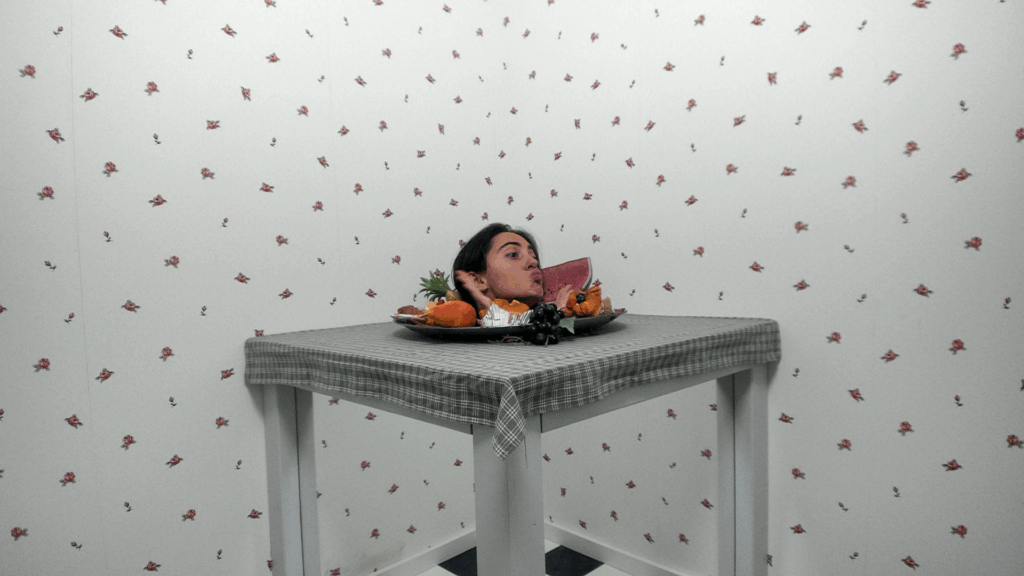
Grundsätzlich hat Daniel schon angezweifelt ob ich überhaupt mit dem Theorieteil dann einen wirklich zusammenhängenden Kurzfilm produzieren muss, oder ob es etwa nicht reicht die 4-5 Schlüsselszenen herauszunehmen und sich mit diesen dann wirklich tagelang beschäftigen und diese komplett perfekt zu leuchten. Sodass, das Werkstück am Ende dann aus mehreren “perfekten” Stills, oder Shots besteht. (Als Inspiration dazu: Gregory Crewdson.) Das würde den Workload natürlich extrem verkleinern und machbarerer gestalten. Womit ich ihm grundsätzlich vollkommen zustimme, wohlwissend, dass ich halt einfach unfassbar gern den gesamten Kurzfilm drehen würde.

Daher nun die Gretchenfrage: Reicht es sich im Theorieteil ausschließlich mit dem eigenen Thema, in meinem Fall eben Lichttheorien in Horrorfilmen auseinanderzusetzen, dann einen Horrorfilm nach dieser Theorie zu drehen und am Ende einfach Stills aus dem Film in den schriftlichen Teil aufzunehmen und zu erklären warum man in dieser oder jener Situation so geleuchtet hat. Oder muss der gesamte Entstehungsprozess des Films auch dokumentiert und wissenschaftlich belegt werden? Denn sonst halte ich mich wahrscheinlich einfach zu lange mit anderen Dingen auf, die aber eigentlich gar nicht mein Hauptthema, nämlich Licht, sind.

Input 4: Jakob Slavicek wäre ein Adresse, die ich mir so oder so unbedingt genauer ansehen sollte. Daniel kennt ihn als Oberbeleuchter und weiß, dass er immer wieder Praktikanten auf Drehs mitnimmt. Vielleicht könnte ich mit einer netten Mail versuchen, einfach mal bei einem Spielfilm Dreh, bei dem er als Gaffer arbeitet, als Volo mitkommen, und mir Dinge abschauen. Außerdem betreibt er einen Verleih, der spätestens für meinen echten Dreh dann interessant wird, wenn die 600er Aputure von der FH an ihre Grenzen kommen.

Impuls 2: “How I Light Every Interview (my 10-step system)” by Mark Bone

Um gleich nahtlos an den ersten Impuls anzuschließen, möchte ich mit einem ganz neuen Video von Mark Bone fortfahren, das erst vor wenigen Stunden veröffentlicht wurde und gleich meine Aufmerksamkeit erlangte.

Anders als Luc Ung ist Mark Bone mehr der klassische Film-Content-Creator auf Youtube, der aber mit seinem Online-Kurs “Art of Documentary” doch recht große Berühmtheit erlangt hat. Durch den hohen Preis habe ich mich aber leider nie drüber getraut mir diesen auch wirklich zu kaufen. Dennoch verfolge ich Bone gerne, da er im Gegensatz zu anderen auch wirklich selbst noch als Filmemacher an großen Projekten arbeitet. Die Doku über CBum zum Beispiel, die er in vielen seiner letzten Videos als B-Roll immer wieder anteasert, sieht nämlich brutal aus und ist, soweit ich weiß, eine Produktion für Prime Video, also der Mann weiß schon was er tut. Gerade deshalb hat mich interessiert ob sich sein “System” inhaltlich wirklich groß von dem unterscheidet was ich mir in Impuls 1 angeschaut habe. Deshalb werde ich dieses kurz zusammenfassen und erklären und danach einordnen.

Mark Bone´s System

  • 1. Track the Sun: Als ersten Schritt, wenn man in einen Raum bekommt, empfiehlt Bone die Sonne abzuchecken und mit Apps wie dem klassischen Kompass oder Sunseeker etc. die Ausrichtung der vorhandenen Fenster herauszufinden. Dies entscheidet wie man dann mit den Fenstern umgeht. Ob man sie also als Key oder Kicker verwenden kann, oder vielleicht ganz ausblockt und nur künstlich belichtet, weil sich die Sonne während der Zeit des Interviews zu viel bewegen würde. Als Merksatz: Fenster Richtung Süden geben hartes Licht, Fenster nach Norden weiches Licht.
  • Control the variables: Als zweites empfiehlt Bone die ganze Szene einmal zu “deaktivieren”, alle Rollos runter, alle Lichter aus. Und dann Stück für Stück mit Absicht das wieder zu aktivieren, was für die Szene Sinn macht.
  • Define the Motivation: Finde heraus wo in deiner Szene auf natürliche Art und Weise das meiste Licht kommen würde. Im Normalfall wäre das ein Fenster oder die stärkste Lampe im Raum. Diese Quelle bestimmt die Seite von deinem Fill, die du dann mit einer Softbox etc. verstärken kannst. Bone empfiehlt die Originalquelle als Practical oder als Anschnitt im Frame zu lassen, um dem Zuschauer zu erklären wo das Licht herkommt.
  • Choose Quality of Light: Entscheide ob du hartes oder softes Licht haben willst. Bone empfiehlt dabei immer die Quality der Motivation zu imitieren, um den natürlichsten Look zu erhalten. Ist die Motivation im Frame eine Tischlampe, wird das Key z.B. eher hart.
  • Place your subject: Mit der Motivation und dem Key fix aufgestellt, empfiehlt Bone jetzt den Shot quasi zu locken und das Subjekt final zu platzieren. Dafür empfiehlt er, dass die Person den dreifachen Abstand zu nächsten Wand im Hintergrund hat, im Vergleich zum Abstand zwischen Person und Kamera, um genug Tiefe zu kreieren.
  • Choose the Lens: Wenn das Subjekt sitzt stellt Bone die Kamera final auf und wählt die Linse. Dafür nimmt er fast immer eine 35er, um genug Hintergrund ins Bild zu bekommen und noch Raum für eine engere zweite Einstellung zu lassen.
  • Shape the contrast: Jetzt bestimmt Bone das lighting ratio des Subjekts. Grundsätzlich empfiehlt er nur dann ein Fill light zu verwenden wenn es wirklich nötig ist und lässt dieses oft ganz weg oder benutzt natürlich negative fill. Für ein nettes Gespräch empfiehlt er 2:1, für ernste Themen 4:1.
  • Build the background: Jetz wo Key, Kamera und Subjekt stehen, baut er noch den Hintergrund für maximale dreidimensionale Wirkung. Dafür fügt er nach und nach noch practicals im Hintergrund hinzu (gerne in anderen Temperaturen als das key) oder beleuchtet diesen von außerhalb ohne aber das Subjekt zu überstrahlen. Alternativ kann der Separation auch klassisch mit einem Kicker light erfolgen, er ist aber nicht wirklich Fan davon, weil es dann laut ihm zu sehr nach einem Studio aussieht und nicht mehr als wäre man wirklich bei der Person zu Hause.
  • Expose and Balance Color: Jetzt stellt Bone erst die Belichtung und den Weißabgleich in der Kamera ein. Dabei gleicht er nicht automatisch key und Kamera Farbtemperatur miteinander an, sondern wählt die Temperatur in der Kamera je nach Look: Kühler für seriöse Interviews (corporate style), wärmer für emotionale Interviews.
  • Stresstest: Zu allerletzt, lässt er das Subjekt sprechen und sich bewegen. Bewegt es sich aus dem Licht? Sind Handgesten nicht im Frame etc? Er macht das Setup bulletproof, um nicht erst danach etwaige Fehler zu bemerken und nimmt ein Testvideo auf.

Fazit

Ich fand Bone´s Herangehensweise extrem interessant, da ich selbst schon sehr oft klassische Interviews oder Talking Head Szenen gefilmt habe und auch mein nächster Auftrag genau daraus bestehen wird. Neu und aufschlussreich war dabei für mich wie er mit der Sonne arbeitet, wie er lighting motivation findet, um den Frame natürlich wirken zu lassen, und wie er entscheidet wie weit sich das Subjekt von der Wand entfernt. Das sind finde ich sind sehr einfache und leicht umzusetzende Guidelines.

Im Verglech zu Luc Ung ist die Abfolge der essenziellen Schritte des Beleuchtens eigentlich sehr gleich: Zuerst findet er die Motivation und passt dann Richtung, Härte und Farbe dementsprechend an. Dann bestimmt er die Stärke des Lichts bei der Wahl des Kontrastverhältnisses und wenn man so will ist das was Luc Ung als letztes macht, nämlich das Licht noch zu formen um ungewollte light spills zu verhindern, auch das worauf Bone im Stresstest am Schluss noch einmal achtet.

Ich finde beide Systeme daher unglaublich hilfreich, Bone´s für klassische Interview Szenarien und Ung´s im klassischen narrativen Filmmaking.

Achja, und das Video selbst gibts hier: https://www.youtube.com/watch?v=NOrTSb-kZC4 und den gratis pdf guide dazu hier https://www.dropbox.com/scl/fi/hq4ejfyb79mqm4rs45g14/AOD-Interview-Lighting-Checklist-v8.pdf?rlkey=hj8fnhxe7ygewoa5fmino1skr&e=3&st=w398206u&dl=0

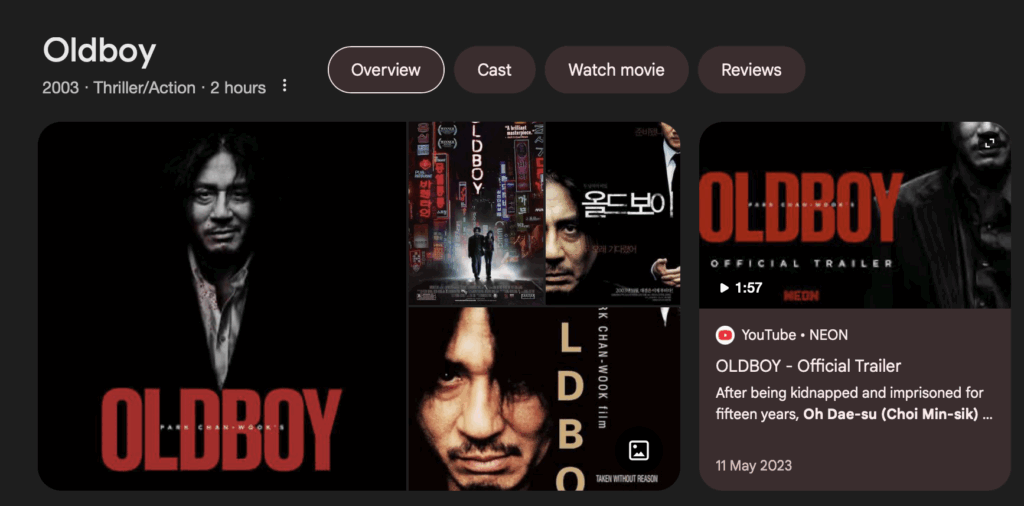
IMPULSE: “Oldboy” (2003)

In one of our ChatGPT tips classes, we learned how to use AI to get creative ideas and ask better questions. For fun, I asked ChatGPT to recommend a movie that would fit my mood — something emotional, with a strong story and a big plot twist. It suggested “Oldboy”, a South Korean movie from 2003 directed by Park Chan-wook. I dont usually watch Korean films, more accurate would be to say that its not my style but i decided to watch it, and it honestly surprised me in every possite way.

From the first few minutes, the film caught my attention because of how it’s designed visually. The lighting, colors, camera angles everything feels very alive. It’s not just telling a story; it’s creating an experience. Some scenes are quiet and slow, others feel chaotic and close, and it all builds up this weird mix of curiosity and tension.

Now here comes the big part — the plot twist (Spoiler warning for anyone who hasn’t seen it!)
Everything Dae-su went through — being locked up, being released, meeting a young woman who helps him — was actually part of someone’s long, cruel revenge plan. The shocking reveal is that the woman he falls in love with is his own daughter, and the villain set it all up to make him suffer. It’s a hard twist to process, but it completely changes how you see the story.

I started thinking about it from a media design point of view. The movie doesn’t just surprise the viewer it builds that surprise carefully through design. Also had an elements of hints all around the movie little ones. In “Oldboy,” both the character and the audience are trapped inside a story they don’t fully understand until the end. In a way, that’s similar to how designers shape user experiences in digital spaces — users think they’re exploring freely, but in reality, everything has been planned to create a certain feeling or reaction.

Watching this film after getting it from ChatGPT also showed me how AI can actually help in creative research. I wouldn’t have picked this movie myself, but it matched exactly what I asked for something emotional and complex. so at the end I was really happy with my “film of choice”

“Oldboy” gave me a strong impulse for my Ai generated film. That why I also wanted to do something with plot twists. the same kind of engagement I want to create through AR design in retail.

References:

  1. IMDb – “Oldboy” (2003)
  2. Roger Ebert Review – “Oldboy”
  3. Visual Storytelling in “Oldboy” – FilmSchoolRejects

This text was refined for grammar and flow with the assistance of OpenAI’s ChatGPT. ✅

IMPULSE: Klanglicht Festival Graz

“SPHÄREN”

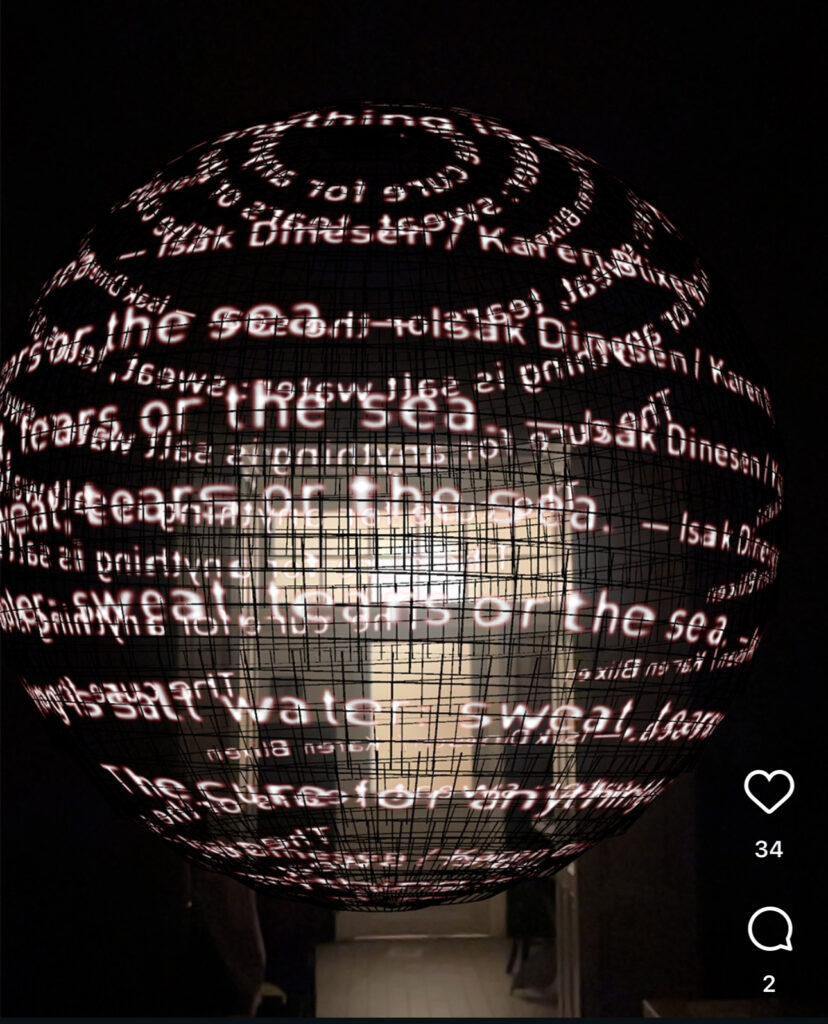
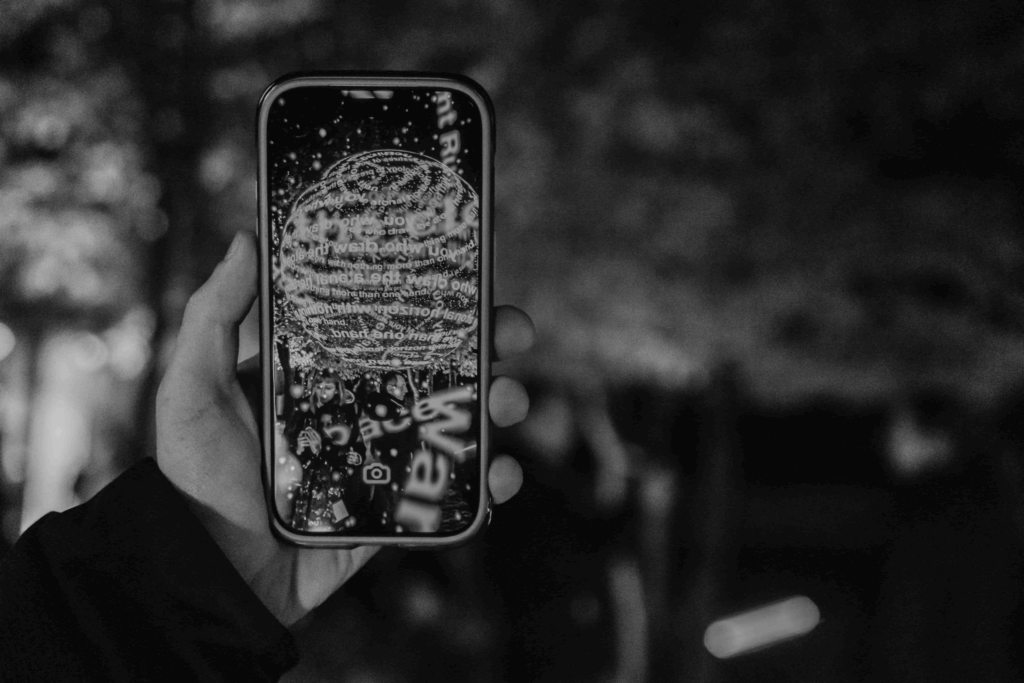
During the Klanglicht Festival in Graz, I visited the installation “SPHÄREN” at the Graz Museum Schlossberg. It was made up of three big glowing spheres that people could walk into. Each one had floating light texts around it with different mood some were poetic, some philosophical talking about things like space, perception, and so on. The main part of it was AR set up that was making it possible to see the instillation.

At first, I wasn’t really sure what people were doing there or what the idea behind it was. But after watching for a bit seeing people having fun and enjoying their time , it started to make sense. it turned out to be really impressive. The light, the sound, and the way people moved through the spheres created not only fun but also calm atmosphere. I

This experience gave me even more inspiration for my master’s thesis: “Designing Immersive Retail Experiences: How Design in AR/VR Environments Shapes Consumer Engagement” The installation showed me how AR design can change people mood and be fun. I clearly saw that it guided people emotionally and made them explore, even without clear instructions. Also after figuring out app and how it works turn out it was not that complicated after all.

Thinking about it from an AR design point of view, the night setting played a big role in how the installation felt. The darkness made the glowing spheres and text stand out much more, almost like how digital elements appear on a phone screen in low light. so contrast and environment are really important for visibility in AR. The lighting created focus and made every interaction clearer something I definitely want to consider..

Even though Klanglicht is an art event, it reminded me how immersive media design can change how people behave and feel in a space. It’s not just about technology it’s about new way of showing your product and changing people experiences. That’s exactly what I want to explore in my own project.

(Text refined for grammar and flow with the assistance of OpenAI’s ChatGPT.)

Product III: Image Extender

Intelligent Sound Fallback Systems – Enhancing Audio Generation with AI-Powered Semantic Recovery

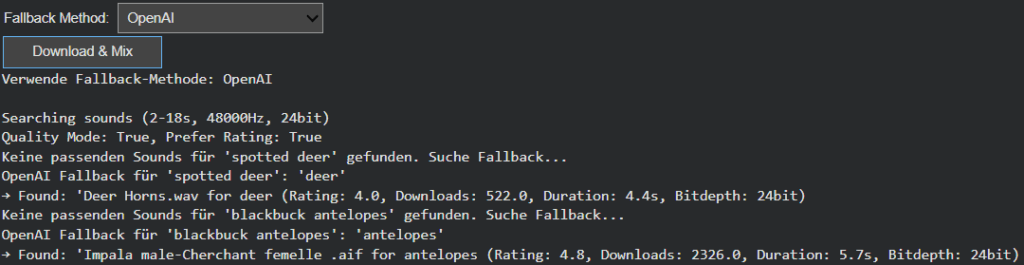
After refining Image Extender’s sound layering and spectral processing engine, this week’s development shifted focus to one of the system’s most practical yet creatively crucial challenges: ensuring that the generation process never fails silently. In previous iterations, when a detected visual object had no directly corresponding sound file in the Freesound database, the result was often an incomplete or muted soundscape. The goal of this phase was to build an intelligent fallback architecture—one capable of preserving meaning and continuity even in the absence of perfect data.

Closing the Gap Between Visual Recognition and Audio Availability

During testing, it became clear that visual recognition is often more detailed and specific than what current sound libraries can support. Object detection models might identify entities like “Golden Retriever,” “Ceramic Cup,” or “Lighthouse,” but audio datasets tend to contain more general or differently labeled entries. This mismatch created a semantic gap between what the system understands and what it can express acoustically.

The newly introduced fallback framework bridges this gap, allowing Image Extender to adapt gracefully. Instead of stopping when a sound is missing, the system now follows a set of intelligent recovery paths that preserve the intent and tone of the visual analysis while maintaining creative consistency. The result is a more resilient, contextually aware sonic generation process—one that doesn’t just survive missing data, but thrives within it.

Dual Strategy: Structured Hierarchies and AI-Powered Adaptation

Two complementary fallback strategies were introduced this week: one grounded in structured logic, and another driven by semantic intelligence.

The CSV-based fallback system builds on the ontology work from the previous phase. Using the tag_hierarchy.csv file, each sound tag is part of a parent–child chain, creating predictable fallback paths. For example, if “tiger” fails, the system ascends to “jungle,” and then “nature.” This rule-based approach guarantees reliability and zero additional computational cost, making it ideal for large-scale batch operations or offline workflows.

In contrast, the AI-powered semantic fallback uses GPT-based reasoning to dynamically generate alternative tags. When the CSV offers no viable route, the model proposes conceptually similar or thematically related categories. A specific bird species might lead to the broader concept of “bird sounds,” or an abstract object like “smartphone” could redirect to “digital notification” or “button click.” This layer of intelligence brings flexibility to unfamiliar or novel recognition results, extending the system’s creative reach beyond its predefined hierarchies.

User-Controlled Adaptation

Recognizing that different projects require different balances between cost, control, and creativity, the fallback mode is now user-configurable. Through a simple dropdown menu, users can switch between CSV Mode and AI Mode.

  • CSV Mode favors consistency, predictability, and cost-efficiency—perfect for common, well-defined categories.
  • AI Mode prioritizes adaptability and creative expansion, ideal for complex visual inputs or unique scenes.

This configurability not only empowers users but also represents a deeper design philosophy: that AI systems should be tools for choice, not fixed solutions.

Toward Adaptive and Resilient Multimodal Systems

This week’s progress marks a pivotal evolution from static, database-bound sound generation to a hybrid model that merges structured logic with adaptive intelligence. The dual fallback system doesn’t just fill gaps, it embodies the philosophy of resilient multimodal AI, where structure and adaptability coexist in balance.

The CSV hierarchy ensures reliability, grounding the system in defined categories, while the AI layer provides flexibility and creativity, ensuring the output remains expressive even when the data isn’t. Together, they form a powerful, future-proof foundation for Image Extender’s ongoing mission: transforming visual perception into sound not as a mechanical translation, but as a living, interpretive process.