Concluding the Shoot

The journey to Lapland as well as my filming of it has concluded a couple of days ago and I want to write a short conclusion of my experiences, struggles and learnings.

All in all I feel like filming worked out quite well, both technically and story-wise. I have been struggling a bit with the cold, but the main issue was mostly my hands and fingers and not the cameras which was good. The batteries have lasted me longer than I had expected and I made it through the whole journey without any battery struggles. I even managed to fly my drone twice, but there the low temperatures did significantly affect how long the battery lasted and I had to do two emergency landings. Nonetheless, I managed to get some nice footage of the snowy marshes and forests of Lapland with members of our group skiing and reindeer sledding. Other than the battery life, I was also a bit concerned with the safety of the camera’s LCD displays because I read online that they might break in really low temperatures. And while filming in minus 30 degrees celsius I noticed that the display moved slower and showed some artefacts. However, once I got the camera warmed up again, the display returned to normal and showed no sign of damage. The times where I was most afraid for the safety of the cameras was while taking Timelapse content of the northern lights where I had the camera out on a tripod in minus 34 degrees for 10 minutes. But even then, the cameras showed no sign of damage after I slowly warmed them back up, so I am positively surprised at the durability of the cameras in low temperatures.

One thing I realised fairly quickly during the filming process is, that most of the time I went with the flow of the journey and group instead of very strictly sticking to my shot list. This also worked out well with the travel group I was filming, because while they were all really good with being filmed during the journey and didn’t mind me recording them, they were quite opposed to “faking” anything. I got frequent comments about how unauthentic things were, even if I just quickly asked someone if they could repeat a movement or move slightly for a better camera angle. So I pivoted towards recording what was happening with almost no interference or commentary from my side, which however sometimes also made it pretty difficult to achieve certain shots I had imagined. Nonetheless, I believe that the footage I collected now really authentically represents the journey, the group and the experiences they had together. Now I just need to manage to create a film in the edit that accurately depicts these experiences while also conveying the story and message I had in mind during the planning phase. But what I mostly learned from this was that you cannot plan for everything that will happen and have to stay flexible and spontaneous enough to adapt to unexpected things that are happening while still keeping the message you want to convey to your viewers in mind to make sure you focus on the right action.

That was also one thing I was struggling with, to let go of the idea of documenting everything and instead focus on what I will actually need for my story. There were many interesting things happening, which, however, did not serve my story or would have just been too much to also fit into my film. While it was difficult to put my camera down at times, it was quite liberating to realise I did not need to film every little detail that was happening.

I really enjoyed the trip and the sense of community in our travel group even though I was technically there to work. This sense of belonging to the group and being part of the experience allowed me to really get a sense of how the journey felt to the participants. However, it also made it difficult at times to stay neutral and as an outsider of the story. What I also realised is, that the moments I most wanted to film because there was some struggle with having to catch a train or packing your bags quickly, I in fact also had to run for the train or pack my stuff, so I could not actually film all that I wanted to film.

All in all, I really enjoyed the experience and could also collect some footage I am quite happy with. Now it is just about refining that footage in the edit and telling the story I have in mind. I also provided photos for the travel group every day and got some really positive feedback from everyone, which, I think also helped with easing their scepticism about me being there and documenting them.
RESEARCH #10 – Reflection and Next Steps

Looking back at the past weeks, I realise how much my thesis process has shifted. What began as a vague interest without clear direction has slowly turned into something more defined. At the same time, it still feels open. I am no longer at the very beginning, but I also don’t feel like I have fully arrived anywhere yet.

The only thing that currently creates pressure is the upcoming deadline. In less than ten days, I have to submit my final exposé. It feels strange, because I only recently reached a point where I feel fully engaged in my research. For a long time, I was circling around ideas without committing to them. Now that I am actively exploring and making connections, I wish I had more time to stay in this phase. But I also understand that exploration cannot continue indefinitely. At some point, it becomes necessary to define a direction. Otherwise, it is easy to get lost in the endless number of possibilities. There will always be more books to read, more conversations to have, and more perspectives to consider. The challenge is not only to explore, but also to decide.

My next step is to work with the feedback I received last week and begin formulating a clear research question. Until now, I have been collecting ideas, references, observations without forcing them into a fixed structure. Now, I need to translate these fragments into something more precise. This feels both exciting and challenging. It requires moving from intuition to articulation.

The part I currently struggle with the most is defining the artefact. I want to create something that genuinely excites me, something I can stay engaged with until the end of the project. Right now, many of the ideas I come up with feel logical in relation to my topic, but they don’t feel personally motivating. They make sense intellectually, but they don’t create a strong emotional response.

At the same time, I have realised that I deeply enjoy the theoretical and philosophical part of this process. Reading, writing, and thinking about abstract ideas has become something I look forward to. This surprised me, because I used to see theoretical work as something difficult. Now, it feels like a space with endless depth. There is always another idea to explore, another perspective to consider. As someone who often loses interest in things quickly, this feels significant. The fact that I remain curious and engaged gives me confidence that I am moving in a meaningful direction.

Moving forward, my focus will be on clarifying my research question and finding an artefact that connects to my interests in a more personal way. I want the outcome of this thesis to reflect not only the topic itself, but also my relationship to it. Right now, I am still in the process of defining what that will be.

RESEARCH #9 – The Value of Difficult Feedback

Last Thursday, we had a tutorial day, which means each student signs up for a one-to-one feedback session with one of our lecturers. Since we have several lecturers teaching the course, we can choose who we want to speak to. I originally planned to talk to a professor I had spoken to before, but his schedule was completely full. I had to wait a long time, and while waiting, I noticed that another professor only had two students signed up.

I asked some of my classmates why that was the case. Almost all of them said the same thing: she was tough. They said she could be encouraging, but that she was also very direct and sometimes harsh with feedback. Some students said she had criticised their ideas strongly, which made them hesitant to speak to her again.

Hearing this made me sceptical, but also curious. I felt that maybe this was exactly the kind of feedback I needed. The previous tutorial I had attended had been open and supportive, but it hadn’t really pushed my thinking further or helped me clarify my direction. I realised that encouragement alone is not always enough. Sometimes you need confrontation, or someone who challenges your assumptions.

So I decided to sign up with her.

When I sat down and started explaining my thesis topic, I immediately noticed something different. Usually, when I explain my ideas, I feel like I’m not expressing them clearly. They make sense in my head, but once spoken out loud, they sound vague or unfinished. This time, however, I had the feeling that she understood exactly what I meant. She responded quickly and directly, without needing long explanations.

Her feedback was honest and very straightforward. At one point, she said that documenting and interviewing creative directors could be interesting, but that ultimately, the world would continue spinning without that work. At first, this sounded harsh. But instead of feeling discouraged, I appreciated the honesty. It felt like a necessary reality check. It made me realise how easy it is to get absorbed in design itself, without questioning its relevance. Designers often operate within their own bubble, focusing on internal conversations rather than external impact. Her comment forced me to think more critically about why my topic matters, and what it actually contributes beyond the design field.

She encouraged me to focus more specifically on chaos, especially in relation to information overload. She pointed out that chaos is not only an abstract concept, but something that has real consequences. Information overload affects mental health, contributes to burnout, and also has environmental consequences, such as the physical infrastructure required to store and process data. She also suggested expanding my perspective beyond creative directors. Instead of only interviewing people within design, I could also speak to scientists or researchers who study chaos from a scientific perspective. Chaos exists across multiple disciplines, not just in visual or creative contexts.

Another important point she made was that my thesis does not necessarily need to result in a traditional product. Instead, it could take the form of a system, a framework, or a set of tools. She mentioned the example of prompts, similar to the Oblique Strategies, which are designed to help people approach creative problems differently. This conversation shifted my thinking significantly. It helped me see my topic not just as something to observe, but as something that could be explored in a more structured and intentional way.

My next step will be to explore these inputs further. This includes researching chaos from scientific perspectives, reconsidering the role of creative direction within my thesis, and thinking about alternative formats beyond a single artefact. This tutorial reminded me that difficult feedback is often the most valuable.

#30 – damn this is number 30

The next months are going to be a bit intense, so I’m trying to get ahead of the chaos before it starts. 

A big part of what makes this semester feel different is that I have two parallel realities to manage: my thesis work, and the fact that I’ll be in Valencia for a a few months. Which is exciting, but also slightly terrifying, because I know myself. Procrastination and thesis don’t go well with one another. So instead of pretending I will magically become a perfectly disciplined person, I’m trying to build a structure that is realistic. I have to have a plan now, so at least one thing is out of the way and I can directly start into the thesis.

My main goal for the next months is to keep moving forward in small steps. I don’t need huge breakthroughs every week. I need consistency. The thesis is not one big moment. It’s a chain of small decisions: collecting, selecting, writing, revising and polishing.

Right now my plan is to split my thesis work into three tracks that can run simultaneously:

The first track is research. This is where I read, collect sources and build the language around my topic. I already noticed that reading becomes easier once I have the right keywords and once I stop forcing my topic into one discipline. I want to keep doing this continuously, because it’s the part that will support everything else later when I start writing.

The second track is practical work. That means taking photographs, documenting everyday installations, and experimenting with reconstructions. The miniature idea especially feels like something I want to push further, because it connects the observational part of my thesis with a more designed outcome. I want to keep producing while I research, so I don’t end up with a thesis that is only theoretical.

The third track is final format planning. Even if I don’t decide the exact outcome yet, I want to start thinking in systems: how the archive will become a narrative, how an exhibition could work, how a book could work and what kind of structure makes sense for my material. This is also where Valencia might become interesting, because being in a different city could change what I notice and could expand my archive beyond one location.

To make this plan actually work, I’m also setting myself a few small rules. Routines that I can realistically keep:

  • I want at least 3 focused thesis sessions per week (even if they are short).
  • I want one day where I only do practical work (photography, collecting, building miniatures).
  • I want one day where I only work on writing (even if it’s messy writing).
  • I want to keep my archive clean while collecting, so I don’t have to sort everything later.

If I manage to stick to this structure, I think the thesis will stay manageable while living abroad.

The real challenge of this semester: not coming up with even more ideas but turning them into a finished thesis.

#29 – Ethics?

The more I archive my everyday installation photographs, the louder this question gets: what are the ethics of this whole project?

Because the truth is: I’m photographing situations that do not belong to me. These installations are anonymous, often accidental and usually created by someone who never planned for them to be seen as “art.” Sometimes they might even be functional: moving boxes, stored materials, temporary fixes, or objects left behind for a reason.

And the moment I photograph them, I shift their meaning. I turn them into an image. I turn them into something that can be shared, archived and potentially exhibited. 

So I started setting a few rules for myself.

The first one is simple: I avoid photographing people. If someone is clearly visible, the image becomes street photography, and that’s not what my thesis is about. It also creates privacy issues that I don’t want to build my project on.

The second rule is about intervention: I never move objects. Even if an arrangement looks “almost perfect,” I don’t want to complete it. My role is observer, not curator of the street. Otherwise the work would become staging and I would lose the whole point of researching found installations.

The third rule is about sensitivity. Some installations feel open and neutral. Others feel personal. If an object includes names, private belongings or something that feels emotionally loaded, I might still document it for myself, but I probably wouldn’t include it in a public exhibition. Not everything that is visually interesting should automatically become content.

What I like about this ethical question is that it connects directly to the core of my thesis: framing. Because the ethical dilemma is basically proof that framing is powerful. An installation changes the moment it is documented. It changes again the moment it is shared. And it changes again if it enters a curated context like a book or exhibition.

So instead of ignoring the ethics, I want to include it as part of my research. It is not a side issue. It is a sign that meaning is not neutral, and that the act of noticing already carries responsibility.

#28 – building an archive

At this point I’m collecting more photographs than I can process. Which sounds like a good problem to have, but it becomes messy very quickly. A camera roll full of “interesting moments” is not research yet. It only turns into research once the material becomes searchable, comparable, and usable for decisions.

So this week I started building a proper archive system for my everyday installation photographs.

Right now, my main goal is clarity. I need to be able to find images again without relying on memory. I also want to be able to see patterns: what types of installations I notice most, which materials repeat, and how the city keeps producing similar accidental compositions.

My structure:

Each installation gets a folder name that includes date + city + a short description. Inside that folder I keep the raw photo(s), plus one selected version I consider “final” for now.

On top of that, I started tagging my images with a few recurring categories. 

For example:

  • Beverages (coffee/beer)
  • cardboard
  • repair
  • furniture
  • temporary construction
  • staged?

This immediately made my collection feel less like a random moodboard and more like a research archive. Because once the images are tagged, I can compare them across time and location. I can see how often certain object types appear. And I can start asking better questions: Why do I notice these moments? What do they have in common visually? What kind of “order” keeps showing up?

The archive also helps me with selection. Instead of choosing images based on mood, I can choose them based on criteria. I can group them. I can build sequences. And I can start thinking about the final format (book, exhibition) in a more structured way.

I’m realising that archiving is not a boring side-task. It’s actually part of the design work. The archive is the foundation for everything I will do later: writing, analysis and the final output.

RESEARCH #8 – Rethinking Chaos Through Richard Sennett

https://www.youtube.com/watch?v=7PoRrVqJ-FQ

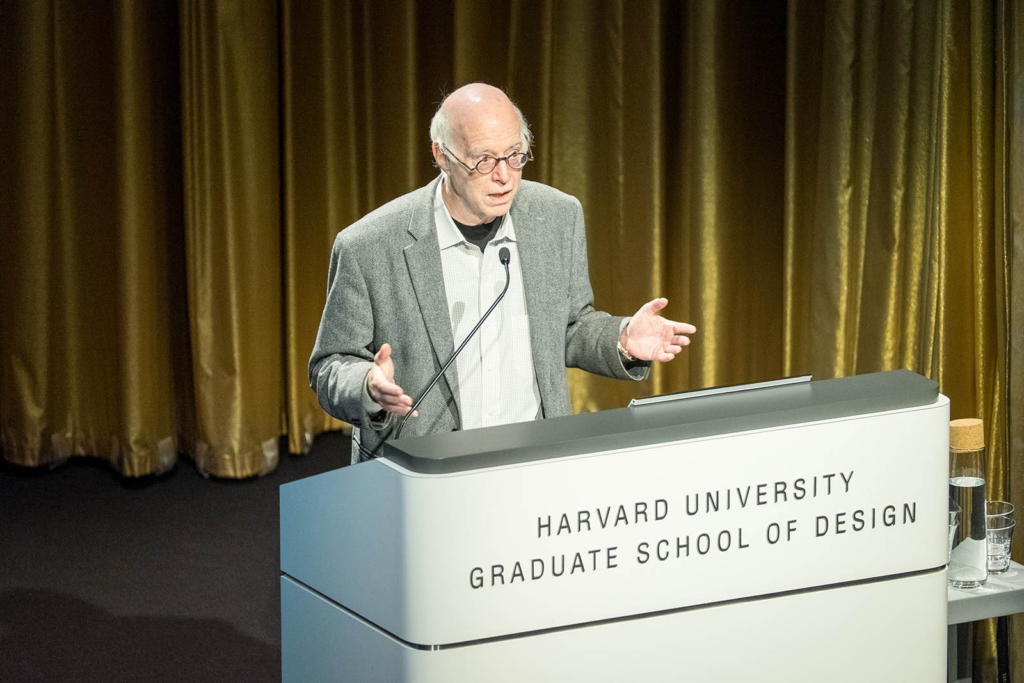
In one of my earlier impulse blog entries, I wrote about Richard Sennett’s book The Uses of Disorder. At the time, I had only just started reading it. But looking back now, I realise how much his work has influenced the way I understand my thesis topic.

I first came across his name in a very casual but memorable way. After one of our lectures at Kingston, I asked my professor if it would be possible to use my thesis topic for the research proposal we are preparing this term. I showed her my iPad, where the only thing readable on the screen was “CURATING CHAOS” in capital letters. There was no explanation, no context, just those two words. She was in a rush, but she immediately reacted and told me to send her an email and quickly said, “Look into Richard Sennett — Designing Disorder.” Even without seeing my full research, she was able to point me toward someone whose work directly engages with similar questions.

I later found out that Designing Disorder was not available at the library, so instead I borrowed his earlier book, The Uses of Disorder. Reading it became an important turning point in how I viewed chaos. Before this, I mostly saw chaos as something negative. Something that needed to be organised, controlled, or resolved. Chaos felt like a problem, something that stood in the way of clarity and meaning. My instinct was always to try to structure it.

Sennett introduced a different perspective. Instead of treating disorder as something to eliminate, he describes it as something necessary. He writes about how environments that are too controlled or too ordered can limit human experience. Disorder, in contrast, creates space for interaction, adaptation, and growth. His work, especially in relation to architecture, urban planning, and social structures, explores how environments can be designed in ways that allow for complexity rather than suppress it. The idea that disorder could be something that is not only unavoidable but also valuable was new to me.

The concept of “designing disorder” itself raises an interesting contradiction. It suggests that disorder is not simply the absence of structure, but something that can exist within structure. It can be shaped, framed and engaged with intentionally.

This made me reflect on my own understanding of creative direction. Creative direction is seen as the act of creating order: selecting, organising, and defining. But through Sennett’s perspective, I began to see it differently. Creative direction is not about eliminating chaos, but about navigating it.

Sennett’s work helped me realise that chaos is not the opposite of meaning. It can be the condition that allows meaning to form. This shift in perspective changed how I approach my thesis. Instead of trying to resolve chaos, I am now more interested in understanding how it can be engaged with, shaped, and curated.

IMPULSE #8 — Perfect Days

(Media Activity — watching and reflecting on a film, 1+ hour)

For this impulse a friend recommended me a movie to watch. So I followed his suggestion and watched Perfect Days (2023) by Wim Wenders. It is not a film about art, nor design. But while watching it, I realised that it connects to my thesis topic almost perfectly: attention.

The film follows a man living in Tokyo who works as a toilet cleaner. His days are repetitive and quiet. He wakes up, goes to work, eats, reads, takes photos and repeats. At first glance, nothing “special” happens. And that is why it became such a strong impulse for me.

One of the core questions in my thesis is: why do we ignore most of what is around us? And what makes certain everyday situations suddenly feel meaningful? In my research, this often happens through accidental installations in public space, arrangements of objects that appear without intention, without authorship, and without explanation. In Perfect Days, the same mechanism is explored, but through storytelling instead of photography.

The main character is someone who notices. Not in a dramatic way and not with a big artistic gesture. He notices small things because he is present. Light through leaves, reflections, textures, routines, tiny shifts in the city. The film shows that attention is not a talent, it is a practice.

The film suggests it is all about what you choose: the city is full of moments all the time. You just have to choose to start looking.

Another thing the film made clear is that meaning does not always come from interpretation. Sometimes meaning comes from repetition. The film repeats similar scenes over and over again and slowly, they become loaded. Not because the scenes change a lot, but because the viewer becomes more sensitive. This is similar to what happens in my archive. A single photograph might feel like a joke. But when many similar situations are collected, patterns start to appear. The work becomes less about one funny moment and more about a visual culture.

What I also found relevant is the way the film treats public space. It does not romanticise the city, but it also doesn’t treat it as anonymous. Public space becomes a place of small encounters, invisible labour, and unspoken rules. This connects directly to my thesis, because everyday installations often exist in the gaps of those rules: between private and public, between order and disorder, between function and accident.

The biggest insight from this impulse is that my thesis is about attention as a design question. Who is allowed to slow down? Who is allowed to look? And what happens when we treat the ordinary as something worth noticing?

Perfect Days feels like the opposite of Instagram. It is slow, quiet and almost stubbornly unoptimized. But that is exactly why it matters. It reminded me that the work I’m doing is not only about documenting “cool finds.” It is about training perception. And about making space for a different way of seeing.

Links
https://www.imdb.com/title/tt27503384/
https://en.wikipedia.org/wiki/Perfect_Days
https://www.rottentomatoes.com/m/perfect_days

AI Disclaimer
This blog post was written with the assistance of AI.

RESEARCH #7 – Dumping

Before arriving at my current thesis direction, I spent a long time thinking about randomness. I was interested in how things appear unstructured, accidental, or uncontrolled. At the time, I didn’t yet have the language to describe what exactly fascinated me about it. It was more of a feeling than a clearly defined concept.

As my research progressed, I began collecting thoughts, references, and observations in my Figma file I showed you before. Looking at everything together, I started noticing connections between ideas that initially seemed unrelated. Many of the things I was drawn to shared a similar tension between order and disorder. They were not completely random, but they also weren’t fully controlled.

At some point, I wrote down the phrase “curating chaos.” It wasn’t something I had read anywhere. It was just an attempt to describe what I was observing. When I later searched for this term, I realised that it already existed. I came across several articles that explored similar ideas, including one titled Curated chaos: What Instagram’s photo dumps say about art today. Reading it felt like encountering something I had already been thinking about, but expressed in a different context.

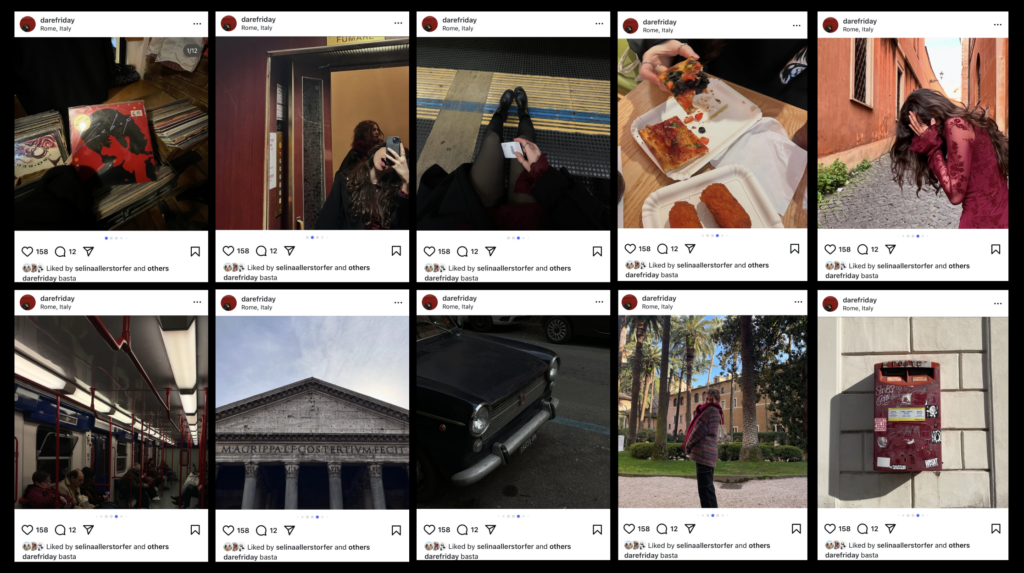
The article described the rise of “photo dumps” on Instagram: collections of images that appear spontaneous and unfiltered, but still communicate a specific atmosphere or identity. At first glance, they seem chaotic and unstructured. But looking closer, they often create a carefully constructed impression. The chaos is intentional. This made me realise that chaos, especially in visual culture, is rarely neutral. It can be used as an aesthetic or a strategy.

The article also reflected on how Instagram has shifted from a platform focused on individual images to one driven by volume and engagement. Posts with multiple images receive significantly more visibility than single, carefully crafted works. As a result, artists are often pushed to produce more content, rather than more meaningful content.

This creates a tension between artistic integrity and algorithmic visibility. Instead of rewarding depth, the system rewards frequency and engagement. Chaos becomes not just an aesthetic, but a condition created by the platform itself. What interested me most was the idea that even chaotic image collections still communicate something coherent.

This connects directly to my own research process. My Figma file, for example, could also be seen as a form of curated chaos. It contains fragments from different sources like books, conversations, lectures, images, and ideas. Individually, they may seem disconnected. But together, they begin to form patterns.

My previous interest in randomness was never really about randomness itself. It was about how meaning emerges from seemingly disorganised systems. Finding this article helped me understand that my thesis topic had been present from the beginning, even when I didn’t have the words for it yet. The concept of curating chaos connects many of the themes I have been exploring, including attention, atmosphere, creative direction, and perception.

I really think that creative direction itself can be understood as a process of curating chaos. It involves selecting, organising, and giving form to something that initially exists in an open and undefined state. Rather than eliminating chaos, creative direction works with it.

Links:
https://www.catalinamunoz.me/p/curated-chaos-what-instagrams-photo

IMPULSE #7 — a Test

(Offline Activity – mini experiment with 3 participants, 1 hour)

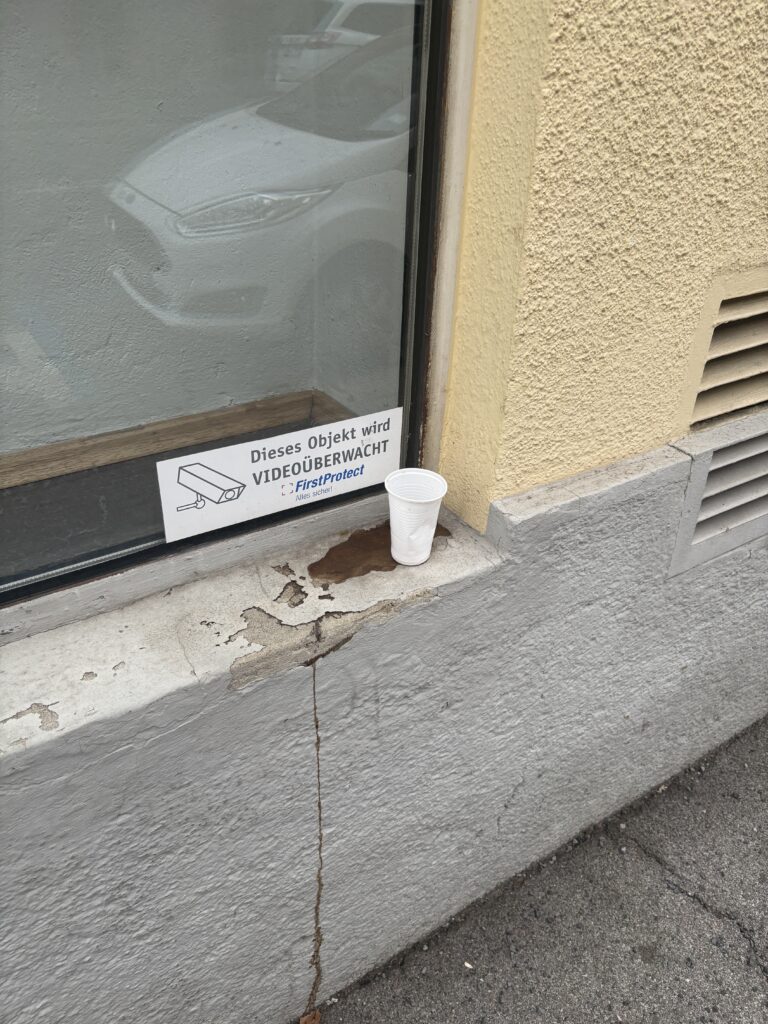
For this impulse I wanted to test something that sits at the center of my thesis: framing. I keep writing about how context changes meaning, and how the same everyday installation can be read as trash, as suspicious, or as art depending on how it is presented. But instead of staying in theory, I decided to test it with a small experiment.

I used one photograph from my archive, taken in Graz (Geidorf) on 03.12.2025. The image shows a very simple scene: a white plastic cup placed on a window ledge. Under the window there is a sign that reads: “Dieses Objekt wird VIDEOÜBERWACHT.” The cup itself looks casual, like someone just left it there after drinking. At the same time, the surveillance sign makes the situation feel strangely tense. It turns a completely ordinary object into something that suddenly feels “watched,” important.

I then showed this image to three different people. All three participants were non-design friends, which was important for me because I wanted reactions that are not trained through art or design education.

The setup: I showed everyone the exact same photograph in three different framings.

Version A: the image without any title or context.
Version B: the image with an artsy title (Surveillance Cup, 2026).
Version C: the image with additional context (date, location, and the label “found everyday installation”).

I asked each participant the same questions:

  1. What do you think this is?
  2. Would you describe it as art? Why or why not?
  3. What do you think is happening here?
  4. Does the title or context change your interpretation?
  5. Would you stop and look at this in real life?

Across all three participants, the first reaction was surprisingly similar: they tried to explain the scene through logic. The cup was interpreted as “someone’s trash,” “a coffee left behind,” or simply “a random thing on a ledge.”

But even in Version A, the sign already triggered something. All three people mentioned the surveillance text immediately. Without me asking, they started wondering why the sign was there, and why it was placed so close to the cup. The cup became suspicious because of the context around it.

Once I introduced Version B (the title), the reactions shifted. The participants stopped treating the cup as a practical object and started reading the scene as a message. One person said it feels like “a joke about how seriously we take surveillance, even when there’s nothing to protect.” The title didn’t fully convince them that it is art but it did change the way they looked at the image. They started searching for details.

Version C created another shift. When I added the location and the label “found everyday installation,” the participants became more open to the idea that the scene could be something worth noticing. Interestingly, the added context didn’t make the scene feel more emotional. It turned the image from a random situation into something documented on purpose.

What became very clear is that framing does not only change the final judgment (art or not). It changes the entire viewing process. In Version A, the image was scanned quickly. In Version B and C, the participants looked longer and started analysing: the stain under the cup, the typography of the sign, the relationship between object and text, and the strange contrast between cheap plastic and official surveillance language.

This experiment was useful because it produced direct evidence for something I’ve been circling around for months: meaning does not sit inside the object. Meaning happens between the object and the viewer. And even minimal framing can push interpretation in completely different directions.

For my thesis, this confirms that everyday installations can communicate — but they do not automatically do so. Communication begins when attention is activated. Sometimes all it takes is a title. Sometimes all it takes is one sentence. Sometimes it takes a whole institutional frame.

As a next step, I want to repeat this experiment with more images from my archive and compare which types of everyday installations react most strongly to framing.

Links
https://www.britannica.com/topic/framing
https://www.britannica.com/science/semiotics
https://www.britannica.com/science/Gestalt-psychology

AI Disclaimer
This blog post was written with the assistance of AI.