RESEARCH #10 – Reflection and Next Steps

Looking back at the past weeks, I realise how much my thesis process has shifted. What began as a vague interest without clear direction has slowly turned into something more defined. At the same time, it still feels open. I am no longer at the very beginning, but I also don’t feel like I have fully arrived anywhere yet.

The only thing that currently creates pressure is the upcoming deadline. In less than ten days, I have to submit my final exposé. It feels strange, because I only recently reached a point where I feel fully engaged in my research. For a long time, I was circling around ideas without committing to them. Now that I am actively exploring and making connections, I wish I had more time to stay in this phase. But I also understand that exploration cannot continue indefinitely. At some point, it becomes necessary to define a direction. Otherwise, it is easy to get lost in the endless number of possibilities. There will always be more books to read, more conversations to have, and more perspectives to consider. The challenge is not only to explore, but also to decide.

My next step is to work with the feedback I received last week and begin formulating a clear research question. Until now, I have been collecting ideas, references, observations without forcing them into a fixed structure. Now, I need to translate these fragments into something more precise. This feels both exciting and challenging. It requires moving from intuition to articulation.

The part I currently struggle with the most is defining the artefact. I want to create something that genuinely excites me, something I can stay engaged with until the end of the project. Right now, many of the ideas I come up with feel logical in relation to my topic, but they don’t feel personally motivating. They make sense intellectually, but they don’t create a strong emotional response.

At the same time, I have realised that I deeply enjoy the theoretical and philosophical part of this process. Reading, writing, and thinking about abstract ideas has become something I look forward to. This surprised me, because I used to see theoretical work as something difficult. Now, it feels like a space with endless depth. There is always another idea to explore, another perspective to consider. As someone who often loses interest in things quickly, this feels significant. The fact that I remain curious and engaged gives me confidence that I am moving in a meaningful direction.

Moving forward, my focus will be on clarifying my research question and finding an artefact that connects to my interests in a more personal way. I want the outcome of this thesis to reflect not only the topic itself, but also my relationship to it. Right now, I am still in the process of defining what that will be.
RESEARCH #9 – The Value of Difficult Feedback

Last Thursday, we had a tutorial day, which means each student signs up for a one-to-one feedback session with one of our lecturers. Since we have several lecturers teaching the course, we can choose who we want to speak to. I originally planned to talk to a professor I had spoken to before, but his schedule was completely full. I had to wait a long time, and while waiting, I noticed that another professor only had two students signed up.

I asked some of my classmates why that was the case. Almost all of them said the same thing: she was tough. They said she could be encouraging, but that she was also very direct and sometimes harsh with feedback. Some students said she had criticised their ideas strongly, which made them hesitant to speak to her again.

Hearing this made me sceptical, but also curious. I felt that maybe this was exactly the kind of feedback I needed. The previous tutorial I had attended had been open and supportive, but it hadn’t really pushed my thinking further or helped me clarify my direction. I realised that encouragement alone is not always enough. Sometimes you need confrontation, or someone who challenges your assumptions.

So I decided to sign up with her.

When I sat down and started explaining my thesis topic, I immediately noticed something different. Usually, when I explain my ideas, I feel like I’m not expressing them clearly. They make sense in my head, but once spoken out loud, they sound vague or unfinished. This time, however, I had the feeling that she understood exactly what I meant. She responded quickly and directly, without needing long explanations.

Her feedback was honest and very straightforward. At one point, she said that documenting and interviewing creative directors could be interesting, but that ultimately, the world would continue spinning without that work. At first, this sounded harsh. But instead of feeling discouraged, I appreciated the honesty. It felt like a necessary reality check. It made me realise how easy it is to get absorbed in design itself, without questioning its relevance. Designers often operate within their own bubble, focusing on internal conversations rather than external impact. Her comment forced me to think more critically about why my topic matters, and what it actually contributes beyond the design field.

She encouraged me to focus more specifically on chaos, especially in relation to information overload. She pointed out that chaos is not only an abstract concept, but something that has real consequences. Information overload affects mental health, contributes to burnout, and also has environmental consequences, such as the physical infrastructure required to store and process data. She also suggested expanding my perspective beyond creative directors. Instead of only interviewing people within design, I could also speak to scientists or researchers who study chaos from a scientific perspective. Chaos exists across multiple disciplines, not just in visual or creative contexts.

Another important point she made was that my thesis does not necessarily need to result in a traditional product. Instead, it could take the form of a system, a framework, or a set of tools. She mentioned the example of prompts, similar to the Oblique Strategies, which are designed to help people approach creative problems differently. This conversation shifted my thinking significantly. It helped me see my topic not just as something to observe, but as something that could be explored in a more structured and intentional way.

My next step will be to explore these inputs further. This includes researching chaos from scientific perspectives, reconsidering the role of creative direction within my thesis, and thinking about alternative formats beyond a single artefact. This tutorial reminded me that difficult feedback is often the most valuable.

RESEARCH #8 – Rethinking Chaos Through Richard Sennett

https://www.youtube.com/watch?v=7PoRrVqJ-FQ

In one of my earlier impulse blog entries, I wrote about Richard Sennett’s book The Uses of Disorder. At the time, I had only just started reading it. But looking back now, I realise how much his work has influenced the way I understand my thesis topic.

I first came across his name in a very casual but memorable way. After one of our lectures at Kingston, I asked my professor if it would be possible to use my thesis topic for the research proposal we are preparing this term. I showed her my iPad, where the only thing readable on the screen was “CURATING CHAOS” in capital letters. There was no explanation, no context, just those two words. She was in a rush, but she immediately reacted and told me to send her an email and quickly said, “Look into Richard Sennett — Designing Disorder.” Even without seeing my full research, she was able to point me toward someone whose work directly engages with similar questions.

I later found out that Designing Disorder was not available at the library, so instead I borrowed his earlier book, The Uses of Disorder. Reading it became an important turning point in how I viewed chaos. Before this, I mostly saw chaos as something negative. Something that needed to be organised, controlled, or resolved. Chaos felt like a problem, something that stood in the way of clarity and meaning. My instinct was always to try to structure it.

Sennett introduced a different perspective. Instead of treating disorder as something to eliminate, he describes it as something necessary. He writes about how environments that are too controlled or too ordered can limit human experience. Disorder, in contrast, creates space for interaction, adaptation, and growth. His work, especially in relation to architecture, urban planning, and social structures, explores how environments can be designed in ways that allow for complexity rather than suppress it. The idea that disorder could be something that is not only unavoidable but also valuable was new to me.

The concept of “designing disorder” itself raises an interesting contradiction. It suggests that disorder is not simply the absence of structure, but something that can exist within structure. It can be shaped, framed and engaged with intentionally.

This made me reflect on my own understanding of creative direction. Creative direction is seen as the act of creating order: selecting, organising, and defining. But through Sennett’s perspective, I began to see it differently. Creative direction is not about eliminating chaos, but about navigating it.

Sennett’s work helped me realise that chaos is not the opposite of meaning. It can be the condition that allows meaning to form. This shift in perspective changed how I approach my thesis. Instead of trying to resolve chaos, I am now more interested in understanding how it can be engaged with, shaped, and curated.

RESEARCH #7 – Dumping

Before arriving at my current thesis direction, I spent a long time thinking about randomness. I was interested in how things appear unstructured, accidental, or uncontrolled. At the time, I didn’t yet have the language to describe what exactly fascinated me about it. It was more of a feeling than a clearly defined concept.

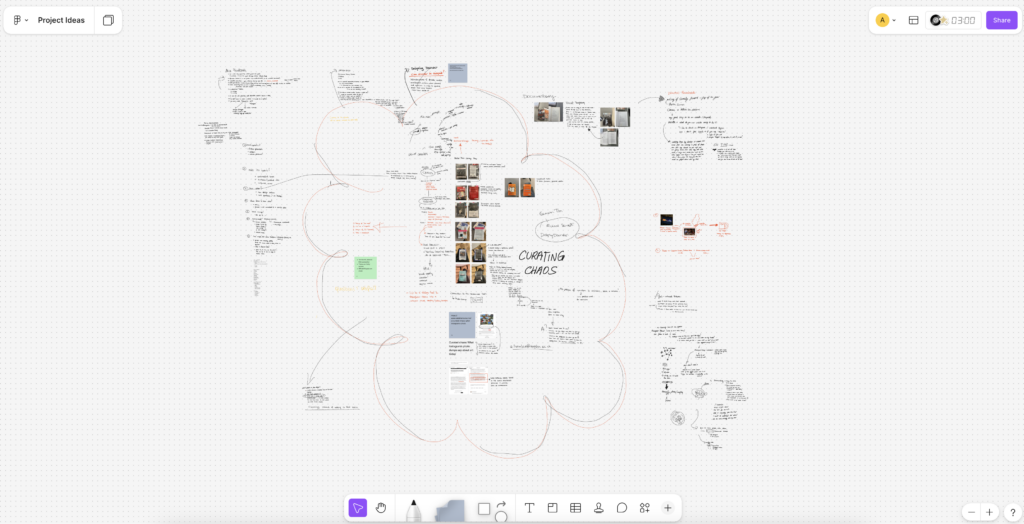
As my research progressed, I began collecting thoughts, references, and observations in my Figma file I showed you before. Looking at everything together, I started noticing connections between ideas that initially seemed unrelated. Many of the things I was drawn to shared a similar tension between order and disorder. They were not completely random, but they also weren’t fully controlled.

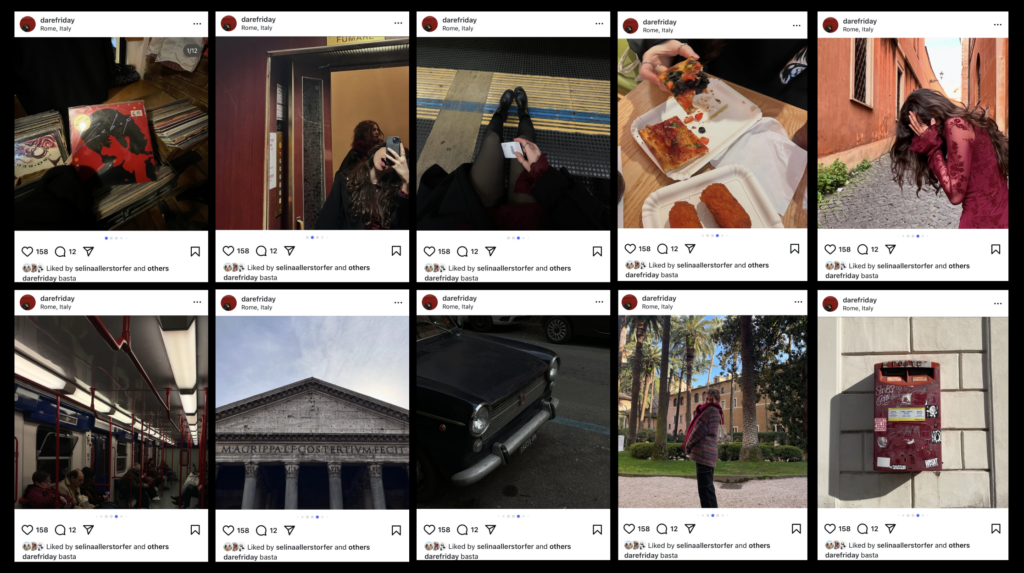
At some point, I wrote down the phrase “curating chaos.” It wasn’t something I had read anywhere. It was just an attempt to describe what I was observing. When I later searched for this term, I realised that it already existed. I came across several articles that explored similar ideas, including one titled Curated chaos: What Instagram’s photo dumps say about art today. Reading it felt like encountering something I had already been thinking about, but expressed in a different context.

The article described the rise of “photo dumps” on Instagram: collections of images that appear spontaneous and unfiltered, but still communicate a specific atmosphere or identity. At first glance, they seem chaotic and unstructured. But looking closer, they often create a carefully constructed impression. The chaos is intentional. This made me realise that chaos, especially in visual culture, is rarely neutral. It can be used as an aesthetic or a strategy.

The article also reflected on how Instagram has shifted from a platform focused on individual images to one driven by volume and engagement. Posts with multiple images receive significantly more visibility than single, carefully crafted works. As a result, artists are often pushed to produce more content, rather than more meaningful content.

This creates a tension between artistic integrity and algorithmic visibility. Instead of rewarding depth, the system rewards frequency and engagement. Chaos becomes not just an aesthetic, but a condition created by the platform itself. What interested me most was the idea that even chaotic image collections still communicate something coherent.

This connects directly to my own research process. My Figma file, for example, could also be seen as a form of curated chaos. It contains fragments from different sources like books, conversations, lectures, images, and ideas. Individually, they may seem disconnected. But together, they begin to form patterns.

My previous interest in randomness was never really about randomness itself. It was about how meaning emerges from seemingly disorganised systems. Finding this article helped me understand that my thesis topic had been present from the beginning, even when I didn’t have the words for it yet. The concept of curating chaos connects many of the themes I have been exploring, including attention, atmosphere, creative direction, and perception.

I really think that creative direction itself can be understood as a process of curating chaos. It involves selecting, organising, and giving form to something that initially exists in an open and undefined state. Rather than eliminating chaos, creative direction works with it.

Links:
https://www.catalinamunoz.me/p/curated-chaos-what-instagrams-photo

RESEARCH #6 – Florine Bonaventure

Chaos and direction are not opposites, but exist in relation to each other. Creative direction, in a way, is the act of navigating chaos: selecting, shaping, and giving form to something that initially has no clear structure.

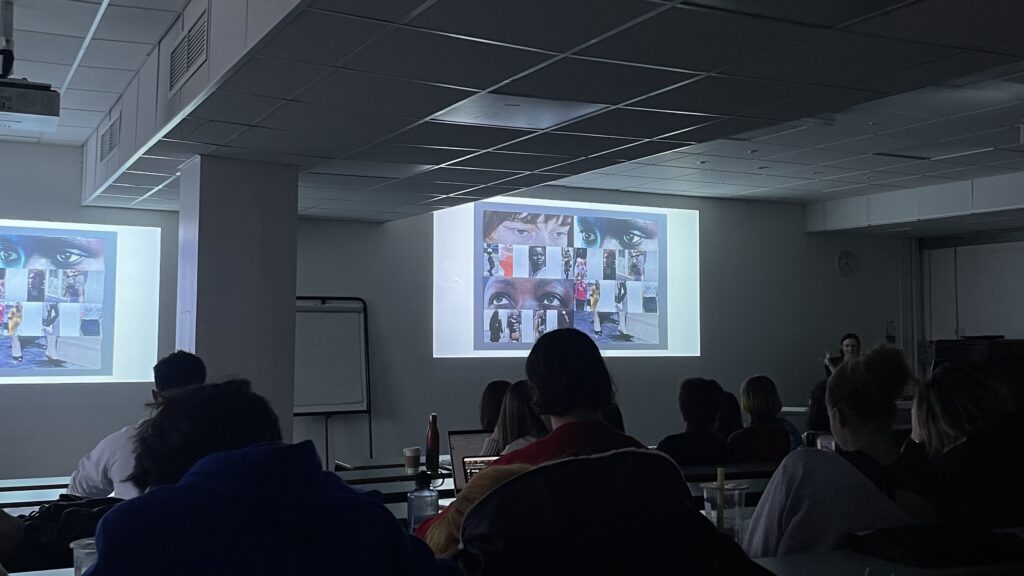
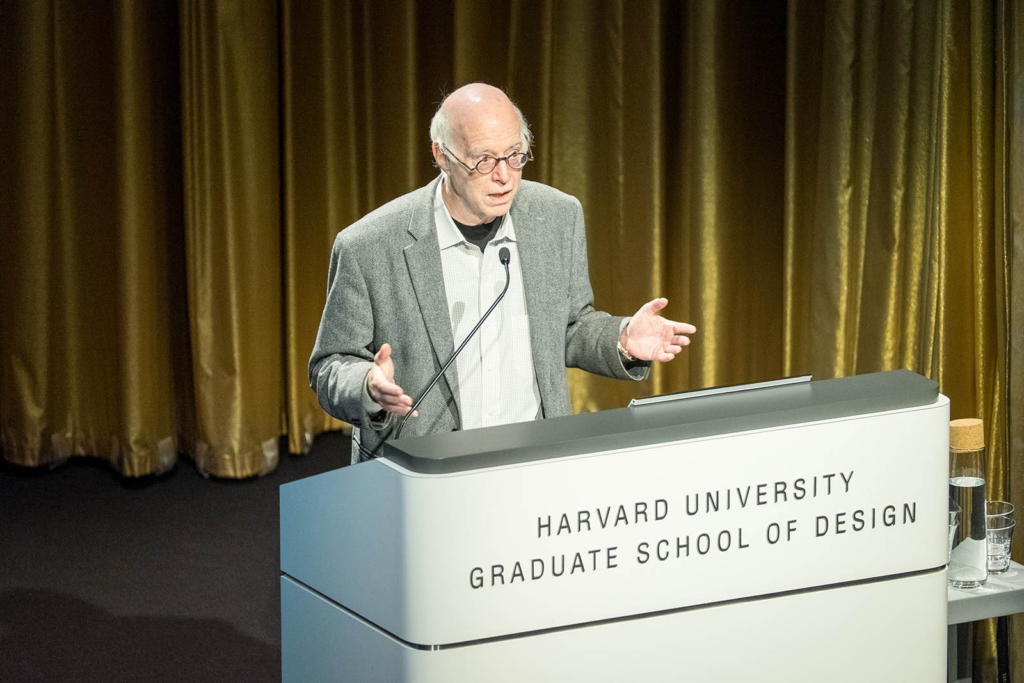
This became clearer to me after attending a talk by Florine Bonaventure, a creative director who has worked across different brands, including Phoebe Philo, a London-based fashion label led by one of the most influential fashion designers of recent years. Before this talk, I had heard of the brand but never really payed attention to it. It made me realise that creative directors do more than just produce visual outcomes. Through their work, they also introduce audiences to new references and brands they might not have encountered otherwise.

In this sense, creative directors don’t just shape how something looks, but how it is perceived and understood. By working with different brands, they become closely connected to them, influencing how people encounter and remember them. They act as mediators between the brand and the audience.

What I found especially interesting was hearing how Florine’s work exists across different disciplines. She mentioned that she teaches in various study programs, including architecture and fashion. This was surprisingly reassuring to hear. Having studied architecture before, I often felt like I had abandoned that path. But hearing that creative direction exists across multiple fields reminded me that creative practice does not have to be limited to one discipline. It made me see creative direction as a space that allows movement between fields. It involves connecting ideas, people and contexts.

Another thing that stayed with me was how creative direction involves making decisions within uncertainty. There is no fixed formula. Each project begins with open possibilities, and the role of the creative director is to navigate these possibilities and give them coherence.

This connects directly to my interest in chaos. Chaos is often understood as something negative and something that needs to be controlled or eliminated. But through this talk, I began to see chaos differently. Chaos can also be understood as potential. It contains multiple directions, and creative direction becomes the process of selecting and shaping one of them. This perspective helps me understand creative direction not as a purely technical skill but as a way of thinking.

Every time I collect references, organise ideas, or connect different influences I am already practicing forms of creative direction. This talk reinforced my interest in exploring creative direction further.

Links:
https://thegentlewoman.co.uk/names/florine-bonaventure

RESEARCH #5 – Arriving at Kingston and Expanding My Perspective

Arriving at Kingston marked an important shift in how I approached my thesis. Before coming here, I saw the thesis primarily as something I needed to complete. It felt distant and intimidating, like something that existed somewhere in the future, but not yet part of my daily reality.

What I noticed early on was how many opportunities there are to encounter new ideas. Inspiration is not limited to lectures or assigned readings. There are constant talks, workshops, and events happening across the university. Just yesterday, for example, the student union invited Florine Bonaventure, a creative director, to give a talk. Listening to people speak about their own practice and process makes the idea of creative direction feel much more real and accessible. It also shows how many different paths and approaches exist. I will reflect more on this talk in my next blog entry, but moments like these make research feel connected to a wider creative community.

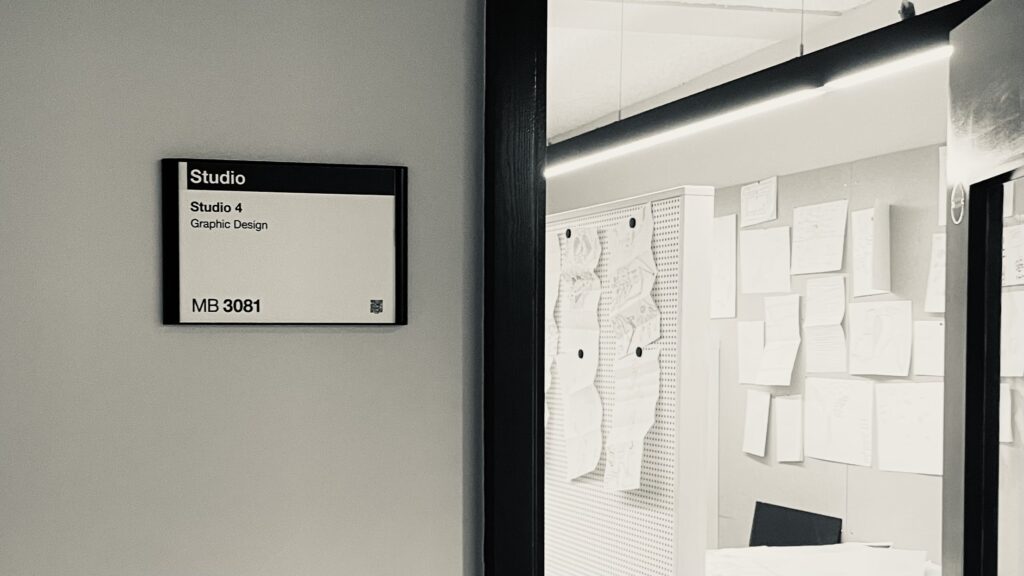
Another thing that stood out to me was the physical structure of the classroom itself. The tables and chairs are not arranged to face the lecturer in a traditional way. Instead, they are organised for group work, allowing students to sit together and face each other. Most of the time, we are encouraged to work in small groups, often using large sheets of paper to share and discuss ideas. These groups change regularly, since no one has a designated seat. This means you are constantly exposed to different perspectives and ways of thinking.

This setup changed how I engaged with my thesis topic. At the beginning, I was hesitant to talk about it. I struggled to explain it clearly, and I was unsure how it would be understood by others. It made sense in my head, but when I tried to express it out loud, it felt vague and incomplete. Because of this, I avoided talking about it in detail.

However, over the past weeks, I found myself in situations where I had to explain my ideas repeatedly. In group discussions, workshops, and informal conversations, people would ask what I was working on. Over time, it became easier. Each time I explained it, something shifted slightly. The act of verbalising my thoughts helped clarify them.

What also made a difference was the feedback I received. Hearing responses from people with different backgrounds and perspectives allowed me to see my ideas from outside my own thinking. Sometimes they made connections I had not considered, or asked questions that helped refine my direction. Through these conversations, my thesis topic slowly became more defined.

RESEARCH #4 – Developing a Personal Research Process

One of the first concrete steps I took in my research process was creating a Figma file to collect references. Instead of using traditional academic tools, I began documenting books, images, and thoughts visually. Whenever I found a book in the library that interested me, I took photos of the front and back cover and placed them into this file.

This method might feel informal and unstructured for some. I mean, it did not follow conventional academic standards, and people might question whether it is the “right” way to approach research. However, I realised that this visual system allowed me to engage with my research in a more intuitive way.

Seeing the books as images, alongside my own notes and reflections, made the research feel more tangible. It allowed me to see relationships between different sources more clearly. Instead of existing as isolated texts, the books became part of a larger visual landscape of ideas.

What surprised me most was how naturally patterns began to emerge. Even when I selected books based on intuition rather than relevance, many of them explored similar themes. Questions about perception, environment, attention, and meaning appeared repeatedly.

Over time, the Figma file became much more than just a collection of books. It started to include everything that influenced my thinking. I wrote down things that were said during lectures at Kingston, notes from the workshop at UAL, and reflections on documentaries I watched, even when they were not directly related to my thesis. I added feedback I received from my lecturers, ideas my friends shared with me in conversations, and even things my dad said that stayed with me afterwards. Sometimes it was just a sentence, a question, or a song title that captured a certain feeling or direction.

This made me realise that research does not only happen in structured academic settings. It happens constantly, through conversations, experiences, and observations. The Figma file became a space where all of these fragments could exist next to each other. It allowed me to take these moments seriously and recognise them as part of the research process. (I love it)

This process helped me understand that research does not have to follow a rigid structure from the beginning. Developing a personal system made the process more accessible and engaging. It also made me more confident in trusting my own way of working. Looking at the file now, I don’t see a finished structure, but a growing archive of my thinking. What initially felt random and unorganised slowly began to form connections.

RESEARCH #3 – On Starting

Closely connected to avoidance was procrastination. Even when I had time to work on my thesis, I often found it difficult to begin. The act of starting felt much harder than the work itself. I would sit down with the intention to work on it, but quickly find myself distracted by smaller tasks or well… MY PHONE.

What I noticed was that the anticipation of working on the thesis created more stress than the actual process of doing it. Once I started reading, collecting references, or writing down thoughts, it didn’t feel as overwhelming as I had imagined. But reaching that point required overcoming a mental barrier.

I think part of this came from the expectations I associated with the thesis. It felt like something that needed to be meaningful and well-developed from the beginning. This created pressure to make the “right” decisions early on. As a result, I hesitated to make any decisions at all.

This made me realise how much procrastination is connected to uncertainty. It is easier to delay something than to confront the possibility of making mistakes or choosing the wrong direction.

What helped me move forward was shifting my perspective. Instead of seeing the thesis as a single large task, I began breaking it down into smaller actions. Taking photos of books, writing short reflections, or organising references became manageable entry points. These actions did not require immediate clarity, but they allowed the process to begin. Clarity does not appear before the process begins, but emerges through the process itself. Understanding this helped me approach my research more realistically. Instead of waiting for the perfect moment, I learned to value small, consistent steps.

RESEARCH #2 – Avoiding the Thesis

For a large part of the semester, I avoided thinking about my thesis. I was busy with other university projects, workshops, and deadlines, and it was easy to focus on tasks that had clear expectations and immediate outcomes. These projects gave me structure. I knew what to do, how to do it, and when it needed to be finished. The thesis, in contrast, felt abstract and undefined. There was no immediate urgency, no fixed form, and no clear starting point.

Because of this, I kept postponing it. I told myself that I would start once I had more time, or once other projects were finished. I convinced myself that I needed the right moment to begin, even though that moment never really arrived.

Looking back, I realise this is a pattern I have experienced before. When something feels important but uncertain, I tend to avoid it. Not because I am not interested, but because the openness of it feels overwhelming. The thesis carried a different kind of weight compared to other projects. It felt more permanent, more personal, and more significant. This made it harder to approach.

At the same time, I now understand that avoidance did not mean the thesis was absent from my thinking. Even when I wasn’t actively working on it, I was still encountering ideas that influenced it. Lectures, conversations, exhibitions, and books all became part of my research indirectly. I just didn’t recognise it as such at the time.

Avoidance created the illusion that I was delaying the process, but in reality, the process was already happening in the background. My interests were forming gradually, even without conscious effort.

Reflecting on this made me realise that research is not a purely linear or controlled process. It includes phases of uncertainty, hesitation and distance. These phases are not necessarily unproductive. They allow ideas to develop more naturally, without forcing premature decisions.

Recognising my avoidance was an important turning point. It made me more aware of the emotional and psychological dimensions of research. The difficulty was not only about finding a topic, but about allowing myself to engage with something that didn’t yet have clear boundaries. Understanding this helped me approach my thesis with more patience.

RESEARCH #1 – Feeling Lost

At the beginning of the semester, I felt completely lost when thinking about my thesis. Not in the sense that I had no interests, but almost the opposite. I had too many ideas, too many directions, and none of them felt stable enough to commit to. Every time I thought I had found something, I would question it again. It felt like everything was possible, which strangely made it harder to begin.

Looking back, I realise that I expected myself to start with clarity. I thought I needed to know exactly what my thesis would be about before allowing myself to explore it. But this expectation made it difficult to move forward. Instead of helping me, it made me feel stuck.

During lectures, workshops, and conversations, I saw how open the process actually is. There is no single correct starting point. Research is not about immediately knowing, but about gradually finding direction through exposure and reflection.

What I understand now is that feeling lost was not a failure of the process, but the beginning of it. It forced me to question my assumptions and stay open. Instead of following a predefined path, I had to start paying attention to what genuinely interested me.

This uncertainty also made me more aware of the themes that kept reappearing in my thinking, such as chaos, attention, atmosphere, and meaning. At the time, these ideas felt random but over time I started seeing relationships between them.

This phase taught me that not knowing is not something to avoid, but something to work with. It creates space for ideas to develop more naturally, without forcing them too early into fixed forms.