Beyond the Lens: The Next Frontier of Augmented Reality in Marketing

Since people are tired of the usual online ads, an essential shift is happening. AR is now used for more than fun effects, as it supports marketing that relies on presence, relevance and people’s connection. The future of AR marketing is focused on changing the way brands interact with the physical world instead of only adding digital elements to it.

Here, I discuss the next important things happening in AR marketing such as ambient AR and campaigns affected by emotions, as well as real-time personalization.

1. Background Marketing: Ambient AR consists of Interactive Elements

Ambient AR refers to information or objects that appear in the physical environment around someone, depending on their location, the time or even the mood they display. With ambient AR, you can receive information or experiences without having to aim your device at anything or use the camera.

Just think that as you walk into a store, your AR glasses will highlight items that mean most to you based on your past and present interests. Perhaps it’s a public sculpture that tells a relevant story from the brand as you walk by. Marr (2019) stated that the next important shift in marketing will be hidden tools that make it more convenient for people without demanding attention.

They believe that these campaigns will be integrated into our lives, helping us rather than causing disruptions.

2. Emotionally Responsive AR: Marketing That Feels

With today’s technology, marketers have more ways to sense when customers are not happy or satisfied and can respond.

Marketing is being transformed by the way AR blends with affective computing which is able to gauge feeling from a person’s face or other signs. When AR is used, brands are able to react instantly to what a user is feeling.

A fashion retailer can use AR mirrors to determine if a customer is upset or happy and react appropriately. If a person seems tense, a skincare brand may guide them through visualisations to help relax. Since the brand responds so quickly, marketing shifts from promotion to sympathy.

Kotler, Kartajaya and Setiawan (2021) state in their book that the upcoming trend in marketing calls for machines and humans to work together. Emotion-aware AR prepares to do just that.

3. AR Spaces That Last: Digital Twins Are Increasing

Businesses are beginning to design AR spaces that mirror actual places and keep updating with the real world. Thanks to Niantic and Snap’s platforms, companies are able to set up multi-user AR areas where clients interact with various things such as products, over a period of time.
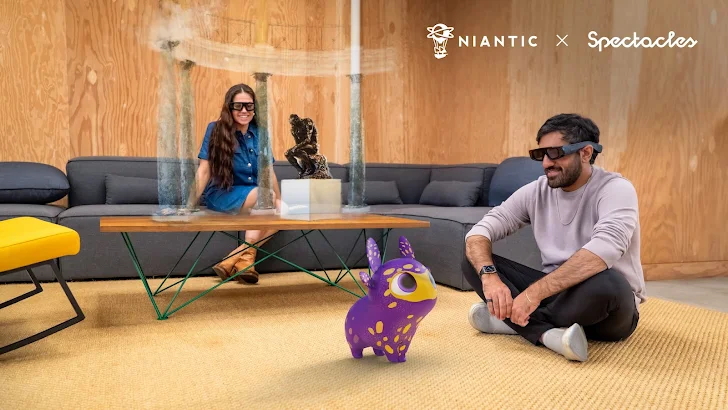
Envisage a sneaker brand where you could use AR to access its virtual flagship store, join drop events, meet others in real time and share your brand avatar. They shouldn’t be mistaken for simple campaigns; they’re meant to last.

Craig mentioned before that with AR, we will experience more lasting environments that matter for a period of time.

4. Hyper-Personalisation Through AI and Spatial Data

AI allows brands to examine AR data to personalise their offerings for every individual. Based on someone’s interactions and tastes, a tourism company could develop an AR walk in real time. A fitness company could advise you on appropriate exercises based on your schedule when you enter a gym. ( which is already can used as an app)

Pires and Stanton (2015) explain that real-time flexibility is crucial in today’s marketing which incremental AR provides with accuracy.

5. Storytelling for the Sustainable Use of the Environment

Many consumers hope that brands can be more transparent and environmentally friendly. AR lets you present eco-information by visualising the process behind a product on its packaging or in stores.

For example, Rothy’s has introduced AR experiences that explain how used plastic bottles are made into shoes. When customers perform a scan, the sustainability statements are immediately visible.

Deloitte highlights that AR creates transparency, turning regular CSR efforts into experiences that engage consumers.

6. WebAR and 5G are helping to get rid of the barriers.

Over the past few years, using AR in marketing was restricted due to the requirement for users to download an app and the lack of enough bandwidth. However, WebAR enables AR to be accessed via web browsers and with the introduction of 5G, these problems are no more.

Nowadays, brands can design interactive campaigns using a link or QR code. Because it takes little effort to log in, the platform will attract more users, encourage them to spend more time there and reach a wider audience. When Starbucks switched to WebAR for their seasonal offers, they reported a 62% increase in the way customers engaged with the campaigns.

In Conclusion: From Something New to Something Essential

The best part about AR in marketing now is its potential, rather than what it is today. Today, AR is more than a clever tool or a trend; it is expected to be the main form of brand communication. There will be a shift in AR marketing from advertising to offering experiences so realistic that people barely notice it.

It is evident that the brands that succeed in being less visible, yet present, will guide the future market.

Reference List (Harvard Style)

Craig, A.B. (2013) Understanding Augmented Reality: Concepts and Applications. Waltham, MA: Morgan Kaufmann.

Deloitte. (2024) Augmented Reality: The new front line of digital marketing. Available at: https://www2.deloitte.com

Kotler, P., Kartajaya, H. and Setiawan, I. (2021) Marketing 5.0: Technology for Humanity. Hoboken, NJ: Wiley.

Marr, B. (2019) Tech Trends in Practice: The 25 Technologies That Are Driving the 4th Industrial Revolution. Hoboken, NJ: Wiley.

Pires, G.D. and Stanton, J. (2015) Interactive and Dynamic Marketing. London: Routledge.

Scholz, J. and Smith, A.N. (2022) Immersive Marketing: How Technology is Shaping the Future of Customer Experience. London: Routledge.

Starbucks. (2024) Seasonal AR campaigns: A case study. Available at: https://stories.starbucks.com


Grammar and formatting support provided by ChatGPT.
#2 The Art of Noticing

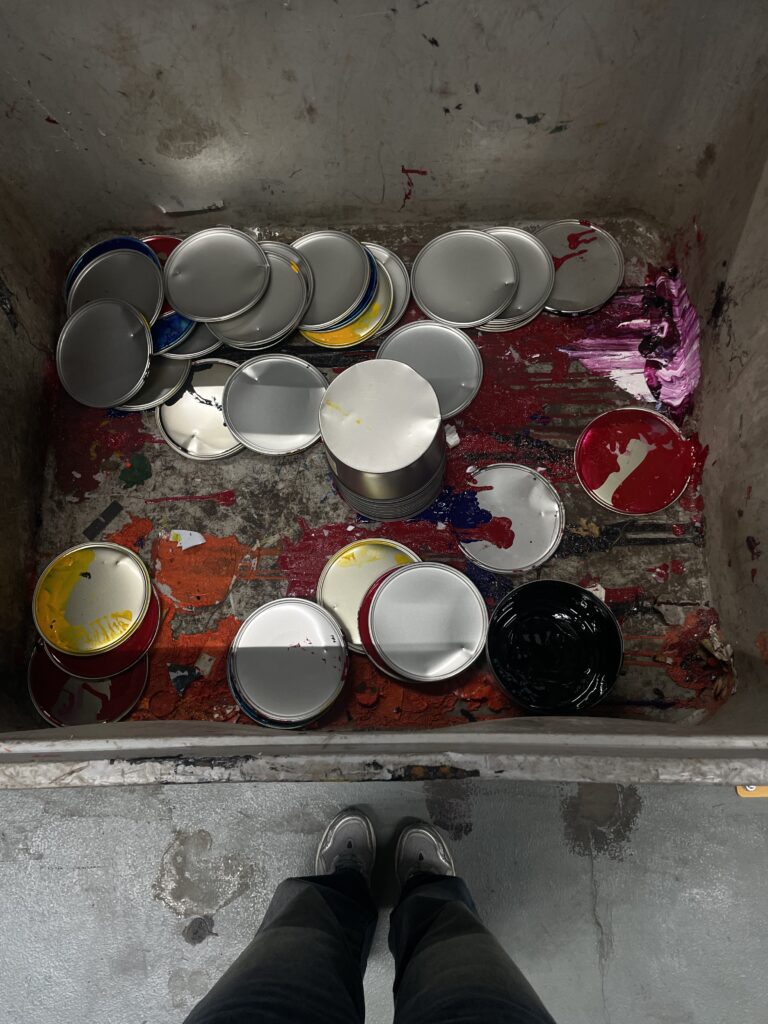
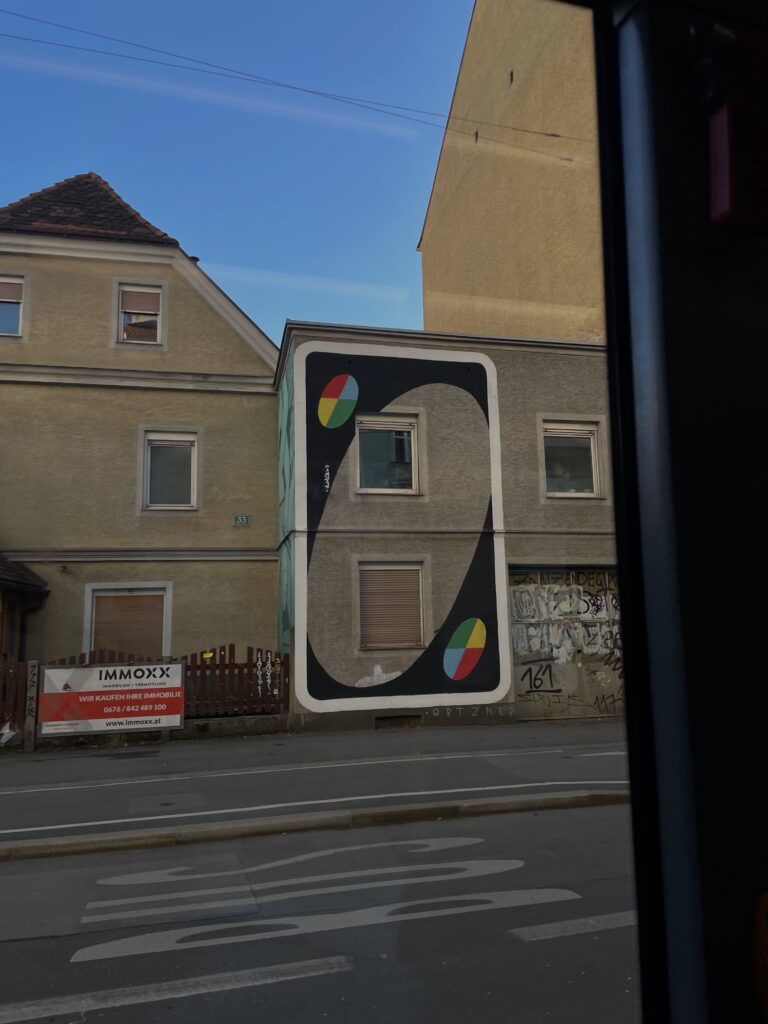
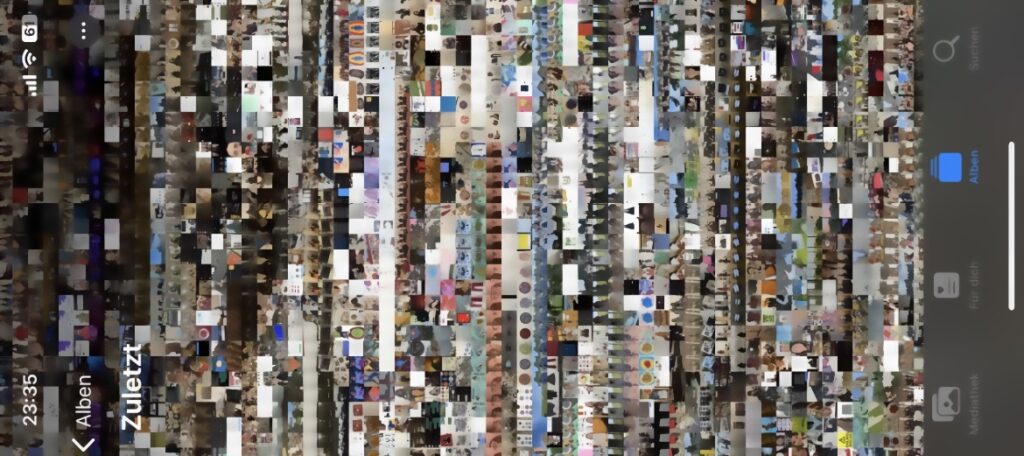
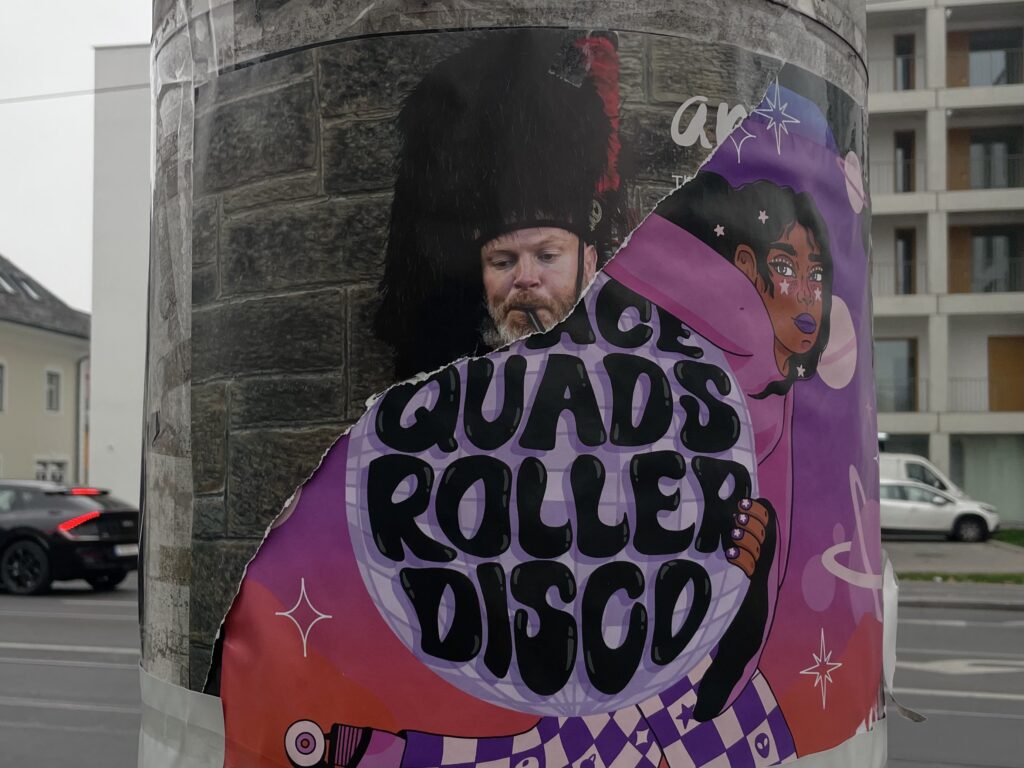
Lately, I’ve realized that I’m always collecting. Not with intention or purpose, but with a quiet pull toward the things no one else seems to care about. My camera roll is full of crumpled posters, broken signs, strange textures on walls or spilled paint. I never really questioned it. I just took the pictures.
But now, as I think about my semester of experimentation, I’m starting to see it as a tool to be more present and maybe even as my own way of creating designs that don’t follow.

We live in a culture of overstimulation, where everything is trying to grab our attention like ads, feeds, headlines, polished portfolios. But there’s a different kind of awareness that lives in the cracks. It’s quieter. Slower. More personal.

This week, I’ve been thinking about how noticing could be a form of resistance. A refusal to only look at what’s designed to be looked at. A refusal to be impressed only by what’s been curated, filtered, finished. Noticing is not about finding beauty. It’s about being present enough to see what’s already there. And that’s something design often forgets. We’re trained to create impact. To control the narrative. To arrange every element with intention. But what happens when we just observe? When we gather fragments, traces, leftovers and let them lead us somewhere? I’ve started going on walks with no destination during covid and it kind of became my version of therapy. Just me, my headphones, and an openness to what I might find.

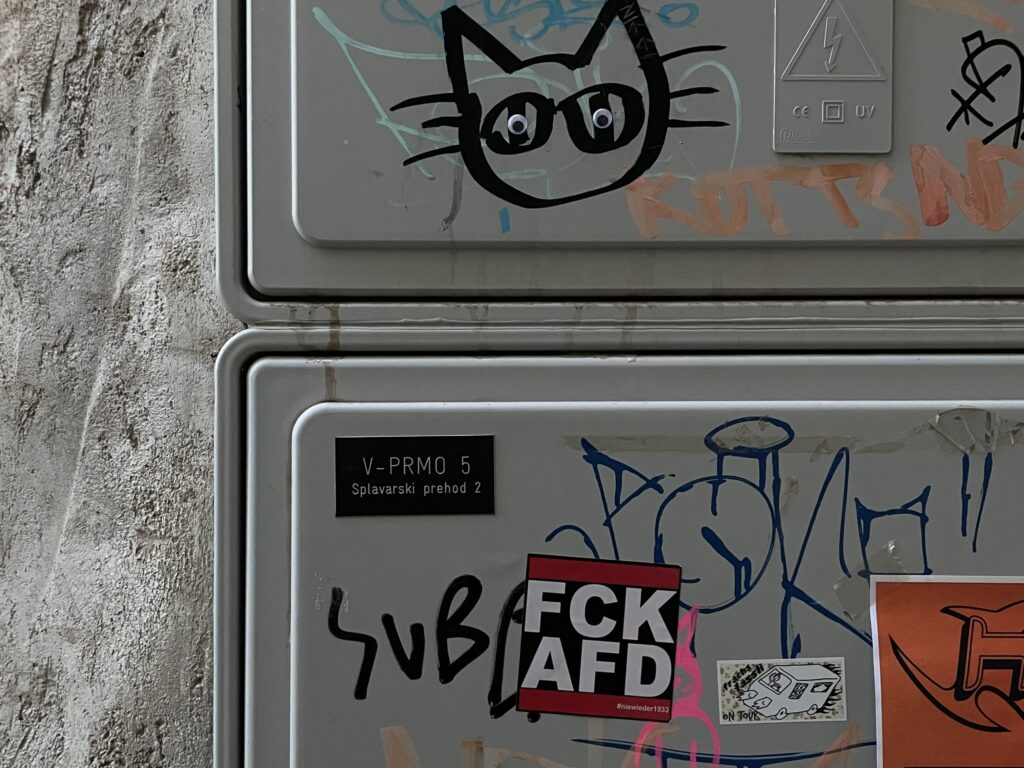
A bent fence, casting a perfect accidental grid on the pavement. A half-painted wall where the tape lines remain like scars. A sticker with only one letter left. Things no one made, but that somehow say something. I’m thinking of this as a kind of visual journal. Not even a moodboard or inspiration source yet. Just proof that the world is already designing without us.

These images might become the texture of a future poster. Or a layout experiment. Or maybe nothing at all. But the act of noticing itself feels valuable. It’s a practice in being present. It’s also a way to challenge the perfectionism I keep wrestling with. Because when I notice things that are broken or unfinished or random and still feel drawn to them, it reminds me that I don’t always have to fix or perfect everything I create.

This project might be about randomness but at the moment, it’s really about paying attention.
Noticing things that don’t scream for it. Stuff that exists on the edges. Messy details. Accidents. Layered posters. Things that feel like they have a story even if I don’t know what it is yet.

I like that I’m not trying to make anything final right now. There’s no pressure to solve anything. I’m just observing. Letting things unfold a bit. Saving images, making notes, trying to figure out what all this could turn into.

Personalized Shopping with AR: 

 AR and Personalized Fashion Recommendations

For me shopping online always been easier than in shops. But unfortunately even now for me classical methods of shopping more often involve the use of general size definitions and style groups that may not in the best possible way for the specific needs of each customer. This is where AR comes in, because it allows brands to provide the customers with fashion suggestions that are more relevant by taking into consideration the customer’s body type, favorite articles of clothing, and even previous orders. AR technology allows customers to use their cameras or in-store screens to see how the clothes will look like on them in the near real time.

Zeekit’ app

Zeekit’ app (purchased by Walmart) suggests body metrics. With these technologies combined with the use of machine developing,learning algorithms, brands can now suggest styles that would fit the customers’ body shape much more effectively, making this a very personalized experience for the customer . Besides, AR can also identify colors ( pattern to match ) , the time of the year, and other preferences of the customers to give recommendations that are not limited to resizing, but also to the style and the current trends on the market.

Moreover, all these large accounts for(encoded) data such as social media habits and personal shopping histories can be checked and analyzed to provide the best styling. Customers, therefore, did not have a simple choice between what was so wishes on a rack or a website but got to choose from what is decided on the basis of customers’ individual characteristics. Such a level of customization is capable of minimizing returns and level of dissatisfaction among customers, and at the same time promoting customer loyalty and brand uptake.

Custom-Tailored Virtual Outfits: The Role of AI and AR

Among all the features that AR and AI bring to the fashion industry, the most striking one is the personalized virtual clothing try-on for customers. AI can know their individual style preferences from different sites (outlet, yoox and more) or what they have been searching for in the past and what they like sharing on social media. Together with AR this technology creates perfect experience for fashion consumers.

For example, Amazon and H&M contain AR options in the applications of smart phones through which customers can design clothes and virtually try them on. Exclusively, artificial intelligence algorithms operate in the background, making the appropriate recommendation based on a customer’s past selections ,which is already now new technique with regard to clothing. With these data points, AI brings not only fashion relevance, but much more skin to skin experience (Hoffman and Zhao, 2022, p.56).

AR increases the overall diversity within fashion domain as well as the reach of the industry. Specific types of clothing can be suggested to any consumer based on their shape, size, or physical possibilities. So AI algorithms consider each individual’s body shape in order to give them suggestions that they feel alright about themselves. This strengthens the talk of how technology is closing all the gaps in the fashion world, making shopping on individuality a reality across the world.

 The Future of Hyper Personalized Shopping Experience 

AR hop and AI technologies are not standing still, and so the next stage of personalized shopping may not be far away.

AI can anticipate suitable clothing based on the weather forecast for the week, important events that might be scheduled for the week or even changes in the social media trends.

AI weather fashion combines data from several weather APPs, behavioral analytics, and intelligent recommendation offer real-time clothing suggestions. When these systems detect a cold front in your area, for example, they can highlight cozy knits, boots, or scarves in your app or feed. 

Glance can be as your adviser from now one. Glance use contextual knowledge with the help of artificial intelligence (AI) to provide customized outfit suggestions based on location, preferences, and the current weather.

Furthermore, as more appealing wearable AR devices get introduced to the market, the rationale of the digital and physical world’s shopping differences evaporates. Augmented reality on wearables such as glasses may act as a tool whereby the customers are able to engage with the items of clothing in a different way. These customers could ‘place’ entire wardrobes with accessories in a store while observing the assortment, or they could ‘purchasing from their living rooms, and at once look and feel the garments (Johnson, 2024). Consumers’ physical and digital experiences, known as ‘Phygital’, are held to reinvent the consumer-brand touchpoints.

Hyper-Personalization is also going to hit sustainability by the end of shopping. Thus, AI and AR help with the more precise clothing recommendations, and this approach decreases returns, which cause waste. Virtual showrooms also eliminate the extra requirements of clothes in stock, making the production line cater to the consumers’ market better (Evans, 2023).

Conclusion

The combination of AI and AR in fashion is here. This means that despite body type, style and trends, people can be given recommendations on what season’s fashionable for them and where to find it as it has become possible for fashion and tech to amalgamate thus changing the retail landscape.

References

https://corporate.walmart.com/news/2022/03/02/walmart-launches-zeekit-virtual-fitting-room-technology

Evans, L., 2023. Sustainable Fashion and Technology: The Role of AR and AI in Reducing Waste. Fashion Technology Review, 14(2), pp.30-41.

Hoffman, J. and Zhao, Y., 2022. Virtual Try-Ons: How AI and AR are Revolutionizing the Shopping Experience. Retail Science Quarterly, 9(4), pp.67-82.

Huang, W. and Liao, Z., 2023. Personalized Fashion with AR: Body Types and Style Preferences in the Digital Age. International Journal of Fashion Studies, 7(3), pp.112-126.

Johnson, M., 2024. The Phygital Future: How Wearable AR Will Transform Shopping. Retail Tech Today, 15(1), pp.54-63.

https://glance.com/us/blogs/glanceai/ai-shopping/ai-weather-fashion-shopping

#1 Designed to Break

There’s something about the broken that feels alive.
This week, I kept noticing the city peeling. A sticker half-removed. Posters fighting for space on a crumbling wall. A screen glitching in the tram. I started to wonder: what if this is the real visual language of now? Not the polished but the layered, interrupted, half-finished?

I’ve been thinking about how design disciplines often work against chaos. We clean things up. We retouch. We organize. But the world doesn’t follow those rules. Meaning emerges in noise, identity reveals itself through mess.

So this semester, I want to work with mess. I want to make space for things to go wrong and I want to create systems that welcome interruption, layering, and decay. Maybe that means printing something over and over until it becomes unreadable or maybe it means designing posters meant to be torn or overwritten. I don’t have a roadmap yet. But I know I’m tired of things that try to be perfect. Let’s see what happens when design begins to fall apart.

I’m interested in what randomness reveals and what emerges when we step back. How does it look like when systems slip, or when time and weather and humans intervene. I’m thinking about how urban spaces speak through their textures, graffiti half-washed away, signs layered on signs, windows reflecting windows. These are not mistakes. They are living surfaces. I’m thinking about how software glitches and compression artifacts create their own strange beauty. Not despite their errors but because of them. I’m even thinking about my own process. How often do I delete something before it has the chance to surprise me?

As someone who struggles with perfectionism in my design work, maybe the most important thing I can do is let go of control and see what happens. I’m so used to polishing every detail, aligning every element, making sure everything feels intentional. But what if the most honest, exciting parts of our work happen after we stop trying to perfect it? What if allowing for mess, interruption, or even failure opens the door to something more human and more meaningful? This semester, I want to challenge my instinct to over-edit and instead trust the process, even when it feels uncomfortable.

I’ve always been drawn to the unnoticed, the random, the imperfect. I take more photos of peeling paint, crooked signs, or strange coincidences on the street than I do of sunsets or famous landmarks. This semester, I want to lean into that instinct. I want to start collecting randomness, not just as inspiration, but as material. Scrolling through my camera roll, it’s clear I’ve been unconsciously collecting randomness for years, fleeting textures, strange compositions, unnoticed corners of daily life and now, those quiet observations are becoming the raw material for a more intentional design experiment.

The goal is to create a zine or digital page that reads and feels like a visual protest against overdesigned perfection. A messy, layered, expressive response to a world that often values control over authenticity. I’m interested in what happens when I break design rules on purpose, in typography, layout, composition, and print and how that affects the way we read, feel, and interpret visual information. I also want to experiment with AI-generated randomness and compare it to my own analog or spontaneous processes. While AI can mimic randomness, it lacks the intuitive, emotional, and visual judgment that humans bring to chaos. I want to test that gap.

This isn’t a fully fixed concept it’s more of a manifesto in the making. Something I will build through experimentation, reflection, and collecting overlooked moments of randomness in the world around me.

LS EX #2 Generating Ideas

Subtle protest through everyday space

Like I already started to describe in my first blogpost, I’ve started to think more deeply and curious about the concept of space; whether it is physical, visual or social. In many ways, space is not neutral. Who gets to take up space, who is expected to shrink and be small, who is heard, and who goes unnoticed is often shaped by power structures such as gender.

Feminist theorists like Iris Marion Young have written about how women are socialized to “keep their bodies small,” like sitting with crossed legs or just avoiding taking up too much room in daily life. In her essay “Throwing Like a Girl” (1980), she discusses how even the most everyday gestures reveal how we internalize social expectations about gender. While men are encouraged to expand, to stretch, to claim their environment, women (or more precisely, those who are read as female in public) are taught the opposite: to shrink, to protect, to avoid confrontation – and to obey.

This tension between visibility and invisibility, between expansion and restriction, forms the basis for my idea generation and concept. I want to explore moments of subtle protest: Reversing these everyday dynamics that happen not through big slogans or raised fists, but through posture, looks and presence.

Here are some ideas I have thought of for possible (animated) poster scenes:

  • Manspreading on public transport
    → A woman confidently spreading out while others adapt around her // I have used this example in my blogpost before and I think it is a concept that is known too many at this point. It describes the way how men often sit or stand while taking up too much/ stealing public space from other people in their surroundings, often people perceived as female (Bertrand, 2018).
  • On the street, women are the ones who step aside
    → A Woman keeps walking straight while a man has to move // This imbalance of public norms of society where a man does not need to bother, has been known for quite a while as it was already discussed by Iris Marion Young in 1990 where she implies that Women are often physically and socially positioned in such a way that taking up space or asserting physical presence is discouraged.
  • In restaurants or meetings, people only speak to the men
    → Waiters or colleagues only address the woman, ignoring the men // This is related to the Hepeated concept where men get credit for the work women has done which has happened and shaped history since the beginning of time (Serrano, 2022). For my poster I want to show the subtle signs in daily life where people tend to rather speak with or look at the men than the women.
  • Men throw their arms over others’ chairs without hesitation
    → A woman doing the same, owning the shared space // This idea has the same origin than the manspreading idea in public transport, just with the arms.
  • Public spitting or peeing seen as normal for men
    → A woman unapologetically peeing in a public space // Men can pee anywhere and it is socially accepted (Even though many people do not like to see it, it is still okay and not called out when someone does). This is another example of how society controls women by them always having to rely on public restrooms in public spaces (Feminist Fightback, 2020).
  • Women covering up with a sweater to avoid being looked at
    → Man wearing a crop-top without discomfort or sexualization.
  • Men standing with hands on hips ; confident stance
    → Women using strong postures unapologetically.
  • Men taking central space at sports events, yelling and performing
    → A group of women in full control of the moment, loud and unapologetic // This is a reflection of how patriarchal norms encourage male visibility, entitlement, and expressive freedom in public spaces, while discouraging similar behaviors in those read as female (Rail, 2025).
  • Men sunbathing shirtless in parks
    → A topless woman reading a book casually // This regards to the – for years – ongoing discussion about top nudity and how men can be topless in public and women’s breasts get sexualized and are not allowed to be shown (Equipe Madagascar, 2020).
  • Mansplaining / Being stared at
    → A woman overexplaining to a man, or staring at him without blinking // This is another situation that focuses on the silencing of women, with specific attention to the concept that some men seemingly believe that no matter what a woman says, a man always knows better (Solnit, 2025).
  • Being groped in public / catcalled
    → a woman catcalling a group of men, flipping the power.

Next Steps

For now, this is an idea pool I can draw from for the upcoming poster. I plan to choose 4/5 scenes to start with, especially ones that feel both relatable and visually strong. My goal is not to “reverse the roles” just for the sake of it or to encourage women to be egoistic in public spaces but to reveal how strange it suddenly looks when someone perceived as female takes up space without apology (and how strange it is that it even feels strange??) and to show that space (like almost all other things) should be equally distributed.

Maybe existing loudly in a space can be a protest too.

Sources

Bertrand, D. (2018). The rapid rise of online feminism: A symptom of the surfacing of a fourth wave? Réseaux, 208209(2), 232–257. https://shs.cairn.info/journal-reseaux-2018-2-page-232?lang=en

Equipe Madagascar. (2020, December 16). Free the Nipple, a highly controversial feminist movement. Sisters Republic DE. https://sistersrepublic.eu/en/blogs/der-blog-der-sisters/free-the-nipple-eine-hochst-umstrittene-feministische-bewegung

Feminist Fightback. (2020, June). The Political Urgency of the Public Toilet | Feminist Fightback. Feminist Fightback | Anti-Capitalist Feminist Collective. https://www.feministfightback.org.uk/the-political-urgency-of-the-public-toilet/

Rail, G. (2025). Sport and Postmodern Times. Google Books. https://books.google.at/books?hl=de&lr=&id=7KI1a6Z3ouYC&oi=fnd&pg=PA301&dq=men+and+sport+events+problematic&ots=dGpZWCX__A&sig=thPKMS5g5T1Hbt1bbeQE97GexHM#v=onepage&q=men%20and%20sport%20events%20problematic&f=false

Serrano, B. (2022, May 28). Hepeating: When a man takes credit for what a woman already said. EL PAÍS English. https://english.elpais.com/society/2022-05-28/hepeating-when-a-man-takes-credit-for-what-a-woman-already-said.html

Wikipedia Contributors. (2025, April 11). Men Explain Things to Me. Wikipedia; Wikimedia Foundation.

Young, I. M. (1980). Throwing like a girl: A phenomenology of feminine body comportment motility and spatiality. Human Studies, 3(2), 137–156. https://www.jstor.org/stable/20008753

Young, I. M. (1990). The People, Place, and Space Reader. Google Books. https://books.google.at/books?hl=de&lr=&id=b9WWAwAAQBAJ&oi=fnd&pg=PA247&dq=Urban+spatial+dominance+(Iris+Marion+Young).&ots=KX_xBJptA7&sig=xHrMLb6NDsm3h250ek5BjFyeOFQ#v=onepage&q&f=false

Speed Dating: Prototyping

This post will be a quick recap of the speed dating session at the start of the semester. The goal was to create prototypes for a possible master’s thesis topic. In class we divided into two groups and talk about each others prototypes in a small amount of time. Due to my decision on swapping majors after the first semester, this task was a challenge for me. I had no clue what to do actually and just tried to connect my previous knowledge with the goal of this task. My love for typography always played a big role in my work and I tried to develop a playground to interact with letters and their movement.

The first concept was to have some kind of object that will is suppused to be thrown against a wall. It should invite people to let out their emotions. Imagine it like a rage room but the collision of the object and the wall is interactive. Depending on the speed of the object, the wall displays a collection of words as type.

The second prototype was a more relaxing way to interact with typography. Based on movement and impact on pressure plates, the wall shows different letters being formed by the people. My idea was to show their behavious in form of typography. Letters are always expression a kind of personality. In this case I want the people to connect with letters and get to know the power of expression through typography.

Class Feedback

It was interesting to see that noone acutally understood what I actually wanted to express. This also lead to a feedback saying the second concept could be offensive to some extent. As I mentioned in the first paragraph, it was hard to create something understandable as a lofi prototype, so I understood the reactions and i tried to reflect how I could make it more understandable. So I knew I had to get more experience to learn more about prototyping and interaction.

Prototyping a Data Visualisation Installation

In this second part of the IDW25 recap I want to talk about the prototype I created of my CO2 project. The goal for me was to build an installation to interact with the data visualisation. For this I chose makey makey and built a control mechanism with aluminium foil and a pressure plate. To send the data from processing to the projector I used Arena Resolume. My concept was based on the CO2 footprint. So you activated the animation with steping on the pressure plate. Here are first sketches of my idea.

I thought about making an interactive map where you step on different countries and realease fog in a glas container. But that was too much to create in one week so I reduced the concept to projecting the boundary I showed in my last blog post. I kept it simple and connected the makey makey to aluminum foil to control the time line with a finger tap. The processing output is being projected on the wall.

Conclusion

It was interesting to get to know the possibilities of the used technology to visualise data and therefore I had a lot of fun during production. I will definitly keep working on this project to see where it can go. Also expand the data set to compare more countries. In the first part of the blog post I mentioned that there are probably better programs to make more visually appealing animations for such a topic. But for a rough protoype this was completly fine.

Data Visulisation with Processing

The International Design Week 2025 is over and this first part of the blog will be a recap of my process. I joined the workshop #6—Beyond Data Visualisation with Eva-Maria Heinrich. The goal was to present a self chosen data set on a socio-political topic. I chose a data set on the Co2 emission worldwide per country (https://ourworldindata.org/co2-emissions). The process started with evaluating the data span I want to show and the method of visualisation. Because the task of the workshop was to present data in an abstract way and to step back from the conventional methods, to make the experience more memorable.

Cutting the Data with Python

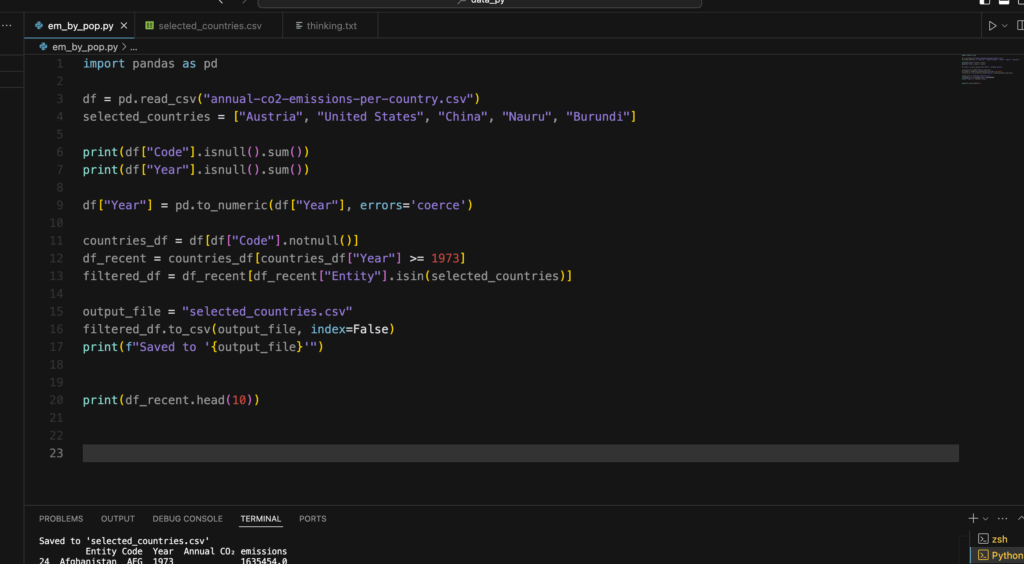
So to get a specific range of data to make a prototype i used python to cut the csv file to my liking. I used the pandas tool for python to manipulate the file. At first I wanted to compare three countries, but later in the process I realized that this goal was a bit too much for the given time, since I haven’t used python like this before. It was a nice way to get to know the first steps of data analysis with coding.

I created a new csv file with a selected country, in this case it was Austria in a time span from 1900—2023. Now it was time to visualise it.

Let’s get creative!

In my research on how CO2 was being visualised before I looked up some videos of NASA showing how the emission covers the world. I got inspired by this video.

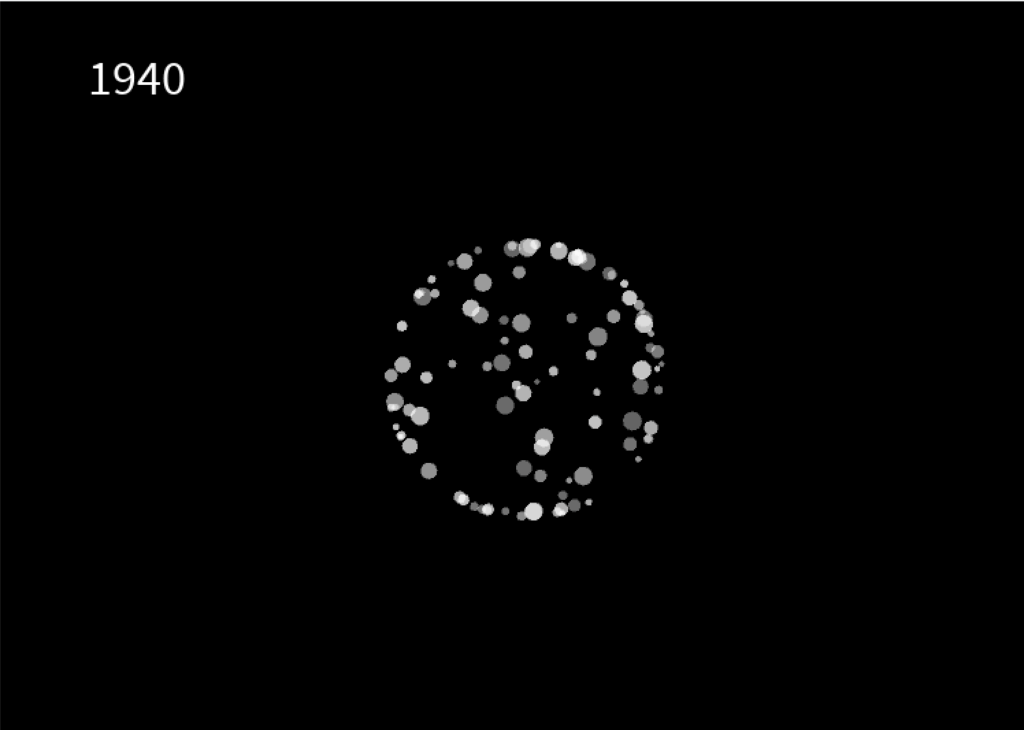
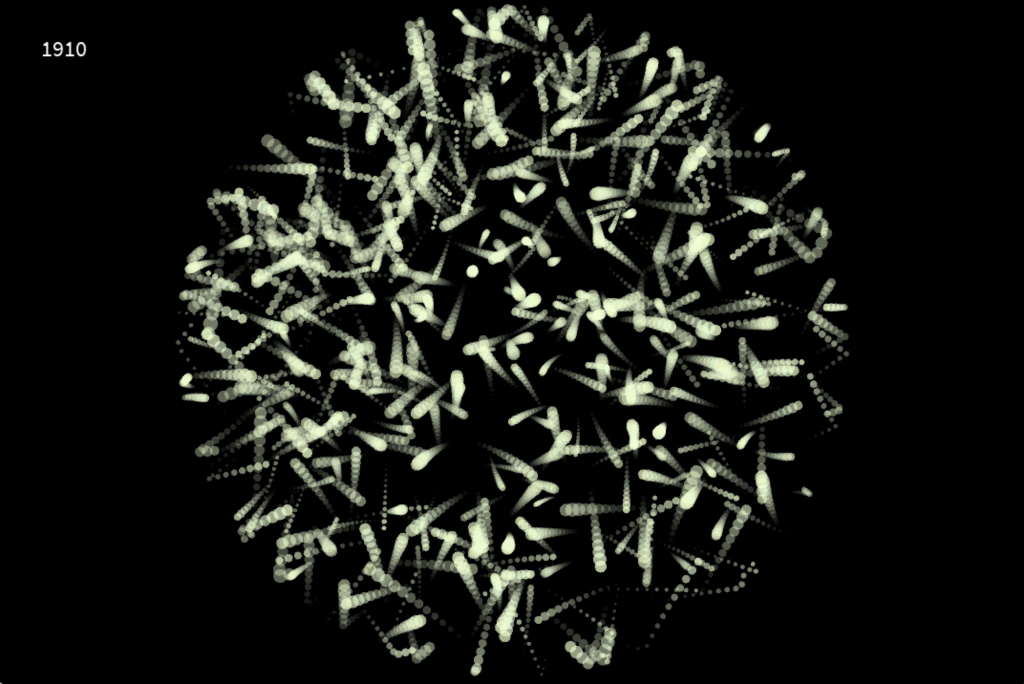
I chose processing to create my own interpretation of visualising emission. In hindsight, there are probably better tools to do that, but it was interesting to work with processing and code some visuals relative to a data set. I created a radial boundary which is invisible. Inside this shape, i let a particle system flow around which is relative to the CO2 emission in the specific year, shown in the top left corner. This visualisation works like a timeline. You can use your LEFT and RIGHT arrow keys to go back and forth in 10 years steps. The boundary expands or be reduced, which depends if the emission of that year is higher or less. The particle system also draws more or less circles, depending on the amount of CO2.

After the workshop was done I tried out other methods to make the particle system flow more and create a feeling of gas and air.

Conclusion

The whole week was a nice experience. I got to try out new techniques and tools and create something i never done have before. A problem I encountered was the time. It’s hard to estimate what you can do, if you try out something completly new. The presentation day at the end was really inspiring and emotional to see what the all the other students have created and talking about their process and results.

Setting up our own recording and mixing environment for a 3D audio rock album

My individual project deals with the creation of a 3D audio concept album in the genre of rock – on the topics of addiction and dependency. Logically, we are also confronted with the problem of high production costs. In order to be able to realize the project to the extent planned, it was therefore important to create a recording and mixing environment ourselves – to reduce costs and at the same time improve the quality of the project.
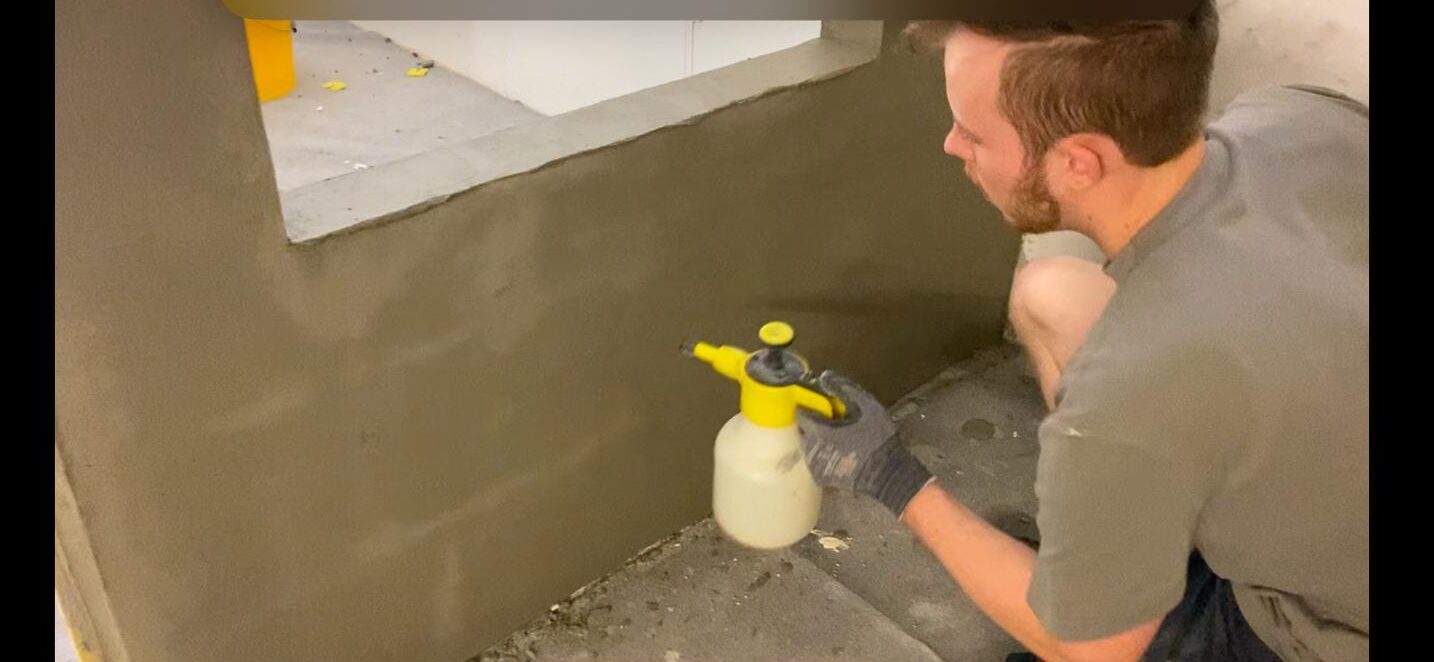
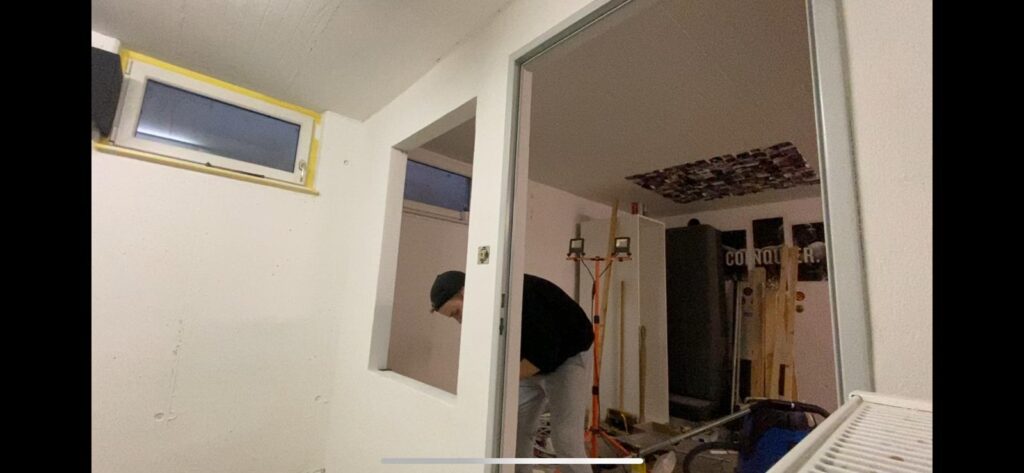
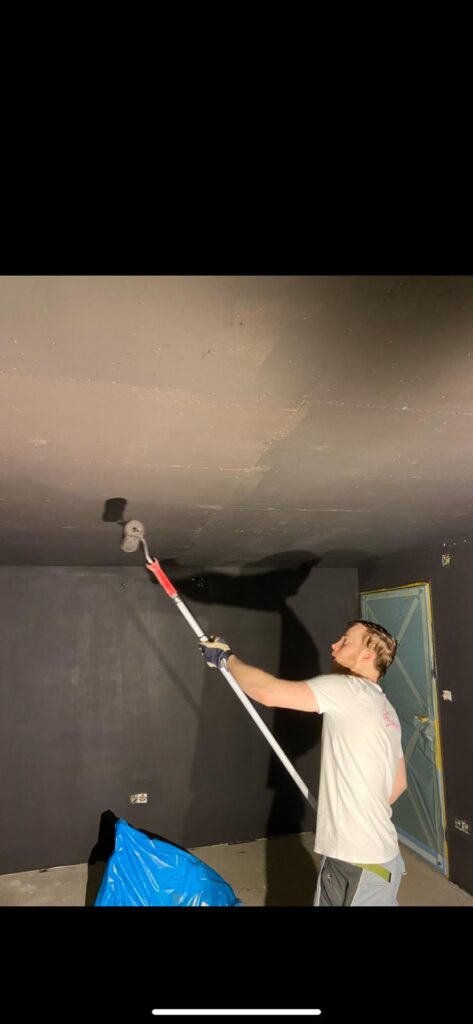
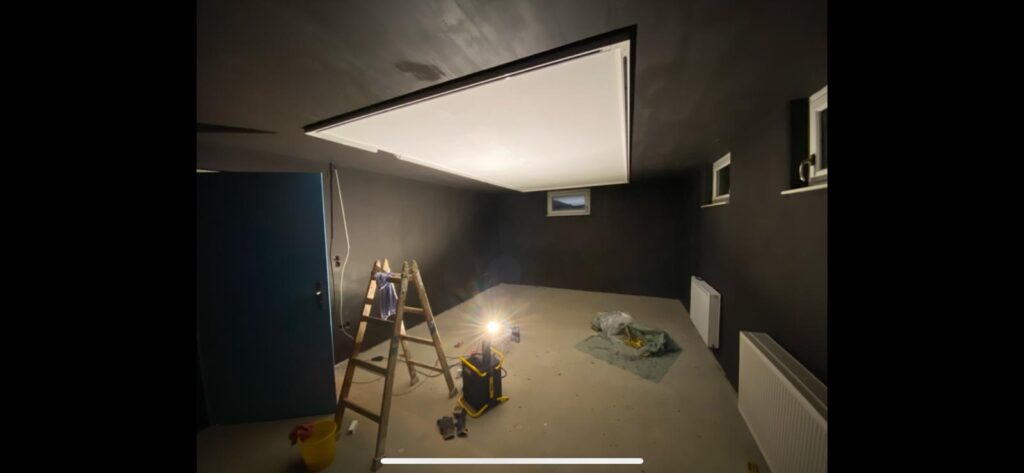
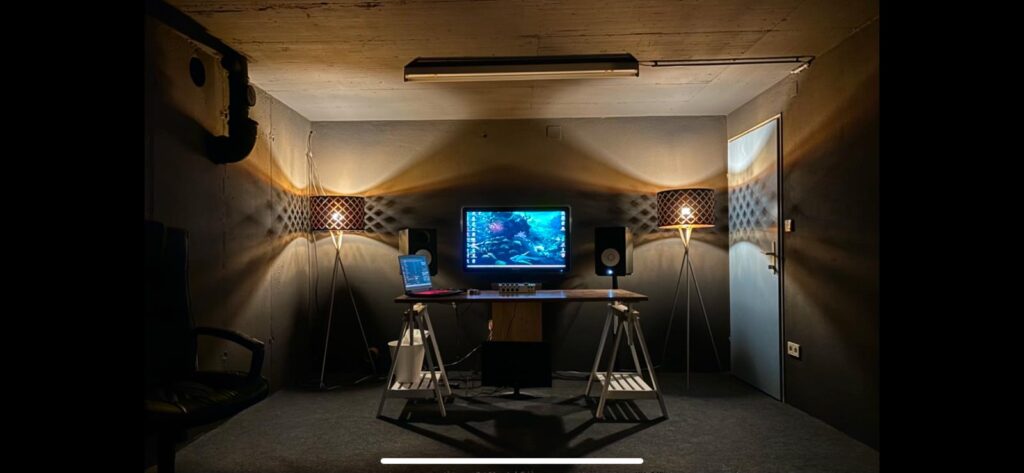
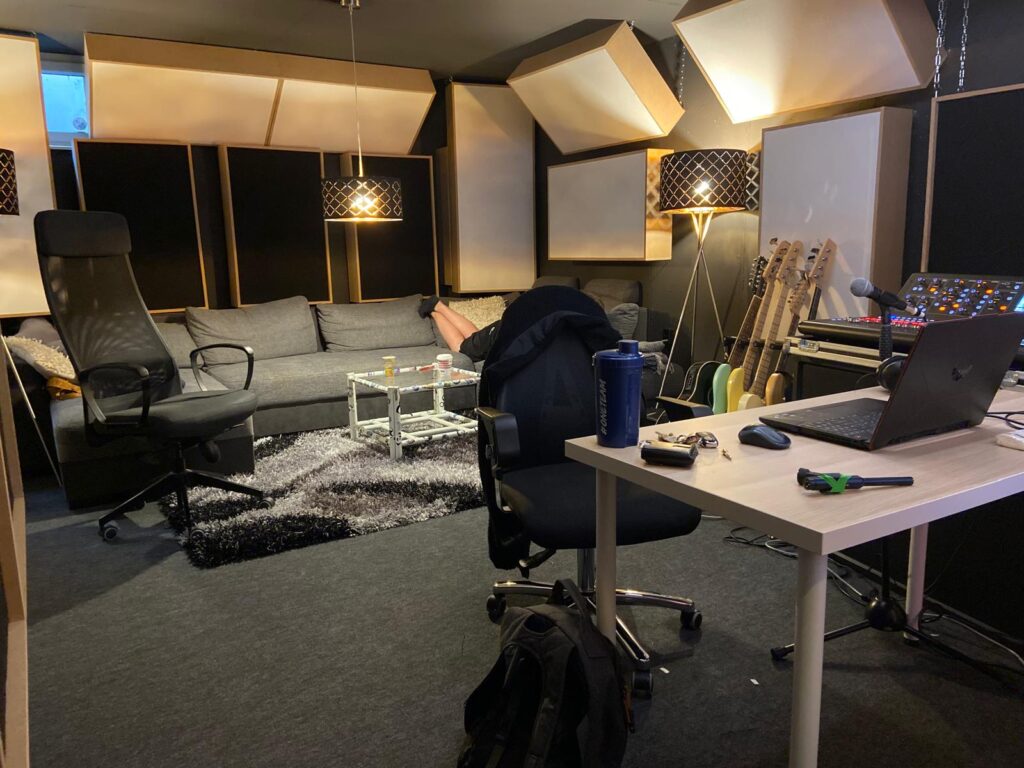
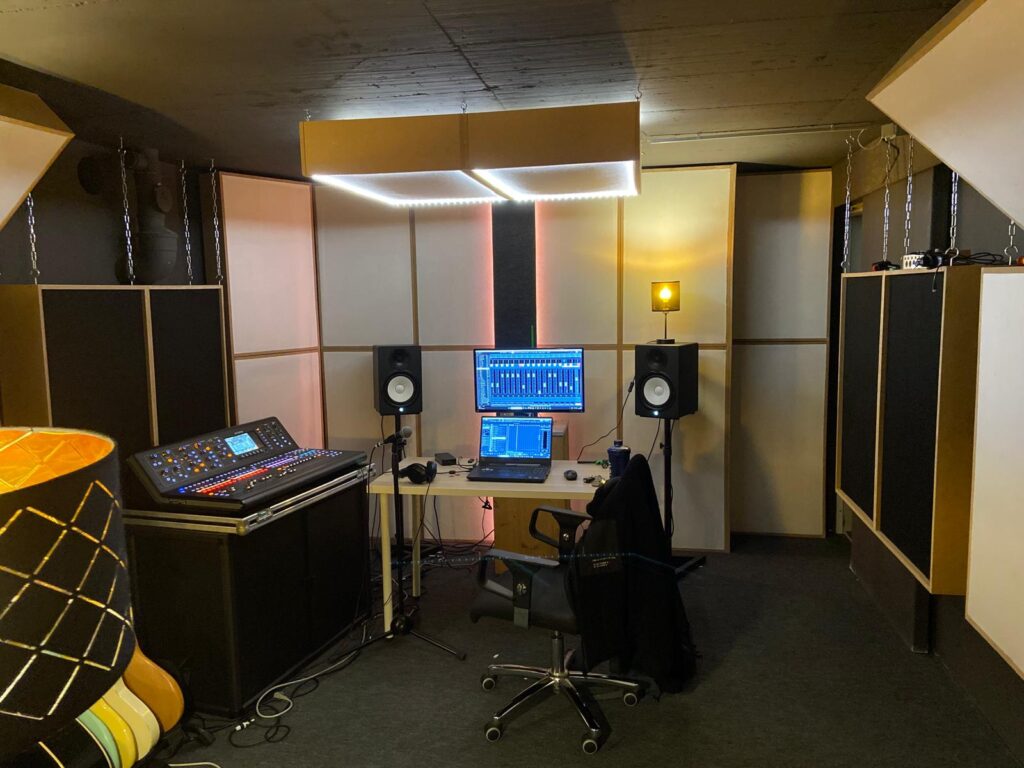
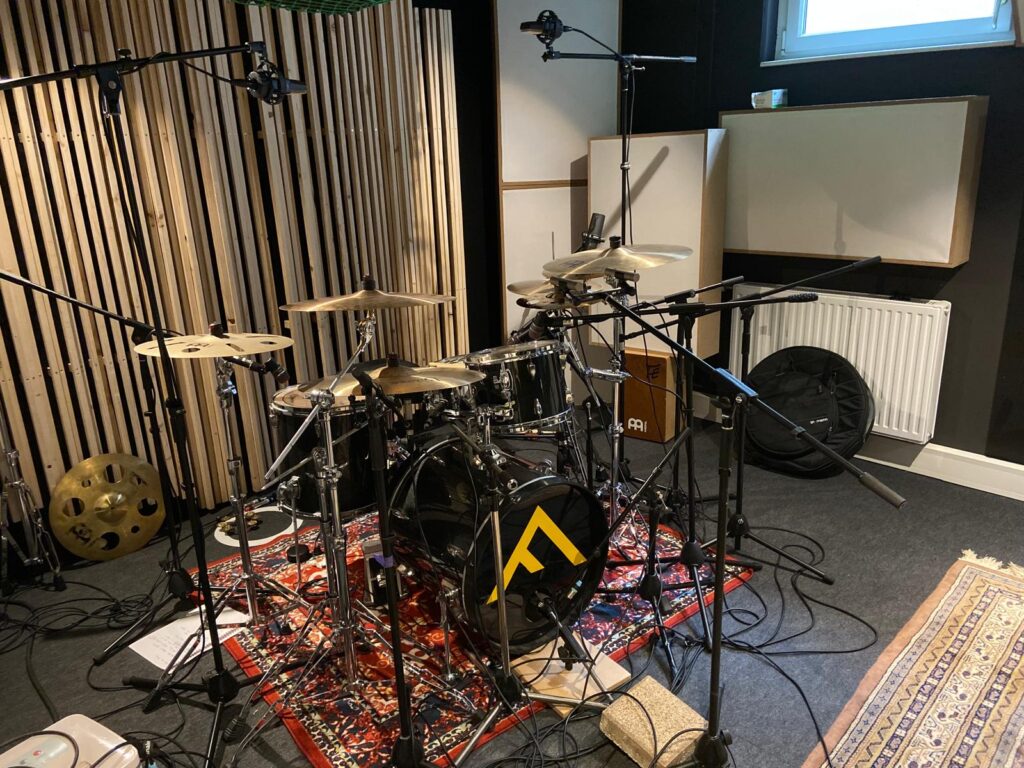
Since the beginning of 2024, we have been able to take over the former warehouse premises of our drummer’s parents (they run a floristry business). Here we have just under 80 m² at our disposal, which we have converted into a small office, a rehearsal/recording room and a mixing room on our own initiative. We took care of the building work (putting up walls, pouring screed, electricity, etc.) in the course of 2024. We and our trainee were already able to use the office together with our intern during the planning of our festival Bock auf Rock in summer 2024 – however, the control and rehearsal room could only be used to a limited extent due to the lack of room acoustics optimization.


In February 2025, the time had finally come: a suitable recording and mixing environment had to be created for the start of the project.
Our drummer is studying civil engineering, so we had the necessary knowledge to implement this project ourselves. The aim was to build a recording and control room with the best possible acoustics (in terms of room dimensions and budget). We wanted to create a very good stereo monitoring situation in the control room. It was important for us to have the opportunity to pre-produce as much as possible, as time in the 3D audio-compatible studios at the IEM is limited.
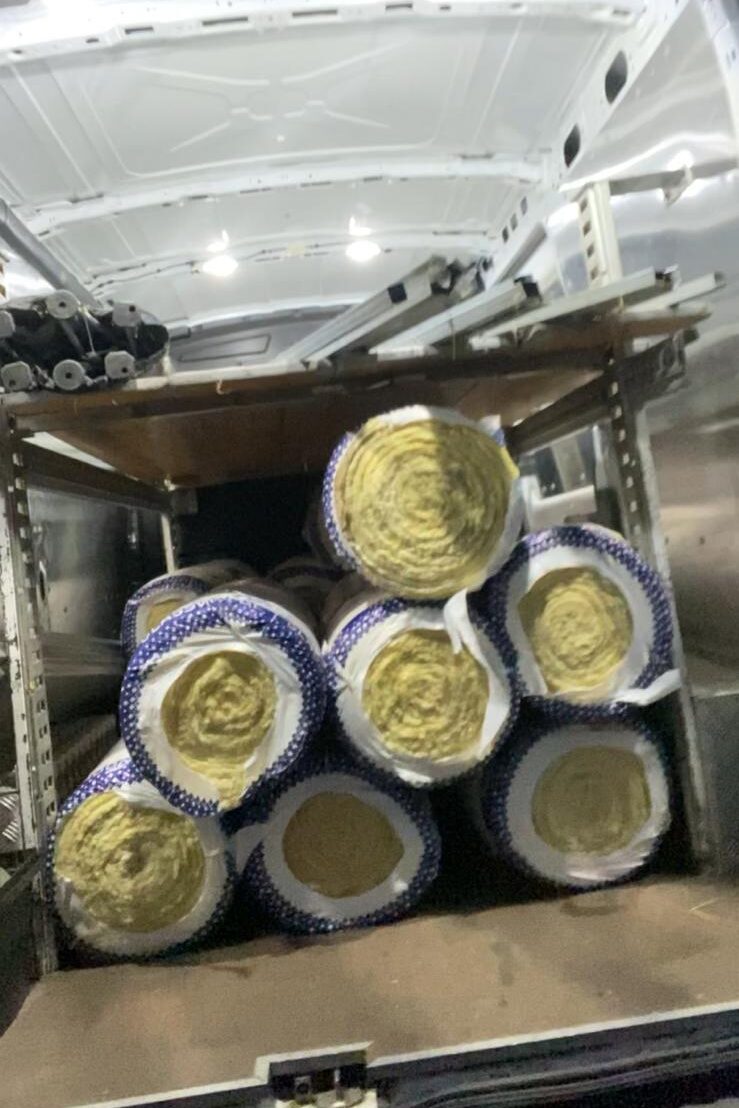
We finally started our construction project in mid-February. We had already organized insulation wool and other building materials via Willhaben over the last few months. In total, we used around 15 m³ of insulation wool (mostly Ursa DF39 Dual).

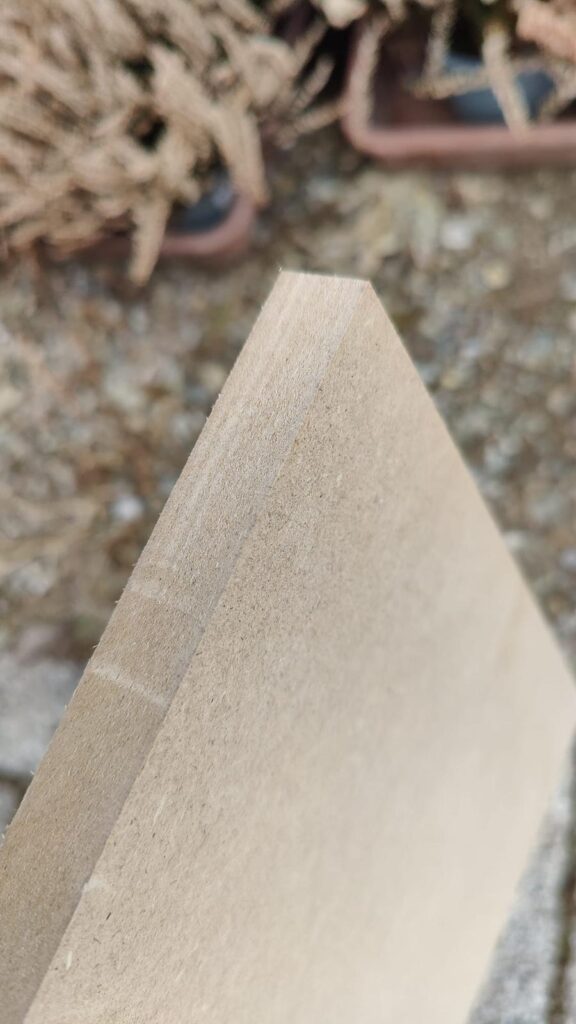
We spent a long time researching what was the cheapest option for the frames of the absorbers and what will fit for our purpose (Will it crack when you screw it together? How will the cut look like? … ). We tested a lot of different wood types.

In the end, we opted for MDF plates – these are much cheaper than solid wood and still offer the necessary stability. We had the plates (3 m x 2.10 m x 1.6 mm = in total we bought about 45m²) which we bought through a local carpeter.
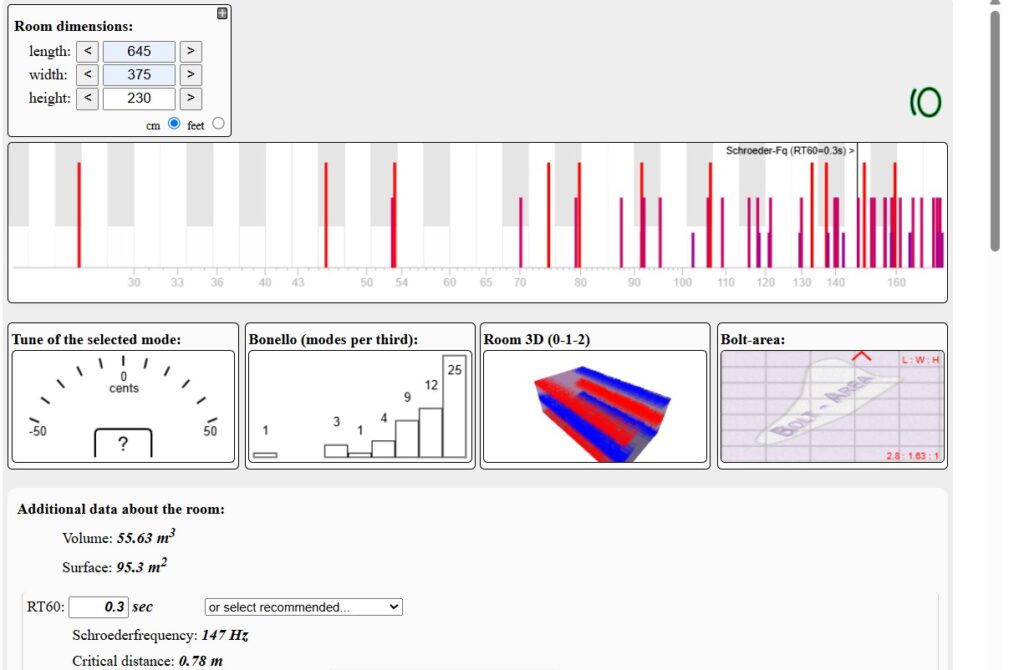
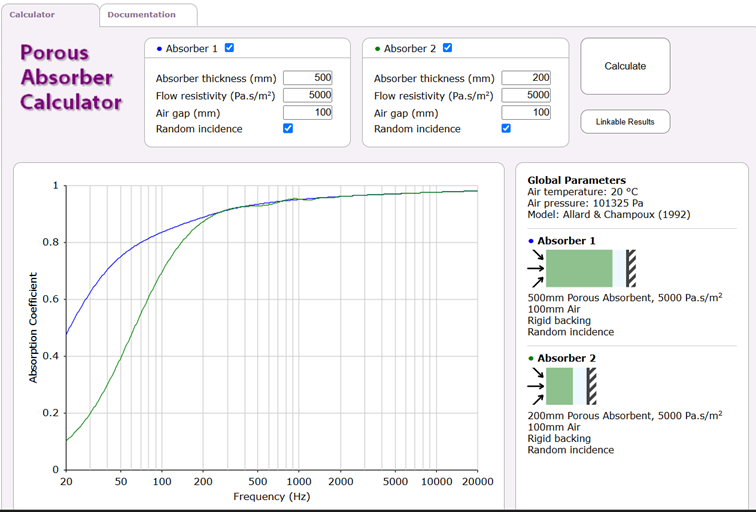
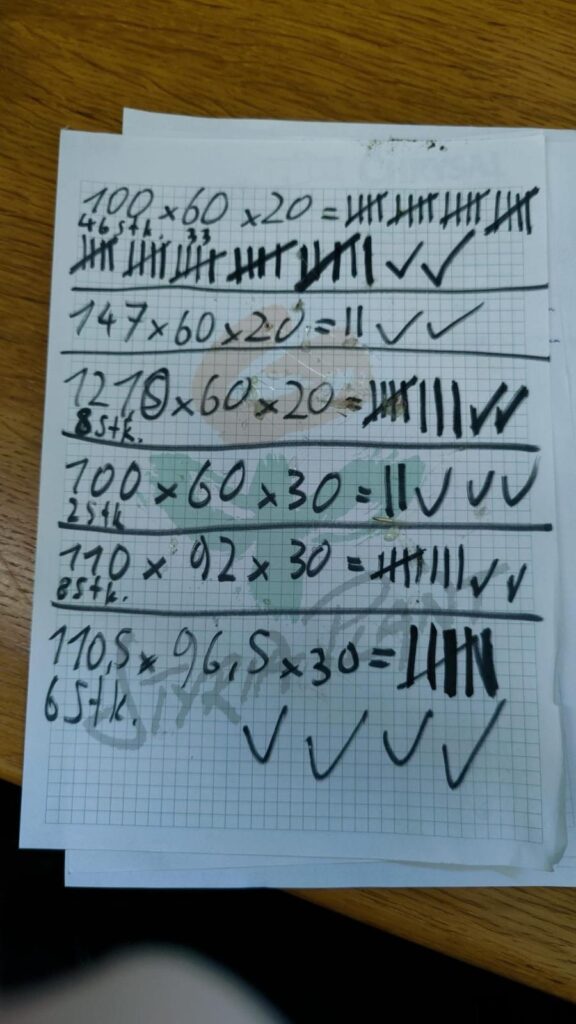
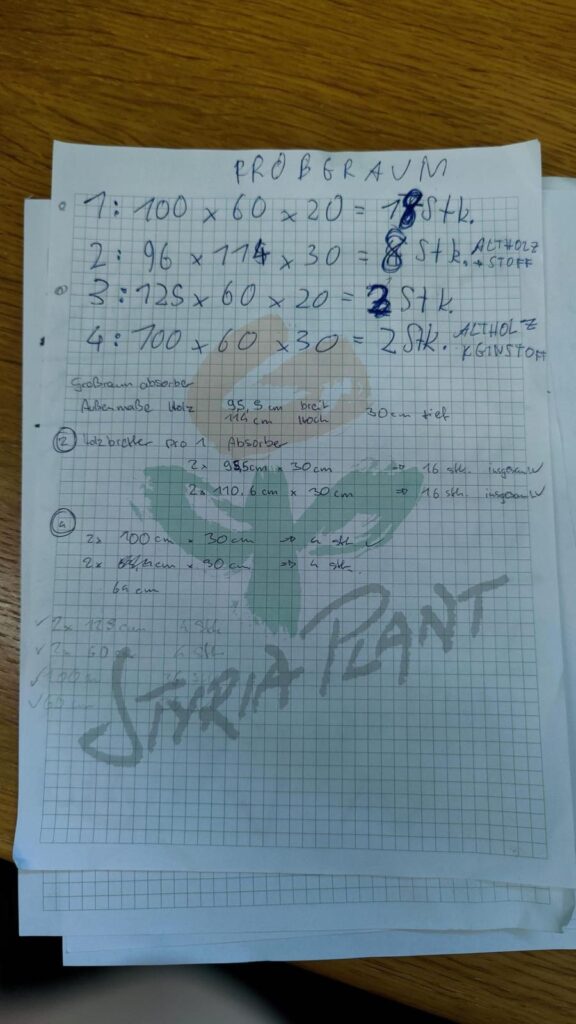
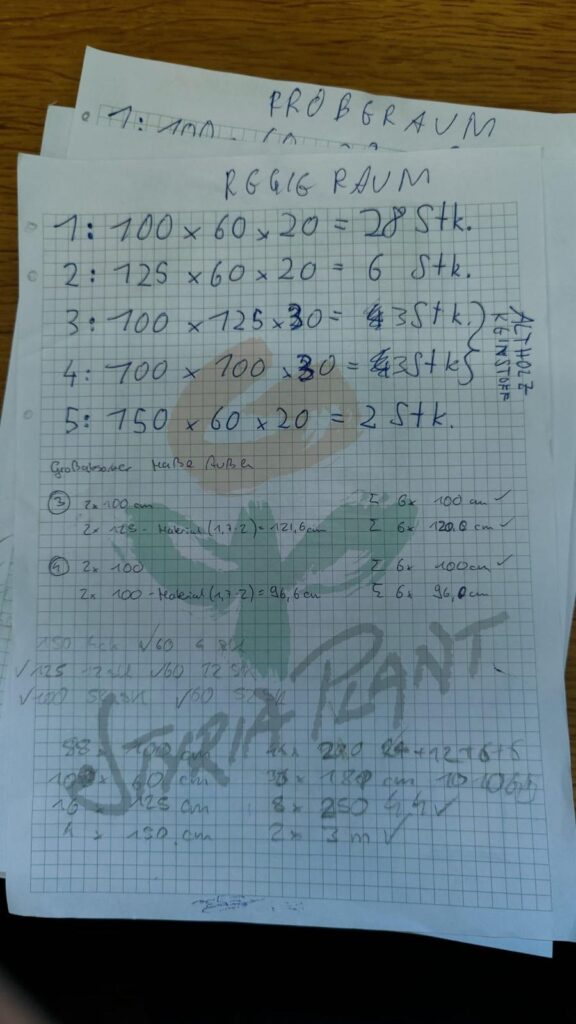
Before we started the installation, we planned as precisely as possible where and how many absorbers should be placed and how many we would need in total. We mainly worked with the Trikustik room mode calculator and the Porous Absorber Calculator.

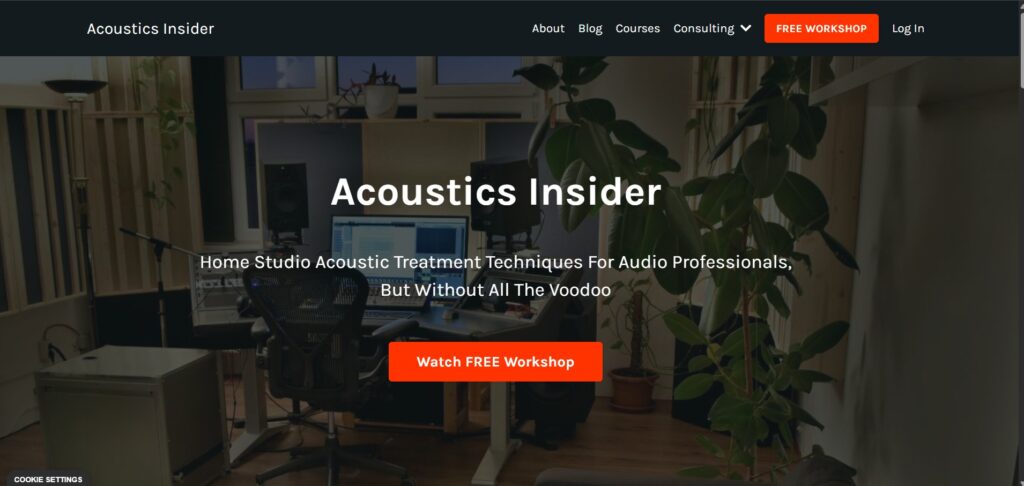
We built the absorbers according to the course-plan of a Berlin acoustician called Jesco (Acoustic Insider). He offers an online course for the professional expansion of home studios:
Jesco is the founder of Acoustics Insider, where he teaches practical acoustic treatment techniques for audio professionals—without the voodoo. With over 12 years of experience mixing records and treating studios in Berlin, he knows exactly how to turn almost any room into a reliable creative space. His approach has helped him reduce his average mix time to just 4 hours and earn a platinum record for mixing Ofenbach’s “Be Mine.”


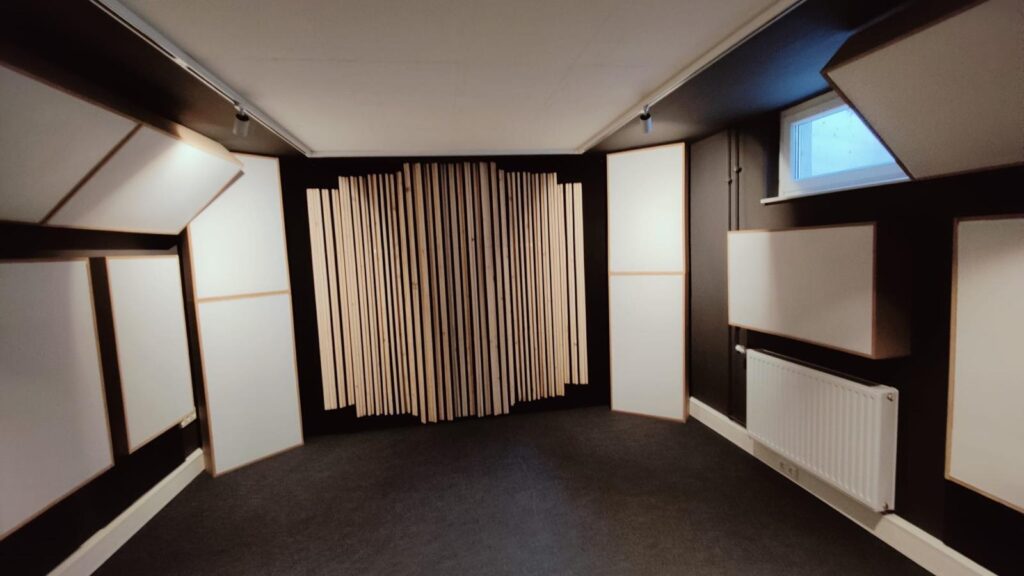
His program was the perfect basis for us, because it’s all about achieving the best possible result with the available resources – that’s the reality of small bands, young audio engineers and students. It really helped us in terms of the placement of speakers, building bass traps & absorbers and where to place them. And as you can see from the results – it worked great!
Now it got serious: the construction of the !70 absorbers! could begin. In total, we built two different “absorber categories”, which we divided into further models:

  1. large room absorbers (110 cm x 110 cm x 30 cm) – not visible (e.g. behind other absorbers or diffusers). We need them to catch the low frequencies (we have 50cm material & 10cm air behind it on the front wall – in the corners we have about 70cm).
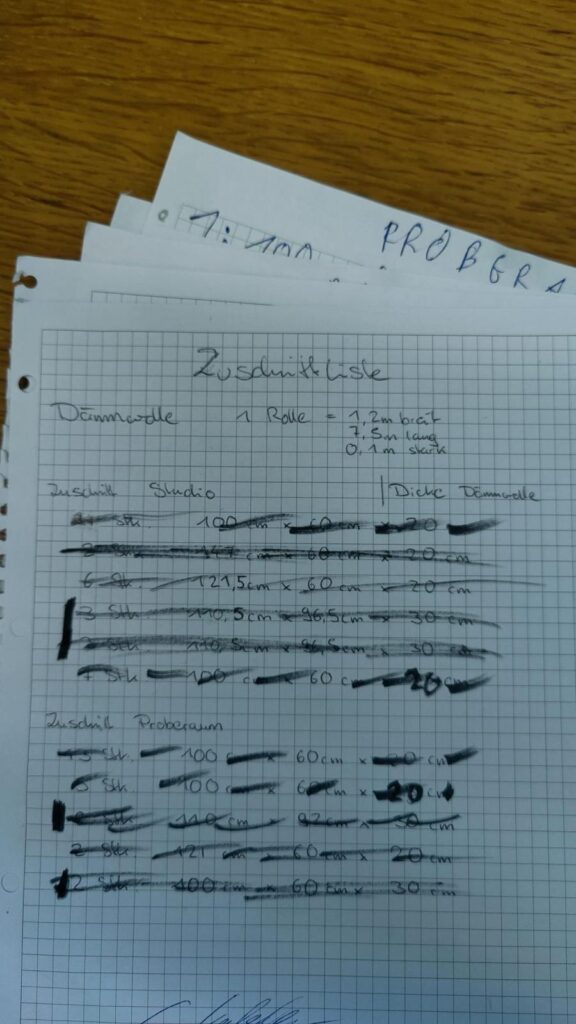
  1. normal absorbers (standard size: 100 cm x 62.5 cm x 20 cm). There were special dimensions in special places to control the absorption more specifically (150 cm x 62.5 cm x 20 cm; 100 cm x 62.5 cm x 30 cm; 125 cm x 62.5 cm x 20 cm). Diffusion slats are also screwed onto 7 of the normal absorbers (covered with black fabric) – we will do it this summer when we have time to do that.

Everything was planned, the wooden panels ordered – we were ready to go. Of course, not everything went according to plan, and things got off to a difficult start:

The MDF boards were incredibly heavy and flexible – transporting the huge boards (approx. 6 m²) was a real HORROR (I really hurt me knee while transporting them…).


Once we had picked up the boards, we started cutting them to size. Unfortunately, the weather was anything but helpful: it was snowing and we spent most of the three days cutting the panels outside in 3 degree temperatures.

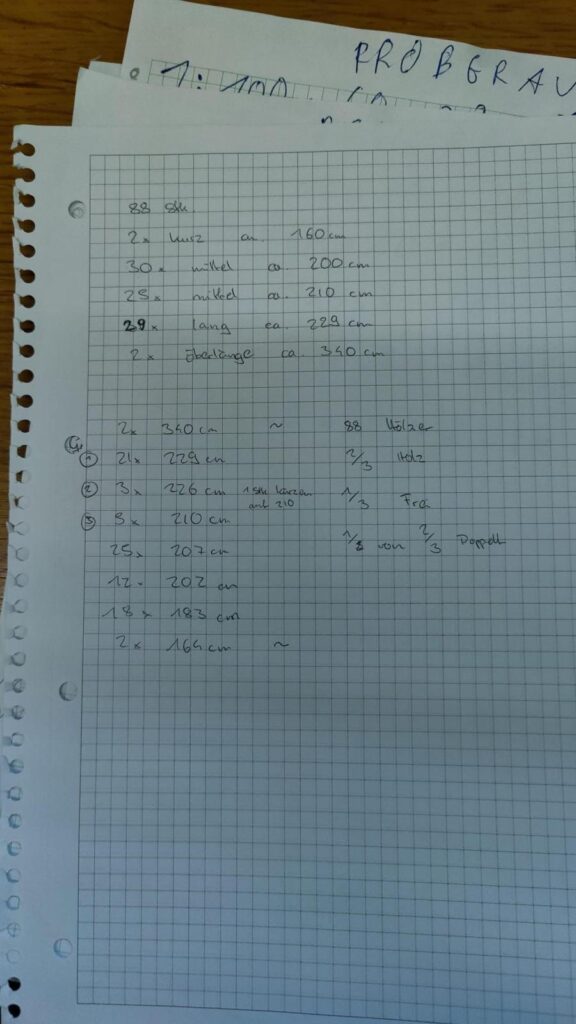
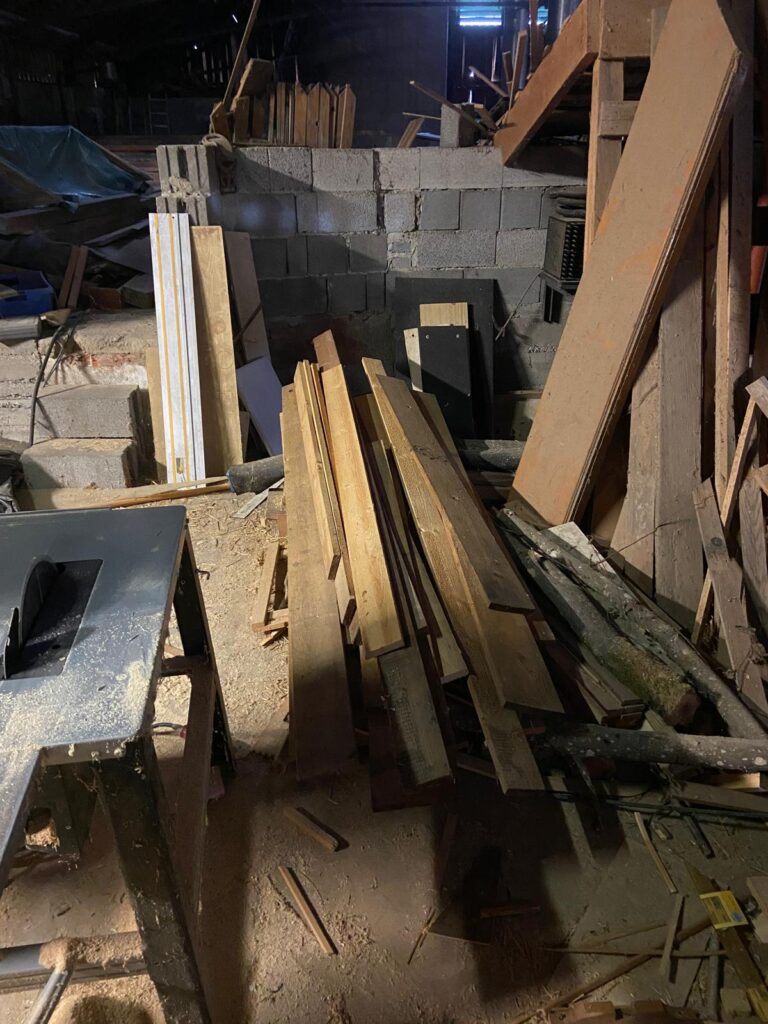
In addition to the MDF boards, we also used waste wood (hopefully without woodworm…) that we were allowed to collect from a good friend’s farm. We used this waste wood to build the inner frames of the absorbers and the large absorbers (1 m x 1 m x 30 cm – 14 pieces), which were not visible later anyway.


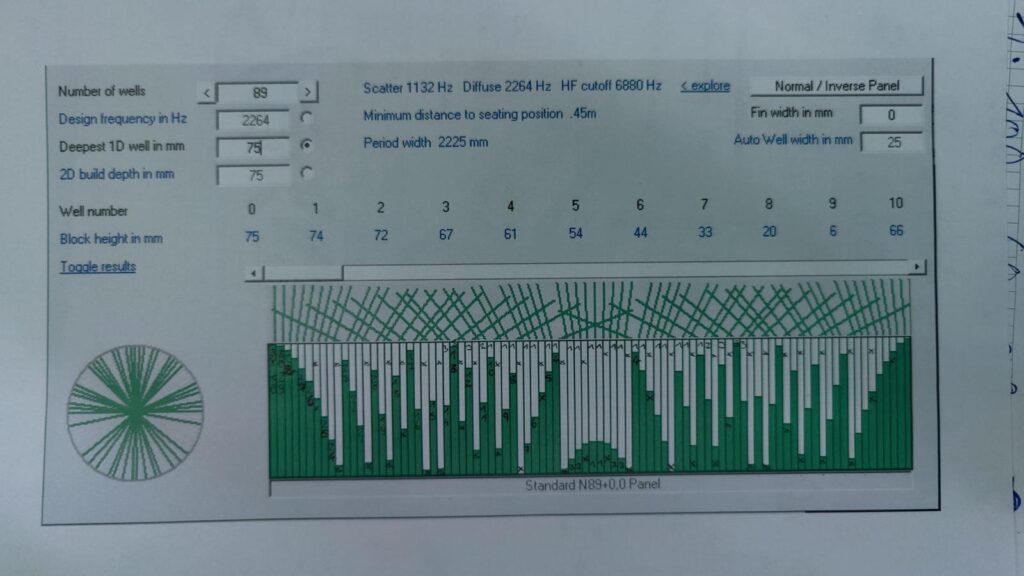
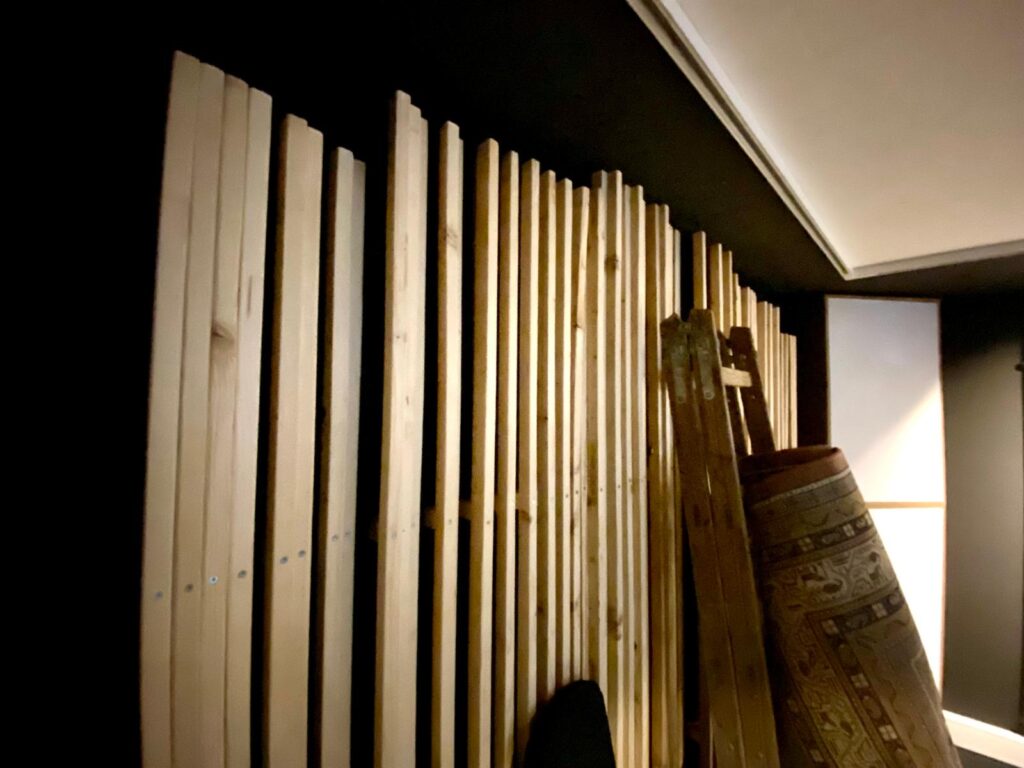
At the same time, I was already working on the rear wall of the recording room. A large 1D diffuser was to be installed here.

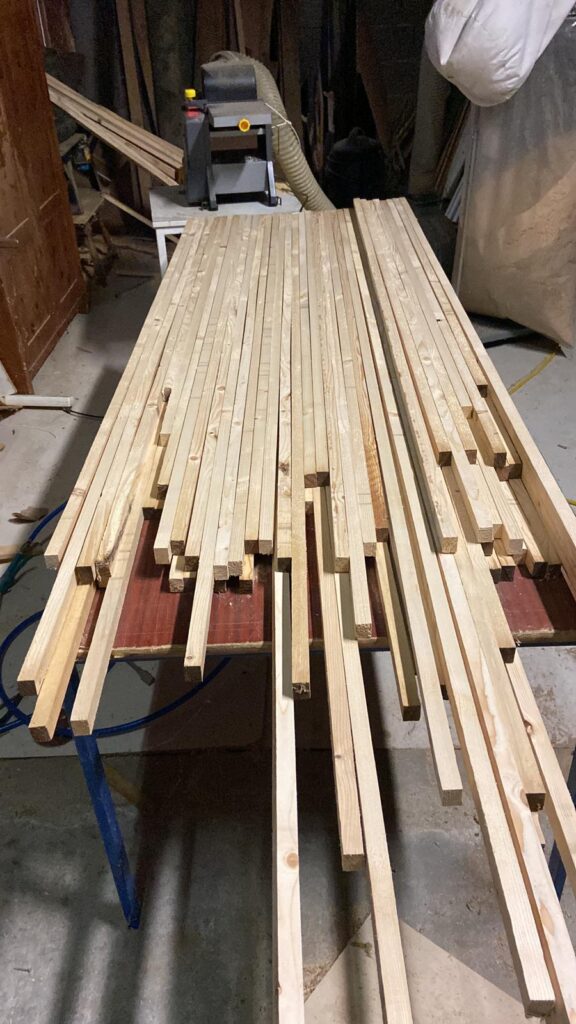
Due to the enormous price of wood, I organized the required wood myself: I was able to cut and then plane boards in a good friend’s wood workshop – it took me a whole day, but the result was great and we saved a lot of money in the process.


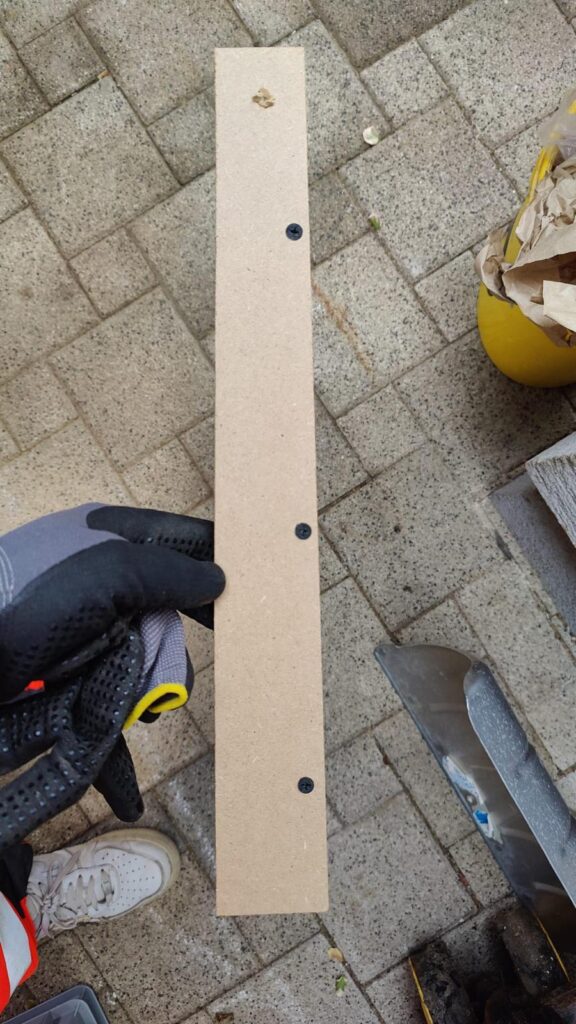
While we were cutting the wood, we also made a drilling template for the holes in the wooden panels. This allowed us to quickly prepare all the panels and make a countersink for the screw heads.


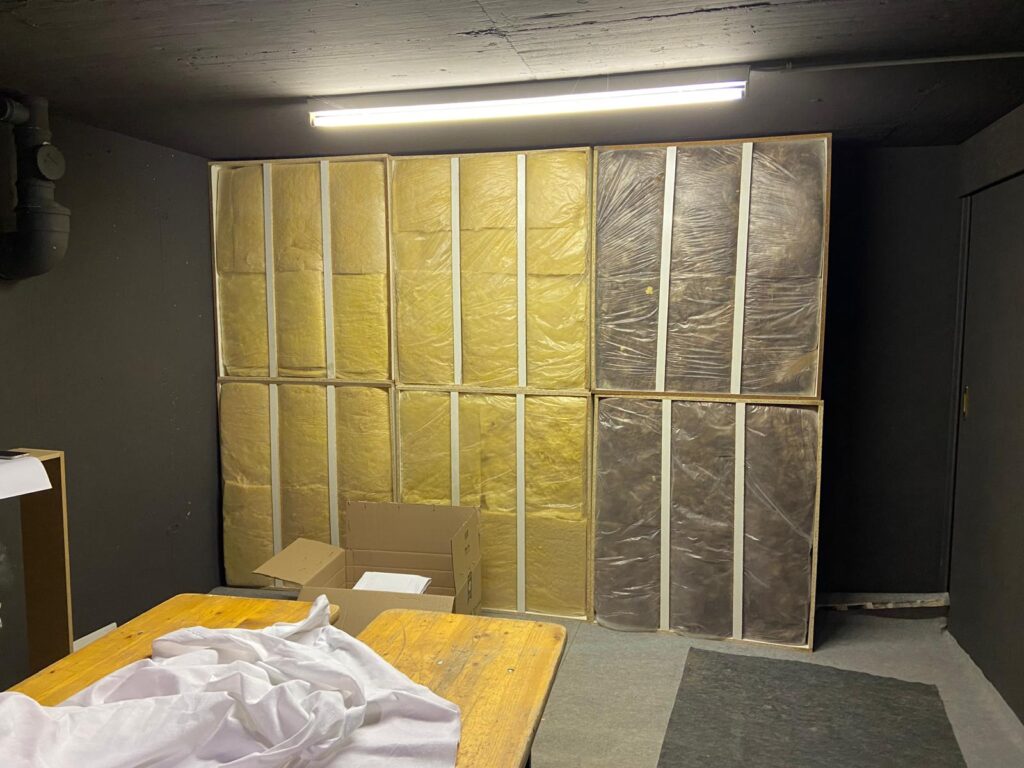
At the same time, we prepared the cutting of the insulation wool. For health reasons, we immediately wrapped the cut insulation wool in foil (painter’s foil, 0.2mm thick). Fortunately, we did this indoors – we had simply cleared out the future control room.
Fortunately, we also got help from my parents and our friends – without this support, the whole thing would have taken much longer.


After everything was cut and prepared, we took a weekend break as we had gigs in Vienna and Brno (Czech Republic) ahead of us. After that we went straight back to work.


Although university had started again, we used every free minute to continue working on our studio. We started by screwing the frames together. After the outer frames came the inner frames – unfortunately, this work was much more time-consuming than expected. Nevertheless, we decided to continue consistently, as we wanted to maintain a uniform construction method.
After building the inner frames, we took care of covering them with fabric. We searched for a long time for a suitable fabric that was sound-permeable and didn’t exceed our budget. In the end, we opted for stage molton (160 g/m²). We bought a total of almost 60 m² – the cutting alone took two of us a whole 12 hours.


The molton was then stapled onto the inner frames and carefully stretched. We screwed these inner frames to the outer frames, inserted the insulating wool and attached two struts at the back.


At the same time, we took care of the large room absorbers – these were only partially covered with fabric (not at all in the control room and over a large area in the recording room), as they are not visible anyway.


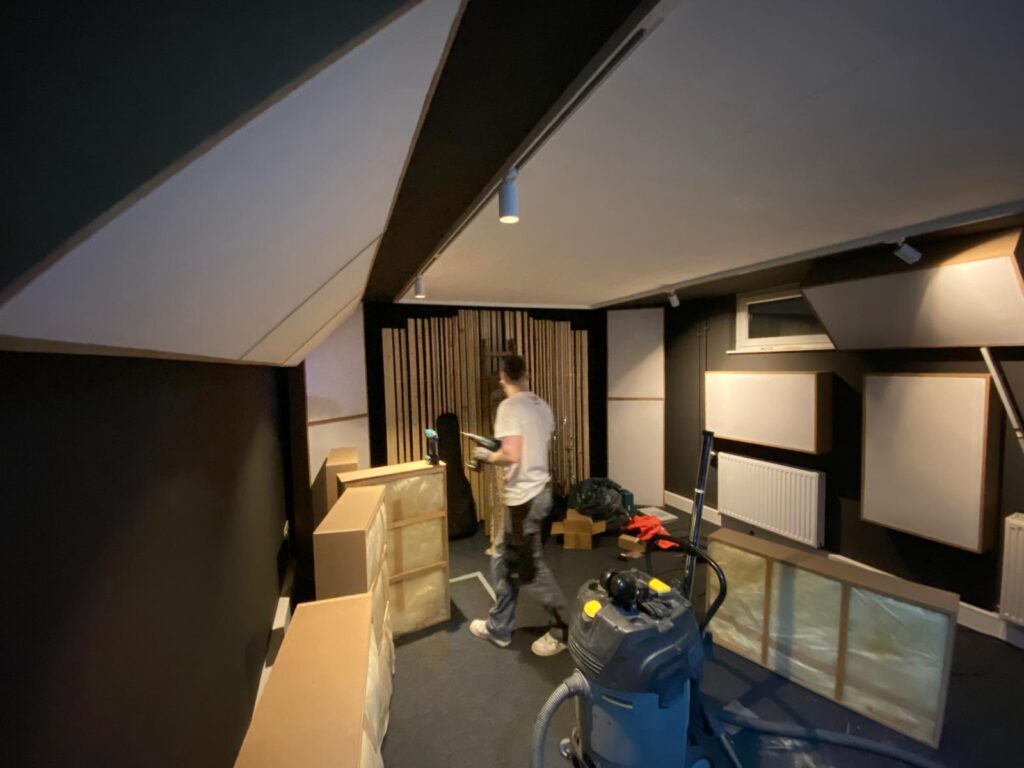
Once the absorbers were finished, we got straight down to installing them. We attached them with screw hooks, chains or normal screws (via the rear struts of the absorbers).


There were also numerous other tasks to complete, the scope of which I don’t want to describe in detail here. In addition, some unexpected problems arose during the installation. The main challenges of the entire project were

Installation: In some places, installation was much more difficult than expected. Individual and creative solutions were required.

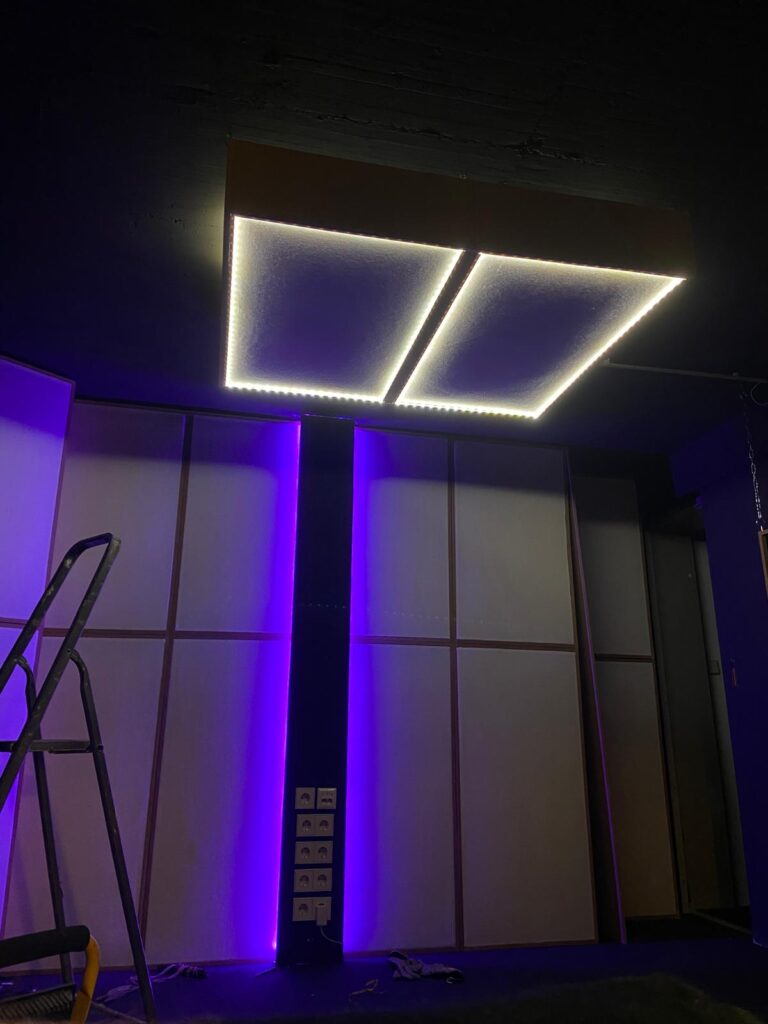
Door in the corner of the control room (blue door you can see in the first pictures) (= missing absorber in the corner of the room; we bought an old sliding door from an elderly lady via Willhaben – rebuilt it, covered it with plasterboard and finally installed it). We have built four additional ‘mobile’ absorber what we can use for this purpose (or for drum recording e.g.).

Cutting to size (we’d rather not talk about the working conditions, times and weather…) – the boards were extremely unwieldy and almost impossible to transport even with the van. They bent a lot and were very difficult to carry.

Simultaneous use of the premises: The longer the fit-out dragged on, the longer we were unable to use the space for rehearsals. In addition, the entire entrance was blocked with absorbers – this also had to be resolved as quickly as possible.

Despite everything, we are really very satisfied with the end result – precise acoustic measurements of the rooms will follow in the near future.


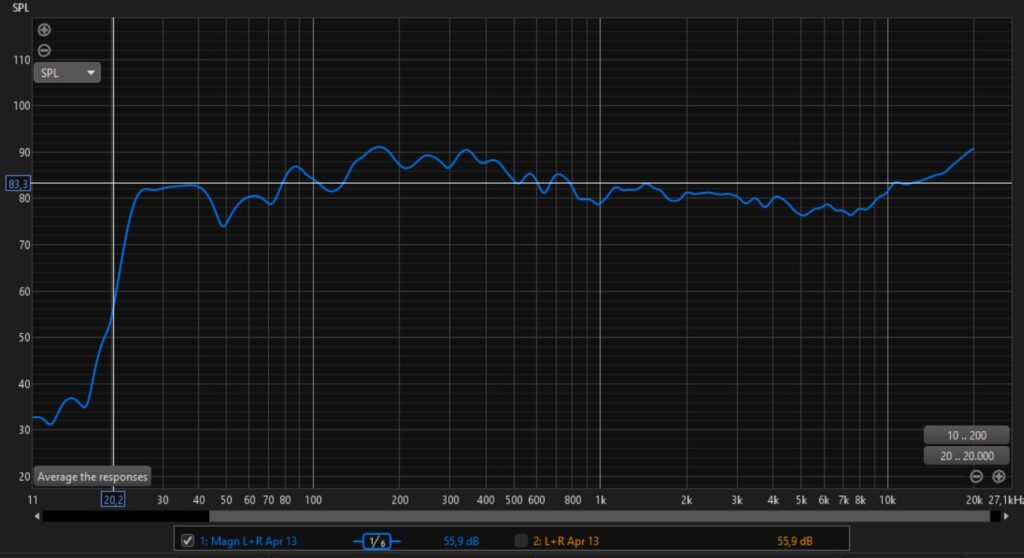
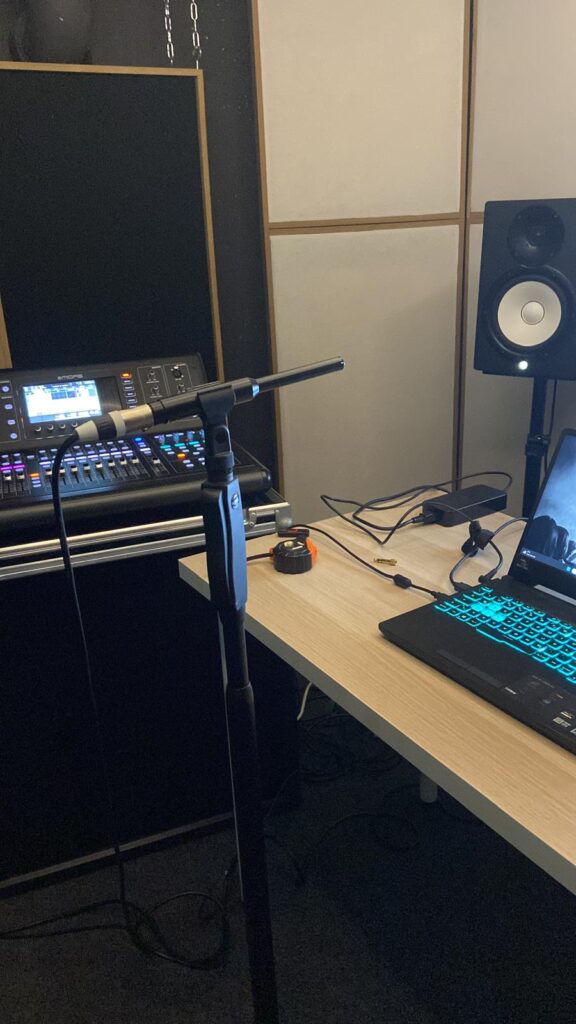
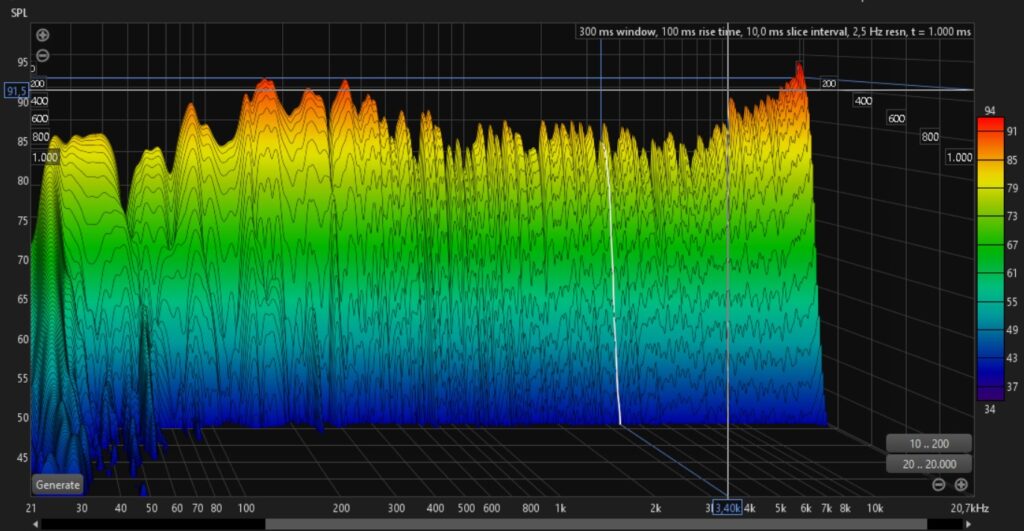
I have already carried out a first provisional measurement of the control room with my measuring microphone (Superlux ECM999) – here are a few screenshots.


The results are – measured against our do-it-yourself approach – outstanding. The room simply sounds fantastic. I am 100% happy with the results we achieved.

I want to be fully transparent about this project. While part of the studio construction was funded through our band’s shared budget, we also invested a significant amount of our own private money.

Considering the results we achieved, the overall costs were remarkably low—this was undoubtedly due to our detailed and lengthy planning, our strong motivation and perseverance, and some incredible second-hand bargains we found along the way.

Below, you’ll find a breakdown of the costs specifically related to the acoustic treatment:

One important point to mention is that from the mid of February to the beginning of April, we invested around 25 full workdays as a team of two—not including the additional help we received from other band members and friends—into the acoustic construction alone.

Looking back on it objectively, it’s clear that we pushed ourselves well beyond our limits with this project. It was definitly too much. We often worked more than 12 hours straight to get everything done within such a short timeframe. But in the end – we think, that it`s worth the price.

But we are not 100% finished yet. That said, the diffusers in the control room and the ceiling treatments are still unfinished (on some pictures you can see it: we packed leftover pieces of acoustic foam into a cargo net (of a car-trailer) and strapped it to the ceiling above the drums. It’s definitely a temporary fix, but it helped to reduce some reflections from the ceiling). We’re still discussing how best to tackle these elements, and haven’t fully decided on the final approach yet.

Photogrammetry in Polycam

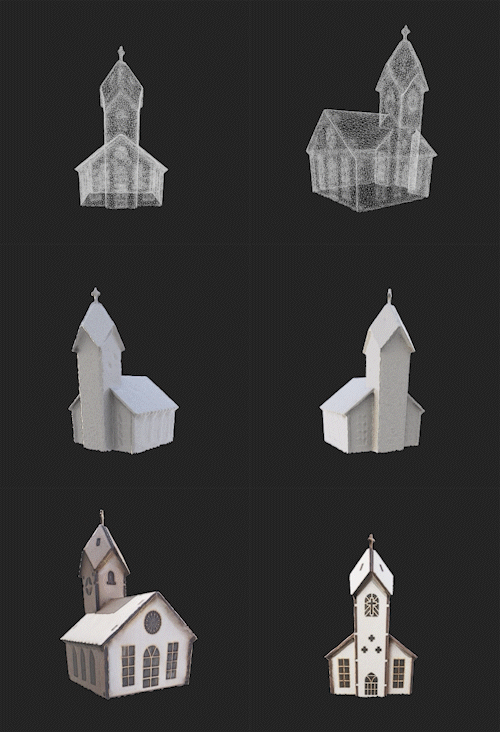
Um ein präziseres 3D-Modell der Kirche zu erhalten und eine verlässliche Referenz für die Arbeit in Cinema 4D zu schaffen – insbesondere zur besseren Einschätzung von Tiefenverhältnissen und räumlichen Dimensionen – wurde die Kirche aus etwa 50 verschiedenen Perspektiven fotografiert. Diese Aufnahmen deckten möglichst viele Blickwinkel ab, um ein umfassendes Bild des Objekts zu gewährleisten.

Die Fotos wurden anschließend in Polycam hochgeladen und mithilfe des Photogrammetry-Modus verarbeitet. Das daraus generierte 3D-Modell – im GLB Format – lieferte überraschend gute Ergebnisse und bildete die Struktur der Kirche erstaunlich detailreich ab.

Im nächsten Schritt wurde das Modell in Cinema4D weiterbearbeitet. Mit der Remesh-Funktion konnte die Geometrie optimiert und in eine gleichmäßige, saubere Topologie überführt werden. Das daraus resultierende Modell dient nun als präzise digitale Replik des ursprünglichen Holzmodells und ermöglicht eine exakte Anpassung der zuvor erstellten Fassadenprojektion in Cinema 4D.

Ein weiterer Vorteil: Eine leichte perspektivische Verzerrung, die beim vorherigen Mapping-Versuch aufgefallen war, konnte nun auf Basis des neuen Modells korrigiert werden.

Testrender GLB aus Polycam


Disclaimer zur Nutzung von Künstlicher Intelligenz (KI):

Dieser Blogbeitrag wurde unter Zuhilfenahme von Künstlicher Intelligenz (ChatGPT) erstellt. Die KI wurde zur Recherche, zur Korrektur von Texten, zur Inspiration und/oder zur Einholung von Verbesserungsvorschlägen verwendet. Alle Inhalte wurden anschließend eigenständig ausgewertet, überarbeitet und in den hier präsentierten Beitrag integriert.