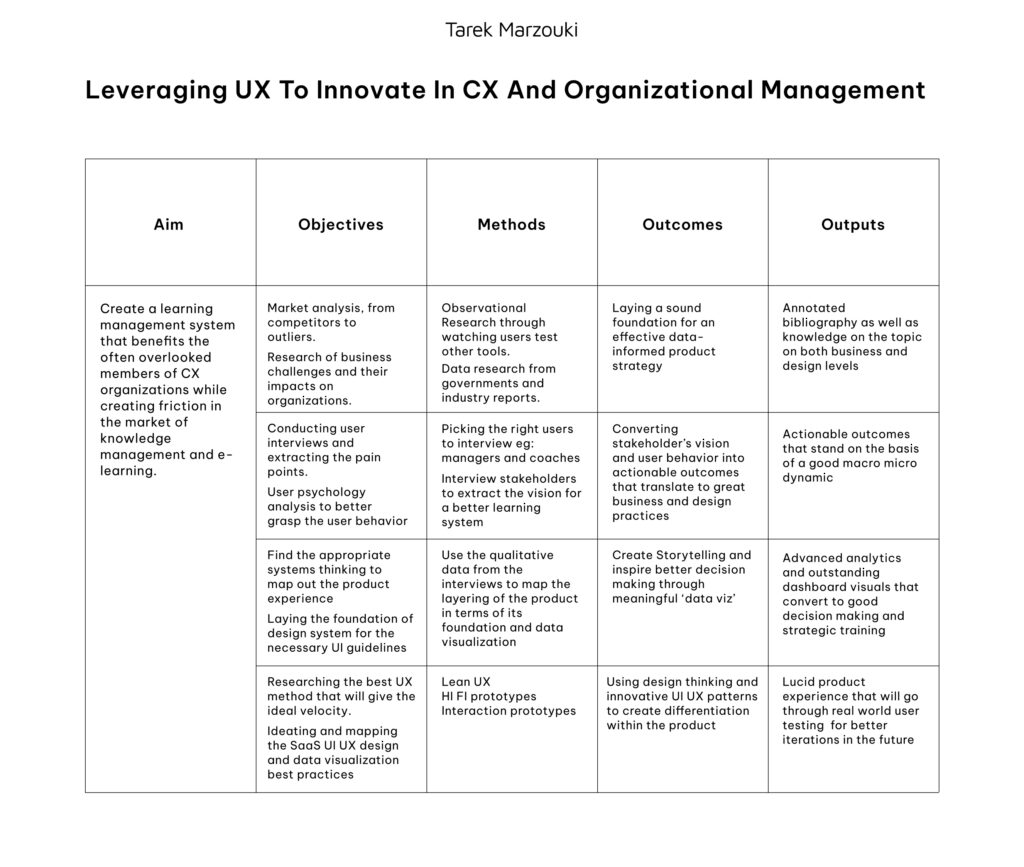
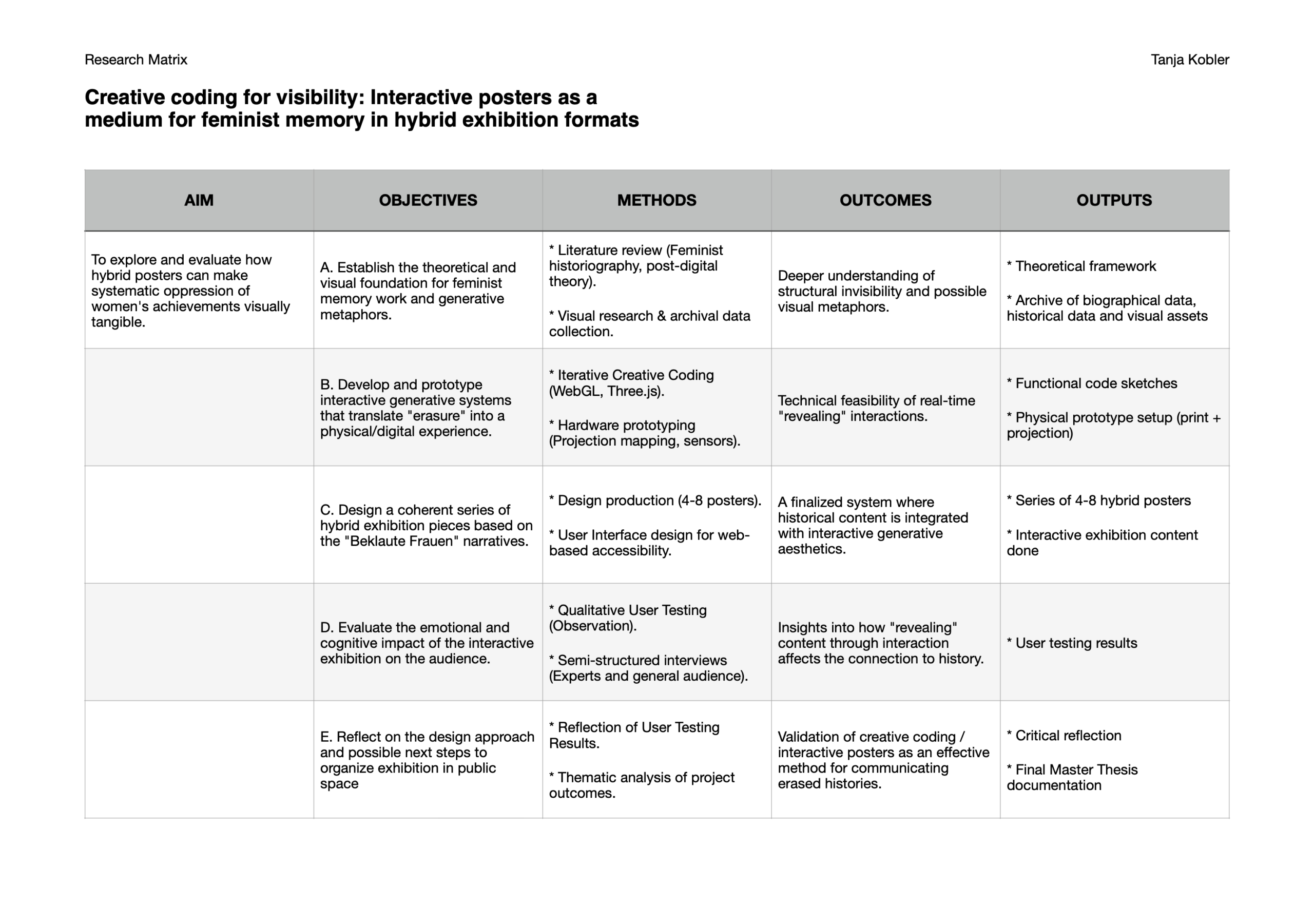
Research Matrix
It’s been a while since my last blog post, and in that time, my thesis has taken a much more concrete shape. At its core, my research is about social anxiety and emotional tension, and how these inner states can be expressed, explored, and softened through interaction, technology, and tangible experience.
I’m interested in how design can create environments of social comfort rather than pressure. Spaces where people don’t have to perform, explain themselves, or be “good” at interacting. Instead, they can approach their emotions through doing, touching, moving, and experimenting.
Even though the topic sounds serious, play is still at the heart of it. Not play as entertainment, but play as a method. A way to interact with uncertainty, vulnerability, and anticipation in a gentle and non-judgmental way.
That’s why I thought it was a good idea to watch the episode “Cas Holman: Design for Play” from Netflix’s Abstract: The Art of Design. Cas Holman is a play designer who creates open-ended tools and environments for children. Watching her work again felt surprisingly close to what I’m trying to do in my own practice. She doesn’t design toys with instructions, but situations and possibilities.
One sentence from the episode really stayed with me:
“We don’t design the play, we design for the circumstances of play to arise.”
This is exactly what I’m trying to do in my thesis.
My goal is not to tell people how to feel or how to behave. It’s to design the conditions in which certain interactions and emotions can appear on their own. Cas Holman does this with wood, plastic, and other physical materials. I do it with technology, interaction, and systems. Different kinds of materials, but a similar intention.
Her work creates spaces where children feel free to explore without being judged. In my case, I’m interested in creating environments where people can engage with their own tension, vulnerability, and uncertainty, especially in relation to social anxiety. I don’t want to design “solutions” to emotions. I want to design spaces where those emotions are allowed to exist and be explored.
Even though my thesis is not about children, play is still my method. For me, play means:
It’s a way to approach difficult feelings gently, through interaction rather than conversation.
AI was used for corrections, better wording, and enhancements.
In December I had a talk with Daniel Bauer to discuss my ideas for my Master’s thesis. To be honest, before this talk, my feeling towards the Master’s project was quite negative. I felt very overwhelmed and burdened by all the research I had done. It felt more like a heavy task than a creative fun project. But after talking to Daniel, my mindset changed. He gave me a lot of motivation and helped me see the Master’s thesis as something cool and fun rather than just a struggle. In our conversation, we first talked about my general interests. I told him that I really like animation, motion design, and what I did for”Klanglicht”. I’ve always enjoyed working in an abstract way and creating abstract animations. At that point—which was actually before I directed the short film “Blau wie der Morpho”—I told him that live-action film didn’t really suit me. I thought I would definitely go into the direction of motion design because it felt more like “me.” A big part of our talk was about the abstraction of forms and how they can trigger emotions or reactions in people. Daniel gave me some great examples of this, which I found very helpful for my own thinking process. We discussed a very artistic way of visualizing data. This was a new idea for me, and I became really interested in how to combine data with art and motion. This talk was very important for my personal process because it opened up new directions. It showed me that my interest in abstract forms and motion design could actually become a solid foundation for a Master’s project. I started to think about how I can take something complex, like data, and turn it into something visual and emotional through abstraction. It made me realize that I don’t have to follow a traditional path; I can mix my interest in sound, light, and motion in a way that feels right for me. What I am taking away from this talk with him is that the Master’s project is a chance to experiment. I stopped seeing the research as a burden and started seeing it as a way to find more examples of what I like. Even though I discovered later during the film shoot that I also enjoy directing real people, the thoughts from this meeting about abstraction and data art are still very relevant for my work. I don’t have to decide yet but I guess sonn, but now i feel much more motivated to write my master thesis and explore what subject I am gone be focusing on.
The starting point for this post is a memory of a very stressful but also great feeling I had in a week in December. I was the director for our short film “Blau wie der Morpho”. Before this project, I mostly focused on animation because I liked having total control over every detail. Working with real people on a set felt like a huge hurdle for me, and I wasn’t sure if I could handle it. My main inspiration for the style of the short movie was the ideas that were created in the last semester by some other people in my class as well as a short awareness campaign by Aldi. I really liked their style, it was very realistic and short, but it made you think. That was the direction I wanted for our film about Frau Giraldi and her caregiver Elias.
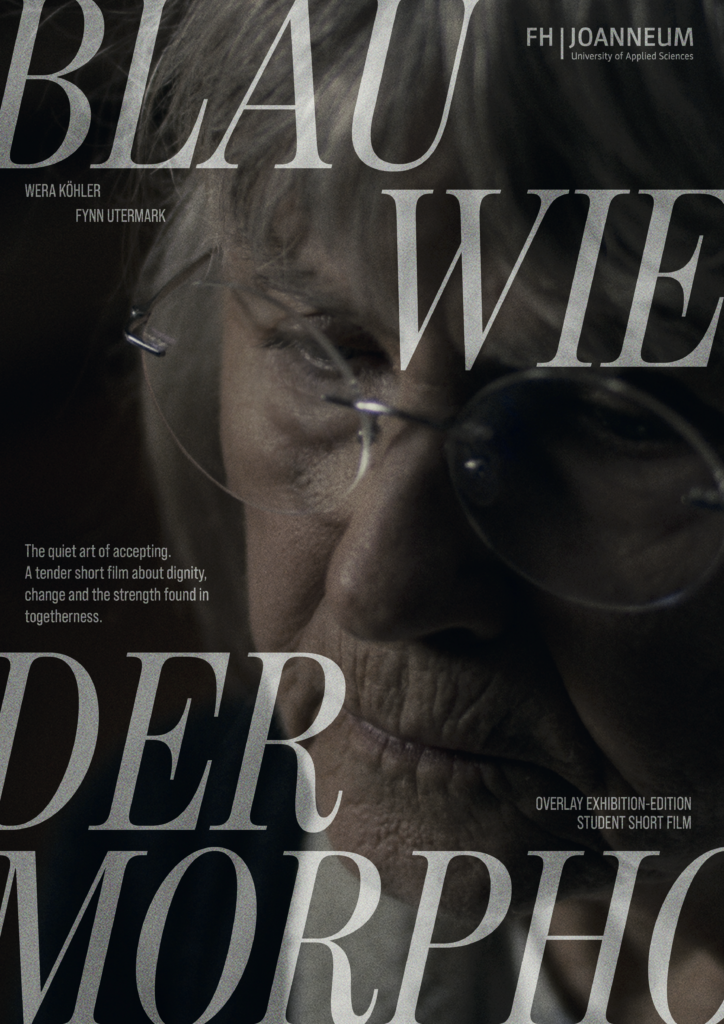
When I look back at the process, it wasn’t just about the filming itself. I spent a lot of time with two teammates rewriting the script. We changed the whole concept to make it shorter and focused more on “awareness”. During the casting, I learned about a theater piece called “Geteiltes Leben,” which is how I met our main actress. She was perfect for the role of Frau Giraldi because she already had experience playing a similar character. The most difficult part for me was the leadership role. I am someone who really needs harmony and I don’t like telling people what to do if it feels like I’m being bossy. On the first day of the shoot I felt very insecure. It was a student project, so everyone had their own ideas, and sometimes it was hard to make the final decision. I was lucky to have Noah and Peter on the team because they supported me a lot when I struggled with my role as a director. I also came to realize that I enjoyed the time on the set the most. The roles were clearly defined, which made it easier for me to focus on the actors and the scenes. It felt very different from animation. It was more about human emotions and quick decisions. However, the post-production was harder again. When we were editing, many different opinions came together, and my need for harmony made it difficult to just say “no” to ideas I didn’t like. I had to learn that as a director, you sometimes have to be firm to protect your vision. In the end, I was really happy because the actors gave me great feedback. They told me they felt I had a very clear vision for the film. I still more interested in doing animations but this project also gave me an impuls to look into directing or art direction in a general sense. It’s a great feeling to see a vision from your head actually happen in real life. I still need to work on being more confident in my decisions when things get complicated, but I definitely want to do this again.
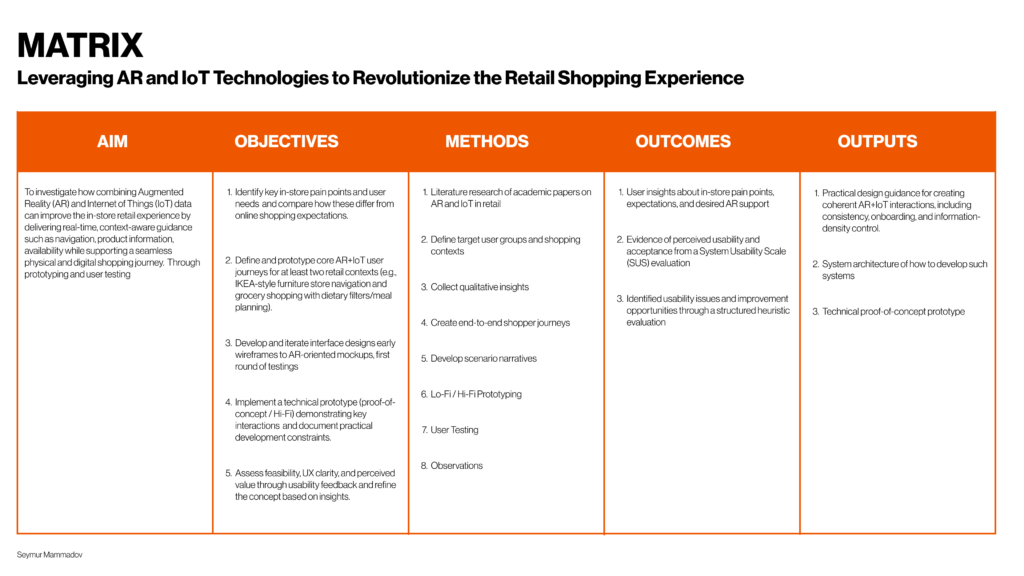
Thesis Topic:
Motion as Communication: Using Micro-Interactions to Help Drivers Understand Automation Mode Changes
| Aims | Objectives | Methods | Outcomes | Outputs |
|---|---|---|---|---|
| Understand how drivers currently get confused about automation modes and handovers. | Clarify the problem space of mode confusion and existing HMI strategies for communicating mode and takeover. | Targeted literature review on mode confusion, takeover studies, and automation HMI guidelines. | Clear picture of where current interfaces fail (e.g., unclear state, weak anticipation, bad timing of alerts). | Short problem framing section with diagrams of current HMI patterns and failure modes. |
| Find out what existing research already says about effective feedback and motion in high‑load, time‑critical interfaces. | Collect and organize evidence on which feedback types and motion patterns improve comprehension and reaction time. | Systematic search, screening, and evidence mapping across automotive, aviation, medical, and UI/motion research. | Evidence maps showing which strategies (static, motion, multimodal) work, where, and how strongly they’re supported. | Evidence tables and visual maps you can include in the thesis (and reuse in slides). |
| Translate that evidence into concrete motion patterns and parameters for automation mode changes. | Define a compact motion framework for entering automation, exiting automation, and escalating takeover requests. | Research‑through‑design: sketching, storyboard flows, prototyping micro‑interactions (e.g., in Figma) guided by the evidence. | A small, coherent set of motion patterns with rationale tied back to specific studies and theories. | Motion specs (timing, easing, behavior) plus prototype screens showing mode transitions and alerts. |
| Turn those patterns into reusable motion tokens and a design guide that teams could plug into a design system. | Define motion tokens (durations, easing curves, escalation patterns) and describe how to use them in an automotive HMI. | Synthesis + systems thinking: abstracting patterns into tokens, writing guidelines, and mapping them into a component library structure. | A motion “layer” that can sit inside a design system for vehicle HMIs (or similar products). | Motion token set, usage guidelines, and an example component library (e.g., Figma pages or documented components). |
| Reflect on how this changes the way we think about motion in safety‑critical interaction design. | Position motion as a functional communication tool (not just delight) and highlight gaps for future empirical work. | Critical discussion that connects your framework back to theory (cognitive load, attention, mode confusion) and identifies missing research. | Clear articulation of what we know, what we can recommend with confidence, and what still needs live testing. | Discussion + conclusion chapters that wrap up the framework, its limits, and next steps (including ideas for future simulator studies). |
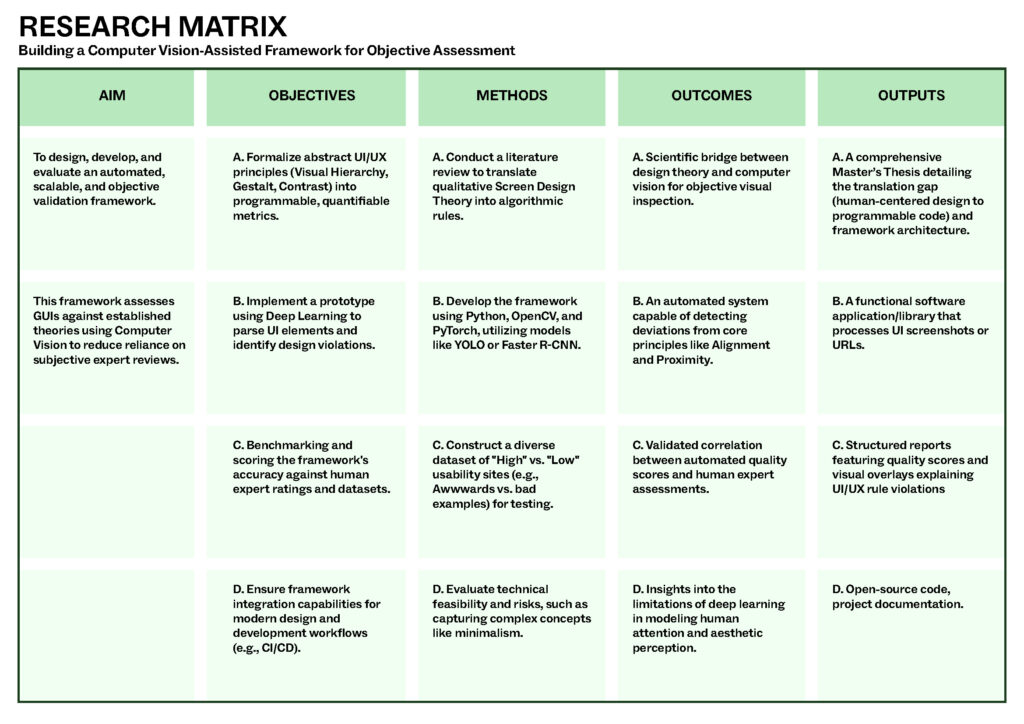
Validating a User Interface (UI) has traditionally been a bottleneck. While we can easily automate functional tests to see if a button works, determining if that button is aesthetically correct or follows established design principles has always required a human expert. My current research aims to enhance the speed of human expertise by developing a Computer Vision-Assisted UI Validation Framework.
The primary goal is to design, develop, and evaluate a framework that uses Computer Vision (CV) to objectively assess User Interfaces based on established UI/UX theories. It specifically targets the current problem where UI validation is too resource-intensive and subjective.
Translate Theory: Convert abstract principles like Visual Hierarchy, Gestalt Principles (Proximity/Similarity), and Color Theory into quantifiable metrics.
Build Prototype: Create a tool that can Parse elements (buttons, text), Evaluate them against rules, and Score the results.
Integration: Ensure the framework can be used within existing development workflows, such as CI/CD tools.
Research through Design: A four-phase approach involving literature review, dataset construction, implementation, and evaluation.
Technical Stack: Utilizing Python with libraries like OpenCV and PyTorch, specifically employing deep learning models like YOLO for object detection.
Data Sourcing: Building a dataset from award-winning sites (e.g., Awwwards) to compare against “bad” design examples.
Objective Validation: An enhancement for subjective human observation to a scalable, automated visual inspection mechanism.
Correlation Findings: Determining the extent to which automated scores can successfully mirror human expert assessments.
Technical Insights: Identifying risks regarding whether high-level concepts like “minimalism” can be truly captured by algorithms.
The Workpiece: A software application or library that takes a URL or screenshot and generates a structured report.
Visual Overlays: Heatmaps or overlays on the UI that point out exactly where rules (like alignment or contrast) are violated.
Master’s Thesis: A formal document covering the translation gap between UX and Computer Vision.