Start into the master thesis: What Works

For the practical part of our master’s project, we set out to understand what makes a short film emotionally engaging and thought provoking. To do this, we watched several short films that are recognized for their strong emotional impact. At first, we watched them without analyzing anything. We wanted to experience them naturally, just as any viewer would. Some films touched us immediately; others did not leave a deep impression. These first reactions helped us understand which elements work intuitively.

In the next step, we examined why certain films moved us more than others. One of the clearest observations was that stories focusing on a single person are more effective in short films. With limited time, viewers connect more easily with one individual. The emotional access becomes stronger, and the message becomes clearer. Films with many characters often lose intensity because attention is divided.

Authentic dialogue also proved to be essential. The films that impressed us the most sounded natural. The conversations felt real and unpolished. They contained pauses, interruptions and spontaneous reactions that made us feel as if we were witnessing real situations. This authenticity creates emotional closeness. When dialogue feels too scripted, emotional distance grows.

Music played an important role as well. Although we expected this, studying other films made its influence more visible. Music guides the viewer’s emotional direction. It shapes atmosphere, highlights key moments and increases intensity. Many impactful short films use music only at specific points rather than constantly. This selective use strengthens emotional peaks and avoids overwhelming the audience.

Something that surprised us with its power was the unexpected twist at the end. Many short films stay memorable because they challenge the viewer’s assumptions in the final moments. A twist creates a moment of shock or rethinking, which keeps the story alive in the viewer’s mind. This effect suits our project especially well.

Our film focuses on racism. To create impact, we want to deliberately play with stereotypes. The goal is to guide viewers toward a familiar assumption. By doing so, they become part of the problem for a moment because they follow the same unconscious ideas that exist in real life. The twist at the end will break this stereotype and reveal a different truth. This moment encourages self reflection and raises the question of why one believed the stereotype in the first place.

From our analysis, we decided to concentrate on a single main character, natural dialogue, selective music and a twist that challenges perception. These insights form the foundation of our short film and help us shape a project that aims to move viewers emotionally and make them think.

Literature we can already use for out theoretical part:

Bordwell, D., & Thompson, K. (2020). Film art: An introduction (12th ed.). McGraw Hill.

Cowgill, L. A. (2005). Writing short films: Structure and content for screenwriters (2nd ed.). Watson-Guptill.

Hall, S. (1997). Representation: Cultural representations and signifying practices. SAGE.

hooks, b. (1992). Black looks: Race and representation. South End Press.

McKee, R. (1997). Story: Substance, structure, style, and the principles of screenwriting. ReganBooks.

Plantinga, C. (2009). Moving viewers: American film and the spectator’s experience. University of California Press.

Seger, L. (1990). Creating unforgettable characters. Holt Paperbacks.
The Temporal Elements of Emotional Identification with Film Characters

McCormick, S. (2020). The temporal elements of emotional identification with film characters (Master’s thesis, University of Colorado. https://mountainscholar.org/items/4619dcd4-d1e2-4f3e-4f3b-730ccf2fd93e

The thesis The Temporal Elements of Emotional Identification with Film Characters by S. McCormick looks at how our sense of time while watching a film influences how strongly we connect with characters. It is a theoretical study, meaning there is no short film or creative project attached. The thesis starts by setting up the research question, then brings in psychological theories about time perception and combines them with film theory on character emotions and immersion. Finally, the author discusses how time can shape emotional reactions in narrative cinema and why that matters for film studies. So the whole thing is more of an intellectual exploration than a practical filmmaking work.

In terms of the “artifact” part, this thesis really doesn’t have one. Everything exists on the page. That makes access easy, but it also limits what kind of evaluation we can do. There’s no practical demonstration, no production notes, nothing like that. The documentation is clear regarding the theory, but of course the connection between concept and filmmaking practice remains abstract. Honestly, you sometimes wish the author had taken one or two well known scenes and broken them down in detail, or even experimented with editing to show the point. But here, the focus stays purely academic. That’s fine if the program accepts theoretical theses, but in a film direction context it may feel a little incomplete.

The overall presentation is professional. The writing looks structured and the formatting is consistent. A few sentences get long, and sometimes the ideas take a moment to click, but that’s pretty common in theory heavy academic work. The topic choice is actually quite refreshing. Time perception and emotional engagement are usually studied separately, so putting them together brings a new angle without trying to sound “revolutionary”. It’s more like: here’s a niche idea that deserves attention. That’s a mature level of innovation.

Regarding independence, the author clearly read widely and formed their own line of reasoning. You can see original thinking in how sources are brought together. Still, since there is no empirical study or creative experiment, the independence is mainly intellectual rather than practical. It’s essentially a high-quality literature based thesis rather than a mixed method or production research project.

The structure works well. Chapters unfold logically, ideas build gradually, and the transitions between psychology and film theory are handled smoothly. Every now and then, one section could be shorter because the point was already made, but nothing major. The communication style is mostly clear, although a bit academic at times, with the typical long paragraphs people tend to write when they want to sound serious. That said, the meaning stays understandable and the argument doesn’t get lost. The scope is appropriate: the author didn’t try to cover every emotional theory ever written, which keeps the work focused and realistic.

The thesis shows attention to detail: references are done properly, terminology is introduced cleanly, and there are no distracting grammar problems. The literature selection is strong, mixing cognitive psychology, film theory, and audience studies. It’s not just surface level sources, so the foundation feels reliable. The author really did their homework.

Stepping back, the thesis makes a thoughtful contribution to how we understand emotional engagement in cinema. The key strength is that it opens up a less commonly discussed aspect of viewing: not just what we feel, but when we feel it and how our inner sense of time affects connection to characters. The main weakness is simply the lack of practical demonstration, which sometimes makes the work feel a bit theoretical and distant from actual directing practice. You don’t get that handson sense of “here’s how to use this when making a film”.

Still, as a master’s project in theoretical film analysis, it’s convincing, well researched and carefully developed. It shows critical thinking, academic discipline, and a clear interest in film psychology. With a little more concrete application, it could even be the start of bigger research or creative experimentation in emotional timing and cinematic immersion.

*To improve readability and clarity, I used GPT 5 as a language assistance tool, while all ideas, analysis, and final decisions in the text are my own

IMPULSE: Travelling to Sweden

In these impulse blog entries we are supposed to talk about a cultural experience we have had, right? And what is travelling if not a cultural experience? As to the relevance my journey to Malmö has for my master’s thesis, I did take the same trains I will be needing for my journey to Lapland, which I will be documenting. Of course I did not just travel all the way to Sweden just to be able to write another blog entry, but I will gladly take the opportunity to use my experience productively. So in this blog entry I will be analysing what observations I have made on my way to the north that might come in handy when repeating my journey in February.

My Travel Companion

Well, not only did I travel part of the same route as I will in February, I also had the same travel buddy join me: my mom. There are some valid reasons for it, both because my mom and I share some of the same passions for travelling, spontaneity, Scandinavia, and sustainability, and also because she’s my mom and I like spending time with her. However, we hadn’t travelled together just the two of us in about a decade, so in a way this trip was also a good way of figuring out whether the two of us were compatible travellers. Some observations I have made on this topic were that while we both are quite relaxed, my mom does enjoy a higher level of comfort, probably due to the fact that she is just not 24 anymore, but also that she has significantly more money at her disposal than a 24-year old (me in this case) would have. While, if I had been travelling by myself, I would have just booked a seat on the overnight train and gambled whether I could upgrade it to a mini sleeping cabin on the day of, my mom went to the register at the train station (yes, like real life people and stuff) and made the reservations for our sleeper cabins a month in advance. That being said, I was very grateful that she did (and also paid for my reservation <3) because I slept the whole night through on the train, feeling better rested than most mornings when I wake up for FH. So to summarise, I believe my mom and I complement each other quite well when on holiday, taking turns who gets to be relaxed and who stressed out, having the same priorities (i.e. looking for cute shops and taste-testing cinnamon rolls), and both being very flexible about our plans (like spending the whole day at a children’s museum when it is too rainy to do any sightseeing).

My Route

In order to get to Malmö without having to fly, we decided on taking the overnight train to Hamburg, then a 5-hour train ride to Copenhagen and another 30 minutes to Malmö. The first train ride went by in no time, because all we essentially did was fall asleep, wake up shortly before Hamburg, have breakfast delivered to bed and then we were already there. During the train ride to Copenhagen I mostly worked and we played cards, and on the ride to Malmö most of what we did was just admiring the Öresund bridge and taking pictures. So all in all, the journey was really enjoyable and didn’t feel long at all. When going to Lapland in February, however, this is of course only half of the distance we’ll be making. We will have a stopover in Copenhagen, from there we will journey on toward Stockholm and then take another overnight train, taking us all the way to Lapland.

My Luggage

While I severely overpacked for the 4 days we actually spent in Malmö, I will surely be having even more luggage the next time around. This time it went quite smoothly with having one big backpack and a small suitcase and I’m thinking for February I might just pack all of my clothes into a slightly bigger suitcase and then have a backpack for most of the camera equipment. If I find out that on our journey farther north there are some passages where pulling a suitcase is simply not an option, I might have to reconsider that choice and maybe switch to a duffel bag instead. But all in all, manoeuvring my luggage proved to be fairly easy this time around.

My Film

While mostly for my own entertainment and for the memories, I did bring a camera with me and take some photos as well as video snippets, also as sort of a “trial run”. One thing I realised though is that I felt a little disconnected from the activities if I was “the one with the camera”, documenting things. It obviously makes sense that I felt that way, but this time it did keep me from reaching for my camera quite a few times because we were actually there to visit my best friend who I hadn’t seen in months and I wanted to spend as much uninterrupted quality time with her as possible. Next time around though, the story is going to be a different one, because I will be travelling with mostly strangers (except for my mom of course, but I consider her as more of a camera assistant than film subject), thus I will more easily find into my role as observer I believe. I am quite used to that role due to working in event photography and videography a lot, where being invisible and unnoticed leads to the best results most of the time.

My Conclusion

All in all I can say that the trial run for our journey in February was a great success, also showing me what I might have to take into consideration, also what clothes to pack and which ones to leave at home, and what to expect from the train rides up north. I am thoroughly excited for February and I feel a little more confident and assured that everything might work out somewhat how I imagined it would.

#5 Why we can see stories in shapes 

The deeper I get into motion design and abstract shapes, I come to realise that the story doesn’t only come from what I make, it also comes from how our brains react to it. And nothing shows this better than an old but also very classic animation by Fritz Heider and Marianne Simmel from 1944. It’s a short film, only a few minutes long, with two triangles and a circle moving around a box. But somehow multiple people see something different, something like a story unfolding: a bully, a victim, someone trying to help, or someone chasing and someone escaping. Even though these “characters” are only shapes. However, these are shapes that move and are associated with a deeper meaning. This simple but groundbreaking film opened up a whole field of research about how we perceive movement, intention, and emotions. Thus, it is still very relevant today when it comes to working with abstract visuals.

Heider and Simmel originally planned to understand how people make sense of events with no obvious meaning. Instead of showing real people or animals, they chose these abstract geometric shapes. And still the results were able to show so much more. “The abstract geometric figures […] are not only experienced abstractly, but are perceived and described as acting persons; their movements have causes, and the persons seem to be striving towards goals. In the perception of the events, motives and intentions are thus attributed to the persons.” (Lück, 2006). People didn’t say the big triangle moved to the left but said things like “he attacked and tried to escape.”

However, our brain does this automatically; it has a tendency to see intention, goals, and emotion in simple movement. We are built to understand behaviour even when the “behaviour” is just two triangles bumping into each other. In one of the previous blog entries I wrote about a study that had one of its results turn out that movement might not always change the aesthetic response to simple shapes. However, neuroscientist David Eagleman explains that the brain is constantly predicting and filling in meaning based on movement (Eagleman, 2015). When something is moving with a certain rhythm, speed, or direction, our brain automatically tries to guess why it’s doing this. It assigns a purpose even if there is none.

This means that even the most abstract motion becomes understandable because the brain prefers a meaningful interpretation over a neutral one. We are wired to detect motives and patterns in things that surround us, so any form that shows even a hint of intentional movement lets the brain treat it as social information. This also adds an emotional layer, meaning that a movement that looks purposeful feels alive, whereas a movement that interrupts a pattern feels threatening. For me this explains why abstraction can still feel emotional; the emotion does not need to be shown, it emerges through the way our brain processes movement.

This also explains why the animation of Heider and Simmel works so well. These are not only shapes that move, it’s how they are moving. A fast or jerky motion here feels aggressive, however a slow and more hesitant one feels shy or scared. A circle that is spinning in place might feel more playful, but a triangle that is “blocking” a doorway feels dominant. Even when shapes look the same, the way that they behave creates emotions and narrative. Another point that becomes clear when reading about the experiment is how quickly our brain starts to create reasons behind movement. Even though the shapes themselves have no inner life, people automatically describe them as if they do: “the big triangle is jealous, the small triangle tries to protect the circle” (Lück, 2006). Here it is clearly pointed out that these interpretations appear even without any contextual cuelücs. This highlights that humans are not passive observers but actively generate explanations.

What is very interesting is that the article shows that newer replications of the Heider and Simmel experiment don’t always show the exact same results as in 1944. Apparently, people today sometimes interpret the shapes more abstractly or more “animation-like.” This can be due to the use of digital media, games, and minimalist graphics. However, in almost every study a strong part of the audience does give meaning to the shapes. They don’t really stay neutral, because they turn movement into motivation. This does raise the question of how abstract something can be and still feel emotional?

Bibliography

Eagleman, D. (2015). The Brain: The Story of You (First American edition). Pantheon Books.

Lück, H. E. (2006). Die Heider-Simmel-Studie (1944) in neueren Replikationen. Gruppendynamik Und Organisationsberatung37(2), 185–196.

7 Chapels Designed by Artists

Der Artikel „7 Chapels Designed by Artists Including James Turrell, Louise Nevelson, and Mark Rothko“ von Elizabeth Fazzare (Architectural Digest, 2018) bietet einen Überblick über sieben Räume, die nicht nur sakrale Architektur neu interpretieren, sondern in vielen Fällen selbst zu künstlerischen Gesamterfahrungen werden.

Der Artikel eröffnet mit einer Beobachtung von Dr. Aaron Rosen, einem Spezialisten für Kunst und Religion: Viele künstlerisch gestaltete Kapellen entstehen als späte Werke, wenn Künstler:innen bereits etabliert sind und ihr Vermächtnis bewusst formen. Eeine Reflexion über die eigene Position im kulturellen Gedächtnis.

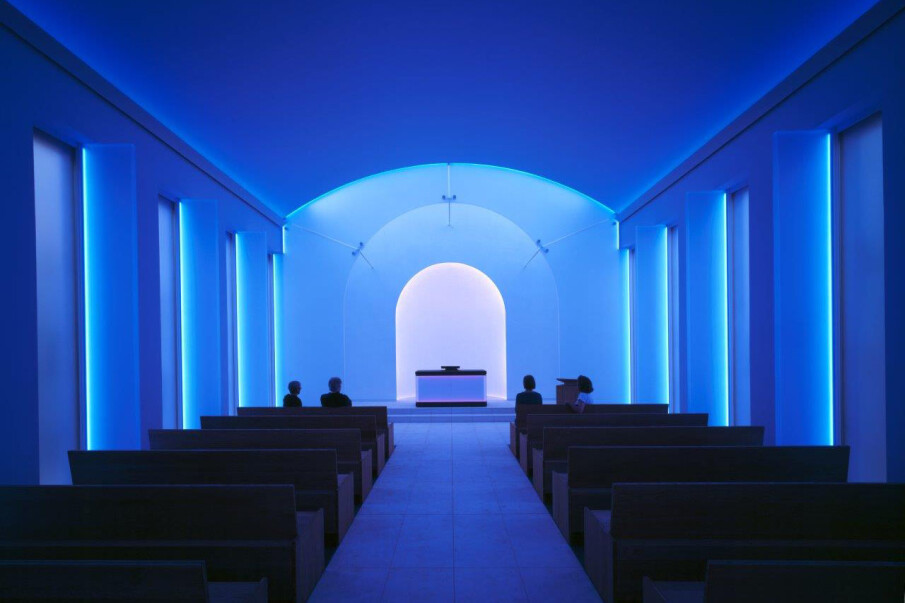
Kapelle im Dorotheenstädtischen Friedhof | Innenansicht
Berlin, 2015 | © James Turrell, Foto: Florian Holzherr

Es entstehen Gesamtkunstwerke, in denen Künstler:innen Architektur, Lichtführung, Ausstattung, Farbgestaltung und Skulptur genau aufeinander abstimmen. Die Kapelle bleibt ein Ort der Kontemplation, wirkt aber zugleich wie ein immersives Kunstwerk, das Besucher:innen aktiv in eine Atmosphäre hineinnimmt.

1. Mark Rothko – Die Rothko Chapel in Houston (1971)

Sie wurde 1971 eröffnet und enthält 14 großformatige Gemälde in tiefen Purpur- und Schwarztönen. Ursprünglich als christliches Kommissionswerk geplant, wurde sie später nicht-konsekriert und als interreligiöser Raum genutzt.

Für Besucher entsteht eine Art „schwarzes Heiligtum“, in dem Rothkos Gemälde zu atmosphärisch-meditativen Oberflächen werden.

Für meinen Forschungsansatz – Licht als Raumträger, Reduktion statt Überladung – ist die Rothko Chapel ein historisch bedeutendes Beispiel.

2. Louise Nevelson – Chapel of the Good Shepherd (1977)

Louise Nevelson gestaltete 1977 die Chapel of the Good Shepherd vollständig aus geschnitzten, bemalten und vergoldeten Holzelementen.

Die Intervention wirkt wie eine räumliche Skulptur: Wände, Altar und Ausstattung sind monochrom, meist weiß-gold, und schaffen eine ruhige, fast spirituelle Atmosphäre.

Materialität und Form sind hier nicht nur bildliche Inhalte, sondern können sakrale Wirkung erzeugen. 

3. Stefan Strumbel – Graffiti-Kapelle in Goldscheuer, Deutschland

Eine zeitgenössische Kirchengestaltung des deutschen Street-Art-Künstlers Stefan Strumbel.
Sein Werk umfasst:

  • Spray-Paint-Grafiken
  • LED-Beleuchtung
  • pink leuchtende Kreuzikonografie
  • großflächige Madonna-und-Kind-Darstellungen im Pop-Art-Stil.

Eine Verbindung von Popkultur und Tradition, die unterstreicht, wie offen der Kirchenraum für experimentelle Medien sein kann, wenn er dafür geöffnet wird.

4. Tobi Kahn – EMET Meditation Chapel (2002)

Der US-amerikanische Künstler Tobi Kahn gestaltete 2002 eine nicht-denominationelle Kapelle für das HealthCare Chaplaincy in New York. Sie besteht aus:

  • neun großformatigen Sky-and-Water-Gemälden
  • eigens entworfenen Möbeln
  • einer dreifachen Lichtarchitektur

Die Kombination aus sanfter Lichtführung, Horizontlandschaften und ruhiger Farbpalette zeigt, wie Licht und Raum therapeutisch wirken können.

5. James Turrell – Kapelle am Dorotheenstädtischen Friedhof, Berlin (2015)

Der US-amerikanische Lichtkünstler James Turrell, den ich im nächsten Blogpost näher studieren und untersuchen  möchte, schuf in der Kapelle des Dorotheenstädtischen Friedhofs in Berlin eine permanente Lichtinstallation, die zu Sonnenuntergang Farbverläufe erzeugt.

Die gesamte Innenarchitektur wurde auf Licht ausgerichtet: klare Linien, reduziertes Mobiliar, gezielte Lichtprogramme. Diese Arbeit zeigt, wie künstliches Licht eine sakrale Raumwahrnehmung erzeugen kann.

6. Louis Comfort Tiffany – Willard Memorial Chapel (1890er Jahre)

Die Kapelle ist die einzige vollständig erhaltene sakrale Innenarchitektur, die Louis C. Tiffany (Sohn des Juweliers & Leiter der Tiffany Glass Company) gestaltet hat.

Sie umfasst:

  • 14 opaleszente Fenster
  • eine Rosette
  • neun Glaslampen
  • Mosaikmöbel
  • goldverzierte Decken

Diese Kapelle zeigt, wie Licht durch Glas, Farbe und Ornament im sakralen Raum bereits im 19. Jahrhundert als atmosphärischer Träger eingesetzt wurde.

7. Ellsworth Kelly – Austin Chapel (2018)

Photo: Courtesy of Blanton Museum of Art, The University of Texas at Austin

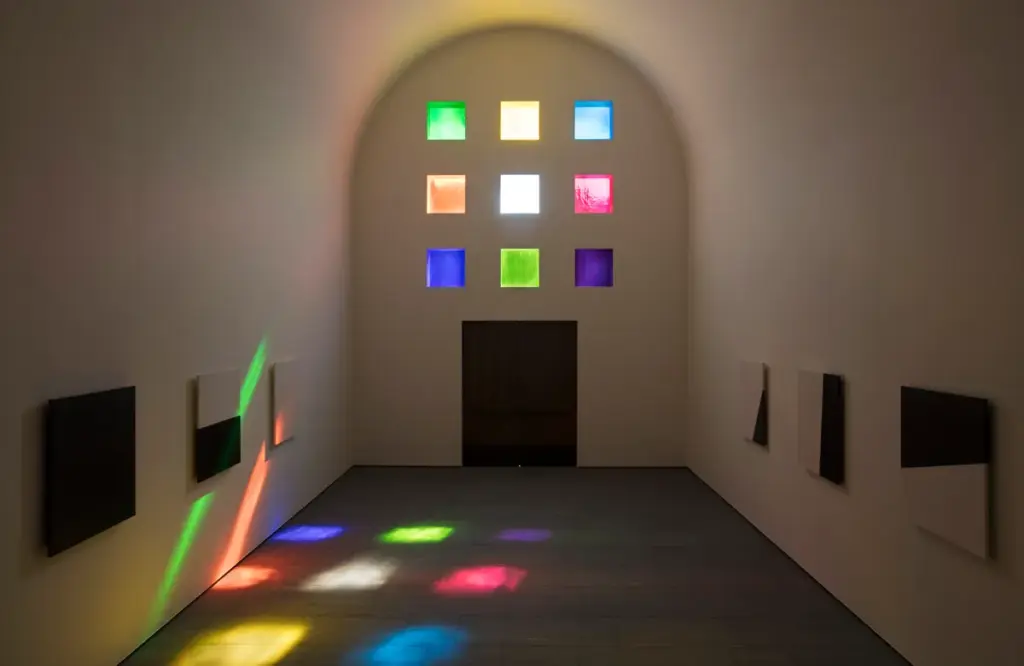
Kelly entwarf die vollständige Architektur: ein kreuzförmiges Gebäude mit farbigen geometrischen Fenstern, die das Licht im Innenraum brechen.

Die Austin Chapel verbindet Minimalismus, Farbtheorie und sakrale Architektur und zeigt wiederum, wie Künstler:innen Licht bewusst als transzendente Erfahrung einsetzen.

Reflexion

Der Artikel verdeutlicht, dass:

  • Räume der Kontemplation und Wahrnehmung sind,
  • Licht als wesentliches Medium der Sakralität nutzen,
  • Architektur, Materialität und Atmosphäre als Einheit denken,
  • religiöse Räume transformieren können, ohne ihre Funktion zu verlieren.

Quellenangabe

Fazzare, Elizabeth. 2018. “7 Chapels Designed by Artists Including James Turrell, Louise Nevelson, and Mark Rothko.” Architectural Digest, May 18, 2018.

Accessed February 2025.

https://archive.is/20210709174407/https://www.architecturaldigest.com/gallery/artist-chapels


Holzherr, Florian. 2015. Kapelle im Dorotheenstädtischen Friedhof, Berlin – Innenansicht.
Fotografie. © James Turrell. Accessed February 2025.


Blanton Museum of Art. 2018. Austin Chapel – Interior View.
The University of Texas at Austin. Courtesy Photo. Accessed February 2025.


Hinweis zur Verwendung von KI-Tools

Zur sprachlichen Optimierung und für Verbesserungsvorschläge hinsichtlich Rechtschreibung, Grammatik und Ausdruck wurde ein KI-gestütztes Schreibwerkzeug (ChatGPT, OpenAI, 2025) verwendet.

How AR Affects Time Perception in Retail Spaces

Why browsing feels faster, easier, and more intentional with augmented reality

Have you ever walked into a store thinking you’d “just stay for five minutes,” only to look at your phone and realize half an hour had passed? Or the opposite—you wanted to browse slowly, but the environment was so overwhelming that everything moved quickly? Time is an interesting thing in retail. It’s not just measured in minutest’s defined by how we feel during the experience. In other words, augmented reality is quietly changing your sense of time.

Why time perception matters in retail

Feeling like time is dragging can make customers bored or overwhelmed. Feeling rushed can push them into poor decisions. Both outcomes hurt the shopping experience.

Studies on customer engagement and AR/VR experiences show that immersive, supportive digital tools can reduce hesitation and improve decision quality. For example:

Time perception is deeply linked to those emotions — confidence, engagement, and clarity.

How AR changes the way we browse

AR affects time perception mainly because it changes how much effort we spend while shopping.
Here’s where the biggest difference happens:

1. AR makes the “first stage” of browsing much faster

AR changes this completely.

With AR, you can scroll through items digitally, preview them instantly, and remove 80% of the “search time.” Instead of checking 30–40 pieces physically, you preview them on a screen and quickly filter out what doesn’t fit your aesthetic.

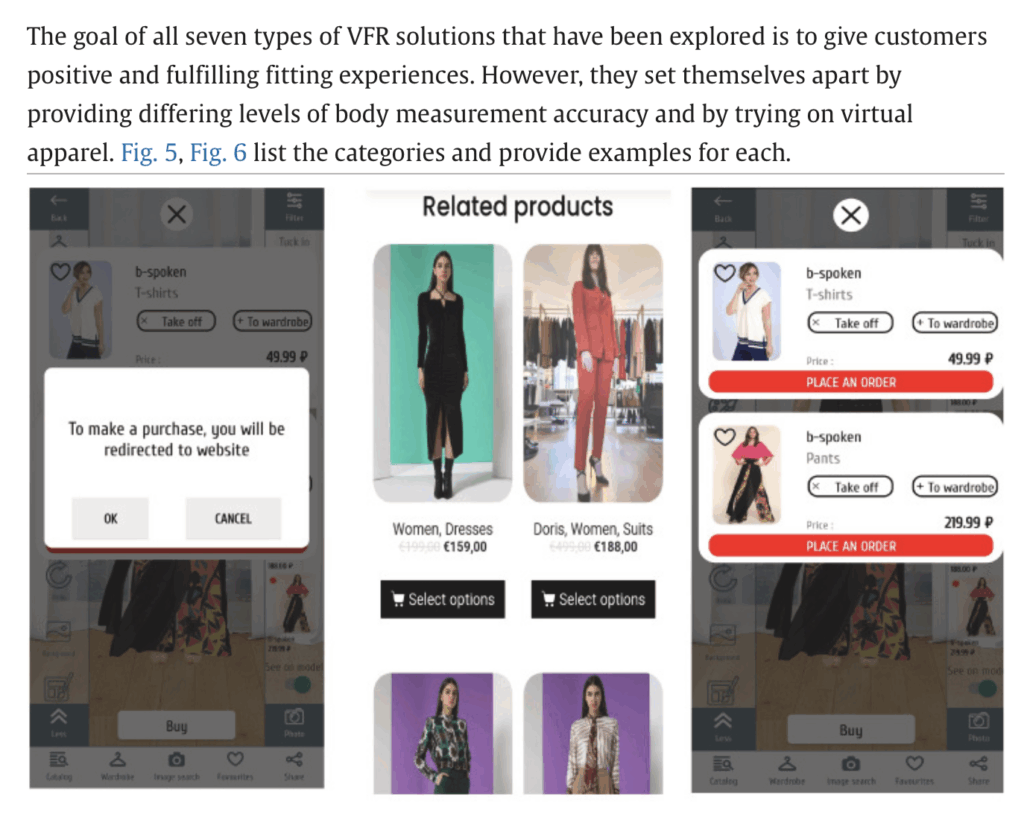
A systematic review on virtual try-on and visualisation supports this idea: visuals increase decision certainty and reduce browsing time before trying something physically.
https://www.sciencedirect.com/science/article/pii/S2543925123000347

2. AR supports better “flow” in the store

When an experience feels smooth and natural, time feels shorter.
AR can guide shoppers with soft nudges:

  • “Here are similar items”
  • “You might also like…”
  • “This is available in your size”

This creates a sense of direction — you spend less time wandering and more time evaluating things that are actually relevant to you.

3. AR speeds up decisions but still respects the need for real try-ons

We all know virtual try-ons can’t fully replicate how clothing feels, or how it behaves on your body.
But AR can narrow down the options dramatically.

Instead of carrying 12 items to the fitting room, AR helps you identify your favorites digitally.
Then, when you do call a staff member or go to the fitting room, you’re only trying on pieces you’re genuinely interested in.

This is where AR’s biggest time effect happens:

Fast digital preview → precise physical try-on → fewer wasted minutes

In academic tone: AR enhances time efficiency by enabling rapid filtering and previewing. After identifying preferred items digitally, shoppers can request them for live try-on — a crucial step, since virtual try-ons still cannot fully replicate texture, fit, or physical comfort.

Why AR makes shopping feel shorter

When a shopper feels:

  • less overwhelmed
  • more in control
  • guided rather than lost
  • confident in their choices

Fan’s 2025 study confirms that AR reduces cognitive load in the evaluation phase, helping consumers stay focused and calm.
https://www.mdpi.com/2071-1050/17/2/728

Less stress = smoother time = more enjoyable shopping.

What this means for the future of retail

AR won’t replace physical stores — it will reshape how we use them.

Instead of spending time searching, customers will spend time evaluating.
Instead of wandering, they will move with clarity.
Instead of feeling rushed, they will feel supported.

The goal is not to make shopping faster — the goal is to make shopping feel better.
If AR can help shoppers spend their time more intentionally, then the entire retail experience becomes more human-centered.

References

  1. Pandya, H. (2024). Effect of AR and VR Experiences on Customer Engagement in Retail Stores.
    https://www.researchgate.net/publication/382681273_Effect_of_Augmented_Reality_AR_and_Virtual_Reality_VR_experiences_on_customer_engagement_and_purchase_behavior_in_retail_stores
  2. Fan, X. (2025). The Role of AR and VR in Shaping Retail Experiences.
    https://www.mdpi.com/2071-1050/17/2/728
  3. Jeong, H. (2023). AR Virtual Try-On and Its Influence on Return Reduction and Consumer Certainty.
    https://www.sciencedirect.com/science/article/pii/S2543925123000347

ChatGPT was used as a supportive tool during the writing process.

How AR-Based Store Design Can Create Comfort and Reduce Anxiety for Introverts

A people-centered perspective

Shopping should be an enjoyable experience — a space for discovery, experimentation, and inspiration that creates positive emotions.
But for many people, especially shy or introverted customers, it’s not that simple.

During my thesis research, one idea kept coming back to me:
store environments are not emotionally neutral.

Some customers feel overstimulated by noise, crowds, bright lights, or the unexpected approach of an employee. Others feel awkward when browsing slowly, unsure how to find their size, or embarrassed when they feel like they’ve “been there too long.” Some people hesitate to ask too many questions, even though they know it’s the staff’s job to help.

These experiences are not rare — people just don’t talk about them.
Even I experience this personally: I love going to stores, but there have been moments where, after asking many questions, I felt uncomfortable for “wasting their time” when I didn’t buy anything. Because of that, I sometimes avoid asking questions at all just to prevent that situation. Another personal challenge is when clothes are folded — after unfolding and refolding 20 pieces, I get tired and feel uncomfortable messing everything up.

This is exactly why AR has such huge potential.
It’s not just a technological “bonus,” but a way to create emotional comfort, personal space, and autonomy in physical stores.

Why Introverted Consumers Feel Uncomfortable in Stores

For decades, consumer behavior studies have shown that the atmosphere of a store directly affects emotions. Overly intense environments — whether visually, socially, or through noise — tend to create stress rather than pleasure. Introverts, who naturally prefer lower levels of stimulation, are especially sensitive to these factors.

This directly affects shopping behavior: some people simply need more space, more time, and more privacy to feel comfortable.

Before AR, the only alternative was online shopping. While it removes social pressure, it also lacks the tactile, sensory, and spatial benefits of a physical store. No matter how convenient online shopping becomes, many people still need to see and try on items in person.
Even I — someone who orders a lot online — have certain categories of clothing that I cannot buy unless I see how they look on my body.

AR fills this gap in a unique and immediate way.  A relaxed atmosphere, for instance, can evoke positive emotions among consumers, fostering feelings of happiness and sparking the urge to make purchases (Kurniawan, 2013)

An empirical examination of perceived retail crowding, emotions and retail outcomes (Almeida C.P., 2019) — This study identifies how spatial crowding (high density of fixtures/space) in retail settings negatively affects positive emotions and satisfaction.  https://www.researchgate.net/publication/233041648_An_empirical_examination_of_perceived_retail_crowding_emotions_and_retail_outcomes

How AR Promotes Emotional Comfort

Many brands see AR as fun, interactive, or “cool,” but its real power is often emotional — and especially helpful for introverted or shy consumers.

1. AR lets customers browse at their own pace

Approaching a staff member or trying to decode chaotic racks can be stressful.
With AR, users can simply scan a QR code and instantly access:

  • product details
  • 3D or 2D visuals
  • color options
  • style recommendations
  • availability

This removes a major anxiety trigger:
“Are they watching me? Do I look like I don’t know what I’m doing?”

2. AR reduces uncertainty by visualizing the product clearly

Uncertainty is one of the biggest reasons anxious customers hesitate.
AR reduces this by showing the product in its real scale or in the real environment.
It helps people save time and preview items before looking at everything physically.

3. AR provides help without forced social interaction

Introverted customers often want assistance just not the kind they have to initiate.
AR replaces awkward questions with calm, digital guidance:

  • similar items
  • outfit suggestions
  • size and fit information
  • store navigation

This turns assistance into genuine support, not pressure.

4. AR places information inside a calmer environment

AR doesn’t need to be flashy or loud.
In fact, it can reduce sensory overload.

Instead of searching visually through rows of items, the information comes directly to the user. It turns browsing into a quieter, more focused moment.

What I’m Planning for My AR Prototype

For my thesis, I want to develop a simple AR prototype using QR codes, PNG clothing items, and Adobe Aero.
With this, users will be able to:

  • view items in AR
  • zoom in and out
  • compare pieces
  • explore freely at their own pace

Ideally, I want users to walk away thinking:

  • “I didn’t feel rushed.”
  • “I could make decisions on my own.”
  • “The store felt less stressful.”

Because ultimately,
AR is not just a technological addition — it’s an emotional support tool.

AR Design for Introverts — Key Principles

1. Keep the interface simple and predictable

Introverted users value clarity and calm interactions.

2. Reduce stimulation with AR, not increase it

Soft colors, slow animations, and minimalist UI improve comfort.

Why This Direction Matters

Modern retail loves to talk about “experience,” but often forgets that not all consumers enjoy the same kind of experience.

Michael Solomon, in Consumer Behavior, writes that reducing psychological discomfort increases satisfaction and confidence in decision-making:
https://www.pearson.com/en-us/subject-catalog/p/consumer-behavior/P200000003579/9780136747053

In short:
Emotionally comfortable customers stay longer, explore more, and feel better about their choices.

“ChatGPT was used as a support tool for translation and grammatical refinement.”

Thema! (Blogpost 2)

Neues Semester, neuer Ansatz! (Aber dieses Mal wirklich in Richtung Masterarbeit!)

Letztes Semester durfte ich mich im Rahmen dieses Blogs mit dem Thema Motion Identity beschäftigen, was durch glückliche Zufälle dazu geführt hat, dass der finale Blogpost mehr oder weniger auf der Electric-Love-Festival-Bühne vorgeführt wurde. (AAAAAAAaaaaaah!)

Doch das ist immer noch sehr weit von dem entfernt, was Masterarbeits-Recherche sein sollte. Deshalb ist die diesjährige Mission: Rechercheansätze, Themen erkunden, „schauen, was wird“ – aber unter der Klammer eines starken Themas!

Aber: „Was willst du denn zur Masterarbeit machen?“ ist eine schreckliche Frage, weshalb ich mich zunächst mit „Was willst du auf KEINEN FALL machen?“ beschäftigt habe:
– reine 3D-Projekte
– etwas Langweiliges
– irgendeinen halbstark animierten Film (siehe Bachelorarbeit), in dem im schlimmsten Fall noch ein 2D-Rig vorkommen muss

Und während ich gedanklich weiter zwischen „Was will ich?“ und „Was will ich nicht?“ hin- und hergeschwommen bin, fand die Creative Night Graz statt!
Und irgendwie fand dieser kleine Ick* beim Thema 2D-Character seinen Weg ins Gespräch mit einem Animationsstudio (siehe Impuls-Beitrag), und auf einmal war da eine Frage: „Warum muss denn überall so ein Character rein?“

(*Ein „Ick“ ist ein plötzliches Gefühl der Abneigung oder des Ekels gegenüber einer anderen Person oder einem Ding.)

Die Frage hat ihren Ursprung wohl darin gefunden, dass sich bei fast allen Erklärfilm-Aufträgen der Vergangenheit, in jedem Pitchdeck und jedem Kund:innen­gespräch zum Thema Animation ein 2D-Character einschleicht (und wenn auch nur für eine unnötige Sequenz – Hauptsache einmal FULL BODY von links nach rechts durchs Bild) – so auch bei den Kolleg:innen aus der Branche.

Und ich habe mich gefragt:
Muss das denn so sein?
Woher kommt die Besessenheit von Kund:innen mit den kleinen Figuren? Vor allem in der Animation?
Funktioniert es tatsächlich gut, oder liegt es vielmehr am fehlenden Vorstellungsvermögen für alternative Erzählstrukturen?
Wie kann ich es schaffen, meinen zukünftigen Kund:innen dahingehend die Augen zu öffnen?
Vielleicht … mit guten Praxisbeispielen?

Und so sind wir bei folgender erster, grober Themenstellung gelandet:


Arbeitstitel:

Beyond Characters: Alternative Narrative Strategien im Motion Design

„Character – Warum Marken- und Erklärvideos neue narrative Strategien brauchen“

Forschungsfokus: Ich möchte untersuchen, warum Figuren/Maskottchen im Motion Design so dominant wurden, aber heute oft nicht mehr die wirksamste erzählerische Lösung darstellen – besonders in Branding- und Erklärvideos.

Zentrale Recherche-Blöcke:

A. Analyse: Warum Charaktere im Motion Design so populär wurden

Eventuell folgende Themen recherchieren:

  • historische Entwicklung: von TV-Maschinenfiguren über Marketing-Maskottchen bis hin zu 2D/3D-Motion-Charactern
  • psychologische Grundlagen (Identifikation, Anthropomorphismus)
  • Marketing-Mechaniken: Wiedererkennung, Emotionalisierung
  • Plattform- und Content-Trends (YouTube-Erklärvideos, Social-Media-Mascots)

B. Analyse: Warum Charaktere heute oft als oberflächlich oder redundant empfunden werden
Eventuell folgende Themen recherchieren:

  • Markenästhetik wird vereinheitlicht
  • „Character Fatigue“
  • zu generische Character-Styles (Flat, 3D-Cute, Corporate Memphis)
  • Ablenkung vom Kerninhalt statt Klarheit
  • Expertenmeinungen (Interviews)
  • Tests: gleiche Botschaft einmal mit Charakter, einmal ohne – welche wirkt klarer?

C. Neue narrative Strategien ohne Charaktere
Eventuell folgende Themen recherchieren:

  • Wie kann man Geschichten über Form, Typografie, Rhythmus, Farbe, Timing und abstrakte Bildsprache erzählen?
  • „Motion Grammar“: Bewegung als Bedeutungsträger (Siehe DesRes Motion Identity Thema)
  • Visuelle Systeme, die Marken klarer ausdrücken als Figuren (Siehe DesRes Motion Identity Thema)
  • non-character communication im Branding 

Keywords

Motion Graphics, Animation, Character Animation, non-character communication, storytelling, motion language, emotion through form, design expression, motion grammar, mascots, form-based storytelling, abstract narrative

Projektidee

A) Eine Serie experimenteller Animationen, die dieselbe Botschaft jeweils ohne Figuren kommunizieren.

Experimente z. B.:

  • nur Typografie
  • nur Formen & Komposition
  • rein über Geschwindigkeit & Rhythmus
  • minimalistische visuelle Systeme
  • abstraktes Storytelling (keine Avatare, keine Hände, keine Augen)

B) Endprojekt dass man später als Tool nutzen kann um es z.B Kund:innen vorzulegen & damit Aufklärarbeit zum Thema Animation zu machen und sie von einer „Non-character“-Erzählstruktur zu überzeugen 

—————

Soweit so gut – es ist einmal ein Anfang!

Aber Wo hackt’s noch:
– Will ich wirklich SO VIEL über Character lernen und schreiben, nur um dann zu sagen „Genau – UND JETZT OHNE!“
Lässt sich der Fokus vielleicht noch mehr auf Recherche in die Richtung „Alternativen“ drehen?

– Das Thema Literatur 🙁

Was wird das Projekt: Ist das Praxisprojekt ein Video, dass eben keine Character nutzt und super funktioniert, oder sind es sogar mehrere? Gibt es das Gegenbeispiel mit Character? Oder sollte das Projekt vielleicht sogar schon eben jene Aufarbeitung sein die ich meinen zukünftigen Kund:innen zeige/sende um zu sagen „Klar Character können wir machen… aber So geht’s auch!“

Wie geht’s weiter:

Hoffentlich mit einem Beratungsgespräch mit Roman (danke!)
Und dann muss man – Wohl oder Übel – in die Bibliothek (oder das INTERNET) um mit der tatsächlichen Recherche loszulegen!

Bis dahin GaLiGrü

#4 London Symphony Orchestra: Abstraction and Motion in Branding

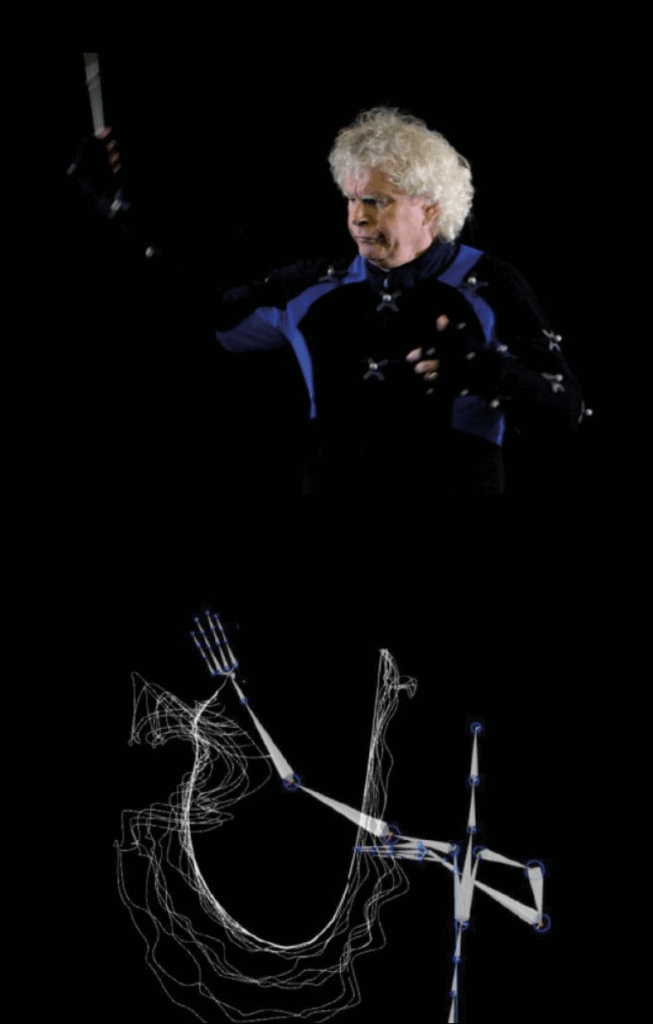
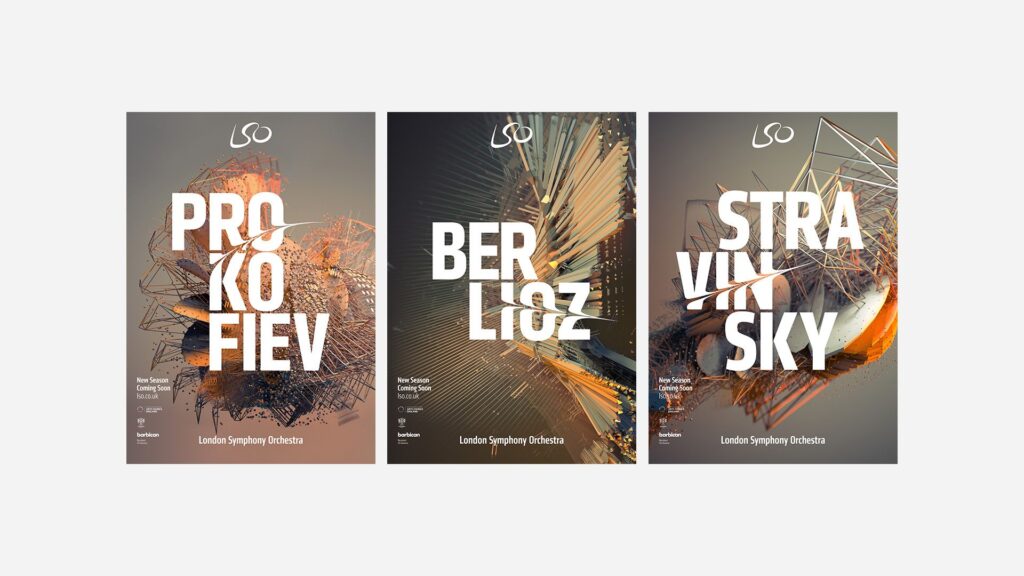
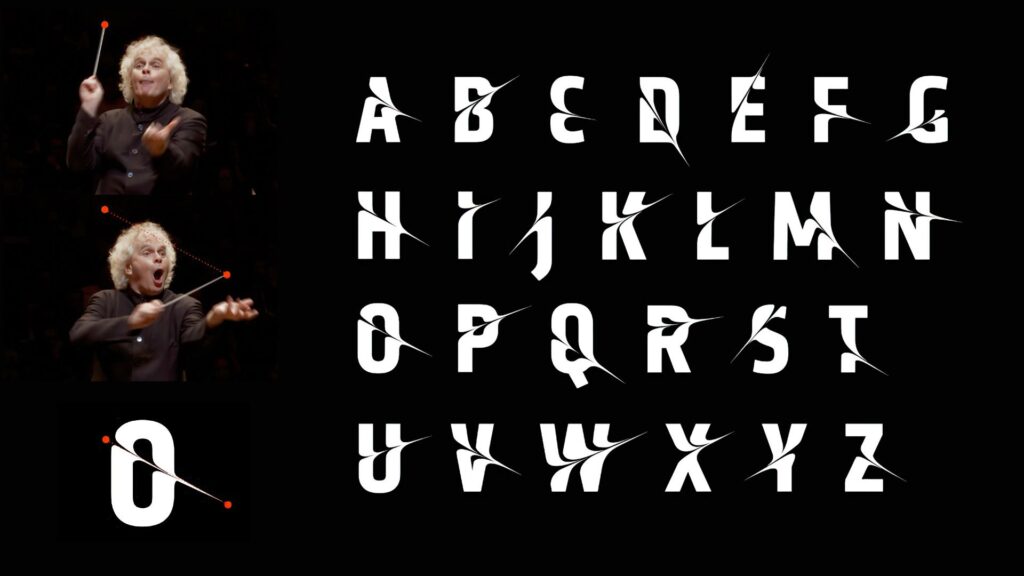
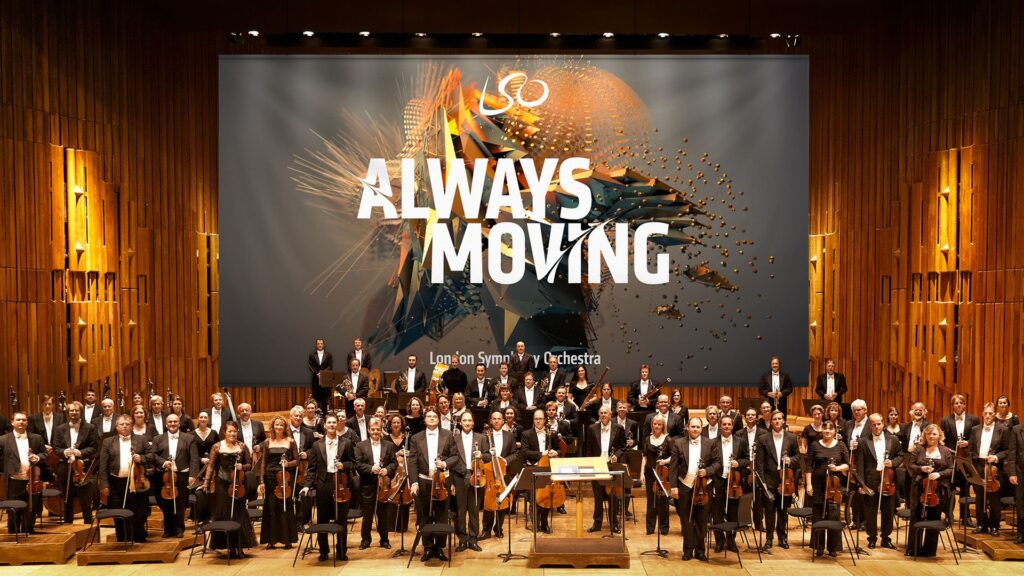
In 2017, the London Symphony Orchestra (LSO) introduced a new visual identity for its 2017/18 season. Instead of using typical images of musicians or instruments, they decided to do something much more experimental. The LSO turned to motion capture technology to create a visual language that reflects the energy, emotion, and dynamism of music itself. This collaboration, executed with the creative agency Design Bridge, used motion capture to turn music and conducting into abstract moving visuals. I found this project really interesting because it mixes classical music with digital art and motion design in. a way you don’t see very often or at least I haven’t. The whole idea was started by Sir Simon Rattle who was the LSO’s Music Director at that time. His conducting movements were recorded with twelve Vicon cameras at 120 frames per second. This helped to create a very detailed motion data that digital artist Tobias Gremmler later was able to transformed into abstract animations like abstract forms, which visually embodied the rhythm, intensity, and flow of the music. Form this data the team also created two typefaces. One of the looked more soft and flowing for a more gentle gesture approach. And the other was sharper and more angular for stronger movements. Both these typefaces worked together with the animations and the still images with this creating a full visual identity that was later on used everywhere. (The Partners Unveil Identity for LSO Formed by Tracking the Conductor’s Movement, 2017)

Abstract Forms and Motion

The abstract shapes generated from the motion capture are not random. Each shape is based on Sir Simon Rattle’s actual movements while conducting. However, the visualizations do not echo his motion. They turn his gestures into swirling vortex-like structures that suggest the textures and materials of an orchestra: wood, brass, smoke, and string. These organic, kinetic forms function as an “abstract score,” where lines, loops, and flowing wires communicate rhythm, energy, and dynamics in a visual language that parallels musical notation. Color and texture also play a big role. The animations use gradients, light flows, and semi-transparent textures to evoke elements of the orchestral soundscape. Air, vibration, resonance, and the interplay of instruments. Everything is always moving which reflects how music itself is never static. Here I really liked how the project manages to translate the feeling of music into a visual experience.

Impact and Significance

This approach positions the LSO as both a guardian of tradition and a forward-looking, innovative institution. By showing the conductors gestures in such an artistic way the visuals create a more emotional and personal connection to the music. In an industry where orchestral brands often remain conservative and predictable, the LSO’s identity stands out for its bold, kinetic abstraction. The combination of the custom typefaces and the abstract animations also helps with recognition. It shows that classical music can work with technology and contemporary design without losing its identity. 

Relevance to Motion Design

For motion design, this project is a great example of how movement can be turned into something abstract but still meaningful. It shows how motion graphics can build a whole brand identity and not just act as decoration. Because every visual element comes directly from the conductor’s movements and the music, the design feels very connected to the source. It proves that abstract shapes can still tell a story and carry emotion.

Even if the project is really strong, there are some challenges. The abstract visuals might not make sense to all viewers. People who don’t know much about design or conducting might think the shapes are just pretty graphics without understanding the idea behind them. Another issue is the budget. Motion capture is expensive and needs advanced equipment, which means smaller orchestras probably couldn’t do something similar. However I was still very fascinated by this approach and project itself and the way it was executed. 

Bibliography:

The Partners unveil identity for LSO formed by tracking the conductor’s movement. (2017, January 20). https://www.itsnicethat.com/news/the-partners-lso-identity-motion-capture-200117