The exhibition Overlays was the first time I was involved in an exhibition not just as a participant, but as one of the main coordinators. Together with Magda, I was one of the major speakers for Media Design, which meant that we were responsible for coordinating everything related to our major. From around December onwards, we regularly met with the other major speakers to discuss what still needed to be done for the exhibition. These meetings included topics like floor planning, budgeting, and deciding what each major wanted to present. At the same time, we also talked a lot within our own major, not only about what we wanted to show, but also how we wanted to show it. For us, it was important that Media Design would not just present simple screens with films, but create something more thought-out and spatial. Alongside the weekly meetings with the other speakers, we also had occasional update meetings with the major leads. These were important to keep everyone informed about our progress and to clarify open questions early enough.
One of my personal challenges during this time was managing everything alongside the short film project. At that point, the short film was very close to my heart, and I was already deeply involved in it. I noticed that balancing both projects was harder than expected and made me reflect a lot on my time management and prioritisation. It was a good reminder that even exciting projects can become stressful if everything happens at once. Working together with Magda was a very positive experience. I felt like we complemented each other well and balanced out responsibilities and levels of engagement. Especially in stressful moments, it helped a lot to not be alone with decisions and tasks. Before the Christmas break, the exhibition still felt very abstract and far away. After the holidays, however, it suddenly became very real. Deadlines got closer, decisions had to be made faster, and naturally, the stress level increased. For Media Design, selecting projects was relatively straightforward, since multiple projects could be shown on shared screens. One of our main focuses was the “cinema” area, where we planned to show two short films. Additional individual projects were displayed on a screen wall, inspired by an exhibition magda had seen in Switzerland. We also included a separate screen for passion projects. Overall, everyone from the major had the opportunity to submit and exhibit work. Looking back, this phase taught me a lot about coordination, communication, and responsibility. Being part of the organisational side of an exhibition showed me how much work happens behind the scenes before anything becomes visible to the audience.
Für meinen Dokudreh Anfang Februar habe ich schon einiges an Ideen und Plänen gesammelt über die letzten Monate hinweg. Was ich jedoch noch nicht gemacht habe, ist mich für eine dieser Ideen zu entscheiden und sie detaillierter auszuführen. Diese Entscheidung habe ich inzwischen endlich getroffen (zumindest vorläufig). In diesem Blogpost will ich grob beschreiben, wie der Ablauf der Doku aussehen soll, in welche thematischen Abschnitte der Film aufgeteilt werden soll und wie sich diese von einander unterscheiden. Außerdem habe ich auch schon angefangen Shot-Ideen für einzelne Szenen zu sammeln und werde eine ausführlichere Liste in einem der nächsten Blog Beiträge erstellen.
Narrative Arc
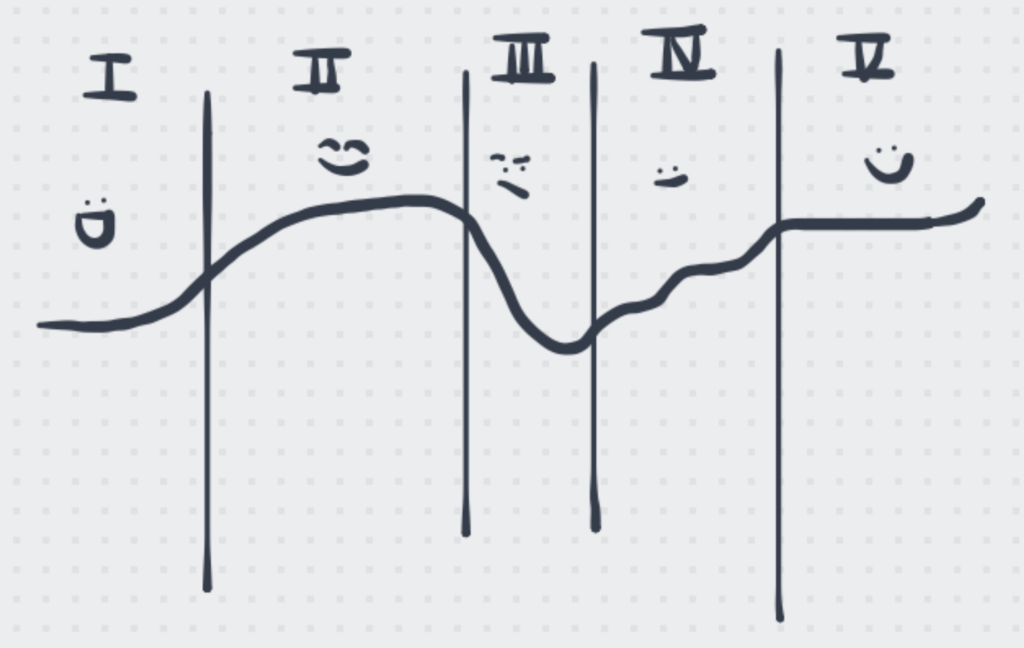
In dieser Grafik habe ich versucht höchst professionell zu visualisieren, wie sich die Geschichte der Dokumentation über die unterschiedlichen Phasen hin entwickeln soll. Die einzelnen Phasen beschreibe ich im Folgenden genauer:
PHASE 1: Die Menschen Stimmung: aufgeregt, euphorisch, hibbelig, aufgedreht, Vorfreude Wir lernen zum ersten Mal unsere Reiseteilnehmer kennen, anfangs nur flüchtig über Aufnahmen beim Packen, kurze aufgeregte Blicke und eilige Schritte. Wir sehen wie die einzelnen Charaktere aufeinander treffen. Es herrscht überschwängliche Freude, aber man merkt auch, dass Nervosität und Aufregung in der Luft liegen. Niemand weiß so recht, was ihn erwartet.
PHASE 2: Die Anreise Stimmung: Beruhigung, in sich kehren, es sich bequem machen, leiser, bedachter, vielleicht etwas mulmig Die Gruppe wird ruhiger, kommt im Zug an und stellt sich auf die lange Fahrt ein. Es werden noch Zähne geputzt und Betten gemacht, das kann noch aufgedreht und leicht überfordert sein. Die anfängliche Überdrehtheit lässt nach, die Zweifel und Ängste bleiben vielleicht noch, aber man ist auch im ruhigen Reisemodus angekommen. Es werden vielleicht noch geflüsterte Gespräche geführt, vielleicht noch gelesen und aus dem Zugfenster geschaut. Dann nur noch Zuggeräusche, vorbeiziehende Lichter. Die Stimmung wird wieder aufgedrehter als nach dem Frühstück im Zug langsam der Endbahnhof näher kommt. Vielleicht werden noch Reisepläne besprochen, Vermutungen und Vorfreuden geäußert.
PHASE 3: Kritische Auseinandersetzung Stimmung: hektisch, voll, überfüllt, hinterfragend, kritisch, reflektierend, erschöpft Nach der Ruhe im Zug kommt die Gruppe in der Stadt an, der Bahnhof ist voll, der Weg zum Hotel wird nicht sofort gefunden, die Stimmung wird wieder gestresster. Reflexion und Zweifel werden nicht offen erklärt sondern über Gesprächsfetzen erfahrbar gemacht. Vielleicht gibt es Gespräche darüber, dass nachhaltig reisen Dinge auch komplizierter macht, vielleicht darüber dass es ein Privileg ist so reisen zu können. Man fragt sich, wo die Verbindung bleibt, wie man mit Locals in Kontakt kommen soll und warum man sich vielleicht fremd und unwillkommen fühlt.
PHASE 4: Wege finden Stimmung: hoffnungsvoll aber vorsichtig, zaghaft, hinterfragend, kritisch, viel Diskurs und Dialog Die Reise nach Lappland geht weiter, der Zug fungiert wieder als Ort für Pause und Reflexion. Vielleicht spricht man über das Erlebte, vielleicht über das was noch kommt. In Lappland angekommen gibt es direkten Kontakt mit Einheimischen, mit deren Lebensweise und Werten. Reisen fühlt sich richtig an, nachhaltig. Zwischen Sauna, Kartenspielen und Skitouren finden Gespräche statt die zusammenschweißen. Vielleicht gibt es Meinungsverschiedenheiten, vielleicht tauchen Probleme auf, aber in Summe ist die Gruppe eine Einheit. Durch das Ankommen bei sich selbst kann man sich auch für Neues öffnen und auf andere zugehen. Phase 4 lebt vom Austausch und vom gegenseitigen Respekt. Zuseher lernen gemeinsam mit den Reisenden. Man sieht was Nachhaltigkeit bedeutet.
PHASE 5: Zaghafter Optimismus Stimmung: optimistisch, auch kritisch, Fazit ziehen, zufrieden, selbstsicher Die Heimreise wird angetreten, man muss sich wieder von Lappland verabschieden. Die Hinreise wird gespiegelt, aber die Stimmung ist beruhigter, reflektierter und zufriedener. Die Reisenden haben etwas über das Land, seine Menschen und sich selbst gelernt. Man merkt wie die Reise nachwirkt in den Köpfen der Reisenden. Nicht nur Erinnerungen sondern vielleicht auch neue Freundschaften und neues Bewusstsein sind entstanden. Man erkennt eingespielte Dynamiken in der Gruppe. Man kann auch mal gemeinsam Schweigen und einfach nur sein.
ENDE
Im Allgemeinen soll dieser Film nicht erklären sondern zeigen. Er soll nicht belehrend sein sondern Zuseher mitnehmen und sie beobachten lassen wie es aussehen kann, wenn Nachhaltigkeit mit Überzeugung gelebt wird. Dass es nicht immer nur schön und leicht ist, sondern auch schwer sein kann und man manchmal vielleicht beginnt zu zweifeln. Dass man sich sehr wohl seiner privilegierten Lage bewusst sein muss und anderen immer mit Respekt und Wertschätzung gegenübertreten soll. Dass echte Verbindungen und prägende Erlebnisse dann entstehen können wenn man bereit ist sich zu öffnen und auf andere zuzugehen, auch wenn einem das vielleicht die eigenen Fehler und Unzulänglichkeiten vor Auge führt.
Allerdings ist mir auch bewusst, dass ich die Emotionen Anderer nicht planen kann und nicht entscheiden kann, welche Gespräche geführt werden und was passieren wird. Alles in Allem will ich versuchen, einen klaren roten Faden in meinem Kopf zu haben, der mir als Anhaltspunkt dafür dient, was ich einfangen will und welche Stimmungen ich audiovisuell darstellen will. Gleichzeitig will ich aber auch flexibel genug bleiben um Abweichungen von meiner Storyline nicht zu ignorieren sondern genauso festzuhalten und offen dafür zu bleiben, meine Pläne auch noch zu ändern. Ich denke, am Wichtigsten wird es sein, immer bereit und aufmerksam zu sein und in den richtigen Momenten auf REC zu drücken.
One of the projects that gave me the biggest sense of accomplishment this semester was our short film shoot in December. Although it was also really stressful and exhausting at times, I loved how we all came together as a group and everyone gave their best and played their role to create an amazing product.
I found it incredibly interesting and inspiring to get somewhat of an insight into what it might look like on a real film set and working with a large team. All of the practical experience I have had so far outside of FH was with event after movies or smaller commercial productions where a team of maximum 3 people did everything from lighting, a little bit of scripting, camera and editing. However, with all of these shoots it was mostly just interviews or statements of company CEOs or employees talking about their work, so there wasn’t much creative freedom in it. This is also why I enjoyed it so much to work with real actors and see a story come to life that we as a group developed further from an initial idea.
It also gave me a whole new appreciation for how much work goes into just a couple of minutes of professionally produced films or shows. How much time it takes to plan out every single shot, get the lighting just right, think of everything needed for the set design and so many more steps that need to be taken before even turning on a camera. In comparison the work I usually do takes a lot less preparation and planning beforehand, but you also need to be a lot more flexible and spontaneous with filming because there are some situations which you cannot simply redo if the focus or camera movement were off. I think having experienced both situations will greatly help me with my master’s project in order to combine thorough planning and thinking of storytelling with having to be spontaneous when things happen that cannot be planned for. During documentary filming, depending on the style of documentary, you might have to stay very vigilant not to miss shots that will help your planned story along or maybe even ask the right questions to the right people in order to achieve your goal for the movie.
One personal takeaway I got from the film shoot was that I am very bad at saying no, which often lands me in situations where I’m in over my head. That is also when I become frustrated and I’m always scared that I am very rude to others just because of my own exhaustion and stress. So in the future I want to be able to just clearly declare the tasks I want to do and have the capacity for without feeling bad for saying no to other tasks.
I still don’t know whether in the future I would rather be involved in more creative projects that are thoroughly planned and staged or whether I prefer capturing real moments with real people even if that means not being able to influence the captured story all that much.
In 2019, I had the incredible opportunity to attend a UX masterclass/workshop led by a representative from Google. As someone deeply interested in user experience design, this event felt like a stepping stone towards the world of UX, a world that had little online material back then. I remember the anticipation building up to the day, eager to explore and absorb knowledge.
The session kicked off with an overview of core UX principles. Our instructor emphasized the importance of user-centered design and the value of empathy in the design process. I learned how critical it is to understand users’ needs, preferences, and pain points. This knowledge is crucial when crafting experiences that resonate with the target audience.
Through interactive discussions, we explored various methodologies, including personas, user journey mapping, and usability testing. Engaging in group activities helped reinforce these concepts. One of the most impactful exercises involved role-playing as users to gain a deeper understanding of their perspectives. It was a unique way to create empathy, allowing me to see through the eyes of others—something I realized was fundamental in UX design.
Next, we delved into sketching practices. The instructor encouraged us to embrace spontaneity and creativity in our designs. Armed with whiteboards and markers, we transitioned into a hands-on sketching session. I was surprised at how liberating it felt to let go of perfectionism and allow ideas to flow freely.
I sketched a variety of wireframes and mockups, understanding that quick sketches can often convey ideas more effectively than detailed designs. The instructor emphasized that “simple is often better;” it’s about communicating concepts clearly rather than getting bogged down in intricate details. This reminder became a valuable takeaway, highlighting that sometimes the simplest solutions are the most effective.
As we continued, we shifted focus to best UI practices. Our instructor shared insights into visual hierarchy, color theory, and typography. Each element can significantly impact how users interact with a design, and I found myself captivated by the nuances of effective UI design.
We studied case studies from successful apps and websites, analyzing what made them user-friendly and visually appealing. Our instructor also discussed the importance of consistency in design elements, addressing how it contributes to brand identity and user trust. This segment reinforced the understanding that good design goes beyond aesthetics—it has a functional purpose.
Walking away from that masterclass, I felt invigorated and inspired. The combination of theoretical knowledge and practical application left a lasting impression on me. I was grateful for the chance to learn from a Google representative, who shared both industry insights and hands-on techniques.
This workshop not only solidified my understanding of UX principles but also sparked a passion for continual learning in the field. I realized that every project is an opportunity to experiment, iterate, and gather feedback to enhance the user experience further. The importance of empathy and user-centered design became pillars of my approach, guiding my journey as a Product Designer.
Disclaimer: AI was used to fix any grammatical mistakes and for better phrasing.
It’s been a while since my last blog post, and in that time, my thesis has taken a much more concrete shape. At its core, my research is about social anxiety and emotional tension, and how these inner states can be expressed, explored, and softened through interaction, technology, and tangible experience.
I’m interested in how design can create environments of social comfort rather than pressure. Spaces where people don’t have to perform, explain themselves, or be “good” at interacting. Instead, they can approach their emotions through doing, touching, moving, and experimenting.
Even though the topic sounds serious, play is still at the heart of it. Not play as entertainment, but play as a method. A way to interact with uncertainty, vulnerability, and anticipation in a gentle and non-judgmental way.
That’s why I thought it was a good idea to watch the episode “Cas Holman: Design for Play” from Netflix’s Abstract: The Art of Design. Cas Holman is a play designer who creates open-ended tools and environments for children. Watching her work again felt surprisingly close to what I’m trying to do in my own practice. She doesn’t design toys with instructions, but situations and possibilities.
One sentence from the episode really stayed with me: “We don’t design the play, we design for the circumstances of play to arise.”
This is exactly what I’m trying to do in my thesis.
My goal is not to tell people how to feel or how to behave. It’s to design the conditions in which certain interactions and emotions can appear on their own. Cas Holman does this with wood, plastic, and other physical materials. I do it with technology, interaction, and systems. Different kinds of materials, but a similar intention.
Her work creates spaces where children feel free to explore without being judged. In my case, I’m interested in creating environments where people can engage with their own tension, vulnerability, and uncertainty, especially in relation to social anxiety. I don’t want to design “solutions” to emotions. I want to design spaces where those emotions are allowed to exist and be explored.
Even though my thesis is not about children, play is still my method. For me, play means:
not having to be right
not having to perform
not having to explain yourself immediately
It’s a way to approach difficult feelings gently, through interaction rather than conversation.
AI was used for corrections, better wording, and enhancements.
In December I had a talk with Daniel Bauer to discuss my ideas for my Master’s thesis. To be honest, before this talk, my feeling towards the Master’s project was quite negative. I felt very overwhelmed and burdened by all the research I had done. It felt more like a heavy task than a creative fun project. But after talking to Daniel, my mindset changed. He gave me a lot of motivation and helped me see the Master’s thesis as something cool and fun rather than just a struggle. In our conversation, we first talked about my general interests. I told him that I really like animation, motion design, and what I did for”Klanglicht”. I’ve always enjoyed working in an abstract way and creating abstract animations. At that point—which was actually before I directed the short film “Blau wie der Morpho”—I told him that live-action film didn’t really suit me. I thought I would definitely go into the direction of motion design because it felt more like “me.” A big part of our talk was about the abstraction of forms and how they can trigger emotions or reactions in people. Daniel gave me some great examples of this, which I found very helpful for my own thinking process. We discussed a very artistic way of visualizing data. This was a new idea for me, and I became really interested in how to combine data with art and motion. This talk was very important for my personal process because it opened up new directions. It showed me that my interest in abstract forms and motion design could actually become a solid foundation for a Master’s project. I started to think about how I can take something complex, like data, and turn it into something visual and emotional through abstraction. It made me realize that I don’t have to follow a traditional path; I can mix my interest in sound, light, and motion in a way that feels right for me. What I am taking away from this talk with him is that the Master’s project is a chance to experiment. I stopped seeing the research as a burden and started seeing it as a way to find more examples of what I like. Even though I discovered later during the film shoot that I also enjoy directing real people, the thoughts from this meeting about abstraction and data art are still very relevant for my work. I don’t have to decide yet but I guess sonn, but now i feel much more motivated to write my master thesis and explore what subject I am gone be focusing on.
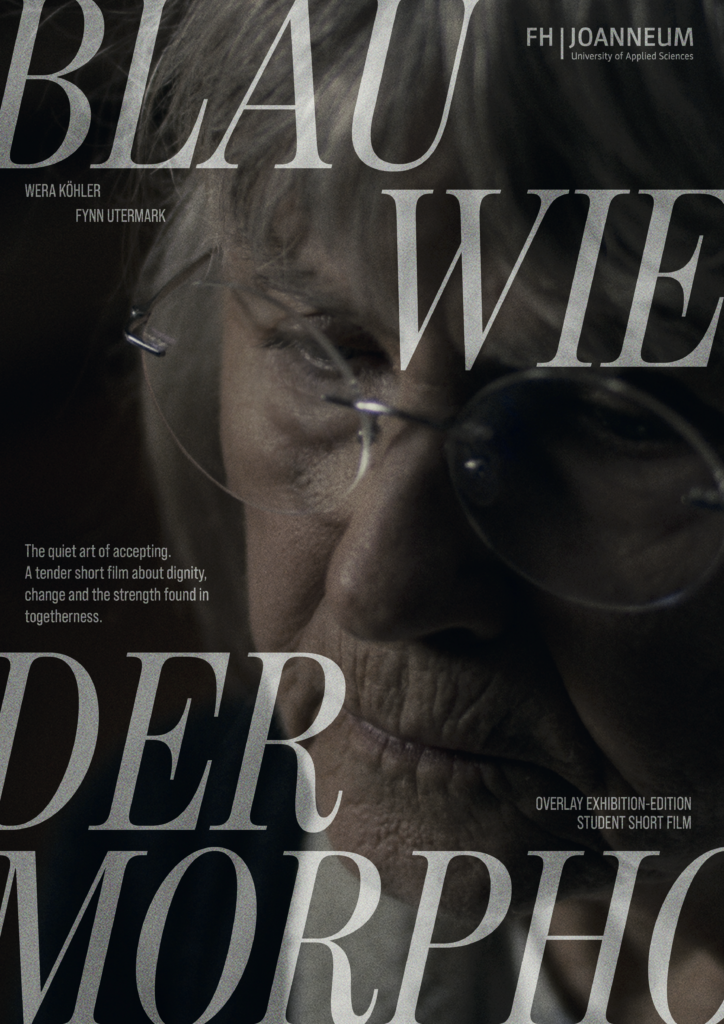
The starting point for this post is a memory of a very stressful but also great feeling I had in a week in December. I was the director for our short film “Blau wie der Morpho”. Before this project, I mostly focused on animation because I liked having total control over every detail. Working with real people on a set felt like a huge hurdle for me, and I wasn’t sure if I could handle it. My main inspiration for the style of the short movie was the ideas that were created in the last semester by some other people in my class as well as a short awareness campaign by Aldi. I really liked their style, it was very realistic and short, but it made you think. That was the direction I wanted for our film about Frau Giraldi and her caregiver Elias.
When I look back at the process, it wasn’t just about the filming itself. I spent a lot of time with two teammates rewriting the script. We changed the whole concept to make it shorter and focused more on “awareness”. During the casting, I learned about a theater piece called “Geteiltes Leben,” which is how I met our main actress. She was perfect for the role of Frau Giraldi because she already had experience playing a similar character. The most difficult part for me was the leadership role. I am someone who really needs harmony and I don’t like telling people what to do if it feels like I’m being bossy. On the first day of the shoot I felt very insecure. It was a student project, so everyone had their own ideas, and sometimes it was hard to make the final decision. I was lucky to have Noah and Peter on the team because they supported me a lot when I struggled with my role as a director. I also came to realize that I enjoyed the time on the set the most. The roles were clearly defined, which made it easier for me to focus on the actors and the scenes. It felt very different from animation. It was more about human emotions and quick decisions. However, the post-production was harder again. When we were editing, many different opinions came together, and my need for harmony made it difficult to just say “no” to ideas I didn’t like. I had to learn that as a director, you sometimes have to be firm to protect your vision. In the end, I was really happy because the actors gave me great feedback. They told me they felt I had a very clear vision for the film. I still more interested in doing animations but this project also gave me an impuls to look into directing or art direction in a general sense. It’s a great feeling to see a vision from your head actually happen in real life. I still need to work on being more confident in my decisions when things get complicated, but I definitely want to do this again.