Connection as the opposite of loneliness

Having explored loneliness in depth – what it is, how it’s defined, and how it manifests – I now want to approach the topic from a different angle. Rather than solely asking how we might design loneliness away, we should also consider its opposite: connection. I want to take a closer look at how we can foster connection and community. This perspective could serve as a powerful starting point for design. After all, connection is a basic human need. In one of the best known models of human needs (Maslow’s Pyramid) it is located on the second and third level: social security, love and belonging and sense of connection [1]. This is also backed by the self-determination theory of Deci and Ryan, who propose three basic human needs, one of them being relatedness (feeling socially connected to others) [6]. Just as loneliness can isolate and harm our well-being, connection has the potential to uplift and create belonging.

But what is connection? And what makes it meaningful instead of superficial? Many people nowadays consider themselves well connected. They largely attribute this to connections via technology based mediums like social media. But while this bridges distances, it undermines deep human connections due to digital distractions and overload and lack of crucial elements for meaningful and deep connection.

In a world dominated by digital distractions, fostering meaningful connections requires intentional effort. The ease of digital interaction often leads to diminished presence – multitasking during family time, taking calls on dates, or scrolling through social media instead of engaging with friends. These habits dilute the depth of our relationships. To counter this, we can focus on strategies like prioritizing thoughtful communication, using technology to enhance rather than replace connections, building emotional literacy, practicing presence, and stepping away from devices. By doing so, we can recenter on genuine human connections and enrich our relationships, seeking out quality interactions over digital convenience [3]. This can even mean just short exchanges with people we love to increase wellbeing and make us feel better [2].

„our relationships have broadened in scope yet diminished in depth. In our pursuit of speed and convenience, we’ve inadvertently sacrificed the intentionality and deliberate slowness that enrich connections.“ [3]

There are of course several definitions of connection, each with different focus and intention. I have chosen this one as it considers interaction and fits into the research conducted thus far:
„connection is the dynamic, living tissue that exists between two people when there is some contact between them involving mutual awareness and social interaction. The existence of some interaction means that individuals have affected one another in some way, giving connections a temporal as well as an emotional dimension.“ [7]

In reference to non-places I would like to add this quote:
„Technology makes it easier to connect but often replaces in-person contact with less meaningful interactions. Even the increase in self-service kiosks and checkouts at stores cuts down on small talk with strangers, which can help with feeling connected. The shift to remote work and Zoom calls means we might be seeing our colleagues less, leading to fewer opportunities for socializing.“ [2]

It is however worth mentioning that even small talk can enhance well-being, build relational diversity, and foster belonging. Research shows casual interactions improve mood, energy, and confidence, even for introverts. Overcoming the “liking gap” (underestimating others’ enjoyment of conversations) helps people feel more connected. Techniques include viewing small talk as a “treasure hunt,” using shared surroundings as conversation starters, and moving from surface topics to personal ones. Compliments on unique self-expression or avoiding sensitive topics can deepen interactions. Practicing small talk strengthens social confidence and thereby the feeling of belonging and capability of creating connection [4].

Based on general research and theories on connection, the following summarizes the key elements of genuine human connection:
Emotional Presence – Feeling seen, heard, and understood is critical for connection (active listening and empathy)
Shared Experiences – Shared activities and experiences foster a sense of belonging and mutual understanding
Trust and Vulnerability – Trust allows people to share their true selves, and vulnerability strengthens emotional bonds
Physical Proximity and Touch – Nonverbal communication, such as eye contact, hugs or other forms of physical contact create a sense of closeness (connection is a neuro-biological phenomenon)
Shared Values and Goals – Having common beliefs or working toward shared objectives builds connection
Reciprocity – Giving and receiving support and care create mutual feelings of appreciation and connection

Relevant paper and an extensive look at connection: “The connection prescription: Using the power of social interactions and the deep desire for connectedness to empower health and wellness”


Sources

  1. Maslow, A. H. (1943). A theory of human motivation. Psychological Review, 50(4), 370–396.
    https://doi.org/10.1037/h0054346
  2. D. Henley, “The secret to feeling less lonely in only 8 minutes,” Thrive Global, Apr. 05, 2024. https://community.thriveglobal.com/the-secret-to-feeling-less-lonely-in-only-8-minutes/
  3. C. Steinhorst, “The way people people has forever changed — focuswise,” Focuswise, Mar. 18, 2024. https://www.focuswise.com/blog/from-superficial-to-significant-transforming-how-people-connect-in-the-digital-age
  4. A. Haupt, “7 Ways to Get Better at Small Talk—And Why You Should,” TIME, Jun. 01, 2023. [Online]. Available: https://time.com/6280607/small-talk-tips-benefits/
  5. J. Martino, J. Pegg, and E. P. Frates, “The connection prescription: Using the power of social interactions and the deep desire for connectedness to empower health and wellness,” American Journal of Lifestyle Medicine, vol. 11, no. 6, pp. 466–475, Oct. 2015, doi: 10.1177/1559827615608788.
  6. Deci E L, Ryan RM. Intrinsic Motivation and Self-Determination in Human Behavior. New York, NY: Plenum; 1985
  7. Dutton JE, Heaphy E. The power of high quality connections. In Cameron KS, Dutton JE, Quinn RE, eds. Positive Organizational Scholarship: Foundations of a New Discipline. San Francisco, CA: Berrett-Koehler; 2003:263-278 https://www.researchgate.net/publication/262725459_The_Power_of_High_Quality_Connections
Digital Age Warfare: The Influence of Propaganda

War propaganda has never been as easily accessible, as fast, and as present as today. Unlike in the past, where censorship and physical distance could limit the dissemination of information, digital technology has erased borders and anyone with an internet connection now has access to a global megaphone. This new environment is now creating a new way for nations, non-state actors, and even individuals to participate in conflict. Whereby platforms such as TikTok, YouTube, and Telegram can be used as unparalleled weapons of persuasion.

At the center of modern war propaganda is the struggle for control over how it is portrayed, particularly in the media. Both governments and armed groups have recognized that shaping public perception is often just as important as victory on the ground. Russian state media, for example, utilize an entire ecosystem of television channels and social media channels to justify actions in conflicts – particularly in Ukraine – by portraying them as patriotic or humanitarian missions (Helmus & Holynska, 2024). These narratives are further reinforced by orchestrated disinformation campaigns, sometimes using fake videos or ‘bot armies’ that push certain hashtags. Such tactics aim not only to gain support within the country but also to create confusion among international audiences (Russische DesinformationskampagnenBundesregierung, 2022). 

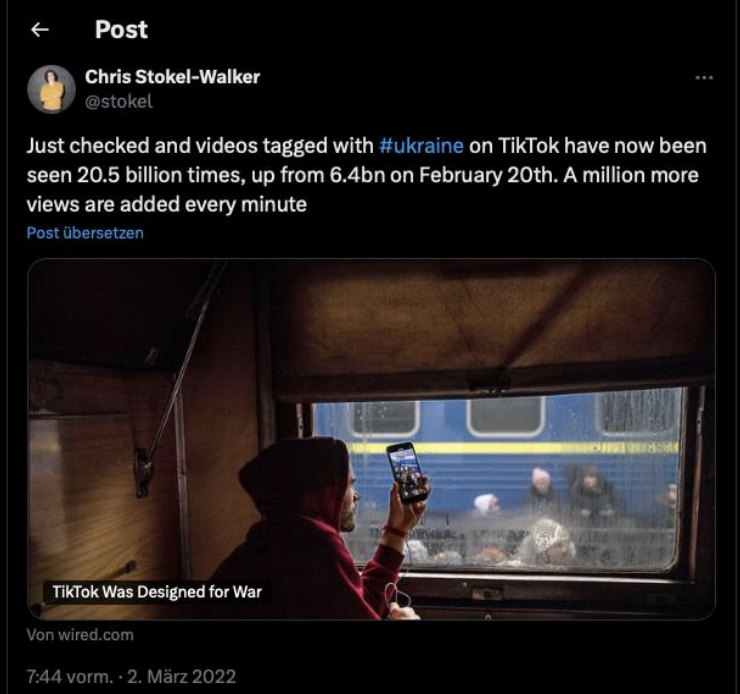
In Ukraine, a different, more hands-on approach has been chosen. Citizens and soldiers are posting real-time updates from the battlefield, sharing personal stories and the human cost of the conflict. The two purposes of these reports: are to boost support at home and to generate international empathy and aid. In this context, war propaganda becomes a community project rather than a top-down responsibility (Sk, 2024). Platforms such as Twitter (X), TikTok, and Instagram allow ordinary people (influencers) to share footage on the ground and shape narratives at the speed of a retweet, significantly influencing global sentiment.

One remarkable development is the weaponization of viral culture. Memes, for example, are not just trivial internet jokes but can become effective propaganda tools. A single meme can summarise a conflict by portraying one side as heroic and the other as villainous (Poepsel et al., 2024). This visual representation often resonates more than long-winded statements or official declarations. Experts point out that memes bypass traditional fact-checking and academic strictness and appeal directly to emotional responses. They can be spread quickly across language barriers and use humor and simplicity to anchor messages in the public’s consciousness.

However, the digital sphere offers more than just memes. Deepfake technology has become a new frontier of war propaganda. Videos that appear to show high-ranking leaders surrendering or making inflammatory claims can spread quickly before they are exposed. Which can lead to momentary chaos. Although fact-checkers often quickly disprove these clips, the remaining doubt destabilizes any agreement about what is true (Kleemann, n.d.). This atmosphere of uncertainty benefits those who profit from the confusion and makes it increasingly difficult for observers especially those without advanced media literacy, to distinguish truth from fake.

Another influential aspect of modern war propaganda is the role of diaspora communities. Digital networking allows people far from the conflict zone to share and strengthen their views from home. People living abroad can become vocal supporters or critics, organizing international protests or fundraising campaigns. Likewise, state-sponsored campaigns can also target these diaspora communities to influence their views and secure their financial or political support. The result is a highly networked environment in which propaganda easily crosses national borders and can continue to be influential. Media literacy therefore becomes an important tool of defense against war propaganda. Educational initiatives can teach citizens how to evaluate sources, cross-check information, and recognize manipulative content (Bildung, 2022). Numerous NGOs and fact-checking organizations are struggling to keep up with the flood of tweets, videos, and articles being produced in real-time in conflict zones. Although these organizations play an important role, their work can be overshadowed by the sheer volume and spread of misleading information.

Ultimately, war propaganda in the digital age is about more than controlling a single narrative; it is about fragmenting information environments so that multiple competing stories coexist. This fragmented reality complicates attempts at diplomacy and can prolong conflicts, as neither side has a single point of reference for negotiations. For the global public, the flood of competing claims can lead to a sense of cynicism or overwhelm, making it tempting to withdraw altogether. While technology has democratized the distribution of information, it has also multiplied the opportunities for propaganda. States and other organizations involved can adapt quickly to this new environment and with that influence minds and hearts more effectively than ever. Navigating this information battlefield requires alertness, nuanced judgment, and a global commitment to transparency so that truth does not become another casualty of war.

Sources: 

Russische DesinformationskampagnenBundesregierung. (2022c, August 30). Die Bundesregierung Informiert | Startseite. https://www.bundesregierung.de/breg-de/aktuelles/aus-narrativen-desinformation-2080112?

Helmus, T. C., & Holynska, K. (2024, September 3). Ukrainian Resistance to Russian disinformation: lessons for future conflict. RAND. https://www.rand.org/pubs/research_reports/RRA2771-1.html?

Sk. (2024, February 2). Russia-Ukraine War through the eyes of social media | GJIA. Georgetown Journal of International Affairs. https://gjia.georgetown.edu/2024/02/02/russia-ukraine-through-the-eyes-of-social-media/

Poepsel, M. A., Malo, A., Obuekwe, C., Wilhelm, M., Góngora, V. P., & Daiber, D. (2024). “Tears have never won anyone freedom:” a multimodal discourse analysis of Ukraine’s use of memes in a propaganda war of global scale. Online Media and Global Communication3(1), 55–81. https://doi.org/10.1515/omgc-2023-0050

Kleemann, A. (n.d.). Deepfakes – Wenn wir unseren Augen und Ohren nicht mehr trauen können. Stiftung Wissenschaft Und Politik (SWP). https://www.swp-berlin.org/publikation/deepfakes-wenn-wir-unseren-augen-und-ohren-nicht-mehr-trauen-koennen

Bildung, B. F. P. (2022, January 26). Kritische Medienkompetenz als Säule demokratischer Resilienz in Zeiten von “Fake News” und Online-Desinformation. bpb.de. https://www.bpb.de/themen/medien-journalismus/digitale-desinformation/290527/kritische-medienkompetenz-als-saeule-demokratischer-resilienz-in-zeiten-von-fake-news-und-online-desinformation/

LS #8 Ok, but how do you design for a Protest

In my last blog post, I started thinking about how protest design works and which big movements have bold and clear designs that everyone recognizes. But what actually makes a great protest design? A design that sticks in people’s minds, inspires action, and is simple and easy to understand.

Let’s break it down:

The Design Anatomy of Protest: Typography, Icons, and More

When it comes to protests, visuals play a crucial and important role in conveying urgency, solidarity and emotion. The design elements of protest materials like typography, color, symbols, and imagery are more than only aesthetic choices. They are tools for communication, organize people around causes, and amplifying voices. Obviously, the graphic language of protest design is rarely made by professional designers but by marchers and people that want something to change, but exactly this lack of budget, urgency and motivation has created and developed its own graphic language and “rules of protest design” (Riechers, 2021).

Typography: The Voice of the Movement

Typography is the cornerstone of protest design. It transforms words into powerful visuals, ensuring that messages are loud and clear. In protests, typography often serves two main purposes: readability and emotional resonance.

  • Bold Fonts: Protest signs often use bold, sans-serif fonts to grab attention and convey urgency. Blocky, all-caps text screams for attention, mimicking the act of shouting. Fonts like Impact or custom hand-drawn lettering create a sense of immediacy and raw emotion.
  • Handwritten Text: The unpolished look of handwritten text adds authenticity to protest messages. It conveys a personal touch, making the message feel direct and heartfelt. This rawness resonates deeply with audiences and serves as a reminder of the human effort behind the cause (Schwendener, 2015).
  • Size and Layout: In a protest setting, readability is critical. Designers use large fonts and simple layouts to ensure messages can be understood from a distance, whether on a placard in a crowd or a digital image on social media (Gosling, 2022).

Icons and Symbols: Visual Shortcuts to Meaning

Icons and symbols are the universal language of protest design. A single image can encapsulate the essence of a movement, making it instantly recognizable across cultures and languages.

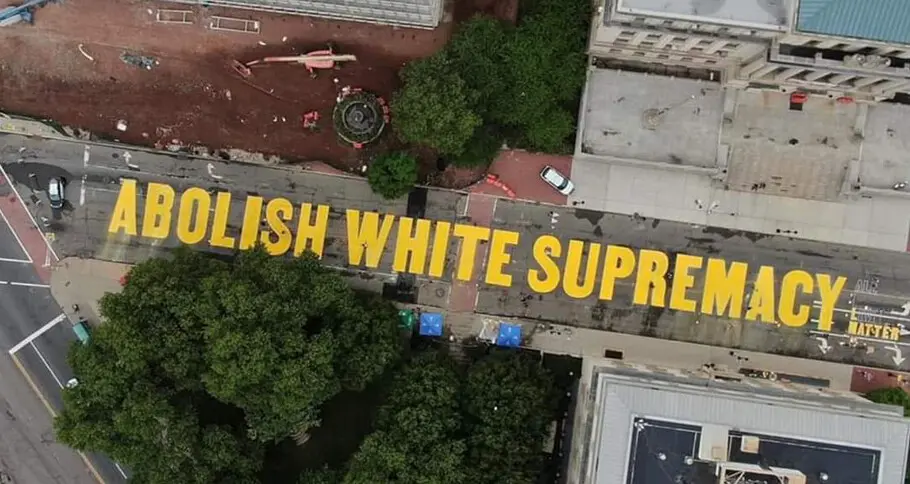
Historic Symbols: The raised fist, peace symbol, and LGBTQ+ rainbow flag are enduring icons that have transcended time. These symbols evoke solidarity, resistance, and pride without the need for words (Reason, 2024).

Abstract Images: Many protests use metaphors and abstract visuals to convey complex ideas and often the urgency of a situation. For example, the climate movement often incorporates imagery of melting ice caps, burning forests, the world, or hourglasses to symbolize the urgency of climate action (Extinction Rebellion, 2019).

  • Adaptable Icons: Symbols that evolve with movements remain effective. The Black Lives Matter fist, for example, has been adapted to incorporate different skin tones, reflecting inclusivity, diversity as well as intersectionality within the cause (K.S.C., 2020).

Color: Setting the Tone of Protest

The influence of color is undeniable. Colors have the ability to shape our behavior, emotions, and mindset; they can calm us, energize us, provoke opposition, and inspire us to act. This effect is especially apparent in protests and demonstrations, where activists have realized that associating their movement with a particular color can help them gain visibility and support. There are colors that are used often as they are associated with Urgency, Anger and Protest and others that are used for certain topics (Lombardo, 2021).

  • Red: Often associated with passion, urgency, and anger, red is a common color in protest materials demanding immediate attention or justice. An example is the Saffron Revolution in Myanmar 2007 that arose due to the decision of the military government to remove subsidies on fuel prices, which caused a 60-100% increase of gas prices (Steinberg, 2008).

Or another known example are the Red Rebels, a street performance group that joined the activism organization Extinction Rebellion in 2015. They mainly do slow motion demonstrations in red cloaks that symbolizes the blood that almost all species on the planet have in common (Red Rebel Brigade, n.d.).

  • Black and White: These colors symbolize seriousness, mourning, or defiance. Black Lives Matter effectively uses black and white to emphasize strength and solidarity while keeping the message stark and unambiguous.
  • Yellow: Yellow is often associated with energy, optimism, and caution. It can evoke feelings of hope and happiness, but also attention, making it effective in movements that seek to raise awareness or demand urgent action, such as campaigns for mental health or social justice. In 2014, the Umbrella Movement in Hongkong made use of the color yellow by bringing yellow umbrellas to the demonstrations that were pro-democracy (Davidson, 2024).
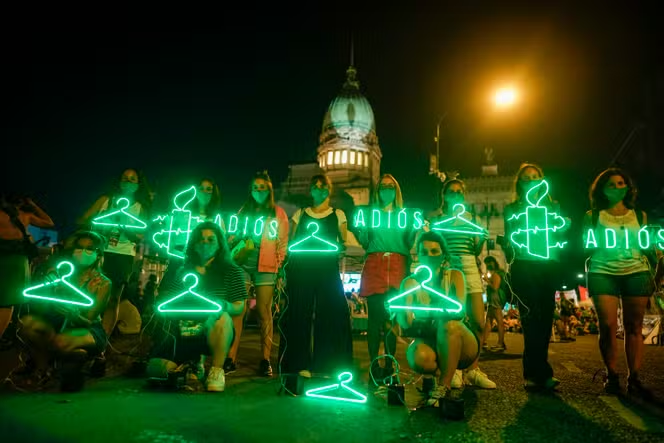
  • Green and Blue: Movements like Fridays for Future use greens and blues to symbolize nature and environmental care, while bright colors in general evoke optimism and hope (Fridays For Future, 2024). Also, green became the color/ symbol of resistance to anti-abortion laws (Connolly , 2022).
  • Purple: Violet represents dignity, justice, and the fight for equality. It has historically been linked to the women’s suffrage movement and LGBTQ+ rights, symbolizing resilience and the ongoing pursuit of social change. Also, purple has become the official color of the Women’s Day (8th  March) which is celebrated every year to honor achievements and struggles of women worldwide (Mullally, 2023).

Slogans and Messaging: Clarity is Key

A great slogan is the heartbeat of protest design. It’s the soundbite that gets chanted, shared, and remembered (Van De Velde, 2022).

  • Conciseness: Brevity is essential. Short phrases like “No Justice, No Peace” or “My Body, My Choice” pack a punch while remaining easy to remember and replicate (Denton, 1980).
  • Repetition: Effective slogans often use repetition to enhance impact, such as “Black Lives Matter” or “Act Now” as they are short and can be embedded easily and repetitive in chants, posters and in the media.
  • First Person: Protest slogans are becoming increasingly individualized, especially in recent years and therefore reflect the growing individuality in demonstrations, Examples are ‘Je suis Charlie’, ‘Me Too’ or ‘I can’t breathe’ (Van De Velde, 2022).

Mediums and Materials: From Streets to Screens

Protest design spans a variety of mediums, each with its unique considerations (Sunmola, 2020)

  • Placards and Signs: Often handmade, these designs prioritize bold typography and durable materials like cardboard for practicality. Their imperfection adds a raw, human touch.
  • Posters and Flyers: These allow for more detailed messaging and artistic expression, combining text, imagery, and colors to inform and inspire.
  • Digital Design: Social media posts and digital posters amplify messages far beyond physical protests. The designs often include shareable elements like hashtags and calls to action, ensuring the message spreads globally.

Design for Accessibility

An often-overlooked aspect of protest design is accessibility. Ensuring designs can be understood by diverse audiences is key to inclusivity. Depending on the context it is important to consider and adapt the different design aspects mentioned above to achieve maximum accessibility in protest design (Vision Australia, 2025).

  • Readable Fonts:  Big clear fonts with high contrast ensure legibility for people with visual impairments (Gosling, 2020)
  • Language: Including multiple languages or universally recognized symbols can make messages accessible to a broader audience. Though sometimes this and the bullet point before are hard to combine, as it is hard to put multiple languages on one placard and still expect the font to be big and bold.
  • Audio and Video: In digital formats, including captions, subtitles, or audio descriptions ensures accessibility for people with hearing or visual disabilities.

The Impact of Good Design

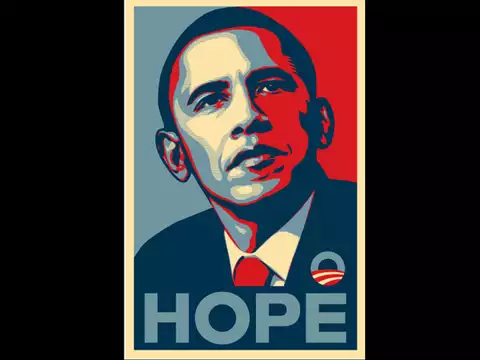
Protest design isn’t just about aesthetics—it’s about creating a visual identity for movements, fostering emotional connections, and mobilizing action, it’s a tool of empowerment and representation. Posters, stickers, and digital graphics serve as both art and argument, encouraging viewers to interact with the content in ways that dissolve the boundary between protest and education (Jasmine, 2024). When done well, it leaves an indelible mark on history. An Example could be Shepard Fairey’s “Hope” poster for Barack Obama’s 2008 campaign or the “Silence = Death” design from the AIDS activism movement. These visuals became cultural touchstones, encapsulating the spirit of their respective causes (Art Institute Chicago, 2008).

Sources

Art Institute Chicago. (2008). Barack Obama “Hope” Poster. The Art Institute of Chicago. https://www.artic.edu/artworks/229396/barack-obama-hope-poster

Connolly , A. (2022, July 6). IN PHOTOS: Here’s how green became the colour of abortion rights. Global News. https://globalnews.ca/news/8970022/green-colour-of-abortion-rights/

Davidson, H. (2024, September 28). “I was so naive”: 10 years after Umbrella protests, Hongkongers remember China’s crackdown. The Guardian; The Guardian. https://www.theguardian.com/world/2024/sep/28/i-was-so-naive-10-years-after-umbrella-protests-hongkongers-remember-chinas-crackdown

Denton, R. E. (1980). The rhetorical functions of slogans: Classifications and characteristics. Communication Quarterly, 28(2), 10–18. https://doi.org/10.1080/01463378009369362

Extinction Rebellion. (2019, April 20). The origins of the extinction symbol. Logo Design Love. https://www.logodesignlove.com/the-extinction-symbol

Gosling, E. (2020, August 11). Strongly worded letters: Typography and modern protest. Monotype. https://www.monotype.com/resources/expertise/typography-and-modern-protest

Gosling, E. (2022, July 18). Why typography still packs a punch when it comes to protest. Creative Review. https://www.creativereview.co.uk/why-typography-still-packs-a-punch-when-it-comes-to-protest/

Jasmine, M. (2024). The Role of Design in Social Justice Movements. Desireedesign.co.uk. https://www.desireedesign.co.uk/brand-insider/design-social-justice-movements

K.S.C. (2020, June 17). A brief history of protest symbols, from cockades to raised fists. The Economist. https://www.economist.com/prospero/2020/06/17/a-brief-history-of-protest-symbols-from-cockades-to-raised-fists

Lombardo, G. (2021, March 23). The Colors of Protest. DeMagSign. https://medium.com/demagsign/the-colors-of-protest-46289d141e2b

Mullally, W. (2023, March 8). Why is purple the color of International Women’s Day? Esquire Middle East – the Region’s Best Men’s Magazine. https://www.esquireme.com/news/why-is-purple-the-official-color-of-international-womens-day

Reason, P. (2024, December 4). The raised fist: a history of the symbol – People’s History Museum. People’s History Museum. https://phm-org-uk.translate.goog/blogposts/the-raised-fist-a-history-of-the-symbol/?_x_tr_sl=en&_x_tr_tl=de&_x_tr_hl=de&_x_tr_pto=rq

Red Rebel Brigade. (n.d.). Red Rebel Brigade. Red Rebel Brigade. https://redrebelbrigade.com/

Riechers, A. (2021, February 3). Type and Protest. Communication Arts. https://www.commarts.com/columns/type-and-protest

Schwendener, M. (2015, July 30). Seeing the Power of Political Posters. The New York Times. https://www.nytimes.com/2015/07/31/arts/design/seeing-the-power-of-political-posters.html

Steinberg, D. (2008). Globalization, Dissent, and Orthodoxy: Burma/Myanmar and the Saffron Revolution. Georgetown Journal of International Affairs, 9(2), 51–58. https://www.jstor.org/stable/43133778

Sunmola, Y. (2020, December 3). The visual language of Protest: How graphic design can fuel protest and change government. Medium. https://yinks0067.medium.com/the-visual-language-of-protest-how-graphic-design-can-fuel-protest-and-change-government-bcffa115a74c

Van De Velde, C. (2022). The power of slogans: using protest writings in social movement research. Social Movement Studies, 23(5), 1–20. https://doi.org/10.1080/14742837.2022.2084065

Vision Australia. (2025). Typography in Inclusive Design Part 2: Choosing typefaces and laying out text content | Vision Australia. Blindness and low vision services. Www.visionaustralia.org. https://www.visionaustralia.org/business-consulting/digital-access/blog/typography-in-inclusive-design-part-2

1.7 Privacy vs. Personalization: Navigating Ethical Challenges in AI Mental Health Apps

AI-driven mental health apps offer a remarkable combination of personalization and accessibility, providing users with tailored experiences based on their unique needs. For example, apps like Talkspace utilize AI to detect crisis moments and recommend immediate interventions, while platforms such as Wysa offer personalized exercises based on user interactions. However, these benefits come with significant privacy and ethical challenges. To deliver personalized support, such tools rely on sensitive data such as user emotions, behavioral patterns, and mental health histories. This raises critical questions about how this data is collected, stored, and used.

Image Source: Government Technology Insider

Ensuring privacy in these apps requires robust safeguards, including encryption, secure data storage, and compliance with regulations like GDPR in Europe and HIPAA in the United States. These laws mandate transparency, requiring developers to clearly explain how user data is handled. Companies like Headspace exemplify these practices by encrypting user data, limiting employee access, and providing users with the option to control data-sharing settings. Headspace also rigorously tests its AI for safety, particularly in detecting high-risk situations, and connects users to appropriate resources when needed.

Beyond privacy, ethical concerns about fairness and inclusivity in AI algorithms are prominent. If the data used to train these algorithms isn’t diverse, the resulting tools may be less effective, or even harmful, for underrepresented groups. For example, biases in language or cultural context can lead to misunderstandings or inappropriate recommendations, potentially alienating users. To address this, platforms must ensure their datasets are diverse and representative, integrate cultural sensitivity into their development processes, and conduct ongoing audits to identify and rectify biases. Headspace’s AI Council, a group of clinical and diversity experts, serves as a model for embedding equity and inclusivity in AI tools.

Transparency is another key pillar for ethical AI in mental health. Users must be informed about how the AI works, the types of data it collects, and its limitations. For example, AI is not a replacement for human empathy, and users should be made aware of when to seek professional help. Clear communication builds trust and empowers users to make informed choices about their mental health.

While AI-driven mental health apps can enhance engagement and outcomes through personalization, the trade-off between privacy and functionality must be carefully managed. Ethical design practices, such as secure data handling, bias mitigation, and transparent user communication, are essential for balancing these priorities. By addressing these challenges proactively, developers can ensure that these tools support mental health effectively while respecting users’ rights and diversity.

Sources

  1. “AI principles at Headspace.” Headspace. Accessed: Jan. 14, 2025. [Online.] Available: https://www.headspace.com/ai
  2. Basu, A., Samanta, S., Sur, S., & Roy, A. Digital Is the New Mainstream. Kolkata, India: Sister Nivedita University, 2023.
  3. “Can AI help with mental health? Here’s what you need to know.” Calm. Accessed: Jan. 14, 2025. [Online.] Available: https://www.calm.com/blog/ai-mental-health
  4. Coghlan, S., Leins, K., Sheldrick, S., Cheong, M., Gooding, P., & D’Alfonso, S. (2023). To chat or bot to chat: Ethical issues with using chatbots in mental health. Digital Health, 9, 1–11. https://doi.org/10.1177/20552076231183542
  5. Hamdoun, S., Monteleone, R., Bookman, T., & Michael, K. (2023). AI-based and digital mental health apps: Balancing need and risk. IEEE Technology and Society Magazine, 42(1), 25–36. https://doi.org/10.1109/MTS.2023.3241309
  6. Valentine, L., D’Alfonso, S., & Lederman, R. (2023). Recommender systems for mental health apps: Advantages and ethical challenges. AI & Society, 38(4), 1627–1638. https://doi.org/10.1007/s00146-021-01322-w

Loneliness as a human experience

Having already defined and analyzed loneliness I will now take a phenomenological approach in order to gain a more rounded and holistic understanding of the concept. This means looking at the actual experience of what it means, feels and looks like for individuals to be lonely.
This can mean asking how loneliness is experienced physically, how it shapes our experience of time and sense of space, how it affects our relationships with others, our attitude towards other experiences or how loneliness is approached in general (negatively or positively).

Barbara Schellhammer initially sees loneliness as a structural problem and criticizes measures such as the ministry of loneliness as an approach against the loneliness epidemic. They simply treat a symptom, however the fundamental problem and one of the the origins of society’s increasing loneliness lies primarily in the fact that in recent years politicians have cut back on the funding of communal spaces that are essential for community and connection (more on this in Post 5 on Third Places). It raises the question of which loneliness should be addressed at all and clearly shows how loneliness can be a completely different experience for different people in different scenarios: From the lonely senior citizen who is only cared for by robots, to single households who almost exclusively virtually search the internet for a partner or the homeless, uprooted refugee separated from their family [1].

Nicht-Orte (Non-Places)
“Loneliness never exists in itself, but only for someone who experiences it in a very unique way. It results from a history that extends far beyond one’s own, it is rooted in lived time, in specific cultural structures and nests itself stubbornly in certain places” [1]

„[The] weakening of the identity of places to the point where they not only look alike but feel alike and offer the same bland possibilities for experience“ – Edward Relph

The phenomenon of non-places was first described by Marc Augé and describes places, especially in urban areas, that are used monofunctionally (train stations, airports, shopping centers), which is in stark contrast to traditional anthropological places that are full of culture, history, identity, communication and relation [see also: Heterotopia – places with predetermined experience that are restrictive in experience and access, such as retirement homes or hospitals]. These places are often characterized by a functionality that does not promote social contact or interpersonal interaction. They offer little space for the development of individual identity or for genuine connections between people. One reason why non-places are associated with loneliness lies in their temporary and functional nature. They are designed to be transit places where people generally only stay for a short time. This fast-paced, anonymous atmosphere can reinforce feelings of isolation [2]. As a counterpart to this, there is the idea of „in-between places“ (Zwischenorte) that promote community and open up spaces for encounters. The aim is to create spaces that promote openness, dialog and emotional contact, something that is often lost in everyday life [1,4].
Loneliness as a negative experience
Loneliness is often perceived as strange, wrong, shameful, or even taboo. Society frequently associates it with lower status or a personal deficit, creating pressure to avoid being alone. Many feel the need to justify their solitude with excuses like being unwell or having work, as if simply choosing to be alone is unacceptable. This societal stigma stems from deeply ingrained childhood experiences and cultural norms, making it difficult for some to embrace solitude. It’s not just being alone but feeling unwanted, forgotten, or unnecessary, especially by those you value most and often rooted in rejection, exclusion, or abandonment. This form of loneliness is defined by the loss of connections, a longing for companionship, and a sense of invisibility or lack of place. It can have an affect on both mind and body, leading to stress, discomfort, or unhealthy coping mechanisms.
When feeling unseen or misunderstood, loneliness can even occur when surrounded by other people.This can mean feeling isolated in social settings like parties due to superficial interactions or feeling lonely in a close relationship when feeling overlooked or unappreciated, leading to emotional invisibility. Also feeling isolated due to differences like disability, lifestyle, or personal choices can make a person feel lonely. In all cases, loneliness arises from a lack of emotional connection and the pain of feeling unseen or misunderstood, emphasizing the importance of being acknowledged and valued by others. [3]

However, loneliness does not have to be negative – it can even be appreciated or seen as positive when separated from these harmful views.

Loneliness as a positive experience
Loneliness, when chosen or voluntary, can be a source of rest, creativity, and serenity. Unlike painful loneliness, this form is experienced as harmonious, calming, and even empowering. It allows one to connect with oneself, recharge, and reflect. While virtual interactions can reduce feelings of isolation, they lack the embodied richness of real-life interactions. Occupations like reading, crafting, or listening to music can also transform loneliness into a meaningful experience. This positive form of loneliness requires personal strength and the ability to face oneself. 

Over time, one can develop an appreciation for solitude, realizing it is not a sign of inadequacy but a way to connect more deeply with oneself and even enhance future social interactions, as long as you connect with something in some way. [3] The contrast and balance between solitude and connection enhance both: those who embrace solitude can connect openly with others, and healthy relationships enable solitude to become a source of strength and inspiration [1].


Sources

  1. B. Schnellhammer, “Eine phänomenologische Annäherung an die Erfahrung der Einsamkeit”, April 2020, https://www.researchgate.net/publication/340502352_Eine_phanomenologische_Annaherung_an_die_Erfahrung_der_Einsamkeit
  2. M. Augé “Orte und Nicht-Orte”, https://swiki.hfbk-hamburg.de/Medienoekologie/uploads/auge-ortenichtorte.pdf
  3. K. Dahlberg, “The enigmatic phenomenon of loneliness”, July 2009, https://www.researchgate.net/publication/232058607_The_enigmatic_phenomenon_of_loneliness
  4. H. Rosa, “Resonanz”, https://books.google.at/books?hl=en&lr=&id=MUeWCwAAQBAJ&oi=fnd&pg=PT3&dq=soziologie+der+weltbeziehung&ots=zNQRoPz929&sig=mbBXxjo9zRRTtzeJy4XLK5h8Ho0&redir_esc=y#v=onepage&q=soziologie%20der%20weltbeziehung&f=false

#05 The Theory of the Third Place

A few months ago, I came across a TikTok where someone discussed the Theory of the Third Place and argued that Generation Z no longer has a true Third Place. Instead, he suggested, our phones have become the new “third place.” I briefly got stuck on this TikTok because I had never heard of it before but found the topic really interesting. Now that I’ve started researching the topic of loneliness and social isolation, I’m realizing how important these third places are for people, especially young people and their mental health.

What is a Third Place?

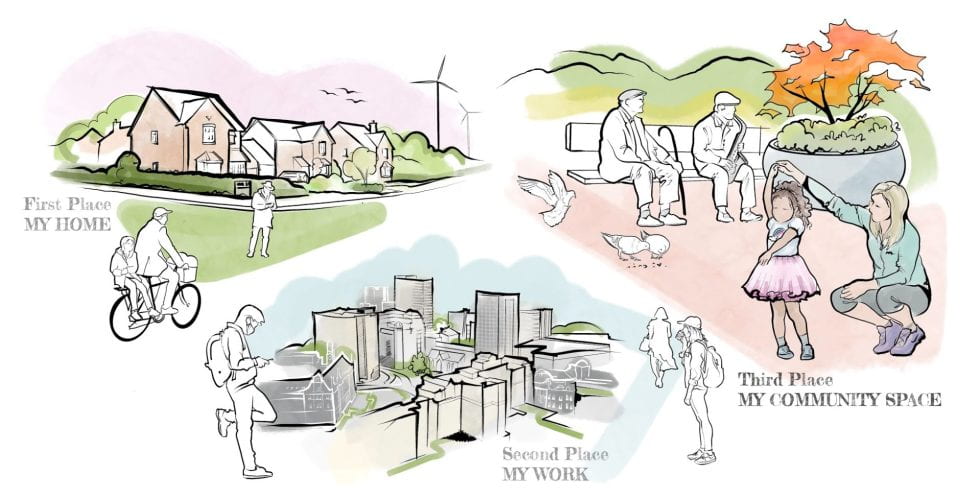
The term Third Places originates in the book “The Great Good Place” (1989) by the sociologist Ray Oldenburg. His Third Place Theory revolves around the concept that our lives are shaped by three key environments: the first place, the second place, and the third place. 1

The first place: HOME

The first place refers to where individuals live and develop their private lives. It is typically associated with privacy, a sense of solitude, and personal ownership. A home serves as a crucial foundation, offering stability, comfort, and a space for shaping one’s identity. 2

The second place: WORK

The second place refers to the workplace, where people spend a substantial part of their time. It is characterized by productivity, professional responsibilities, and a structured setting. Workplaces play a vital role in providing financial security and fostering career growth. 2

The third place: COMMUNITY

A third place is distinct from both home and work, serving as a space where people can regularly gather and connect with friends, neighbors, coworkers, or even strangers. Oldenburg states it as a “a space for informal, free social interaction, essential to democracy” 1 It encompasses locations such as cafes, libraries, parks, community hubs, and other shared spaces. These environments foster social connections, open dialogue, and a sense of community. Some even call the third places the living room of society. 4

Source: “2021 Cat A – My Third Place,” IFLA Europe Youth Competition, 2021, https://iflaeurope.eu/index.php/youth/entry/my-third-place-60edb5efb7ebc2.73333502

Oldenburg identifies the following nine characteristics for third places:

  • Neutral ground: In a third place people can easily join in or disengage from the conversation.
  • Leveler: All people, regardless of class and status, are welcome and intermingle.
  • Engaging Conversation: Talk is the main activity and provides the greatest value. The rules are simple: Don’t dominate the conversation, be sensitive to others’ feelings, speak on topics of general interest, and avoid trying to instruct.
  • Accessibility and accommodation: People can wander in almost any time of day or night and find someone to talk to.
  • Regulars: The people who frequent the place give it character, set the tone, and welcome both old timers and newcomers.
  • Low profile: The decor is plain and unimpressive, discouraging pretension and self-consciousness.
  • Playful mood: Displays of wit are encouraged. The congenial environment makes it feel like a home away from home.” 1

Why are they so important?

Third places are more than just physical spaces — they are vital social hubs that contribute significantly to individual well-being and the strength of society as a whole. Here are the functions they serve:

Encouraging Social Interaction
These spaces offer an inviting setting where individuals can come together, engage in conversation, and build meaningful relationships outside their typical social networks.

Inspiring Creativity
Third places bring together individuals from different backgrounds, creating dynamic environments that encourage the sharing of ideas and inspire creativity and innovation.

Cultivating a Sense of Belonging
Third places help individuals feel valued and accepted, creating a strong sense of belonging that enhances community bonds.

Supporting Personal Development
Through shared experiences, exposure to new perspectives, and opportunities for learning, these spaces contribute to personal growth and self-improvement.

Building Stronger Communities
By hosting gatherings and events, third places act as pillars for community cohesion, helping to create more resilient and united neighborhoods. 2

Third places play a crucial role in promoting health and well-being across all stages of life by providing essential social support. Despite often being overlooked, they are key to addressing pressing societal challenges like isolation, crime, education, addiction, physical inactivity, malnutrition, and sociopolitical polarization. Strengthening these spaces in both cities and suburbs could help rebuild social connections, foster a sense of community and offering opportunities for meaningful in-person interactions, dialogue, and shared experiences. 5 6 7

Examples of Third Places

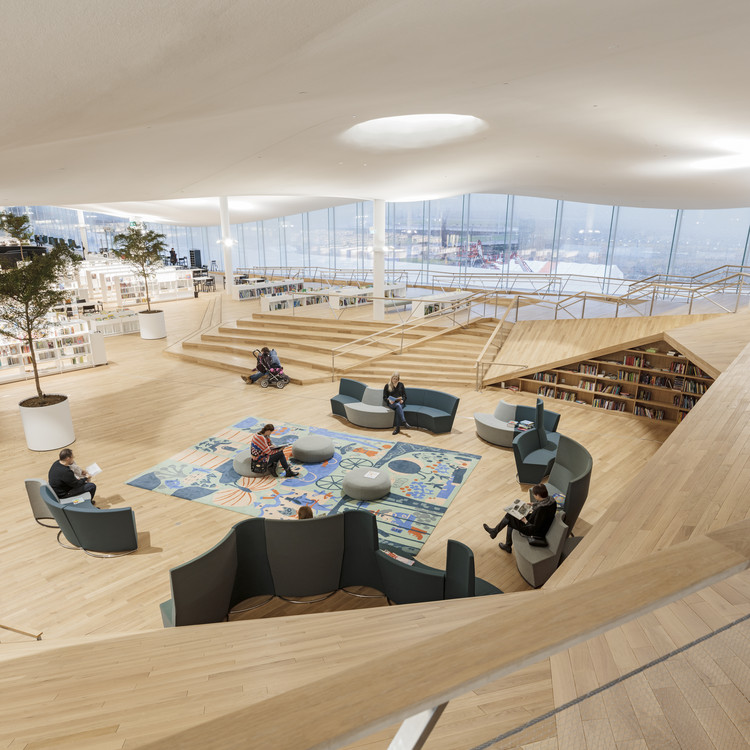
Oodi Library in Helsinki

“Helsinki Central Library Oodi is a living meeting place at Kansalaistori square, right at the heart of Helsinki. Oodi provides its users with knowledge, new skills and stories, and is an easy place to access for learning, story immersion, work and relaxation. It is a library of a new era, a living and functional meeting place open for all.” 8

Source: https://www.archdaily.com/907675/oodi-helsinki-central-library-ala-architects)

The Highline in New York

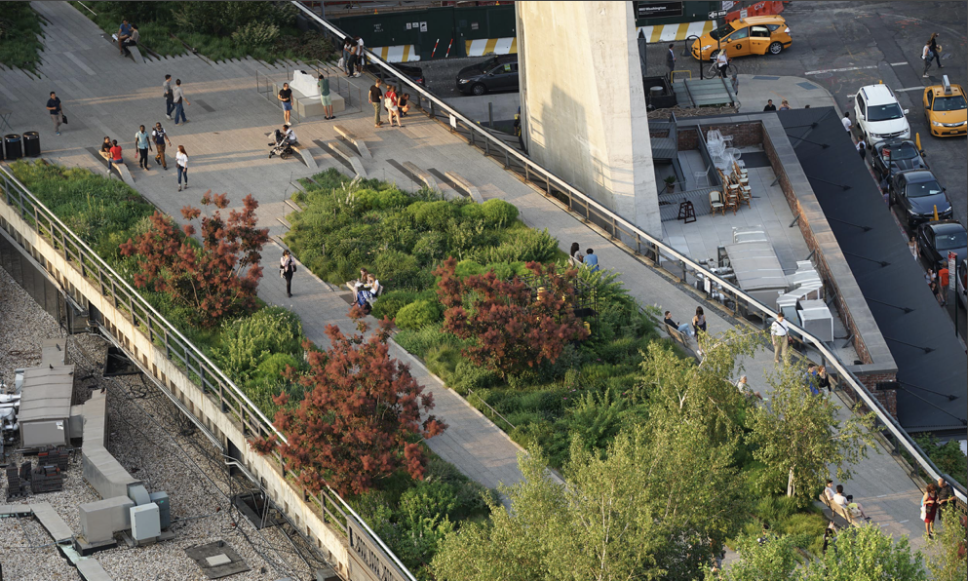
“The High Line is both a nonprofit organization and a public park on the West Side of Manhattan. Through our work with communities on and off the High Line, we’re devoted to reimagining the role public spaces have in creating connected, healthy neighborhoods and cities. Built on a historic, elevated rail line, the High Line was always intended to be more than a park. You can walk through gardens, view art, experience a performance, savor delicious food, or connect with friends and neighbors-all while enjoying a unique perspective of New York City.” 9

Source: https://www.thehighline.org

Third places at risk

Unfortunately, limited public transportation, suburban zoning laws, and rising real estate costs often place these spaces far from residential areas, making car access a necessity and reducing their accessibility. The shift to digital interactions has further diminished these community-focused spaces, leaving many isolated.

But especially in today’s fast-paced digital age, third places are more essential than ever as a counterbalance to the isolating effects of technology, the relentless pace of modern life, and the growing emphasis on work and productivity. 5 6

Video

I also found this interesting YouTube Video from Elliot Sang explaining the issue with Third Places also in a historical context: 


Sources:

[1] R. Oldenburg, The Great Good Place: Cafes, Coffee Shops, Bookstores, Bars, Hair Salons and Other Hangouts at the Heart of a Community, New York: Marlowe & Company, 1999.

[2] N. G. Er, „The Third Place Theory – Nazlı Gizem Er – medium“, Medium, 11. September 2023. [Online]. Verfügbar unter: https://medium.com/@gzm.err/the-third-place-theory-ae0dcee927b6#:~:text=The%20Third%20Place%20Theory%20reminds,to%20our%20overall%20well%2Dbeing.

[3] V. Mehta und J. K. Bosson, „Third Places and the Social Life of Streets“, SAGE Publications, 2010. doi: 10.1177/0013916509344677.

[4] A. Mondry, “In praise of loud, stinky bars,” Shelterforce, May 24, 2012. [Online]. Available: https://shelterforce.org/2012/05/24/in_praise_of_loud_stinky_bars/. [Accessed: Jan. 13, 2025].

[5] E. Klinenberg, Palaces for the People: How Social Infrastructure Can Help Fight Inequality, Polarization, and the Decline of Civic Life, New York, NY: Crown Publishing Group, 2018.

[6] Aquizoncolquitt, „Third Places: What Are They and Why Are They Important to American Culture? | English Language Institute“, 1. November 2023. https://esl.uchicago.edu/2023/11/01/third-places-what-are-they-and-why-are-they-important-to-american-culture/

[7] C. Diaz und S. M. Butler, „“Third places” as community builders“, Brookings, 14. September 2016. [Online]. Verfügbar unter: https://www.brookings.edu/articles/third-places-as-community-builders/

[8] „What is Oodi? – Oodi“, Oodi, 25. Januar 2024. https://oodihelsinki.fi/en/what-is-oodi/

[9] The High Line, „Overview | The High Line“, The High Line, 15. Januar 2025. https://www.thehighline.org/about/

1.4. Engagement Across Generations: Designing Inclusive Museum Spaces

Museums today are not only repositories of artifacts and history but dynamic spaces for community interaction, learning, and inspiration. Engagement, often described as the depth of a visitor’s emotional, intellectual, and physical connection with an institution’s offerings, is a multifaceted concept that extends beyond mere attendance. As Ed Rodley discusses in his article “Defining ‘Engagement’,” the term encompasses both the individual’s immersive experience and the reciprocal interaction between the museum and its audience. This dual perspective highlights the importance of creating spaces where visitors are not only recipients of information but active participants, contributing to a shared cultural dialogue [9]. By designing meaningful experiences tailored to diverse age groups — children, adults, and seniors — museums can inspire curiosity, provide learning opportunities, and build lasting relationships with their audiences.

The Importance of Multi-Generational Engagement

In a world that’s becoming increasingly diverse in terms of age and interests, museums must design experiences that cater to different learning needs. The ability to connect with visitors from varied backgrounds and life stages not only enhances the relevance of museums but also strengthens the role of these institutions as community hubs. While children may crave interaction and sensory stimulation, adults often seek intellectual depth and critical engagement. Seniors, on the other hand, benefit from programs that emphasize accessibility, comfort, and intergenerational connection. Creating museum spaces that accommodate all these needs ensures that museums remain engaging for everyone, regardless of age.

Understanding the Audience

Children: Spark Curiosity and Play
Children thrive in interactive, sensory-rich environments that encourage exploration and play. Features such as tactile displays, hands-on workshops, and augmented reality experiences provide opportunities for active engagement. For example, children’s areas in science and history museums combine education with fun, allowing children to learn by doing. The integration of digital technologies and gamification has become central in creating these captivating experiences [1].

Adults: Encourage Depth and Discovery
Adults often seek intellectual engagement, context, and connections to broader societal issues. Guided tours, audio guides, and themed events tailored to specific interests offer platforms for deeper understanding. Offering flexible experiences, such as evening talks and workshops, allows adults to explore topics at their own pace while connecting with like-minded individuals [2].

Seniors: Foster Connection and Comfort
For senior visitors, accessibility, comfort, and meaningful interaction are key. Gentle-paced tours, comfortable seating, and programs that promote reminiscence and storytelling create welcoming spaces. Intergenerational programs also offer seniors the opportunity to engage with younger generations, enhancing the experience for both groups [3].

Strategies for Engagement Across Generations

  1. Co-creation with Communities: Involving community members in the design and development of museum programs ensures that exhibits and events resonate with diverse age groups. This participatory approach ensures that museums adapt to the changing needs of their audiences [4].
  2. Intergenerational Programs: Activities that bring together different generations—such as family days or joint art projects—help to build stronger community connections while addressing the needs of all age groups.
  3. Technological Adaptation: Mobile apps, virtual reality, and other technologies allow museums to offer personalized, adaptive experiences that cater to individual preferences and accessibility needs.
  4. Continuous Feedback: Gathering feedback from visitors across all age groups helps to refine programming and maintain its relevance. Surveys, focus groups, and online reviews provide invaluable insights for future initiatives [5].

Challenges and Opportunities

One challenge in designing for diverse audiences is balancing the needs of different age groups without diluting the experience. Tailored content, adaptive technologies, and modular exhibit designs can address this. Another consideration is ensuring accessibility for all visitors, from physical accommodations to cognitive inclusivity. Research highlights the importance of visitor studies in understanding audience engagement. Insights from studies, such as those examining the impact of cultural capital and motivations, can guide museums in designing experiences that resonate deeply with visitors [7][8].
Conclusion

Engaging audiences across generations requires thoughtful design, community involvement, and a commitment to inclusivity. By addressing the unique needs of children, adults, and seniors, museums can create spaces that not only educate but also inspire and connect communities. As we move forward, let’s envision museums as vibrant hubs where all generations can come together to share, learn, and grow.

References

[1] Museums Association, “Engaging audiences and communities,” Available: https://www.museumsassociation.org/careers/competency-framework/engaging-audiences-and-communities/

[2] Thinking Museum, “Museum visitor teams and the art of informal engagement,” Apr. 18, 2024. Available: https://thinkingmuseum.com/2024/04/18/museum-visitor-teams-and-the-art-of-informal-engagement/

[3] Crowd101, “Museum community engagement,” Available: https://www.crowd101.com/museum-community-engagement/

[4] MuseumNext, “6 museums successfully cementing relationships with their audiences,” Available: https://www.museumnext.com/article/6-museums-successfully-cementing-relationships-with-their-audiences/

[5] Museum-iD, “Audience engagement: How museums learned to love their visitors,” Available: https://museum-id.com/audience-engagement-how-museums-learned-to-love-their-visitors-by-adam-rozan/

[6] C. Jones, “Enhancing our understanding of museum audiences: Visitor studies in the twenty-first century,” Museum & Society, vol. 13, no. 4, pp. 539-544, 2015. 

[7] B. Taheri, A. Jafari, and K. O’Gorman, “Keeping your audience: Presenting a visitor engagement scale,” Tourism Management, Pre-print Draft, 2025. 

[8] G. Black, The Engaging Museum: Developing museums for visitor involvement, London: Routledge, 2005. 

[9] E. Dawson, “Defining engagement,” Thinking About Museums, Dec. 4, 2019. Available: https://thinkingaboutmuseums.com/2019/12/04/defining-engagement/.

Technische Untersuchung: ÖBB History

Im vorherigen Artikel “Fallbeispiel: Öbb History” habe ich die Seite auf inhaltliche und Design Aspekte analysiert. In diesem Blogpost schau ich mir an, ob und wieviel ich über die technische Umsetzung dieser Seite herausfinden kann.

Das sind jedenfalls mal die Personen, die diese Webseite kreiert haben:

Und die Seite war mal auf AWWWARDS Website of the Day:

Technische Analyse

Als erstes sehe ich beim Untersuchen, dass die Seite mit dem Framework Next gebaut wurde:


Next.js ist ein beliebtes React-Framework, das serverseitiges Rendering (SSR), statische Seitengenerierung (SSG) und API-Routen in einer Umgebung kombiniert. 

Canvas

Die Hauptanimationen befinden sich in einem canvas tag mit dem parameter data-engine=”three.js”. Daher ist davon auszugehen, dass für die großen Animationen Three.js verwendet wurde.

Styled Components

https://styled-components.com

Diese Library habe ich auch noch nie verwendet, damit soll angeblich CSS leichter zuzuweisen sein auf React Componenten.

Tailwind

Tailwind mag ich nicht so, ich finde es macht das ganze voll unübersichtlich wenn die tags so lange werden.

Imgix

Imgix wird verwendet, um Bilder effizient zu komprimieren, zu transformieren (z. B. Größenänderung, Zuschnitt) und über ein Content Delivery Network (CDN) schnell auszuliefern. Das reduziert Ladezeiten und verbessert die Benutzererfahrung, insbesondere bei Medien-intensiven Websites. Das weißt auch darauf hin, dass sie ein CDN verwenden.

SEO

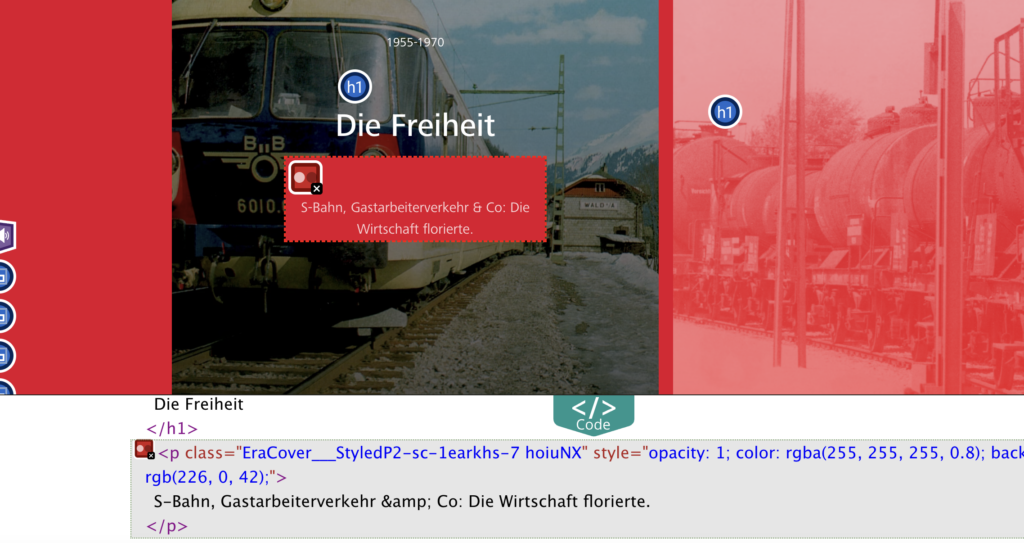
Da gibt es bissl viele h1.

Barrierefreiheit

Die Seite ist trotz der vielen Animationen großteils mit tab bedienbar. Es wurden auch Aria live tags benutzt.

Manchmal Kontrast Probleme.


Fazit

Nach der Analyse überlege ich doch, wieder React mit Next.js zu nutzen, weil ich mich trotz meines letzten Projekts immer noch nicht super fit darin fühle. Ich werde noch ein paar vergleichbare Websites untersuchen und wenn sich das als State-of-the-Art Framework für interaktive Webseiten herauskristallisiert, dann geht fast kein Weg drum herum. Three.js stand bereits auf meiner To-Do Liste, das will ich unbedingt auch nutzen. Gegen Tailwind wehre ich mich. Imgix und Styled-Components sehe ich mir gern mal an.

Augmented Reality Art

Augmented Reality art is an emerging medium that blends the real and the digital, offering animations and audio overlays that can be experienced through mobile devices. Unlike Virtual Reality (VR), which immerses users in fully synthetic environments, AR bridges reality and illusion, enhancing existing art with new dimensions of form, motion, and meaning. Its accessibility and relatively low production cost are making it a growing force in contemporary art.

But AR art is much more than a technological novelty—it is a tool for collaboration between viewer and creator, taking traditional works out of static galleries and into interactive, dynamic experiences.

What is Augmented Reality Art?

AR art can involve new compositions or recontextualizations of existing works. These 3D digital objects appear in space wherever a viewer points their camera. The layers AR adds to artworks—be it motion, form, or sound—create new avenues for interpretation and engagement.

For example, Alex Mayhew’s ReBlink at the Art Gallery of Ontario reimagines classical paintings with modern contexts. Through AR, a fire-haired maiden wields a selfie stick, and a 17th-century couple’s bountiful feast transforms into canned goods and hot dogs. This satirical take critiques online absorption while making the classic works relevant to contemporary audiences.

Augmented Reality and Viewer Interaction

AR redefines how we engage with art. Traditional artworks are often seen as passive objects, experienced in isolation. AR, however, turns the interaction into a collaborative process.

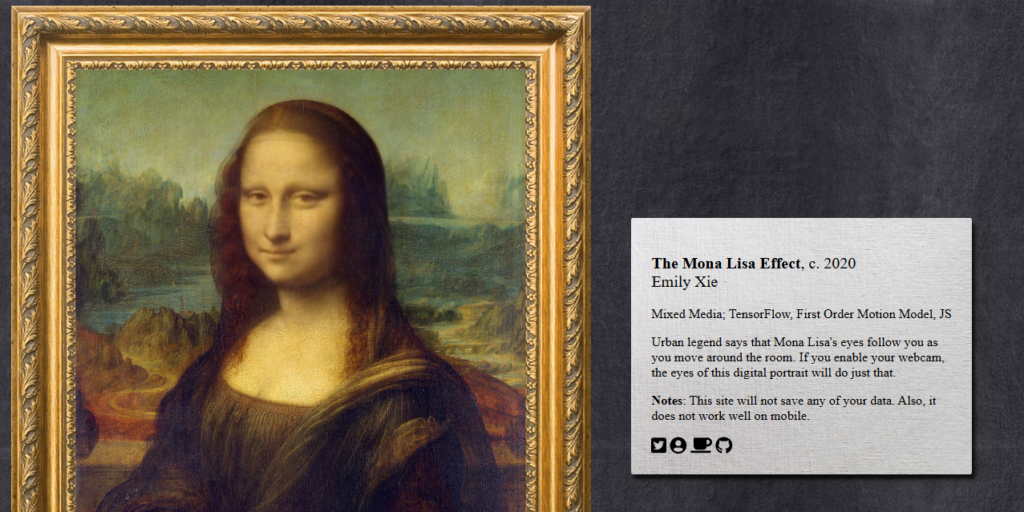
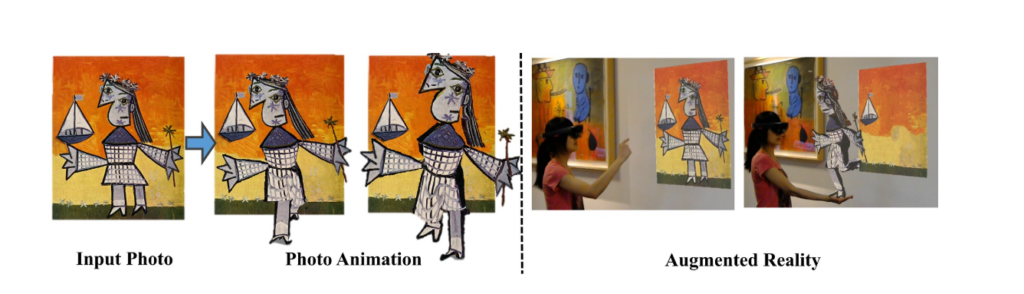
Take Xie’s Mona Lisa Effect project, which animates a single photo into a fully 3D experience. Users can see a central figure emerge from the frame, moving between dimensions. This reimagining brings paintings to life, offering an entirely new way of appreciating still imagery.

The Wake Up Photo project builds on this concept by bringing characters from still images to life in 3D. Unlike cinemagraphs, which introduce small motions to a 2D photo, Wake Up Photo creates fully three-dimensional animations from a single photograph. These animations can be experienced as videos or interactively in augmented and virtual reality, allowing characters to emerge from their frames and step into the real world. This innovative approach transforms static images into dynamic storytelling experiences, offering viewers a deeper and more immersive connection to the artwork.

Similarly, Everyday Conjunctive, a project rooted in the aesthetics of Fong Tse Ka, promotes bodily engagement with paintings. Using interactive techniques, viewers physically interact with painterly worlds, deepening their appreciation of the artist’s philosophy and aesthetics.

Expanding Spaces Beyond Galleries

AR takes art beyond the confines of gallery walls, bringing it into the streets, homes, and public spaces. This creates opportunities for greater access and diverse interpretations of the works.

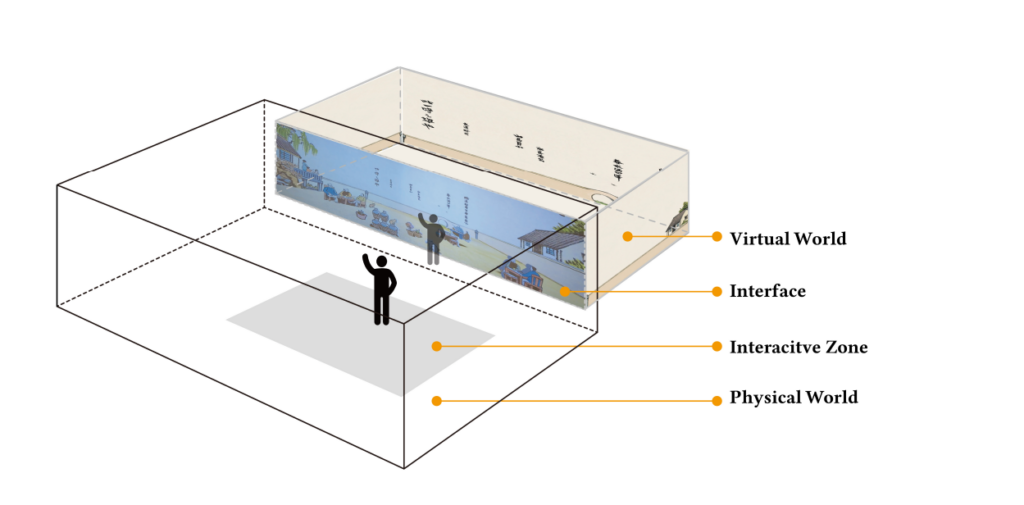
The Flow Room installation exemplifies this by using AR and computer vision to create shared visual and soundscapes between participants in two separate locations. This interactive environment emphasizes community and collaboration, representing the flow of users across virtual spaces.

A New Era of Engagement

AR is not just a method for enhancing visuals; it’s a way to foster deeper engagement with art. By blending technology with tradition, AR encourages viewers to think critically and creatively about the relationships between art, space, and their own role as participants.

From reimagining classics to creating shared spaces for exploration, AR art turns passive viewership into active collaboration, enriching how we connect with and interpret art. The medium offers a glimpse into a future where the line between physical and digital experiences blurs, redefining how we perceive and interact with art forever.

Conclusion
Augmented Reality is revolutionizing the art world, giving traditional works new life and relevance while fostering dynamic, participatory experiences. By transforming how we engage with art, AR not only expands its audience but also deepens its impact.

Whether it’s through a reimagined gallery experience, a 3D animation of a classic painting, or a shared virtual environment, AR is proving that art is not just something we view—it’s something we experience, shape, and carry with us into the future.

References:

https://arxiv.org/pdf/2312.01067

https://monalisaeffect.com

https://openaccess.thecvf.com/content_CVPR_2019/papers/Weng_Photo_Wake-Up_3D_Character_Animation_From_a_Single_Photo_CVPR_2019_paper.pdf

https://lisajamhoury.com/the-flow-room

https://www.museumnext.com/article/akron-art-museum-launches-augmented-reality-experience/

https://cosimo.art/blog/art-and-augmented-reality/

https://www.autodesk.com/design-make/articles/augmented-reality-art

Fallbeispiel: Öbb History

Juhu ich habe von der Agentur wild tatsächlich Zugang zu ihrer Staging Umgebung bekommen, in der die Seite, die ich im Chronologisches Storytelling auf Web-Plattformen Blogpost erwähnt habe, aufzurufen ist! Die Zugangsdaten teile ich natürlich nicht, aber ein paar Sceenshots darf ich bestimmt machen.

Das ist die Loading Scene:

Ein Preloader, der bei mir momentan in etwa 1-2s ladet. Super elegant gelöst damit, dass der loader in der selben Font wie das 100 Jahre ÖBB Logo ist. Und sobald die 100% geladen sind entwickelt sich aus dieser Zahl direkt das Öbb logo unten und fährt dann nach oben. Ich finde so kleine Details machen das ganze Projekt so richtig elegant. Die Seite wird auch nicht einfach rot, sondern hat auch hier eine kleine transition.

Das ist dann der Startscreen:

Nachdem das Logo hochfährt, animiert sich der mittlere Text rein und danach kommt der Button hinzu.
Obwohl jedes einzelne Element hier eine eigene Intro Animation hat, wirkt es nicht überladen. Wahrscheinlich weil es sehr dezente animationen sind und sie auch gut getimed sind. Das einzige was ich mich frage: wieso braucht man hier zwei button fürs einsteigen, soweit ich checke machen die beiden das selbe.

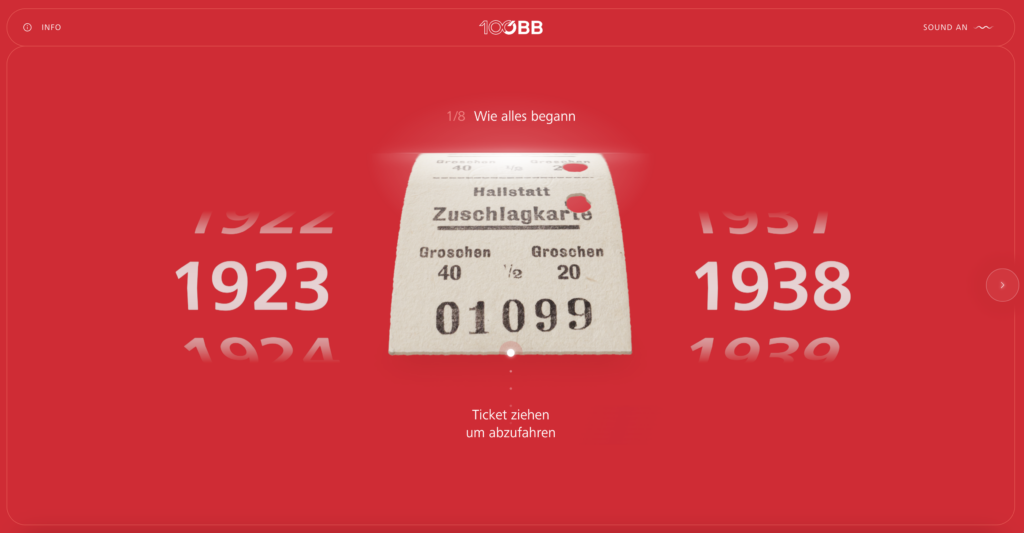
Dann kommt man auf die, meiner Meinung nach, coolste Seite: das Ticket-Ziehen

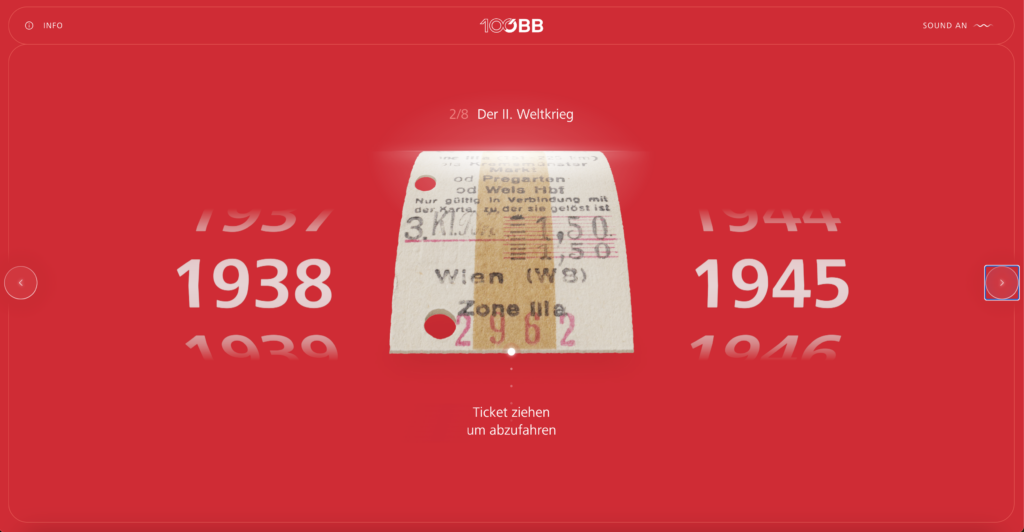
Hier animiert isch der “Datepicker”, der das Start und End Datum festlegt und mit links und rechts Pfeilklick kann man zwischen den 8 Phasen wechseln. Jede Phase hat ein eigenes ticket, dass per Drag gezogen werden kann. Hier ein Screenvideo davon:

Ursprünglich habe ich nicht gedacht, dass ich Sound einbauen werde, weil das garnicht mein Bereich ist und ich es auch auf Webseiten eher nervig finde. Jedoch ist es hier super gemacht und auch bei den meisten anderen Seiten die mir gefallen haben gibt Sound eine wichtige weitere Ebene dazu, darum werde ich höchstwahrscheinlich nicht darauf verzichten können.

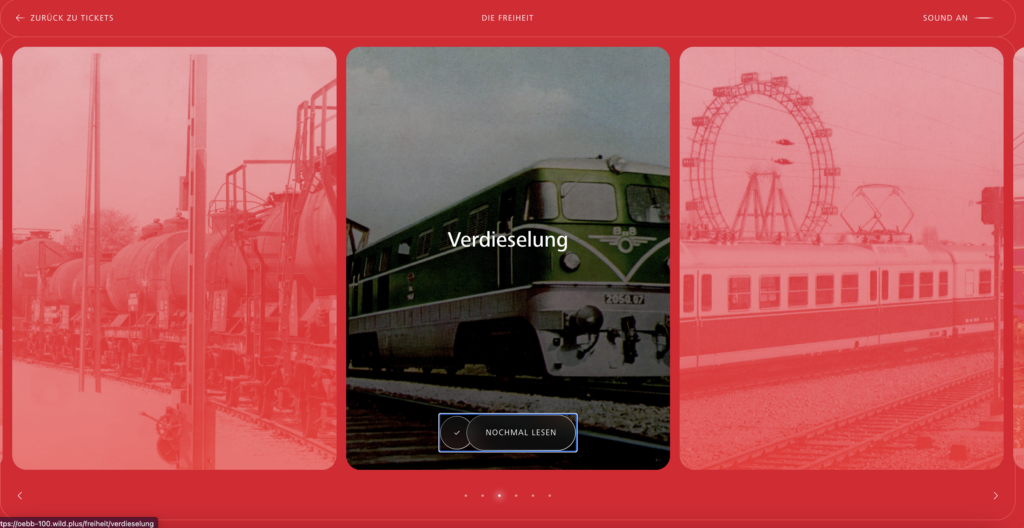
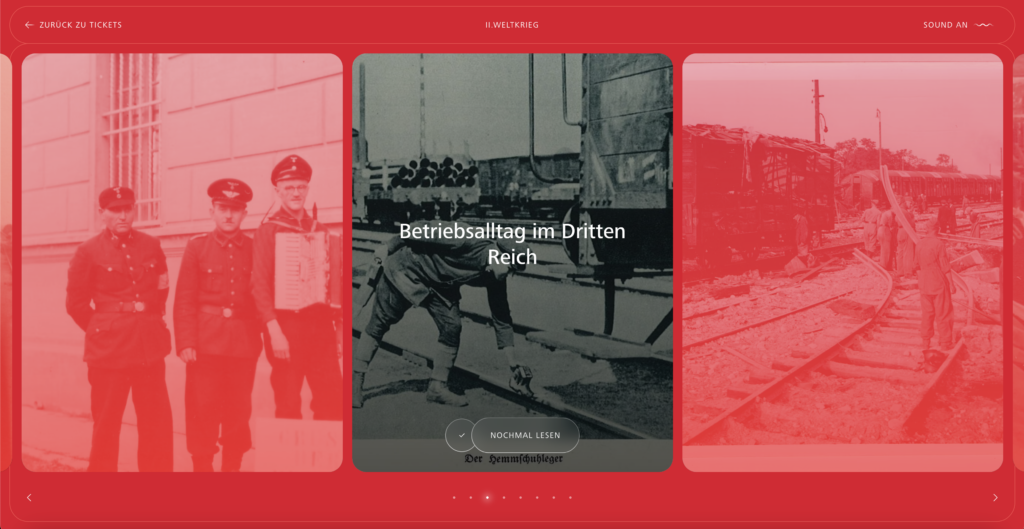
Im Anschluss kommt man zu einem Slider, der die einzelnen Artikel zu dem Zeitraum auflistet:

So sehen dann die dazugehörigen Detailseiten aus:

Ich finde es super gelöst, sehr einfach für den User zu verstehen. Die Detailseiten, in denen es um die tatsächliche Informationsweitergabe geht, ist eher schlicht und informativ gelöst mit wenig effekten und klarem Fließtext auf weißem Hintergrund. Je nachdem wieviel Inhalt ich bei meinem Projekt habe, sollte ich vielleicht auch dem User die Möglichkeit geben auf eine angenehme Weise viel Text zu konsumieren. Vielleicht ist es aber auch nicht nötig viel zu lesen. Könnte ich auch mit einem Prototypen mal testen, ob Leute auch wirklich lesen, ehrlicherweise habe ich selber auch noch nicht so viel vom ÖBB Text gelesen außer den Überschriften.

Im nächsten Blogpost werde ich die Website in technischer Hinsicht untersuchen und mal sehen, ob und wieviel ich da über die Umsetzung herausfinden kann.