Paradoxes of Authenticity

In search of literature about the influence of film tourism on current travel trends and developments, I came across the book “Film and Tourism : Case Studies on Tourist Behavior” by Marco Valeri (Valeri, 2025) where the topic is analysed through various studies in 6 different chapters, written by 16 different authors and set in 9 different countries. In one of the chapters, which particularly caught my attention, Diórgenes Mamédio et al talked about different, often paradoxical, types of authenticity in films, analysed through different movies shot in Morocco (Mamédio et al, 2025).

The Dimensions of Cinematic Consumption

Mamédio et al talk about three different contexts of consuming cinema; there is the real context, the fake context and the scenographic context. In a real context a movie is set in a real place, so a film set in Morocco which was also shot in Morocco, like “Prince of the Streets” (2000). In a fake context, the real place is conjured up by the filmmakers, so a movie set in Morocco but shot in Hollywood, like “Casablanca” (1942). A scenographic context means that a movie was shot in a real place that represents someplace else, like “Gladiator” (2000) which was filmed in Morocco, but plays somewhere else (Mamédio et al, 2025).

Ourzazate – Morrocco’s very own Hollywood

Ourzazate, in the local Berber language meaning “noiseless” is set between the Atlas Mountains and the Sahara dessert of Morocco, where it is eerily quiet to a European ear, no birdsong, no leaves rustling in the wind and no river running. Ourzazate and its surrounding regions is popularly used by film directors for scenes and movies set in the dessert as well as the Middle East. Not only does the landscape offer great backdrops for various movies, there is also Aït-Ben-Haddou, a small village built from clay, where many movies were filmed. Not only scenery and ancient structures make it a good location for filming, but also the weather conditions are ideal with bright sun on at least 300 days a year (Mamédio et al, 2025).

Analysis Results

Mamédio and his colleagues used virtual ethnography, where they analysed data taken from openly accessible websites, such as consumer’s summaries and ratings of movies, comments, videos, texts on travel websites, and many more sources (Mamédio et al, 2025). These texts were then analysed and categorised. In the following I just want to very quickly summarise what I took away from the results, this summary is by far not conclusive.

I found particularly interesting how, a lot of the time, fakery in movies is being done so well that many viewers won’t ever question whether what they see is real or not. Even though the movie “Casablanca” was not filmed in Morocco at all, many tourists will visit Casablanca, looking for the famous café featured in the movie. This has gone on for so long that someone has now actually built this café and visitors come there none the wiser, thinking they are at the original set of the movie. This shows that for the viewers it does not really matter, whether what they are observing is actual reality or just pure fakery, as long as it feels real to them. It showcases how fake and authentic can coexist and how sometimes movies can create reality from fakery, conjuring into real life what used to only live on movie screens (Mamédio et al, 2025).

To the film tourist it does not matter whether the movie “Casablanca” was actually filmed in the city Casablanca. Watching it can still create the desire to travel there and see it with your own eyes. The same is true the other way around; tourists might still prefer to travel to Morocco to see where “Gladiator” was filmed, even though the scenes filmed there are actually set in the Colosseum in Rome. Thus the tension between the different dimensions in cinema continues on within the viewers.

Mamédio talks about how cinematic tourists travel between worlds. They exist within the tension between fake and authentic created by the cinema, and with their influence imagined worlds can blur together with or even become the real world (Mamédio et al, 2025).

Literature:

EP #12: Toward a Sonic Ecology – The Ethics and Aesthetics of Acoustic Documentation

As the system becomes more capable, so do the questions. What does it mean to preserve the sound of a space?
Is it documentation, art, or something in between?

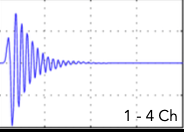
Acoustic photography offers a poetic and perceptual lens: it asks us to listen with care. A recorded impulse response is not just a technical artefact — it’s an invitation to reimagine space through sound. A stairwell becomes a resonator, a forest a filter, a cathedral a delay line for memory.

In this way, the project intersects with acoustic ecology, preservation, and sonic activism. Who gets to decide which spaces are worth hearing? What stories can be told through reverberation?

These are not only technical questions, but artistic and ethical ones — and they shape how I see the work ahead.

EP #11: Learning by Doing – From SwiftUI to Spatial Systems

One of the most rewarding parts of this phase was the technical deep dive into the Apple ecosystem. From Swift and AVAudioEngine to sensor fusion and FFT algorithms, I learned how to architect complex audio apps natively.

Challenges included:

  • Managing multichannel audio in real time
  • Implementing head tracking across threads
  • Creating reactive user interfaces with SwiftUI
  • Performing spectral deconvolution on mobile hardware

These skills are transferable to other platforms — Unity, Unreal, WebXR — but more importantly, they changed my understanding of how sound design tools are built. Not just for artists, but by artists who code.

EP #10: Mapping the Invisible – Building a Global Soundmap

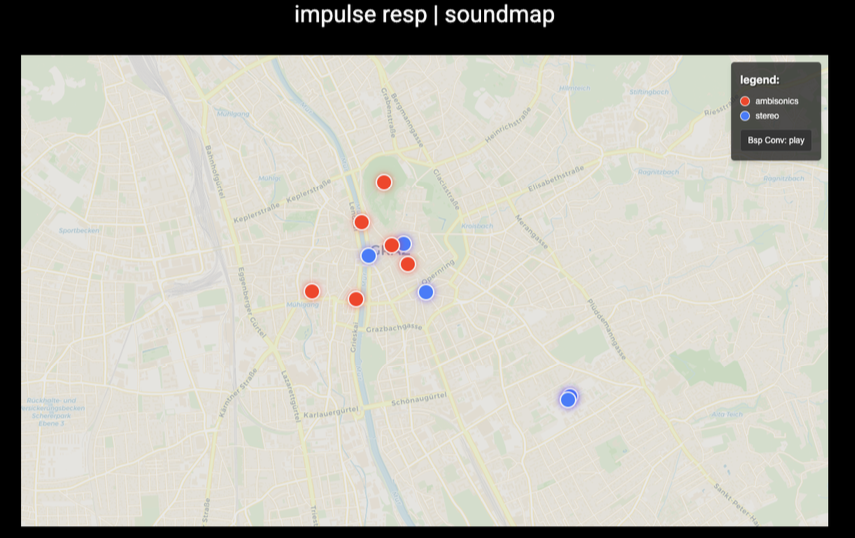
Alongside the app, I prototyped a web-based soundmap that displays recorded locations and lets users hear the acoustics of real-world spaces. Built with Leaflet.js, the soundmap shows markers where impulse responses were captured. Clicking them reveals:

  • Metadata (location, date, mic type)
  • A photo of the space
  • Audio preview of a dry sound convolved with that space’s IR

In the future, this could evolve into a public archive: a platform where users all over the world can contribute and explore acoustic identities. Think of it as Google Street View for sound — an acoustic memory atlas, built one snapshot at a time.

EP #9: Headtracking and Spatial Playback with AirPods Pro

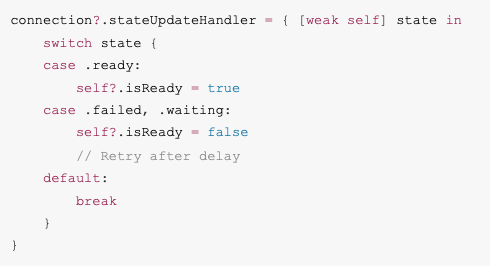
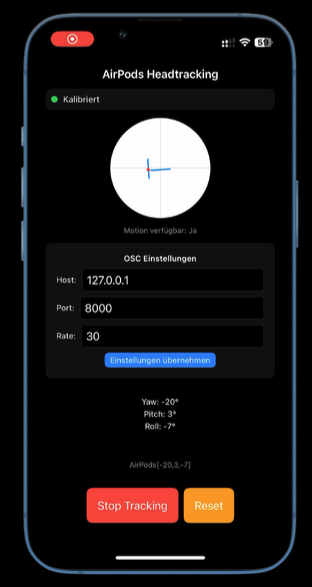
Spatial sound isn’t just about how rooms behave — it’s about how listeners move. To simulate this in real time, I integrated Apple’s CMHeadphoneMotionManager into the app. This allows the orientation data (yaw, pitch, roll) from AirPods Pro to be sent via OSC (Open Sound Control) to spatial audio engines like Reaper with the IEM Plugin Suite.

With this data, users can rotate their head and hear the soundfield respond — just like in real acoustic environments. A calibration feature lets users define their “neutral” forward direction, while rate-limiting and reconnection logic ensure stable use in real setups.

This is more than a feature. It’s a step toward interactive listening, where movement, sound, and space become part of one fluid experience.

2.4 BTS: Laser Cutting and Assembly of My Prototype

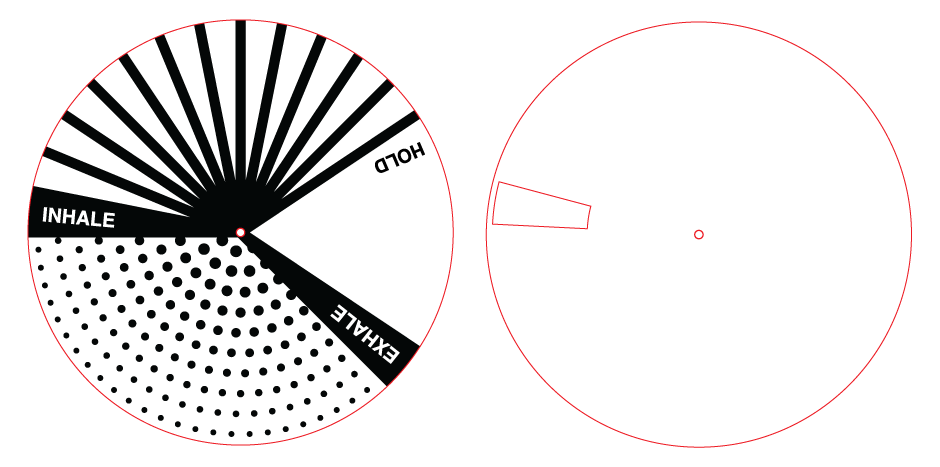
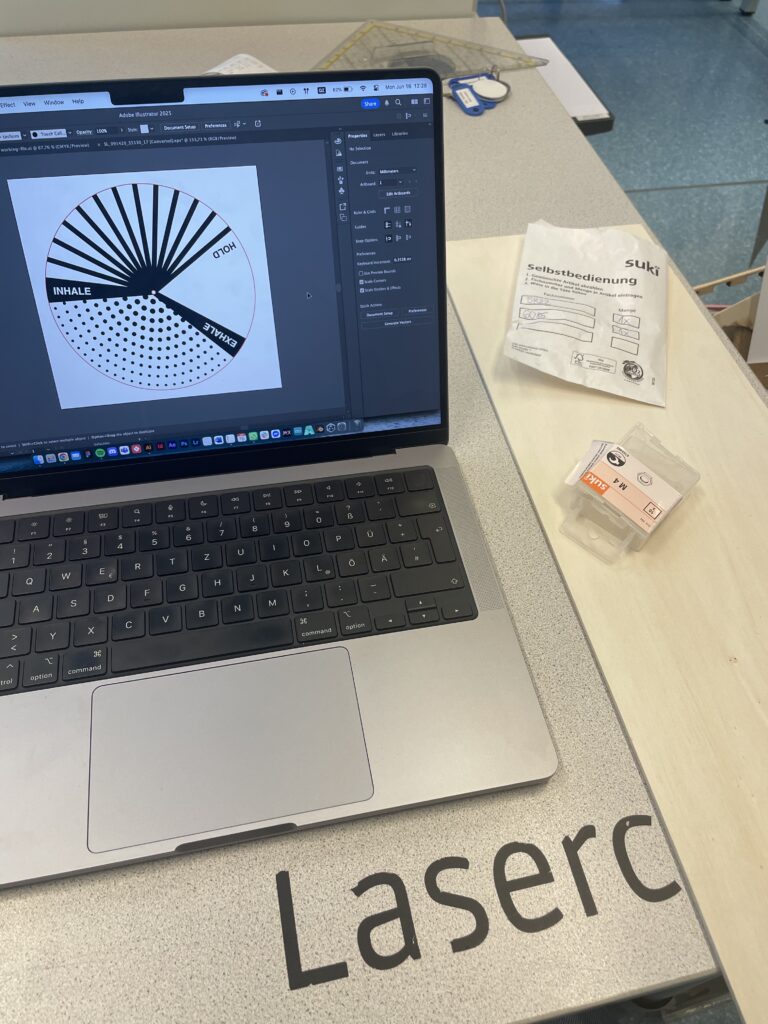
After finishing the design phase, I moved on to creating the physical prototype using the university’s Lasercutter CO2 Trotec Speedy 360. The material I chose was 4mm thin plywood, sturdy enough for the breathing circle but still easy to work with. Before starting the machine, I prepared my design in Adobe Illustrator. To make sure the laser cutter knows what to cut and what to engrave, I used two different colors in the file: red lines show where the laser should cut completely through the plywood, outlining each piece of the breathing circle, black lines and textures represent areas to engrave, like the tactile patterns for the inhale, hold, and exhale sections, plus small text labels.

This separation is important because engraving only burns the surface lightly, creating texture and detail without cutting all the way through. Since I’m relatively new to laser cutting, I was careful not to engrave too deeply – wood can start to burn quickly if the settings are too strong. This cautious approach helped me keep the surface textures clear and clean.

Once the file was ready, I set up the materials and workspace with the 4mm plywood sheets and M4 size plastic screws. These screws allow the plates to rotate smoothly while keeping the holes minimal and unobtrusive, maintaining a clean and minimalistic look.

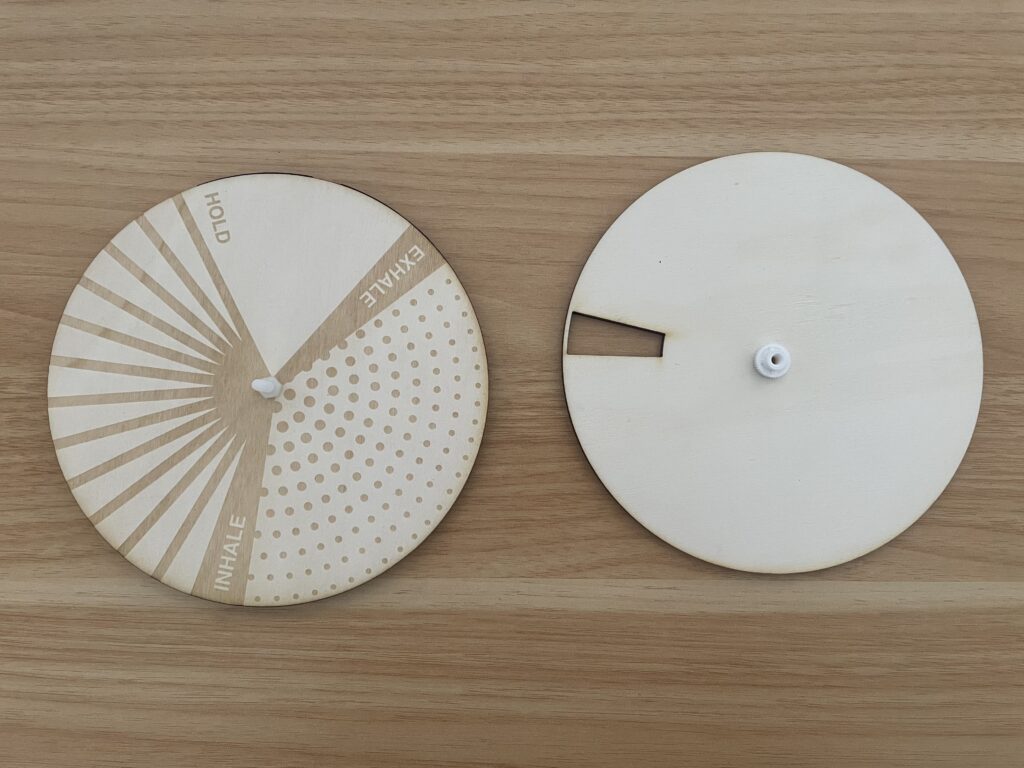
The laser cutter produced very precise pieces with clean edges. The engraved sections added subtle textures that can be felt by touch, which is essential for the breathing circle’s interactive experience.

At this stage, the prototype pieces were not yet assembled, but it was exciting to see the parts come to life physically. The cutouts and engraving matched the digital design well, making assembly straightforward.

Final Thoughts

Using the laser cutter was a key step in turning the concept into something tangible. This process allowed me to explore the tactile qualities of the breathing circle and how the physical form supports the interaction. Even though the prototype isn’t complete, the precise cuts and engraved textures already give a strong sense of how users might experience it.

This phase reinforced how prototyping, especially analog and lo-fi methods, can reveal important insights early in the design process. It’s not just about finishing a perfect product but about thinking through the physical experience, testing ideas, and learning along the way.

Next, I will do some user testing to gather feedback and observe how the prototype works in practice.

EP #8: Real-Time Sound Shaping – Convolution and the Lambert-W Sweep

At the core of the app’s audio processing lies a precise method: convolution. By recording an impulse response of a space, we can digitally place any dry signal within it. But this only works if the IR is accurate.

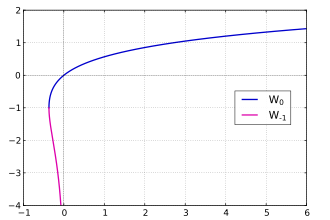
To achieve this, I implemented an exponential sine sweep generator with Lambert-W phase correction, ensuring high signal-to-noise ratio and spectral clarity. Deconvolution is then performed using regularized FFT division — a mathematically stable way to reverse-engineer the system response.

This combination allows fast, portable IR measurement without sacrificing detail. The result? Any sound — a whisper, a field recording, a voiceover — can be spatialized with the unique acoustic fingerprint of a room.

How Fashion Brands Create AR Filters in the Real World

The Software, Workflow & Time Investment

Augmented Reality is becoming the new favourite tech of fashion brands to grab attention of shoppers and optimizing their shopping experience. From virtual try-ons to interactive fashion campaigns, AR filters bring clothes to digital life — and they are a powerful marketing and personalization tool, as well as a vehicle for product discovery.
In this article, I’ll address how fashion AR filters are produced, the necessary tools and platforms, the kind of needed data and the time needed to build a full AR experience from scratch.

 📝 Note: Some of these are also questions I would like to feature for Ines Alpha, the 3D makeup and AR artist that exhibited at OFFF Festival Barcelona on the subject of “3D software an augmented reality to merge makeup with tech.” I’m super excited to have an interview scheduled with her, and can’t wait to get more behind-the-scenes info on what her creative process and use of AR become in the world of digital fashion/beauty.

Why Fashion Brands Use AR Filters

Fashion AR filters are being used on various platforms from Instagram and Snapchat to branded apps to produce:

  • Virtual Try-Ons – Allowing consumers to see how an item will look and move on their body.
  • Digital Dress-Up – Enabling consumers to mix and match articles of clothing in real time to produce curated looks.
    Not only do these experiences personalize shopping, but they increase customer engagement and social shares — and even conversion rates.

How to Make an AR Filter for Fashion

1. Concept and Design

Defining the concept and user experience is the first step. Brands must decide:

  • Are they featuring a product?
  • Want to build your own interactive fashion show?
  • Promoting a new campaign?
    Early on, teams align on:
  • Format of experience: Try-ons, storytelling or brand-specific interactions.
  • User interaction: Are users going to swipe, zoom or rotate to view the garment?
  • Brand identity: Preserving branded colors, logos, textures, and tone of voice.
    Designers often create wireframes or storyboards before developing their ideas.

2. 3D Model Creation

At the core of AR filters, you’ll find high quality 3D models of clothing. These have to look and move real.
Steps include:

  • 3D Scanning: To digitize real pieces (especially more complex garments)
  • 3D Modeling Software: Experience with Blender, Maya or 3DS Max to create highly detailed virtual clothing.

Rigging: Rigging, adding skeletons, so that clothes can move in a natural way with a body — or flight, or other body movement.

3. AR Filter Development

After 3D models are completed, they’re brought into an AR development platform.

  • Spark AR Studio (Instagram/Facebook)
  • Lens Studio (for Snapchat)
    Tasks include:
  • Importing 3D assets
  • Using your own textures or materials
  • Introducing interaction (e.g.Gesture, tap-to change, animation)
  • Supporting multiple devices and platforms (iOS/Android)
    The filters are checked for fit, this is very tight, dust-free, rotation smoothness.

Performance Testing

Smooth performance is key. Filters must:

  • Load quickly
  • Perform well on low-spec phones
  • Not drain battery

Users fall off if filters lag or freeze. Checking that everything runs correctly is essential if users are to have a friction-free experience.

Launch and Monitoring

Once they’re ready, you can then launch your filters through social networks or mobile applications. Brands monitor:

  • Engagement: How frequently users apply and share the filter.
  • Conversion: What is the purchase rate after a user applies the filter?
  • Feedback: What do users love? What do they want more or less of?
    This refining process is useful for future campaigns.


How Accurate Are AR Filters?

Accuracy depends on:

  • 3D model quality Body Tracking(Face/Body Detection)
  • Device functionality (iOS/Android)

Today’s AR tech can be impressively life-like, but there are discrepancies between platforms.

Conclusion

Making AR filters for fashion requires a blend of technical perfection, artistic freedom and user experience design. Every step along the way, from the ground up design process to launch requires a delicate touch to ensure that the experience “feels” intuitive, engaging, and beautiful.

And while building 100 filters might sound like a Herculean effort today, advanced tools and workflows are making the process simpler and faster every day.

interview with Ines Alpha coming soon….


This text was grammar-corrected with the assistance of ChatGPT.

Generative AI in Retail Product Discovery


Abstract

McKinsey & Company estimates that Generative AI could create between $240 billion to $390 billion in economic benefits for retailers, possibly boosting margins by as much as 1.9 percentage points [1]. This paper aims to find a middle ground between all the hype surrounding Generative AI and its actual potential in retail. We’ll look at practical applications offering genuine advantages while addressing overhyped scenarios and providing tips for effective integration of AI tech. Readers will come away with valuable insights on how to use Generative AI wisely without falling into common traps.

CCS Concepts

  • Applied computing → Online shopping
  • Computing methodologies → Natural language processing
  • Information systems → Recommender systems; Search interfaces

Keywords

Generative AI, Retail, Machine Learning, Recommender Systems, Natural Language Processing


Introduction

We kick things off with an overview showing how generatively driven technologies are transforming retail landscapes—pointing out significant chances for enhancing shopper experiences while optimizing processes [6]. Plus we discuss just how much cash retailers are pouring into these new technologies along with their impact on global markets.

Key Applications of Generative Ai in Retail

Next up is our dive into major ways GenAI can be used within retail settings:

  • Smart Assistants: Discover how interactive chatbots powered by GenAI offer customized answers about products [3] while guiding both customers and staff.
  • Curated Shopping Experience: See how retailers can use GenAI to craft personal shopping journeys that feel like having your own virtual assistant—with tailored comparisons based on specific criteria.
  • Enhanced Search Capabilities: Learn about advancements such as guided navigation improvements alongside better understanding user queries which leads to refined search accuracy [5].
  • Recommender Systems: Find out how GenAI fine-tunes suggestions around products creating fresh categories for easier discovery aligned closely with marketing strategies [2].
  • Multimodal Product Content: Explore using GenAI for extracting features efficiently—from generating optimized titles automatically through alt text creation aimed at improving accessibility plus SEO efforts.
  • Marketing Optimization & User Experiences: Uncover ways that data-driven campaigns get enhanced thanks due diligence toward consumer behavior benefiting overall site experience optimization via AIdriven innovations!

The Hype Trap – Overblown Use Cases

After discussing useful applications we’ll dissect some currently hyped-up uses cases where expectations might’ve gotten ahead ourselves including:

  • End-to-End Search Systems: Here’s why thinking you can rely solely upon gen ai technology managing every part independently ignores conventional components necessary—a hybrid approach proves smarter!
  • Comprehensive Recommendation Models: We’re diving deep here too; it turns out leaning completely onto generators alone misses business goals impacting traditional algorithm performance negatively instead pairing them together reaps rewards!
  • Fully Automated Customer Service? Sure thing but let’s not forget humans still play critical roles navigating complex issues requiring empathy far beyond what bots provide alone.. While generative AI automates many tasks, human oversight remains essential to maintain creativity, ethical standards, and quality control. Retailers must strike a balance between automation and human input.
  • Automated Messaging/Writing Needs Creativity Too! Letting machines do this work risks losing coherence across branding voice unless human input stays involved consistently throughout messaging processes[4]!

Challenges and Considerations

1. Data Privacy and Security

The use of generative AI requires access to vast amounts of customer data, raising concerns about data privacy and security. Retailers must ensure compliance with regulations such as GDPR and implement robust data protection measures.

2. Transparency and Trust

AI-generated content, such as product descriptions and images, can sometimes be misleading. Retailers must prioritize transparency and ensure that AI outputs align with brand values and customer expectations {8}


Future Implications

The adoption of generative AI in retail is expected to accelerate in the coming years. By 2025, 50% of fashion executives identify product discovery as the top use case for generative AI [9] . Key trends driving this adoption include:

  1. Multimodal AI: Combining text, image, and video capabilities to create richer shopping experiences [10].
  2. Advanced Personalization: Leveraging AI to create hyper-personalized experiences at scale.

References

  1. McKinsey & Company (2024)
    LLM to ROI: How to Scale Gen AI in Retail
    A comprehensive industry insight exploring the economic impact and integration strategies of Generative AI in retail.
    Read the full article
  2. Yashar Deldjoo et al. (2024)
    A Review of Modern Recommender Systems Using Generative Models (Gen-RecSys)
    Presented at the 30th ACM SIGKDD Conference, this paper reviews how generative models are shaping the future of product recommendation systems.
    DOI: 10.1145/3637528.3671474
  3. Feriel Khennouche et al. (2023)
    Revolutionizing Customer Interactions with Generative Chatbots
    This arXiv paper discusses the challenges and insights behind deploying AI-driven chatbots for FAQ and customer support systems.
    Available at: arXiv:2311.09976
  4. Katherine Lee, A. Feder Cooper, James Grimmelmann (2024)
    Talkin’ ’Bout AI Generation: Copyright and the Generative-AI Supply Chain
    From the Symposium on Computer Science and Law, this study explores copyright and legal implications of generative AI content.
    DOI: 10.1145/3614407.3643696
  5. Zheng Liu et al. (2024)
    Information Retrieval Meets Large Language Models
    This paper, presented at the ACM Web Conference, dives into how language models are transforming traditional search and information retrieval.
    DOI: 10.1145/3589335.3641299
  6. Mari Sako (2024)
    How Generative AI Fits into Knowledge Work
    Published in Communications of the ACM, this article reflects on GenAI’s role in reshaping how professionals manage and apply knowledge.
    DOI: 10.1145/3638567
  7. Macy Takaffoli, Sijia Li, Ville Mäkelä (2024)
    Generative AI in UX Design: Industry Insights
    A study from the ACM Designing Interactive Systems Conference on how UX teams and companies use GenAI in practice.
    DOI: 10.1145/3643834.3660720
  8. (Digixplanet, 2025).
  9. (BoF Insights, 2024)
  10. (Retail TouchPoints, 2025)

Note: This text was grammar-corrected and structured with the assistance of ChatGPT.

2.3 Sketching and Developing the Breathing Circle

What kinds of interactions actually support mental focus in everyday life? And how can something as simple as a small, analog object stand up to the constant pull of digital notifications?

These questions guided me as I moved from concept into the practical development of the Breathing Circle. This was the moment where abstract ideas started becoming real: sketching, measuring, refining. But it wasn’t just about making a “nice object”, it was about intentionally designing a pause. A pause that resists the speed and urgency of digital life.

Here’s how I started shaping that pause into form.

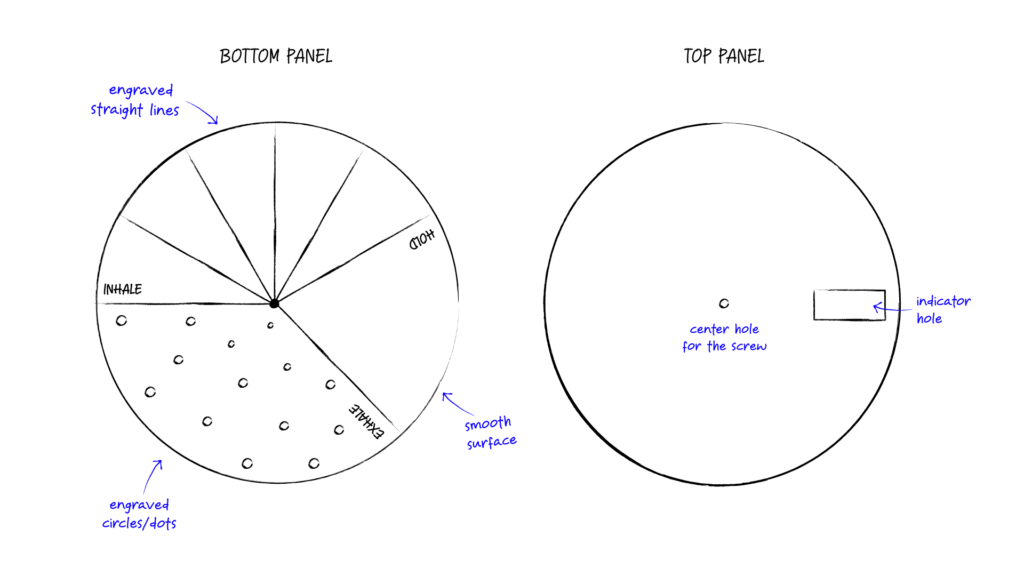
Sketch of the Breathing Circle

Turning Breath into Form

I wanted each part of the breathing process to feel different, so that people don’t have to think about what comes next, they can simply follow the texture with their fingers and focus on their breath. Since the prototype will be laser-cut, I chose engraved textures over raised ones. The engraved patterns are subtle but distinct, providing just enough tactile guidance without being distracting or overstimulating.

The Three Phases of Breath
  1. INHALE – Straight Lines – Why? Inhaling feels like steadily drawing in air, filling the lungs. The lines guide the fingers steadily inward, like gathering energy.
  2. HOLD – Smooth / Flat – Why? Holding the breath is a still moment. By removing texture, I’m reinforcing that pause, offering tactile neutrality to match the emotional neutrality of holding.
  3. EXHALE – Engraved Dots – Why? Exhaling is about release. The dotted texture creates a gentle sense of dispersal, like bubbles or soft particles letting go.
Proportions of the Circle

2/5 inhale, 1/5 hold, 2/5 exhale – Why? This ratio reflects a calming breathing rhythm, with enough space for a longer exhale to naturally relax the body.

Other Functional Details
  • Center hole for screwing together both plates, allowing rotation.
  • Indicator hole to show which breathing phase you’re currently on (“inhale,” “hold,” or “exhale”).
  • Text engravings to match, visible through the moving layer, guiding the flow.

Why Analog? Why This?

Screens offer too much speed. This small, analog tool offers something different: focus through simplicity. For me, this isn’t just a prototype, it’s a way to answer a frustration I’ve experienced myself: forgetting to breathe properly in stressful, digital spaces. Making this helps turn that small frustration into a thoughtful pause.

Next, I’ll bring this sketch into reality through laser cutting, testing proportions and feel. In the following blogposts, I’ll reflect on that process, and eventually create a video that brings the whole journey together.