#16 Creating an AI Video Illustration

AI is no longer limited to creating images. Today, it is also possible to animate illustrations. Short videos, subtle motion, and atmospheric loops can be generated from a image or prombt. Since I had never animated illustrations with AI before, I decided to try it out and see how it works in practice. i knew that its possible to create illustrateded animation videosfrom the scratch, but I am intrested in using already existing illustrations and animating them. I heared it works best for minimalistic, subtle animations. That’s why I chose my illustration, which I’ve used once before. I think it has the potential to be pretty good. This blog post is an exploration and an experiment with AI and based on the previous post.

Why I Wanted to Try AI Animation

As an illustrator, animation has always felt like a separate skill set. Traditional animation takes time, planning, and technical knowledge. AI promises a faster and more accessible way to bring illustrations to life, even without animation experience. Sometimes even small animations enhance an illustrations more, especially for soocial media.

Over all I was curious to find out:

  • how much control I actually have
  • how natural the movements look
  • whether AI animation feels like a useful tool or just a visual effect
  • which Generator is the best

How AI Animation Works (as a user)

Most AI animation tools work with an image-to-video approach. You upload a finished illustration and describe how it should move. The AI then creates a short animated clip based on your image and text prompt. Typical movements include flowing smoke, water, light, or subtle object motion. These animations are usually short and loopable, making them suitable for social media, websites, or mood visuals.

Let’s Start Animating

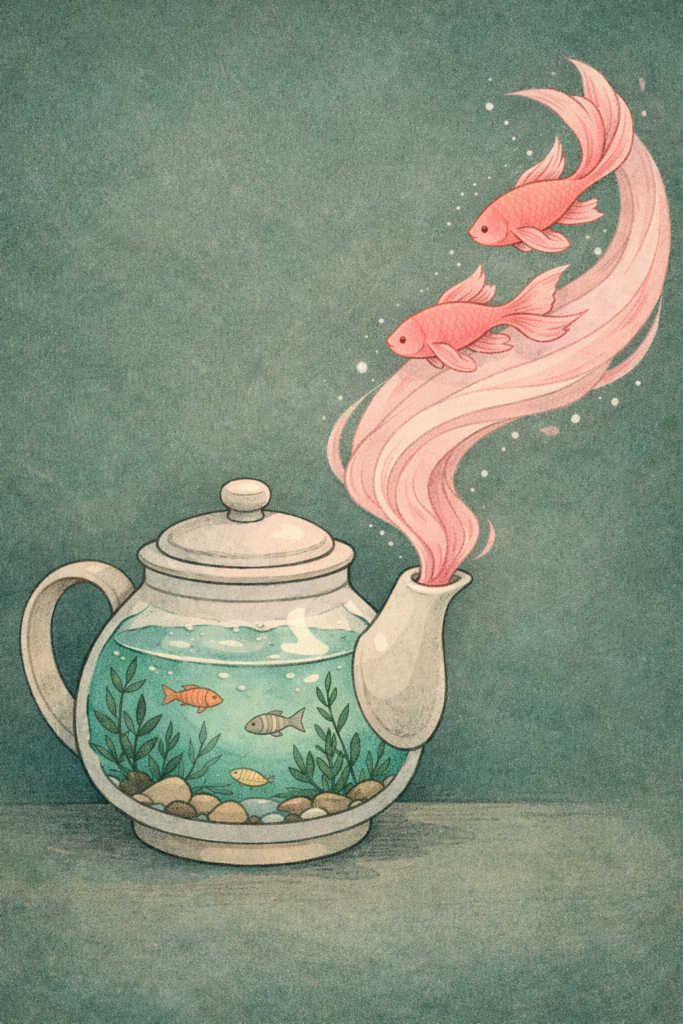
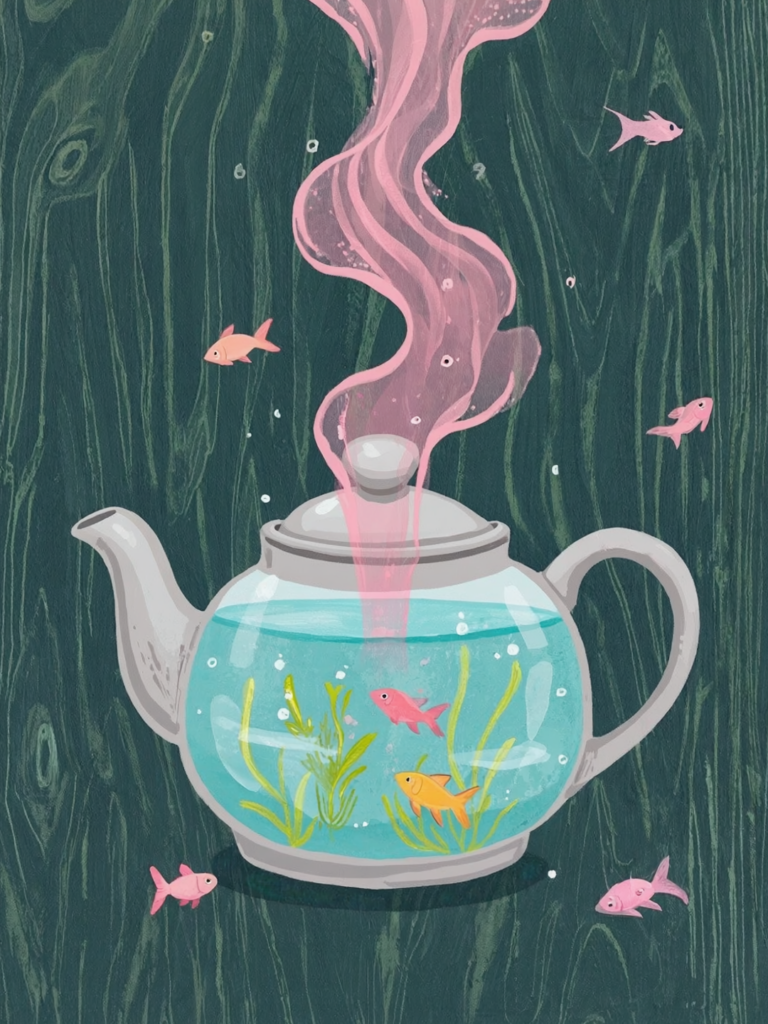
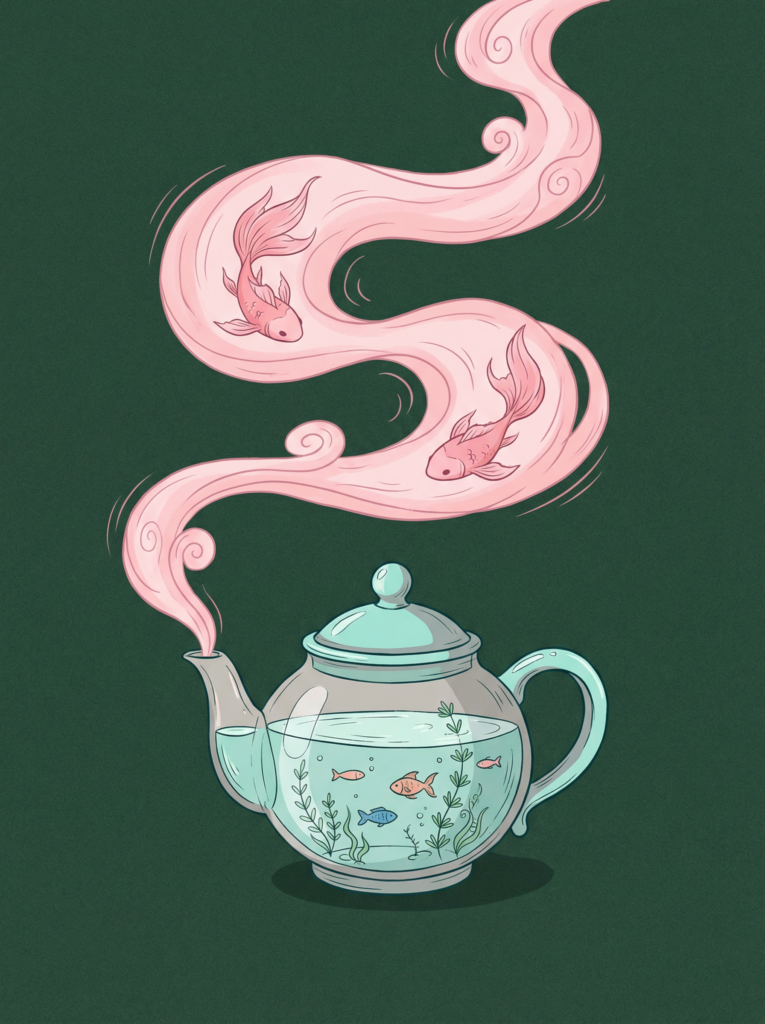
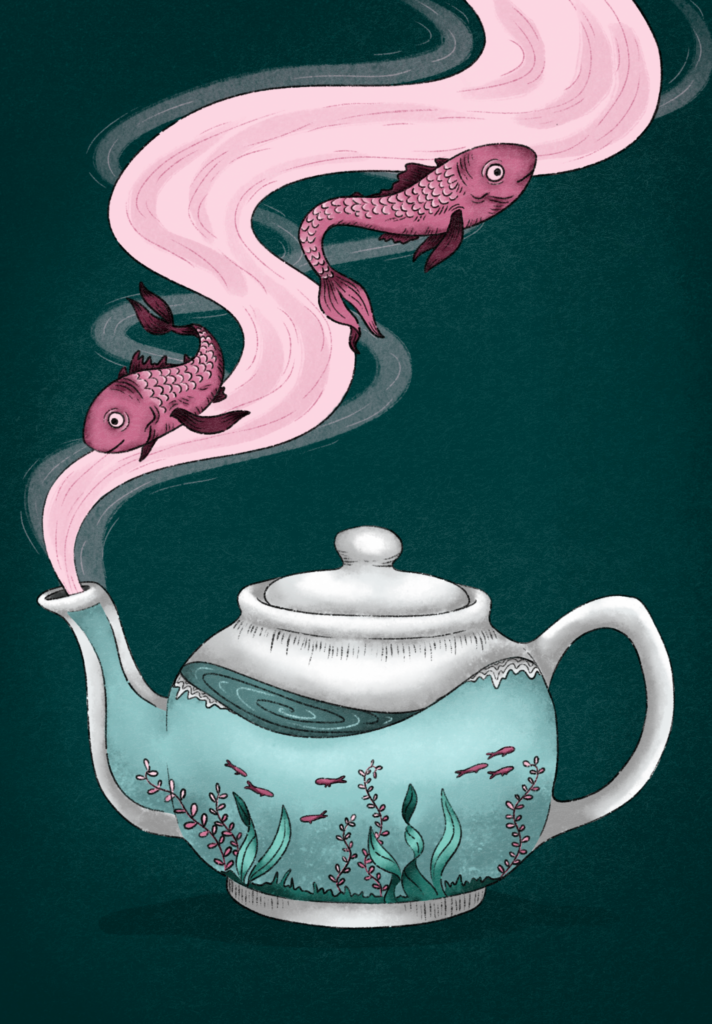
For my first tests, I decided to focus on tools that are commonly used (and free) for image-to-video animations. I let Chat GPT write the prombt for my imagined animation. Here how it turned out and the picture an want to use, which you may already know from my previous article:

Soft, slow animation. The pink smoke gently flows out of the teapot spout and moves upward in a smooth curve. The fish inside the smoke slowly swim forward. Calm, dreamy motion, no camera movement, subtle loop.
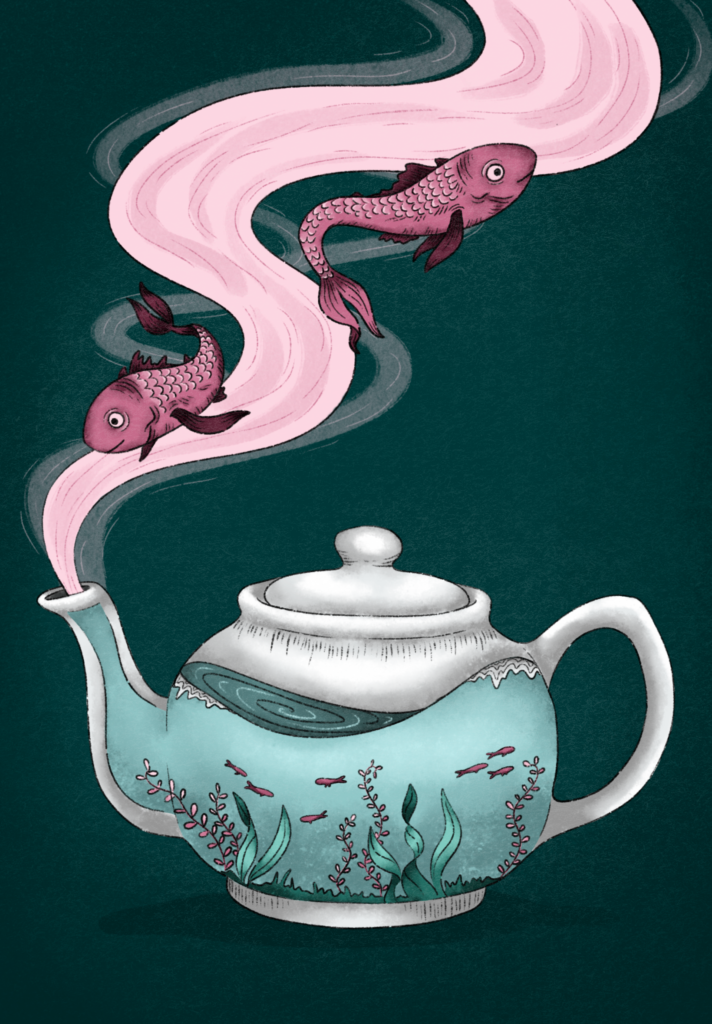
It was not easy to find Generators that are completly free. I just can just Firefly because I have an Adobe Subscription but there exclusive material as well. The good thing on Firefly is, that you can choose between a lof of diffrent models. Most websites require you to purchase credits, but there are some models where you have a few credits available in the free plan as Leonardo Ai or Stable Diffusion. However, I assume that you will achieve the best results with paid models.

  • Firefly Veo 2: You just can create 9:16 or 16:9 which is very limiting, just the fishes are moving, even though one of the fishi sis turning weird, I like the flowy and slow motions
  • Stable Diffusion: I tried Stable Diffusion for the first time and I have to admit I am very happy with this result, the movements of the fish are really realistic and I like how the smoke is slightly moving in the background, it looks very magical
  • Firefly Ray 3 HDR: I like how the smoke is slowly moving upwards and how the fish are floating around it, I dont get why the camera is mocing upwards cause there is no information about it in the prombt but I kinda like it, what’s really strange are the colors and how gray and dark they’ve become.
  • Firefly Pika 2.2: Really dont know whats going on there
  • Leonardo AI: I had high hopes on that generator but it turned out a bit weird, i like how the smoke is flowing, but everything is moving way too fast
Firefly Veo 2
Stable Diffusion
Firefly Ray 3 HDR
Firefly Pika 2.2
Leonardo AI

I think the best result so far came from Stable Diffusion. That’s why I wanted to refine the prompt and make it more precise, to see if I could achieve an even better result, even though I already really like how it turned out. Here’s what I got.

Unfortunately, I couldn’t manage to keep the fish inside the frame. Aside from that, I really like the movements inside the teapot, especially the gentle water motion and the way the small fish swim. If it were possible to combine these movements with the version shown above, that would be my ideal result.

Final Thoughts

Animating static illustrations with AI is something I find really interesting. Compared to fully creating illustrations with AI, I like this approach because it lets you add motion to existing artwork and create cool results very quickly. You don’t need any After Effects skills, and traditional animation usually takes a lot of time.

Especially for social media or small animated pieces, AI animation is a great option. You can get something moving without a complex workflow. It could also be interesting to animate individual layers separately and then combine them, which might lead to even better and more controlled results. Prompting is still challenging, especially when you have a very specific idea in mind, but overall it’s an exciting and accessible way to experiment with animation.
Impulse #5 – Talk with Birgit

Before the break I met with Birgit to talk about my master’s thesis. I had a rough idea what I want to do for my thesis since end of November, but nothing really concrete yet. To be honest I also had some doubts about the topic every other day if this is really what I want to do. I thought a lot about the topic and the project, brainstormed, researched but somehow, I circled around the same project ideas over and over again. While this is probably a normal part of the process, I still felt stuck. So, the meeting with Birgit came at a very good time for me, since I wanted to move forward with my idea and get more concrete.

One thing that felt quite clear to me already was the general direction for my thesis. I want to design something that embraces low-pressure creativity, fun, a bit of uselessness, and something whimsical. I feel like we are missing all of these sometimes during our everyday life as creatives. I see this as a counter to the productivity- and hustle-culture we are currently live in. It feels like everything needs to be useful, perfect and efficient. With my thesis I want to explore the opposite: creating a space where people can simply enjoy the act of creating without goals, pressure and expectations.

However, my intention felt clear, I struggle with what the creative space/playground could be. What should be on the website? What do people do there? How does it look like? After pitching her my idea she gave me a historical context I didn’t think of yet. She told me about a the time where the internet was full of so-called “useless” or one-purpose websites, especially during the time of Flash websites. These sites didn’t try to solve a problem or be efficient; they simply existed for fun, surprise and a little confuse.

One example she showed me was the, back in the days very famous, Hamster Dance Website (http://www.hamsterdance.org/hamsterdance/). The website doesn’t really do any useful it is basically just a loop of animations of a hamster with music (unfortunately the sound somehow doesn’t work, but the version Birgit showed me had sound). There is no goal, it doesn’t lead to anything and there is no productivity value and yet it is very joyful and funny. This reminded me that the internet hasn’t always been about optimization, metrics and productivity. It was playful, strange and delightfully pointless. So, I am going to take a deeper look at the history of websites and what was already out there.

Another aspect Birgit told me I should consider is the time factor. She suggested that the webspace or the content of it should not be available all the time. Instead of it being constantly available, it should be available only temporarily, for example 24 hours, before disappearing or changing into something else. That is the same concept as BeReal follows, people can take a snapshot of what they are doing now, once every 24 hours. This limitation creates presence and urgency, but without the pressure to be perfect. This temporal aspect could reinforce the idea of low-pressure creativity: you show up, you play, you create and then it’s gone. You create just in the moment, there is no way to iterate, optimize or monetize.

Even though I still don’t have an exact idea of what the webspace should be like, the talk with Birgit gave me new insights and impulses for the next steps.

AI was used to check spelling and grammar and better clarity.

#15 Experiments with AI and Illustration

Artificial Intelligence is currently one of the most discussed and controversial topics in the creative industry. Especially for illustrators, AI raises many questions, fears, and also curiosity. Some see it as a threat, others as a useful tool. Instead of taking a clear position right away, I decided to test AI illustration tools myself and see what they can (and cannot) do. The goal of this article is to explore it through a practical experiment and see what models are the best for illustrations.

Between Fear and Opportunity

I have already written a blogpost on this topic. However, for the purpose of completeness, I would like to reiterate the most important points here. AI in illustration comes with many concerns, and these concerns are valid.

On the negative side, many AI tools are trained on artworks without the consent of the original artists, which raises ethical concerns. Many illustrators fear job loss or that their work will lose value. AI also tends to copy existing styles without truly understanding their meaning.

On the positive side, AI can be useful when used carefully. It allows fast idea generation, quick experiments, and can support inspiration and composition during the creative process.

This mix of risks and possibilities is why AI remains such a challenging topic in illustration.

The Experiment: Recreating My Illustration with AI

For this experiment, I used one of my own illustrations, which I created manually in Procreate. This illustration served as the reference and starting point. The idea was to see:

  • how close the AI results come to my original illustration
  • how well the style, colors, and mood are translated
  • where AI performs well and where it clearly fails

From my experiences using AI Genereators, its easier to let AI write the Prombt for the gererated picture instead of write it by myself. So I gave Chat GPT my Illustration and asked him to describe this illustration in form, color an style for an AI Generator Prombt.

This is how it turned out:

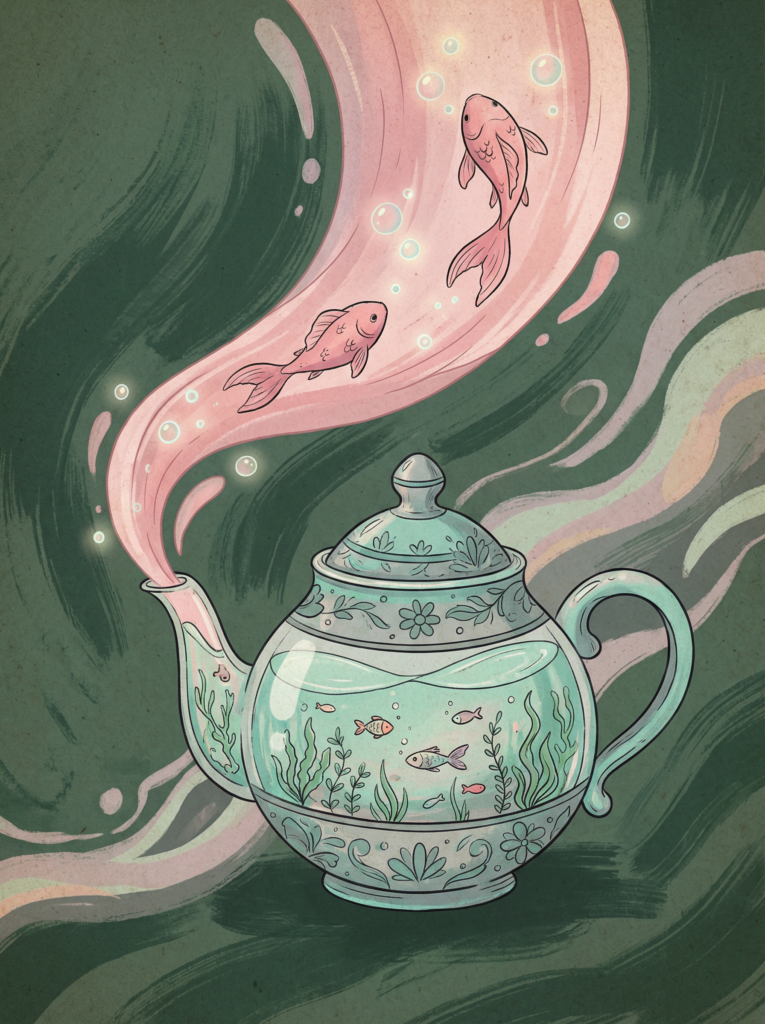
A surreal hand-drawn illustration of a ceramic teapot filled with water like a small aquarium. Inside the teapot, tiny fish and aquatic plants are floating gently. From the spout of the teapot, a soft pink stream flows into the air, and two larger pink fish are swimming within this flowing stream. Dark green textured background, soft pastel color palette with turquoise, pink, and muted grey tones. Whimsical, poetic atmosphere, clean linework, subtle grain texture, storybook illustration style, calm and dreamy mood.

Let’s start the AI Competition

For this experiment, I tested several popular AI image generator models mainly from Firefly. Here are the results and my opinion on it:

  • Firefly Image 4 Ultra: it dosen’t make sense at all, the style is quite mixed up (3d and 2d elements), don’t understand the stain in the backgorund, at least the teapot looks quite nice with the aquarium in it
  • Chat GPT Iamge 1.5: I think thats one of the best results when it comes to similarity, the style is illustrative and handmade, it actually make sense, but I don’t like the layout it seems kind of lost and random, the fishis are nice
  • Gemini 3 with Nano Banana Pro: This modell is usually one of my favorites, I like the artsy style, I think its the best result in gerneral which you could actually use for something (or work further on that), It’s all kind of random and not exactly like the prombt but the style fits pretty well
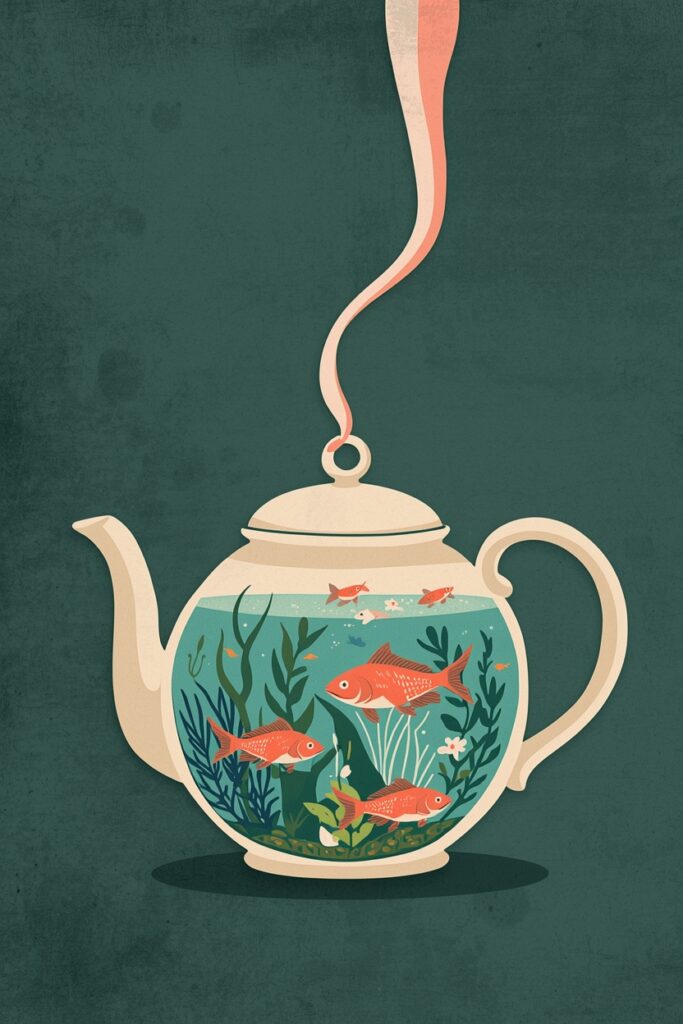
  • Flux 1.1 Ultra Raw: The only thing I like here is the bold and graphic style, without the fish in the air and the tiny smoke-thingy it could look nice
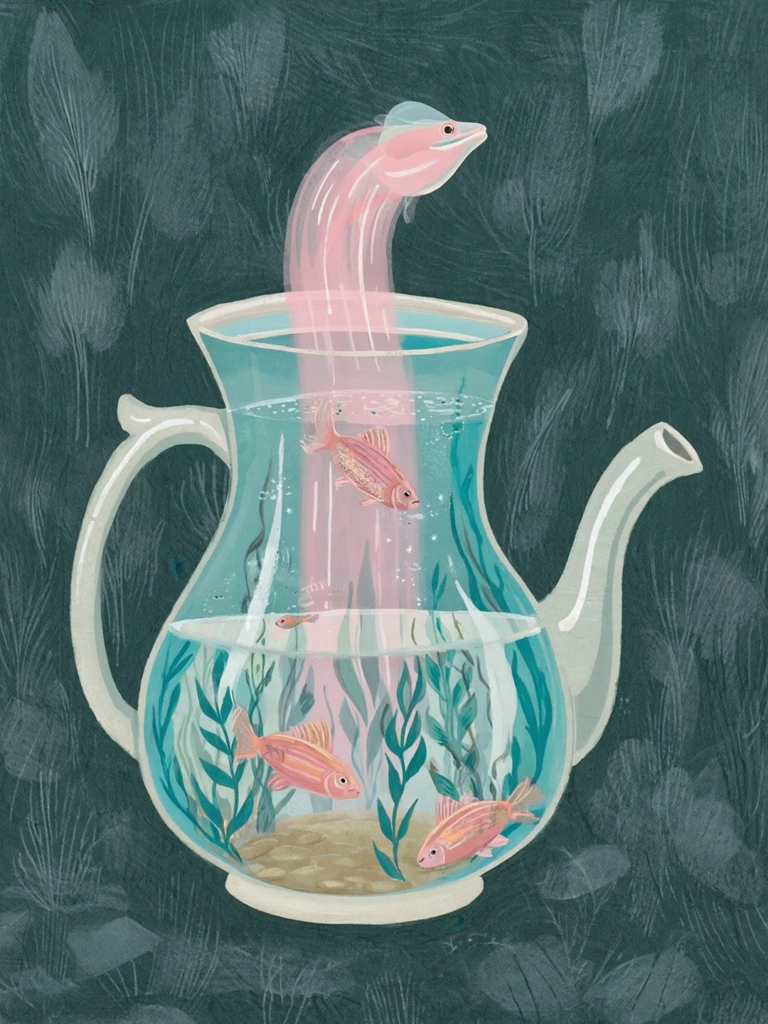
  • Runway Gen-4 Image: What the hell is happing here?! But to be honest if there were no weird eel-ghost there, I would choose that as the winner picture. I really like the style, it looks very editoral-ish and artsy, even though its the most diffrent compared to the original one
  • Leonardo AI: I tried this website for the first time as I read it should work well for illustrations, turns out: not really. I think its together with the Firefly Ultra its my least favorite, the style is kind of nice (maybe for posters) but it dosen’t make sense
Firefly Image 4 Ultra
Chat GPT Image 1.5
Gemini 3 with Nano Banana Pro
Flux 1.1 Ultra Raw
Runway Gen-4 Image
Leonardo AI

I thought this experimetn was really fun, but I am not completley happy with it at this point. So I decided to take my favorite model and work on the gererated picture until I am happy with the result. Since I really liked the Style of the Runway Gen-4 Image Generator I chose to go with that one, even though the compostions is hilarious. But I see the most potentiol here to get a nice and artsy result.

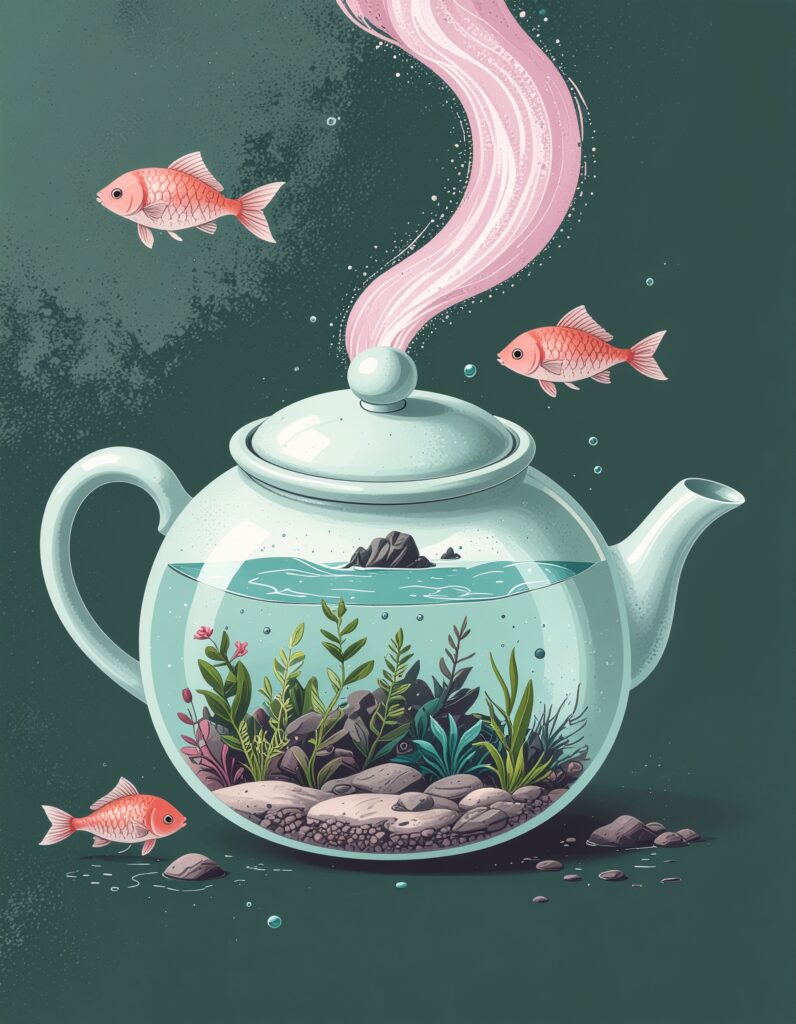
But after half an hour promting by myself and chat gpt, the picture below was the best result I could get. So I gave Runway up again and switch to my usual favorite Nano Banana again.

Runway
Nano Banana

I tried hard to create a nice result, but the one from Nano Banana was the best I could get. Its kinda nice, but the artsy and handdrawn style is totally missing. It always seems easier than it is to prombt something nice, but actually its pretty hard and time consuming. Probably I could get a better result than this, but I dont wanted to waste so much time (and of course energy) to create those images. And I think thats the whole point: It’s kind of fun to prombt something until it doesn’t work out the way we want or it dosen’t match our expectations. It was interesting and fun to create these images and see how differently each generator works, but it was not as enjoyable as painting the illustration myself. In the end all the created images are looking like AI images. I can’t say exactly why – maybe the too clean lines, the over perfectionsim or the plain textures – but you can see it in all of them. They have no soul and no personality. I don’t want to be an AI-hater, because I am sure that we all have to use it in the future, but with real art at least for me it can’t compete and won’t ever.

I am sure that for some tasks or areas, it makes sense, especially if it doesn’t matter much which illustrations are used. It can save a lot of time and produce beautiful results. Perhaps there are also ways to combine analog illustration and AI, which would certainly be interesting to test. But all in all, I believe and hope that human illustration and art will always remain an important and irreplaceable part of our lives.

Because Art without soul is like a book without words.

#14 Originality and AI

Following on from my thoughts in my previous blog post on “Sketchbook,” I looked into the topic of AI and illustration in more detail and came across Eileen Isagon Skyers’ TED Talk. I found her ideas very interesting and similar to my own, which is why I would like to share them here.

What does originality mean when machines can generate images?

That’s the question she is asking the audience. Eileen Isagon Skyers explores how AI is changing art and creativity. Her key points are:

  • Originality may now be collaborative, layered, and concept-driven rather than purely hand-drawn.
  • AI produces images that are both familiar and uncanny, blurring lines between human and machine creativity.
  • Artists working with AI often act as curators, shaping output by selecting, refining, and guiding the machine.
  • Questions arise around authorship, emotion, representation, and bias: who defines originality, and whose stories are told?

Why this matters for Illustrators

Originality in art is changing. It is not just about drawing perfectly but about showing your own voice, making choices, and putting intention into your work. Illustrators today often guide ideas and improve the results instead of creating every detail by hand. What really matters is emotion and story. AI can make pictures, but it cannot capture real experiences or true feelings. It is also very important to think about representation, to consider whose stories are shown, which visual traditions are included, and which are left out.

AI aka creative thief

When talking about the originality of AI artworks, one must of course also ask where AI gets its references from. That’s right – from all of us. Caught up in the AI and art bubble, I came across two more TED Talks that deal with precisely this topic. One by Ed Newton‑Rex on how AI “steals” creative work and another by Melody Liu on the ethics of AI art. Both show that AI can create impressive images, but it raises serious questions about originality, authorship, and fairness.

AI learns from existing artworks, often without permission. This means that styles, images, and ideas created by real human artists are used to train machines that can then produce new work. On one hand, this can inspire new creativity and speed up the illustration process. On the other, it risks taking away recognition, income, and the personal voice of artists.

Another issue is emotion and story. AI can combine shapes and colors perfectly, but it cannot capture lived experience, personal feelings, or the soul an artist puts into their work. Without that human element, art can feel empty. Finally, representation is also a concern: AI reflects the biases of its training data, so some voices and cultural traditions are left out, while others dominate.

How to protect your art

Ed Newton‑Rex also talks about how artists can protect their work from being used by AI without permission. One important step is to be aware of where and how you share your art online. Artists can use copyrights and licenses to make clear how their work can be used. Another idea is to add signatures or branding so people can see which work is original. Newton‑Rex says it’s important for artists to have a say in how their art is shared online, so they can protect both their voice and their income.

My take away

Of course, everyone knows by now that AI steals from real artists, but it’s easy to ignore and these talks really made me realize that I need to keep it in mind before posting anything online, especially on Instagram or Pinterest. My opinion on AI hasn’t really changed since my last blog post, it feels like most people talking about AI in a good way as “art” aren’t really illustrators or working artists. Still, I’m sure there are positive ways to use AI creatively without losing the soul of art, and I probably need to explore that side more. All three TED Talks I watched were really interesting and raised a lot of important questions. There are definitely many more talks out there on this topic for anyone who’s interested. I’m not sure if I want to explore this topic more deeply at this point, but maybe it could be part of a research.

IMPULS 2 – A Different Kind of Museum Experience 

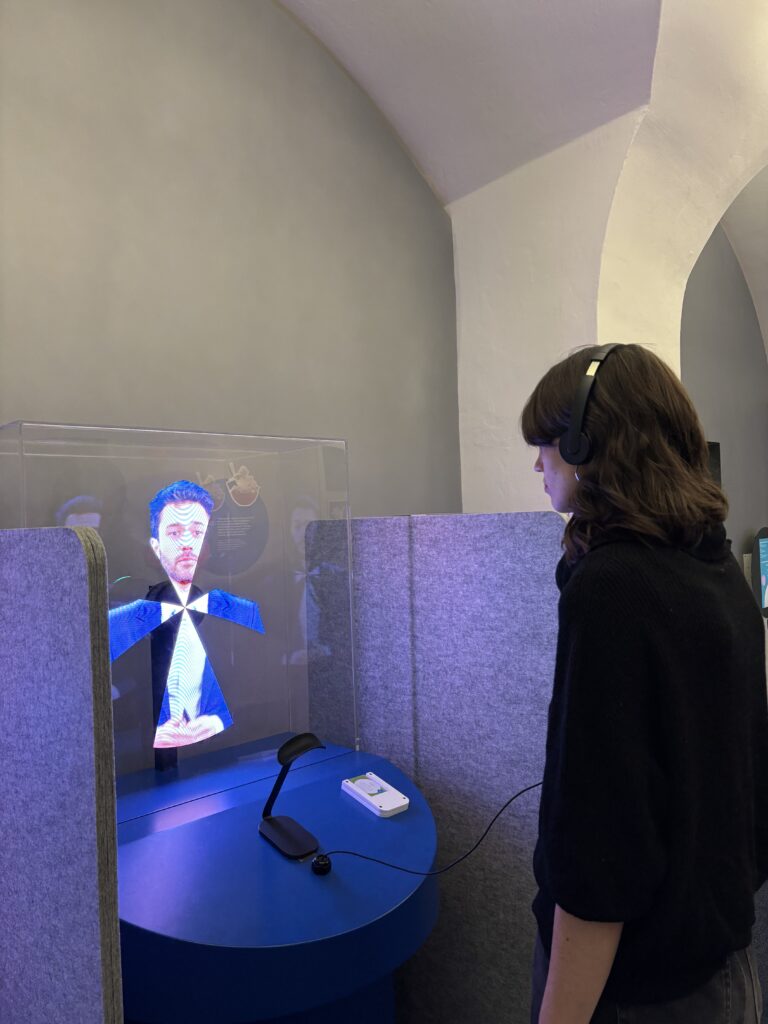
Recently, I visited the CoSA – Center of Science Activities – museum in Graz, and it honestly surprised me in a very good way. I’ve been to a lot of museums before, mostly the kind where you walk through quiet rooms, read wall texts, and carefully don’t touch anything. Here CoSA felt completely different, but was also designed to be very different from a regular museum visit. It was playful, interactive, and at the same time still dealt with serious and important topics. That combination made the whole experience feel much more accessible and memorable for me and inspired me to now write about it. What stood out immediately was how much the museum invites you to participate and interact. That is what I lives of. Almost everything is interactive. You are encouraged to touch things, try them out and make decisions. Instead of just consuming information, you become part of the exhibition. It felt less like “learning facts” and more like discovering things through the experience you get while walking thought the exhibition itself. I noticed that this made it much easier to stay focused and curious while moving through the space.

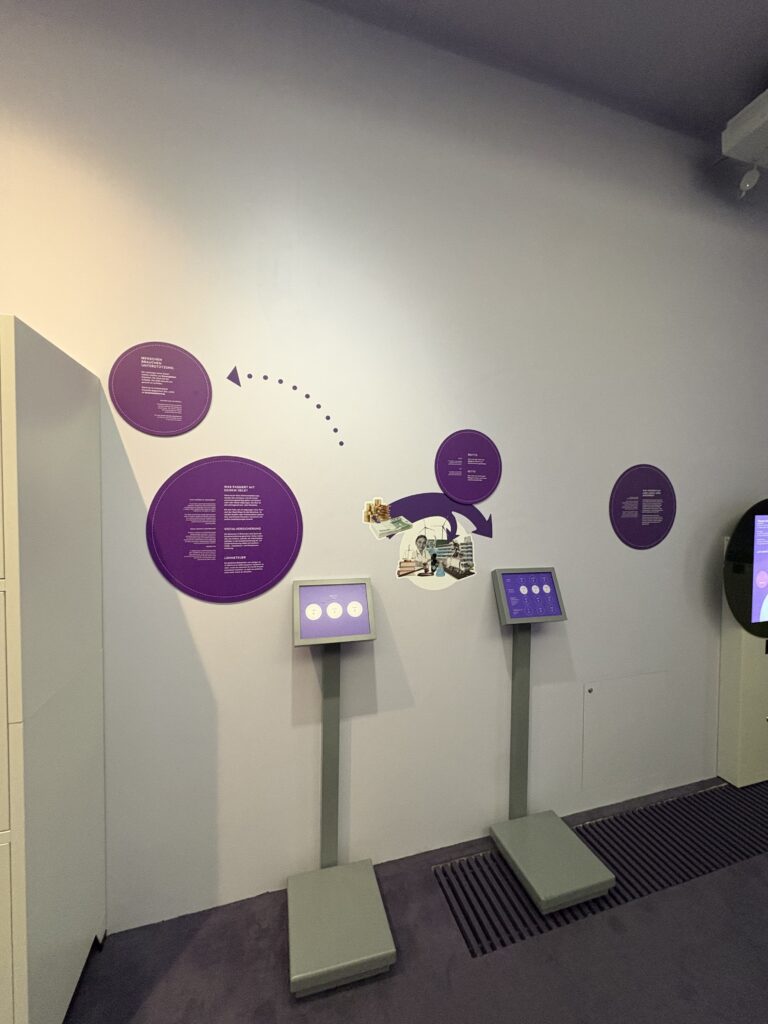
One part of the exhibition that really stuck with me and was a fun way to interact, was a system where you could collect points. Depending on how you interacted with certain stations, you would gain or lose points. What I found interesting was not the points themselves, but how differently people reacted to them. Some visitors were immediately motivated by the system. They tried to maximize their score, compared results, and took the tasks very seriously. Others didn’t care at all. They ignored the points, focused on the content, or even found the system a bit annoying. Seeing this made me think about motivation in general. The same mechanic can feel exciting to one person and completely meaningless to another. That’s something we often forget when designing exhibitions or interactive spaces.

Whithin this museum I also realised what made it different then most other experiences. The space almost encourages you to behave more like a child again: to be curious, playful, and less afraid of doing something wrong. CoSA creates an environment where interaction feels allowed and even expected, which lowers that barrier a lot. Another thing I really appreciated was that the museum was simply fun to go through. It didn’t feel like a task or something I had to concentrate really hard on. Instead, I was able to walk through the exhibition easily, guided by my personal interest in ceratin topics or things rather than obligation. And still, important topics were communicated in a clear and understandable way. That balance between fun and content is something that’s actually very hard to achieve. This also made me think a lot about the exhibition we are planning for January, where works from the past year will be shown. Designing an exhibition like that is a challenge in itself: different topics, different formats, different levels of interaction. CoSA showed me that there is no single “right” way to design an exhibition space. Museums can be playful, interactive, and still meaningful in their own ways. 

#13 Color and and Form in Editorial Design

How Color and Form Shape Emotion in Editorial Illustration

Editorial illustrations are pictures that go with articles in magazines, books or online. They help people feel the story, not just read it. The way an illustrator uses colors and shapes can change how the viewer feels about the idea before they even read the words. As I want to do something with Editorial Illustration or Design in my Master Thesis, I decided to dive a bit deeper in this topic again.

Why Color Matters

Color is one of the first things we notice in an image. Colors can change our mood and make us feel something without thinking too hard. For example:

  • Red can make an illustration feel energetic, urgent, or strong.
  • Blue can feel calm, quiet, or thoughtful.
  • Yellow feels happy, bright, and full of energy.

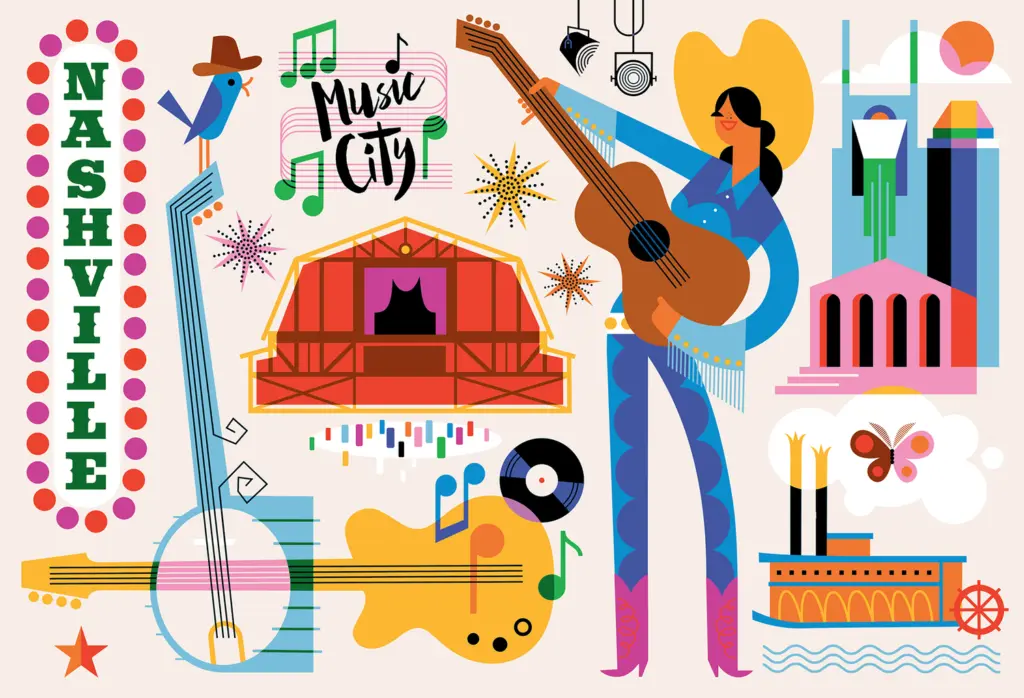
This works because our brains connect colors with feelings, often without us planning it. A red element might make a viewer feel alert immediately, while a blue background can make a story feel peaceful. Illustrators use these color feelings on purpose. For example, an editorial illustration about climate change might use mostly blues and greens to make the reader feel calm and connected to nature. A political cartoon about protest might use bold reds and blacks to show intensity and movement. In this picture you see the typical color meanings. It significant to consider this while creaitng something for a certain information and emotion.

How Shapes and Forms Affect Mood

Color isn’t the whole story. The shapes and forms the illustrator uses also give the viewer emotional clues.

  • Soft, round shapes often feel friendly and gentle.
  • Sharp, pointed shapes feel tense or active.
  • Large open spaces can feel calm or lonely, while crowded shapes can feel busy or chaotic.

The way elements are arranged on the page (called composition) also matters. A centered figure can feel stable or important, while a tilted composition can create tension or movement.

Golden Cosmos: Colorful, Playful, and Thoughtful

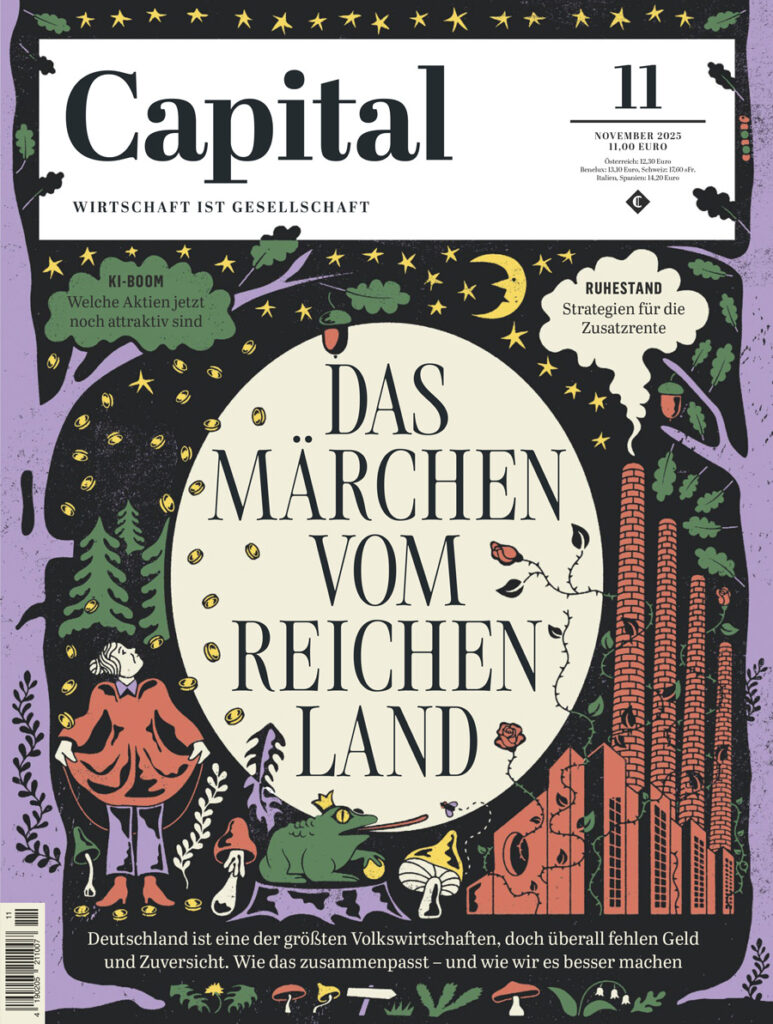
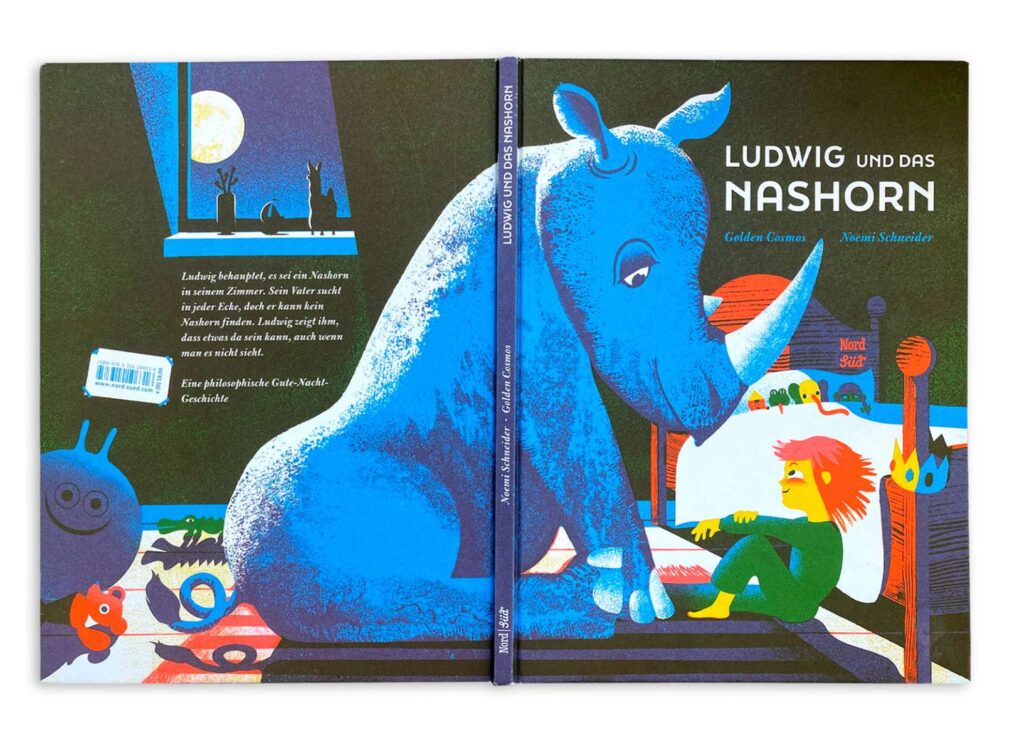
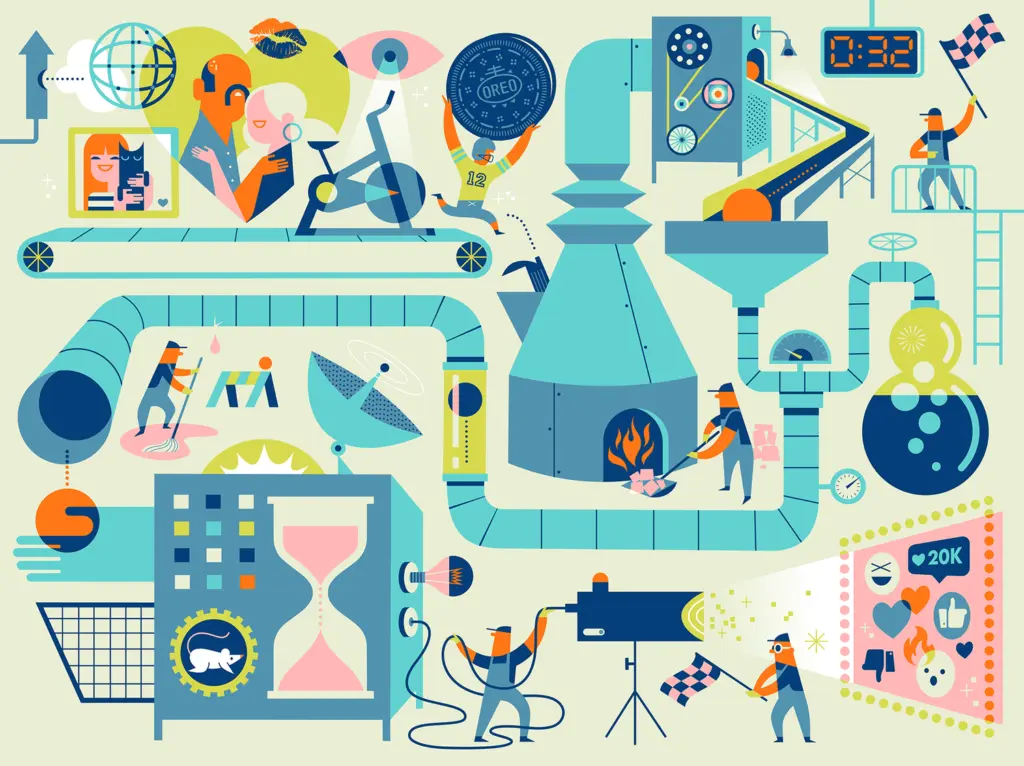
One of the best real-world examples of how color and form influence emotion in editorial illustration is the Berlin-based duo Golden Cosmos (illustrators Doris Freigofas and Daniel Dolz). I saw their website and thougt they are doing really really nice work. They are working for major international publications like The New York Times, The New Yorker, Die Zeit, and Bloomberg. Their style is instantly recognizable because they use bright, contrasting spot colors, simple shapes, and a screen-print-like aesthetic that feels both bold and warm.

How Their Work Uses Color and Shape

  • Bold palettes: Golden Cosmos often limits their illustrations to a few strong colors which create a feeling of energy and focus. In editorial contexts, this helps draw readers in and gives a visual intensity that matches serious topics.
  • Simple but expressive forms: Their people and objects are usually drawn in flattened shapes with playful proportions. This makes spaces feel open and engaging, not heavy or literal, and lets readers connect emotionally before reading the text.
  • Narrative scenes: Instead of just illustrating a literal idea from the article, they often build scenes with small stories inside them which makes the illustrations feel like visual essays themselves.

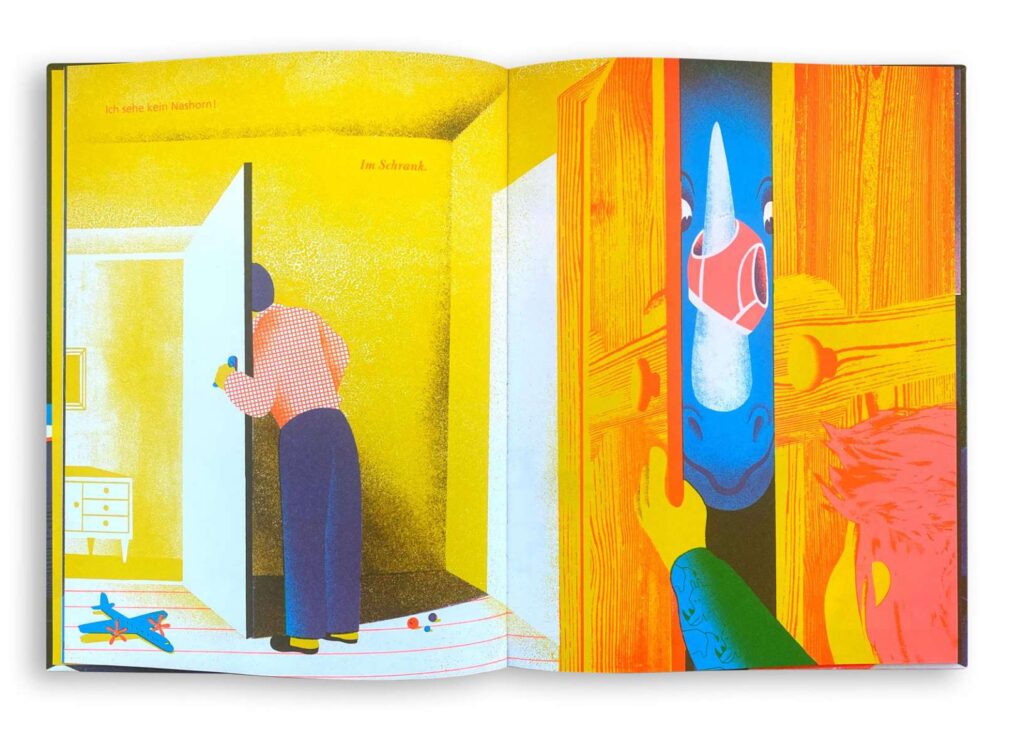
In their picture book work (like Ludwig and the Rhinoceros) the duo gained awards for color and spatial design, showing that color and composition are central to their emotional storytelling whether in editorial work or book illustration. I thought comapred to usual childrenbooks, it is really diffrent in how they using colors and shapes.

Another Example: Kirsten Ulve

A second great example of emotional editorial illustration comes from Kirsten Ulve, an American graphic artist known for her vibrant editorial and caricature work. Ulve’s illustrations appear in publications such as The New York Times, Vogue Japan, Los Angeles Times and Entertainment Weekly.

What Makes Ulve’s Work Emotionally Effective

  • Expressive color: Ulve often chooses bold and saturated colors that draw attention and give a lively energy to the topics. For example, using strong reds and blues in political caricatures gives urgency and emotional punch to commentary about public figures.
  • Character and exaggeration: Her caricatures use shapes and proportions that exaggerate personality traits, making the emotional impact of the subject immediately clear. A reader can sense mood (whether satire, tension, or humour) before reading a word.
  • Collage and texture elements: In addition to flat color, Ulve sometimes combines visual textures and patterns that heighten emotional contrast, like rough patterns behind calm figures to show underlying conflict.

Ulve’s strong and confident use of form helps editorial stories about politics, culture, and society feel alive and very human, which keeps readers visually engaged and emotionally connected.

Why Color and Form Matter in Editorial Illustration

Whether it’s Golden Cosmos’ bright screen-print shapes or Kirsten Ulve’s expressive caricatures or editorial illustration uses visual language to communicate emotion. Here’s why it matters:

Color Sets the Mood

Color creates emotional cues instantly. Bright, high-contrast colors can feel urgent or joyful, while muted or limited palettes can feel calm, serious, or reflective. Color can signal the right emotional tone even before someone starts reading.

Shape and Composition Guide Understanding

Shapes and layout help guide the reader’s eye. Organic, flowing shapes can feel natural and warm. Straight lines or geometric forms can feel structured and formal. How space is organized around figures or objects shapes the viewer’s emotional response to the idea being illustrated.

Emotion First, Narrative Second

Illustrations that influence emotion don’t just show facts, they embody a feeling. This is especially effective in editorial contexts where the illustration sets the tone for the article and stays in the reader’s memory long after they’ve moved on.

Conclusion

Color and form are more than stylistic tools, they are emotional languages in illustration. When illustrators choose color palettes thoughtfully and shape forms with intentional emotional impact, they give editorial stories a deeper voice and connection. Golden Cosmos and Kirsten Ulve are great examples of how strong visual design can turn words into feeling. For me personally its very helpful and inpirational to compare such examples as Golden Cosmos or Kirsten Ulve and just look at their work.

Sources

https://www.golden-cosmos.com/

https://www.kirstenulve.com

https://www.itsnicethat.com/articles/golden-cosmos

https://www.numberanalytics.com/blog/the-power-of-color-theory-in-editorial-illustration

https://kreafolk.com/blogs/inspirations/art-of-editorial-illustration

IMPULSE #1

Animation has never been just for children.

As a kid, I saw the world through colors that only existed in Disney movies. Everything felt brighter, softer, and more hopeful. Movement flowed the way it does in Studio Ghibli films—alive, intentional, full of quiet emotion. Those stories didn’t just entertain me; they shaped how I understood kindness, courage, and what it meant to see others as more than what they appeared to be.

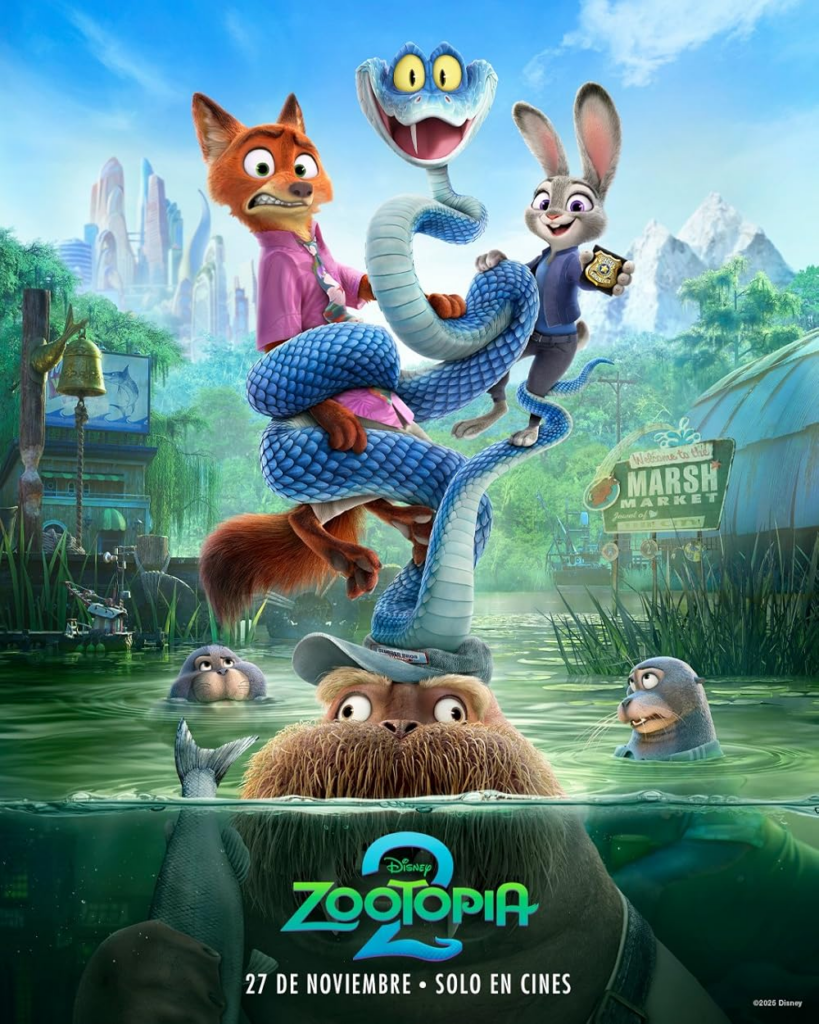
One animated film that sparked that feeling again this year was Zootopia 2, directed by Jared Bush and Byron Howard. As a sequel to Zootopia, it carries forward a world that was never afraid to talk about uncomfortable truths.

When Zootopia was first released, it stood out because it dared to explain racism and prejudice in a way children could understand and adults could reflect on. Predators and prey weren’t just animals—they were symbols of how fear is created, how stereotypes are formed, and how entire groups are judged based on the actions of a few. The film sent a powerful message: bias is learned, and unlearning it requires empathy, self-awareness, and courage.

That message was important when the film first came out, and it feels even more urgent today.

Zootopia 2 builds on this foundation by exploring themes that resonate deeply with the world we currently live in—division, inherited fear, and the cycles of conflict that pass from one generation to the next. Without naming real-world events directly, the film reflects the reality of modern global tensions, where communities are shaped by long histories of trauma and misunderstanding.

What makes animation so powerful is its ability to hold these heavy ideas without overwhelming its audience. Through animals, color, and movement, it creates space for reflection rather than confrontation. Children absorb lessons about empathy and fairness, while adults recognize the uncomfortable truths hiding beneath the surface.

Maybe that’s why we keep coming back to these stories—not because we want to escape reality, but because we want to remember who we were before the world told us to stop caring.

https://www.thepersistent.com/the-secret-feminist-message-hidden-in-zootopia-2


TR #1 Master of what exactly?

For me, the decision was relatively simple. I wasn’t done with the knowledge I had gained during my bachelor’s studies. Several of the projects I was working on felt unfinished, and I believed they had a future beyond the university context.

The research I was most deeply involved in focused on Yugoslavia and the Balkan region. Coming from the Balkans is not just a geographical fact for me—it shapes how I think, work, and create. It carries a complex history of fragmentation, and resilience, but also a strong sense of shared culture, shared contradictions, and collective memory. This background influences the questions I ask and the themes I repeatedly return to in my work.

My bachelor’s thesis is closely connected to LGBTQ+ identities and rights, and to how these are understood and lived in the Balkans and then Yugoslavia. I was interested in the tension between visibility and safety, progress and backlash, and in how legal rights, social acceptance, and everyday realities often do not move at the same pace. Looking at the Yugoslav past alongside the current political and cultural climate helped me understand how ideas of freedom, community, and solidarity have shifted over time.

Continuing with a master’s degree felt like a natural next step to deepen this research. It offered the space to further explore questions of identity, belonging, and resistance, and to critically examine how personal experience can become a political and artistic position. For me, staying in academia was not about postponing “real life,” but about giving these topics the time, care, and complexity they require.

#5 Die Metaphysik des Long Takes

Parallel zur Tiefenschärfe (Raum) steht die Plansequenz oder der Long Take (Zeit). Für Bazin sind Raum und Zeit im Kino untrennbar verbunden. Wenn die Tiefenschärfe den Raum respektiert, respektiert der Long Take die Zeit.

6.1 Die Dauer als Qualitätsmerkmal

Bazin glaubt, dass die Zeit selbst eine “Dichte” hat. Ein Ereignis, das in seiner realen Dauer gefilmt wird, hat eine andere ontologische Qualität als ein Ereignis, das durch Schnitte verkürzt wird. Das Warten, das Schweigen, das Zögern, all diese “toten Momente” sind essenziell für die emotionale Wahrheit.

Im italienischen Neorealismus, etwa in De Sicas Umberto D. oder Fahrraddiebe, beobachtet die Kamera oft banale Handlungen in ihrer vollen Länge. Wir sehen ein Dienstmädchen, das morgens aufsteht, Wasser kocht, die Mühle mahlt. Nichts “Dramatisches” passiert im klassischen Sinne. Doch gerade durch diese ungekürzte Dauer entsteht eine tiefe Empathie für die menschliche Existenz der Figur. Wir spüren die Last ihrer Zeit. Bazin schreibt über Fahrraddiebe: “Nichts passiert […], das nicht auch genauso gut nicht hätte passieren können”. Die Tragödie entsteht aus der bloßen Akkumulation von Zeit und Zufall, eingefangen durch eine geduldige Kamera.   

6.2 Montage Interdit: Das Gesetz der Ästhetik

Bazins radikalstes Konzept in Bezug auf den Schnitt ist das der Montage Interdit (Verbotene Montage). Er formuliert ein ästhetisches Gesetz: “Wenn die Essenz einer Szene die gleichzeitige Anwesenheit von zwei oder mehr Faktoren in der Handlung verlangt, ist die Montage ausgeschlossen”.   

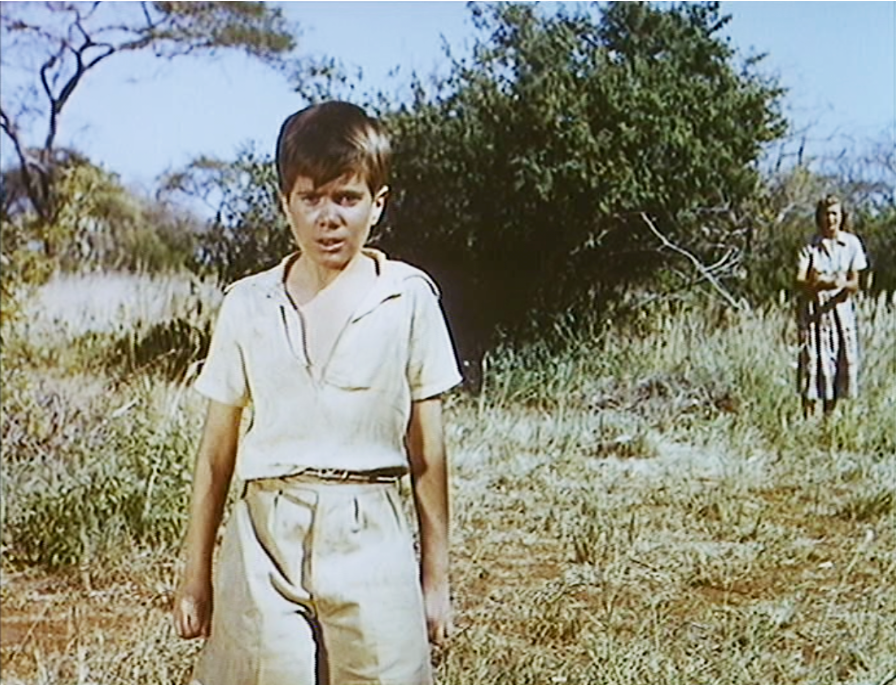
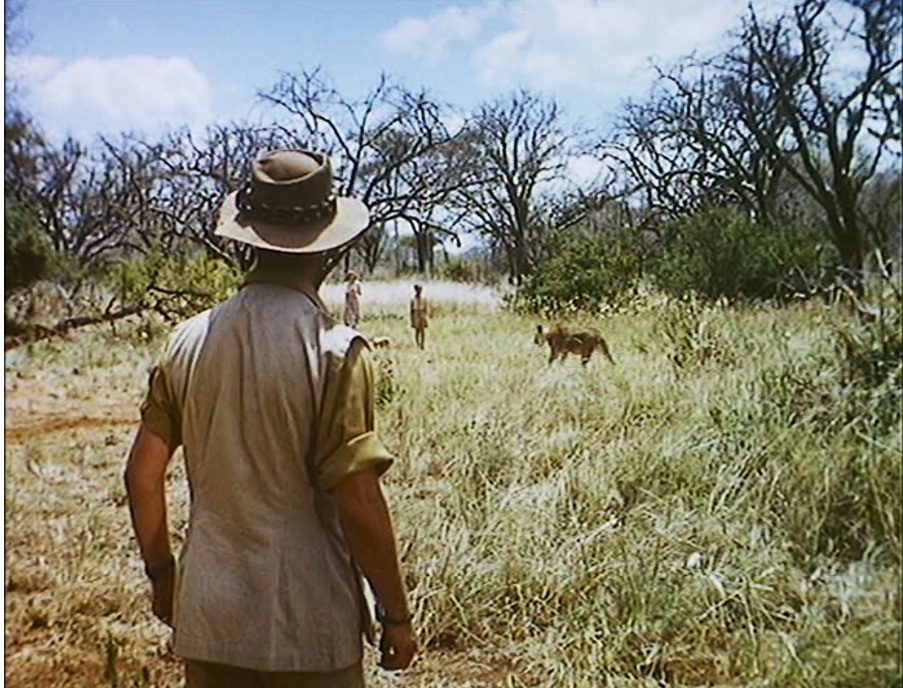
Er führt Beispiele aus Tierfilmen und Dokumentationen an. In dem Film Where No Vultures Fly gibt es eine Szene, in der ein Kind ein Löwenbaby findet, während die Löwenmutter sich nähert.

  • Würde der Regisseur schneiden (Kind -> Löwin -> Kind), würde der Zuschauer instinktiv wissen: Das Kind war nie in Gefahr. Die Bilder wurden getrennt aufgenommen. Es ist ein Trick.
  • Zeigt der Regisseur jedoch Kind und Löwin in einer Einstellung (durch Weitwinkel und Tiefenschärfe), so wird die Gefahr real. Die Authentizität der Gefahr erzeugt eine viszerale Emotion (Angst), die durch Montage niemals erreicht werden könnte.

https://nonsite.org/the-reality-contract/

Bazin nennt dies den “Realitätsvertrag” (Reality Contract). Der Kameramann bürgt mit der Einstellung für die Wahrheit des Gezeigten. Sobald der Schnitt diesen Vertrag bricht, wird die Emotion zu einer bloßen intellektuellen Übung. Die emotionale Wucht von Filmen wie Der rote Ballon (Lamorisse) beruht darauf, dass wir den Ballon und den Jungen tatsächlich zusammen im Bild sehen und somit an die “Magie” als physikalisches Faktum glauben müssen.

Fallstudie Children of Men und 1917:

Children of Men (2006): Die „Montage Interdit“ im Kriegsgebiet

Cuaróns Film ist ein perfektes Beispiel für Bazins Gesetz der „Montage Interdit“. Bazin argumentiert: Wenn die Essenz einer Szene die gleichzeitige Anwesenheit von zwei Faktoren verlangt, darf nicht geschnitten werden.

Die Auto-Szene (Der Hinterhalt)

In einem der Longtakes sitzen die Protagonisten im Auto. Sie scherzen, die Stimmung ist gelöst. Plötzlich: Ein brennendes Auto versperrt den Weg, ein Mob greift an, Julianne Moore wird erschossen, die Polizei verfolgt sie. Alles passiert in einer einzigen, ununterbrochenen Einstellung.

  • Anwendung des Textes: Hätte Cuarón hier die klassische „analytische Montage“ genutzt (Schnitt auf Angreifer -> Schnitt auf verängstigtes Gesicht -> Schnitt auf Waffe), wäre die Szene „konsumierbar“ gewesen. Wir hätten die Distanz des Kinos gespürt.
  • Der Realitätsvertrag: Indem die Kamera im Auto bleibt und sich nicht durch einen Schnitt in Sicherheit bringt, greift Bazins „Realitätsvertrag“. Wir sehen die Insassen und die Gefahr (den Mob, die Kugel) gleichzeitig im selben Raum. Wie beim Beispiel mit dem Löwen und dem Kind zwingt uns die Kamera, die Gleichzeitigkeit von Leben und Tod zu akzeptieren. Da der Schnitt uns nicht „rettet“, entsteht jene „viszerale Emotion“, die Bazin beschreibt. Wir sind gefangen im „Hier und Jetzt“ des Autos.

Der Weg durchs Kriegsgebiet

Am Ende folgt die Kamera dem Protagonisten Theo durch ein Kriegsgebiet. Blut spritzt auf die Linse (und wird nicht weggeschnitten).

  • Bazin-Analyse: Dies ist die extreme Form der „aktiven geistigen Haltung“. Der Zuschauer muss, genau wie Theo, den unübersichtlichen Raum scannen. Die fehlende Montage bedeutet, dass wir nicht wissen, woher die nächste Kugel kommt. Die Gefahr ist keine filmische Behauptung, sie ist eine räumliche Tatsache.

2. 1917 (2019): Die „Dichte der Zeit“ und die physische Empathie

Während Children of Men oft die „Montage Interdit“ nutzt, um Gefahr zu authentifizieren, ist 1917 eine Studie über Bazins Konzept der „Dauer als Qualitätsmerkmal“. Der Film ist so inszeniert, dass er (scheinbar) aus einer einzigen Einstellung besteht.

Das Gehen und das Warten

Ein Großteil des Films besteht darin, dass die zwei Soldaten, Blake und Schofield, gehen und die verschiedensten Probleme lösen. Sie laufen durch Schlamm, durch Gräben, über Wiesen.

  • Anwendung des Textes: Bazin schreibt, dass Zeit eine „Dichte“ hat und dass „tote Momente“ essenziell für die emotionale Wahrheit sind. Im klassischen Kriegsfilm würde man die lange Wanderung durch einen Schnitt verkürzen (Ellipsen). 1917 verweigert dies. Wir müssen jeden Meter mitgehen. Der Zuschauer und Protagonist, weiß dass die Zeit drängt, doch wird er oft aufgehalten um Hindernisse zu überwinden. Der Zuseher sieht jeden Schritt und fühlt sich mittgehangen.
  • Die Entstehung von Empathie: Wie beim Dienstmädchen in Umberto D., dessen banale Handlungen Empathie erzeugen, erzeugt hier die bloße physische Anstrengung der Dauer eine Verbindung. Wir spüren die Erschöpfung, weil wir die Zeit der Erschöpfung mit den Figuren teilen. Die Tragödie des Krieges wird nicht nur durch Explosionen erzählt, sondern durch die mühsame „Akkumulation von Zeit“, die es braucht, um das Niemandsland zu durchqueren.

Die Szene des rennenden Soldaten (Der Graben-Run)

Gegen Ende rennt Schofield parallel zum Schützengraben, während hunderte Soldaten aus dem Graben in den Tod stürmen und Bomben fallen.

  • Montage Interdit: Hier greift wieder das Löwen-Beispiel. Würde Mendes schneiden (Schofield rennt -> Explosion -> Schofield rennt), wüssten wir: Es ist ein Trick. Durch die Totale, die Schofield und die Explosionen gleichzeitig zeigt, bürgt der Kameramann (Roger Deakins) für die Wahrheit des Moments. Auch wenn digitale Hilfe im Spiel ist: Die Wirkung ist die von Bazin beschriebene: Wir glauben an die Gefahr, weil Raum und Zeit nicht zerstückelt werden. Es hilft dabei auch, dass der Schauspieler (George Mackay) von einem Komparsen umgeranntwurde. Diese Imperfektionen helfen Filmen Realitätsnäher zu sein.

Fazit der Fallstudie

Bazin sah im Long Take und der Tiefenschärfe einen Weg zurück zur Unschuld des Auges.

  1. Children of Men nutzt diese Technik für Terror: Die Weigerung zu schneiden (Montage Interdit) nimmt dem Zuschauer den Schutzmechanismus des Filmschnitts. Die Gewalt wird unausweichlich.
  2. 1917 nutzt diese Technik für Immersion: Die ununterbrochene Dauer („Dichte der Zeit“) zwingt den Zuschauer, die physische Distanz und die verstrichene Zeit als reale Last zu empfinden.

Bazin, A. (1967). What is cinema? 1. Univ. of Calif. Press.

Shechtman, A. (2017, 1. November). The reality contract: Rope, Birdman, and the economy of the single-shot film. Nonsite.org, 22. https://nonsite.org/the-reality-contract/

#4 Weiterführende Techniken für Realität

Tiefenschärfe und die Demokratie des Blicks

André Bazin identifiziert die technologischen und ästhetischen Durchbrüche der 1940er Jahre – insbesondere den Einsatz von Weitwinkelobjektiven und panchromatischem Filmmaterial, die eine extreme Tiefenschärfe (Deep Focus) ermöglichten, als einen “dialektischen Fortschritt” in der Filmsprache. Dieser Fortschritt ist für ihn nicht nur formaler Natur, sondern hat massive Auswirkungen darauf, wie Emotionen im Kino erlebt werden (Bazin, 1967).   

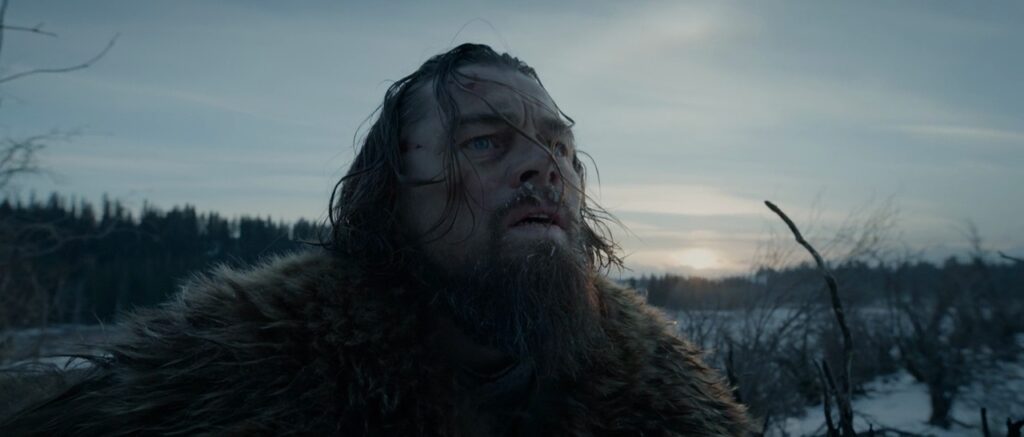
Wenn wir den vorliegenden Absatz auf Alejandro G. Iñárritus The Revenant (2015) und die Kameraarbeit von Emmanuel Lubezki anwenden, sehen wir die extreme Weiterführung dessen, was Bazin an Citizen Kane bewunderte. The Revenant ist im Grunde die moderne Erfüllung von Bazins Theorie des „totalen Kinos“, in dem die Realität unzerschnitten auf den Zuschauer einwirkt.

Fallbeispiel “The Revenant”:

1. Die Tiefenschärfe als Ausdruck der Naturgewalt Bazin lobt bei Toland (Citizen Kane), dass Vordergrund und Hintergrund gleichzeitig scharf sind. In The Revenant wird dies durch extreme Weitwinkelobjektive (Weitwinkel-Ästhetik) auf die Spitze getrieben.

  • Die Anwendung: Während das klassische Kino oft den Hintergrund unscharf macht (Bokeh), um die Aufmerksamkeit auf den Star zu lenken, sehen wir in The Revenant Leonardo DiCaprios schmerzverzerrtes Gesicht im Vordergrund und die majestätische, aber tödliche Landschaft im Hintergrund in gleicher Schärfe.
  • Der Effekt: Dies erzwingt visuell das Thema des Films: Der Mensch ist nicht losgelöst von seiner Umgebung. Die Natur ist kein bloßer Tapete, sondern ein gleichwertiger, erbarmungsloser Akteur. Die Tiefenschärfe verbindet den Kampf des Protagonisten untrennbar mit der Welt, gegen die er kämpft.

2. Die Abschaffung der „analytischen Montage“ Der Text beschreibt, wie die klassische Montage dem Zuschauer das Denken abnimmt. Iñárritu verweigert sich diesem Diktat fast vollständig durch die Nutzung der Plansequenz (lange Einstellungen ohne sichtbaren Schnitt).

  • Die Anwendung: In der Eröffnungsschlacht oder dem Bärenangriff gibt es keinen rettenden Schnitt. Wenn im klassischen Kino ein Pfeil fliegt, schneidet der Regisseur oft auf den Getroffenen. In The Revenant schwenkt die Kamera fließend vom Schützen zum Opfer und weiter zum nächsten Kampf.
  • Die Konsequenz: Der Regisseur „diktiert“ den Blick nicht durch Zerstückelung der Zeit, sondern zwingt den Zuschauer, die Dauer des Ereignisses zu ertragen. Das bringt den Zuschauer, wie Bazin fordert, näher an die „Beziehung, die der Mensch zur Realität hat“, denn im echten Leben gibt es auch keine Schnitte, um brenzligen Situationen zu entkommen.

3. Die „Demokratie des Blicks“ als Überlebensmechanismus Bazins Kernargument ist, dass der Zuschauer selbst entscheiden muss, wohin er schaut („Wir scannen den Raum“). In The Revenant wird diese Freiheit zur Pflicht.

  • Die aktive Haltung: Da die Kamera oft in einer einzigen, weiten Einstellung verharrt, während überall im Bild etwas passieren könnte (ein Angriff der Arikara aus dem Wald, ein herabstürzender Ast, eine Bewegung im Wasser), muss der Zuschauer den Bildraum permanent aktiv scannen.
  • Der „positive Beitrag“: Bazin schreibt, der Zuschauer leiste einen „positiven Beitrag zur Inszenierung“. Bei The Revenant bedeutet das: Der Zuschauer wird vom passiven Konsumenten zum virtuellen Mitleidenden. Wir suchen den Horizont nach Gefahr ab, genau wie die Figur im Film. Die „Demokratie des Blicks“ führt hier nicht nur zu intellektuellem Verstehen (wie bei Kane), sondern zu physischer Immersion. Wir sind nicht mehr sicher im Kinosessel, sondern visuell schutzlos der Weite des Raumes ausgeliefert. Der Zuseher befindet sich wortwörtlich in der Szene.

Während Citizen Kane die Tiefenschärfe nutzte, um komplexe narrative Informationen zu vermitteln, nutzt The Revenant Bazins Prinzipien für eine sensorische Erfahrung. Die von Bazin geforderte „aktive geistige Haltung“ verwandelt sich hier in einen visuellen Überlebensinstinkt. Der Film beweist, dass Bazins Theorie auch 75 Jahre später der Schlüssel ist, um die Wirkung modernen, immersiven Kinos zu verstehen (Bazin, 1967).

Warum führt diese “aktive geistige Haltung” zu stärkeren Emotionen? Weil die Emotionen, die wir selbst entdecken, tiefer wirken als jene, die uns serviert werden.

Bazin spricht von der “immanenten Ambiguität der Realität”. Das Leben kommt nicht mit Untertiteln oder Schnittmarkierungen, die uns sagen, was wichtig ist. In einer Szene mit Tiefenschärfe kann im Hintergrund etwas Tragisches passieren, während im Vordergrund etwas Banales geschieht. Der Zuschauer muss diese Spannung selbst auflösen.   

Diese Unbestimmtheit erzeugt eine psychologische Resonanz. Wir fühlen uns involviert. Wir sind Zeugen, nicht nur Konsumenten. Die Unsicherheit (“Habe ich alles gesehen?”) spiegelt die Unsicherheit des echten Lebens wider und verstärkt so die emotionale Glaubwürdigkeit der Szene.

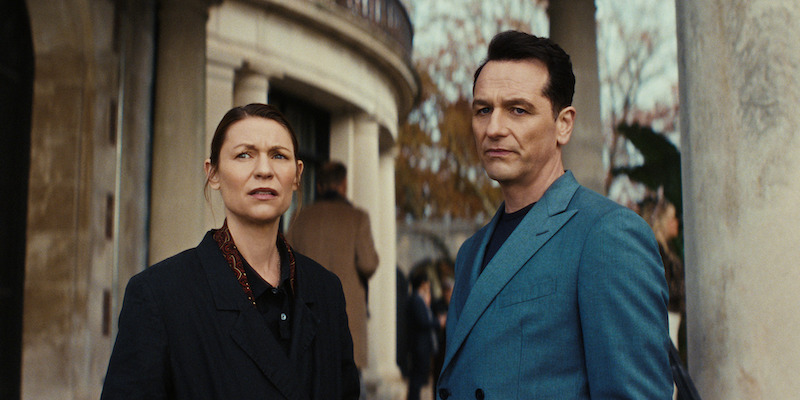
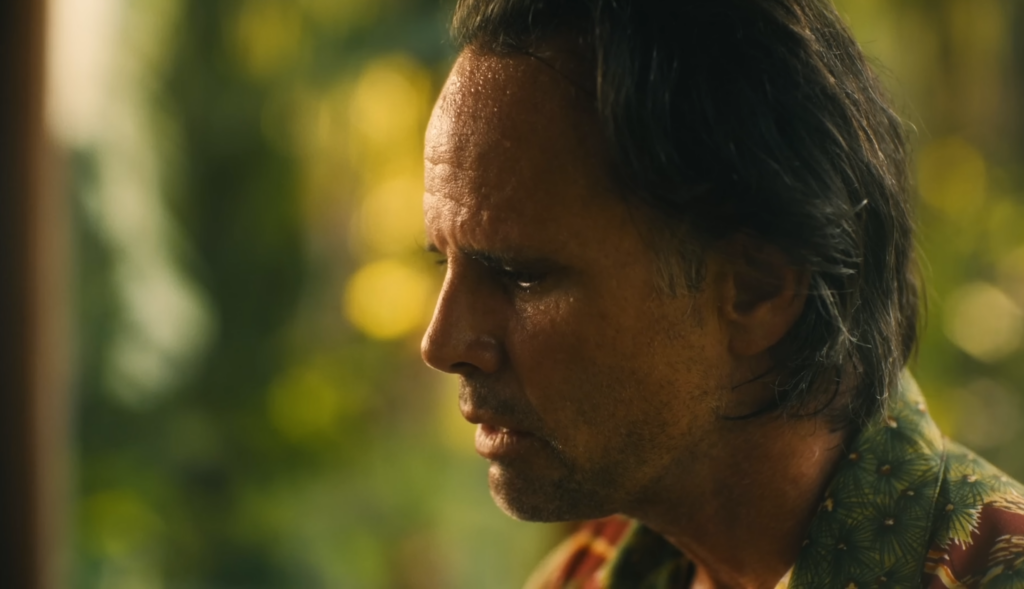
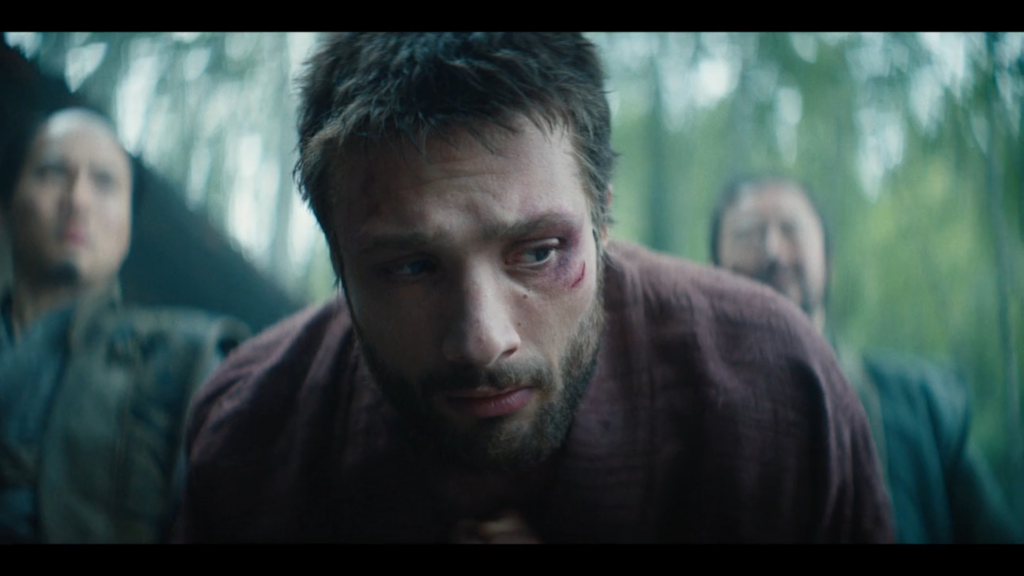
Im Gegensatz (kurzer Teaser für den Blogpost # 6)

Oft geht dies nun in die komplett andere Richtung. Blenden werden so weit offen wie möglich benutzt um das Bokeh der Linsen hervorzuholen. Warum das gemacht wird, wird später untersucht. Oft werden so ganze TV-Serien gefilmt. Als Beispiel: The Beast in Me, The White Lotus, Shogun

Bazin, A. (1967). What is cinema? 1. Univ. of Calif. Press.