Levitin explores music’s foundational role in shaping and maintaining human social structures, emphasizing its power as a unifying force across cultures and communities.
GROUP BONDING AND SURVIVAL
Music historically served as a tool for fostering cooperation and cohesion within groups. In early human societies, communal music-making, such as drumming or chanting, likely strengthened social bonds and promoted group survival. This is because coordinated musical activities helped align group members physically and emotionally, enhancing trust and reducing conflict. Moreover, singing together has been shown to increase oxytocin levels, a hormone linked to bonding and empathy. This chemical connection explains why group singing in choirs, religious rituals, or protests fosters a sense of unity.
CULTURAL IDENTITY AND COMMUNICATION
Music is a universal language but also reflects the unique values, norms, and histories of different cultures, it acts as a repository for cultural memory, preserving traditions, values, and histories through lyrics, melodies, and performance styles. For example, folk songs often encapsulate a community’s shared experiences and struggles. Music transcends spoken language, allowing individuals from different linguistic backgrounds to communicate emotions and ideas. For instance, a mournful melody universally conveys sadness, regardless of cultural context. We also have some examples from history like the role of spirituals during the American Civil Rights Movement or the use of national anthems to foster patriotism. These examples illustrate music’s ability to inspire collective action and express shared identity.
MUSIC AND SOCIAL HEALING
Music is also an effective tool for conflict resolution and emotional healing in social contexts such as some programs like musical collaborations between conflicting cultural groups (e.g., Israeli and Palestinian youth orchestras) have shown how music can build bridges by focusing on shared creative experiences. But also music therapy which can help individuals process trauma, foster empathy, and rebuild relationships after crises or conflicts.
Museums come in a variety of types, each catering to unique audiences and subject matter. These differences are reflected in their exhibitions, which are carefully curated to align with their missions and appeal to their visitors.
An Overview of the Types
Science museums feature interactive exhibits to simplify complex scientific concepts through hands-on experiments and immersive simulations. Notable examples include the Exploratorium in San Francisco and the Deutsches Museum in Munich, which features an extensive range of scientific and technological innovations. These museums exemplify the mission to engage and educate through active participation.
image source: Deutsches Museum – Chemistry in everyday life
Art museums focus on visual and emotional impact, curating collections that foster deep connections through paintings, sculptures, and multimedia installations. Notable institutions like the Louvre in Paris and the Museum of Modern Art (MoMA) in New York, showcasing contemporary masterpieces, highlight how art museums create profound connections through their curated selections.
image source: Louvre
History museums use artifacts, dioramas, and multimedia to narrate historical events, making the past resonate with visitors. These techniques ensure that history resonates with diverse audiences. The Smithsonian National Museum of American History in Washington, D.C., and the British Museum in London, which showcases global historical artifacts, are prominent examples of this approach [1].
image source: British Museum
Natural history museums showcase life-size reconstructions and fossils, immersing visitors in Earth’s evolutionary history. Renowned institutions like the Natural History Museum in Vienna. These types of exhibitions highlight the rich diversity of the natural world and its evolutionary history.
image source: Natural History Museum in Vienna
Children’s museums promote learning through playful, sensory exhibits that stimulate creativity and critical thinking. Examples include the Children’s Museum of Indianapolis and KidZania, a global chain offering interactive role-play experiences. These museums create spaces where learning is synonymous with play.
Cultural heritage museums preserve traditions and identities by highlighting artifacts, photographs, and oral histories.For instance, the National Museum of the American Indian in Washington, D.C. and the Museum of New Zealand Te Papa Tongarewa reflect how museums can serve as guardians of heritage and culture.
Crafting the Content: How Exhibitions Are Designed
Exhibition design is a cornerstone of the museum experience, acting as the primary link between institutions and their audiences. Exhibitions are more than just displays; they are carefully crafted to inspire, inform, and entertain while encouraging engagement, spreading knowledge, and influencing perspectives. To achieve this, museums must thoughtfully adapt their design approaches to meet specific goals, balancing educational value with visitor engagement. Whether focused on objects or overarching concepts, well-designed exhibitions have the power to deepen understanding, foster appreciation, and create meaningful connections with audiences. [3][4]
People Involved in Exhibition Development
Exhibition development is a collaborative process involving various professionals, tailored to each museum’s focus:
Science Museums: Scientists, educators, and designers work together to create hands-on experiments that simplify complex concepts.
Art Museums: Curators, designers, and artists collaborate to design immersive exhibits with emotional and intellectual appeal.
History Museums: Researchers and curators select artifacts and build cohesive narratives to engage visitors with history.
Natural History Museums: Experts create lifelike models and interactive displays based on fieldwork to showcase nature.
Children’s Museums: Child development specialists and designers create tactile, playful exhibits for young visitors.
Cultural Heritage Museums: Collaborating with communities, they ensure authentic representations of cultural traditions.
Across all types, feedback and revisions are key to balancing educational and visitor engagement goals.
Conclusion By tailoring their exhibitions to their audiences and content, museums ensure that their spaces are not only informative but also memorable and meaningful. Their variety demonstrates the importance of curatorial intent in shaping visitor experiences.
[3] Kamaruddin, N., “An Empirical Understanding on Types of Museum Exhibition Design,” International Journal of Scientific and Research Publications, Oct. 2019. Available: https://www.ijsrp.org/research-paper-1019/ijsrp-p9567.pdf
[4] Kapukotuwa, A., & Anedo, O. A. A., “Museum Exhibition Techniques,” ResearchGate, July 2020.
Letterform experiments are not a recent development; the origins can be traced back to the Renaissance with the introduction of movable type. However, it truly began to flourish in the 20th century, driven by advancements in digital technology and an increasing desire for innovation in graphic design. During this time, typography transitioned from being merely a practical means of communication to becoming an artistic form, where its visual appeal became just as important as its ability to convey meaning.This style of typography uses a range of methods such as distortion, layering, and abstraction. Designers alter typographic elements to craft a visual composition that resembles poetry, where every letter and word contributes significantly to the overall design. These techniques vary from subtle tweaks to dramatic changes, each adding to a distinctive story or visual experience.
Typography as Art
True typographic experimentation began in the early 20th century, with movements like Futurism, Dadaism, and Constructivism leading the charge. During this period, the relationship between form and context became increasingly important. Writers and poets began to ‘shape’ their texts, using typography not just as a medium of communication, but as a means to enhance and clarify their expression.
Digital Revolution
The rise of digital technology has greatly expanded the possibilities for experimental typography. With an array of design tools and software available, graphic designers now have the ability to craft intricate and sophisticated typographic designs more easily than ever before.
The integration of animated and interactive features into digital typography introduces a new dimension of engagement, enhancing user experience through dynamic interfaces. As the digital realm continues to evolve, experimental typography remains a key player in this transformation, constantly reshaping how we interact with text in an increasingly digital world.
Regenerative agriculture is farming and ranching in harmony with nature. It is a holistic agriculture method that means to restore soil and ecosystem health, address inequity, and leave our land, waters, and climate in better shape for the future.
The World Business Council for Sustainable Development (WBCSD) describes how our food system today “[…] contributes to approximately 25% of greenhouse gas (GHG) emissions, three-quarters of biodiversity loss and is a leading cause of non-communicable disease” (WBCSD, n.d.). They also say that regenerative farming is the way to sustain and enhance the farm ecosystem, in contrary to exhausting it.
The World Economic Forum writes that the rising global population is placing increasing pressure on traditional agricultural systems, which often rely on expanding farmland and using more chemical inputs to boost production – further intensifying the strain on biodiversity. To address this challenge, it is essential to shift from conventional farming methods to a regenerative approach that prioritises and enhances biodiversity. They explain how regenerative agriculture can help:
Regenerative agriculture is the way forward to decarbonise the food system and make farming resilient to climate shocks.
It won’t happen unless we succeed in making it commercially attractive for the farmers.
Farmers must be prioritised as key players in our fight against climate change. (World Economic Forum, 2023)
They also explain that the exact upscaling needed to sufficiently limit climate change is to farm regenerative on 40% of the world’s cropland, which would save around 600 million tons of emissions. But in order to limit climate change to 1.5 degrees, it must be scaled faster, and move from covering around 15 % of global cropland today to 40 % by 2030 (World Economic Forum, 2023).
The World Economic Forum lists 5 benefits from regenerative farming:
1. Climate. It helps mitigate emissions such as through carbon sequestration and improved crop resilience for climate shocks.
2. Soil Health. It improves soil fertility through increased biomass production, thereby preventing soil degradation.
3. Resource use efficiency. Higher nutrient use efficiency (NUE) increases crop yield and optimizes land use efficiency, while improved water use efficiency reduces the stress on freshwater reserves.
4. Biodiversity. More diverse rotation and reduced pesticide usage supports biodiversity on farms while, in some cases, higher crop yields mean more natural habitats can be protected rather than cleared for agriculture.
5. Prosperity. Regenerative agriculture improves long-term farmer livelihood through reduced costs, improved crop yield and crop quality, and greater resilience to market volatility and extreme climate events. It also opens new green revenue streams for farmers, such as rewarding them for carbon capture and storage in the soil.
These are some very attractive benefits that you would think made everyone push for regenerative practises. However, this is not the case. This is because the transitioning fase is very risky and could be costly, which is why it is this is the fase the World Economic Forum prioritises to tackle. They present 5 concrete routes to reach scale:
1. Agree on common metrics for environmental outcomes. Today, there are many disparate efforts to define and measure environmental outcomes. We must move to a set of metrics adopted by the whole food industry, making it easier for farmers to adjust their practices and for positive changes to be rewarded.
2. Build farmers’ income from environmental outcomes such as carbon reduction and removal. We need a well-functioning market with a credible system of payments for environmental outcomes, trusted by buyers and sellers, that creates a new, durable, income stream for farmers.
3. Create mechanisms to share the cost of transition with farmers. Today, all the risk and cost sits with the farmers. It is impossible to achieve systems transformation without sharing the burden and benefits through the value chain.
4. Ensure government policy enables and rewards farmers for transition. Too many government policies are in fact supporting the status quo of farming. That has led us to a broken food system. The food sector must come together and work jointly with regulators to address this.
5. Develop new sourcing models to spread the cost of transition. We must move from sourcing models that take crops from anywhere to models that involve collaboration between off-takers from different sectors to take crops from areas converting to regenerative farming.
(World Economic Forum, 2023).
The solution to both the climate emergency and the food crisis is in the soil, quite literally
To make regenerative farming relevant for my research, I need to look at how design can be implemented. Design can play a crucial role in supporting the transition to regenerative agriculture by raising awareness, or developing innovative tools. Thoughtfully designed educational campaigns, user-friendly digital platforms for tracking environmental outcomes, and collaborative design strategies for farm operations can help farmers adopt sustainable practices with greater confidence.
My research on major European and American events shows that, much like in Asian and African events, many of these events maintain a consistent corporate identity (CI) or logo language over time, with minimal changes. Unlike events that adapt to different host countries or cultural contexts, these events tend to preserve their core visual identity, using it as a recognizable symbol for their brand.
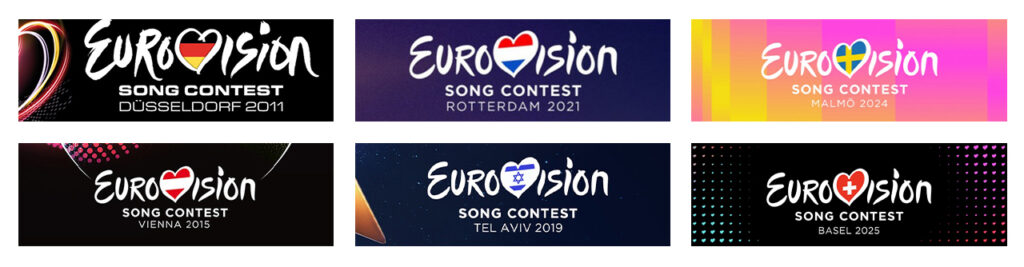
For example, festivals like Coachella and Tomorrowland rely on their iconic designs to create continuity and global recognition, making only minor updates such as color variations or seasonal design tweaks. Similarly, the Eurovision Song Contest modifies small elements—such as incorporating a heart in the host country’s flag colors—but its main logo remains constant.
Eurovision Song Contest // Logo over the years
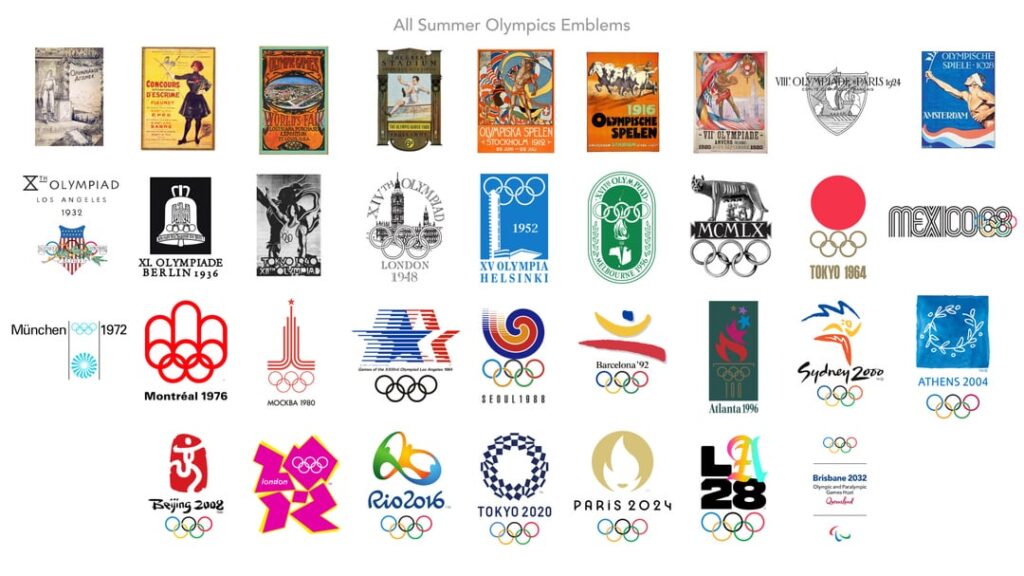
In contrast, a smaller but significant number of events exhibit a dynamic approach to design, often influenced by the need to reflect diverse cultural settings or shifting societal trends. Sporting events like the Olympic Games and the FIFA World Cup redesign their visual identity for every edition, incorporating the culture and aesthetics of the host nation. This approach creates a unique identity for each event while maintaining an overarching theme that ties back to the global brand. Similarly, international gatherings like Climate Conferences (COP) or the G7 Summits adapt their visual themes to reflect pressing societal issues such as sustainability, innovation, and global collaboration, while also acknowledging the cultural nuances of the host region.
Olympic Games // Logo Evolution
Overall, the evolution of designs in European and American events reflects a dichotomy between stability and adaptability. Events with strong cultural or brand roots often prioritize recognition and continuity over change, while globally-oriented or rotating events tend to embrace evolving design trends to capture the spirit of the host location and address contemporary issues. This balance allows some events to build long-term brand recognition while others use design as a flexible tool to engage audiences in a dynamic and relevant way.
Having explored major events on other continents, the next blog posts will shift focus to large-scale events in specifically in Europe and America, but also global large scale events, that change their venue every time. Building on the analysis of African and Asian events, the next phase will delve into significant events from the “Western World” exploring whether they also have events with a design history that merits further investigation.
These Events are:
1. Super Bowl (USA)
2. Eurovision Song Contest (Europe)
3. G7/ G20-Sumit (Global)
4. Coachella Valley Music and Arts Festival (USA)
5. Berlinale (Germany) und Sundance Film Festival (USA)
Having explored different aspects of the nature and climate crisis and the difficulties with trying to combat them, I want to look into other possible solutions. Through researching this topic, I have come by the term “permaculture” and want to explore it further. Permaculture is already connected with design, through “the 12 permaculture design principles”. These I will look into further below.
Permaculture, prior Permanent Agriculture, is systems for growing crops, plants, etc. that cause little damage to the environment and can therefore continue for a long time. Permaculture aims to develop a landscape that will be self-sustaining and productive for generations (Cambridge, n.d.).
Permaculture is not only a gardening system, the Permaculture Magazine explains it as:
An innovative framework for creating sustainable ways of living
It is a practical method of developing ecologically harmonious, efficient and productive systems that can be used by anyone, anywhere
They also write that permaculture focuses on sustainable ways to grow food, build homes, establish communities, and reduce environmental harm. Its principles are continuously evolving, shaped by people around the world in diverse climates and cultures. It promotes resourcefulness and self-sufficiency, offering an ecological design framework rather than a rigid doctrine or belief system. Permaculture helps us address local and global challenges with practical solutions.
The permaculture principles are as following:
Observe and interact
Catch and store energy
Obtain a yield
Apply self regulation and accept feedback
Produce no waste
Use renewable resources and services
Design from pattern to detail
Integrate rather than segregate
Use small and slow solutions
Use and value diversity
Use edges and value the marginal
Creatively use and respond to change
These principles are more like guidelines rather than rules. That means they can be applied to anything from designing your garden to designing an organisation.
The world is in crisis, permaculture gives people the tools and confidence to respond
Permaculture Association
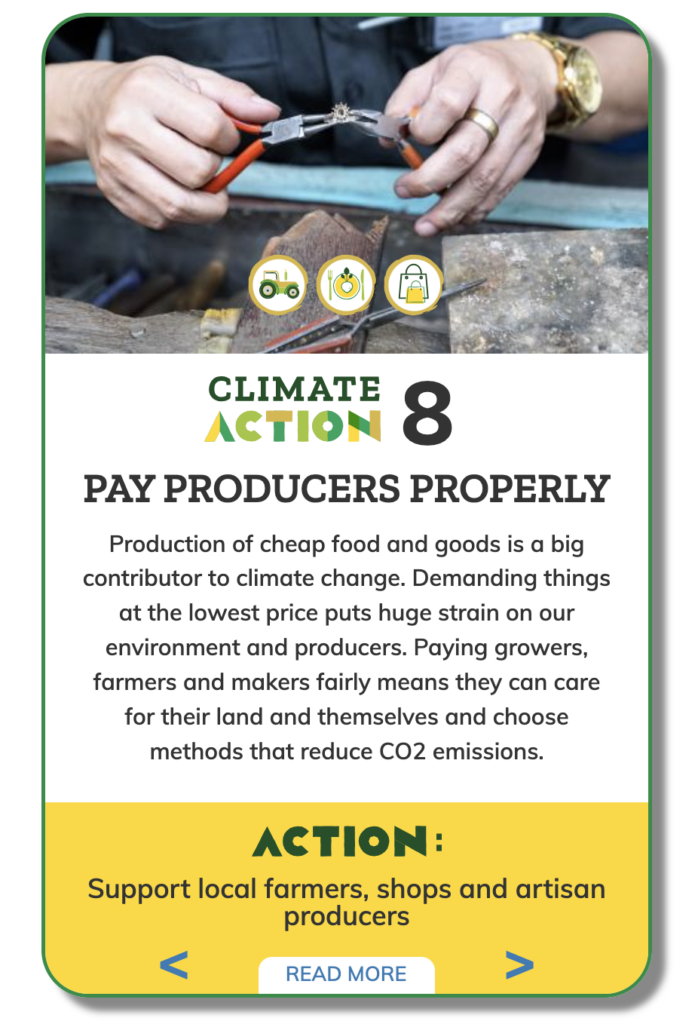
The Permaculture Association is contributing by offering permaculture courses, and contributed in creating the 52 Climate Action page together with 8 other organisations to promote permaculture based solutions to climate change (52 Climate Action, n.d.). This webpage helps people understand their personal power in tackling climate change by showing them tangible, doable actions that anyone can do.
This is an example of one of the 52 actions on this webpage. These 52 actions are chosen as they are powerful, realistic, up-beat and fun – a big contrast to the doomsday crisis news we hear all the time.
By looking at for example how the Permaculture Association´s projects contribute to solving the nature and climate crisis, I may find where I can contribute – as they come with smaller and more tangible solutions that even I myself can participate in. By combining permaculture with design, I can contribute to addressing the climate and nature crisis by creating sustainable, self-sufficient systems that work in harmony with the environment. Using the 12 permaculture design principles, I can develop solutions with a much more tangible framework that can lead me to create something actually useful.
In conclusion, permaculture provides a hopeful and actionable approach to combating the climate crisis. Whether applied to urban planning, agriculture, or community initiatives, these principles offer a practical framework for tackling environmental challenges while fostering innovation and sustainability. By integrating these principles into design, I personally can use this as an inspiration or a framework for a possible design solution.
War propaganda can be a powerful way of shaping international relations and conflicts. It doesn’t just justify armed conflict; it can also prolong it by spreading fear, hatred, and national pride. While propaganda has been part of almost every war looking at historic battles or today’s disputes and wars, there are clear ways to push back against its influence.
The first step in addressing propaganda is understanding how modern conflicts are no longer limited to one region. Today’s wars often reach far beyond their borders, especially through digital platforms such as Instagram, TikTok, or the platform X. State media and proxy groups target different audiences, including diaspora communities, allied countries, or neutral states, by framing their messages in a way that triggers emotional responses. To counter this, efforts to fight propaganda must also be international and not just dealt with on a national basis. Hereby one possible way of tackling this issue could be for Journalists, fact-checkers, and global organizations to work together to respond to false claims in real time. For example, when misleading reports about civilian casualties or so-called “liberation missions” are spread, these alliances can quickly correct them (“Hiding Behind the Coalition,” 2023).
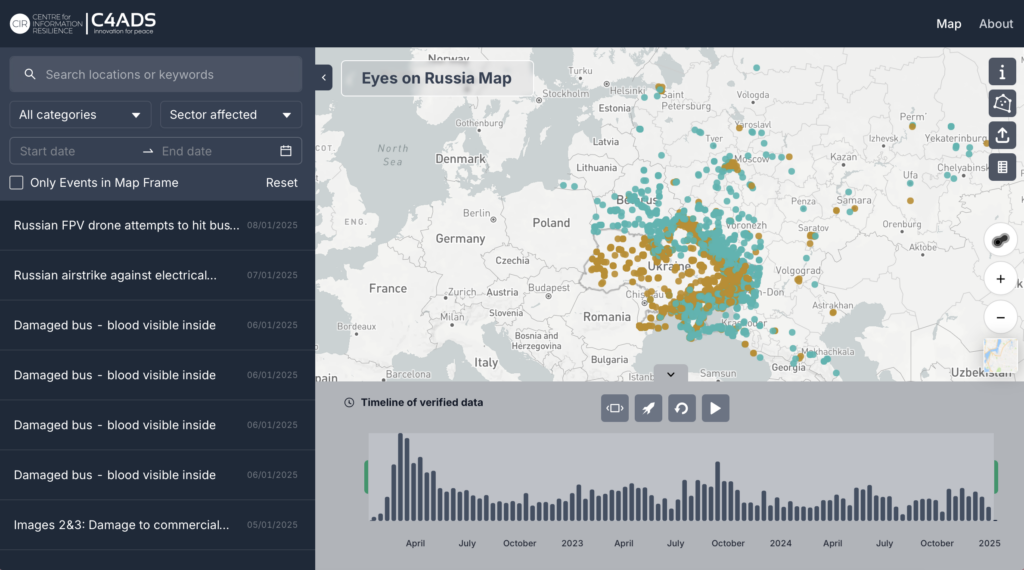
Source: Eyes on Russia map. (n.d.). https://eyesonrussia.org/
Global partnerships, like those between NGOs and governments, also make it possible to share resources amongst each other. By combining expertise, they can train journalists in conflict zones, translate key reports, or use satellite imagery to verify on-the-ground events and with that do real-time fact-checking. Open-source intelligence communities, for instance, have shown how tools like satellite photos and geolocated social media posts can expose lies about troop movements or ceasefire violations. One example is the “The Eyes on Russia Map” which is an interactive, publicly accessible map created by the OSINT platform Bellingcat. Its main purpose is to visually document and track information about the conflict between Russia and Ukraine. The map relies on verified sources such as satellite images, geolocated photos, and videos, as well as eyewitness reports. It offers a clear and reliable way to understand the situation on the ground by combining and presenting this data in one place. Sharing this information publicly increases transparency, which directly challenges the secrecy that propaganda depends on (Strick, 2023).
Media reform is another important piece of the puzzle to be able to solve this problem. Many news outlets, driven by clicks and advertising revenue, unintentionally amplify war propaganda by rushing to report sensational stories without proper verification. The saying “If it bleeds, it leads” still drives many headlines (Zehndorfer, 2025). To fix this, stricter editorial rules are needed, like requiring multiple sources or working with independent fact-checkers before publishing sensitive reports. Although this could slow the news cycle, it would also lower the chances of media becoming a tool for propaganda.
Education is also key to tackling propaganda in the long term. In countries exposed to frequent conflict, teaching media literacy and critical thinking in schools can help people question one-sided or extreme narratives. Nonprofit groups can also organize workshops for older populations or rural communities who might not be used to navigating digital information. These efforts should go beyond simple fact-checking tips. They need to explain how propaganda works, how it taps into emotions like fear and nationalism, and why people might be drawn to such messages, especially in times of crisis. Technology can also play a role, though it comes with challenges. Automated fact-checking tools and AI systems can flag false information, but they aren’t perfect. Errors or biases in these systems could block legitimate content, and sophisticated propagandists can adapt to avoid detection. Still, a balanced approach using ethical AI, transparent data practices, and user-reporting features can slow the spread of false information (How AI Can Also Be Used to Combat Online Disinformation, 2024). Collaboration between tech companies, governments, and civil society is essential to ensure these tools are both fair and effective.
One of the hardest challenges is breaking through echo chambers, both online and offline. Even if false claims are quickly replaced, people who already believe in a certain narrative may dismiss corrections as more propaganda from the “other side.” Repeated exposure to the same viewpoint can deepen these beliefs, creating a loop where new propaganda only strengthens existing biases (Alatawi et al., 2021). To interrupt this cycle, campaigns can focus on fostering dialogue between divided communities, highlighting shared experiences, and promoting open discussion. While these efforts may face resistance, even small steps toward engagement can help disrupt this kind of continues thinking. Finally, whistleblowers and investigative journalists also play a critical role in exposing propaganda operations. Leaks, insider accounts, and in-depth reporting reveal how governments or other groups create and spread propaganda. While whistleblowers often face legal risks and personal threats, their actions can spark public awareness and demand accountability. Laws that protect whistleblowers and investigative journalists are essential for maintaining transparency and countering the secrecy that allows propaganda to thrive.
In conclusion, fighting war propaganda requires many efforts working together—international cooperation, media changes, education, and technology. Each of these approaches tackles a different way propaganda spreads, from emotional manipulation to misleading media practices.
Sources:
Alatawi, F., Cheng, L., Tahir, A., Karami, M., Jiang, B., Black, T., & Liu, H. (2021, December 9). A survey on echo chambers on social media: Description, detection and mitigation. arXiv.org. https://arxiv.org/abs/2112.05084
Hiding behind the coalition. (2023). In Human Rights Watch. https://www.hrw.org/report/2018/08/24/hiding-behind-coalition/failure-credibly-investigate-and-provide-redress-unlawful
How AI can also be used to combat online disinformation. (2024, June 14). World Economic Forum. https://www.weforum.org/stories/2024/06/ai-combat-online-misinformation-disinformation/?utm_source=chatgpt.com
Strick, B. (2023, July 24). Over 500 Days of the Russia-Ukraine Monitor Map – bellingcat. Bellingcat. https://www.bellingcat.com/news/2023/07/24/over-500-days-of-the-russia-ukraine-monitor-map/
Zehndorfer, E., PhD. (2025, January 23). Why are news headlines always so negative? Psychology Today. https://www.psychologytoday.com/intl/blog/political-animals-and-animal-spirits/202501/if-it-bleeds-it-leads
Image Source:
Eyes on Russia map. (n.d.). https://eyesonrussia.org/
Empowering Self-Management: Applications that enable the tracking of symptoms or monitoring of health parameters can help individuals manage conditions better, promoting self-responsibility.
Enhanced preventative care: Digital tools can aid in informing the population about preventative check-ups and vaccinations, ideally through a central platform.
Improved coordination of care: Digital networking among healthcare providers can enhance the coordination of health measures, allowing for more holistic care that takes into account various aspects of health such as nutrition, exercise, and mental well-being.
Telehealth for wider access: Telehealth solutions offer flexible options for receiving medical support, improving care in rural areas and for those with mobility issues.
Support for chronic conditions: Digital tools can provide continuous support for people managing chronic diseases, integrating both analogue and digital services
There are different opinions about weather or not regular checkups reduce mortality rate. For example:
Women who participated in mammography screening (Duffy S. et.al. , 2020)had a statistically significant 41% reduction in their risk of dying of breast cancer within 10 years.
A study from 2021 (Liss D. et.al, 2021) did not show a reduction in mortality or cardiovascular events; however, they were linked to enhanced recognition and treatment of chronic diseases, better control of risk factors, increased uptake of preventive services, and improved patient-reported outcomes. Primary care teams can justifiably provide general health checks, particularly for populations at greater risk of missed preventive services, uncontrolled risk factors, low self-assessed health, or limited access to primary care.
2. Climate factors
Telemedicine not only cuts down on travel but can also reduce the energy and resource use of health facilities. This includes decreasing the consumption of disposable medical products and disinfectants and lowering the overall energy demands of hospitals due to fewer in-person visit.
Electronic health records conserve resources and help avoiding unnecessary or duplicate treatments and tests. While digital solutions offer climate benefits, they should not be implemented without considering access equity, digital skills, and societal values.
3. Gender, equal opportunities and inclusivity
Digitalisation and socio-economic factors: Studies indicate that individuals with higher income and education are more likely to use health apps. Also, older and unemployed individuals tend to have a lower usage of digital health offers.
Data Bias: The document raises concerns about potential gender bias in data sets, noting that women may be underrepresented or that data may lack gender breakdowns7. It also warns that AI systems may not adequately consider the anatomical and physiological needs of different genders if their data sets are biased, which could lead to inappropriate symptom evaluations and therapy.
Duffy, S. W., Tabár, L., Yen, A. M., Dean, P. B., Smith, R. A., Jonsson, H., Törnberg, S., Chen, S. L., Chiu, S. Y., Fann, J. C., Ku, M. M., Wu, W. Y., Hsu, C. Y., Chen, Y. C., Svane, G., Azavedo, E., Grundström, H., Sundén, P., Leifland, K., Frodis, E., … Chen, T. H. (2020). Mammography screening reduces rates of advanced and fatal breast cancers: Results in 549,091 women. Cancer, 126(13), 2971–2979. https://doi.org/10.1002/cncr.32859
Liss, D. T., Uchida, T., Wilkes, C. L., Radakrishnan, A., & Linder, J. A. (2021). General Health Checks in Adult Primary Care: A Review. JAMA, 325(22), 2294–2306. https://doi.org/10.1001/jama.2021.6524
BMSGPK (2024): eHealth-Strategie Österreich. v1.0 im Juni 2024. Bundesministerium für Soziales, Gesundheit, Pflege und Konsumentenschutz, Wien
I have talked a lot about what bias is and where it can occur, but not about how it can be mitigated. You will find some ideas on how to deal with bias in this blog post.
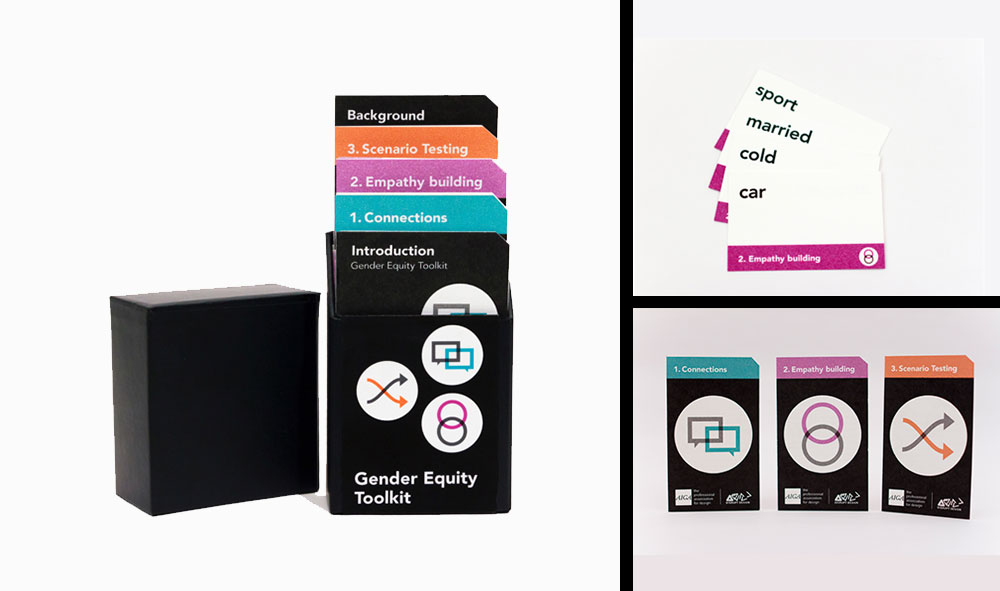
Once you’ve spotted your biases, it’s time to do something about them. A great way to start is by consciously designing with different users in mind. Tools like Perspective Cards can help you imagine how your designs might feel to people with different experiences. When working with clients or users, take time to truly listen and understand their perspectives. Let go of your own assumptions—it’s the best way to gain new insights and create designs that work for everyone. (cf. UX Booth)
3. Build Diverse Teams
Diverse design teams are key to creating inclusive experiences. Diversity matters especially in design, a profession that requires professionals to think new thoughts and challenge existing ideas all the time. Different people think a different way, brining them together can result in a pool of new ideas, incorporating different (cf. UX Booth)
4. Keep Learning
Overcoming bias isn’t a one-time thing, it’s a lifelong process. Stay curious and open to feedback. Always think about who you might be leaving out and how you can make your designs more inclusive. By committing to continuous learning and embracing new perspectives, you’ll create better, more universal designs that truly work for everyone. (cf. Medium)
5. Explore the “unhappy paths”
When designing, don’t just focus on the “happy path” — consider the unhappy paths too. These are real-life situations where things break, go wrong, or are misused, and they shouldn’t be ignored as edge cases to fix later. Ask tough questions like, “How could people game the system?” or “Who could use it to harm others?” Addressing these issues early creates more robust and humane products that work for diverse users. While exploring unhappy paths may slow you down initially, it saves time in the long run by preventing costly reworks and ensuring you’re headed in the right direction from the start. (cf. Medium)
6. Make personas challenge assumptions
Personas are a hot topic, with debates on whether they’re necessary or useful, but when done right, they can be a powerful tool to challenge assumptions about users. Start by removing demographic details like age, gender, or income, which can introduce bias. Instead of generic stock photos, use real images of users who defy stereotypes, helping teams confront their unconscious expectations. If real user photos aren’t available, consider inclusive stock photo alternatives like tonl.co. You can also use names from underrepresented groups to further broaden perspectives. Remember, this isn’t about ticking a diversity box — it’s about reflecting real insights and challenging narrow views to design for a wider audience. (cf. Medium)
7. Designing for a diverse global audience
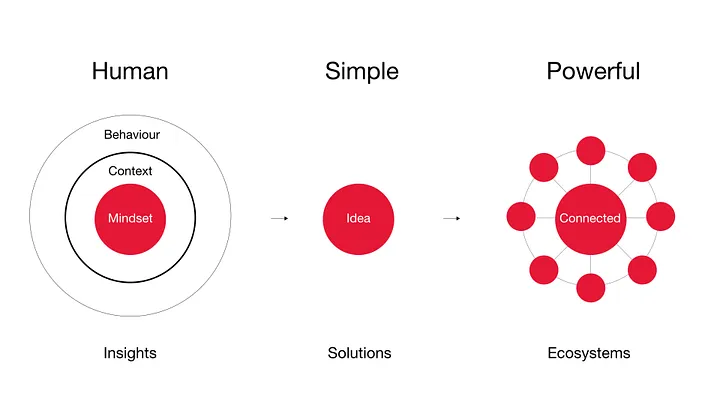
t R/GA, we design for global audiences by leveraging diverse teams and cultural insights from the start. Our “Human, Simple, Powerful” design model ensures diversity and inclusion are baked into the process. The “Human” element focuses on addressing problems through a human lens, considering cultures, customs, and the context of users’ lives. We validate prototypes through user testing with a diverse audience that mirrors the anticipated end users. By mapping touchpoints and breakpoints across different backgrounds and conducting experience mapping globally and locally, we gain a well-rounded view of our users. This approach helps us create focused, inclusive solutions that eliminate ambiguity and meet the needs of diverse audiences. (cf. Medium)
Although completely overcoming bias is probably impossible, you can try to minimize their impact on your work by utilizing some of the methods, I wrote about in this blog post.