This is my research matrix for the thesis with a working title Narrative UX & Interactive Web Storytelling.

This is my research matrix for the thesis with a working title Narrative UX & Interactive Web Storytelling.

| Aims | Objectives | Methods | Outcomes | Outputs |
| Untersuchen, wie interaktive Medien liturgische Prozesse und spirituelle Erfahrungen innerhalb der katholischen Kirche unterstützen können – für Menschen mit unterschiedlicher Nähe zur Kirche. | Analyse bestehender liturgischer und spiritueller Praktiken sowie ihrer Wahrnehmung durch Personen mit unterschiedlicher kirchlicher Bindung. | Literatur- & Kontextanalyse | Theoretisch fundiertes Verständnis von Ritual, Resonanz und Interaktion im kirchlichen Kontext. | Theoretischer Rahmen im schriftlichen Teil der Masterarbeit. |
| Erheben subjektiver Erfahrungen, Bedürfnisse und Spannungen im Erleben von Liturgie und Kirche. | Qualitative, semi-strukturierte Interviews mit Personen aus kirchlicher Praxis und unterschiedlichen Nähegraden zur Kirche. | Verdichtete qualitative Erkenntnisse zu emotionalen, körperlichen und räumlichen Aspekten spiritueller Erfahrung. | Interviewtranskripte, qualitative Inhaltsanalyse, Insight-Clustern. | |
| Ableiten zentraler Gestaltungspotenziale für interaktive Medien im religiösen Kontext. | Qualitative Inhaltsanalyse | Zentrale Design-Prinzipien und Spannungsfelder (z. B. Nähe/Distanz, Ritual/Alltag, Körper/Medien). | Analysekapitel + visuelle Synthesen (Maps, Modelle). | |
| Entwickeln eines forschungsgeleiteten interaktiven Design-Outputs, der spirituelle Erfahrungen zugänglich macht. | Übersetzen der Forschungsergebnisse in erste Konzepte und Szenarien. | Research through Design, Concept Sketching, Szenarien, Moodboards. | Konzeptionelle Klarheit über mögliche Interaktionsformen und Sinnesmodalitäten. | Konzeptdokumentation, Szenarienbeschreibungen. |
| Experimentieren mit unterschiedlichen medialen Ausprägungen ohne Vorfestlegung auf ein Artefakt. | Experience Prototyping, Material- & Medienexperimente (Audio, Raum, Haptik, etc.). | Erkenntnisse über die Wirkung unterschiedlicher Interaktionsformen im spirituellen Kontext. | Low-Fi-Prototypen, audiovisuelle Tests, dokumentierte Experimente. | |
| Iteratives Testen und Reflektieren der entworfenen Konzepte. | Expert*innen-Feedback, iterative Tests, gestalterische Reflexion. | Reflektierte Bewertung der gestalterischen Ansätze und ihrer Angemessenheit. | Weiterentwickeltes finales Workpiece. | |
| Evaluation der entworfenen Interaktionsansätze. | Überprüfung der Wirkung und Verständlichkeit der Konzepte. | Testings, Feedbackgespräche, qualitative Evaluation. | Erkenntnisse zur Wirkung interaktiver Medien auf liturgische/spirituelle Erfahrung. | Iterierte Konzepte, reflektierte Designentscheidungen. |
| Reflektieren, welchen Beitrag Interaction Design zu liturgischen und spirituellen Erfahrungsräumen leisten kann. | Kritische Einordnung des Design-Outputs in Theorie und Praxis. | Designkritik, Reflexion, Vergleich mit bestehender Forschung. | Erkenntnisgewinn für Designforschung im religiösen Kontext. | Masterarbeit, Design-Dokumentation. |
Before I really dive into my master thesis research, I wanted to meet my supervisor FH‑Prof. Baumann one more time. This was a two‑hour talk where we went through everything: my plan, possible contacts, how to start and also some real‑life stories. It felt like a good send‑off before I move back to Vienna and start the fieldwork.
We first talked about contacts and experts. I told him about the UX Graz Speed Dating the evening before. I spoke with an employee from AVL, the company that builds parts for Audi and has specialists in e‑mobility. Since my girlfriend’s father has an Audi e‑tron, we decided to focus my thesis on Audi. It makes sense – I can test real Audi systems and interfaces. Baumann liked that and said it gives my work a clear focus.
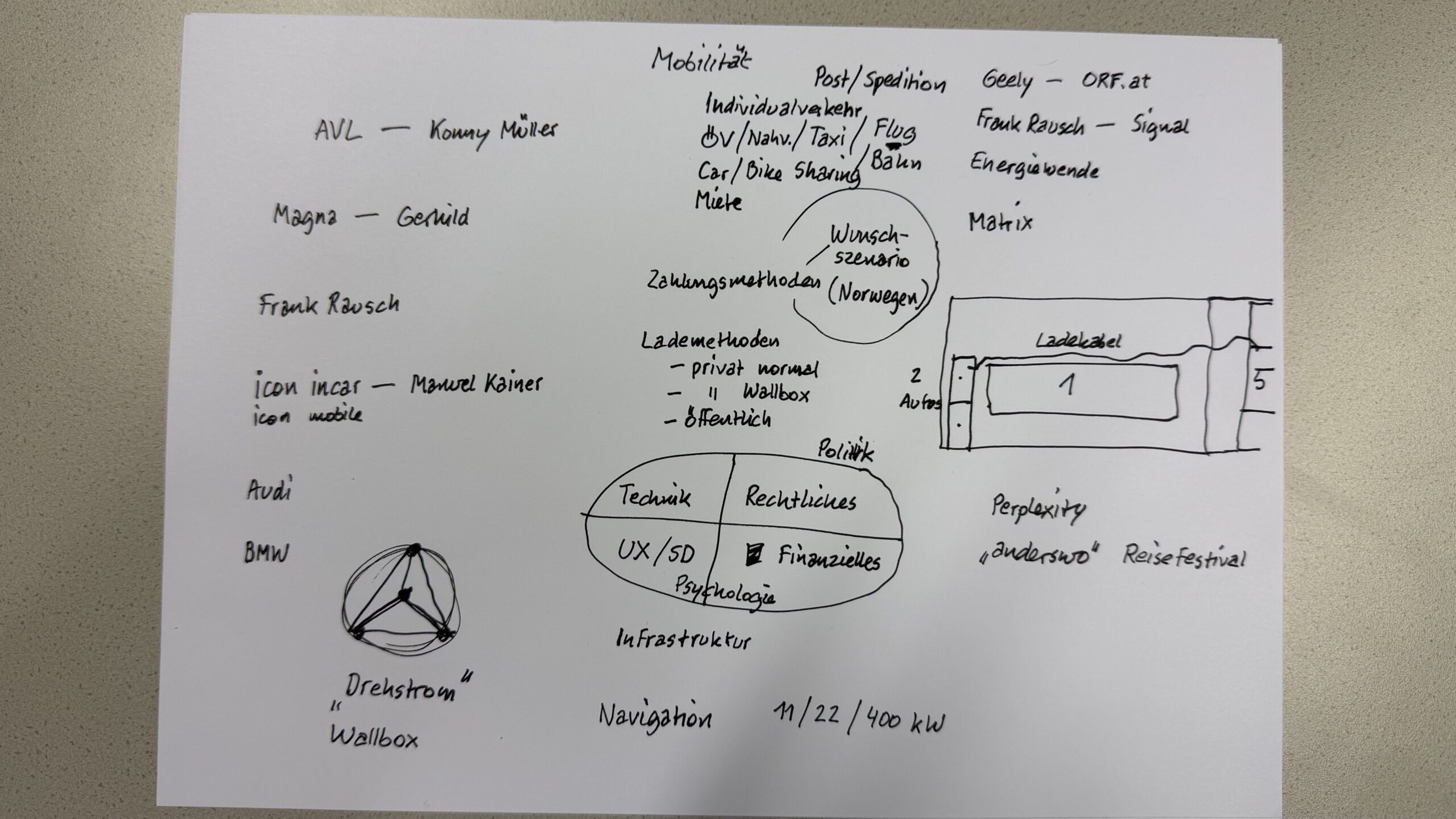
Then he shared a personal story that stuck with me. His neighbours bought an electric car, but they live in an apartment without their own wallbox or garage. So he offered them the extra parking spot at his house. They run a long extension cable from their apartment, through his garden, to the car. He showed me a photo – it looks like a DIY solution, but it works for now. This story shows the infrastructure gap: people want EVs, but the system is not ready yet. You still have to get creative or struggle.
We also discussed different charging types, which I want to explain early in my thesis. There are private options like normal sockets (slow, 2.3 kW) or wallboxes (up to 22 kW AC). Then public chargers: slow AC (Type 2, up to 22 kW), fast DC (CCS2 up to 350 kW), and some older ones like CHAdeMO. Audi uses CCS2, which is standard in Europe for fast charging. Cables look different – home ones are thinner, fast chargers thicker and heavier. I will make a simple table for this.https://ev-orientrise.com/blogs/blog-1/complete-adapter-guide-for-european-ev-owners-from-ccs-to-chademo
https://evniculus.eu/de-fr/pages/ev-charging-adapters-1
Looking to the future, we talked about Plug & Charge, where you just plug in and the car app handles payment automatically. EU rules (AFIR) will make this standard soon – all new public chargers must support ISO 15118 by 2025, and Plug & Charge by 2027. We also mentioned inductive charging (wireless on the street), but that is still speculative. These visions show where onboarding could go: seamless, no cards, no apps needed.https://alternative-fuels-observatory.ec.europa.eu/general-information/news/european-commission-publishes-delegated-acts-afir-open-consultation
The big discussion was about the whole system. Charging is not just one thing. It depends on technology (connectors, power), legal rules (contracts, roaming), UX and service design (apps, instructions, psychology of trust), money (prices, tariffs), and infrastructure (parking, cables). We drew a quick diagram: all parts connect, and if one fails, the whole experience breaks. This system thinking fits perfectly with my service blueprint plan.
This talk was important because it gave me confidence. We prepared interview questions and who to contact next (AVL, Audi experts). Baumann’s neighbour story reminded me: my research is not abstract – it solves real problems people have today. Now I feel ready to start: first the literature and system analysis, then interviews with first‑time users. The Audi focus makes it concrete. I am excited to see what happens when I test these touchpoints myself.
Disclaimer: This post was written with help from AI for structure and grammar, but all content, stories and reflections are from my own experience and conversation with my supervisor.
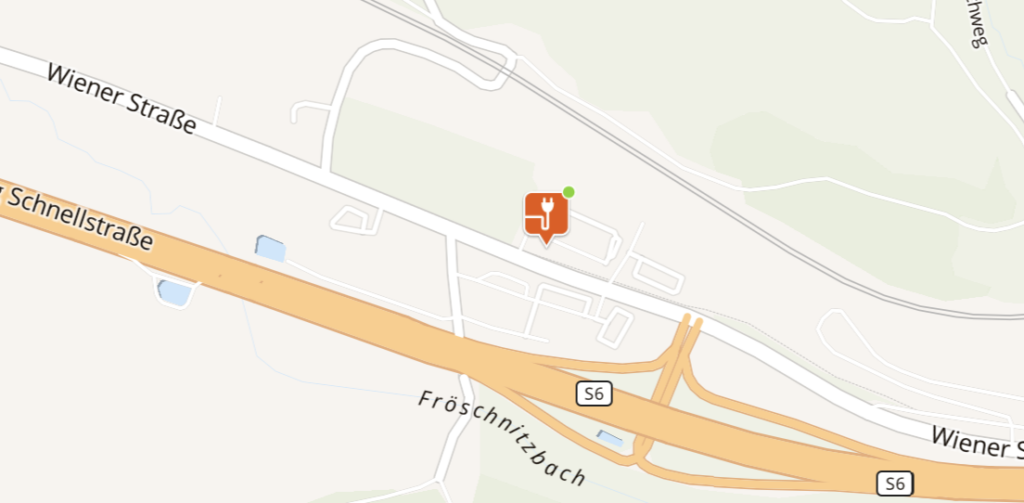
For this impulse I decided to just sit, watch and listen. No laptop, no papers. Only me, two public charging stations and forty minutes each.
The first location was a busy highway charger near Mürzzuschlag, next to a McDonald’s. The provider was MER AT and there were three stations with six plugs in total. When I arrived, it was already quite full. I plugged in my car and then tried to look casual while secretly observing everyone else.
Very quickly I saw one big pattern: people arrived, slowed down, looked around… and then left again, because everything was taken. I saw this several times. At least three cars did a small sad circle and drove away. In that moment I thought: “So many apps show the charger on the map, but not clearly if it is actually free when you arrive.” For a first‑time user this must feel terrible.
While I was staring at all this, I started thinking about reservations. Would it help if you could reserve a charger for, say, 3 p.m.? But then I imagined another car arriving at 2:30 p.m., starting to charge, and then getting cut off at 3 p.m. by a cold software rule. That also sounds like a recipe for anger. So in my notebook I wrote: “Reservation might solve one problem, but create new ones.”
Another thing I noticed: people carry many different charging cards. Some drivers opened their wallets like playing cards and tried one after another on the reader. It looked like a strange card game: “Does this one work? No.Next card. Maybe this one.” It is almost funny, until you remember they are standing in the cold with a low battery.
The classic behaviour at this highway spot was also very clear. Most people plugged in, checked the screen nervously for a few seconds, then walked straight into McDonald’s. I assume many of them used the time to eat. One or two people just went to the toilet and then waited in their car until the charge was finished.
Two scenes really caught my attention. Twice I saw someone drive to a free station, get out, try to plug in, and then something clearly went wrong. One man tapped around on the screen, looked confused, and then even hit the interface lightly with his hand. After that he simply unplugged and drove away. I would have loved to ask him, “What exactly happened?” but he was gone faster than I could move.
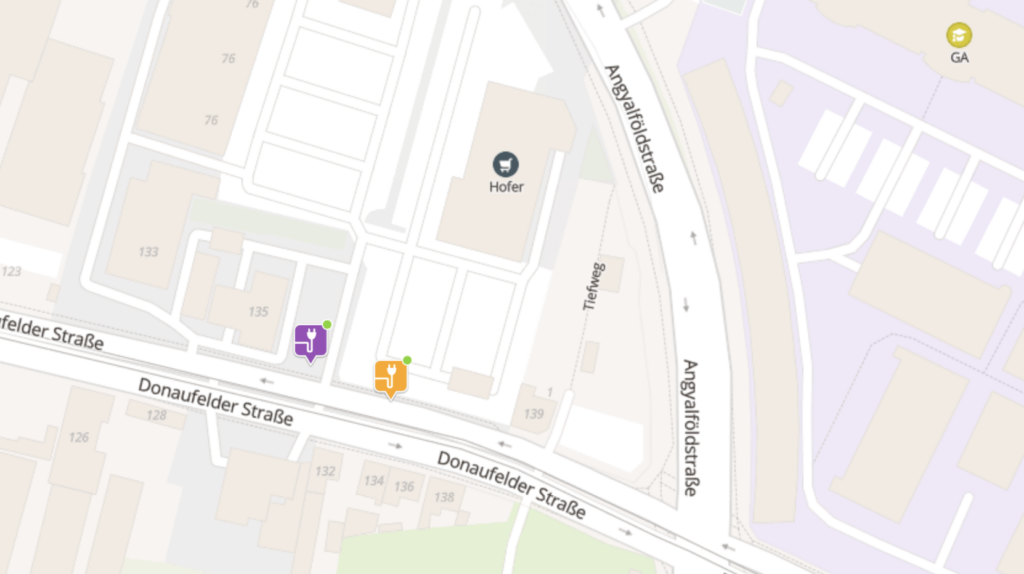
The second observation place was very different. It was a charger on a Hofer parking lot in Vienna. Much less traffic, much less drama. People drove in, connected the cable, checked quickly if it started, and then walked into the Hofer. When they came back with their groceries, they unplugged and left. Everything looked calm and routine.
My feeling is that many of these users already know this charger well. Maybe they shop there every week and charge at the same time. So the station is part of their normal habit, not a big unknown adventure. That might be one reason why there were fewer visible problems.
Comparing both locations was very interesting. The highway charger showed all the typical pain points: queues, no real‑time visibility, card chaos, technical errors and stressed people. The supermarket charger felt more like a quiet background service that just works for the locals. For my master thesis this contrast is important. The same technology can create very different experiences depending on context, frequency of use and user familiarity.
The next logical step for me would be to talk to these people, not only watch them. Interviews could help me understand what they really feel in these moments: stress, boredom, routine, anger, or maybe even satisfaction. But already now, just standing there for forty minutes at each place gave me a rich view into the real life of public EV charging – far away from clean diagrams and perfect user journeys.
Disclaimer: This post was written with help from AI for structure and grammar, but all content, stories and reflections are from my own experience.
For this impulse I finally left my laptop and went outside. I borrowed a friend’s Audi Q4 e‑tron for two weeks and tried to live like a “real” EV driver. I drove between Graz and Vienna, searched for chargers on the road and in the city, and tried to feel what first‑time users feel. It was exciting, but also often very frustrating.
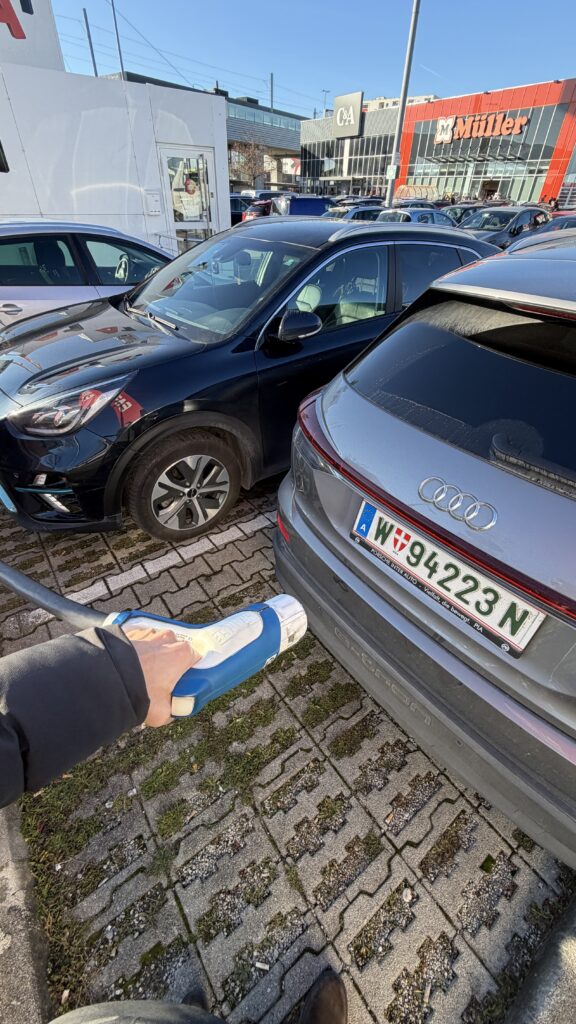
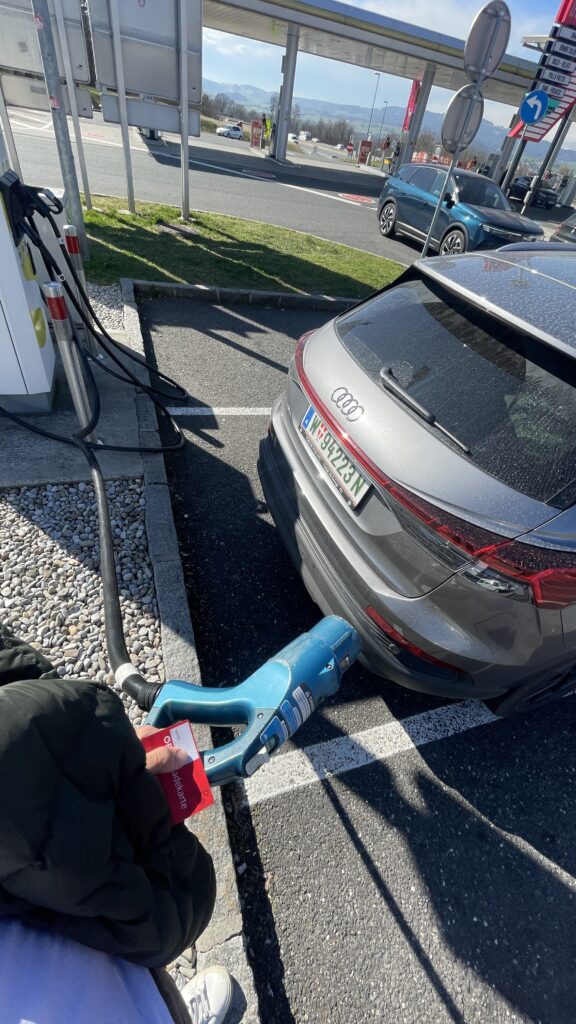
The first big problem was something very simple: cable length and parking. Two times I could not charge because the cable was way too short. The cars next to me were parked very close and very wide, so I could not place the Audi in a position where the plug reached the port. I stood there with the fast‑charging cable in my hand and could only laugh and be angry at the same time. It felt so stupid: the charger was free, my battery was low, but the physical layout made it impossible to start the session.
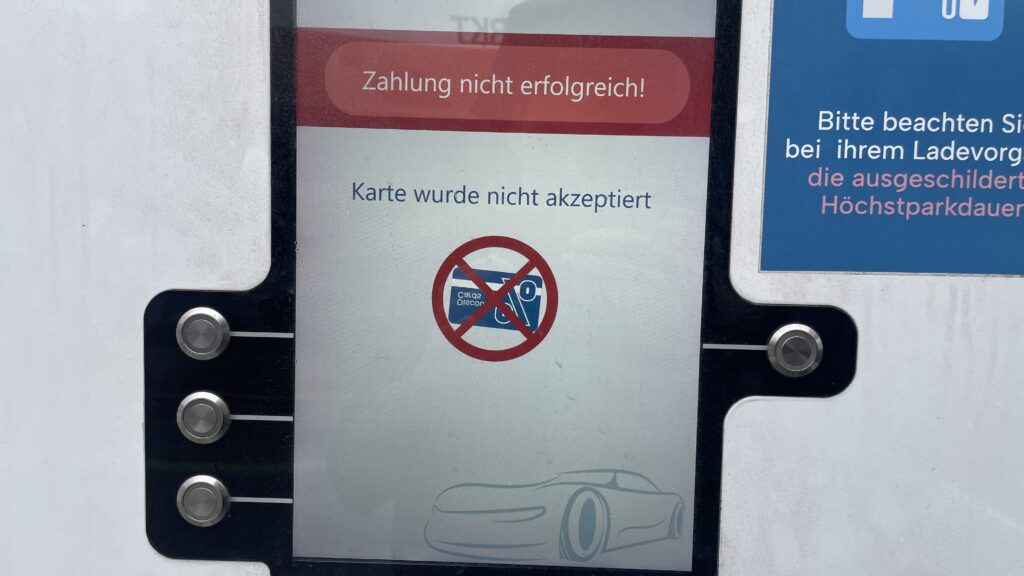
The second repeating problem was payment. My main charging card was sometimes not accepted at all. I had to try other cards and apps until something finally worked. Each time I stood there thinking: “If I was a total beginner, this would be the moment i give up.” I felt my own frustration rise, but at the same time I thought, this is good for my research. Now I do not just read about these pain points – I experience them with my own hands.
Route planning also showed interesting gaps. On the trip from Graz to Vienna I had some clear wishes. I wanted a charger with more than 300 kW so I do not have to wait too long. I wanted something with food nearby, because I was hungry. And I wanted a provider that is not SMATRICS, because I already had problems with them before. I thought these are basic, logical filters. But in the Audi system I could not filter for any of this. The car offers a nice tool that estimates how far I can still drive and suggests chargers on the way. Technically, this is very smart. But I could not set my own preferences. I could not select only “high‑power” chargers, or exclude specific networks, or search for stations with restaurants. I had to check everything manually, station by station.
Another missing detail was live information. Often it was not clear in the interface if a charger was free or busy. Sometimes I did not even see how many plugs the station had in total. For confidence this is important: if I drive ten minutes off the highway, I want to know if I really have a chance to plug in.
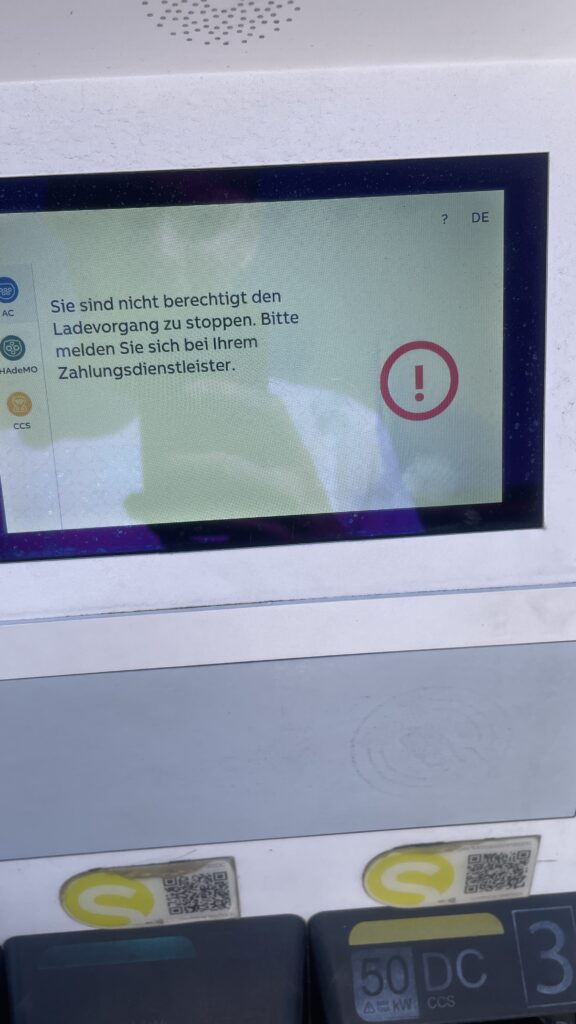
One of the most stressful moments happened when I came back to the car after charging. I wanted to unplug and continue my trip, but the connector was stuck and did not want to come out. The card did nothing anymore. I locked and unlocked the car several times and tried to pull with more and more force. After some minutes it finally released, but I never really understood which action solved it. For onboarding this is a nightmare: if something goes wrong, the system should clearly tell the user what to do, step by step. Here I had only trial and error.
Emotionally, these two weeks were a mix of curiosity, anger, and calm observation. In some moments I was really mad – especially when three small problems (finding a station, cable too short, card not accepted) came together. In other moments I felt almost grateful, because now I know these issues are not abstract. They really happen in everyday life, even with a premium car like an Audi Q4 e‑tron.
For my master thesis this impulse is very valuable. It helps me see how many barriers are not just software problems, but also physical design and service design problems: parking layout, cable reach, live status, contract jungle. It also shows how important personal preferences are. A good onboarding should not only explain “how to plug in”, but also support users in choosing the right charger for their needs: power, price, nearby services, and trust in the operator. These two weeks in the car gave me a much richer picture of what “first‑time public EV charging” really feels like – messy, fragile, but full of opportunities for better design. And I know imagine how a person that is less tech-savvier then me would do all these tasks. Crazy…
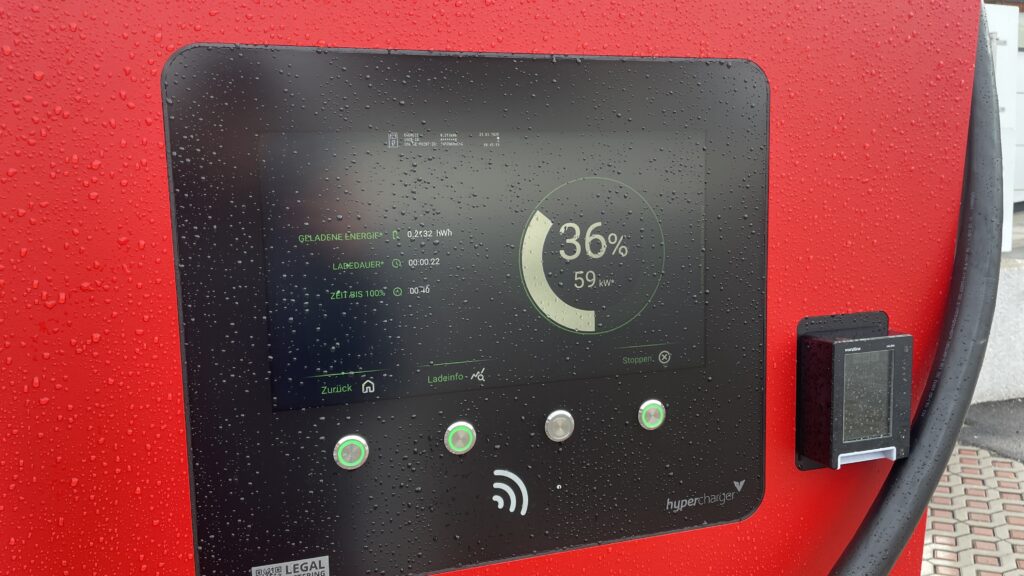
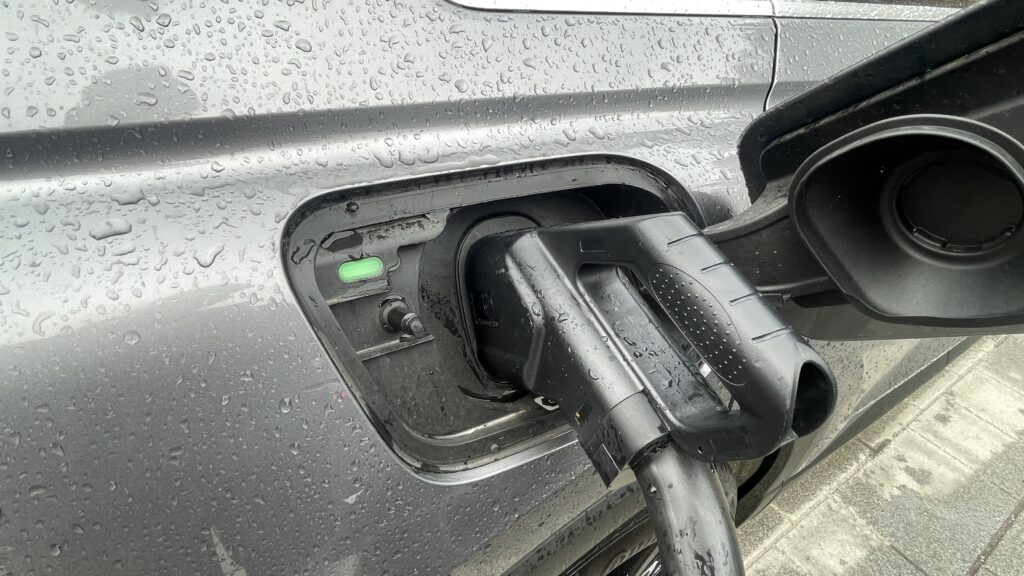
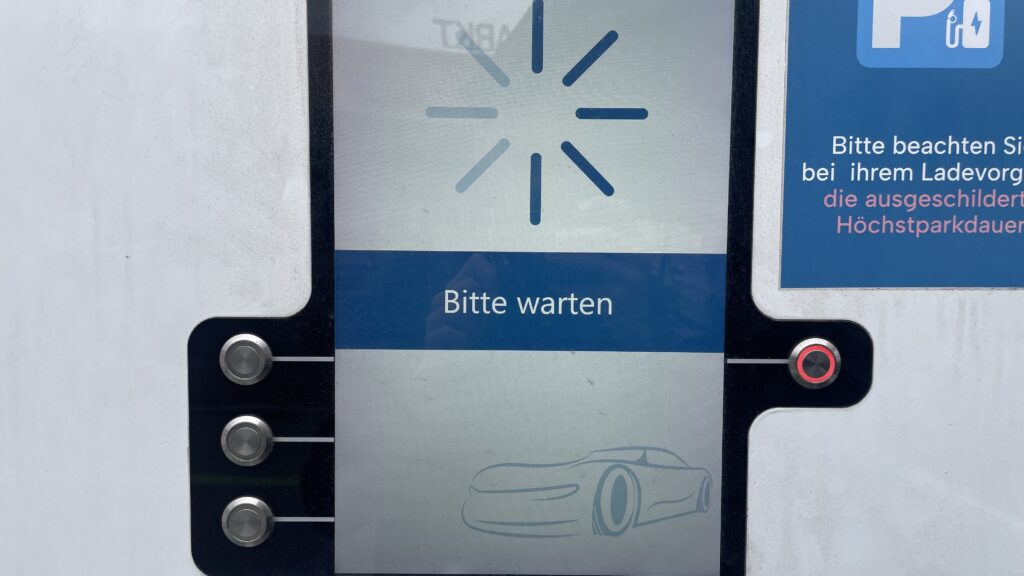
Last week I spent hours scrolling through Reddit, Trustpilot and German EV forums like GoingElectric. I was looking for honest user stories about public charging, not this polished marketing stuff, but real frustration, real emotions. what I found is exactly what my master thesis needs to understand.
The most striking thing is not just that things break. It is the feeling behind it. One user on Reddit wrote something like: “I used to have range anxiety. Now I have charger anxiety.” Another person mentioned they estimate 25 to 50 percent of their public charging sessions go wrong somehow – either the charger does not start, the cable gets stuck, or the app crashes. One user tried four times to charge at an Ionity station, typing in their credit card each time. Nothing worked. They called the hotline and were told “Your car is broken.” It was not. https://www.trustpilot.com/review/ionity.eu
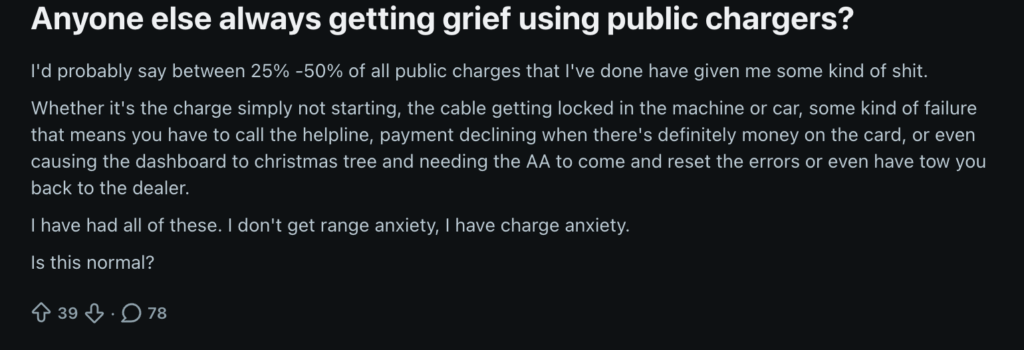
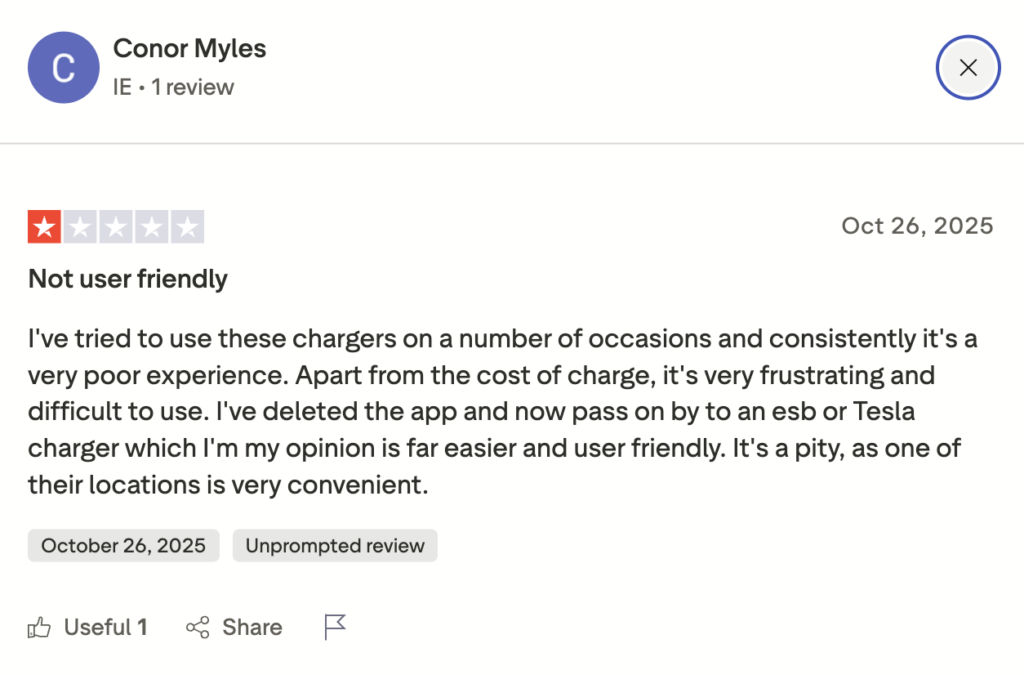
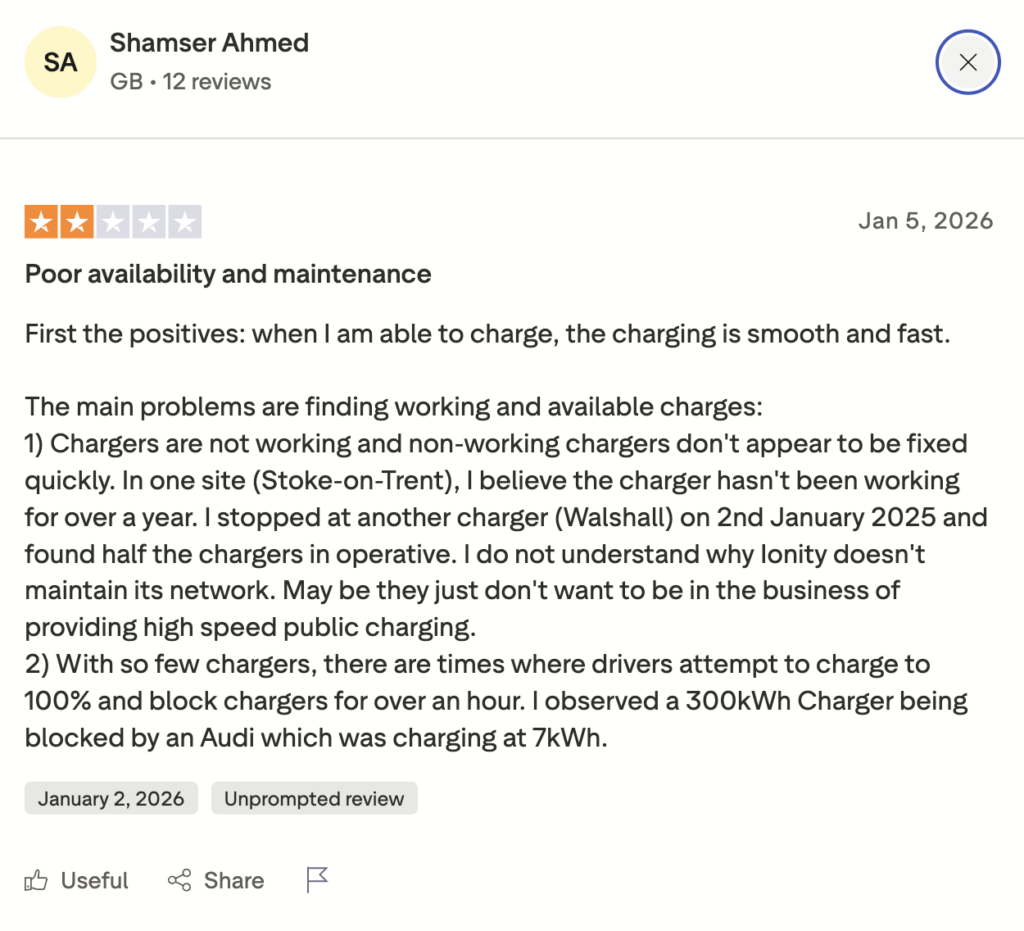
What surprised me most is how stressed people feel before they even arrive at a station. They do not know if it will work. They do not know what it will cost. On Trustpilot, someone paid 73€ to charge from 2% to 70% battery and then the support person told them this was normal. Normal! One person wrote: “Why does it have to be 10 times more complicated than buying diesel?”
I noticed a pattern of main problems:
For my thesis, this is gold. These are real first-time users (or experienced ones still struggling) describing exactly what breaks down in their mental model and confidence. They did not expect charging to be so complicated. They expected it to work like gasoline – simple, clear, fast.
I also found that Austria is not special in this problem. The same complaints come from the UK, Germany, Netherlands. It is a European-wide issue.
What does this mean now for my own research? It tells me that onboarding is not just about the touchpoint where the user stands at the station. It starts with trust. Will this station work? What will it cost? How do I do this? The first-time user is already anxious before they arrive. My job is to design away that anxiety, as i often mention through clear guidance, transparent pricing, and step-by-step help across all touchpoints: the app, the car, the station, the website.
These user voices of these forums was really worth reading through and gave me new pain points i havent thought about yet and will definetly help me for the thesis. They are reminding me: design for the stressed, confused person. Not for someone who has charged 100 times.
Disclaimer: This blog post uses real quotes and themes paraphrased from public Reddit discussions, Trustpilot reviews and forum posts. No direct copy-paste was used, but the emotional tone and pain points are taken directly from user experiences shared online. AI (Perplexity) was used to better and faster find these forums in the internet.
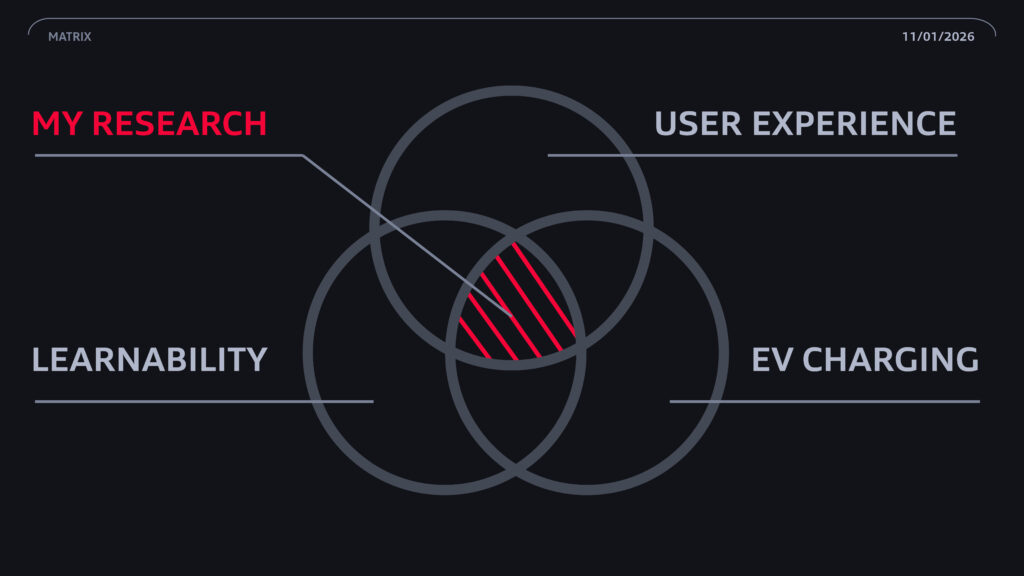
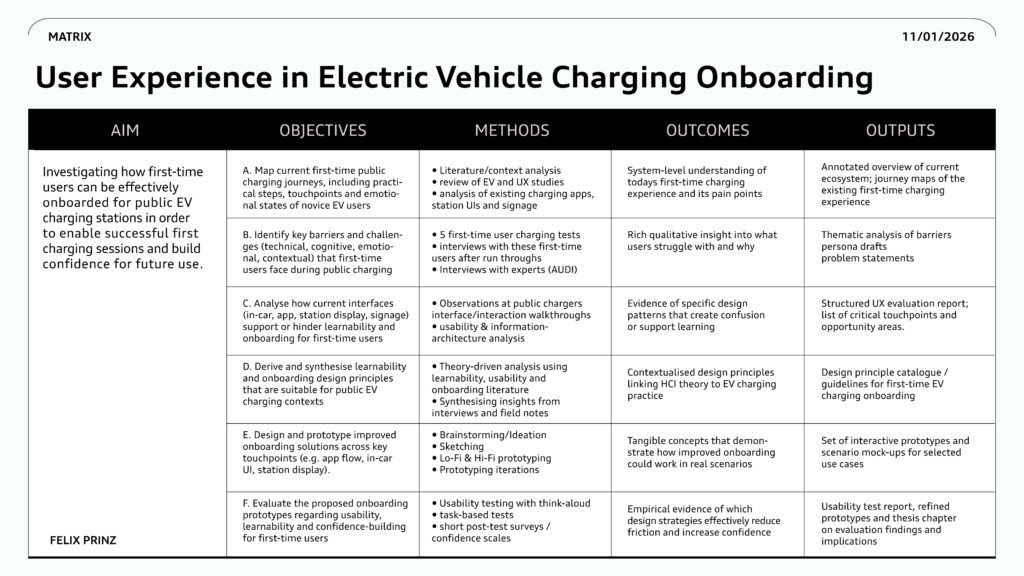
This master project explores how first‑time users can charge an electric car at public charging stations in a simple and confident way. I focus on the Audi UI and look at the whole journey: finding a charger in the app, using the in‑car system and interacting with the charger on site. With interviews, observations and usability tests, I study where people get stuck, feel stressed or unsure. The matrix in the image shows how my aims, objectives, methods and expected outcomes connect and guide the design of better onboarding experiences.
Research Question: How can first-time users be effectively onboarded for
public electric vehicle charging stations to ensure successful completion of their initial charging session and build confidence for future use?
To answer the central research question a mixed-methods approach combining literature review, qualitative user research and onboarding design evaluation is employed. This approach is justified because effective onboarding requires understanding: (1) what barriers first-time users face during initial public charging encounters, (2) which onboarding interventions reduce these barriers and (3) whether designed solutions actually build user confidence for repeated use. Single-method investigation cannot adequately address this complexity.
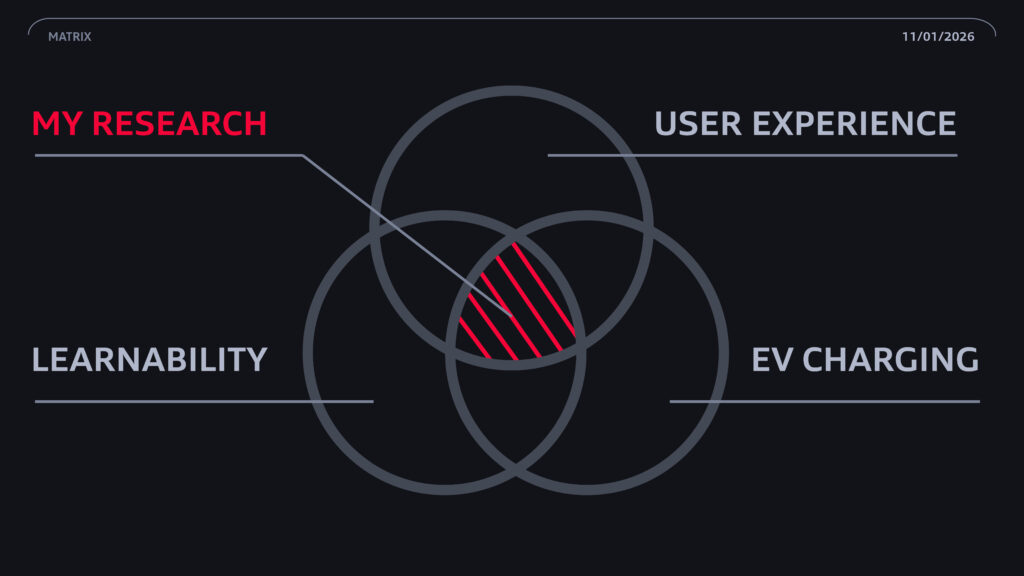
This thesis is grounded in an interpretivist, user-centered research paradigm, assuming that first-time charging experiences cannot be understood only through technical performance metrics but must be interpreted through users perceptions, emotions and interpretive processes. The work therefore draws primarily on qualitative HCI theory, learnability models and onboarding research that explain how people approach unfamiliar systems and how confidence develops through interaction.
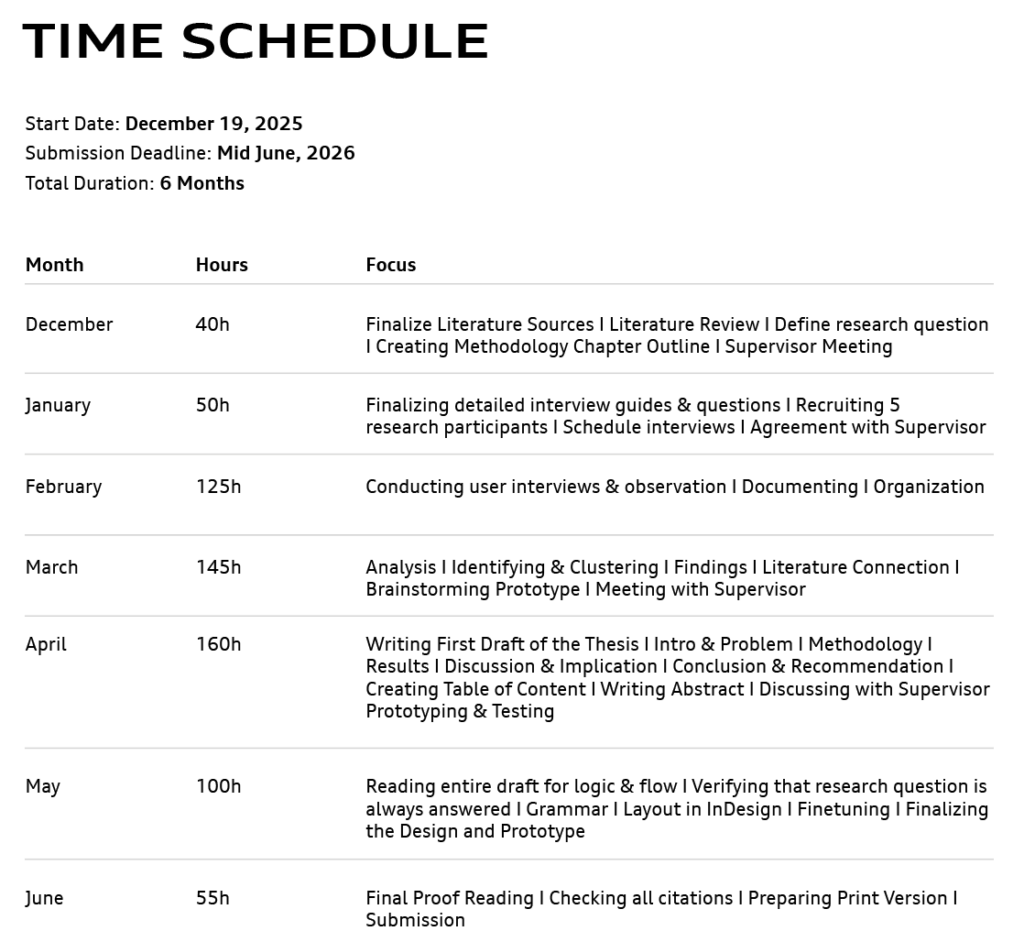
Albert, Bill, and Tom Tullis. Measuring the User Experience: Collecting, Analyzing, and Presenting Usability Metrics. 2nd ed. Morgan Kaufmann, 2013.
Aichinger, Wolfgang, Nadine Appelhans, Julian Gerlach, Jürgen Gies, Stefanie Hanke, Anne Klein-Hitpass, and Thomas Warnecke. „Elektromobilität in der kommunalen Umsetzung – Kommunale Strategien und planerische Instrumente.“ Technical Report. Deutsches Institut für Urbanistik (DIFU), 2015. https://starterset-elektromobilität.de/sites/default/files/Dokumente/Elektromobilitaet_in_der_kommunalen_Umsetzung.pdf.
Bevan, Nigel, and Michelle Macleod. „Usability Measurement in Context.“ Behaviour and Information Technology 13, no. 2 (1994): 132–145. https://www.academia.edu/1962544/Usability_measurement_in_context
Beringer, D. B., and J. G. Peterson. „Underlying Behavioral Parameters of the Operation of Touch-Input Devices: Biases, Models, and Feedback.“ Human Factors 27, no. 4 (1985): 445–458.
Bundesverband Elektromobilität Österreich (BEÖE), „Neuzulassungen E-Autos (BEV) in Österreich,“ accessed December 2, 2025, https://www.beoe.at/neuzulassungen/
Choi, B. R., W. P. Lee, and D. J. Won. „Optimal Charging Strategy Based on Model Predictive Control in Electric Vehicle Parking Lots Considering Voltage Stability.“ Energies 11, no. 7 (2018): 1812. https://doi.org/10.3390/en11071812.
Davis, Fred D. „Perceived Usefulness, Perceived Ease of Use, and User Acceptance of Information Technology.“ MIS Quarterly 13, no. 3 (1989): 319–340. https://doi.org/10.2307/249008.
Designability and Motability. Accessible EV Charging: Scoping and Discovery Report. United Kingdom, 2021.
eCharge4Drivers Consortium. eCharge4Drivers D1.2: A Priori Users‘ Concerns and Expectations Relevant to EV Charging. Project Report, Version 1.0 FINAL, 2023.
Figenbaum, Erik, et al. “Empirical Analysis of the User Needs and the Business Models in the
Norwegian Charging Infrastructure Ecosystem.” World Electr. Veh. J. 13, no. 10 (2022)
Grossman, Tovi, George Fitzmaurice, and Ramtin Attar. “A Survey of Software Learnability: Metrics, Methodologies, and Guidelines.” In CHI ’09 Extended Abstracts on Human Factors in Computing Systems, 649–658. New York: ACM, 2009.
Guo, Jianfeng, Binbin Xu, Qi Cao, Siyao Liu, Fu Gu, and Xuemei Zhang. „Unveiling the Bidirectional Link Between Electric Vehicle Sales and Charging Infrastructure: Evidence from 95 Cities in China.“ iScience 27, no. 3 (2024). https://doi.org/10.1016/j.isci.2024.111245.
Han, Tye. „Learnability and EV: Improving First-Time Electric Vehicle User Experience of Learning on Electrification Functions.“ Master‘s thesis, Södertörn University, 2023.
Hardman, Scott, Alan Jenn, Gil Tal, Jonn Axsen, George Beard, Nicolo Daina, Erik Figenbaum, et al. „A Review of Consumer Preferences of and Interactions with Electric Vehicle Charging Infrastructure.“ Transportation Research Part D: Transport and Environment 62 (2018) https://doi.org/10.1016/j.trd.2018.04.002.
ISO 9241-11:2018. Ergonomics of Human-System Interaction – Part 11: Usability: Definitions and Concepts. International Organization for Standardization.
Krug, Steve. Don‘t Make Me Think, Revisited: A Common Sense Approach to Web & Mobile Usability. New Riders, 2014.
Lee, Dong-Yeon, Melanie H. McDermott, Benjamin K. Sovacool, and Raphael Isaac. „Toward Just and Equitable Mobility: Socioeconomic and Perceptual Barriers for Electric Vehicles and Charging Infrastructure in the United States.“ Energy and Climate Change 5 (2024). https://doi.org/10.1016/j.egycc.2024.100146.
Linja-aho, Merja. Learnability Assessment of Complex ICT Systems: Iterative Design-Validation Cycle. Doctoral dissertation, University of Oulu, 2006.
Ma, Jun, and Qinrui Yang. „Research on User Satisfaction of Charging Infrastructure.“ IOP Conference Series: Earth and Environmental Science 440 (2020). https://doi.org/10.1088/1755-1315/440/3/032078.
Nielsen, Jakob. Designing Web Usability: The Practice of Simplicity. New Riders Publishing, 2000.
Norman, Don. The Design of Everyday Things: Revised and Expanded Edition. Basic Books, 2013.
Ries, Eric. The Lean Startup: How Modern Entrepreneurs Use Continuous Innovation to Create Radically Successful Businesses. Crown Business, 2011.
Rubin, Jeffrey, and Dana Chisnell. Handbook of Usability Testing: How to Plan, Design, and Conduct Effective Usability Testing. 2nd ed. Wiley Publishing, 2008.
Story, Molly Follette, James L. Mueller, and Ronald L. Mace. The Universal Design File: Designing for People of All Ages and Abilities. The Center for Universal Design, 1998.
Tullis, Tom S., and Jacqueline N. Stetson. „A Comparison of Questionnaires for Assessing Website Usability.“ In Proceedings of the Usability Professionals Association Conference, 1–12. Minneapolis: Usability Professionals Association, 2004.
UDG Consortium. Universal Design Guidelines for Electric Vehicle Charging Infrastructure. Policy and Design Report. Ireland/European, 2024.
Venkatesh, V., and F. D. Davis. „A Theoretical Extension of the Technology Acceptance Model: Four Longitudinal Field Studies.“ Management Science 46, no. 2 (2000): 186–204.
Wang, Hengsong, Qi Huang, Changhua Zhang, and Aihua Xia. „A Novel Approach for the Layout of Electric Vehicle Charging Station.“ In Proceedings of the 2010 International Conference on Apperceiving Computing and Intelligence Analysis (ICACIA), 64–70. IEEE, 2010. https://doi.org/10.1109/ICACIA.2010.5743443.
Wang, Yingwei, and Chuan-Ren Wang. „Locating Passenger Vehicle Refueling Stations.“ Transportation Research Part E: Logistics and Transportation Review 46, no. 5 (2010): 791–801. https://doi.org/10.1016/j.tre.2010.02.007.
Yang, Mengqi, and Boqiang Lin. „The Development of Consumer Preferences for Electric Vehicle Charging Infrastructure in China: Evidence from a Questionnaire Survey with a Four-Year Interval.“ Energy 307 (2024): 132671. https://doi.org/10.1016/j.energy.2024.132671.
Zheng, Jian, Xingang Wang, Ke Men, and Yonghua Song. „Aggregation Model-Based Optimization for Electric Vehicle Charging Strategy.“ IEEE Transactions on Smart Grid 4, no. 2 (2013): 1058–1066. https://doi.org/10.1109/TSG.2013.2244904.
Recently I spent some time exploring the Audi Innovation pages, especially the content about e‑mobility, digital services and the Audi charging hub. At first I just wanted to understand what Audi is doing with fast charging. But after reading more, I realized that this material is also very relevant for my master thesis as I want to do the prototyping within the AUDI Design System.
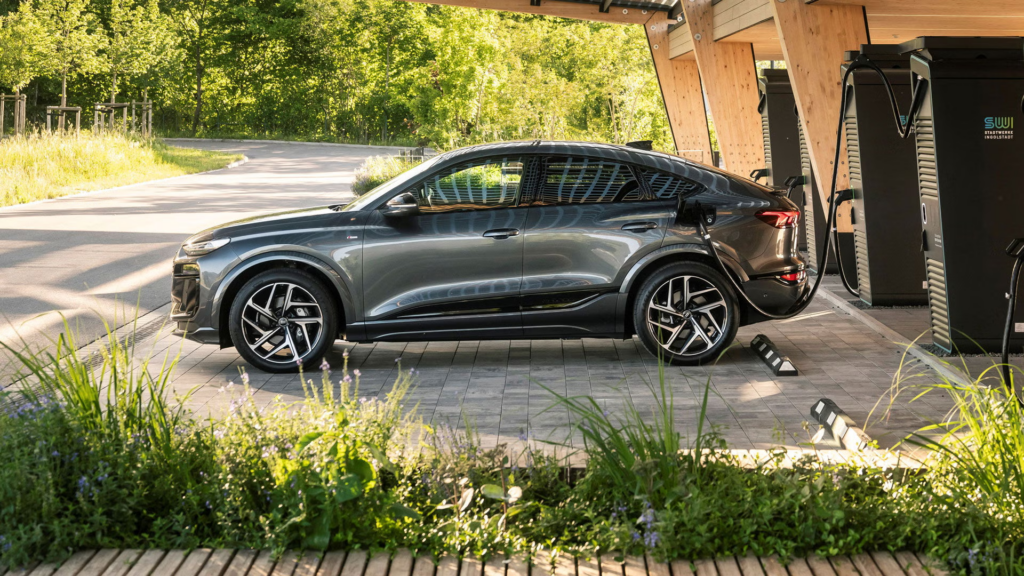
One key topic for me is how Audi understands charging as a complete experience, not only as a technical process. On the Audi charging hub site, they describe the hub as a premium place where drivers can charge quickly and relax in a lounge at the same time. The charging cubes store energy with second‑life batteries and can be moved and rebuilt in different cities. I find this interesting because it shows a clear link between infrastructure design, sustainability and user comfort. For my research, this confirms that charging is more than a plug and a screen. It is a service environment that can reduce or increase stress for especially first‑time users.
Audi also focuses strongly on urban users who do not have private charging at home, which im also focusing in (Public EV Charging). The charging hub gives them reliable fast charging and extra services like parcel delivery and battery changing for small vehicles. This makes me think about my own personas and journey maps. All of my interview plans already consider users without private parking. The Audi concept suggests that I should look more closely at how “extra services” around the main task can support confidence. For example, clear staff presence or a comfortable waiting area might make it easier for a nervous first‑time user to ask for help.
Another connection to my thesis is Audi’s work on a seamless digital ecosystem. On their pages about digital products and the myAudi app, they describe how drivers can plan routes with charging stops at home and then send them directly to the car. For EV drivers, the app becomes a smart buddy that manages charging contracts, plug & charge features and battery pre‑conditioning. In my research question I ask how onboarding can guide first‑time users from station discovery to successful departure. The Audi ecosystem shows one possible answer: onboarding does not start at the station, it starts earlier in the app and in the car. This impulse motivates me to design my prototypes across multiple touchpoints, not only the station display.
The Audi charging hub examples also give me concrete design inspiration. The barrier‑free layout in Zurich, with wide spaces and flexible swivel arms, clearly tries to remove physical and cognitive barriers. In my own study I plan observations at public stations to see where people actually struggle. The hub design suggests some variables I should pay attention to during fieldwork: parking space width, cable reach, height of displays, clarity of signs and the feeling of safety when moving around the car. These details can directly affect whether a first‑time user feels in control.
For my future research steps, this impulse has three main impacts. First, it pushes me to treat charging as a holistic service, where architecture, services and digital interfaces work together. Second, it encourages me to integrate an OEM perspective into my interviews, for example by asking about expectations formed by car brands and apps like myAudi. Third, it gives me ideas for design principles: create a “hub” feeling even at simple public stations, maybe through small but clear cues like reserved beginner bays, simple reservation flows, or micro‑lounges that communicate “you are welcome here”.
In summary, exploring the Audi Innovation Lab was more than just browsing a corporate website. It gave me a real picture of how a leading OEM imagines premium charging, both physically and digitally. This impulse will help me align my thesis with realistic industry directions, while still keeping a critical, user‑centred view on what first‑time EV users actually need to feel confident during their first public charging session.
https://www.audi.com/en/sustainability/environment-resources/electrification
https://www.audi.com/en/innovation/digitalization
https://www.audi.com/en/innovation/product-innovation/technologies/audi-charging-hub
https://www.audi.com/en/innovation/product-innovation/e-mobility/a6-scandinavian-drive
During this semester, we had the course Future Design Lab by Raphaela Egger. The class focuses on future thinking, system analysis and understanding complexity in design processes. This course made me reflect deeply on my Master thesis topic, as it is also related to emerging technologies, innovation and future-oriented design.
My Master thesis deals with user experience and onboarding processes in public electric vehicle (EV) charging systems. EV charging is a relatively new and still evolving field. Many users experience uncertainty, confusion and frustration when using public charging infrastructure for the first time. Because of this I strongly connected the content of Future Design Lab with my own research topic and cam to the point that i definetly should write an impulse about it to also reflect on it.
One of the most important impulses from the course was the idea that designers should not only focus on single interfaces or isolated problems, but instead understand the whole system in which a design is embedded. This shift in perspective helped me to see EV charging onboarding not just as a UX problem, but as a complex socio-technical system. (https://www.interaction-design.org/literature/topics/socio-technical-systems?srsltid=AfmBOooix6XdupAkLQ0EaxDAz2jfQfAdeIQc8iXnE7FHTPwaU1MRQEUK)
A central method we learned in the course is system analysis, which helps to understand how different elements influence each other. A useful framework for this is the 5R Model, consisting of Resources, Rules, Roles, Relations and Results. Applying this model to my thesis topic gave me new insights.
Resources in the EV charging system include technical infrastructure, digital interfaces, user data, electricity, time, and the users’ attention and cognitive capacity. Especially for first-time users, mental resources such as confidence and trust play a crucial role.
Rules are defined by charging standards, payment systems, regulations, pricing models, and platform-specific requirements. These rules often differ between providers, which creates inconsistency and confusion during onboarding.
Roles include EV drivers, charging station providers, app developers, energy companies, municipalities, and designers. Each role has different responsibilities and levels of power within the system.
Relations describe how these roles interact. For example, users depend on apps and stations working together, while providers depend on regulations and technical standards. Poor coordination between these relations often leads to negative user experiences.
Results are the outcomes of the system, such as successful charging, user satisfaction, trust in e-mobility, or in negative cases frustration, abandonment and anxiety. These results influence whether users are willing to adopt electric mobility in the future.
Through the Future Design Lab, I realized that onboarding is not only about explaining how something works. It is also about reducing uncertainty in a system that is still changing. This is where future thinking becomes highly relevant. Future thinking encourages designers to accept uncertainty and design solutions that are flexible, robust and supportive during transitions.
This impulse has influenced my research approach significantly. I now see onboarding as a strategic design intervention that helps users navigate complex systems during technological change. It also strengthened my decision to use system mapping and user journey analysis as part of my methodology.
This course of Future Design Lab gave me an important impulse for my Master thesis by helping me to think deeper and my perspective from interface design to system-oriented and future-oriented thinking. It helped me understand that good user experience in emerging technologies depends not only on usability, but on how well designers understand and shape the systems behind it.
2 Links fehlen noch
AI is used for better spelling
Sources:
Slides from Mrs. Egger