How do the users behave and respond to design interventions, such as carbon impact calculators or green streaming options? In the next paragraphs I would like to describe one scientific research from Germany made in January 2024 aimed to understand how feedback from the CFTA eco2log app affects consumer behavior and their carbon footprint.
The Study
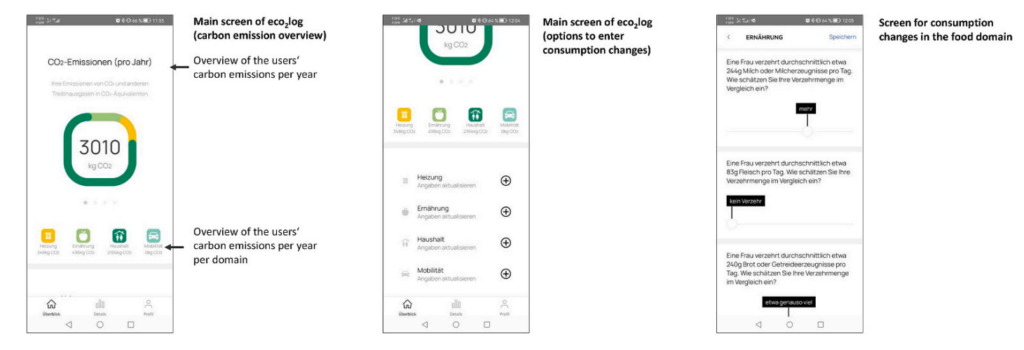
This research involved 216 university students who used the CFTA eco2log app—a tool designed to calculate individual carbon emissions in four major consumption areas: mobility, food, heating, and household activities. Participants entered their current consumption habits into the app, which provided detailed feedback on their carbon footprint, both overall and in each domain.[1]
After receiving feedback, participants planned modifications to their consumption and entered these future plans into the app. The app then recalculated their estimated emissions based on these planned changes, giving participants an opportunity to reflect on their behaviors and make more sustainable choices.[1]
Key Findings
Awareness Sparks Action
The study revealed that awareness drives change. When participants were confronted with their actual carbon footprint, they were motivated to plan significant reductions in their emissions. On average, participants aimed to reduce their overall carbon emissions by 22.5%.However, the reductions varied by domain:
Household activities saw the largest reduction (34.7%).
Heating came next (26.9%), followed by food (16.4%).
Mobility had the smallest reduction (12.0%), and this change was only marginally significant.
Feedback Drives Domain-Specific Changes
Interestingly, the app’s feedback was most effective in encouraging changes in the exact area where it highlighted high emissions. For example, feedback about high emissions from heating inspired participants to plan significant reductions in heating-related consumption. There were minimal cross-effects—feedback on one domain (e.g., mobility) didn’t strongly influence behavior in other areas (e.g., food).
Awareness Gaps
The study also showed that participants struggled to estimate their carbon footprint accurately, especially in specific domains. While they could gauge their overall footprint somewhat reliably, they often underestimated or overestimated emissions in individual areas like food or heating. This underscores the importance of tools like the CFTA app, which provide precise, data-driven feedback.[1]
What Does This Mean for Sustainability?
The study demonstrates that design interventions like the CFTA eco2log app can effectively encourage more sustainable behaviors by raising awareness and providing actionable feedback. However, it also highlights the need for tailored approaches. Not all users respond equally—some changes, like reducing food-related emissions, require different strategies than those for mobility or household activities.
Conclusion
Awareness alone is a powerful first step, but tools that provide specific, domain-focused insights are key to driving meaningful, lasting behavior changes. The principles tested in the study—awareness, actionable feedback, and domain-specific insights—are equally relevant and powerful in encouraging more sustainable behaviors in the digital world. Creating tools to measure and share the energy footprint of online activities could be the first step toward a greener digital future.
Whether we’re scrolling through TikTok, sharing moments on Instagram, or firing off texts and emails, our days are filled with digital interactions. These actions feel easy and harmless, but they carry an environmental cost many of us overlook. By understanding the true cost of our digital habits, we can take small, informed steps toward reducing our online carbon footprint.
Which age group has the biggest impact?
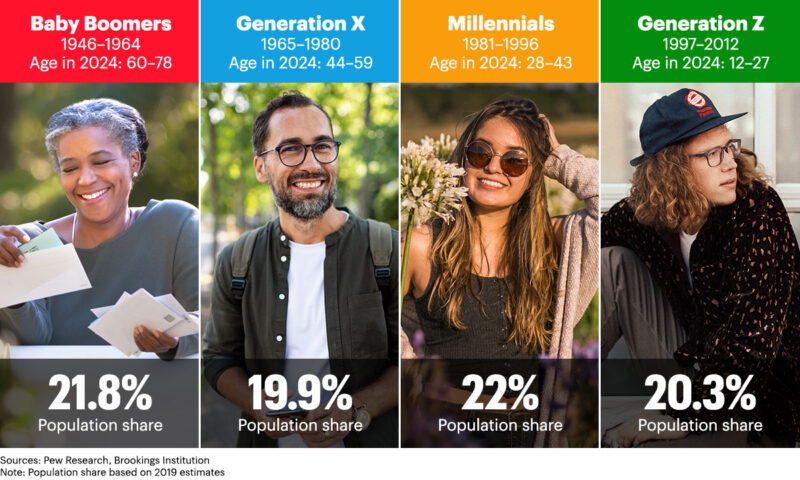
While all age groups contribute to the digital carbon footprint, it’s no surprise that Gen Z has the largest impact. Individuals aged 18-24 send an average of 124 text messages per day, which results in 652.3 grams of CO2 annually. This is roughly equivalent to a 5 km car ride! In comparison, older age groups, like those aged 55 and above, produce significantly fewer emissions. It’s important to recognize that while younger generations are the most active digital consumers, their habits also present an opportunity for change. [1]
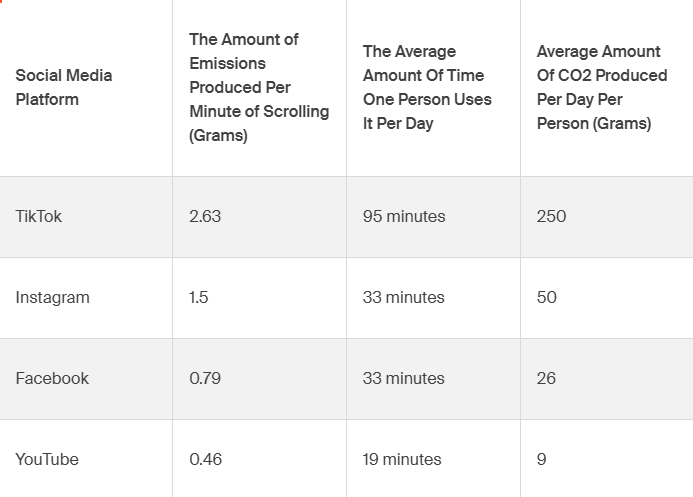
Social media platforms like TikTok and Instagram are part of daily life for billions of people. However, each minute spent scrolling contributes to a significant carbon footprint due to the energy consumption of the data centers that power these platforms. TikTok, for instance, emits 2.63 grams of CO2 per minute of use. With an average user spending 95 minutes per day on the app, this results in over 250 grams of CO2 daily, which is comparable to driving a car for 4 km. [1]
Which social media platforms produce the most emissions?
Not all social media platforms have the same environmental impact. TikTok leads the way in terms of emissions, as its video-heavy content consumes more data and energy. On average, TikTok emits 2.63 grams of CO2 per minute of use. Instagram follows closely behind, with its visual-based content requiring significant data storage. Platforms like Facebook and YouTube also contribute heavily due to their massive user bases and video streaming services, making them some of the most energy-intensive platforms to use.
“To put this even more into perspective, air travel emits around 133 grams of CO2 per mile per passenger for short-haul flights. So, doom-scrolling for one day equates, on average, to the same emissions for about seven passengers per mile on one of these flights.[1]”
The Environmental Impact Of Mindless Texts And Emails
Even sending a simple “LOL” or a quick “OK” by text adds up. In the U.S., the average person sends 61 texts per day, and each message emits 0.014 grams of CO2. Over a year, this equates to 310 grams of CO2, or the same as charging your phone 32 times. Similarly, sending work emails can have a surprisingly large environmental cost. On average, each email contributes about 2 grams of CO2, leading to over 2,000 grams per year.[1]
Tesla has long been a leader in transforming the way we think about cars, especially when it comes to technology and user experience. The company’s bold design decisions, such as the large touch interface, have revolutionised the automotive industry. But with innovation comes both praise and criticism. Here’s a closer look at what Tesla’s UX/UI design has done well – and where it could improve.
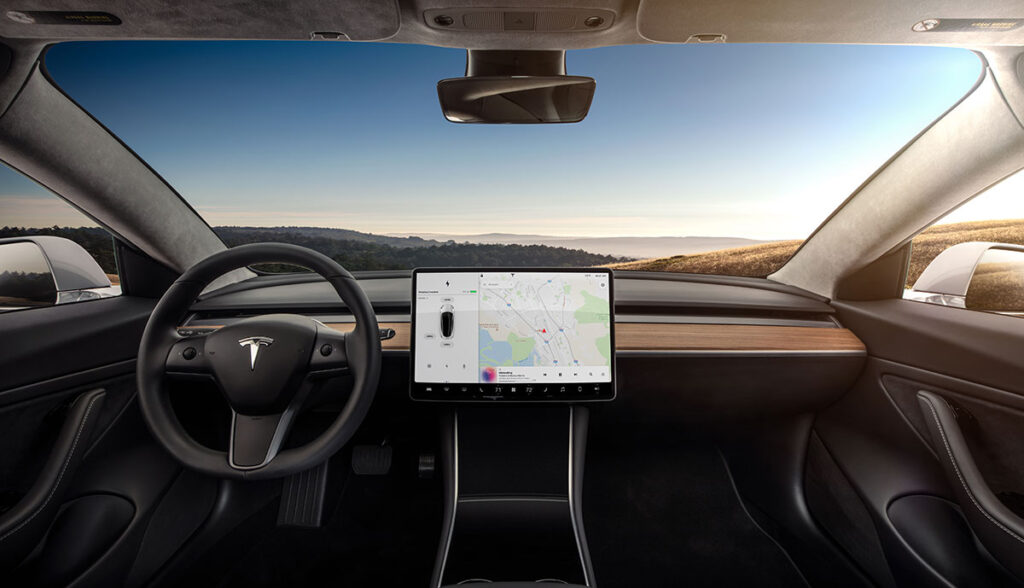
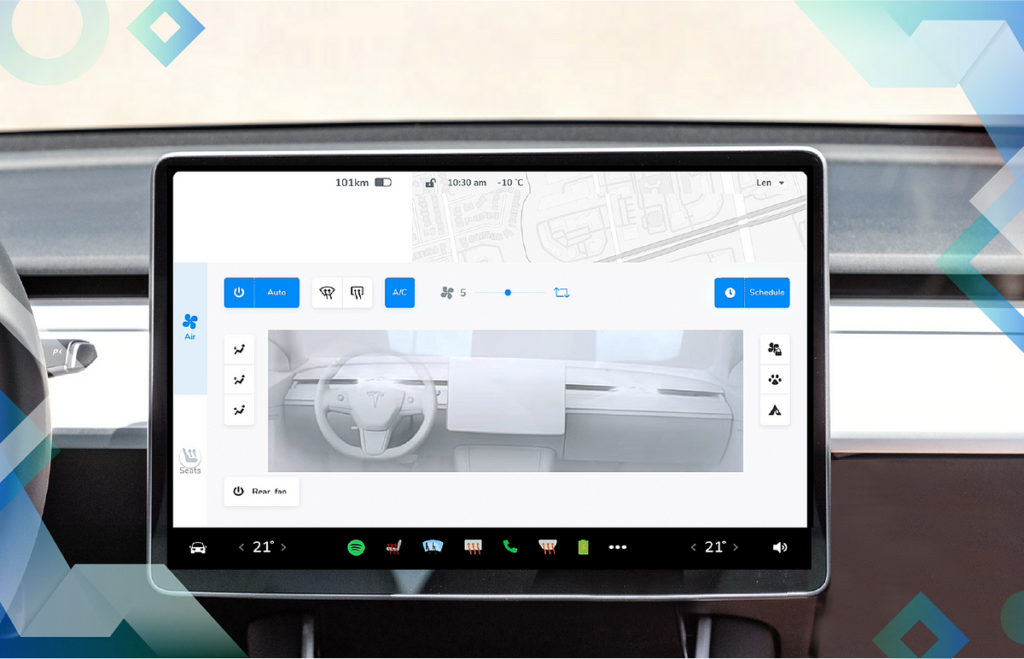
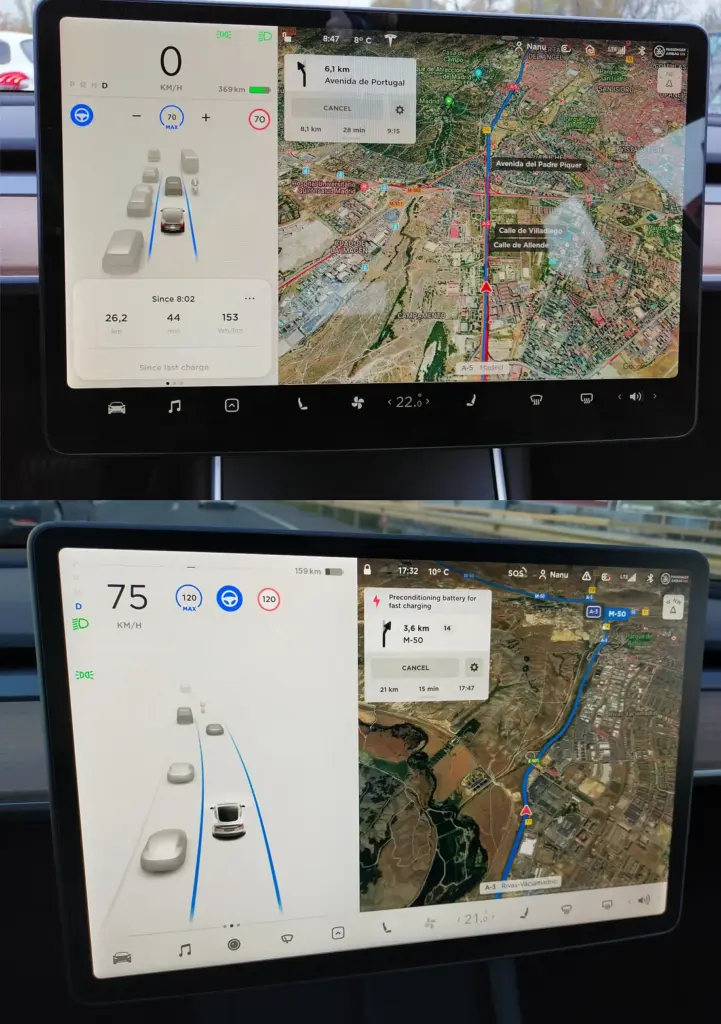
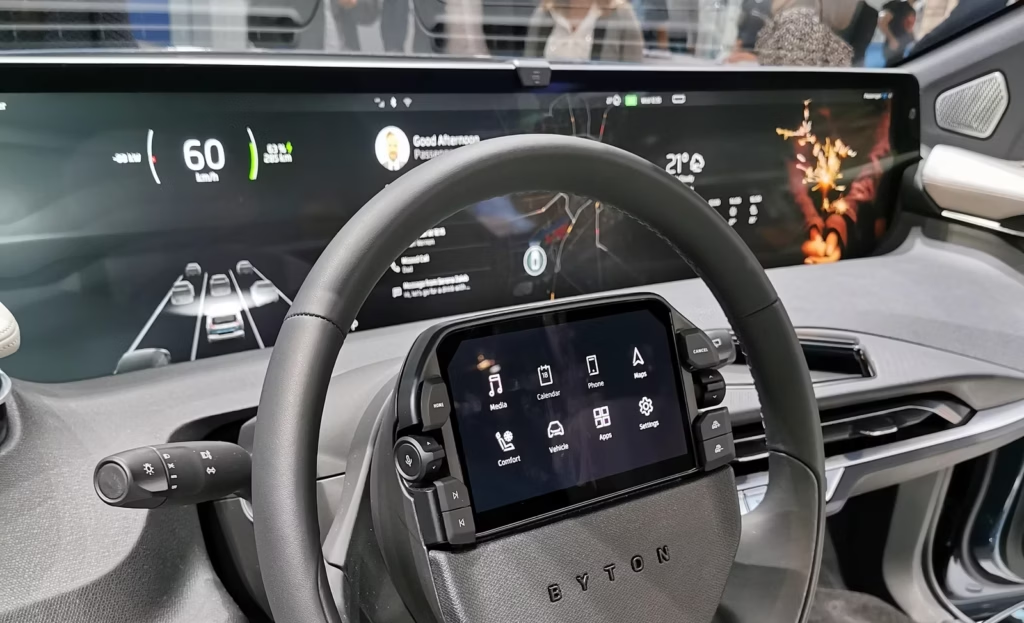
One of Tesla’s most notable contributions to the automotive world is its minimalist design, especially in the dashboard of its vehicles. The central touchscreen of the Tesla Model S and Model 3 is sleek and streamlined, allowing users to interact with many of the car’s features through an intuitive digital interface. The move has eliminated the need for many physical buttons, simplifying the driving experience and creating a more modern, technically advanced feel.
Tesla also stands out by integrating software updates through an over-the-air (OTA) system. This means that, even after purchase, a Tesla car is continually upgraded with new features and bug fixes delivered directly to the vehicle, similar to how smartphones are updated. This user experience flexibility is a game changer in automotive design.
However, not all aspects of Tesla’s UX/UI have been widely complimented. One of the most common criticisms is the size and placement of some of the buttons on the touchscreen. Many users find that adjusting basic functions like the HVAC system or wipers while driving can be frustrating. These controls are often small and not always intuitively located, making it difficult for drivers to access them quickly and safely.
Another common complaint is the lack of customisation of Tesla’s infotainment system. Unlike some competitors, Tesla does not offer Apple CarPlay or Android Auto, which could provide users with additional navigation options, such as Waze integration. While Tesla’s large map display is much appreciated, the system lacks route planning for multiple destinations, which can be a significant annoyance for users who rely on complex navigation for their trips.
Overall, Tesla has pushed the boundaries of automotive UX/UI design, making cars more like smartphones on wheels. The integration of cutting-edge technologies like touchscreen interfaces and OTA updates has changed the face of the industry. However, the company needs to continue to refine its design, especially when it comes to usability during active driving. As Tesla and other manufacturers continue to innovate, it will be interesting to see how they manage to balance futuristic design with practical and user-friendly interfaces that keep safety and ease of use in mind.
The automotive industry is undergoing a change and user experience (UX) design is at the forefront of this development. As vehicles become more connected, intelligent and user-centric, the future of automotive UX promises to redefine the way we interact with cars. Below is a look at the key developments that are shaping this future.
Sustainability and Intelligent Design
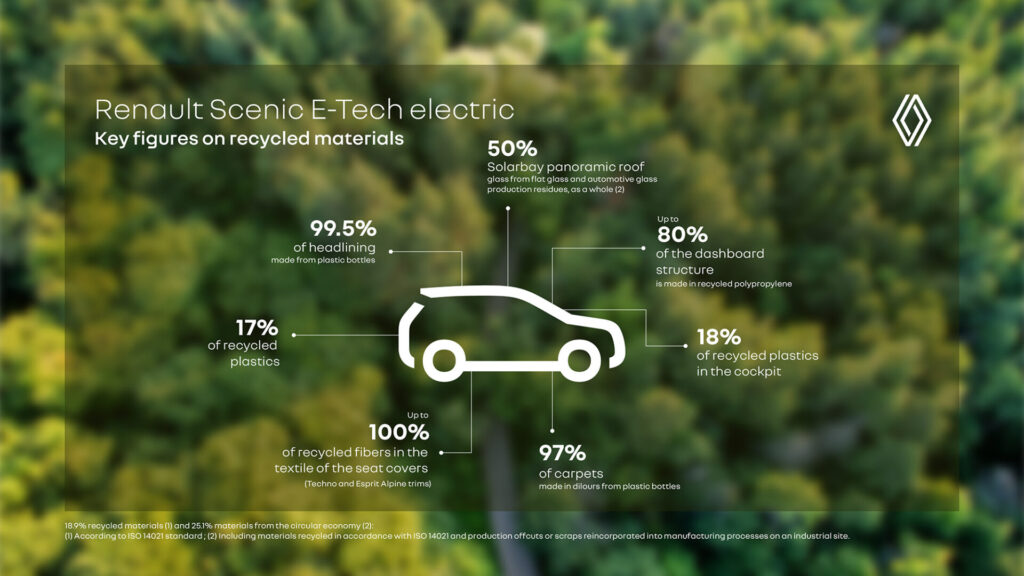
As sustainability becomes a global priority, automotive UX is adapting to promote eco-friendly practices. Game-based interfaces encourage fuel-efficient driving behaviours, while electric vehicles (EVs) offer advanced features such as intelligent climate control systems that optimise energy use. In addition, automotive manufacturers are incorporating sustainable materials into vehicle interiors to align with environmental goals.
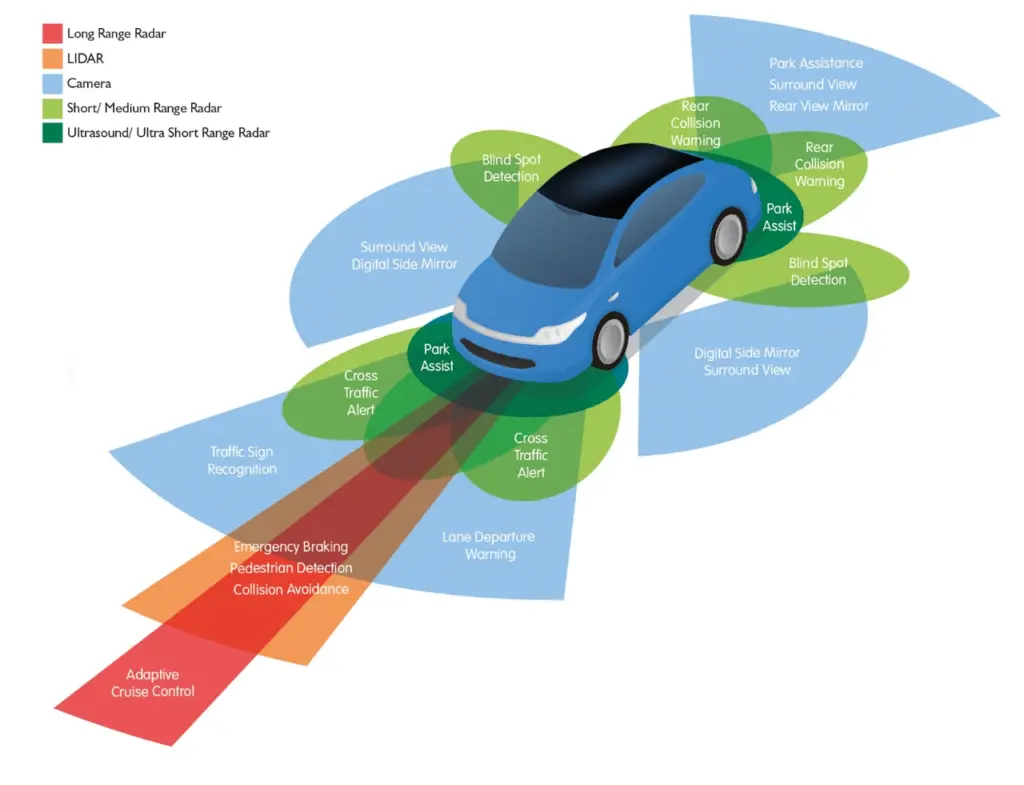
Safety remains at the forefront of automotive UX innovation. Advanced Driver Assistance Systems (ADAS) include features such as forward collision warning, lane departure warning, adaptive cruise control and automated parking. These technologies not only improve safety, but also reduce driver stress by taking over repetitive or difficult tasks.
Artificial Intelligence (AI) is revolutionising the in-car experience by enabling hyper-personalisation. Vehicles are now able to learn user preferences, such as seat positioning, climate control and entertainment choices, to create tailored experiences. AI-powered voice assistants are also becoming more intuitive, enabling natural conversations that eliminate the need for memorised commands. This integration of generative AI enhances convenience while fostering a deeper connection between users and their vehicles.
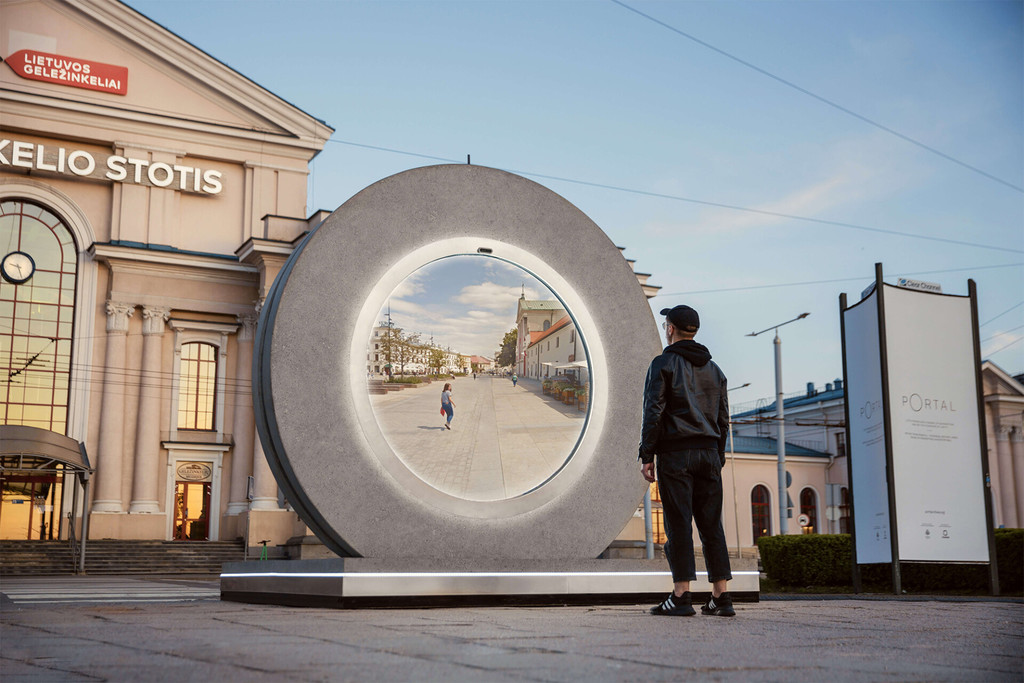
Traditional museum experiences typically involve passive observation. However, by integrating interactive technologies such as touch screens, VR/AR, and motion-sensing installations, museums can improve their exhibits and make them more engaging. Additionally, incorporating DIY elements that allow visitors to create or contribute actively ensures a participatory and enriching experience.
Research Question and Sub-Questions My central research question is: How do DIY elements (visitors creating their own experience) and interactive technologies improve engagement and retention in learning within museums?
This question is supported by sub-questions like: How can these methods be adapted for different age groups? Can these methods foster community building within museum spaces? Can DIY experiences remain truly “hands-on” when combined with advanced tech?
DIY Elements: DIY elements in museums enable visitors to actively engage by creating or developing exhibits. This hands-on participation boosts creativity, problem-solving, and a deeper connection to the content, improving both engagement and learning. Studies show that visitor satisfaction increases significantly when exhibits involve personal input, with 49% of respondents preferring interactive exhibits. [1]
Interactive Technologies: Technologies like AR, VR, and motion sensors offer dynamic, immersive experiences, enriching emotional and intellectual engagement. AR overlays digital content on physical exhibits, while VR transports visitors to virtual spaces, increasing their understanding. Research highlights how these technologies create personalized, engaging experiences. [2]
Relevant Institutions A list of museums and science centers that I intend to explore in greater depth. This research will focus on their exhibits, educational programs, and the impact they have on the community.
Personal Motivation By exploring this topic, I hope to uncover creative methods to make museums more interactive and engaging. My goal is to transform these spaces into environments where learning is enjoyable and becomes a shared adventure. In doing so, I hope to help people connect with one another and create memorable experiences that they can truly enjoy together.
Next Steps In the next steps, I plan to:
Analyze existing examples of interactive museum experiences. (reference “Relevant Institutions”)
Investigate how community building happens through cooperative DIY activities.
Evaluate the impact of interactive exhibits on information retention.
Compare non-technology-based tangible interactions to those using tech in museum settings.
Sources
X. Li, “Interactive elements in museum design,” Journal of Museum Studies, vol. 15, no. 3, pp. 211–230, 2020.
D. Baker and R. White, “The effectiveness of digital technologies for the visitor’s experience,” Journal of Digital Learning, vol. 11, no. 2, pp. 145–160, 2018.
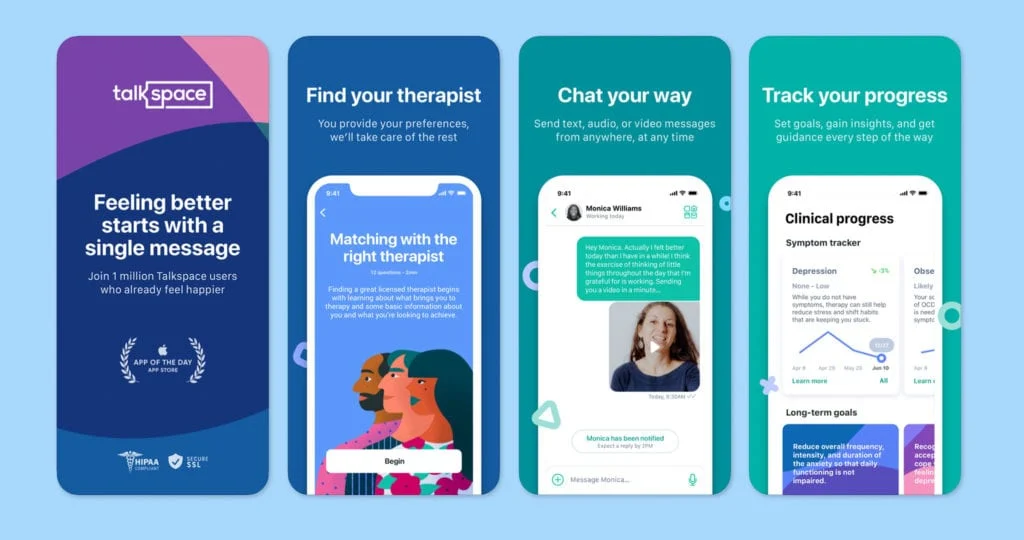
In today’s fast-paced world, stress and anxiety are part of daily life for many people. Finding mental health support has never been more important, but traditional therapy is often expensive and hard to access. That’s where technology comes in. Apps like Calm, Headspace, Wysa, BetterHelp, and Talkspace are helping millions of people take care of their mental health by offering tools like guided meditation, mood tracking, AI-powered chatbots, and even direct access to therapists.
Smartphones have made mental health care more accessible than ever. Mobile health apps offer a private and convenient way to improve mental well-being, breaking down barriers like cost, access, and stigma. There are now hundreds of thousands of health apps, with a significant number focused on mental health, and they’re popular with both users and clinicians. However, there are still concerns about security, privacy, and how effective these apps really are.
One of the most exciting developments in this space is the use of chatbots, AI-powered tools that allow users to have conversations about their mental health. These chatbots are available 24/7, creating a safe space for users to share sensitive information without fear of judgment. They can also provide immediate support when human connections aren’t available. But they’re not perfect. Sometimes their responses are too simplistic or even wrong, which can frustrate users. And while some people find chatbots comforting, others may rely on them too much, which could lead to feelings of isolation.
These tools have incredible potential, but there’s still room to improve. How can we design these apps to be even more effective? How do we make them feel personal and calming? Can design and artificial intelligence work together to create better tools for mental health support? These are the questions I’ll explore in this blog series, focusing on how thoughtful design, like intuitive layouts, smooth transitions, and calming animations, can make a difference. I’ll also look at how AI can act as a “digital companion” that provides personalized and empathetic support.
Central Research Questions
This project focuses on two key questions:
How can UX/UI design elements make mental health apps more calming and accessible?
What role can AI play in providing personalized and empathetic mental health support?
To answer these questions, I’ll look at how clear navigation and interactive features can help users feel more relaxed and supported. I’ll also explore how chatbots and AI systems can create a sense of trust and connection by feeling more human and empathetic. Finally, I’ll consider ethical issues, like protecting user privacy while using data to personalize the experience.
Why This Matters for Designers
Good design isn’t just about making something look nice, it’s about solving problems and improving people’s lives. Mental health apps are a great example of how design can make a real difference. Micro-interactions, like a gentle animation when you complete a task, can help users feel supported and motivated. These small touches might seem minor, but they create a sense of care and connection.
Colors also play an important role. Calming shades of blue and green can help users feel more relaxed, while warm tones, used sparingly, can create feelings of safety and comfort. Simplicity is key: clear, uncluttered layouts can help users navigate the app without feeling overwhelmed.
Information architecture – how content and features are organized, is another critical piece. A well-designed app might prioritize frequently used tools like mood tracking or journaling, while keeping other features easily accessible but out of the way. This reduces mental load and ensures users can focus on their well-being.
What makes this project especially exciting is the opportunity to design for emotional connection. It’s not just about functionality, it’s about creating an experience that feels personal and meaningful. With mental health challenges on the rise, designers have a chance to create tools that genuinely help people feel better.
Challenges I Expect to Face
Designing mental health apps comes with unique challenges. Personalization is essential, but it requires sensitive user data, which raises concerns about privacy and security. People need to feel confident their information is safe, so building trust is a top priority.
Another challenge is finding the right balance between simplicity and functionality. Apps need enough features to be useful, but too many can overwhelm users. Testing and user feedback will be crucial to getting this right.
The design also needs to avoid overstimulation. Too many animations, notifications, or bright colors can cause stress instead of reducing it. Ensuring the design feels calm and supportive is key.
Chatbots, while promising, present their own challenges. Poorly designed responses can frustrate users or even cause harm in a crisis. Making chatbots feel empathetic and reliable, while avoiding over-dependence, will require thoughtful design and testing.
Have you ever used ChatGPT to ask for advice or encouragement, like it’s a therapist? I have. It made me realize how much potential AI has to provide meaningful support. Mental health is something we all deal with at some point, and the idea of creating tools that make support more accessible feels deeply personal to me.
This project isn’t just about building an app, it’s about creating something that feels like a companion. A tool that understands what users need, offers comfort, and helps them feel calmer and more in control. Combining thoughtful design with AI to make a real impact on people’s lives is what excites me most about this project.
What’s Coming Next
In the upcoming blog posts, I’ll explore topics like color psychology and how specific colors can create calming digital environments. I’ll also dive into micro-interactions and how small design details, like animations and transitions, can make apps feel more intuitive and relaxing.
Another focus will be analyzing successful mental health apps, such as Calm, BetterHelp, and Wysa, to understand what makes them work. I’ll also look closely at the potential and challenges of chatbots, exploring how they can provide round-the-clock support while addressing their current limitations, like handling crises and overly simplistic responses.
The ultimate goal is to develop a foundation of ideas for creating mental health apps that blend thoughtful design with AI. These could include guidelines or even a prototype that shows how these ideas come to life in a practical, user-friendly way.
Sources
“BetterHelp | Professional Therapy With A Licensed Therapist.” BetterHelp. Accessed: Dec. 2, 2024. [Online.] Available: https://www.betterhelp.com/
“Calm – The #1 App for Meditation and Sleep.” Calm. Accessed: Dec. 2, 2024. [Online.] Available: https://www.calm.com/
“Headspace: Meditation and Sleep Made Simple.” Headspace. Accessed: Dec. 2, 2024. [Online.] Available: https://www.headspace.com/
M. D. R. Haque & S. Rubya. (2023). An overview of chatbot-based mobile mental health apps: Insights from app description and user reviews. JMIR mHealth and uHealth, 11, e44838. https://doi.org/10.2196/44838
M. Neary & S. M. Schueller. (2018). State of the field of mental health apps. Cognitive and Behavioral Practice, 25(4), 531–537. https://doi.org/10.1016/j.cbpra.2018.01.002
Es sollte eine Kunst-Ausstellung in Zusammenarbeit mit einem visuellen Künstler erstellt werden. Dabei soll den kreativen Prozess des Künstlers/der Künstlerin durch die Messung von Gehirnströme mittels EEG während der Entstehung seiner Gemälde beobachtet werden. Die EEG-Daten werden anschließend durch generative Designs in statische Grafiken übersetzt und als großformatige Drucke neben den jeweiligen Gemälden präsentiert, um den Besuchern einen Einblick in den kreativen Schaffensprozess zu geben. Ein interaktiver Teil ermöglicht es den Besuchern, selbst ein EEG-Gerät auszuprobieren und ihre Gehirnaktivitäten in Echtzeit als visuell ansprechende Grafiken zu erleben. Das Projekt verbindet Kunst und Technologie, indem es komplexe, dynamische biologische Daten in greifbare, visuelle Kunstwerke transformiert.
Diese Idee und Ausstellung fände ich auch persönlich sehr spannend. Jedoch bin ich sehr abhängig von einer zweiten Person, was ich erstmal vermeiden will. Ohne die zweite Person und der Ausstellung handelt es sich hauptsächlich um ein grafisches Projekt, in dem Gehirnströme Dargestellt werden. Finde ich interessant, jedoch habe ich die Befürchtung, dass hier im Laufe der Arbeit viel Wissen im Medizinischen/Neurologischen Bereich angehäuft wird. Mir ist jedoch sehr wichtig, dass ich in meiner Masterarbeit Fähigkeiten in Bereichen vertiefe, die ich beruflich weiterverfolgen will.
Also kommt hier eine neue Idee
Idee ist die Entwicklung einer digitalen, interaktiven Galerie in Form einer Web-App. Diese Galerie wird als Plattform dienen, auf der selbst entwickelte interaktive Kunst- und Designexperimente präsentiert und von den Nutzern entdeckt werden können. Der Schwerpunkt liegt dabei auf visueller Kreativität und Animation. Die “digitale Galerie” würde eine Sammlung von Animationen und Designexperimente beinhalten, die mithilfe von Tools wie p5.js, Processing, Canvas.js und Greensock realisiert werden. Besucher der Website haben die Möglichkeit, in Echtzeit mit den Animationen zu interagieren und verschiedene visuelle Effekte zu erkunden. Die Galerie könnte kontinuierlich erweitert werden, indem neue Projekte und kreative Experimente hinzugefügt werden.
Forschungsfrage: “Wie können interaktive Web-Anwendungen, die auf visueller Kreativität und Animation basieren, das Benutzererlebnis verbessern und zur Erkundung künstlerischer Inhalte anregen?“
Eingrenzung: Das Projekt könnte sich speziell auf die Frage konzentrieren, wie Nutzer durch interaktive visuelle Elemente in Echtzeit mit den Inhalten interagieren. Dies könnte untersucht werden, indem verschiedene Arten von Animationen und Interaktionen (z. B. Mausbewegungen, Klicks oder Gesten) getestet werden, um herauszufinden, welche Designs die Benutzer am stärksten einbinden. Darüber hinaus könnte das Thema auf den Einsatz bestimmter Technologien wie p5.js und Greensock begrenzt werden, um deren jeweilige Stärken im Hinblick auf kreative Coding-Experimente und Animationen zu erforschen.
Aber ich bin noch nicht wirklich zufrieden mit dem Thema, bzw. brauche ich noch konkreten Kontext oder eine spannendere Forschungsnische. Darum geht die Suche nach einer Idee weiter. Momentan sind mich noch folgende Varianten von dieser Idee eingefallen:
Genauere Verfeinerung
Psychologische Wirkung von Web-Animationen
Forschungsfrage: Wie beeinflussen visuelle Stile und Interaktionsmöglichkeiten die Wahrnehmung von Animationen im Web?
Ansatz: Experimentieren mit unterschiedlichen visuellen Stilen (z. B. minimalistisch, überladen) und untersuchen, wie diese die Aufmerksamkeit und das emotionale Erlebnis der Nutzer beeinflussen.
Forschungsfrage: Inwiefern unterscheiden sich Nutzererlebnisse zwischen statischen Designs und dynamischen, interaktiven Animationen?
Ansatz: Erstellung von zwei Versionen der Galerie (statisch und dynamisch) und A/B-Tests durchführen, um die Auswirkungen auf Engagement und Nutzerzufriedenheit zu messen.
Forschungsfrage: Welche Interaktionstypen (z. B. Mausbewegung, Touch, Gesten) fördern das Engagement mit animierten Webinhalten?
Ansatz: Implementation von verschiedene Interaktionsmöglichkeiten und Tests, welche Art von Input (z. B. Gestensteuerung vs. Maussteuerung) zu mehr Engagement und positiverem Feedback führt.
Ich fände es auch spannend, die einzelnen Unterseiten an weibliche Künstlerinnen der Geschichte zu widmen und den jeweiligen Stil an ihre Kunst anzulehnen. Also „moderne, digitale Kunstgalerie zur Representation von Künstlerinnen der Geschichte“ zu erstellen.
Forschungsfrage: Wie können interaktive, digitale Kunstgalerien genutzt werden, um das Bewusstsein für die Werke und den Einfluss weiblicher Künstlerinnen der Geschichte zu fördern und die Nutzererfahrung zu bereichern?
Ethik und Inklusion: Bewusst auch weniger bekannte Künstlerinnen, insbesondere aus unterrepräsentierten Regionen oder Communities.
Designvielfalt: Experimente mit der Frage, wie sich klassische Kunststile in ein digitales Medium übersetzen lassen, ohne ihren Charakter zu verlieren.
Dieses Thema ist allgemein wichtig, weil weibliche Künstlerinnen in der Kunstgeschichte oft übersehen oder marginalisiert wurden, obwohl sie einen bedeutenden Beitrag zur kulturellen und kreativen Entwicklung geleistet haben. Als kreative Feministin ist es mir natürlich besonders ein Anliegen.
Public spaces like parks, squares, and plazas are essential to urban life. These areas should offer opportunities for relaxation, escaping the busy city life and connection with others. But, most of the time people are for themselves, lacking meaningful interactions. This phenomenon is particularly striking in urban neighborhoods, where anonymity is growing, and the sense of community is shrinking. However, several studies have shown that belonging to a community has a positive effect on people’s mental and physical health (Cramer, Pawsey 2023), (Kitchen, Williams, Chowhan 2011). Baumeister and Leary (1995) describe belonging even as a fundamental human motivation.
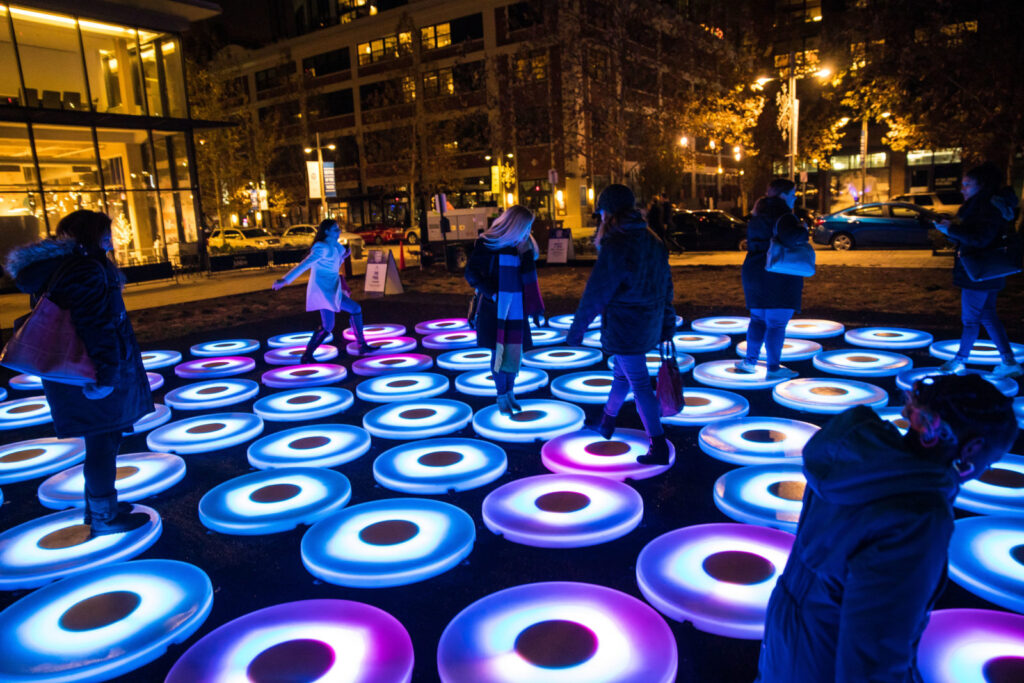
Therefore, the research investigates if interactive installations have the potential to transform the public space into an environment that breaks the social isolation by creating playful experiences that invites people to interact with the installation itself and create a space that encourage social engagement. Can such shared experiences between different people of different background and ages help to strengthen the sense of belonging, strengthen the community and connection within a neighborhood and create a space where people come together?
Personal motivation I am living in a new neighborhood with a great nice park as the center of it, which actually could be a great place of community and interactions. However, the park is rarely used by residents of the neighborhood, primarily due to its lack of amenities. Only few weeks ago few benches were installed, but overall, the space remains largely uninviting.
Next steps In the next step, I would like to take a closer look at urban design with a focus on public spaces. How are they defined and what must be considered when constructing a public space. I also want to focus on the social dimensions of public spaces. In the second part of research I will dive deeper into the design aspect. That includes learning about interactive installations, the different types available, tools and methods used to create them and studying best practices.
Bringing all these topics into a cohesive concept and finding a type or direction for interactive installations that can be universally used in different public spaces, can be challenges during this research.
Literature K. M. Cramer and H. Pawsey, „Happiness and sense of community belonging in the world value survey“, Current Research in Ecological And Social Psychology, Bd. 4, S. 100101, Jan. 2023, doi: 10.1016/j.cresp.2023.100101.
P. Kitchen, A. Williams and J. Chowhan, „Sense of Community Belonging and Health in Canada: A Regional Analysis“, Social Indicators Research, Bd. 107, Nr. 1, S. 103–126, März 2011, doi: 10.1007/s11205-011-9830-9.
Baumeister, Roy F. and Leary, Mark R., “The Need to Belong: Desire for Interpersonal Attachments as a Fundamental Human Motivation”, Psychological Bulletin 1995, Vol. 117, No. 3, 497-529
In this blog, I will research the ways of extending the perception of art in museums that can help emerge into art, understand the context and meaning of the work, and connect with the artwork, its time, and its artist on a deeper level. My initial idea of expanding interaction with art was only 3D scanning and printing in a way of presenting a reproduction of the original relief, color, and small details next to the original work. So that the audience could quite literally touch the art they consume and perceive it not only with sight but touch as well, that could be a way to open more interpretations, and emotions gained from art. However, I believe it could be not only touch but other senses involved. What if you could start hearing, feeling the temperature, tasting, and touching the already existing piece of art, that was previously only seen from far?
My motivation initially stemmed from my interest in visual art. As someone interested in painting, I find many small details of art fascinating, particularly the texture and relief of the paint. Usually, in galleries and museums, it is not allowed to approach a painting closely, let alone touch it. However, I believe it would be a truly wonderful experience to touch the artwork and feel the thick, rigid brushstrokes, droplets, and highlights with my own hands. This gave me the idea of recreating the relief of the original painting so that visitors could touch the art and feel a stronger connection with the artist who lived centuries ago. However, later I realised a bigger problem and respectively a bigger idea. It is not only about the interest in touching a piece of art but deeply immersed in the history and the context of art.
Studies have determined that the average time a person spends gandering at a piece in a museum is between 15 seconds and 30 seconds. That’s plenty of time to figure out what the image is attempting to represent (or not, if you’re looking at abstraction). But that’s not nearly enough time to fully experience the work. Given this fact, we should also consider the average attention span of the adult at this day and age, which is just 8. 25 seconds. Hence, it is not a rarity to see a person not willing to read a description of the art and to just look at it for a few seconds. Sometimes we can even see people not stopping once in a museum, sometimes we see bored public yawning while listening to a guide, sometimes there are no guides or descriptions at all, only art behind a barrier and glass.
In fact, a large number of people are interested in art and want to visit different cultural sites. Of course, the percentage depends on cultural, educational, and personal factors, but the study’s 2017 edition, based on answers from 27,969 respondents, found visual and performing arts attendance overall up by 3.6% since 2012, with 132.3 million U.S. adults (53.8% of all U.S. adults) attending a visual or performing arts activity at least once in the previous year. However, a deeper understanding of art is available for visitors who have formal art education or deep familiarity with art history, the majority engage at a surface level. One of the main problems of an existing barrier to understanding is a lack of accessible or engaging information. Thinking about a younger audience we can more prominently point out the fact that they need more interactivity and technology in museums.
So what are the existing tools in museums that help get into the history and the context of the specific artwork? Let’s start with the most trial and common ones: information panels, audio guides, guided tours, talks, brochures, and booklets. Relatively new ways to explore art in museums – online databases, interactive maps online on museum apps and websites, social media posts, quizzes, and treasure hunts. Also thematic installations and interactive technologies such as AR, VR, and Interactive displays. I would like to focus on the last two categories and start a deeper research on them.
In the upcoming posts, I would like to first understand a little bit about how people behave in museums and how they perceive art in museums. Later I need to learn about the existing experiences of museums incorporating interactive technologies and analyse their success or errors. I would like to understand the technology of 3D scanning and printing, in which museums is this embodied and how and what lessons can be learned from their experience. Apart from 3d, there are plenty of other ways to interact with the public that must be studied in this blog. The question is why these tools are not widespread in the museums, how can they be enhanced to bridge the gap between seeing and understanding art?
Keeping up with doctor’s appointments, scheduling, looking for printed medical findings from 2 years ago, these are all outdated processes everyone still deals with. With online portals like ELGA, the Austrian Government has started the process of digitizing the Austrian Healthcare system. Still, there is room for improvement.
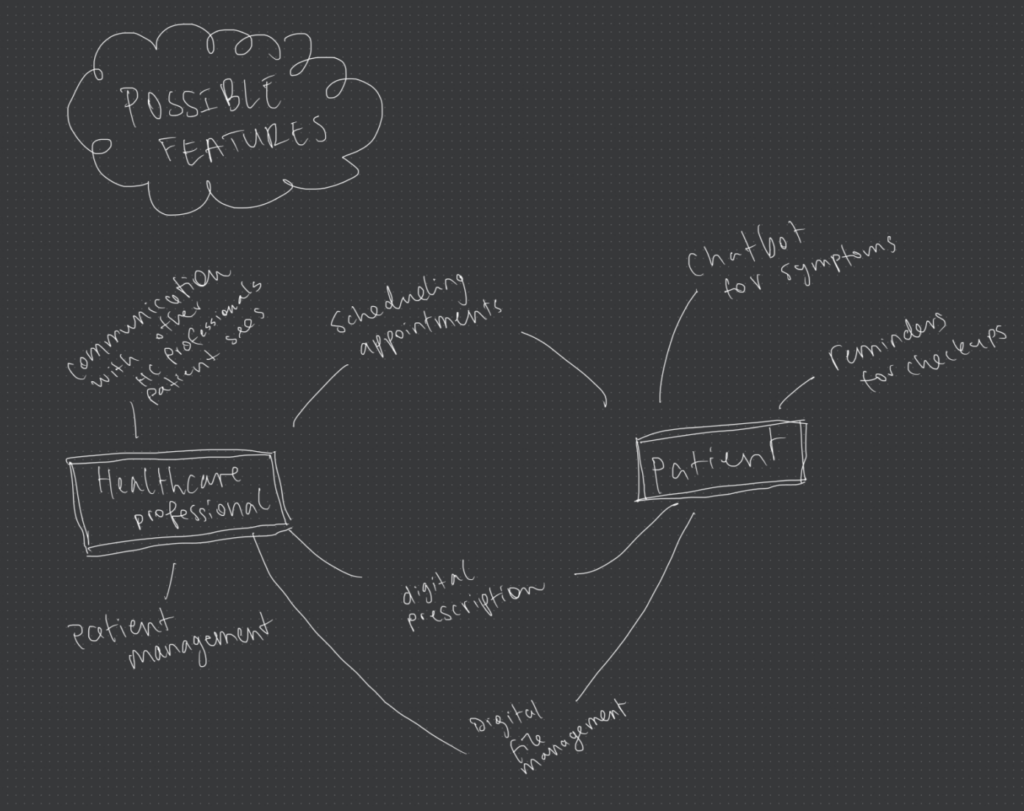
This thesis explores the rollout of a national health administration tool designed to streamline processes, improve data accessibility, and foster better communication among healthcare providers and patients. An all-in-one tool, where patients and healthcare professionals can communicate, confidently share information, and – most importantly – prioritize the patient’s health efficiently.
A key focus of this thesis is to investigate whether patients are willing to embrace digital health tools within the national health administration framework, particularly given the sensitive nature of health-related topics. By conducting surveys and interviews, the research will assess patient attitudes, digital literacy, and perceived barriers to adoption.
The main challenge here is to fit the needs of a extremely broad user group. The needs and pain points of the healthcare professional and the side of the patient will be examined in order to find out wether or not such a tool could be realistic, or if the concerns data privacy outweigh the benefits.
In this blog I would like to identify best practices, challenges, and opportunities for creating a more efficient and user-centered health administration system.
Personal Motivation
I’ve always struggled with keeping up with medical appointments, as I’m sure most of you do. After I moved to Graz in October and faced the challenge of finding new doctors I was shocked at how difficult it is to find a doctor (in various fields) that takes new patients.
I was wondering how mortality rates could be tied to the challenges of getting regular medical checkups and found this study that confirmed my hypothesis (McQueenie, 2019): Missed appointments are a major indicator of all-cause mortality, especially among individuals with mental health issues. Current primary healthcare appointment systems fail to effectively address the needs of these patients. Therefore, future interventions must prioritize strategies to enhance attendance to regular doctor’s appointments.
My plan is to further investigate the touchpoints we have with the health care system and find difficulties and challenges. I would also like to ask around in my friend group (kind of like a informal mini survey) to see if they agree that this is an issue and what they find challenging so I can see what other topics I should focus on.
eHealth Strategie Österreich https://www.sozialministerium.at/Themen/Gesundheit/eHealth.html Powell, John & Arvanitis, Theodoros. (2015). Welcome to the Digital Health revolution. Digital Health. 1. 10.1177/2055207614561571.
Joaquin, J. G. (2023). Designing for health: A guide to health and wellness technology.
Hartlep, M. (2015). Durchblick trotz Wolke: Verwaltung von osteopathischen Praxen per Software. https://doi.org/10.1016/S1615-9071(15)30011-3
Klauber, u. a. Krankenhaus-Report 2019 : Das digitale Krankenhaus.https://permalink.obvsg.at/fhj/AC15332383
McQueenie R, Ellis DA, McConnachie A, Wilson P, Williamson AE. Morbidity, mortality and missed appointments in healthcare: a national retrospective data linkage study. BMC Med. 2019 Jan 11;17(1):2. doi: 10.1186/s12916-018-1234-0. PMID: 30630493; PMCID: PMC6329132.