Sustainability in Climbing Board Design: Materials, Energy, and Durability

Climbing gyms and tech-enhanced climbing boards are at the heart of modern bouldering culture. However, the materials, energy demands, and disposability of these systems can have significant environmental impacts. As the sport continues to grow, adopting sustainable design practices in climbing board creation is essential to reduce waste, conserve energy, and protect the planet. This blog explores how sustainable materials, energy efficiency, and durability can help make climbing boards more eco-friendly without compromising usability.


Sustainable Materials for Climbing Boards

One of the simplest ways to make climbing boards more sustainable is by focusing on the materials used in their construction. Sustainable materials can significantly reduce the carbon footprint of gym equipment:

  • Recycled or Renewable Materials: Using reclaimed wood or recycled plastics for board structures and climbing holds minimizes waste. Renewable options like bamboo are both lightweight and durable, making them ideal for climbing walls.
  • Non-Toxic Finishes: Avoiding toxic adhesives, paints, or sealants protects both the environment and climbers. Opting for low-VOC (volatile organic compound) finishes ensures a safer gym environment and reduces harmful emissions during production.

By integrating eco-friendly materials into climbing board designs, manufacturers can create products that support environmental sustainability without sacrificing quality.


Energy Efficiency in Tech-Enhanced Boards

Tech-heavy climbing boards, such as those equipped with LED lighting or AR projection systems, often consume significant amounts of energy. Reducing energy use in these systems is key to sustainable gym practices:

  • Low-Energy LEDs: Using energy-efficient LED systems with smart dimming features can cut power consumption without compromising performance. LEDs that only light up the holds being used can further optimize energy use.
  • Solar-Powered Solutions: Gyms in sunny climates could explore solar panels to power climbing boards or other equipment, reducing reliance on non-renewable energy sources.
  • Energy-Saving Projectors: For AR-enabled climbing boards, adopting projectors with low power consumption and longer lifespans reduces energy costs and waste over time.

Energy efficiency not only benefits the environment but also reduces operating costs for gyms, making sustainability a win-win.


Durability and Longevity

Durable climbing boards and holds are essential to minimizing waste and promoting sustainability. Designing for longevity ensures that equipment remains functional for years without frequent replacements:

  • Robust Materials: Holds made from high-quality, wear-resistant materials can withstand heavy use without cracking or degrading, reducing the need for frequent replacements.
  • Modular Systems: Boards designed with modular components allow gyms to replace or upgrade specific parts instead of the entire system. For example, individual LED panels or hold placements can be swapped out as needed, extending the board’s lifespan.
  • Maintenance-Friendly Designs: Boards that are easy to clean, repair, and maintain ensure that gyms can maximize their investment while minimizing waste.

Durable and modular designs save money, reduce material waste, and enhance the overall sustainability of climbing boards.


Conclusion

Sustainability in climbing board design is not just a trend; it’s a necessity. By prioritizing sustainable materials, energy-efficient technologies, and long-lasting designs, manufacturers and gyms can significantly reduce their environmental impact. These practices not only benefit the planet but also create cost-effective and durable solutions for climbing spaces.

Adopting eco-friendly practices in climbing board design ensures that the sport we love continues to thrive without compromising the environment. By making conscious choices today, we can help shape a sustainable future for climbing enthusiasts around the world.
#10 A Summary

Throughout my research, I have explored the complexity of the climate and biodiversity crises, uncovering both their vast scope and the challenges in addressing them. These crises are deeply interconnected, involving a multitude of factors such as land use, policy decisions, economic structures, and environmental conservation efforts. Understanding this complexity has been essential in identifying viable solutions. Given the broad nature of the problem, I needed a structured approach to navigate my inquiry, which led me to adopt a design-oriented perspective. By framing my research through the lens of design solutions, I had something to navigate by throughout the process.

I began by examining the role of major international organisations such as the United Nations, the World Wildlife Fund (WWF), and the Intergovernmental Science-Policy Platform on Biodiversity and Ecosystem Services (IPBES). These institutions play a critical role in shaping global responses to environmental challenges, setting policy frameworks, and guiding conservation efforts. However, despite their influence, many of the strategies implemented at the international level struggle with enforcement and accountability, often relying on voluntary commitments from nations and industries and a lot of financial support. This highlighted the need for systemic changes that go beyond policy declarations and focus on tangible, enforceable actions.

A significant focus of my research has been the political dimensions of the climate and biodiversity crises. While various policies have been enacted to curb environmental degradation, gaps remain in implementation, enforcement, and long-term commitment. Many policies prioritise economic growth over ecological stability, leading to continued environmental harm. The issue of land use exemplifies this challenge. Land-use change is currently the greatest driver of biodiversity loss, yet responsibility for managing and protecting nature is often diffuse and difficult to assign. This lack of clear accountability makes it difficult to implement lasting solutions, as economic and infrastructural interests frequently take precedence over conservation.

In seeking potential solutions, I explored alternative approaches such as the permaculture movement and regenerative agriculture. Both emphasize sustainable land management practices that restore ecosystems rather than deplete them. Permaculture focuses on designing agricultural and social systems that work in harmony with nature, while regenerative agriculture seeks to improve soil health, increase biodiversity, and create resilient farming practices. These methods demonstrate the potential for human activities to coexist with and even enhance natural systems. However, while promising, they require widespread adoption, supportive policies, and systemic shifts in agricultural practices to have a large-scale impact.

One of the most intriguing topics I have explored is speculative design and future-thinking as a means of addressing environmental challenges.

Large societal transformations are only possible if humanity gets better at imagining and envisioning positive futures

(Corc, et. al., 2023)

Unlike conventional solutions that react to existing problems, speculative design allows for the exploration of potential futures, considering how societies might evolve in response to climate change and biodiversity loss. Future-thinking integrates interdisciplinary knowledge, systems thinking, and design methodologies to anticipate long-term outcomes and create visionary solutions.

Future-thinking offers several advantages in tackling environmental crises. First, it enables proactive rather than reactive decision-making, allowing policymakers, designers, and communities to plan for multiple scenarios. Second, it encourages holistic solutions that consider ecological, social, and technological dimensions simultaneously. Finally, it fosters creativity and adaptability, which are crucial for addressing the unprecedented challenges posed by climate change and biodiversity loss.

Another factor that makes this method superior, is that scenario based future-thinking, can create such immersive and strong future-scenarios that can impact and appeal to the audience in a much stronger degree than other methods. An since value-change and understanding from the audience is what true transformation needs, it is a important factor to take into account.

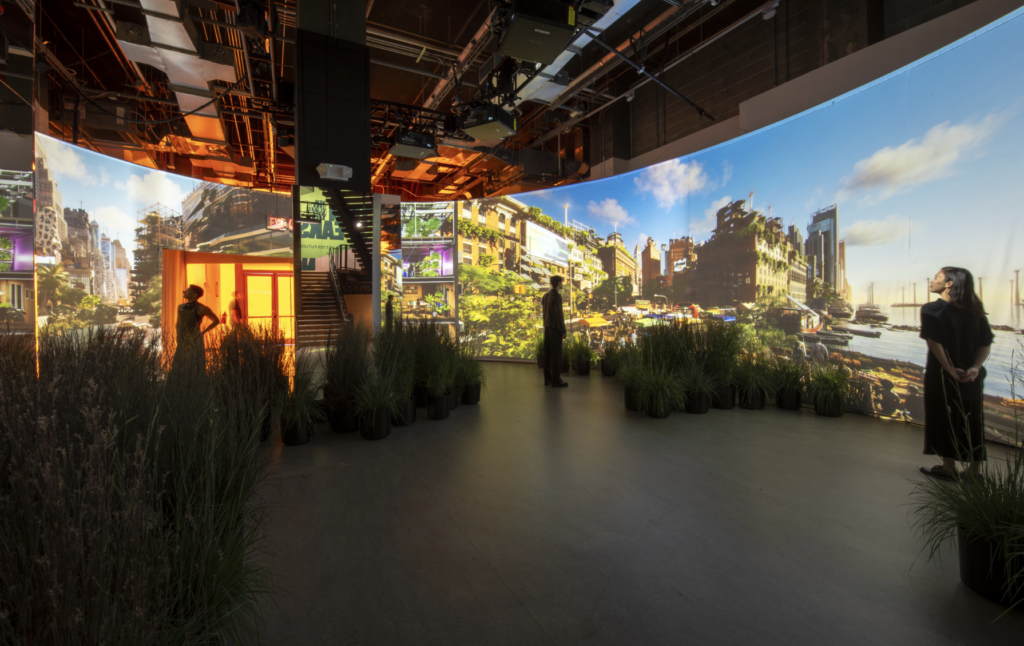
A company called Superflux, makes immersive, real built scenario exhibitions about the future – which allows the audience to use all their senses and truly feel what the future can bring

In a TED Talk “Why We Need To Imagine Different Futures”, the CEO Anab Jain says (Superflux, 2009, 6:30):

One of the most powerful tools for driving change is allowing people to experience the future consequences of their actions today

Anab Jain, CEO of Superflux

From a design perspective, future-thinking is particularly compelling because it provides a framework through which I can contribute meaningfully. Rather than being confined to mitigating existing damage, I can use design to imagine and construct sustainable futures. This might involve creating resilient urban environments that incorporate nature, developing innovative materials and technologies that reduce environmental impact, or designing policies and infrastructures that prioritize ecological health. By merging speculative design with real-world applications, future-thinking allows for the integration of visionary ideas with practical implementation.

As I conclude this phase of my research, I recognise that future-thinking is the most promising and encompassing solution I have encountered. It not only addresses the immediate and long-term challenges of climate and biodiversity crises but also provides a structured, design-oriented methodology that aligns with my expertise. However, this realisation is only the beginning. Moving forward, I intend to dive deeper into the field of future-thinking, exploring its applications in environmental policy, urban planning, and ecological restoration. By continuing this research, I hope to contribute to the development of innovative strategies that bridge the gap between imagination and action, ultimately shaping a future where nature and human progress coexist harmoniously.


Sources:

Cork, S., Alexandra, C., Alvarez-Romero, J.G., Bennet, E.M., Berbés-Blásquez, M., Bohensky, E., Bok, B., Constanza, R., Hashimoto, S., Hill, R., Inayatullah, S., Kok, K., Kuiper, J.J., Moglia, M., Pereira, L., Peterson, G., Weeks, R. & Wyborn, C. (2023). Exploring Alternative Futures in the Anthropocene. Annual Review of Environment and Resources, 48, 25-54. Swinburne University of Technology. Retrieved from https://www.annualreviews.org/content/journals/10.1146/annurev-environ-112321-095011

Superflux. (2017, 19. juni). TED Talk: Why We Need To Imagine Different Futures [Video] Superflux. Retrieved from https://superflux.in/index.php/ted-2017-the-future-you/#

9. Affordances Uses

APPLICATIONS IN INTERACTIVE DESIGN

Affordances are a cornerstone of user experience (UX) and interaction design, as they guide users on how to interact with objects, interfaces, and environments. The goal is to make these interactions intuitive by aligning design elements with users’ expectations and capabilities.

Visual Affordances: Visual cues, such as arrows, color contrasts, or animations, can suggest how to interact with an interface or environment.
In an interactive video mapping installation, glowing pathways might afford movement, while pulsating shapes suggest touch or interaction.
Tactile Affordances: Haptic feedback can reinforce perceived affordances.
A vibrating surface in an interactive installation can signal that it affords touch or proximity.
Auditory Affordances: Sound can provide additional clues about action possibilities.
A rising tone accompanying a visual projection can suggest that a user should raise their hand or move upward.
Dynamic Affordances: In interactive environments, affordances can change in response to user actions.
A visual pattern that spreads outward when touched signals that further interaction is possible.

APPLICATION IN IMMERSIVE EXPERIENCES

In immersive environments like video mapping, interactive exhibitions, or installations, affordances help bridge the gap between users and the system by making interactions natural and engaging. By designing elements with clear affordances, users are encouraged to explore the space and interact. For instance, a visual element that brightens as users approach affords proximity and engagement.
Dynamic affordances are often used in projection mapping to guide user behavior. For example, footsteps that trigger ripple effects in projections afford walking, exploration, and movement. Affordances can guide users through a narrative. For example, a glowing doorway in a visual environment might afford passage and signify the transition to the next part of the story.

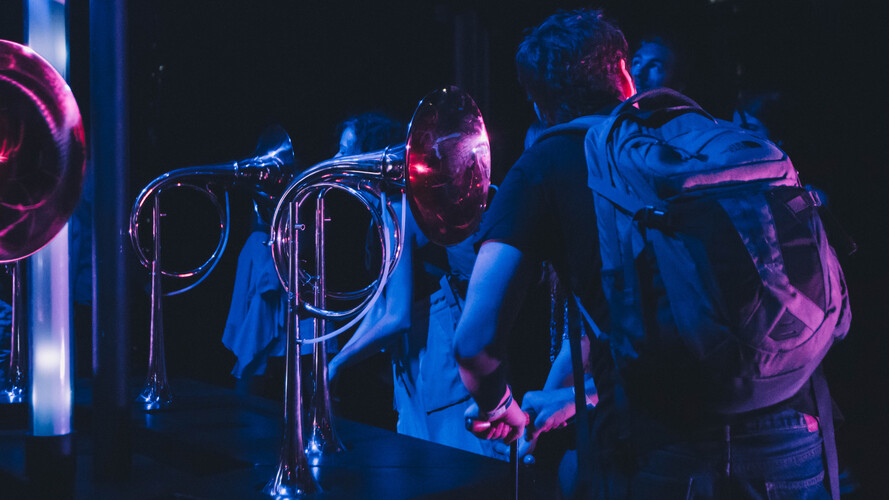
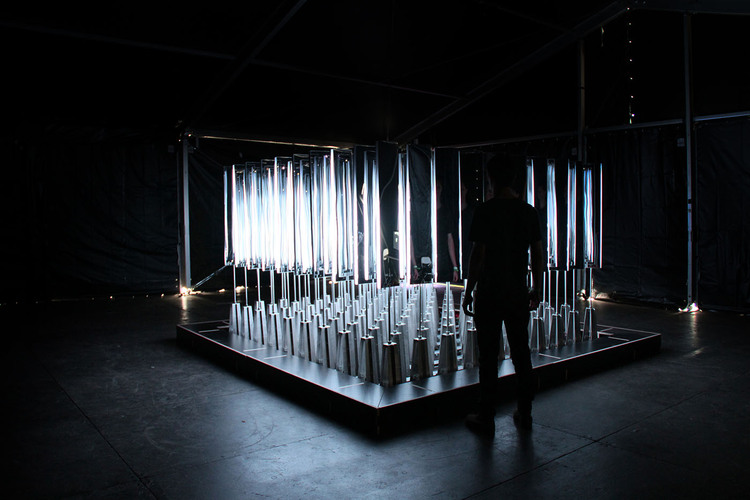
“Volume” is an interactive cube of responsive mirrors that redirect light and sound to spatialize and reflect the excitement of surrounding festival goers.

“Dream Machine” piece was a “multi-sensory scent organ” connected to a network of bicycle pumps that spray scents into the air. Festival-goers can experience a range of human emotions by playing the organ, which activates smells, sound and light to communicate feelings such as contentment, sadness, fear, anger, disgust and shame

CHALLANGES WITH AFFORDANCES

It’s important to keep in mind what the challenges of affordance can be, too many in one environment can overwhelm users, making it unclear where to focus attention or how to interact. Think of a multi-sensory installation, conflicting visual, auditory, and tactile affordances might create confusion. Affordances can be misinterpreted based on cultural contexts, for instance gestures or symbols that afford interaction in one culture might not be understood in another. Beware of misleading users with false affordances, this can result in frustration and disengagement.

8. Affordances

Affordances, a concept originally introduced by James J. Gibson and expanded upon by Don Norman, are central to understanding how we interact with objects, environments, and systems. Diving deeper into affordances involves exploring their origins, types, applications, and implications, particularly in the context of interaction design, audiovisual environments, and immersive experiences.

THE CONCEPT OF AFFORDANCES

In Gibson’s “The Ecological Approach to Visual Perception“, affordances refer to the action possibilities that an environment or object offers to an organism that perceives and behave, that is to say, animals. As an example: A chair affords sitting because its surface is flat and elevated and stairs affords climbing because of its shape and spacing.

Gibson emphasized that affordances exist independently of perception—they are inherent in the object or environment. Whether or not an individual recognizes an affordance depends on their ability to perceive and act upon it.

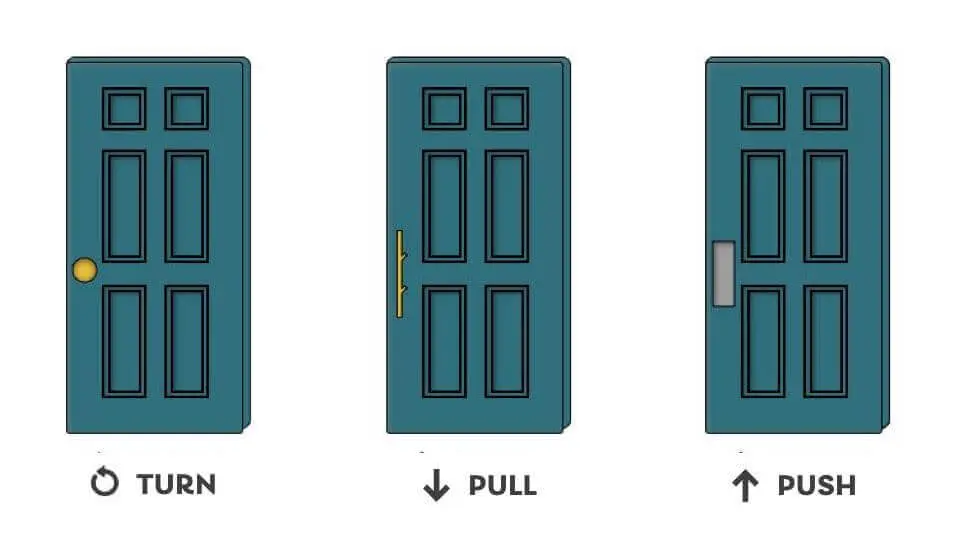
Norman, in “The Design of Everyday Things“, narrowed this concept to perceived affordances, focusing on how design can make these action possibilities obvious and intuitive. A door with a pull handle affords pulling because of the way the handle is shaped and positioned.

TYPES OF AFFORDANCES

Physical Affordances: These are based on the physical properties of an object or environment.
A button affords pressing because it protrudes and can be pushed.
Perceived Affordances: These rely on visual, auditory, or tactile cues that signal how to interact with a object or system.
A glowing touch screen affords interaction by signaling its active state.
Hidden Affordances: These are affordances that exist but are not immediately perceivable.
A touch-sensitive area on a wall projection may afford interaction, but without visual or auditory cues, users might not recognize it.
False Affordances: These occur when an object suggests an affordance that it does not actually provide.
A decorative handle on a door that does not open but looks like it should be pulled.
Cultural Affordances: These are shaped by cultural norms and user expectations.
Red often signals danger or stop in Western cultures, while it may have different meanings in other cultural contexts.

#09 Using future visions to change the world

Before I begin, soundtrack of this post: I´d love to change the world – Ten Years After

Now that I have researched a whole lot of different aspects of the interconnected nature- and climate crisis, I need to look deeper what some of the solutions can be. What are the most efficient ways to create real change? And in this context? Understanding and imagining solutions for societal-scale decision-making is a complex challenge, often called a wicked problem. This complexity arises from the diverse ways people perceive the issues and the uncertainty of decision outcomes. It is also difficult to bring people together at the right scale to reach a shared understanding. Trying to find the answer to this, I have come across Speculative Design and Future Thinking– something that may show it self to be the tools I (/we) need.


Speculative Design explores future possibilities and societal impacts of emerging technology and shifting cultural and social trends, diverging from traditional design to provoke new thought, debate, directions, preferences, and strategy (Neeley, 2024).

Futures-thinking is a diverse scholarship and practice, drawing on multiple disciplines across the sciences, arts, and humanities, that explore the nature of change, how humans conceive of futures, the range of possible (not just probable) futures, and how alternative futures might emerge (Corc, et. al., 2023).

Anthropocene refers to the period since the 1950s, which has seen exponential increases in human impacts on global ecological systems, with implications for the nature and quality of life, across all societies (Corc, et. al., 2023).


Speculative design is an approach that explores possible futures by using design as a tool to imagine and provoke thought about what could be. Unlike traditional design, which focuses on solving existing problems, speculative design pushes boundaries by addressing “what if” scenarios. It challenges assumptions and opens up discussions about potential futures. Speculative design often combines elements of storytelling, critical thinking, and visual representation to create thought-provoking and immersive artifacts, experiences, or scenarios.

The article Exploring Alternative Futures in the Anthropocene on future-thinking was published by a group of scientist by the Swinburne University of Technology about “[…] cognitive, cultural, and institutional constraints on the societal uptake of futures-thinking” (Corc, et. al., 2023). The authors´ objective was to “[…] help newcomers to futures-thinking make sense of what has been happening in scholarship and practice and to encourage existing participants to reflect on past and recent developments”. Therefore, this article is the perfect way into the topic of speculative design.

These scientists, claim that the two critical requirements for transformative change are:

  1. The cognitive and/or institutional capabilities for understanding and acknowledging humanity’s current predicament (i.e., the relationship between people and the planet).
  2. The capabilities to imagine new futures—ones involving possibilities not encountered before—and the possible pathways toward achieving them

They also argue that these requirements are especially poorly developed across humanity, and are therefore also the key vulnerabilities of our era.

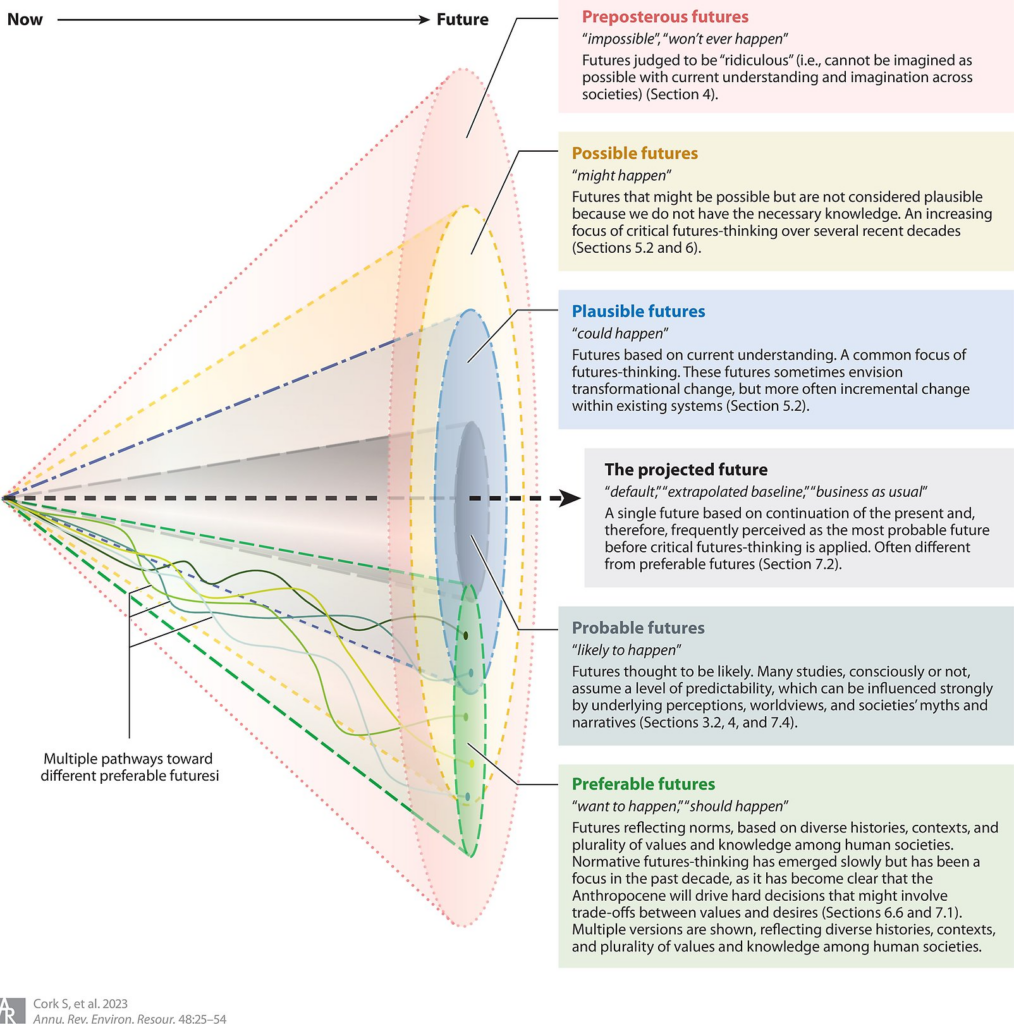
A “future cone”, showing the width of the different futures in front of us – but also the most probable ones (Corc, et. al., 2023).

The scientists summed up their article into 4 important takes:

  1. To achieve the transformations required to address Anthropocene challenges, societies need opportunities that bring a diversity of knowledge and perceptions together to seek shared understandings of current situations and to imagine what alternative futures might be possible, including radical ones never before imagined.
  2. Incremental adjustment within current paradigms and systems is no longer an option that will allow humanity to survive the Anthropocene, let alone achieve sustainable futures with high levels of human well-being and harmonious coexistence with other species.
  3. Lessons from more than seven decades, especially the past two, suggest that the diverse knowledge and expertise embodied in theories, philosophies, approaches, and methods for futures-thinking offer models for achieving the above, although coupling futures-thinking with mainstream decision-making and governance remains a challenge.
  4. Many cognitive, cultural, and institutional constraints on broad societal uptake of futures-thinking exist, but none are insurmountable once understood (Corc, et. al., 2023).

Transformative change is required to meet many of the challenges of the Anthropocene. To make this change happen, people need to better understand the present situation, strengthen their ability to imagine and share hopeful futures, and explore different ways to reach those futures. That is why speculative design or future-thinking will play a crucial role in the great shift that is needed. It will help bridge the gap between scientific data and public engagement by presenting future scenarios in an accessible and emotionally resonant way. Through these methods, we can imagine resilient cities, regenerative agriculture systems, and circular economies that prioritise ecological balance – and maybe start to believe that change is possible.

By using speculative design as a tool, I can challenge existing paradigms in the pursuit of environmental sustainability. Ultimately, speculative design is not just about imagining futures—it is about shaping them, and as a designer, this may be one of the most impactful contributions I can make to addressing the climate and nature crisis.


Sources:

Cork, S., Alexandra, C., Alvarez-Romero, J.G., Bennet, E.M., Berbés-Blásquez, M., Bohensky, E., Bok, B., Constanza, R., Hashimoto, S., Hill, R., Inayatullah, S., Kok, K., Kuiper, J.J., Moglia, M., Pereira, L., Peterson, G., Weeks, R. & Wyborn, C. (2023). Exploring Alternative Futures in the Anthropocene. Annual Review of Environment and Resources, 48, 25-54. Swinburne University of Technology. Retrieved from https://www.annualreviews.org/content/journals/10.1146/annurev-environ-112321-095011

Neeley, J. Paul. (2024, 19th of June). What is Speculative Design? School of Critical Design. Retrieved from https://www.critical.design/post/what-is-speculative-design

10. Summary and Conclusion

Preventing health problems before they happen is one of the best ways to stay healthy. However, many people don’t know much about preventive healthcare, which can help avoid serious diseases like heart attacks and strokes. The good news is that technology and design can help make preventive healthcare easier and more interesting for everyone.

In my blog posts, I explored how adding fun and engaging features, like gamification, can encourage people to take better care of their health. Gamification uses things like rewards, challenges, and progress tracking to keep people motivated. For example, fitness apps that give points for daily steps or health platforms that offer badges for completing check-ups.

One of the most important things we need to consider is how to make sure people’s personal health information stays safe. If we want people to trust and use healthcare apps, we must protect their data with strong security measures and clear privacy policies.

We also need to find the best ways to use gamification to promote healthy habits. Simple features like goal tracking and reminders can be very effective, while more complex systems might include personalized health challenges and rewards that fit each person’s lifestyle.

Building a healthcare platform that works for both doctors and patients can be challenging. It requires a balance between providing useful medical advice and keeping users engaged without overwhelming them. Some of the benefits of such a system include better communication with doctors, improved health tracking, and easier access to preventive care information. However, challenges include making the system easy to use and ensuring that it meets medical standards.

  1. What gamification strategies can make preventive healthcare more popular?

Strategies like setting achievable goals, offering rewards, using progress tracking, and providing social support can make preventive healthcare more engaging and encourage long-term commitment.

2. How can we ensure that people’s health data stays private and secure?

By implementing strong encryption methods, secure user authentication, clear privacy policies, and regular security audits, we can protect user data and build trust.

3. What are the benefits and challenges of creating a healthcare system that works for both patients and doctors?

The benefits include better communication, personalized health recommendations, and improved health monitoring. However, challenges involve ensuring ease of use, maintaining data security, and aligning with healthcare regulations.

Preventive healthcare has the power to save lives and improve well-being, but it needs to be more accessible and engaging for people. By using gamification and smart design, we can encourage healthy habits and make healthcare more enjoyable. The journey towards better preventive healthcare is ongoing, and with the right tools and strategies, we can create a healthier future for everyone.

A different approach – designing for loneliness

While traditional approaches to tackling loneliness often focus on creating opportunities for social interactions, there’s another, more surprising strategy gaining attention: designing public spaces that actively embrace and even encourage solitude. A paradoxical approach recognizes that many people experiencing loneliness don’t necessarily want to be surrounded by others but instead need environments that allow them to feel comfortable being alone. Being comfortable with being alone and even feeling lonely is important. Sometimes the feeling is inevitable and a vital part to identifying and overcoming loneliness is connecting with ones own emotional needs as it is connecting with others. Places that make this possible in a positive, comfortable and nonjudgmental way can therefore also play an important role in wellbeing, reflection and dealing with an at first uncomfortable feeling [3].

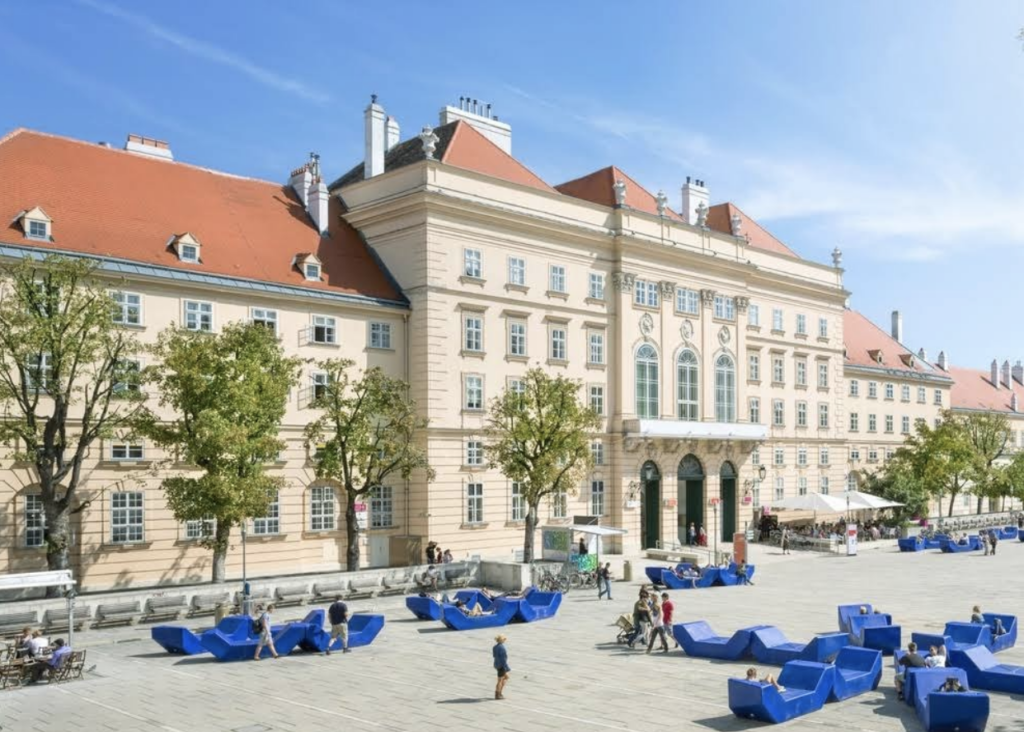
Often, urban spaces prioritize group interactions, leaving little room for those who prefer solitude. This can unintentionally send the message that being alone in public is unusual or even undesirable. However, small design tweaks can challenge that stigma. Take seating arrangements, for example. Public furniture designed for individuals – like single chairs rather than long communal benches – can make it feel normal and even inviting to spend time alone in public. The MuseumsQuartier in Vienna does this with its modular seating options that work just as well for one person as they do for a group, creating a more inclusive and flexible experience.
It’s not just about where you sit, it’s also about the atmosphere. Public spaces can be designed to provide opportunities for quiet moments, which are essential for helping people process their feelings of loneliness. Parks are a natural fit for this kind of design. Whether someone wants a solitary walk or a peaceful corner to sit and reflect, these kinds of environments offer options for both privacy and connection. Nature itself can also play a big role. Green spaces, dense vegetation, and the presence of birds or other wildlife add a sense of life and calm to a city. These features don’t just make urban spaces – they provide a way for people to connect with something larger than themselves. Studies have shown that access to green spaces is linked to lower feelings of loneliness, likely because they help clear the mind and create moments of quiet, personal connection with nature.
This idea of “paradoxical intervention” in design doesn’t just apply to solitude. It’s about embracing contradictions to create better experiences. By designing spaces that support both solitude and social interaction, we can serve different emotional and social needs in the same environment. It’s a shift away from rigid design concepts and toward more flexible, human-centered thinking.
Interaction design, too, has a critical role in this conversation. Thoughtfully designed technology can help foster meaningful connections in ways that feel organic and comfortable. For example, the concept of “cozy tech” has emerged as a way to create products that offer a sense of companionship. Devices designed with warmth and simplicity in mind, for instance, can provide emotional support in subtle ways. These tools aren’t about replacing human relationships but complementing them, making it easier for people to feel connected in their own way.
Ultimately, combating loneliness in cities requires a holistic approach – including rethinking public spaces, embracing solitude as a valid experience, and designing products that help people feel less alone. By integrating interventions and innovative interaction design into urban life, environments can be created that feel welcoming, inclusive, and human. And in doing so, we can take meaningful steps toward not just reducing loneliness, but reshaping how we think about connection and belonging in the first place [1,2].

Modular seating vienna

Sources

  1. L. Heu and T. Brennecke, “Making Space For Loneliness In Our Cities,” Next City, Oct. 21, 2022. https://nextcity.org/urbanist-news/making-space-for-loneliness-in-our-cities-design-research
  2. L. C. Heu and T. Brennecke, “By yourself, yet not alone: Making space for loneliness,” Urban Studies, vol. 60, no. 16, pp. 3187–3197, May 2023, doi: 10.1177/00420980231169669.
  3. “Knowledge on Loneliness — The Loneliness Lab | Loneliness in urban spaces,” The Loneliness Lab, Dec. 29, 2020. https://www.lonelinesslab.org/knowledge-hub

Designing for connection – Part 2

DESIGNING INTERACTION

In the previous post I have discussed what is important when designing the public space itself. Now it is also important to look at what aspects to consider and incorporate when designing interaction and human connection. To build successful products like installations or experiences that are meant to bring people together and create or nurture connection we must understand key elements that create connections between people.

Human connection comes from a mix of emotional, physical, and psychological factors, all of which can guide how we design interactions that bring people closer together. Physical touch is an important aspect – it releases hormones like oxytocin, reduces stress, and builds trust. Designs can for example use haptic feedback, like vibrations or warmth, to mimic touch or encourage real-life gestures and touch like handshakes or hugs [1]. Physical proximity also plays a big role – being near others naturally makes connection easier. Spaces that bring people closer, like small gathering spots can create more chances for spontaneous interaction. Similarly, eye contact creates intimacy and trust.
Shared experiences are also something that bring people together by creating a sense of belonging and togetherness. Things like group activities, team challenges, or even shared virtual spaces can help foster these bonds [2]. Another aspect that gives people a sense of identity and connection are rituals and traditions. This could mean designing recurring events or encourage and help the development of little rituals specific to an experience [3].
Active listening makes people feel heard and valued, and Emotional sharing deepens relationships when people feel safe enough to open up. Design ideas could include anonymous spaces for sharing or lighthearted prompts that encourage people to talk about their feelings [4].

WHAT DO WELL DESIGNED PLACES AND INTERACTIONS LOOK LIKE?
The Loneliness Lab is a „global collective of people and organizations on a mission to design connection in to the places where we live, work and play.“ They for example made a toolkit for tackling loneliness in areas for people involved in urban planning and helped create several projects and concepts addressing the issue.

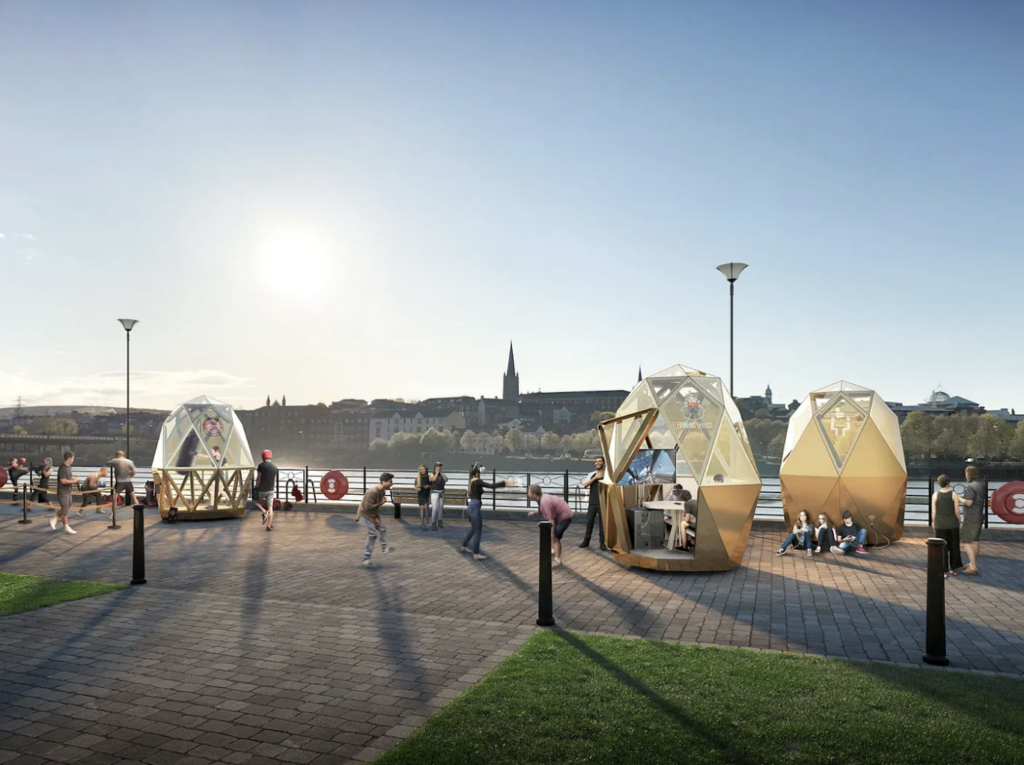
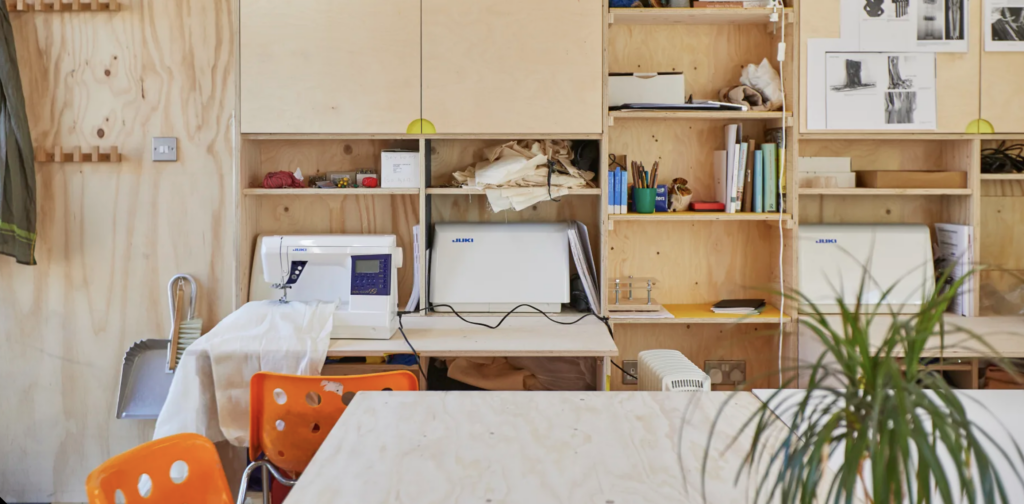
Designing public spaces that are inclusive, welcoming, and engaging can significantly impact social interactions and well-being. Accessible wayfinding, paths, and facilities ensure these spaces are available to everyone, especially those with disabilities or those who may feel excluded. Community-generated art empowers locals to reclaim and transform neglected spaces into safer, more inviting areas. Features like lighting, street furniture, and creative installations bring life to underused spaces, as seen in Derry’s pop-up meeting pods paired with mental health training, fostering connection and well-being. Temporary or “meanwhile use” spaces, such as Story Garden in London, allow communities to actively shape their environment while policymakers learn about long-term needs. Programs like this build creative skills and tackle local issues through collaborative projects. Lighting also plays a crucial role, it can help create a feeling of safety and encourage positive behaviors, as seen in Phillips’ LED installations, which extended children’s outdoor playtime and reduced device usage. A sense of place and identity strengthens connections between residents, businesses, and organizations. For example, “Elephant Says Hi!” unites over 30 groups in Elephant and Castle to create a welcoming environment for all. Thoughtful design, such as flexible seating, human-scale areas and elements, and moveable furniture, enhances the comfort of large spaces for both individuals and groups. Long-term administration is vital for sustainability, as demonstrated by the Gillett Square Partnership, which fosters ongoing collaboration to transform a once-deprived area into a vibrant community hub [5].
Further approaches from these ideas could also go more in the direction of installations and artistic displays, that follow a specific goal or have a specific message, for example creating awareness about the topic or making a statement.

Pods in Derry
Collaborative Creative Spaces in London

Source

  1. A. H. Tejada, R. I. M. Dunbar, and M. Montero, “Physical contact and loneliness: Being touched reduces perceptions of loneliness,” Adaptive Human Behavior and Physiology, vol. 6, no. 3, pp. 292–306, May 2020, doi: 10.1007/s40750-020-00138-0.
  2. V. Chung, R. Mennella, E. Pacherie, and J. Grezes, “Social bonding through shared experiences: the role of emotional intensity,” Royal Society Open Science, vol. 11, no. 10, Oct. 2024, doi: 10.1098/rsos.240048.
  3. D. Robson, “The secret to long-lasting connection? Shared rituals,” Dec. 30, 2024. https://www.bbc.com/future/article/20241218-michael-nortons-rituals-key-to-connection-family
  4. S. Myers, “Empathic Listening: Reports on the Experience of being Heard,” Journal of Humanistic Psychology, vol. 40, no. 2, pp. 148–173, Apr. 2000, doi: 10.1177/0022167800402004.
  5. “Knowledge on Loneliness — The Loneliness Lab | Loneliness in urban spaces,” The Loneliness Lab, Dec. 29, 2020. https://www.lonelinesslab.org/knowledge-hub

Designing for connection – Part 1

In the last blogposts I have established, that public spaces offer a great opportunity for design to combat loneliness. Concepts like Third Places provide and ideal starting point for designers to tackle the loneliness issue ans shape social networks.
Based on my current research I would say that designing against loneliness means designing for connection. But what is important when designing public spaces with the purpose of community building in mind? How do we design spaces to nurture connection? In the following I will take a closer look at design principles, guidelines and important aspects for spaces, installations and interactions and maybe even seemingly counterintuitive design approaches addressing the problem.

DESIGNING PLACES
Designing places to combat loneliness and foster connection requires thoughtful consideration of how we interact with our environment. Accessibility is the foundation, ensuring that spaces are inclusive, safe, and easy to navigate for everyone, such as parks, libraries, or pocket spaces (a micro space serving a function different to the room or area it’s located in) seamlessly integrated into neighborhoods. Creating spaces that feel welcoming also starts with comfort – designing environments that invite people to stay. Incorporating nature boosts mental health and also fosters sociability. Adding elements of activation, like strategically placed seating, amenities, and refreshments, brings energy and encourages interaction.
It’s also important to offer choice and flexibility. People have different needs – sometimes we crave stimulation, and other times we just want a quiet spot to rest. Spaces that adapt to these preferences are more likely to feel inclusive. Designing at a human scale (the proportion of space in relation to human dimension, eg. not making spaces too large or small) adds to this sense of comfort that naturally invite connection. A strong sense of place is equally essential. Spaces that reflect local culture and shared values signal belonging and create identity. Purposeful programming (placemaking), or giving a space a specific focus – like catering to a particular group with shared needs or interests – can lower barriers to connection. For example, a park designed with community gardening in mind brings people together over a shared activity, making it easier to strike up conversations and build connections [1,2,4]. The project “the loneliness lab” uses a metaphor to define the essential elements of place making. The physical environment is considered the „hardware“ (buildings, parks), the programming of these spaces is the „software“ (activities, events, services) and the policies and standards that bring people together and prevent loneliness are the „code“ [3].
Thoughtful integration of technology can also enhance these spaces, make them more accessible and extend the sense of community beyond the physical world. But technology should always support the space, not take over, and it needs to be used carefully so it doesn’t get in the way of the real human connections these spaces are meant to create. [2]

In practice this means understanding the unique needs of a community. Conducting a needs assessment helps identify gaps in existing spaces and uncovers the types of activities people value most. Collaboration is equally vital – partnering with local businesses, organizations, and community groups builds a support network that strengthens the foundation of these spaces. Securing funding through grants, sponsorships, and partnerships ensures their creation and long-term sustainability [2].
Third places are more than just physical spaces, they play a crucial role in reducing social isolation by encouraging meaningful connections and interactions. They also act as places for civic engagement, giving people opportunities to participate in and contribute to their communities. Beyond this, third places support well-being by providing spaces where people can relax, connect with others, and share experiences. They promote a sense of belonging, strengthen social bonds, and cultivate vibrant, inclusive communities [2].

SUCCESSFUL EXAMPLES

“Gathering place” in Tulsa is a concept of a park that offers a diverse amount of activities from learning and education to events and culinary experiences: „Gathering Place aims to serve as a cornerstone for our vibrant community while improving social, economic, and environmental sustainability in Tulsa.“
https://www.gatheringplace.org/


“The High Line” in New York used to be an old elevated abandoned railroad track and was transformed into a park and community space in the middle of the city. Ideas for dEsigns were created through contests by anyone who wanted to participate and much of it is therefore created by public participation. Most of it is supported by funding and it offers many activities from food, art, performance and nature: „The High Line is both a nonprofit organization and a public park on the West Side of Manhattan. Through our work with communities on and off the High Line, we’re devoted to reimagining the role public spaces have in creating connected, healthy neighborhoods and cities.“

https://www.thehighline.org/

The implications for interaction design projects could be developing design guidelines, such as workshops or a framework, to guide the creation of third spaces for urban planners, architects, community leaders or involved citizens. Another approach could be to create a platform that fosters the development of communities dedicated to designing third places tailored to their needs, thereby encouraging active citizen participation in urban planning.


Sources

  1. HKS Architects, “Healing Loneliness: Six Ways to design for Social Connection and Community | HKS Architects,” HKS Architects, Jun. 24, 2024. https://www.hksinc.com/our-news/articles/healing-loneliness-six-ways-to-design-for-social-connection-and-community/
  2. M. Abdelhamid, “Third place theory: creating community spaces,” Urban Design lab, Oct. 20, 2024. https://urbandesignlab.in/third-place-theory-creating-community-spaces/
  3. “Knowledge on Loneliness — The Loneliness Lab | Loneliness in urban spaces,” The Loneliness Lab, Dec. 29, 2020. https://www.lonelinesslab.org/knowledge-hub
  4. “Eleven Principles for Creating Great Community Places.” https://www.pps.org/article/11steps

7. Immersive Experiences in Social and Cultural Contexts

Immersive experiences that combine interaction design, video mapping, and visual design have the power to shape collective experiences that are not only visually stunning but also socially and culturally resonant. When these fields intersect, they can evoke emotions and foster connections in a way that mirrors the roles music has played in human history, such as group bonding, cultural expression, and social healing. Here’s how these visual technologies serve similar functions in social and cultural contexts:

GROUP BONDING AND SURVIVAL

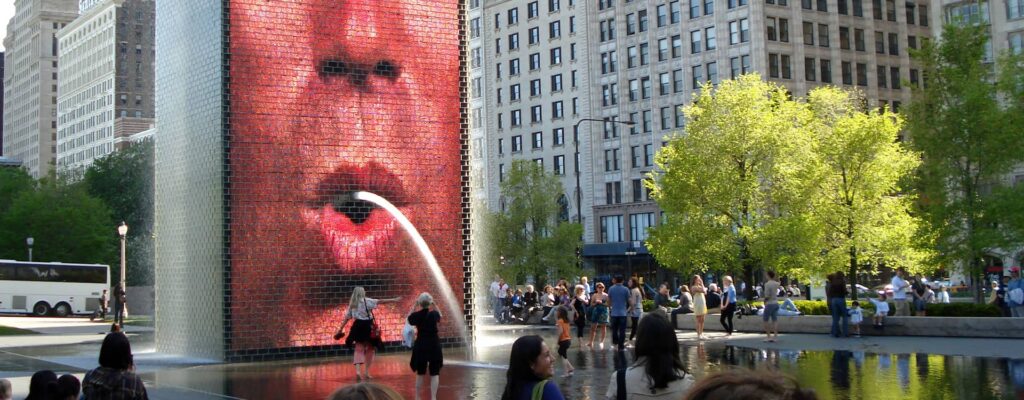
In immersive environments, visuals have the potential to act as a tool for fostering group cohesion, much like how music once played a role in aligning individuals within a group for survival. Through interactive visual experiences, people can engage together, share moments of awe, and feel united in a collective experience. For instance, large-scale projection mapping installations, such as those used during public festivals or social events, often transform shared spaces—like the sides of buildings or urban streets—into visually captivating environments. When these projections are designed to respond to the movement and actions of the group, they encourage communal participation, creating a sense of belonging and collective identity. This shared interaction can foster cooperation and unity, with participants feeling that they are part of something larger than themselves.

Crown Fountain in Millennium Park, Chicago. It incorporates multimedia technology into the fountain,but also “invites” passers-by to join the shallow pool, and water interaction.

CULTURAL IDENTITY AND COMMUNICATION

Immersive visuals also play a key role in reflecting and communicating cultural identities. Video mapping and interactive installations allow for the exploration of cultural symbols, historical narratives, and visual traditions, helping communities preserve and express their heritage in an engaging, modern context. This can take the form of interactive exhibitions that use projections to showcase traditional art or storytelling techniques, blending old and new forms of expression. These installations can serve as a platform for communities to communicate their stories, histories, and values in a way that resonates with both the present and the future. Visual design, through its ability to engage and captivate, creates a powerful space where cultural identity can be shared, celebrated, and explored by both local and global audiences.

MUSIC AND SOCIAL HEALING

Although this point primarily concerns sound, immersive visual environments also play an essential role in social healing and emotional restoration. Visuals have been used in therapeutic settings to calm the mind, reduce anxiety, and provide an outlet for emotional expression. For instance, in interactive art therapy or healing installations, participants might engage with immersive projections that change according to their movements or emotions, creating a dynamic, responsive environment that encourages introspection and emotional release. By interacting with visuals in these spaces, individuals can process their feelings, find calm, and experience a sense of healing. This type of visual interaction can also be used in public installations where the aim is to heal divisions within a community, creating spaces of reconciliation and connection.

Through projections, light, and motion design, immersive experiences can act as tools for emotional regulation and group healing, providing a shared space for personal and collective recovery. For example, projections of nature scenes, calming landscapes, or abstract visuals have been used in hospital rooms, therapy centers, or community spaces to help people relax, feel connected, and improve their mental well-being.