Affordances, a concept originally introduced by James J. Gibson and expanded upon by Don Norman, are central to understanding how we interact with objects, environments, and systems. Diving deeper into affordances involves exploring their origins, types, applications, and implications, particularly in the context of interaction design, audiovisual environments, and immersive experiences.
THE CONCEPT OF AFFORDANCES
In Gibson’s “The Ecological Approach to Visual Perception“, affordances refer to the action possibilities that an environment or object offers to an organism that perceives and behave, that is to say, animals. As an example: A chair affords sitting because its surface is flat and elevated and stairs affords climbing because of its shape and spacing.
Gibson emphasized that affordances exist independently of perception—they are inherent in the object or environment. Whether or not an individual recognizes an affordance depends on their ability to perceive and act upon it.
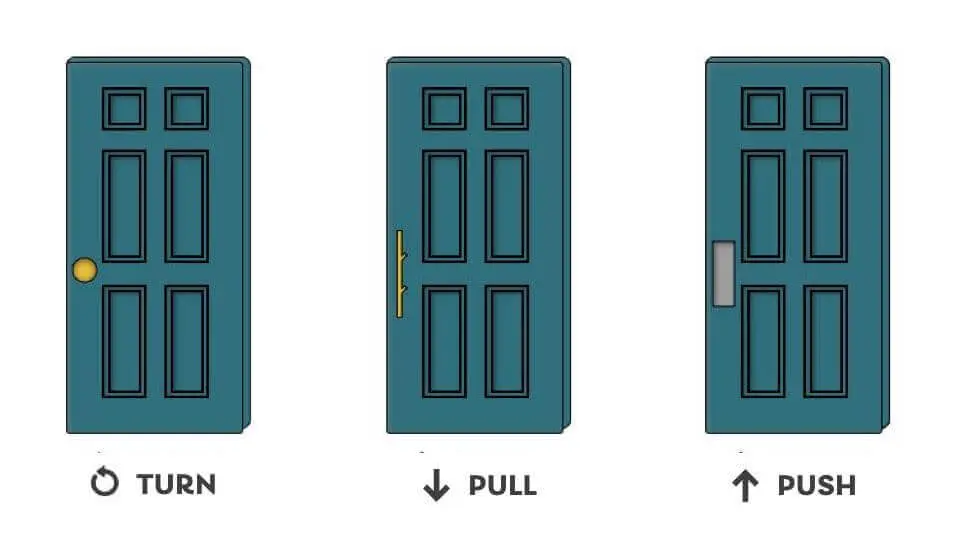
Norman, in “The Design of Everyday Things“, narrowed this concept to perceived affordances, focusing on how design can make these action possibilities obvious and intuitive. A door with a pull handle affords pulling because of the way the handle is shaped and positioned.
TYPES OF AFFORDANCES
Physical Affordances: These are based on the physical properties of an object or environment.
A button affords pressing because it protrudes and can be pushed.
Perceived Affordances: These rely on visual, auditory, or tactile cues that signal how to interact with a object or system.
A glowing touch screen affords interaction by signaling its active state.
Hidden Affordances: These are affordances that exist but are not immediately perceivable.
A touch-sensitive area on a wall projection may afford interaction, but without visual or auditory cues, users might not recognize it.
False Affordances: These occur when an object suggests an affordance that it does not actually provide.
A decorative handle on a door that does not open but looks like it should be pulled.
Cultural Affordances: These are shaped by cultural norms and user expectations.
Red often signals danger or stop in Western cultures, while it may have different meanings in other cultural contexts.
