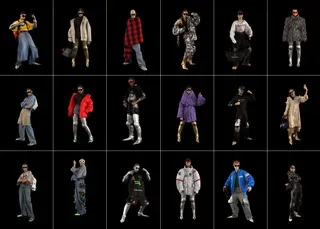
AR-Enhanced In-Store Experiences: Blending Physical and Digital Retail

With the changing environment in the retail industry, more physical store space is utilizing AR to deliver the common client’s engaging buying experiences. When most sales occur through the internet thanks to its accessibility, physical stores are using AR as the means to combine physical and virtual spaces in the most innovative ways seen before. Products such as AR mirrors, interactive displays, and virtual personal stylists represent the new generation in shopping technologies and are shifting the role of shopping into an interactive, engaging and dynamic experience.

Rise of AR in the Brick and Mortar stores.

Growth of e-commerce has proved very challenging to traditional retail stores or shops. As a result, most traditional retailers have gone further and adopted AR as a way of attracting people to come shop at their physical stores. AR aids these stores to provide experiences that cannot be attained online, which will make customers seek physical experience.

One of the ways that AR is boosting in-store actual substance shopping is through developing interactivity that is directing. AR which embeds digital content into the physical world makes it possible for consumers to read more about a product and how it will appear when brought home or even enable shoppers to buy clothes without having to use the trial rooms. Not only do these features add entertainment as well as functionality to the shopping process but they also address the recent and continuous trend for more bespoke marketing.

Further, through the help of AR technology, store is capable on giving recommendations based on the customer’s preferences in real time. Now whether through mobile applications or in-store layouts customers get prompt recommendations regarding their preferences increasing chances of a sale and enhancing total satisfaction. And I think that combination of digital with the physical touch point is crucial for the reactivation of the physical retail store environments (Clark and Johnson, 2023).

AR Mirrors: A Game Changer in Fashion Retail

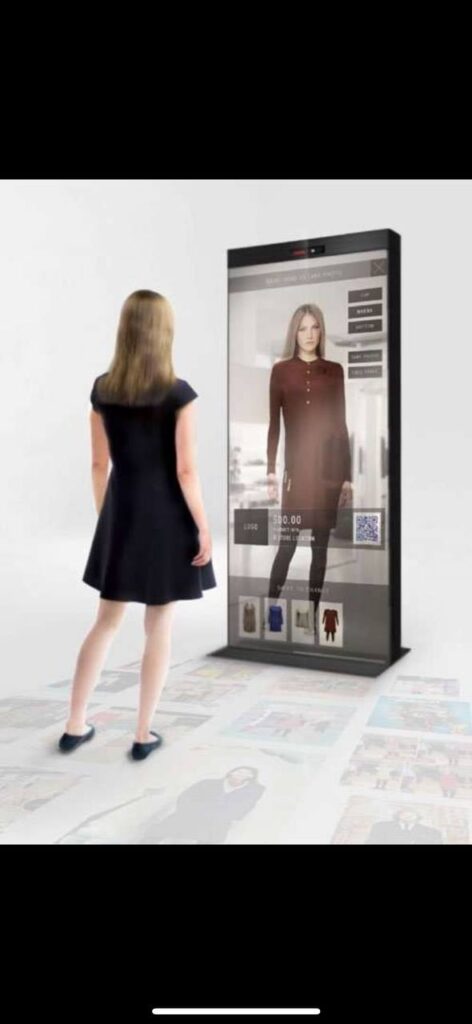
Another interesting use of AR in physical stores is the concept of the AR mirror in a store. Often referred to as ‘smart mirrors’ or the ‘virtual dressing rooms’, such gadgets help the clients understand how particular forms of clothing would fit them without having to put them on. With the help of the mirror interface users choose different garments, accessories and sometimes even makeup to see how such outfits will look in real life.

For instance, Zara and Neiman Marcus stores have incorporated the AR mirrors in their business Premise. Some of these mirrors come with cameras and sensors that display clothing that the customer can see in the mirrors and quickly go through the entire assortment. It quickens the shopping experience and keeps the inconvenience of going physically naked while dressing to dress and at the same time enabling customers to try different outfits on (Doe and Garcia, 2024). Moreover, regular AR mirrors are frequently accompanied by social sharing options to let the customers share their outfits with friends or post them on social media, all of which increases interaction.

They also have a critical role in enhancing diversity of body types. For instance, AR mirrors are convenient to use when selecting clothes since those with mobility problems will not have to battle with fitting rooms. Also, with the help of providing customers with real-time sizing, clients can make a better choice regarding purchasing garments as the likelihood of returning clothes will be considerably lower, and, therefore, customer satisfaction will increase.

Interactive Displays and Virtual Styling Assistants

Besides AR mirrors, another essential element of the AR shops is making a turnaround to becoming an interactive territory. These types of displays become large touch panels or projection types that enable customers to select products in a manner that was not feasible before. For example, a client can use the touchpad to select a product in order to get information on its performance, comments by other users, and stock status. They can also use the interactive technologies to make their own cloths combination, selecting colors or even getting ideas of how the furniture will look at their homes.

A well-known specimen of this kind of technology is IKEA’s application that lets users visualize home furnishings with the help of smartphone cameras. However, IKEA has also moved to incorporate some of these features physically in its stores with clients being able to employ touch screen kiosks to select from a variety of options and then make a visualization of how certain furniture items on display will look when placed together. This makes the process easier and is a more engaging approach to shopping and can also reduce decision-making (Smith and Adams, 2023).

Furthermore, with the development of advanced technologies, service companions, such as virtual styling assistants, form a part of a powerful means of personalization. These digital stylists typically rely on artificial intelligence to understand the customer’s buying history and further shopping behavior when compiling the suggestions list. AR taken to the next level where the customer can see not only the individual piece but an entirely coordinated look. For instance, Levi’s provides its customers with an AI-based AR stylist who recommends clothes and how they could look wearing it and shows the result on a screen. Such instant feedback empowers customers for surety in final purchase, and seamless integration of physical and digital aspects of shopping.

Blending Physical and Digital Retail: The Phygital Experience

In the light of the existing AR technology, the division between the tangible and virtual purchasing process is gradually fading out to create the so-called phygital experience. It is a term used to describe the proper combination of both physical and digital aspects of the store to provide the client with a smooth shopping experience based on the need and appetites of both worlds.

AR fits seamlessly into the customers’ lifestyle where they can switch from physical to digital interface. For example, a customer is in a store, and they use the smartphone to scan a given product’s bar code to get more information about the product; information such as customer reviews and other products which are related to this particular product. Instead, they can use the store’s AR app to see it in a home or on their body making advantage of e-commerce in physical store.

Even more stores are performing this one step further through the integration of mobile apps with augmented reality that not only drives customer engagement but also offer the consumers some form of incentive or reward for their in-store shopping activities. For instance, some stores let a consumer accrue points every time they scan a product with their smartphone, which they can later be exchanged for such things as a discount of some sort or an exclusive offer. This encourages the customer to interact more freely with the brand, so they become more loyal to it, (Harris and Lee, 2023).

The same way, the phygital approach has profound implications in elevating sustainability in the retail business. Consequently, by allowing consumers to ‘virtually’ put on a garment or try other products, AR can help retailers reduce how much stock is kept on the shelves and, thus, reel in unnecessary waste. In addition, its sizing and fit advice give consumers exact measurements, which help in limited returns, one of the biggest indicators of environmental waste in the fashion sector according to Jackson and White, 2023.

Conclusion

Consumer usage of physical stores is evolving quickly toward the use of augmented reality that helps enhance convenience and sales experience. Other current applications of this technology include use in assisted selling through retailers’ AR mirrors, using interactive displays, and virtual styling assistants. With AR being still in development, integrating a physical store with an online store will become seamless thus paving the way for the new “phygital” shopping experience.

References

Clark, A. and Johnson, M., 2023. Revolutionizing Retail: The Role of AR in Enhancing Brick-and-Mortar Experiences. Journal of Retail Technology, 10(2), pp.30-42.

Doe, L. and Garcia, R., 2024. Virtual Dressing Rooms: How AR Mirrors Are Changing the Fashion Landscape. International Journal of Fashion Technology, 8(1), pp.45-59.

Harris, P. and Lee, S., 2023. Phygital Retail: Bridging the Gap Between Physical and Digital Shopping. Retail Innovation Quarterly, 6(3), pp.22-33.

Jackson, T. and White, J., 2023. Sustainable Fashion with AR: Reducing Waste through Virtual Try-Ons. Sustainability in Retail Review, 9(4), pp.12-23.

Smith, K. and Adams, N., 2023. IKEA’s AR Journey: How Interactive Displays are Revolutionizing the Home Goods Market. Journal of Retail Innovations, 11(2), pp.37-49.

AR for Fashion Education and Training: A New Era for Learning and Creativity

Augmented reality (AR) is not only transforming the fashion retail stores but is also progressing constantly in fashion education/training. Thus, through delivering the concept and realization of AR, fashion students, fashion designers, and fashion consumers receive a productive learning and designing opportunity to perceive, experience, and interact with fashion in ways previously unimagined. There is, therefore, endless application of AR in design learning institutions and consumer learning as a means of addressing the trends and history of the fashion industry. People have probably become aware of this all too well with philanthropic organizations trying to help out. As discussed above, AR is increasingly becoming popular, and should be incorporated in fashion design schools and training programs in the follow ways:

In most cases, education that caters for fashion design has for a long time just used materials, drawings and patterns to impart to the students’ relevant basics used in fashion design. However, the growth of digital technology and AR is extending fashion student’s knowledge about the design and production process. From the case of fashion students, fashion courses are made more engaging using AR since students come up with various ways of visualizing, designing and presenting their work.

Virtual Draping and Patternmaking

The surreal application of AR within the concept of fashion education is the virtual draping and pattern making. Preceding, fashion students would build actual specimens utilizing fabric and mannequins on which surveys and metrics would be conducted. With AR, the clothes manufacturers are able to use virtual 3D models to lay fabrics, twist them and see what the garment will look like when worn before any part of a fabric has been cut. This is a resource effective and effective because students can advance through different types of materials and conceptions of their creations without the pressure of having the thing made.

Currently, many fashions academic institutions including but not limited to, the London College of Fashion, the Parsons School of Design have integrated AR into the fashion pedagogy enabling students to employ AR tools like CLO 3D and TUKAcad which mimic the fabrication process of garments in real time. It facilitates knowledge acquisition of how various types of fabrics respond, how the garments are constructed, and how the clothing appears when worn on the human form without constant reference to physical prototypes (Smith & Brown, 2023).

Interactive Workshops and Virtual Showcases

AR is also used in fashion schools to implement workshops and demonstrations of clothes and accessories. Fashion educators can take advantage of AR in teaching instead of the conventional class lectures where a faculty member is standing in front of a class teaching the students fashion lessons; AR allows the student to physically manipulate digital objects and understand fashion ideas and principles in an interactive manner. For instance, Microsoft HoloLens and Magic Leap: Students can observe virtual garments with haptic feedback; rotate them using 360-degree space; and work with other students virtually.

In addition, fashion schools have lately adopted the use of AR to conduct virtual fashion show and portfolio. The use of AR in showcases helps students to present their work without the conventional physical display centers thereby giving more opportunities for the student designers and establishing a platform for more equality for candidates (Deloitte, 2022).

How AR Is Assisting Fashioners to Realize Their Projects in real time

AR is not only a nice addition to fashion schools, but it is also giving tools that can help fashion designers to perfect their works interactively. The practicality of seeing garments, accessories and even complete collections directly in a virtual space confers on the designers an amount of freedom and choice never experienced before.

Real-Time Visualization and Iteration

It has been argued that one of the best features of AR use for fashion designers is the possibilities it provides for designing a true-timed model. AR applications allow designing garments to virtual mannequins and then projecting the result onto live models so that the designer can see how the piece will look and fit and how it will behave while worn. This enables designers to solve design problems in a relatively short amount of time such as the color, the material used, proportions and others by doing away with the tedious work of having to come up with actual prototypes.

For example, Dutch fashion designer Anouk Wipprett based on wearable technology applies AR to test her creations before engaging in the manufacturing process. By so doing, she is able to predict how the garments will look and respond allowing her to test some of the difficult features such as interactive lighting and smart fabrics (Wipprett, 2021). In such a kind of development it becomes extremely hard to experiment and refine to such a level if one were to do it without the help of AR tools.

The Integration of Cooperation and Distributed Design

AR also assists designers, manufacturers, and clients to work on the same project since the world has adopted the work from home style. Designers can pass on AR-enabled prototypes to other members in the team working from different parts of the world, hence receiving feedback instantly on projects. This can also greatly accelerate the design phase and minimize reliance on material samples which would ultimately be beneficial for sustainability.

For instance, to facilitate their design team situated in different areas, the luxury brand, Balenciaga has adopted AR. Since the use of AR gives the feeling that the teams are working together on the design where in fact, they are miles apart makes the designer’s work to be done efficiently and effectively (Balenciaga, 2022).

The Function of AR in Educating Consumption for Fashion History and Trends

Apart from enriching fashion education and designing the concepts of augmented reality forehead the consumer education to raise awareness of fashion history, trends, and manufacturing processes of popular garments wear. One of the most appealing ways consumers can become exposed to details about the evolution of fashion is using technology to create secret interactive experiences.

How apparel lovers got a real taste of fashion history – with AR.

There is a developing trend in fashion museums and exhibitions, and that is the use of augmented reality in recreating the outfit on display. By using augmented reality, visitors can explore digital replicas of famous garments, get extra information about them, and make further actions like changing their position to look at them from all sides, or zooming them.

For example, the Museum of Fine Arts based in Boston recently created an augmented reality where customers would be able to use smartphones to discover as to how the gowns in the eighteenth century would fit a mannequin. The museum adds a new perspective by digitally mapping these garments on physical mannequins, which makes the visitor’s experience much richer and a much better understanding of the history of fashion (Museum of Fine Arts, 2022).

AR for Fashion Trend Learning

Apparel retailers too are embracing AR to proactively inform the customers of the latest fashion and how to wear products. With the help of AR-powered apps customers, they get suggestions on different combinations of the clothes and how some items of clothing can suit the other. Through specific codes on the label, a consumer can get the Augmented Reality content where the way the garment can be worn differently, its fabric, and how it was made, or even the culture behind it. What is more, it informs consumers, which in turn improves their attitude toward the product.

Some companies such as H&M have integrated AR into their applications, where they use it to let the consumer scan different pieces of clothing and provide all relevant information about their construction, materials, and sustainability, as well as new ways of wearing a specific garment. This brings in a more aware customer clientèle (H&M, 2023).

Challenges and Opportunities for AR in Fashion Education 

As confirmed by the literature review, AR has huge potential for fashion education and training; nonetheless, some issues must be solved to optimize this technology.

Accessibility and Cost

However, there is evidence of those obstacles and some of the most significant challenges, such as the impracticality of AR for learning fashion due to the high cost of technology. At this time, not all students, schools or designers are in the position to afford better Quality AR hardware and software. AR applications demand both processing power and trained professionals; however, in many cases, less-known learning institutions or independent designers cannot easily implement AR into their portfolio.

Technical Limitations

Secondly, at the same time, AR technology is still in the development stage, and there is a lack of realistic reconstruction of virtual garments. Getting the realism with which fabric falls and how it moves is not easy and designers may have to revert to using physical models to determine the true nature of their clothes in real life.

Nevertheless, as the rating of AR technologies increases, and as new relatively cheap solutions appear in custom contexts, the usage of AR in the educational and training processes connected with fashion is likely to expand. With the adoption of AR in fashion education, design, and consumption, it calls for an opportunity to transform fashion education, design, consumption, sustainability, globalization and engaging customers.

Conclusion

Augmented reality: the decisive technology in the fashion educational process and training, design schools, fashion designers and consumers. The benefits of AR in fashion are broad and range from virtual draping and real time visualization of garments, interactive learning spaces and education for consumers, to sustainability, and the innovations will continue to reshape not only fashion, but what it means to be a consumer in this industry. Thus, the incorporation of AR technology will only grow in impacting fashion education, offering more potentiality in producing unique creativity collaboration and convincing innovation in fashion.

References

  • Balenciaga (2022). How AR Technology is Transforming Remote Design at Balenciaga. [Online] Available at: https://www.balenciaga.com
  • Deloitte (2022). Virtual Fashion Shows: The Role of AR in Fashion Education. [Online] Available at: https://www.deloitte.com
  • H&M (2023). Using AR to Educate Consumers About Sustainable Fashion. [Online] Available at: https://www.hm.com
  • Museum of Fine Arts (2022). Augmented Reality Brings 18th Century Fashion to Life. [Online] Available at: https://www.mfa.org
  • Smith, J. & Brown, L. (2023). The Future of Fashion Education: AR in Fashion Design Schools.

Digital Fashion and NFTs: Trends in Fashion Design in the Metaverse

As we entered a new age of technological advancement, applying augmented reality to fashion, merging digital fashion with NFTs can dictate a new turn in contemporary clothing industry. All these emerging technologies are not only revolutionizing the ways in which individuals apprehend clothes, but also the ways in which individuals consume, wear and possess fashion both in the physical realm and in the digital world. Where AR permits individuals to affix and utilize clothes in cyber sphere, NFTs are enabling fashion houses and customers to establish value and title the cyber accessories. This blog covers exciting interaction of AR, digital fashion, and NFTs, and the way they reshape fashion in the digital environment. AR, digital fashion, and NFTs are unrelated concepts but are integrated to form the next frontier of the fashion industry.

What is Digital Fashion?

Digital fashion is apparel and accessories that are worn only in the digital domain. These items are modeled using computers and unlike actual clothes, these clothing items are not meant to be physical. Rather, virtual clothing and apparel are only pixelized images on a screen or an object made of figures within a virtual reality. For some it can still be a faraway concept nonetheless, digital fashion is best understood in the context of digitalization and virtualization of social life, media presence, and virtual communities in which users strive to introduce themselves.

What are NFTs?

NFT is a type of digital asset that is embedded in a blockchain that guarantees the originality and ownership of a specific digital object. For fashion, NFTs can be employed to provide ownership to digital fashion products such that the owner has a license to a given digital fashion item. It does this because NFTs are built on blockchain which means that an item cannot be copied or duplicated, just like how a physical item may not be copied.

How Augmented Reality and Non-Fungible Tokens Meet in Fashion

Virtual space is an important aspect of digital fashion and augmented reality being a key enabler. AR also permits users to see and ‘try on’ the digital clothes by the use of smart phones, tablets or even the AR glasses. Alongside NFTs, AR creates the basis for users to display their digital-only clothing possessions in virtual environments, thus representing a completely novel form of identity. Today’s trendy clothes firms are launching NFT-linked digital fashion accessories that may be worn into MR environments, shared over social networks, or sold as valuable tokens.

It is in this new environment that AR allows users to engage with digital fashion in an active, experiential manner and helps NFTs ensure that even these objects can be bought, sold, and shown to be valuable in the virtual world.

How AR is Enabling Users to “Wear” Digital-Only Clothing in Virtual Spaces

It has paved way for great potential of using AR in fashion lovers who are interested in the subject of digital fashion. One of the most prominent areas is how one can ‘put on’ exclusive digital accessories through augmented reality. This technology enables one to know how such a fashion looks like on the physical body or in a given setting without having to wear the outfit physically.

Virtual Try-Ons and Social Medias

AR try-ons with the help of Applied Research have also emerged as a novel selling technique in online clothing stores and social networks. As consumers, they are able to ‘try on’ fashion digital accessories and clothing products directly on their smart phones through the AR filters. The Gucci brand has already released an application with AR try-on and the ability to ‘wear’ different garments, accessories – including shoes, bags, even an entire outfit. This trend has started on Instagram and Snapchat, where one wears clothes virtually, and shares them on the social media page as well.

An excellent example of an organization embracing digital fashion is the ‘The Fabricant,’ an Amsterdam based digital fashion house who designs new fashionable digital clothing collection which can be worn in the virtual space through AR technology. In collaborating with AR platforms and SCAA, The Fabricant provides a way for consumers to virtually use the garment, which revolutionized fashion consumers online (The Fabricant, 2023). As for these AR-enabled digital outfits as a new form of self-identification – they are already trending among Gen Z and millennials who spend more and more time navigating virtual spaces.

How NFTs Contributes in the Ownership of Fashion Digital Industry

Thanks to the integration of NFTs, digital fashionable isn’t just the wearing, it’s the possession and curation of specific digital assets. Digital clothes can be purchased with, exchanged for, or even speculated on via different platforms using different forms of blockchain. Such digital assets come with a proof of provenance and ownership as it is with owning a limited piece of luxury commodities.

For example, the fashion brand Rtfkt (which became part of Nike in September 2021) releases exclusive digital sneakers and accessories as NFT. Consumers can buy the NFTs applied to these sneakers and put on the virtual shoes regarding gaming or social networks using AR elements. The scarcity and exclusivity are the sources of value, which has given rise to a new market in NFT fashion novelties (Rtfkt, 2022). Thus, AR lets wear and present avatars in digital clothes and NFT gives the background for ownership, rarity, and value for the digital fashion industry.

The Future of Owning and Showcasing Digital Fashion in the Metaverse

The notion of a collective virtual space in which people are interacting with each other and their surroundings is at the forefront of the metaverse and how digital fashion will evolve in the future. But as Virtual Worlds form part of our everyday life more so the need for self-actualization through digital fashion will continue to grow.

Virtual fashion show or virtual runway shows

The new avatar of the fashion Industry is here, and digital fashion shows and virtual runways are getting popular. It is crucial for brands to stock exchange their collection completely online — digital clothing on 3D models with subsequent virtual trials. These online fashion shows give the designer’s freedom to imagine, create and present things that cannot be done in a physical world.

A perfect example of this is the Metaverse Fashion Week in which designers such as, Dolce & Gabbana , and Elie Saab presented their digital wear at a fully realizable virtual runway (Vogue Business, 2023). Participants sitting in front of PC-assisted avatars could see the digital garments in detail in real-time, and some of these items were sold as NFT.

Customizing Avatars in the Metaverse

Personal avatars work in metaverse as counterparts to their real-life owners, and similarly to tangible environments, avatars in metaverse can be accessorized with digitally crafted clothing objects. NFTs are instrumental in this process as it avails users with original offline fashion wearables that can be fashioned by avatars in different metaverse domains.

For example, Decentral and The Sandbox let individuals buy digital garments acquired with NFTs to adorn their avatars, wear during social meetings, gaming or virtual occasions. The usage of these platforms will only increase and the opportunity for people to buy and invest in more and more exclusive digital assets – the unique products become higher, and this is a promising outlook for NFTs in the fashion sector.

Sustainability and digital fashion.

This is perhaps one of the key forces behind the adoption of digital fashion in as much as it addresses the sustainability needs of the fashion industry.” Digital clothes save on the materials used in making garments, energy used to manufacture them and transport costs that generate pollution associated with physical fashion. Fast fashion clothes can be changed quickly, bought more often, and discarded without any negative impact on the environment; at the same time, consumers can try on digital garments in virtual reality and buy them online without leaving their homes.

Some of the companies that have gone ahead with the use of AR clothing are DressX, which provides customers with exquisite and eco-friendly digital clothing that can be worn in augmented reality. Given the growing awareness of sustainability concerns among consumers (DressX, 2023), digital fashion and AR are ready to give the concept of fast fashion a worthy ecological counterpart.

Strategies and Tactics of Digital Fashion and NFTs

However, there are a few problems that have to be discussed in order to consider the digital fashion and NFTs industry in the metaverse healthier for the future.

Technical Barriers

AR technology is not developed to the maximum level, thus the realistic portrayal of the digital fashion items in the game may differ according to the platform specific or device that is being used. For such format of usage to go viral, it needs to offer frequent users an engaging experience when they are using digital fashion in virtual environments.

Legal and Copyright Issues

When wearing digital fashion items becomes a trade through NFTs, then the issue of propriety rights and copyright is somewhat an enigmatic one. There will be a need to make sure that the people who are involved in creating digital fashion receive their deserved pay for their jobs and to ensure that the designs they do are protected in the digital space this will be of help in the development of this kind of fashion.

Conclusion

The combination of AR, digital fashion, and NFTs is opening fresh avenues for self-expression, ownership, and creativity in fashion. From its provision of virtual spaces wherein users could wear their digitally only clothing and incorporating NFTs as a system for acquiring ownership for showcasing those items, fashion is destined towards the metaverse. From sustainable practices to new business models, exciting experiences for consumers await the future of digital fashion and NFTs that are well on their way to revolutionizing this industry in the years to come.

References

  • DressX (2023). The Rise of Sustainable Digital Fashion: A New Approach to Conscious Consumption. [Online] Available at: https://www.dressx.com
  • Rtfkt (2022). How Rtfkt is Revolutionizing the Digital Fashion Space with NFT Sneakers. [Online] Available at: https://www.rtfkt.com
  • The Fabricant (2023). Pioneering Digital-Only Fashion with AR and NFTs. [Online] Available at: https://www.thefabricant.com
  • Vogue Business (2023). Metaverse Fashion Week: The Future of Virtual Runways. [Online] Available at: https://www.voguebusiness.com

Augmented Reality (AR) in Fashion E-Commerce: Revolutionizing the Online Shopping Experiences

Fashion Industry around the globe is very dynamic and has been growing explosively with the advent of electronic commerce. As more and more people switch to online shopping and make more visits to physical stores, fashion retailers are faced with the problem of how to replicate a store feel online. Augmented reality is now an innovative capability in fashion e-commerce that can be defined as an integration of online and offline shopping experience. This blog features information on how augmented reality is changing fashion e-commerce, the roles it plays in minimizing the gap between online shopping and in-store shopping, and the examples of fashion e-tailers who can incorporate AR into their services.

The User Integration of Augmented Reality in Fashion E-Commerce Shopping Experience

AR places the digits on top of reality using mobile gadgets like smartphones and even devices like AR glasses. In fashion e-commerce, AR is applied for visualization of fitting rooms, 3D visualization of products and improving buyers’ experience. The current uptake of AR in online fashion retail is informed by several facts, namely, Improvement in technology, demand for personalization in the fashion industry, and pressures to meet new unique selling propositions.

Virtual Try-On Technology

The use of augmented reality in fashion e-commerce is arguably one of the most notable innovations seen in a while, especially with use of virtual trying-on. Virtual try on helps the consumer to decide how the clothing or accessories or make-ups will fit their bodies like without having to wear them. This is attained through integration of AR with computer vision technology, body scan and the advanced machine learning to generate highly realistic digital model of the products on the customer image or human model.

For instance, Gucci and Burberry have incorporated virtual try on options, where a customer is able to ‘wear’ shoes, glasses and even clothes simply by using a smartphone (Yang et al., 2023). Consumers just take a picture of the item using the phone’s camera and get a real live preview of how it looks like on them. This not only improves the shopping experience but will also make the consumers have more confidence with what they are buying, thus reversing high return rates, a big problem facing ready to wear e-commerce.

Enhanced Product Visualization

AR also gives the consumer an opportunity to engage with the fashion items in a way they would never have been allowed to. For instance, customers can get the feeling of the handbag or shoes, check around it and the ability to zoom in or out of the product and check its appearance in varying conditions of light. This level of interaction enables the consumers to develop an initiative understanding of the quality and look and feel of the product as experienced when shopping physically in store. Among all respondents surveyed, 70% expressed their naive to AR enabled shopping platforms since it provides them more accurate real-life representation of the product quality and looks (GlobalData 2022).

How AR is Redefining Extended Web and Encroaching on Physical Stores

There are some advantages of e-commerce; a sort of convenience is an important one but it takes away certain features of the retail shop such as getting to feel the clothes or inspect the product closely. AR fills this gap by recreating these experiences virtually; one of the significant challenges of online buying.

Reducing Purchase Hesitancy

A significant problem of fashion e-commerce is that people, as a rule, do not immediately make a purchase. Clients cannot understand how a garment will sit on their body or if they will find it appealing, thus leaving products in the cart or purchasing only to return them. This problem is effectively addressed in AR by providing consumers with virtual trial where they get to know the size, fitness and style of the product better.

For instance, Sephora, the beauty brand, used augmented reality where through its App it proposes makeup products for instance lipsticks and eyeshadow in the consumer’s skin tone before buying. This has earned the company high traffic and more conversions from the users (Forbes, 2023).

Personalization and the Customization

If you want to personalize your items and give them a personalized look, custom design should be of interest to you. A primary concept of in-store shopping is immediate personal interaction with store personnel as they assist with choices in garments that are appealing to the consumer. It can do so in the same way that AR does – by giving recommendations and featuring options that the user might need. Some typical AR applications involve AI algorithms where people are given preferences using the clothes they have bought before, size, and colors like a personal shopper.

In addition, AR can also be used by customers and clients to select specific features concerning the product they intend to buy. For instance, Nike has an AR app where through a customer can choose between the color, material, and design that they want on their shoes. This will improve the bond between product and the consumers and ensures they complete the purchasing process.

Case Studies of Fashion Retailers Integrating AR into Their Platforms

Some fashion retailers have applied AR technology in the e-shops, which creates new appealing opportunities for purchases and increases the customer satisfaction level.

1. ASOS

ASOS, a UK fashion retailer firm, has integrated AR technology in its application that it refers to as “Virtual Catwalk”. Through employing AR, ASOS lets customers imagine models wearing different clothes in a full circle as if a fashion show took place at the customer’s location. This feature assists shoppers in seeing how the clothes would look and fit in the real world – a function somewhere between online shopping and shopping for clothes in person. Thanks to this feature, ASOS, for instance, obtained a 22% rise of sales after implementing it (Retail Gazette, 2023).

2. Zara

Zara, the Spanish clothes and accessories retail chain, released an AR application in its application that let users capture specific codes within the Zara store or online and then see virtual models showcasing the new range. This augmented reality named “Zara AR” integrated the online and offline environment and seemed to encourage consumers to engage with the brand in different ways and to come to the stores consuming content on the internet (Business Insider, 2022).

3. Warby Parker

The example of Warby Parker, the eyeglasses company, that incorporated the AR try-on feature in its app and lets customers see how a particular pair of glasses looks on them. This feature has become a key differentiator for Warby Parker, as it addresses one of the main challenges of buying glasses online: search of the right size and form. For this reason, Warby Parker reached increased conversion rates and less return rate after adopting AR technology (Deloitte, 2022).

AR in Fashion E-Commerce – Challenges and Opportunities

Nevertheless, the use of AR in fashion e-commerce is still limited and there are barriers which need to be addressed to unlock all the opportunities.

  • Technological Limitations

A major issue is related to technology where the actual production of life-like and real looking augmented reality experiences is technically tricky. Using much detail to design clothes or accessories such as shoes in three dimensions leads to high modeling costs and lengthy processes. Also, integration of AR experiences is subject to the device: not all smartphones have required hardware for smoother AR operation.

  • User Adoption

A last challenge is the ability to get users to adopt new technologies or ways of passing information and interacting. Thus, there are significant advantages associated with the use of AR but, still, some consumers are perhaps not aware of the technology or indeed, may simply not wish to use it. However, as they are becoming incorporated into social networks and other successful applications, consumers tend to gain trust in it through time.

Conclusion

It opens a new chapter in the fashion e-commerce environment since it provides proper client empathy and creates an extended reality between online and offline purchases. Getting this right as AR technology moves from strength to strength and as consumers demand greater interactivity, personalization, and immersion are likely to reap big, as feedback, conversions, and sales go up a notch. Although there are current issues and concerns with AR, the potential that it holds for fashion retailers is huge; the potential for further development is almost unlimited.

References

  • Business Insider (2022). Zara AR: How Augmented Reality Is Revolutionizing Shopping at Zara. [Online] Available at: https://www.businessinsider.com
  • Deloitte (2022). How Warby Parker’s Virtual Try-On Feature Is Changing Online Shopping. [Online] Available at: https://www.deloitte.com
  • Forbes (2023). The Future of AR in Fashion: How Sephora is Leading the Way. [Online] Available at: https://www.forbes.com
  • GlobalData (2022). Consumer Preferences for AR in Fashion E-Commerce. [Online] Available at: https://www.globaldata.com
  • Retail Gazette (2023). ASOS Sees 22% Increase in Sales Following AR Integration. [Online] Available at:https://www.retailgazette.co.uk
  • Yang, Y., et al. (2023). Augmented Reality in Retail: The Case of Gucci and Burberry’s Virtual Try-On Features.

Potential Future Development of Augmented Reality (AR) in Fashion Business

Fashion is all set to complete its digital transformation process in which augmented reality is expected to have huge scope. AR is an interactive technique where computer generated information is superimposed on the real world for enhancing interaction, has seen drastic evolution in the recent years and thus offers new opportunities for interaction, personalization and thus consumers. Further, with continual advancement in the automation industry moving from Fashion 2.0 toward Fashion 4.0 through the integration of modern trends in digital technology, AR enables a complete transformation of the fashion production process, fashion promotion, and fashion consumption. This is a blog on fashion and AR, and it is divided into several sections including present opinions, future advancements, and future challenges.

The Rise of augmented reality in Fashion

Although the concept of augmented reality was initially used in the fashion industry a long time ago, it has only lately gained recognition. Starting from Akram et al., 2022, in this regard, it can be identified that fashion digitalization is a part of a larger concept called Industry 4.0, whose mission is to imbed smart technologies into production and consumption processes. The turn indicated above has been implemented in the past using AR as a tool for this transition, fittings, marketing experiences. AR is another talked about trend brand to offer distinctive touch points and let clients visualize how a product will blend in their houses.

As pointed out by Alkhamisi and Monowar (2013), the early use of Augmented Reality was straightforward: for example, some virtual mirrors at the shops so that buyers can see how they will look wearing some cloths without having to wear them. But when it comes to enhanced features of mobile technology and wearable devices, the Application of Augment Reality in Fashion has become a very saturated concept that enhances not only the web-based virtual fashion retail business but also functioning in the Fashion Retail Malls and Shops. For instance, today, customers can test clothes and accessories through augmented reality applications from the comfort of their homes; thus, it cannot be categorized as purely digital selling platforms – e-commerce – or physical stores.

FASHION AR trends for Next Gen

1. Virtual Try-On Experiences

Virtual try on is most definitely one of the most promising branches of AR for the fashion industry. With AR technology, the reason is because a customer doesn’t have to get to the store physically to try on clothes, shoes and even accessories. This has been on the rise, particularly when COVID-19 arrived and it became impossible for many individuals to shop for necessities themselves. According to the author of this article also, Vyas and Bhatt (2017) note that in the future, AR in the fashion industry will be used to make even more natural speaking simulations in the career through 3D and machine learning. As the technology in augmentation reality is enhanced, so will the try-ons if enhanced be more realistic allowing the consumers to see not only how it fits but when worn and the overall perfect body fit.

That is why virtual try-ons have quite a number of benefits for brands.

That is why virtual try-ons are perfect for so many brands. They assist in reducing the inventory which has to be warehoused, assist the customers make decisions faster and reduce the revers that is one of the biggest challenges of selling online. Also, such try-ons may provide compatibility with social networks which will enable the user to share experiences and give real time feedback from friends and followers and increase their interest.

2. Fashion Show — Virtual Modeling, Conjuring Realistic Runway

The system in which models have to parade before a gathering wearing the apparel is replaced by AR. The current designers and the different brands have begun adopting the new trend of fashion shows that incorporate the use of AR to enhance the mode. Chen et al., (2019) also gives an insight of how augmentation reality shall transform fashion by the way fashion shows shall be conducted since garment designs can be worn by models or even places on dummy models capable of sandwiching on the runway. It also makes it possible to be more creative in terms of design since through digital shows people are given chances to attend the event regardless of the geographical location.

In future similar fashions shows using augmented reality can have live variations, changing the color or can allow for buying straight from the show. It includes new similar tendencies that can be seen in the modern tendencies of fashion, democratizing luxury designing and disrupting the separation of designers and final consumers.

3. AR – Enhanced Customization and Personalization

Augmented reality is claimed to be pursuing customization, one of the largest trends in fashion for a long time. Similarly, citing Riar et al. (2022), AR could be used to map out a unique process for shopping because, when shopping, customers can modify the design of the product. Starting from the selection of fabric type and color for altering the size of apparels, AR enables buyer involvement in fashion product creation with the fashion brands. Furthermore, it is a level of satisfaction between the customer and the organization that can facilitate demand and eliminate the issue of overproduction and, at the same time, embrace the sustainable concern in the fashion industry.

However, in addition to customization, fashion coordination can also be presented, which is relevant only to the customer. For example, virtual stylists particularly when using AR can closely inspect the customers wardrobe and the potential outfits or the introduction of new outfits based on the style, size, or interests of the customer. But then it makes the shopping experience even more personal and interesting to the consumer, he or she will come again and again to the brand.

4. AR in Sustainable Fashion

Newer consideration is being given in equipped the Fashion Industry and AR has an opportunity which can be useful in sustainable regime. One way through which AR can champion sustainability is by minimizing the use of physical samples or prototypes needed in designing. From the research by Akram et al, (2022), the application of fashion digital design/back apparel propped up by AR can substantialize features that let the designers construct and model garments virtually in lieu of real ones, in this process, saving resources.

Besides, AR can guide consumers toward making correct sustainable decisions when it comes to fashion. Another area is that brands can share with consumers information about the components which are used for manufacturing the given product and others related processes with the help of the given name. Thus, an augmented reality could provide its environmental rating when the label of a garment is scanned; how much carbon emission was used or how recyclable the fabric is.

Challenges & Opportunities of AR Applications in Fashion

Today the potential of using AR in the fashion industry is really high; although, it is necessary to solve some questions to propagate this technology. In broader perspective, the main constraint stated by Vyas and Bhatt (2017) is a need for the higher development in technology especially in hardware and software aspects for true AR environment. Current AR applications typically have fixed content that cannot tap into available computer cycles to improve content offered to the user; the content that is offered might not be very easy to interpret, especially if it is displayed on a small screen of a hand-held device, or a wrist-wearable.

Another is that implementing AR technology demands a fairly big investment as for the development of the technology itself and its integration. In a similar regard, applying the AR solutions may be costly to the small fashion brands hence inedible to marketing the average big firms. However, realizing that AR is gradually becoming more accessible as a technology, as well as the costs of its development are decreasing in a vast number of industries, the spread of augmented reality for the companies of multiple industries will go further.

It is therefore important to highlight the idea that the application of AR in fashion retail business is beyond measure although the above challenges are persistent. It will alter the ways consumers will engage with products or interact with clothing, and their relationship with brands. As time goes by, fashion could be assumed to integrate AR more naturally in order to provide a better, or even unique and longer-lasting, and more natural shopping experience.

Conclusion

They indicate that augmented reality application in the sphere of using it to fashion has a great potentiality. 360-degrees fashion show, modifications which will be based on each person’s body type, and sustainable fashion design will also have AR as a critical component of the digital fashion industry. Innovations in the future in regard to the technology of AR may not be hindered by issues of technology and costs which define what can be done today but gives the audience a glimpse of what can be done in fashion industry. On the future of the industry relying on digital and sustainability factors, AR will provide a strong support to the kind of fashion experience that is expectable in the future.

Literature:

Akram, Shaik Vaseem, et al. “Implementation of Digitalized Technologies for Fashion Industry 4.0: Opportunities and Challenges.” Scientific Programming, vol. 2022, no. 1, 17 Aug. 2022, pp. 1–17, www.hindawi.com/journals/sp/2022/7523246/https://doi.org/10.1155/2022/7523246.

Alkhamisi, Abrar Omar, and Muhammad Mostafa Monowar. “Rise of Augmented Reality: Current and Future Application Areas.” International Journal of Internet and Distributed Systems, vol. 01, no. 04, 2013, pp. 25–34, https://doi.org/10.4236/ijids.2013.14005.

Chen, Yunqiang, et al. “An Overview of Augmented Reality Technology.” Journal of Physics: Conference Series, vol. 1237, no. 2, June 2019, p. 022082, iopscience.iop.org/article/10.1088/1742-6596/1237/2/022082/pdf, https://doi.org/10.1088/1742-6596/1237/2/022082.

Riar, Marc, et al. “Using Augmented Reality for Shopping: A Framework for AR Induced Consumer Behavior, Literature Review and Future Agenda.” Internet Research, vol. 33, no. 1, 29 Mar. 2022, https://doi.org/10.1108/intr-08-2021-0611.

Vyas, Daiwat Amit, and Dvijesh N. Bhatt. “Augmented Reality (AR) Applications: A Survey on Current Trends, Challenges, & Future Scope.” International Journal of Advanced Research in Computer Science, vol. 8, no. 5, 1 July 2017, pp. 2724–2730, www.ijarcs.info/index.php/Ijarcs/article/view/4059/3803https://doi.org/10.26483/ijarcs.v8i5.4059. Accessed 16 Apr. 2021.

Real world application and use of AR in Fashion Retailing:

With the coming of Augmented Reality technology, a paradigm shift has occurred in many industries including fashion retail business. With changing customer requirements, many fashion companies are incorporating AR into their operations with good reason to improve customer interaction and deliver a smoother transition from traditional to e-commerce platforms. What has augmented reality brought to the fashion business? The examples of virtual try-on apps or fashionable marketing initiatives show how this technology is revolutionizing the experience of fashion-brand consumers. The lens of literature is then applied to a few case studies and real-world implementations of augmented reality in fashion retail presented in this blog post.

AR in Fashion Retail: An Overview

AR also can be used by fashion retailers to place a digital content on the real environment that enables customers engage with and engage the experience. Consumers benefit from live viewing of the products; seeing how it looks, where it can be worn, or how it may appear like before purchasing; retailers thus posting high satisfaction, less return rates. AR was claimed by Javornik (2016) to enhance customer interaction since it provides them with new experiences, minimizes the risks involved in the purchase decision and also improving on the decision making process. With these capabilities AR has grown to be an essential application for fashion brands that is used to design intimate, exciting, and extraordinary methods through which the fashion houses’ offerings can be marketed.

Case Study 1: Zara’s AR App

Another great example of fashion retail m-Commerce comes from chain of clothing retailer stores, Zara, which can be considered one of the pioneers in AR application in the clothing industry. In 2018, the company unveiled its AR app that makes virtual models appear on screens of smartphones by pointing at a store window or a display. These models ‘dropped’ items from Zara’s current catalogue, and customers could simply tap to buy the featured looks right from the app. This integration of AR not only improved the engagement level of the customers but also turned all the store aisles into a marketing tool.

Zara’s AR app was developed for increasing the share of the total retail sales that occur in-store while preserving the digital aspect of shopping. The AR models shifted, touched and offered live, omnidirectional perspectives of the apparel products. As Wang et al. (2020) pointed out, such AR applications make a difference for a retail business when meeting the need to stand out from the other similar retail businesses and provide the customers with more engaging, as well as individualized shopping experience. AR also solved another increasing phenomenon to blend physical and digital experiences, or ‘phygital’, and let customers interact with Zara’s brand online and offline.

Case Study 2: Sephora’s Virtual Artist

The L’Oréal company, the biggest cosmetics company in the world, has implemented the use of AR through Sephora’s Virtual Artist application. Sephora’s Virtual Artist, which is in the application, helps customers virtually apply makeup, including lipstick, eyeshadow, and foundation, leveraged on AR facial recognition. He noted that through such technology, customers get to know how such products will look on their face in real word without actually putting them on. The concept of virtual try-on has changed the way customers shop for beauty products, allowing many to not only test makeup products but also have a great time doing it from the comfort of their own home.

This study also notes that the options for virtual try-on play a major role in influencing customer decisions leading to purchase Online Shopping since they minimize the customer’s apprehensions. Another benefit of Sephora’s AR application has been highlighted in the case is that it can help minimize the rate of returns that have become rampant in online fashion retailing since the apps gives a life like rendition of the products (McLean & Wilson, 2019). Through evaluating and combining the ideas of AR, Sephora is able to tackle one of the main issues associated with e-commerce – designing for touch and, more specifically, for the shopping experience of beauty products.

Case Study 3: Gucci’s AR Shoe Try-On

AR is used by Gucci, which is a luxury fashion brand to increase customer experience by allowing them to try virtual shoes through the app. This is a special augmented reality which enables people to attempt different types of Gucci shoes by just aiming the phone camera at their shoes. The application overlays the chosen shoes on the wearer’s feet in the form of the 3D image where the users are able to see different views of the shoes. This feature can be more valuable for such categories of goods as luxury products that expensive productions, and customers do not want to buy them without firstly having a trial on the chosen item.

The use of AR try-on by Gucci has ensured that customers minimize their purchase rand and their confidence with the product is increased hence the increased conversion rates among audiences. Due to the research findings of Pantano et al (2017) it was found that fashion retailers wherein incorporating AR augmented try-ons to enhance the attractiveness of the shops and boost the level of satisfaction among the clients. The application of AR by Gucci is also a way of satisfying the evolving consumer trend of wanting to try products before buying because buyers can can see how the product looks like without having to wear it. Moreover, it is very interactive, which is another trend since Gucci is already known as an innovative and a vanguard luxury brand.

Case Study 4: Nike’s AR Size-Fit Technology

Nike has gone about implementing AR in a way that is vastly different from apps like Ikea’s AR app with the creation of the “Nike Fit”. A Nike app featuring this augmented reality app enables the customers to discover the most suitable shoe size for them by simply capturing their feet. Nike Fit via smartphone cameras measures the customers’ feet and then recommends the appropriate size for various Nike shoes. This AR application targets one of the largest challenges inherent to footwear purchase which is size ambiguity by providing a custom and accurate size identification.

Hilken et al. (2017) indicate that the complexity of decision making is decreased and perceived customer utility is increased with the help of AR technology to deliver accurate personalized information. Nike Fit does so in the sense that the experience narrows down the possibilities of incorrectly estimating a correct shoe size, and the frequency of a return, which is often seen with shoes bought online since one gets the wrong size. Further, AR is integrated at the Nike to improve the over-shopping experience through the invention of an efficient and colorful solution for clients.

Case Study 5: ASOS’s Virtual Catwalk

The British online fashion e-tailer ASOS launched its augmented reality hub offering customers a real time view of models wearing the clothes they have chosen. Customers would be able to use their smartphone camera to see virtual models walk on the floors of their living room as they preview ASOS clothing’s movement and fit. This augmented reality function enables a customer to see how garments move on the body, which gives a closer to reality view of the dynamics of an article.

From the case of ASOS, the use of AR exposes the centrality of experiences on the marketplace. Javornik (2016) found out that AR can create a strong bond with consumers because it is interactive and produces visuals that cannot be offered by simple images or videos. Besides, entertaining the customers through the Virtual Catwalk which brings the fashion on the runway into our homes, the more time spent on the app increases sale chances due to its constant appearance.

The Impact of AR on Fashion Retail: Key Takeaways

Thus, the authors confirm that the use of AR in the practice of fashion retail can help to solve the problem of low customer engagement, low confidence in a particular item of clothing, and provide a positively extraordinary experience when purchasing clothes. The different examples highlighted include Zara’s AR models, Sephora’s Virtual Artist, Gucci’s shoe try-on, Nike’s size-fit technology, ASOS’s virtual catwalk all show how AR can be used to satisfy myriad consumer requirements. These case studies fall in line with other literature highlighting the advantages of AR which includes; minimal purchase risk (Poushneh & Vasquez-Parraga, 2017), customer involvement (Hilken et al., 2017) and decision making (Javornik, 2016).

AR does more than create unique methods for customers to engage with fashion brands; it enables businesses to stand out in a saturated space. Growth of these technologies indicates that more interesting and unique allies of AR in fashion retail will surface in the near future and cause integration of physical and online shopping.

Conclusion

The implementation of AR technology in the fashion retail is steadily revolutionizing the market with the possibilities any brand or retailer could used to decrease the risk factors in a purchase and improve the overall experience of shopping. Engaging the consumers with AR in a friendly and personal way means that consumers get to make the right choices and so companies increase sale and customer satisfaction. Likewise, the case of Zara and Sephora, Gucci, Nike, and ASOS has proved that the technique of AR is no longer unique but compulsory for fashion retailers to be strong in the digital world.

References

Hilken, T., Ruyter, K. D., Chylinski, M., Mahr, D., & Keeling, D. I. (2017). Augmenting the eye of the beholder: Exploring the strategic potential of augmented reality to enhance online service experiences. Journal of the Academy of Marketing Science45(6), 884-905. https://doi.org/10.1007/s11747-017-0541-x

Javornik, A. (2016). ‘It’s an illusion, but it looks real!’ Consumer affective, cognitive and behavioural responses to augmented reality applications. Journal of Marketing Management32(9-10), 987-1011. https://doi.org/10.1080/0267257X.2016.1174726

McLean, G., & Wilson, A. (2019). Shopping in the digital world: Examining customer engagement through augmented reality mobile applications. Computers in Human Behavior101, 210-224. https://doi.org/10.1016/j.chb.2019.07.002

Pantano, E., Rese, A., & Baier, D. (2017). Enhancing the online decision-making process by using augmented reality: A two country comparison of youth markets. Journal of Retailing and Consumer Services38, 81-95. https://doi.org/10.1016/j.jretconser.2017.05.011

Poushneh, A., & Vasquez-Parraga, A. Z. (2017). Discernible impact of augmented reality on retail customer’s experience, satisfaction and willingness to buy. Journal of Retailing and Consumer Services34, 229-234. https://doi.org/10.1016/j.jretconser.2016.10

The Influence of Augmented Reality on Customer Experience and Retail Outcome

The retail environment is changing chemically with technology becoming a major driver for change in the manner in which customers interact with brands and make consumption choices. The most revolutionary innovations in the recent past is the augmented reality (AR) that imposes digital objects over the existence environment providing interactions and immersion. As a tool, AR is revolutionizing the way retailers engage with customers and directing consumer behavior and physical store experience. These are the dimensions that this blog discusses, backed by the literature that shows the extent of Retail transformation by AR.

  • AR and customer engagement: key to brand success

Consumer interaction is crucial to ensure more of their repeatedly purchasing your products which can be solved by AR. AR, hence, holds the possibility therefore to offer new and appealing forms of interactivity with products and brands. Analyzing previous work, it was established that AR-based applications engage customers more than traditional media do. In the context of the present discussion, Yim, Chu & Sauer (2017) have suggested that AR experiences offer entertainment value, information and an interactivity advantage, and that customer experiences are therefore richer.

Perhaps one of the many ways in which AR cultivates engagements is through enabling consumers to see a product in their home before purchasing them. For example, applications like IKEA Place use AR to assist customers to learn more about furniture placed in their homes. Not only are consumers captured with this hands-on, virtual concept, but they’re also able to make smarter decisions as they can visualize the product in their home. Therefore, AR is a mediator between online purchasing and sensing of physical environments as presented by real physical outlets (Poushneh & Vasquez-Parraga, 2017). 

How AR affects the purchase behavior of customers.

In this analysis, AR influences consumer purchasing behavior as it reduces the amount of uncertainty in the purchase process. The conventional approach to internet shopping can sometimes result in the buyer delaying the final decision as he cannot touch the product. AR helps to deal with this problem because it offers opportunities for users to try on a garment, applying makeup, or picking up accessories without doing so. McLean and Wilson (2019) concluded that augmented reality improves consumers’ confidence in their choices and minimizes the probability of return as the provided product imagery is closer the reality.

Further there exists a way how AR can contribute to ownership and emotional attachment before the actual purchase occurs. Hilken et al., (2017) asserted that when consumers notice a product placed in their environment, they develop an emotional connection implying a high possibility of purchasing the product. This effect is commonly known as ‘mental ownership,’, and results in improved purchase intentions and customer loyalty.

The last thing is that AR bears opportunities for giving the clients access to the articles’ information through the interactive installations. In a physical store environment, for example, AR apps may offer consumers information about a product – including customers’ comments, characteristics, and price – by using their smartphone to point and scan this merchandise. Besides, it helps to eliminate the confusion in decision making by providing the most potent information on the menu in the form of a touch screen to consumers (Pantano et al., 2017). By that, AR becomes a tool that is capable of encouraging impulse purchases as it enlivens and improves the entire process of shopping.

  • Augmented Reality and the Store of the Future

The designed AR experiences are no longer simply about physical and tangible engagement; they are rapidly transforming how users’ shop. Through adopting AR, the retailers or consumer electronics businesses can significantly build up new and interesting target-based shopping experiences as part of the new shopping behavior of consumers during their visit to the stores.

For instance, augmented reality in the form of AR-powered mirrors have become landmarks in the fashion niche. There are examples of AR like clothes fitting mirrors in Zara stores, makeup and accessories trying mirrors in Sephora stores, which also don’t require fitting rooms, and call for multiple trials. This also improves the overall shopping experience but also tends to particular issues, for example long waiting time for fitting rooms and the necessity to try on several articles of clothing physically (Javornik, 2016).

Also, AR apps have applied in the shopping experience as a form of fun and exciting way of shopping for consumers. Several stores such as Nike and Starbucks have used AR-based games and a variety of other engaging activities in their stores because each activity gives the customer a reward or an offer that is exclusive to the activity. These casual and entertaining AR experiences help the customer engagement with the brand, bringing more customers to stores, visiting stores longer, and, consequently, purchasing more (Huang & Liao, 2015).

Furthermore, introduced previously, AR can help improve visual merchandising. Static product exhibits are normally used in traditional store formats; on the other hand, AR-enabled stores permit dynamic exhibits that can be changed dynamically depending on the customer’s preferences. For instance, customers can make different settings in a showroom to see how they would look when the furniture is placed or arranged in real space through AR apps, and they can also get to know how different garments of clothes would look when they are worn together through a virtual mannequin through AR apps. These features not only enrich customer experience within the store but also make the customers navigate through the store from different aspects and therefore make the shopping remarkably interesting (Pantano et al., 2017).

  • The Future of AR in Retail

AR in retail has limitless possibilities in the future. Retailers particularly will need to follow the advancement of AR technology as they seek to incorporate it into their customer relations. AR glasses and wearable technology may bring the concept of hybrid reality shopping even closer into the future and define new methods of seamless shopping.

However, it was ascertained that the application of AR for enhancing the store experience will bring fruitful results only when several factors can be brought into operation. AR must be easy to navigate and informative to the consumer, for retailers seeking to incorporate it into their business practice to guarantee it will provide value to the consumer. AR for the sake of AR is not enough; the innovation should create real added value for the consumer – in the form of added information, less hurdles in the buying process, or a more entertaining and engaging experience.

Conclusion

Customers can be easily engaged, and products can also be consumed by using augmented reality in ways that are inconceivable in the retail sector. AR creates more engaging and informative experiences that result in consumer confidence through enhancing the gap between tangible and virtual shopping experiences. Over the coming years it is without a doubt that AR has not only rounded the corner, it has and will continue to make a significant impact on the future of retail for both retailer and consumer.

References

Hilken, T., Ruyter, K. D., Chylinski, M., Mahr, D., & Keeling, D. I. (2017). Augmenting the eye of the beholder: Exploring the strategic potential of augmented reality to enhance online service experiences. Journal of the Academy of Marketing Science45(6), 884-905. https://doi.org/10.1007/s11747-017-0541-x

Huang, T. L., & Liao, S. L. (2015). A model of acceptance of augmented-reality interactive technology: The moderating role of cognitive innovativeness. Electronic Commerce Research15(2), 269-295. https://doi.org/10.1007/s10660-014-9163-2

Javornik, A. (2016). ‘It’s an illusion, but it looks real!’ Consumer affective, cognitive and behavioural responses to augmented reality applications. Journal of Marketing Management32(9-10), 987-1011. https://doi.org/10.1080/0267257X.2016.1174726

McLean, G., & Wilson, A. (2019). Shopping in the digital world: Examining customer engagement through augmented reality mobile applications. Computers in Human Behavior101, 210-224. https://doi.org/10.1016/j.chb.2019.07.002

Pantano, E., Rese, A., & Baier, D. (2017). Enhancing the online decision-making process by using augmented reality: A two country comparison of youth markets. Journal of Retailing and Consumer Services38, 81-95. https://doi.org/10.1016/j.jretconser.2017.05.011

Poushneh, A., & Vasquez-Parraga, A. Z. (2017). Discernible impact of augmented reality on retail customer’s experience, satisfaction and willingness to buy. Journal of Retailing and Consumer Services34, 229-234. https://doi.org/10.1016/j.jretconser.2016.10.005

Yim, M. Y. C., Chu, S. C., & Sauer, P. L. (2017). Is augmented reality technology an effective tool for e-commerce? An interactivity and vividness perspective. Journal of Interactive Marketing39, 89-103. https://doi.org/10.1016/j.intmar.2017.04.001

How Apple’s Vision Pro and AR are Reshaping the Fashion Industry

A big shift is about to occur in the world of fashion and it has little to do with the recent launch of Apple’s Vision Pro headset, rather it has everything to do with the technology of augmented reality (AR). As the line between the physical and virtual worlds increasingly blurs, creative, self-expression and consumer engagement opportunities are presenting themselves to fashion brands like never before. The question is how Apple’s Vision Pro is transforming the fashion landscape to create a brighter future for the industry.

The Game Changer, Apple Vision Pro

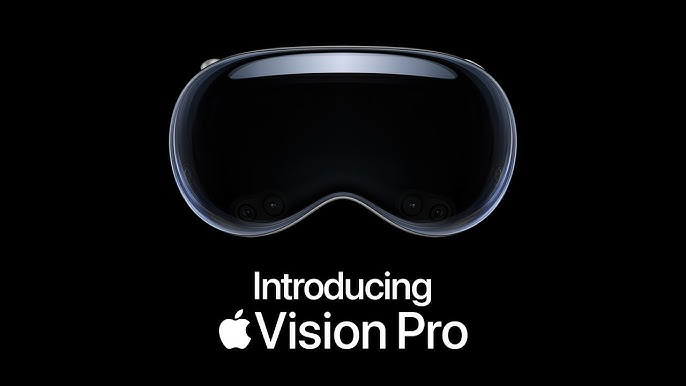
It was at the annual Worldwide Developers Conference (WWDC) that Apple introduced a new era of “spatial computing,” revealing its Vision Pro headset. The device, said to be retailing for $3,499, provides the ability to experience waterfall moments in augmented reality (AR) as well as virtual reality (VR) engulfing experiences. With its eye and hand tracking, voice control, and sleek design, the Vision Pro is no ordinary gadget but an enabling tool that could radically transform fashion interactions.
Apple’s CEO, Tim Cook, sees the Vision Pro as a product that can fundamentally change its industry, much like the iPhone did for mobile technology. By seamlessly merging digital aspects into our physical environments, the Vision Pro forges new paths for narrative, retail and personal expression in fashion.

 Rethinking How to Engage Consumers

The Vision Pro has promising applications within the fashion industry. Think hacking into a virtual fashion show, and being able to interreact with the designs there and then, or putting on digital clothing right in the privacy of your home. The vision pro offers an opportunity for brands to advertise in an entirely new way that immerses consumers.

At WWDC, Apple demonstrated how such users could hold virtual meetings, watch immersive movies and film flying footages of themselves while displaying digital content blended into the rooms. Fashion brands can make use of these functions by streaming their fashion shows, for example, or allowing immersive 3D experiences of their products, which will definitely change how consumers interact with their brands.

Partnering with Technology Behemoths

Apple might not be the first company to arrive at the crossover of fashion and AR, but it is sure to make waves. Fashion brands have been watching the AR movement with interest, and partnerships with tech behemoths like Apple could be transformative. It literally GANs the two computers (unforgettable, in fact; we grow a friendship between ’em) and the Apple and Disney show also represents how brands can reach out to popular IP screens to make the sessions all the more memorable for audiences.
As brands vie for consumer attention and aim to deliver distinctive experiences, collaborating with Apple could introduce remarkable innovations to the fashion industry. This creative exploration has empowered designers to establish virtual runways in captivating digital environments and has enabled shoppers to engage with stores shaped by their fond memories of Disney franchises.

The Luxury Market and Others

Although the Vision Pro’s steep price point will limit its initial adopters to a luxury audience, it also opens up a range of possibilities for high-end brands. Luxury brands should embrace the headset as a tool to improve their proprietary workflows — from product design to testing — which in turn reduces R&D costs and limits material consumption. (cartie) The technology can also extend the luxury shopping experience to consumers’ homes, offering services that comply with VIP customers.

“Big luxury brands like LVMH and Kering are likely to scale a number of these features and bring them from the digital space into the physical store.” it is interesting how luxury brands will be able to use the Vision Pro to find unique ways to engage their consumers and extend their brands.

The Dawn of a New Era

With the introduction of the Vision Pro headset and the change in how people interact with the world — keeping headsets on longer and longer — we can expect to see a boom in virtual shopping experiences, fashion campaigns and digital clothing. Brands are likely to jump at the chance to profile their designs in the metaverse which, will give consumers a hybrid mixture of physical and digital engagement.
We know Apple has a track record with technology meeting stylish with the Apple Watch. The Vision Pro could go beyond a technological device to be a fashion statement, leading to partnerships between fashion brands and tech inventors.

Conclusion

Apple’s Vision Pro​ | Augmented fashion?? | A new way to wear the digital?​

Augmented Reality​ The future of fashion holds great promise, with immersive experiences, novel collaborations, and innovative ways to connect with consumers.

Now, at the brink of this exciting evolution, fashion brands will have to embrace these technological advancements as they’ve always done.
In conclusion, the future of technology in fashion holds exciting prospects, and as we venture forward, this harmonious blend of creativity and innovation will create a new chapter in the world of fashion, limited only by the boundaries of our imagination.

Balenciaga and AR

Balenciaga, brand blame, and bad apologies | Canvas8

How Balenciaga is Using Augmented Reality to Redefine Fashion

In the fast-paced world of fashion, where inspiration is everywhere, Balenciaga has emerged as a hit, at the intersection of the digital and physical worlds. What is particularly exciting about the house is how far its willingness to push boundaries has taken it — as the luxury brand explores AR in a manner that not only allows the brand to show off its clothing, but also challenges how we come to experience and consume the world of fashion itself.

Whether it is virtual fashion shows, AR-enhanced shopping experiences that bring Balenciaga into the metaverse; the brand’s injection of next-generation tech is an important step in the intersection of where fashion, tech and culture meet. But, what is it about AR that is particularly intriguing to Balenciaga and how is the brand using AR to rethink fashion retail and the customer experience altogether? And so, let’s get into this exciting trend, and see what Balenciaga is doing to move fashion into the third dimension.

What Is Augmented Reality (AR) and Why Does It Matter for Fashion?

AR (Augmented Reality) technology overlays digital elements, including images, sounds, or animations, over the real world. AR adds interactive, virtual components to the physical world instead of immersive digital environments like VR. For fashion brands such as Balenciaga, AR opens a door to more engaging, immersive and personalized shopping experiences.

Balenciaga’s Integration of AR: A New Era in Fashion

Perhaps most remarkable about Balenciaga’s use of AR — besides its virtual fashion shows. Instead of showing off collections in traditional runway formats, Balenciaga has used AR to animate its clothing in virtual spaces. From Spring/Summer 2022 collection, Balenciaga unveiled a metaverse themed runway that employed AR to turn the physical runway into a digital dream. With 3D graphics and digital elements overlaid across models walking on the catwalks, they gave an experience of the digital environments meeting with real-life aesthetics.

Virtual Try-Ons and AR Shopping Experiences

In addition to virtual runway shows, AR-enhanced shopping experiences have become a core component of Balenciaga’s playbook. Through the integration of AR into their online and in-store experiences, Balenciaga allows customers to flow seamlessly between the physical and digital worlds. AR has led to customers using it to try on items in real time in the comfort of their own home ─ a technique that streamlines the process of being able to see how clothes fit before paying for them.

Breaking Boundaries: A Digital-First Fashion House

Balenciaga’s AR approach is also part of a broader trend in the fashion industry toward digitally native retail experiences. A recent shift from the pandemic ushered us into a world dominated by online shopping, but Balenciaga has also gone a step further by integrating web3 technologies and launching digital-only collections. Blurring the boundaries of the real clothing and virtual garments, Balenciaga is one step ahead of us in the new digital fashion era.

This emerging trend is reflected by the brand’s partnerships with platforms such as The Sandbox and Fortnite. In these metaverse spaces, Balenciaga is selling not only virtual clothes for avatars, but also exploring how digital fashion might sit alongside physical products. ‘Wearing’ a virtual skirt in a 3D worldSubsequent designs, like virtual leggings and pants, have made it possible to picture wearing and showing off digital clothes in a fully virtual atmosphere. It’s a look at the future of fashion in the metaverse, where customers can interact with brands and get to know products in previously untapped ways.

AR and Fashion-Engagement of the Future
So, what does all of this spell for the future of fashion? Balenciaga’s pioneering use of AR means we have an exciting future to look forward to, when fashion and technology are not only linked but inextricable. AR with the right attribution means customers do not have to choose between offline and online. From trying new clothing, to going to a fashion show, to shopping for digital garments in the metaverse, AR is revolutionizing the shopping experience.

As technology matures, we will see more brands implement AR to create immersive, interactive and personalized experiences for their customers. For Balenciaga, this is just the start. This dream of revamping the concept of style through technology could ignite a whole industry approach to reimagining creativity, pushing traditional notions of style to the side, to embrace a horizon where reality is concept.

Conclusion
Balenciaga’s integration of Augmented Reality is a shining example of technology in action changing the landscape of fashion retail. Through adopting AR into its fashion shows, online shopping experience, and in-store experiences within its brick-and-mortar locations, the brand is therefore stepping out of the conventional confines of fashion and establishing unique ways for consumers to interact with the brand. So, looking ahead, AR is expected to be a foundational aspect of fashion in how we have more engaging and customized engagement than ever before.

“What’s next?”

https://bbbloggerfmm.substack.com/p/blurring-realities-how-balenciaga

Consumer Behavior and AR in Fashion Retail

Fashion Retail and Augmented Reality


Boosting Engagement and Transforming Shopping Habits

main concept is to try on clothes without stepping into a changing room. And see how a dress or pair of shoes would look on you. is ti something for you? Well, it’s already happening, thanks to Augmented Reality (AR). This technology, which using the physical world with generated images, do you think that it’s doing much more than just enhancing shopping experiences.

In fact, AR makes shopping more interactive, personalized, and, most importantly, enjoyable.

Why AR is the Future of Fashion Retail

Creativity, expression and keeping a step ahead of trends has always been profitable for the fashion industry. But online shopping has steadily minimalize freestanding store traffic. This change has prompted retailers to reimagine how they can attract customers and provide a shopping experience that offers more than the essentials.

highlights how AR is changing the fashion retail game:

  1. Increased Customer Engagement
    Studies reveal that 61% of consumers are more likely to shop from a brand that provides AR features. AR adds a level of engagement and excitement to shopping not seen before, whether it be trying on clothes in virtual space or interacting with products in new and unique ways. No longer are consumers passive store shoppers—they are evolving into participating players in an interactive, dynamic experience.
  2. Impact on Purchasing Decisions
    An astounding 74% of consumers worldwide reported increased likelihood to purchase after visualizing a product using AR. In terms of fashion retail, that means that AR enables consumers to visualize how an item will appear and feel in real life, which often leads to increased confidence in a purchase. So, it comes as no surprise that AR is now being recognized as a powerful tool to minimize returns and maximize sales.
  3. Better Customer Retention
    50% of consumers say they would be more likely to return to a store that offers AR experiences, creating a more memorable shopping journey and helps to build loyalty.

Real-World Examples of AR in Fashion Retail

Many fashion brands are already integrating AR into their business strategies, with success.

  1. ASOS Virtual Try-Ons
    Like ASOS, one of the UK’s biggest fashion retailers, which is introducing virtual hanging up through its app using AR. “Customers can now ‘try on’ how clothes will look on them without needing to walk into a store.” Users can “try on” different outfits with their smartphone camera, getting a better sense of how they fit and how big or small it is. Get the right size AR We’ve built this AR experience into ASOS to help to help reduce returns and help increase conversion rates, making shopping easier and more fun.
  2. Warby Parker’s Virtual Glasses Try-On
    A trendy eyewear brand, Warby Parker, employs AR for a virtual try-on of glasses. Customers can upload a photo or use their smartphone camera to see how various frames would fit their face. This AR application improves the online shopping experience and helps consumers feel more confident about their purchase decisions. That feature has resulted in a big uptick in engagement for the brand.
  3. L’Oreal’s AR Makeup Try-On
    L’Oreal: L’Oreal’s Augmented Reality (AR)), Service enables consumers to see a virtual of themselves with their makeup applied through their camera. This AR solution enables the consumer to visually experience various products on their skin tone, in real-time, better informing their purchase decisions. The L’Oreal Makeup Genius app was a game changer, especially when it comes to getting customers to try products they otherwise may not have tried.

The Benefits of AR in Fashion Retail

  1. Enhancing the Shopping Experience
    AR makes shopping a more enjoyable, engaging, and personal experience. Customers can watch the products come to life before their very eyes, rather than just flipping through a catalogue. AR provides consumer engagement in ways that the traditional shopping experience cannot, whether that’s virtually trying on clothes or the ability to interact with a digital display in-store.
  2. minimize the Gap Between Online and In-Store Shopping
    Though online shopping presents one of the key challenges in not being able to try on a piece of clothing physically. AR is filling the gap with virtual fitting rooms that help customers see how a piece will look on their body without trying it on. This helps lessen the apprehensiveness about purchasing online and significantly improves the overall experience.
  3. Increasing Conversion Rates and Sales
    It has been reported recently that AR functionalities have proven to increase conversion by more than 40%. This ultimately increases the likelihood for customers who use AR options to go through with purchasing. AR makes the shopping process more interactive, and when customers are engaged, they are far more likely to make a purchase. The tech also helps curtail cart abandonment and promote repeat visits.

its just a beginning

Virtual Stylists: A virtual experience powered by AI can recommend outfits according to a consumer’s body type and preferences.

Imagine if you could walk into a store and all of the merchandise was instantly viewable in AR on your phone or AR glasses. You could see product details, styling suggestions and even real-time availability — all without having to talk to a sales associate.

Social AR Shopping: The blending of social media and online shopping has made some headway, but we may see unique, AR-driven shopping experiences built directly into social platforms and allowing people to purchase right from their shops while wearing virtual clothes.

Conclusion

Augmented reality is transforming the future of fashion retail through better engagement, improved shopping experience, and increased sales. With an increasing number of consumers seeking personalized interactive shopping experiences, AR is becoming an essential tool for retailers that want to remain competitive. For fashion brands, adding AR technology into their shopping platforms is not merely a matter of trend; it is a strategic decision capable of delivering increased customer satisfaction, loyalty and growth.

With AR , there is no doubt that its potential to inhance fashion retail will be explored further as the technology continues to develop.


https://www.reydar.com/augmented-reality-retail-stats-benefits-examples/#:~:text=Increased%20customer%20engagement%20rates&text=Research%20highlights%20that%2061%25%20of,often%20if%20they%20used%20AR.