LS #9  Unveiling Taboos with Design?

After exploring feminist movements and the bold visuals of protest design in my previous posts, I began to wonder about the power of design in addressing issues that society often avoids altogether. While protest design fights for visibility and action, it also lays the groundwork for addressing the topics we shy away from: taboos. These are the subjects—like menstruation, mental health or sexuality and sex—that have been held in stigma and silence for generations (Bentley, 2022).

Design, with its unique ability to provoke thought and evoke emotion, is emerging as a powerful force to challenge these unspoken issues. Through creativity, designers are bringing these topics into the open, encouraging dialogue, and fostering a culture of understanding.

First of all, why do we even have Taboos?

Taboos exist to maintain social order and protect cultural values. They help define the boundaries of acceptable behaviour, shaping how individuals interact within a community. By setting these boundaries, societies ensure the stability of relationships, prevent harm, and preserve traditions. Taboos also reflect deeper fears, beliefs, and the need for respect in various contexts, from moral codes to personal boundaries (Jones et al., 2008).

Taboo of Menstruation

Menstruation has long been a taboo topic, shrouded in euphemisms and discomfort. For decades, advertisements depicted blue liquid instead of blood and avoided any realistic portrayal of menstruation (Germerott, 2023). But in recent years, bold design has been at the forefront of breaking these stereotypes (United Nations, 2024).

Bodyform’s “#BloodNormal” Campaign was a groundbreaking campaign in 2018 that broke away from sanitized norms by using realistic depictions of period blood in ads. By showing what menstruation actually looks like, the campaign normalized periods and encouraged open conversations about them (Campaigns of the World, 2017).

Mental Health: From Stigma to Awareness

For decades, mental health has been surrounded by silence and stigma, but design is helping break this cycle.

  • The Semicolon Project: A simple semicolon, representing a pause rather than an end, has become a powerful symbol of hope for those struggling with mental illness. The project was established in 2013 to raise awareness and to start talking about mental health issues like depression, addiction, self-injury and suicide (Project Semicolon, 2025). This minimalist yet emotional design has been embraced globally, often appearing in tattoos as a sign of solidarity.
  • Posters and Campaigns: Organizations like Time to Change use bold, brightly colored posters to encourage open discussions about depression, anxiety, and therapy (Time To Change, 2019). These designs often feature approachable typography paired with direct, compassionate messaging.

Sexuality and Gender Identity: Breaking Norms Through Visibility

Design has played a central role in fostering acceptance and inclusivity for topics like sexuality and gender identity. For Example, Gilbert Baker’s iconic rainbow flag started as a symbol of LGBTQ+ pride (Gilbert Baker Foundation, 2019). It has since evolved into numerous variations, like the Progress Pride Flag, which incorporates stripes for transgender and people of colour communities. These designs visibly represent diversity and inclusivity and has created a safe space and form of identity that has helped a lot of people to talk and learn about their sexuality as it wasn’t accepted for many years.

Also, the topic of sex education is so important for the youth but wasn’t properly talked about for so long. The design of sex education materials, including apps, websites, or even physical models, navigates the tension between education and cultural taboos and can often be done anonymously which eliminates possible shame (Buchmann, 2023).

For instance, Planned Parenthood designs user-friendly, non-judgmental interfaces for teens seeking sexual health information (Planned Parenthood, 2019).

Why Design Works

The power of design lies in its ability to bypass language and cultural barriers. A single image or symbol can convey a message instantly and provoke an emotional response (PwC, 2017). For example, a vivid poster on body positivity or a sculpture addressing domestic violence can evoke empathy and challenge ingrained biases.

Design also creates visibility for marginalized groups. When a taboo is represented visually, it gains legitimacy and enters public discourse, making it harder to ignore (Celestine, 2023).

Challenges and Criticisms

Using design to address taboos isn’t without challenges. Pushback from audiences who find the work provocative or inappropriate is common. There’s also the risk of commodification. When corporations adopt taboo-breaking designs for profit without authentic commitment to the cause, the message can feel hollow or exploitative (Najafi et al., 2024).

Lastly, Are Taboos a good thing sometimes?
There are voices that state thatit is important to have taboos in some contexts and they play a crucial role in building civil society. They establish boundaries that protect collective values and prevent harmful rhetoric from destabilizing social harmony. For instance, taboos against hate speech or discriminatory language reinforce ethical standards and preserve respect (Singh, 2023).

Yet, the line between a constructive and oppressive taboo is delicate. Overuse or misuse of taboos risks silencing necessary discussions, freezing consensus, and stifling progress. When taboo topics are avoided, their underlying issues can fester in silence, leading to backlash or misunderstanding. Conversely, a thoughtful re-evaluation of taboos can lead to renegotiation of societal norms, as seen in shifts around LGBTQ+ rights or discussions of racial inequality.

In the age of the internet, where taboos are routinely challenged and reshaped, the question is not merely whether breaking a taboo is good, but whether it leads to meaningful, constructive change. Breaking certain taboos can liberate dialogue, but it also risks eroding protections that took centuries to establish. Navigating this tension thoughtfully is essential to ensure that what is unspeakable remains a safeguard for humanity, not a barrier to progress (Schwartz, 2019).

Sources

Bentley, M. (2022). A New Model of “Taboo”: Disgust, Stigmatization, and Fetishization. International Studies Review, 24(3). https://doi.org/10.1093/isr/viac028

Buchmann, M. (2023, July 24). Shedding Sexual Shame After Really Bad Sex Ed. Momotaro Apotheca. https://momotaroapotheca.com/blogs/vaginal-wellness/shedding-sexual-shame-from-poor-sex-education-in-america?srsltid=AfmBOor6Da7NbSbF4bwm5_27zJUtcJrihYD2jCCYhK0WAeUUu9WQUXuD

Campaigns of the World. (2017, October 21). Bodyform – “Periods are normal. Showing them should be too.” #BloodNormal – Best Advertising Campaigns & Marketing Strategy. Campaigns of the World. https://campaignsoftheworld.com/digital-campaigns/bodyform-blood-normal-campaign/

Celestine, A. (2023, August 22). The Power of Design to Drive Positive Social Change. Celestine’s Design Journal. https://medium.com/design-grip/the-power-of-design-to-drive-positive-social-change-e9830da28584

Germerott, I. (2023, March 2). Blut und Scham: Wie die Menstruation zum Tabuthema wurde. National Geographic. https://www.nationalgeographic.de/geschichte-und-kultur/2023/03/blut-und-scham-wie-die-menstruation-zum-tabuthema-wurde-religion-patriarchat-wissenschaft-medizin

Gilbert Baker Foundation. (2019). Rainbow Flag: Origin Story. Gillbert Baker. https://gilbertbaker.com/rainbow-flag-origin-story/

JONES, J. P. G., ANDRIAMAROVOLOLONA, M. M., & HOCKLEY, N. (2008). The Importance of Taboos and Social Norms to Conservation in Madagascar. Conservation Biology, 22(4), 976–986. https://doi.org/10.1111/j.1523-1739.2008.00970.x

Planned Parenthood. (2019). Planned Parenthood. Plannedparenthood.org. https://www.plannedparenthood.org/learn

Project Semicolon. (2025). Project Semicolon – Suicide Prevention and Mental Health Awareness Organization – Your Story Isn’t Over. Project Semicolon – Your Story Isn’t Over. https://www.projectsemicolon.com/

PwC. (2017). The Power of Visual Communication.

Schwartz, A. E. (2019, March 14). Opinion | Why We Need Taboos. Moment Magazine. https://momentmag.com/opinion-why-we-need-taboos/?srsltid=AfmBOoo74N415TBzmN44zEsTbExTaJPz8NJCwg2p-gCuQOZIzByF1pDL

Singh, P. (2023, September 24). Taboos have played a significant role in shaping human societies throughout…. Medium. https://medium.com/@soamsila/taboos-have-played-a-significant-role-in-shaping-human-societies-throughout-548705671451

Time To Change. (2019). Time to Change | Let’s End Mental Health Discrimination. Time-To-Change.org.uk. https://www.time-to-change.org.uk/

United Nations. (2024). Breaking the taboos around menstrual health for gender equality. OHCHR. https://www.ohchr.org/en/stories/2024/05/breaking-taboos-around-menstrual-health-gender-equality
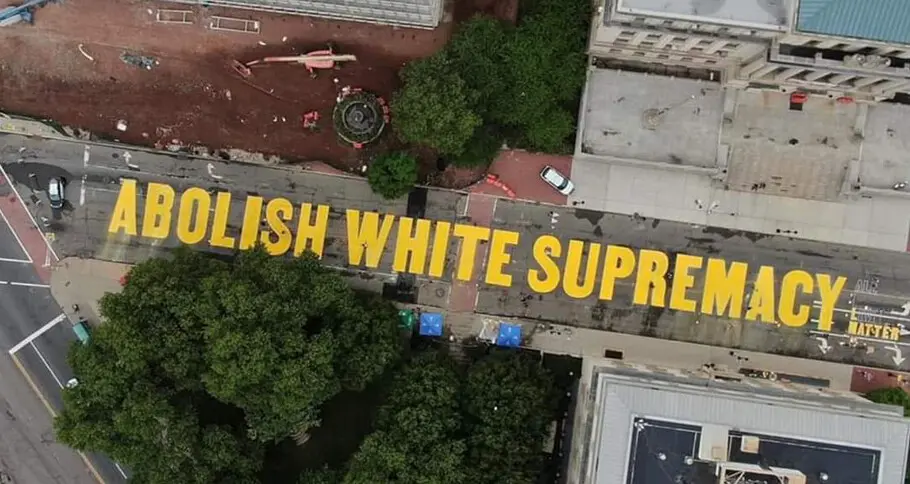
LS #8 Ok, but how do you design for a Protest

In my last blog post, I started thinking about how protest design works and which big movements have bold and clear designs that everyone recognizes. But what actually makes a great protest design? A design that sticks in people’s minds, inspires action, and is simple and easy to understand.

Let’s break it down:

The Design Anatomy of Protest: Typography, Icons, and More

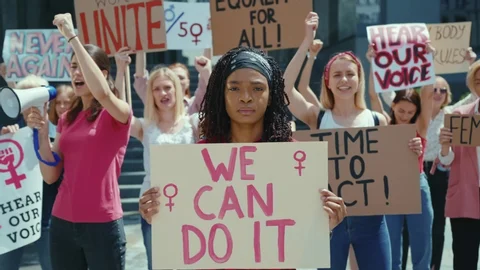
When it comes to protests, visuals play a crucial and important role in conveying urgency, solidarity and emotion. The design elements of protest materials like typography, color, symbols, and imagery are more than only aesthetic choices. They are tools for communication, organize people around causes, and amplifying voices. Obviously, the graphic language of protest design is rarely made by professional designers but by marchers and people that want something to change, but exactly this lack of budget, urgency and motivation has created and developed its own graphic language and “rules of protest design” (Riechers, 2021).

Typography: The Voice of the Movement

Typography is the cornerstone of protest design. It transforms words into powerful visuals, ensuring that messages are loud and clear. In protests, typography often serves two main purposes: readability and emotional resonance.

  • Bold Fonts: Protest signs often use bold, sans-serif fonts to grab attention and convey urgency. Blocky, all-caps text screams for attention, mimicking the act of shouting. Fonts like Impact or custom hand-drawn lettering create a sense of immediacy and raw emotion.
  • Handwritten Text: The unpolished look of handwritten text adds authenticity to protest messages. It conveys a personal touch, making the message feel direct and heartfelt. This rawness resonates deeply with audiences and serves as a reminder of the human effort behind the cause (Schwendener, 2015).
  • Size and Layout: In a protest setting, readability is critical. Designers use large fonts and simple layouts to ensure messages can be understood from a distance, whether on a placard in a crowd or a digital image on social media (Gosling, 2022).

Icons and Symbols: Visual Shortcuts to Meaning

Icons and symbols are the universal language of protest design. A single image can encapsulate the essence of a movement, making it instantly recognizable across cultures and languages.

Historic Symbols: The raised fist, peace symbol, and LGBTQ+ rainbow flag are enduring icons that have transcended time. These symbols evoke solidarity, resistance, and pride without the need for words (Reason, 2024).

Abstract Images: Many protests use metaphors and abstract visuals to convey complex ideas and often the urgency of a situation. For example, the climate movement often incorporates imagery of melting ice caps, burning forests, the world, or hourglasses to symbolize the urgency of climate action (Extinction Rebellion, 2019).

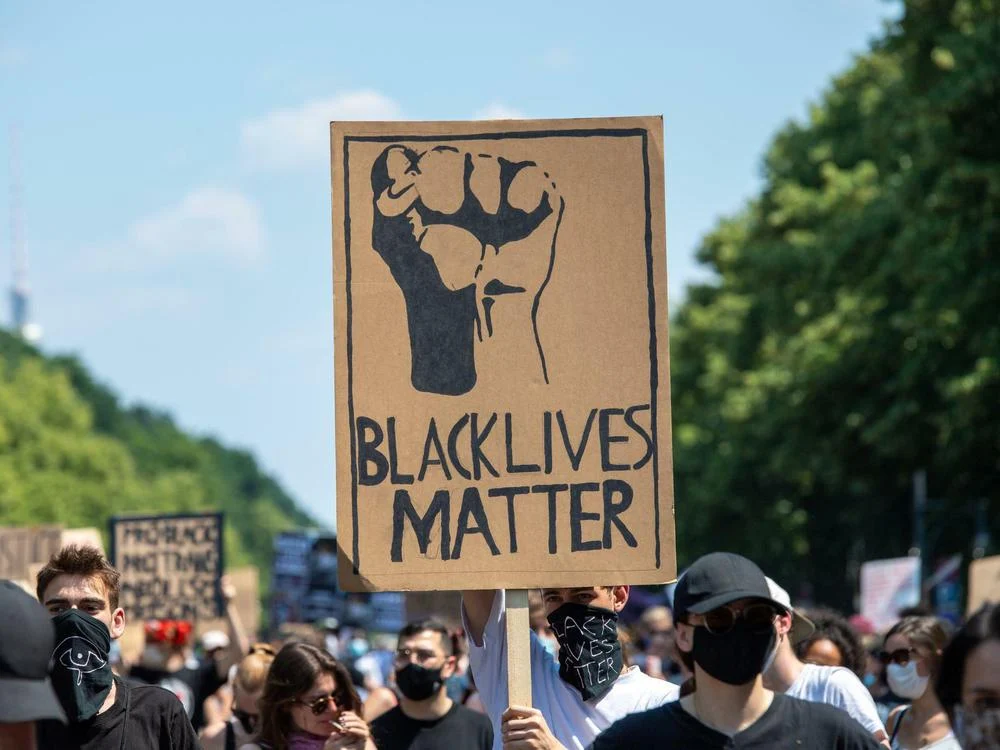
  • Adaptable Icons: Symbols that evolve with movements remain effective. The Black Lives Matter fist, for example, has been adapted to incorporate different skin tones, reflecting inclusivity, diversity as well as intersectionality within the cause (K.S.C., 2020).

Color: Setting the Tone of Protest

The influence of color is undeniable. Colors have the ability to shape our behavior, emotions, and mindset; they can calm us, energize us, provoke opposition, and inspire us to act. This effect is especially apparent in protests and demonstrations, where activists have realized that associating their movement with a particular color can help them gain visibility and support. There are colors that are used often as they are associated with Urgency, Anger and Protest and others that are used for certain topics (Lombardo, 2021).

  • Red: Often associated with passion, urgency, and anger, red is a common color in protest materials demanding immediate attention or justice. An example is the Saffron Revolution in Myanmar 2007 that arose due to the decision of the military government to remove subsidies on fuel prices, which caused a 60-100% increase of gas prices (Steinberg, 2008).

Or another known example are the Red Rebels, a street performance group that joined the activism organization Extinction Rebellion in 2015. They mainly do slow motion demonstrations in red cloaks that symbolizes the blood that almost all species on the planet have in common (Red Rebel Brigade, n.d.).

  • Black and White: These colors symbolize seriousness, mourning, or defiance. Black Lives Matter effectively uses black and white to emphasize strength and solidarity while keeping the message stark and unambiguous.
  • Yellow: Yellow is often associated with energy, optimism, and caution. It can evoke feelings of hope and happiness, but also attention, making it effective in movements that seek to raise awareness or demand urgent action, such as campaigns for mental health or social justice. In 2014, the Umbrella Movement in Hongkong made use of the color yellow by bringing yellow umbrellas to the demonstrations that were pro-democracy (Davidson, 2024).
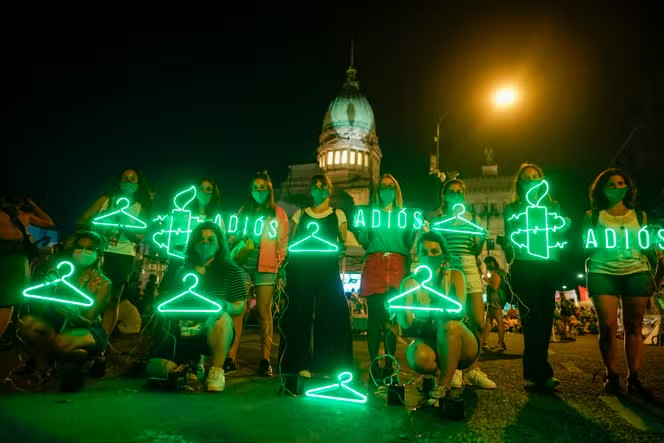
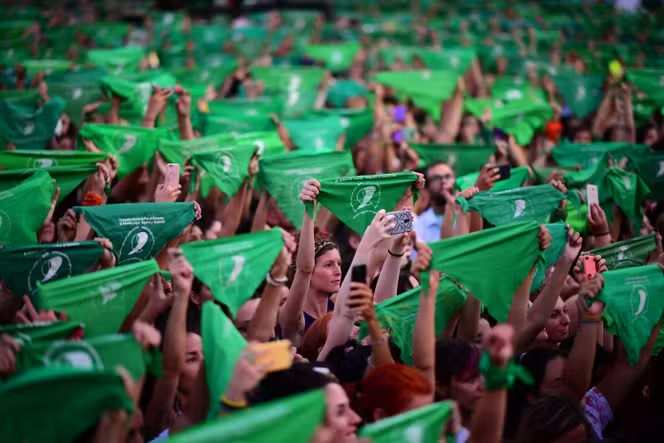
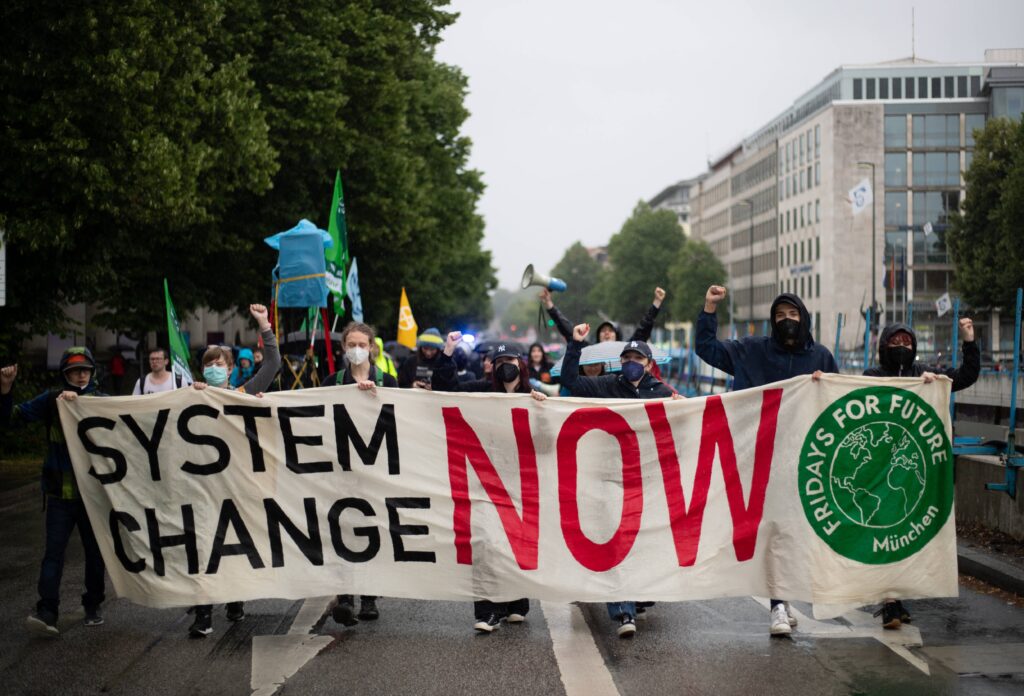
  • Green and Blue: Movements like Fridays for Future use greens and blues to symbolize nature and environmental care, while bright colors in general evoke optimism and hope (Fridays For Future, 2024). Also, green became the color/ symbol of resistance to anti-abortion laws (Connolly , 2022).
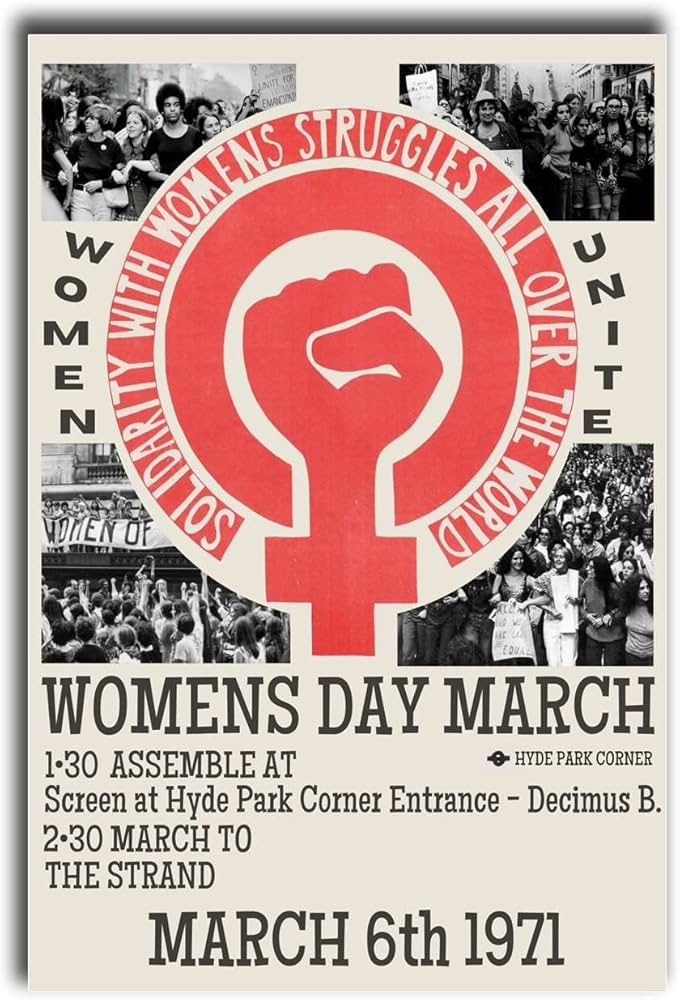
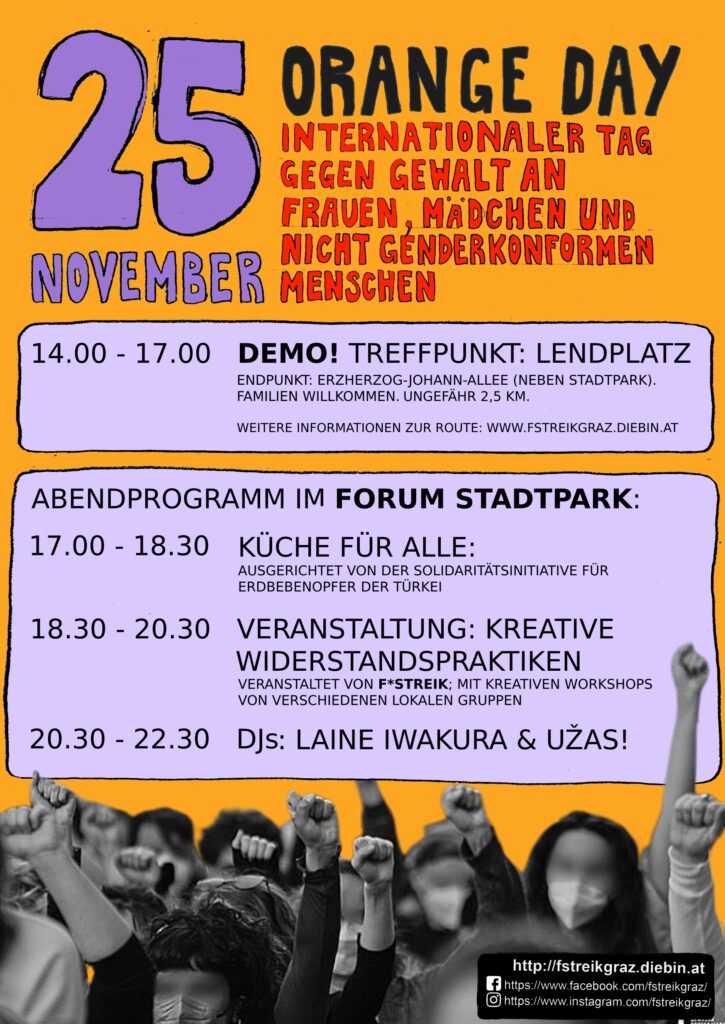
  • Purple: Violet represents dignity, justice, and the fight for equality. It has historically been linked to the women’s suffrage movement and LGBTQ+ rights, symbolizing resilience and the ongoing pursuit of social change. Also, purple has become the official color of the Women’s Day (8th  March) which is celebrated every year to honor achievements and struggles of women worldwide (Mullally, 2023).

Slogans and Messaging: Clarity is Key

A great slogan is the heartbeat of protest design. It’s the soundbite that gets chanted, shared, and remembered (Van De Velde, 2022).

  • Conciseness: Brevity is essential. Short phrases like “No Justice, No Peace” or “My Body, My Choice” pack a punch while remaining easy to remember and replicate (Denton, 1980).
  • Repetition: Effective slogans often use repetition to enhance impact, such as “Black Lives Matter” or “Act Now” as they are short and can be embedded easily and repetitive in chants, posters and in the media.
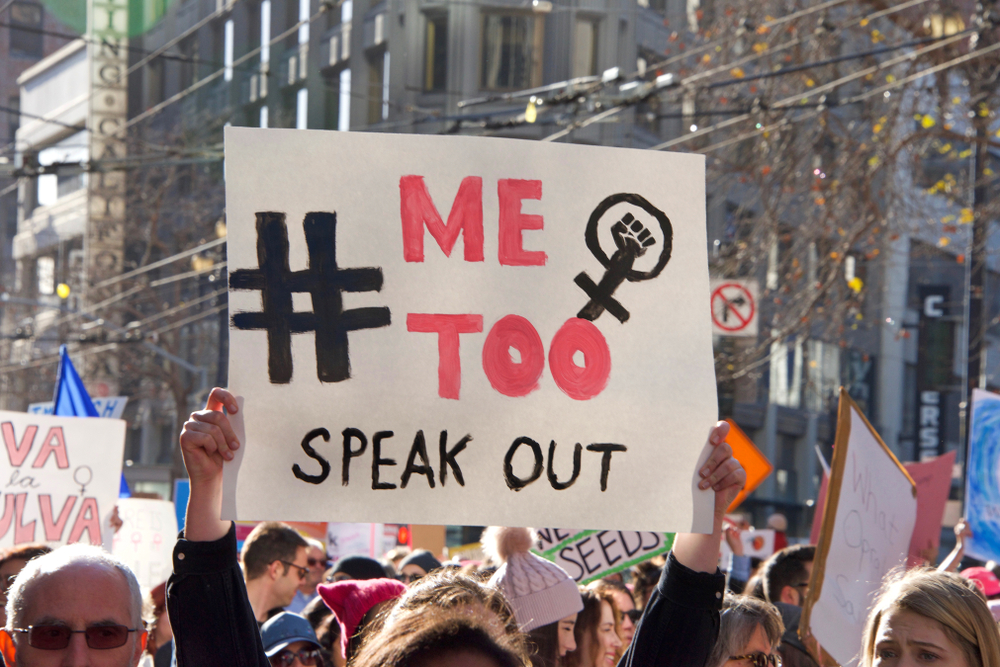
  • First Person: Protest slogans are becoming increasingly individualized, especially in recent years and therefore reflect the growing individuality in demonstrations, Examples are ‘Je suis Charlie’, ‘Me Too’ or ‘I can’t breathe’ (Van De Velde, 2022).

Mediums and Materials: From Streets to Screens

Protest design spans a variety of mediums, each with its unique considerations (Sunmola, 2020)

  • Placards and Signs: Often handmade, these designs prioritize bold typography and durable materials like cardboard for practicality. Their imperfection adds a raw, human touch.
  • Posters and Flyers: These allow for more detailed messaging and artistic expression, combining text, imagery, and colors to inform and inspire.
  • Digital Design: Social media posts and digital posters amplify messages far beyond physical protests. The designs often include shareable elements like hashtags and calls to action, ensuring the message spreads globally.

Design for Accessibility

An often-overlooked aspect of protest design is accessibility. Ensuring designs can be understood by diverse audiences is key to inclusivity. Depending on the context it is important to consider and adapt the different design aspects mentioned above to achieve maximum accessibility in protest design (Vision Australia, 2025).

  • Readable Fonts:  Big clear fonts with high contrast ensure legibility for people with visual impairments (Gosling, 2020)
  • Language: Including multiple languages or universally recognized symbols can make messages accessible to a broader audience. Though sometimes this and the bullet point before are hard to combine, as it is hard to put multiple languages on one placard and still expect the font to be big and bold.
  • Audio and Video: In digital formats, including captions, subtitles, or audio descriptions ensures accessibility for people with hearing or visual disabilities.

The Impact of Good Design

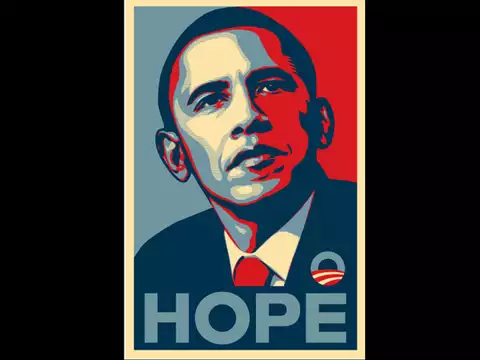
Protest design isn’t just about aesthetics—it’s about creating a visual identity for movements, fostering emotional connections, and mobilizing action, it’s a tool of empowerment and representation. Posters, stickers, and digital graphics serve as both art and argument, encouraging viewers to interact with the content in ways that dissolve the boundary between protest and education (Jasmine, 2024). When done well, it leaves an indelible mark on history. An Example could be Shepard Fairey’s “Hope” poster for Barack Obama’s 2008 campaign or the “Silence = Death” design from the AIDS activism movement. These visuals became cultural touchstones, encapsulating the spirit of their respective causes (Art Institute Chicago, 2008).

Sources

Art Institute Chicago. (2008). Barack Obama “Hope” Poster. The Art Institute of Chicago. https://www.artic.edu/artworks/229396/barack-obama-hope-poster

Connolly , A. (2022, July 6). IN PHOTOS: Here’s how green became the colour of abortion rights. Global News. https://globalnews.ca/news/8970022/green-colour-of-abortion-rights/

Davidson, H. (2024, September 28). “I was so naive”: 10 years after Umbrella protests, Hongkongers remember China’s crackdown. The Guardian; The Guardian. https://www.theguardian.com/world/2024/sep/28/i-was-so-naive-10-years-after-umbrella-protests-hongkongers-remember-chinas-crackdown

Denton, R. E. (1980). The rhetorical functions of slogans: Classifications and characteristics. Communication Quarterly, 28(2), 10–18. https://doi.org/10.1080/01463378009369362

Extinction Rebellion. (2019, April 20). The origins of the extinction symbol. Logo Design Love. https://www.logodesignlove.com/the-extinction-symbol

Gosling, E. (2020, August 11). Strongly worded letters: Typography and modern protest. Monotype. https://www.monotype.com/resources/expertise/typography-and-modern-protest

Gosling, E. (2022, July 18). Why typography still packs a punch when it comes to protest. Creative Review. https://www.creativereview.co.uk/why-typography-still-packs-a-punch-when-it-comes-to-protest/

Jasmine, M. (2024). The Role of Design in Social Justice Movements. Desireedesign.co.uk. https://www.desireedesign.co.uk/brand-insider/design-social-justice-movements

K.S.C. (2020, June 17). A brief history of protest symbols, from cockades to raised fists. The Economist. https://www.economist.com/prospero/2020/06/17/a-brief-history-of-protest-symbols-from-cockades-to-raised-fists

Lombardo, G. (2021, March 23). The Colors of Protest. DeMagSign. https://medium.com/demagsign/the-colors-of-protest-46289d141e2b

Mullally, W. (2023, March 8). Why is purple the color of International Women’s Day? Esquire Middle East – the Region’s Best Men’s Magazine. https://www.esquireme.com/news/why-is-purple-the-official-color-of-international-womens-day

Reason, P. (2024, December 4). The raised fist: a history of the symbol – People’s History Museum. People’s History Museum. https://phm-org-uk.translate.goog/blogposts/the-raised-fist-a-history-of-the-symbol/?_x_tr_sl=en&_x_tr_tl=de&_x_tr_hl=de&_x_tr_pto=rq

Red Rebel Brigade. (n.d.). Red Rebel Brigade. Red Rebel Brigade. https://redrebelbrigade.com/

Riechers, A. (2021, February 3). Type and Protest. Communication Arts. https://www.commarts.com/columns/type-and-protest

Schwendener, M. (2015, July 30). Seeing the Power of Political Posters. The New York Times. https://www.nytimes.com/2015/07/31/arts/design/seeing-the-power-of-political-posters.html

Steinberg, D. (2008). Globalization, Dissent, and Orthodoxy: Burma/Myanmar and the Saffron Revolution. Georgetown Journal of International Affairs, 9(2), 51–58. https://www.jstor.org/stable/43133778

Sunmola, Y. (2020, December 3). The visual language of Protest: How graphic design can fuel protest and change government. Medium. https://yinks0067.medium.com/the-visual-language-of-protest-how-graphic-design-can-fuel-protest-and-change-government-bcffa115a74c

Van De Velde, C. (2022). The power of slogans: using protest writings in social movement research. Social Movement Studies, 23(5), 1–20. https://doi.org/10.1080/14742837.2022.2084065

Vision Australia. (2025). Typography in Inclusive Design Part 2: Choosing typefaces and laying out text content | Vision Australia. Blindness and low vision services. Www.visionaustralia.org. https://www.visionaustralia.org/business-consulting/digital-access/blog/typography-in-inclusive-design-part-2

LS #7 Banners, Placards, and Hashtags: Protest Design in Action

In this Blogpost, I would like to talk about protest design in general as it emerged as a powerful tool for resistance and social change, particularly within feminist movements but not only, thinking about BlackLivesMatter, Fridays for Future, Demonstrations against the rights, Demonstrations against war and many more.

What is Protest Design?

At its core, protest design is the use of visual elements—such as symbols, colors, typography, and graphics—to communicate a political or social message. It is a way of saying “NO!” – that you really disagree with something or someone (Tate, n.d.).

Unlike traditional design, which often focuses on aesthetics or branding, protest design aims to mobilize, inspire, and provoke thought. It’s a form of visual activism, a way to visually articulate dissent and call for change (Sunmola, 2020).

Protest design often draws from a variety of graphic design elements, using bold colors, powerful symbols, and direct messaging to ensure clarity and impact. Whether it’s a simple logo, a slogan on a banner, or an image shared on social media, protest design makes complex issues accessible and emotionally compelling. Its primary goal is to rally people around a cause, create solidarity, and make an impact both online and in the streets (Levanier, 2022).

Social Movements and Protest Design

While feminism has been a key player in protest design, other movements have also utilized visual design to amplify their messages and create change.

Black Lives Matter

The Black Lives Matter movement has perhaps one of the most recognizable protest designs today. The bold, black and white “Black Lives Matter” logo is instantly identifiable, carrying with it a powerful message about racial justice. The design has evolved over time, but its core message has remained the same: advocating for the value of Black lives and fighting against systemic racism with the bold image of a raised fist. In addition to the logo, countless graphics, memes, and protest posters have been created, spreading the message across social media and public demonstrations alike (Reason, 2024).

Fridays for Future

Fridays for Future, the youth-led climate movement spearheaded by Greta Thunberg, has also embraced protest design in its efforts to raise awareness about the climate crisis. The movement’s logo—a simple, bold typography (font jost)—carries a sense of urgency, while its use of vivid, striking colors draws attention to the cause. Digital design, such as posters for climate strikes, has helped young people mobilize globally, encouraging millions of students to demand action on climate change (Anwar, 2019).

Protests Against War

Protests against war have a long history of using design to communicate their anti-war stance. From the iconic “Make Love, Not War” slogan of the 1960s to contemporary anti-war protests, design has been crucial in creating memorable, impactful messages. The peace symbol, the dove, and other visual representations of peace have been used across generations to unite people in their opposition to violence and military conflict (Rosemont et al, 2012).

Why Protest Design Matters

Protest design isn’t just about making things look visually appealing; it’s about creating a sense of urgency and solidarity. It’s about taking an issue—whether it’s climate change, racial justice, or gender equality—and making it visually accessible and emotionally powerful.

In the digital age, protest design has a far-reaching impact. Social media allows for instant sharing of images and messages, turning graphic design into a tool for viral activism. A well-designed image can spread rapidly, reaching millions of people in an instant, and sparking a global conversation (Mindful Mediator, 2023).

Moreover, protest design helps create a visual identity for movements, making them more recognizable and easier for people to rally around. A logo, a slogan, or even a specific color scheme can become synonymous with a movement, and this kind of visual recognition is essential for uniting people and building momentum.

Challenges and Criticisms

While protest design can be a powerful tool for social change, it is not without its challenges and criticisms. One major issue is the commercialization of protest imagery. As social movements gain visibility, there’s a risk that commercial entities may co-opt protest design for profit, reducing the message to a mere aesthetic trend.

Furthermore, there’s a potential danger of superficiality. If protest design becomes too focused on creating catchy visuals rather than communicating a deep political message, it risks losing its effectiveness. Design should always serve the purpose of the movement, not just its aesthetics.

Handwritten protest signs hold a unique power, offering a raw and spontaneous form of expression that contrasts with the polished and professional look of digital design. While digital tools make it easy to create flashy, shareable protest graphics for online activism, handmade signage continues to dominate physical protests, capturing the urgency and passion of the moment. These signs, often created with just markers and cardboard, reflect the immediacy of the cause and stand as deeply personal, unfiltered expressions of anger, hope, and determination.

Despite the rise of socially shareable digital visuals, the prominence of hand-drawn signs in protests highlights their enduring impact. As noted during movements like Occupy Wall Street and Black Lives Matter, these signs often become iconic symbols when photographed, with their striking, improvised lettering adding an extra layer of authenticity. Photographer David Holbrook observed that handmade signs, especially those with bold, capitalized text, convey a sense of shouting and urgency, making them highly expressive and attention-grabbing. Their imperfections and individuality demonstrate the time and effort put into crafting them, adding a human touch that resonates deeply with audiences both on the streets and through the images shared worldwide (Gosling, 2020).

Sources

Anwar, S. (2019, July 30). Grafiker über das Design von Fridays for Future – „Ich finde es wunderbar”. Deutschlandfunk Kultur. https://www.deutschlandfunkkultur.de/grafiker-ueber-das-design-von-fridays-for-future-ich-finde-100.html

Gosling, E. (2020, August 11). Strongly worded letters: Typography and modern protest. Monotype. https://www.monotype.com/resources/expertise/typography-and-modern-protest

Levanier, J. (2022, October 4). Design activism: what good can graphic design do? 99designs. https://99designs.com/blog/design-history-movements/design-activism/

Mindful Mediator. (2023, July 26). The role of social media in modern activism – Mindful Mediator – Medium. Medium. https://medium.com/%40mediation/the-role-of-social-media-in-modern-activism-20123deafacc

Reason, P. (2024, December 4). The raised fist: a history of the symbol – People’s History Museum. People’s History Museum. https://phm-org-uk.translate.goog/blogposts/the-raised-fist-a-history-of-the-symbol/?_x_tr_sl=en&_x_tr_tl=de&_x_tr_hl=de&_x_tr_pto=rq

Rosemont et al. (2012, February). History of the Make Love Not War slogan – Creative Review. Creative Review. https://www.creativereview.co.uk/make-love-not-war-slogan/

Sunmola, Y. (2020, December 3). The visual language of Protest: How graphic design can fuel protest and change government. Medium. https://yinks0067.medium.com/the-visual-language-of-protest-how-graphic-design-can-fuel-protest-and-change-government-bcffa115a74c

Tate. (n.d.). What is Protest Art? Tate Kids. https://www.tate.org.uk/kids/explore/what-is/what-is-protest-art

LS #6 Pink for Girls, Blue for Boys: Are We Still Stuck in the 1950s?

Stereotypes in graphic design are deeply ingrained assumptions that shape how visual elements are used to convey meaning. These stereotypes often reflect societal norms and expectations, influencing how audiences perceive design and the messages it communicates. From colors and typography to imagery and layout, these elements can reinforce outdated gender roles or cultural biases, limiting creativity and inclusivity. Below are some common examples and aspects of stereotypes in graphic design and their implications.

Color

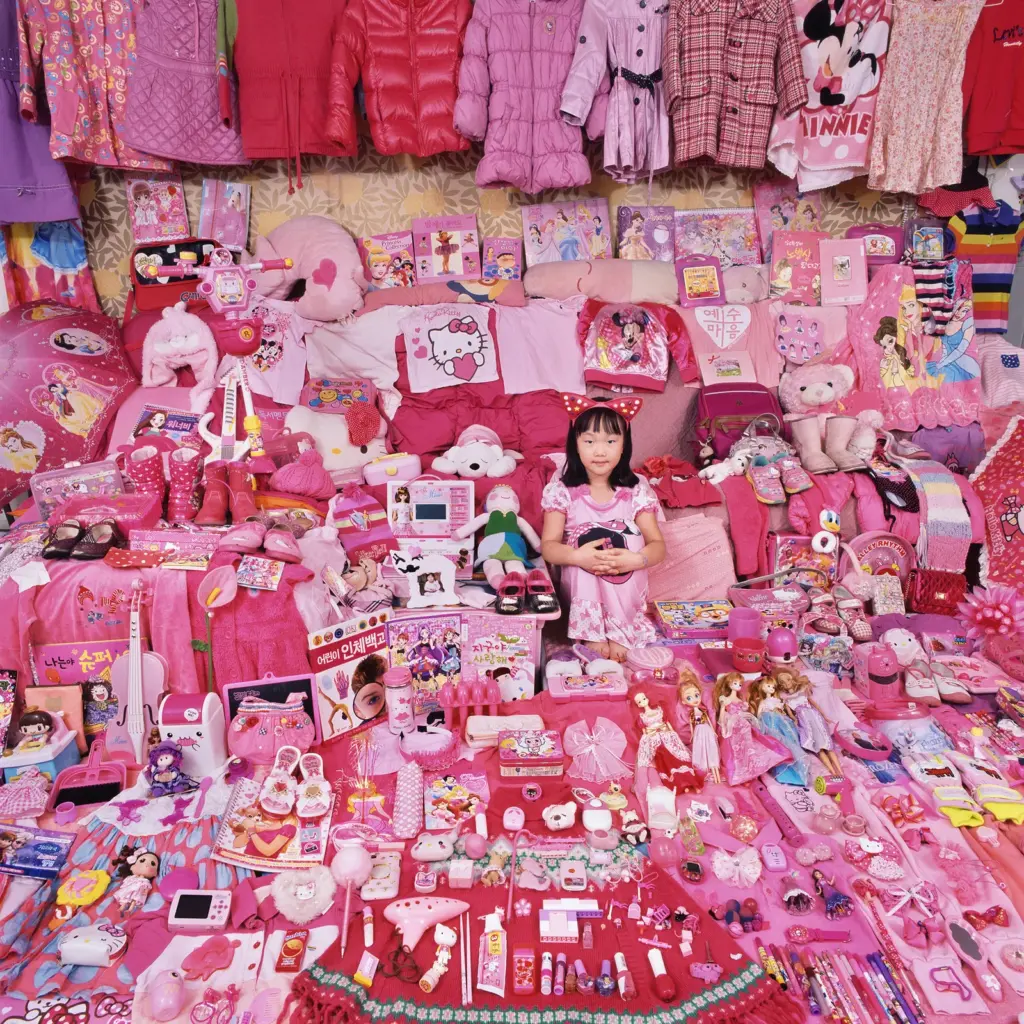
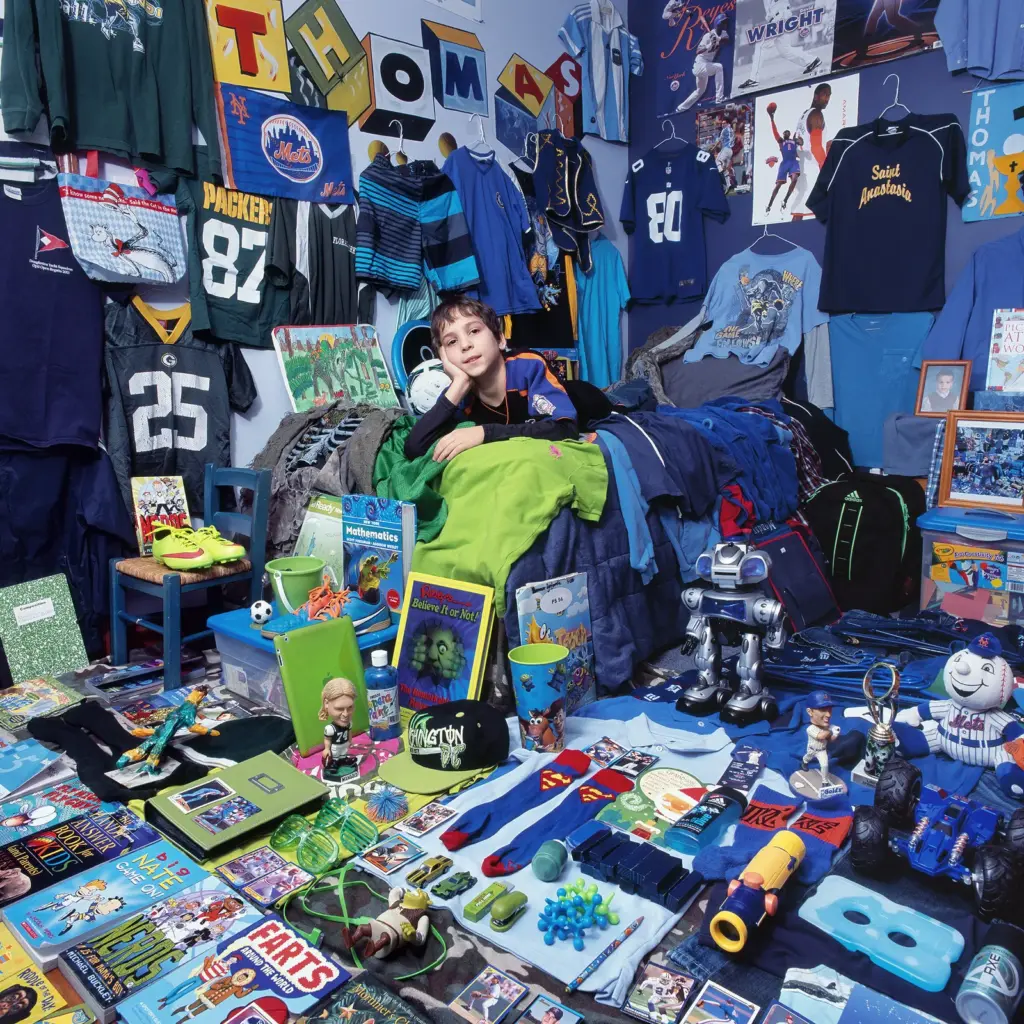
Color is one of the most universal tools in graphic design, but its use is often bound by stereotypical associations. For instance, pink is commonly assigned to femininity and used in products targeted at women, while blue is linked to masculinity and dominates designs for men.


This clear difference is especially noticeable in children’s marketing, where girls’ toys are packaged in pastels and boys’ toys use bright primary colors. These choices not only limit creative freedom but also reinforce societal expectations about gender from a young age (Horne, 2019).

What is the History of this bold and definite color differences for girls and boys? It was even once advertised the reversed way. In 1918 the trade publication Earnshaw’s Infants’ Department it was said that the “generally accepted rule is pink for the boys, and blue for the girls. The reason is that pink being a more decided and stronger color, is more suitable for the boy, while blue, which is more delicate and daintier, is prettier for the girl.” (Grannan, 2016).

After World War II, the association of blue with boys and pink with girls became more widespread, influenced by changing gender norms and growing consumerism. Marketing played a key role, with companies using color to distinguish products for boys and girls. By the 1950s, blue was linked to strength and masculinity, while pink was tied to softness and femininity, reflecting traditional family roles of the time (PBS Digital Studios, 2018).

Typography
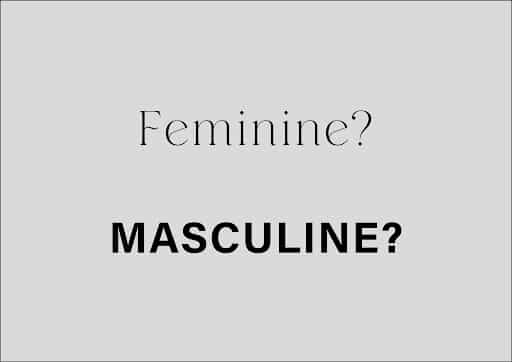
Typography significantly influences design aesthetics, with certain fonts traditionally associated with specific genders. Curved, script-like, or handwritten fonts are often labeled as “feminine,” suggesting elegance or delicacy. In contrast, bold, angular, and blocky fonts are deemed “masculine,” symbolizing strength or authority. This classification is evident in various industries (Fernández, 2015):

  • Beauty Brands: Companies frequently use ornate, decorative fonts to appeal to a female audience, reinforcing traditional notions of femininity.
  • Sports and Automotive Brands: These sectors typically employ heavy, geometric typefaces to convey masculinity and power.

Such typographic conventions perpetuate narrow definitions of gender, often overlooking the diverse preferences of audiences. By adhering to these stereotypes, designers may inadvertently reinforce outdated gender norms, limiting creative expression and failing to engage a broader, more inclusive audience (Wong, 2021).

Challenging these conventions can lead to more inclusive and innovative design practices that resonate with a wider demographic. Marie Boulanger (2021) explains that the perceived femininity or masculinity of a font has nothing to do with its physical aspect, a little to do with its name, but “everything to do with a third gender marker – usage”. By moving beyond traditional gendered typography, brands can better reflect the diversity and complexity of their audiences.

But Typography does not only reinforce stereotypes in regard to gender roles, but some typefaces nowadays are exclusively used with a stereotypical connotation of a culture or country. When you think of a restaurant selling Chinese Food, I bet you have an exact image of a font (which is very likely part of the Logo). Same goes for Japanese or African shops/ items/ music etc.

 The “African” Typeface Neuland is often used for anything that has exotic, adventurous, jungle or ethnic attributes like for example the Lion King Posters, Madagascar Movies or even the American Spirits Logo (Graphéine, 2020).

Originally, the font has nothing to do with Africa as it was created by German Designer Rudolf Koch with the purpose of modernizing Typefaces in Germany for Display and Advertisements (Giampietro, 2004).

This kind of stereo typography is discriminating as it can produce Cultural Oversimplification (by summarizing a whole continent with different countries, cultures and languages with one typeface, the vast diversity of the continent goes missing and it supports the idea, that ‘all Africa is the same) and Cultural Appropriation (By linking the font to the African culture, it can reinforce the stereotypes of Africa being untamed, a tribal culture and primitive, which strips away the deeper meaning and complexity of all the cultures).

Imagery and Iconography
The imagery used in graphic design often carries stereotypical associations that dictate how products or messages are perceived. Designs targeting women frequently include motifs like flowers, hearts, or butterflies, projecting ideas of softness or care. On the other hand, male-oriented designs might incorporate industrial symbols like gears or vehicles, emphasizing utility and toughness. This binary approach reduces people to simplistic roles and misses the opportunity to create designs that resonate across different identities. A study by Dimaandal and Espineda (2023) researched how toy packaging differentiates between toys for boys or girls. The results align with the described above; Girls toys often displayed icons and Imageries like Unicorns, princesses, fashion, flowers, or animals while Boys Toys showed sports, dinosaurs, fight scenes, heroes, tools, science or police.

As an example the picture above, the toy is basically the same but it is advertised completely different. The ‘Diamond Ring Rattle is “for a sweet baby girl” wile the hammerin’ Rattle is “for a busy baby boy”. Also, hard to miss is the iconography, the girls version is full of flowers, hearts and a crown – all in pink of course- while the boys version is yellow and blue using simple icons like dots and circles.

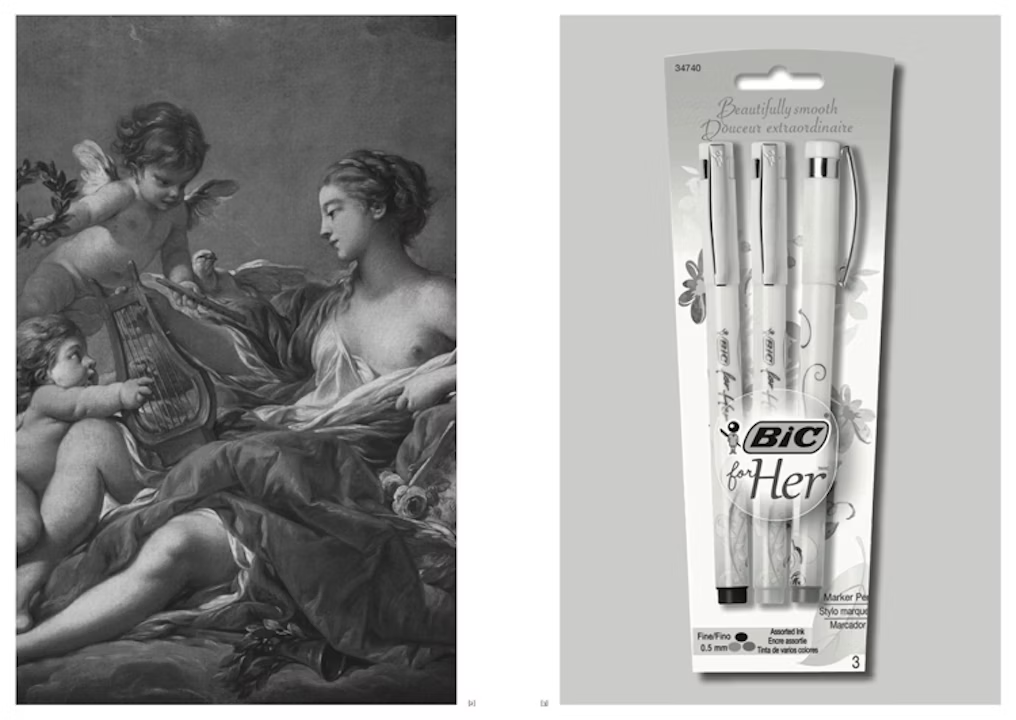
Another quite hilarious example is the picture below, an advertisement for a bic pen for women ‘for her’. It was a campaign and product published in 2012 earning a lot of backlash and critic, as it should. The only thing different to a ‘normal’ bic pen is the iconography on the pen, flowers and flowy llines (Vinjamuri, 2012).

Layout and Composition
The way elements are arranged in a design can also reflect stereotypes. Feminine designs often feature soft, organic layouts with flowing lines and asymmetry, evoking a sense of approachability or emotion. Masculine designs, in contrast, tend to favor structured, grid-based compositions with sharp edges, conveying order and control. For example, advertisements for personal care products might use a light, airy composition for women and a solid, rigid layout for men. These stylistic choices reinforce traditional notions of gender, limiting how designs can connect with broader audiences.

Example of Gilette Advertisements: On the left is for men with straight lines, bold colors and bold – sans serif fonts, on the right the contrast for women, pastel colors, flowy lines and the fonts are thin and flowy as well with an often high contrast (Tempesta, 2019).

Sources

Boulanger, M. (2021, May 3). XX, XY : Sex, Letters and Stereotypes. Kickstarter. https://www.kickstarter.com/projects/xx-xy/xx-xy-sex-letters-and-stereotypes

Dimaandal, R. J. H., & Espineda, M. N. (2023). Gender-Inclusive Children’s Toy Package Design: An Alternative Approach to Gender-Neutral Design Based on Children’s Perceptions. Archives of Design Research, 36(4), 141–161. https://doi.org/10.15187/adr.2023.11.36.4.141

Fernández, N. (2015, November 19). It Ain’t Necessarily So. It Ain’t Necessarily So. https://itaint-necessarilyso.squarespace.com/articles/2015/11/17/stereotypes?utm_source=chatgpt.com

Giampietro, R. (2004). Lined & Unlined · New Black Face: Neuland and Lithos as Stereotypography. Linedandunlined.com. https://linedandunlined.com/archive/new-black-face/

Grannan, C. (2016). Has Pink Always Been a “Girly” Color?. In Encyclopædia Britannica. https://www.britannica.com/story/has-pink-always-been-a-girly-color

Graphéine, T. (2020, February 2). Stereotypography: typical, even racist, typefaces. Graphéine – Agence de Communication Paris Lyon. https://www.grapheine.com/en/graphic-design-en/stereotypography-typefaces-racist

Horne, L. (2019). The Evolution of Stereotypical Color-Coded Childhoods. Wired. https://www.wired.com/story/color-coded-childhoods-photo-gallery/

PBS Digital Studios. (2018). Origin of Everything | Why was Pink for Boys and Blue for Girls? | Season 1 | Episode 19. Www.pbs.org. https://www.pbs.org/video/why-was-pink-for-boys-and-blue-for-girls-6ikwzr/

Tempesta, E. (2019, January 16). Gillette slammed over “pink tax” in the wake of controversial ad video. Mail Online. https://www.dailymail.co.uk/femail/article-6596095/Gillette-slammed-pink-tax-wake-controversial-ad-campaign.html

Vinjamuri, D. (2012). Bic For Her: What They Were Actually Thinking (As Told By A Man Who Worked On Tampons). Forbes. https://www.forbes.com/sites/davidvinjamuri/2012/08/30/bic-for-her-what-they-were-actually-thinking-as-told-by-a-man-who-worked-on-tampons/

Wong, H. (2021, May 25). Why gender stereotypes in typefaces can stifle creativity. Design Week. https://www.designweek.co.uk/issues/24-30-may-2021/why-gender-stereotypes-in-typefaces-can-stifle-creativity/?utm_source=chatgpt.com

LS #5 Unpacking Sexism and Misogyny in Design of Advertisements

Whilst in the last blog post I explored different ways and a bit of history of feminism in graphic and communication design, I want to dive deeper on the reasons why it is necessary in Design as well. Reproduced gender stereotypes, representation and oppression was and is common especially in advertisement but in all other design areas as well.

Advertisements 20th Century

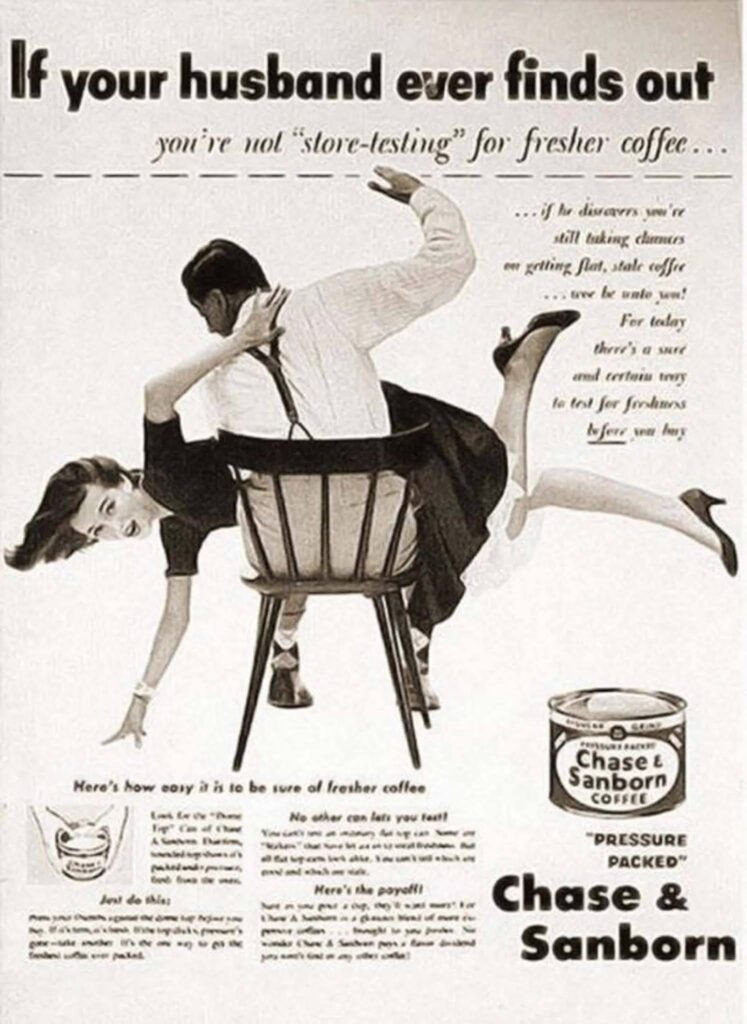
Common examples of historical advertisements of the 20th century show the objectifying and sexualising of women and reflect how women* were seen and valued in the time period (Rare Historical Photos, 2021). Sexist vintage advertisements often relied heavily on the sexualisation of women, portraying them as passive objects to appeal to male consumers. These ads typically featured women in exaggeratedly submissive or provocative roles, reinforcing harmful stereotypes about gender dynamics. While the “sex sells” approach aimed to elicit positive responses from men, it frequently alienated women, who were more likely to perceive such ads as lacking value and agency. For example, iconic vintage ads for products like cigarettes or kitchen appliances often depicted women in highly stylized, sexualized poses, accompanied by slogans that trivialized their roles or intelligence (Keller et al., 2020).

These are bold and controversial examples of sexism in graphic design that already sparked a few discussions at the time but are nowadays an integral part within the debate of gender discrimination.

In 2018, Photographer Eli Rezkallah from Beirut, Lebanon joined the conversation with a humoristic approach, by recreating sexist vintage advertisements with reversed gender roles in the photo series “ in a parallel universe (Arushi Lohia, 2018).

Advertisements 21st Century

As the examples above are from another century, one may argue that this kind of sexism and objectifying does not happen anymore nowadays. Obviously, it is not happening as bold as then, but it is the subtle sexism that does about the same harm.

Gaps Kids

2016 – Gap’s kids advertisement, limiting their interests by highlighting stereotypes that girls like pink and to gossip, they are “the talk of the playground” and boys have “genius ideas” and bright future ahead, in blue of course (Kennedy, 2016). This advertisement primarily relies on the stereotypes of color theory, assigning pink to girls and blue to boys. This reinforces a clear division of genders, leaving no room for exceptions.

Tradwives

In 2022 and 2023, the Tradwives Trend on TikTok went viral and gained momentum. The videos are made by women that promote traditional gender roles, advocating for a lifestyle centered around homemaking, submission to husbands, and traditional family values. While most people cannot even understand how this lifestyle can be attractive for any women, there is a brought audience that aligns with the values and supports the idea (Toma-Toader, 2024).

The videos often use nostalgic imagery and styling, evoking the 1950s “ideal housewife” aesthetic like vintage dresses, immaculate kitchens, and choreographed depictions of domestic bliss. Many proponents link their lifestyle to religious beliefs or traditional cultural practices, framing their roles as morally superior or more fulfilling than modern egalitarian arrangements. Also, a common theme in the trend is the rejection of feminism, with creators claiming that feminist movements have “robbed” women of their happiness by encouraging careers and independence over family-oriented roles (Saskia Papenthin, 2024).

Campaign Brief’s Creative Leaders List (2023)

The Campaign Brief’s Creative Leaders List is an annual feature by an Australian advertising industry publication, showcasing what it considers the top creative leaders of the year. The 2023 list sparked controversy for including 20 men and no women, drawing attention to the ongoing gender imbalance in leadership within the creative sector. While the publisher claimed the list simply reflected the current makeup of chief creative officers in the industry, its lack of female representation subtly reinforces systemic sexism. By failing to recognize or elevate women in creative leadership, it perpetuates the notion that such roles are predominantly male, overlooking the structural barriers and biases that limit women’s opportunities to advance in the field. This omission serves as a stark reminder of the deep-seated gender inequalities that persist in advertising and beyond (Cleal, 2024).

In this blog post, I primarily use the term “women” when discussing feminism and related issues. This choice is grounded in the historical context of feminist movements, which have traditionally centered on the experiences and struggles of women. However, it is important to emphasize that this usage is meant to include and apply to all individuals who fall under the FLINTA umbrella (Female, Lesbian, Intersex, Nonbinary, Trans, and Agender people).

Sources

Arushi Lohia. (2018, January 18). Photographer Gives Sexist Vintage Ads A Role Reversal To Show How Misogynistic Advertising Can Be. ScoopWhoop. https://www.scoopwhoop.com/life/sexist-vintage-ads-role-reversal/

Cleal, O. (2024, October 15). “Toxic, misogynistic, exclusionary”: Campaign Brief criticised for male-dominated list of creative directors. Women’s Agenda. https://womensagenda.com.au/latest/toxic-misogynistic-exclusionary-campaign-brief-criticised-for-male-dominated-list-of-creative-directors/

Keller, M., Walker, M., & Reutner, L. (2020, June 3). Sex Sells? The Role of Female Agency in Sexualized Advertisements| Social Psychological Bulletin. Spb.psychopen.eu. https://spb.psychopen.eu/index.php/spb/article/view/2643/2643.html

Kennedy, M. (2016, August 1). Gap accused of sexism over “social butterfly” children’s T-shirt ad. The Guardian. https://www.theguardian.com/fashion/2016/aug/01/gap-accused-sexism-social-butterfly-pink-childrens-t-shirt

Rare Historical Photos. (2021, September 9). Sexist and offensive vintage ads that would never fly today, 1940-1980 – Rare Historical Photos. Https://Rarehistoricalphotos.com/. https://rarehistoricalphotos.com/offensive-sexist-vintage-ads/

Robertson, T. (2024, July 3). Fury at “sexist” ad campaign with Team GB rugby stars in lingerie as former Olympian slams use of ‘porn und… The Sun. https://www.thesun.co.uk/sport/28923240/fury-sexiest-campaign-olympics-team-gb-rugby-stars/?utm_source=chatgpt.com

Saskia Papenthin. (2024, March 15). “Tradwives”-Trend: Eine Rückwärtsrolle für den Feminismus. Brigitte.de; BRIGITTE.de. https://www.brigitte.de/aktuell/gesellschaft/-tradwives–trend–eine-rueckwaertsrolle-fuer-den-feminismus-13784198.html

Toma-Toader, A. (2024, March 7). Propaganda mit dem Kochlöffel. Taz.de. https://taz.de/Antifeminismus-auf-Tiktok/!5995016/

LS #4 Feminism in Design & Media

Design and media are powerful cultural tools that shape perceptions and influence societal norms. Within these fields, the role of women* and the examination of feminist perspectives reveal a nuanced landscape where creativity intersects with social change. In the previous blogposts, I have defined and explained a few terms associated with the topic of feminism, I will be starting the research of the beginnings of feminism in graphic and communication design.

Geographics of Feminist Graphic Design Approaches

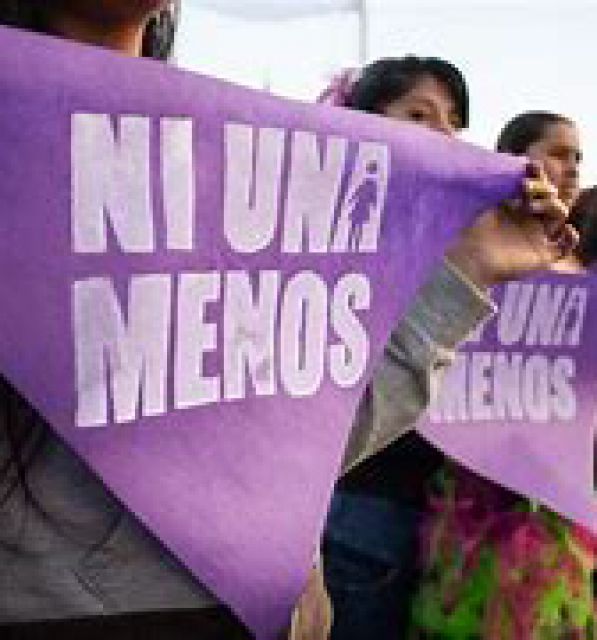
Feminist graphic design approaches are not uniform; they adapt to the cultural, social, and political contexts of different regions. In Northern Europe, for example, feminist graphic design often emphasizes clarity and functionality, mirroring broader societal values of equality and inclusiveness. Scandinavian countries like Sweden have seen urban planning projects incorporating gender perspectives, such as designing bus stops with better lighting and visibility to ensure women’s safety (Gender Equality at the Heart of the City | Urbact.eu, 2021). In contrast, in countries with more pronounced gender inequalities, feminist graphic design may take on a more confrontational or subversive tone. For instance, in regions of Latin America, bold graphic campaigns such as “Ni Una Menos” use stark, evocative imagery to highlight the pervasive issue of femicide. “Ni una menos” is a social feminist movement that started 2015 in Argentina because of a big amount of femicides happening in that time (Bedrosian, 2023). These geographic variations underscore the adaptability of feminist graphic design as it seeks to address diverse cultural realities while maintaining its core commitment to justice and representation.

Feminist Design

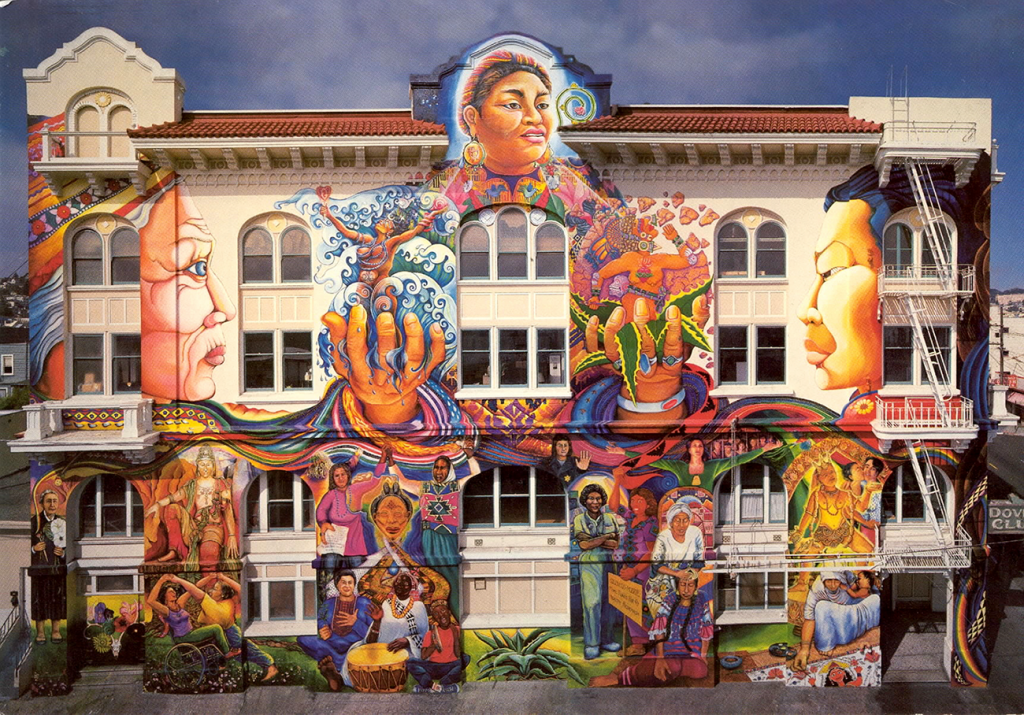
At its core, feminist design prioritizes inclusivity, equity, and the dismantling of systemic biases. As graphic design reflects a society and culture, it also reflects the feminist movement towards equality by the creation of visuals that support inclusivity and diversity. It encourages the critical reflection on how women are represented in media and design and designers like Sheila Levrant de Bretteville emphasize collaboration or question gender-roles and narratives in traditional graphic design. One notable example is her design of the Women’s Building mural in Los Angeles, which brought together diverse female artists to celebrate women’s contributions to history (Jewish Women’s Archive, 2024).

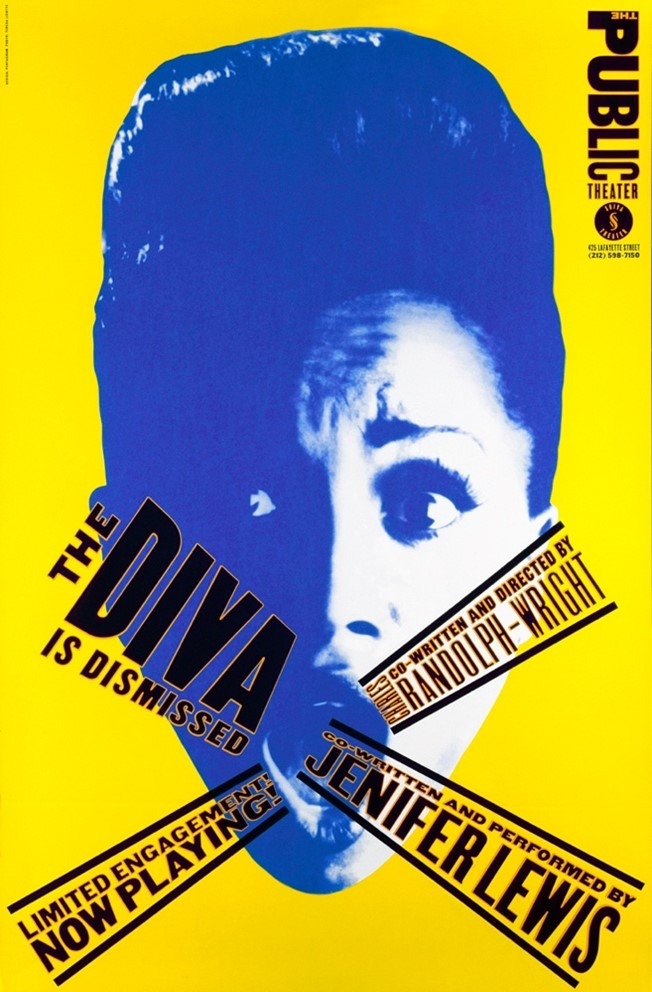
The main principles for change of feminism in graphic design are representation and the reinforced stereotypes and it gained momentum in the late 20Th century. Designers like Paula Scher or April Greiman tried to challenge these norms by focusing on specific design aspects like typography, branding or colours (Vermeulen, 2024). For example, feminine products and branding was traditionally created with very flowy, cursive and serif fonts and designers like Paula Scher try to break up these hierarchal design norms with bold typography and colors (Farr, 2021).

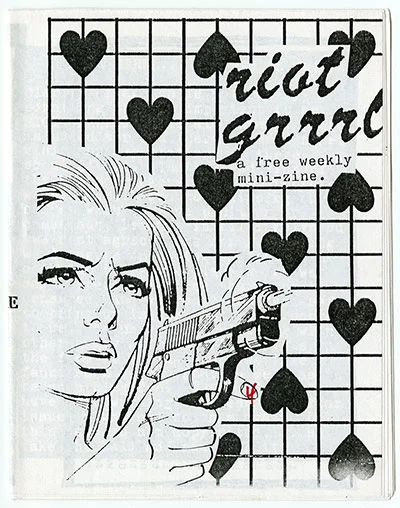
An example of a grassroot movement in the publishing media sector focusing on punk music and feminism:

Riot Grrrl Zine

The Riot Grrrls is a movement of punk feminists that started in the early 1990s and is often associated with the third wave feminism. This movement initiated and therefore included a broad diy-culture focused on zines. These zines and also the music addressed topics like arts, political actions, activism and issues like rape, domestic violence, sexuality, racism and female empowerment (Hopper, 2011).  A message often spread by members of the movement was ‘you matter’ indicating an outrage about representation and validation of women.

The mini zines were a kind of social activism in which women and feminists could form a community and share their experiences through self-publishing and next to mainstream media. Everyone was encouraged to publish and create their own zine, the design was raw and unpolished, often created using basic materials like scissors, glue and photocopiers, featuring lots of hand drawn images (Laing, 2013).

These zines were a way to reclaim the male-dominated media and punk scenes and empowered personal stories or grassroot activism. They often included call to actions and encouraged women to protest, start bands, join collectives etc. Ultimately it served as a means to bypass the gatekeeping of cultural production and stories of women (in Punk) (Jackson, 2022).

Though many white women found solace and comfort in riot grrrl, the movement lacked intersectionality as women of color were and felt excluded from the movement (Farrington, 2020).

*In this blog post, I primarily use the term “women” when discussing feminism and related issues. This choice is grounded in the historical context of feminist movements, which have traditionally centered on the experiences and struggles of women. However, it is important to emphasize that this usage is meant to include and apply to all individuals who fall under the FLINTA* umbrella (Female, Lesbian, Intersex, Nonbinary, Trans, and Agender people).

Sources

Bedrosian, A. (2023, March 31). Ni Una Menos. Bpb.de. https://www.bpb.de/shop/zeitschriften/apuz/femizid-2023/519674/ni-una-menos/

Farr, S. A. (2021, February 2). Analyzing Paula Scher’s Design Process. Medium. https://sarahafarr.medium.com/analyzing-paula-schers-design-process-9a17cb1bf569

Farrington, E. (2020, December 24). When punk went feminist: the history of riot grrl – Gen Rise Media. Web.archive.org. https://web.archive.org/web/20201224041151/https://www.genrisemedia.com/2020/05/12/when-punk-went-feminist-the-history-of-riot-grrl/

Gender equality at the heart of the city | urbact.eu. (2021). Urbact.eu. https://urbact.eu/good-practices/gender-equality-heart-city

Hopper, J. (2011, January 20). Riot Girl: still relevant 20 years on. The Guardian. https://www.theguardian.com/music/2011/jan/20/riot-girl-20-years-anniversary

Jackson, A. (2022, July 17). Start a Riot (and a Zine), Grrrl. JSTOR Daily. https://daily.jstor.org/start-a-riot-and-a-zine-grrrl/

Jewish Women’s Archive. (2024). Los Angeles’ Woman’s Building remembered . Jewish Women’s Archive. https://jwa.org/thisweek/jan/15/2012/womans-building

Laing, O. (2013, June 29). The art and politics of riot grrrl – in pictures. The Guardian. https://www.theguardian.com/music/gallery/2013/jun/30/punk-music

Vermeulen, S. (2024, September 26). Feminism in Graphic Design. Vermeulen Design Studio Wuppertal. https://www.vermeulen-design.com/blog/feminism-graphic-design

LS #3  Let’s keep on Recapping

In the last blogpost, I cleared up a few definitions within the topic of feminism. But as this field is so broad, here are some more…

Different Types of Feminism

Feminism is not an undifferentiated movement but rather an umbrella term including various perspectives and ideologies. For example, liberal feminism focuses on achieving equality through legal and political reforms of the current social systems, by changing it with e.g. equal pay and reproductive rights rather than an overhaul of the systems (Guy-Evans, 2024). Radical feminism, on the other hand, empathizes on the patriarchal structures that perpetuate gender inequality, often critiquing traditional family roles and societal norms. Therefore, radical feminists are often sceptical if there can be an effect in changing the current systems and politics (Johnson Lewis, 2020).  Intersectional feminism emphasizes the overlapping systems of oppression that affect individuals, such as racism, sexism, and classism. It was coined recognizing that the experience of a Black woman differs significantly from that of a white woman (UN women, 2020). Other branches include socialist feminism, which critiques capitalism’s role in sustaining gender inequality and how patriarchy and capitalism are interconnected forms of oppression and exploitation of women (MasterClass, 2020); and ecofeminism, which connects the exploitation of women to the exploitation of nature and argue that women around the world are more affected by the consequences of climate change (Bamberg, 2023).

Intersectionality

Introduced by Kimberlé Crenshaw, intersectionality is an essential framework for understanding how different forms of oppression intersect and compound each other (Crenshaw, 1991). For example, a woman who is both Black and LGBTQ+ faces unique challenges that cannot be addressed only by focusing on sexism or racism in isolation. Intersectionality ensures that feminism is inclusive and accounts for the diverse experiences of all women. Without it, we risk ignoring people who face multiple types of unfair treatment, which goes against the inequalities feminism is trying to fix (Hawk & Sharkey, 2016).

Femicide

One of the gravest manifestations of gender inequality is femicide, the intentional killing of women because they are women. This extreme form of violence is often rooted in misogyny and is disturbingly common in many parts of the world. For example, a study by UN Women (2023) has revealed that in 2023, 140 femicides happened a day, which is a woman being killed by intimate partners or as a result of systemic violence every 10 minutes. Recognizing and addressing femicide is crucial in the fight for gender equality, as it underscores the deadly consequences of unchecked misogyny.

Misogyny & Misandry

Misogyny and misandry are terms that often come up in conversations about gender equality and I have also used them before, but their definitions and relevance within feminism deserve clarification. Misogyny refers to the hatred, dislike, or prejudice against women and often manifests in systemic oppression, gender-based violence, and societal norms that devalue women (Kendall, 2019). On the other hand, misandry describes the hatred or prejudice against men, often expressed through stereotyping or resentment (Oxford Dictionary, 2023). While both represent harmful attitudes, it’s important to note their contexts: misogyny is deeply ingrained in societal structures and has widespread, institutionalized consequences, whereas misandry typically arises in interpersonal or cultural settings and lacks the same systemic impact (Greene, 2022).

In the context of feminism, it’s crucial to address both misogyny and misandry, as the goal of feminism is not to reverse oppression or create new power imbalances. Instead, it’s about achieving equity and dismantling harmful systems that hurt everyone. Misandry, while sometimes a reaction to lived experiences of misogyny, does not align with feminist values. Feminism emphasizes accountability rather than blame, encouraging men and women alike to reject toxic gender norms. By confronting misogyny’s systemic roots and addressing the frustrations that sometimes lead to misandry, feminism creates space for mutual understanding and respect, ensuring that gender equality benefits everyone.

Why Do We (Still) Need Feminism?

After reading and knowing about the history of feminism, there is voices asking why feminism is even still necessary nowadays. Unfortunately, it is. But let’s start with the positive: Thanks to the movement, the recognition of the topic like gender-based violence, harassment and discrimination has greatly increased and movements like #metoo have given victims a voice and changed the way, society talks about consent and responsibility (Joshi, 2023).  

The need for feminism becomes clear when you look at both the obvious and the more hidden examples of gender inequality that still exist in our world.

Despite growing awareness of gender equality, there are still glaring issues that underline the necessity of feminism in 2024. Online harassment remains rampant, with women facing abuse, revenge porn, and deepfake violations that threaten their safety and privacy. Reproductive rights are under attack in many regions, limiting women’s autonomy over their bodies. Domestic violence and the rise of coercive control reveal how systemic issues continue to trap women in unsafe environments. In healthcare, medical gaslighting leads to misdiagnosis and neglect of women’s health concerns. Climate change exacerbates gender inequality, disproportionately affecting women in vulnerable communities. Workplace discrimination, including promotion bias and harassment, continues to hold women back, especially those from marginalized groups. Leadership positions remain dominated by men, with women underrepresented in politics and business. Finally, menstrual inequity persists, as stigma and lack of access to menstrual products continue to impact women worldwide. These pressing issues demonstrate why feminism remains vital today.

But it doesn’t stop there. Some forms of inequality are more subtle yet equally harmful. Society has conditioned women to be “the emotional caretakers,” making them seem naturally more empathetic and suited to caregiving roles. This isn’t inherent; it’s learned behavior, shaped by cultural expectations that prioritize others’ needs and feelings over their own. On the other hand, men are raised with the expectation to suppress their emotions, frequently told to “man up” or avoid vulnerability, leading to emotional repression. These patterns don’t arise in isolation; they are rooted in deeply ingrained social norms passed down through generations, starting from childhood. As a result, women often bear an unequal emotional burden while men are deprived of healthy outlets for their feelings, perpetuating cycles of inequality and harm.

These rigid gender roles harm everyone. Women are overburdened with societal expectations, while men are trapped in a framework that denies them emotional freedom. Addressing these ingrained norms is not just about fairness—it’s about creating a society where individuals are free to express themselves authentically without fear of judgment or limitation. This change must begin with the way we raise children, teaching them from the earliest stages that emotions and empathy are human qualities, not gendered traits. By challenging these stereotypes and fostering equity from the ground up, we can move closer to a more balanced and compassionate world.

And Why Do Men Too?

Feminism is not just for women—it is for men as well. Patriarchy imposes rigid expectations on men, such as the need to suppress emotions, adhere to traditional notions of masculinity, and prioritize dominance over vulnerability (Mohler, 2024). These stereotypes not only harm men’s mental health but also strain relationships and limit personal fulfilment. In countries that have a more gender-equal system and society, men are less likely to struggle with mental health, physical health and have a 40% reduced risk of a violent death (Werber, 2018). By embracing feminist principles, men can reject toxic masculinity, fostering healthier, more equitable interactions with others. Additionally, a more egalitarian society benefits everyone by promoting collaboration, empathy, and mutual respect.

Sources

Bamberg, O.-F.-U. (2023, May 4). Geschlechtersensible Forschung: Ecological Feminism (or Ecofeminism). Uni-Bamberg.de; Otto-Friedrich-Universität Bamberg. https://www.uni-bamberg.de/gbwiss/kunigunde-der-blog-der-gleichstellungsbeauftragten-wissenschaft/alle-artikel/artikel/geschlechtersensible-forschung-ecological-feminism/

Crenshaw, K. (1991). Mapping the Margins: Intersectionality, Identity Politics, and Violence Against Women of Color. Stanford Law Review, 43(6), 1241–1299. https://www.jstor.org/stable/1229039

Greene, M. (2022, September 14). Misogyny vs. Misandry: One Has Historically Defined the Structural, One Has Not. Medium. https://remakingmanhood.medium.com/misogyny-vs-misandry-one-has-historically-defined-the-structural-one-has-not-69abd2f0b9b8

Guy-Evans, O. (2024, February 13). Liberal Feminism: Definition, Theory & Examples. SimplyPsychology. https://www.simplypsychology.org/liberal-feminism.html

Hawk, T., & Sharkey, G. (2016, July 26). What is “Intersectional Feminism”? Denison University. https://denison.edu/academics/womens-gender-studies/feature/67969

Johnson Lewis, J. (2020, November 25). What Is Radical Feminism? ThoughtCo. https://www.thoughtco.com/what-is-radical-feminism-3528997

Joshi, V. (2023, September 30). Feminism in Today’s World. Bschool.dpu.edu.in. https://bschool.dpu.edu.in/blogs/feminism-in-todays-world

Kendall, E. (2019). Misogyny | sociology. In Encyclopædia Britannica. https://www.britannica.com/topic/misogyny

MasterClass. (2020). Socialist Feminism Explained: What Is Socialist Feminism – 2024 – MasterClass. MasterClass. https://www.masterclass.com/articles/socialist-feminism

Mohler, J. (2024, February 15). The biggest reason men should be feminists. Substack.com; Make Men Emotional Again. https://makemenemotionalagain.substack.com/p/the-biggest-reason-men-should-be

Oxford Dictionary. (2023). misandry, n. meanings, etymology and more | Oxford English Dictionary. Oed.com. https://doi.org/10.1093//OED//5787175758

UN Women. (2023, November 22). Femicides in 2023: Global estimates of intimate partner/family member femicides. UN Women – Headquarters. https://www.unwomen.org/en/digital-library/publications/2024/11/femicides-in-2023-global-estimates-of-intimate-partner-family-member-femicides

UN women. (2020, July 1). Intersectional feminism: what it means and why it matters right now. UN Women; United Nations. https://www.unwomen.org/en/news/stories/2020/6/explainer-intersectional-feminism-what-it-means-and-why-it-matters

Werber, C. (2018, September 17). Countries where men hold the power are really bad for men’s health. Quartz. https://qz.com/work/1392183/mens-health-is-worse-in-countries-with-less-gender-equality

LS #2 A Short Recap On Feminism

In this blog post, I would like to dive into a basic explanation and definition of feminism. What is it and where does it come from? I want to create a starting point for my research, especially concerning the theoretical topic exploration of feminism in design.

Feminism and Feminists

To start off, the most commonly used term within this context is feminism (obviously).

Feminists generally agree that women* face discrimination due to their gender, leading to the persistent neglect of their needs. To address these issues, they argue for radical changes across social, economic, and political spheres (Delmar, 2018). At its core, feminism is rooted in the belief in the social, economic, and political equality of the sexes. Ultimately, feminism is about women striving for and demanding equal rights.

Stigmatization of feminism

The stigmatization of feminism highlights widespread misconceptions about the movement. A common paradoxical statement, “I am not a feminist, but I think equal rights for men and women are important,” reflects a misunderstanding of feminism, whose main idea is precisely the pursuit of equal rights in all areas for all people (Chen, 2021).

This stigma suggests that feminism is a concept many, often men, do not want to identify with. Feminists are often misrepresented as extremists who hate men and want to reverse existing gender roles, which is clearly untrue. A 2023 study by Aífe Hopkins-Doyle et al. shows how inaccurate those stereotypes about feminists are by revealing that feminists’ attitudes toward men were positive and did not differ significantly from those of non-feminists.

Another layer of stigmatization comes from the identities projected onto feminists. Feminists are often wrongly generalized based on behavior, looks, or sexual orientation—for example, the stereotype of a feminist as a strong, angry, aggressive lesbian woman who avoids makeup, dresses, or anything deemed cute or girly (Chen, 2021).

Patriarchy

Often, when talking about feminism, the word patriarchy pops up.  According to the Cambridge Dictionary (2022), patriarchy is a society in which the oldest male is the leader of the family or a society controlled by men in which they use their power to their advantage.  It’s a construct of society that is held up by decades of traditions and beliefs that are passed through generations of generations and impact us in the fields of gender inequality, gender-based violence, reproductive rights, stereotypes, and objectification (Peluso, 2023).

Even though the definition might indicate that men only benefit from this social construct, it is actually the opposite as they are affected by it as well, especially when it comes to mental health. Psychologists say, that the main topics that men struggle with are caged emotions which mainly include the “men don’t cry” mentality; silent struggles, as society expects men to be resilient to stress and not in need of help at any moment; relationship roadblocks, being open and vulnerable can influence a partnership especially when it comes to communication; risk-taking and violence as traditional masculinity glorifies aggression and harmful behavior (Zarafshan Shiraz, 2024).

History of Feminism (in short)

Within the history of feminism, it is often talked about the three (four) waves of feminism that started in 1848 at the Seneca Falls Convention, the first women’s rights convention (Oregon Secretary of State, n.d.).

Though there are a lot of arguments and thoughts that these women’s movements started a long time before that, several iconic women from the past can be counted as the foremothers of the feminist movements nowadays: The poet Sappho in ancient Greece who wrote about her love for women and was a teacher for girls about culture, music, theatre and more (Klaeui, 2021), Hildegard von Bingen who lived in the medieval times and consistently advocated for the rights and dignity of women (How Has Hildegard von Bingen’s Work Been Embraced by Feminists? – Saint Hildegard von Bingen, 2022), or the author Jane Austen whose books “hint at the need for equality between the sexes” (Sittenfeld, 2016).

But on the day, the first women’s rights convention was held, it became a self-conscious and clearly identifiable movement that later resolved in multiple similar movements (Rampton, 2015).

This first wave was most active in the US and Western Europe and mainly consisted of women’s marches, public gatherings, writings, and protests for the right to vote. It revolved around the press, the only form of communication at that time, which unfortunately was very biased and often described the early feminists as bad-looking and un-feminine. As the movement developed, the discussion about reproductive rights for women unfolded and the first birth control clinics were opened in the US (Guy-Evans, 2024).

The second wave happened between the early 1960s and the late 1980s after the postwar chaos and was inspired by the civil rights movements. Some would say it started with the publication of writer Simone de Beauvoir of her book “the second sex” (McDonough, 2023).

In addition to the ideas of the first wave, feminists now also focused on sexual harassment and discrimination, especially in workplaces. Also, the discussion about gender roles and sexuality started and questioned as well as – with the rise of television – the female representation in media (Guy-Evans, 2024).

This wave entailed tensions between different groups of feminists, as the movement was mainly built up by white, educated, middle-class women who mistakenly concluded that unity through the same gender would exceed all other experiences. Therefore, feminists from other ethnicities or classes, especially black women, faced oppression, and their issues were passed over and not prioritized, so they created their organizations (McDonough, 2023).

Achievements: Equal Pay Act 1963; Equal Credit Opportunity Act 1974; Legalization of abortion in the first trimester 1973; more educational opportunities

The third wave of feminism started in the 1980s/90s and was started by young feminists who grew up in a world of mass media and they believed to be more inclusive and less judgemental than the feminists before them.  An important factor for this was possibly, that in 1989 intersectionality was introduced, which is the interconnectedness of social categories, such as race, gender, class, sexuality, and ability (Hawk & Sharkey, 2016).

The main ideas of the first wave had a lot to do with the questions of identity, such as the ideas of the self, the fluidity of gender, sexual identity, and what it means to be a woman (Guy-Evans, 2024).

An ideal of this movement is a woman’s choice, the concept of girl power is introduced, and women are encouraged to do whatever they want to do. An example would be putting on makeup if it is their own wish to do so and not for the male gaze. Also, third-wave feminism is often pro-sex, defending pornography, sex work, intercourse, and marriage, and reducing the stigma surrounding sexual pleasure in feminism. Lastly, they also strongly stand up for female representation and cultural production (Guy-Evans, 2024).

Lastly, the fourth wave started sometime around 2012 with a focus on sexual harassment, body shaming, and rape culture. This wave arose through a bunch of incidents regarding sexual harassment and rape worldwide.  One impactful day happened right after the election of former US- President Donald Trump in 2016. Shortly after, a Women’s march for equal rights was proposed via Facebook resulting in more than 4.6 million people marching on January 21st2017 (Britannica, 2019).

A movement that is directly connected to the fourth wave is the #metoo movement that started in 2017 with the revealing of Harvey Weinstein being a sex offender and having assaulted and raped women for years in the industry. The movement grew worldwide especially within social media by women using the #metoo (Britannica, 2019).

This wave is still ongoing.

* In this blog post, I primarily use the term “women” when discussing feminism and related issues. This choice is grounded in the historical context of feminist movements, which have traditionally centered on the experiences and struggles of women. However, it is important to emphasize that this usage is meant to include and apply to all individuals who fall under the FLINTA* umbrella (Female, Lesbian, Intersex, Nonbinary, Trans, and Agender people).

References

Aífe Hopkins-Doyle, Petterson, A., Leach, S., Zibell, H., Phatthanakit Chobthamkit, Rahim Sharafkhani, Blake, J., Bosco, C., Cherrie-Rees, K., Beadle, A., Cock, V., Greer, H. S., Jankowska, A., Macdonald, K., English, A. S., Wai, V., Asano, R., Beattie, P., Allan, & Chinun Boonroungrut. (2023). The Misandry Myth: An Inaccurate Stereotype About Feminists’ Attitudes Toward Men. Psychology of Women Quarterly, 48(1). https://doi.org/10.1177/03616843231202708

Britannica. (2019). Feminism – the Fourth Wave of Feminism. In Encyclopædia Britannica. https://www.britannica.com/topic/feminism/The-fourth-wave-of-feminism

Cambridge Dictionary. (2022, July 6). patriarchy. @CambridgeWords. https://dictionary.cambridge.org/de/worterbuch/englisch/patriarchy

Chen, C. (2021, November 8). Feminism as a Stigma: What does a feminist look like. Kellogg.campusgroups.com. https://kellogg.campusgroups.com/GEN/blog/feminism-as-a-stigma–what-does-a-feminist-look-like-/21353/?back=2

Delmar, R. (2018). What Is Feminism? Theorizing Feminism, 5–28. https://doi.org/10.4324/9780429494277-2

Guy-Evans, O. (2024, February 13). Four Waves of Feminism Explained. Simply Psychology. https://www.simplypsychology.org/four-waves-feminism.html

Hawk, T., & Sharkey, G. (2016, July 26). What is “Intersectional Feminism”? Denison University. https://denison.edu/academics/womens-gender-studies/feature/67969

How has Hildegard von Bingen’s work been embraced by feminists? – Saint Hildegard von Bingen. (2022, December 22). Sainthildegard.com. https://sainthildegard.com/how-has-hildegard-work-been-embraced-by-feminists/

Klaeui, A. (2021, September 4). Sappho neu entdeckt – Sappho war aristokratisch, lesbisch und eine begnadete Dichterin. Schweizer Radio Und Fernsehen (SRF). https://www.srf.ch/kultur/literatur/sappho-neu-entdeckt-sappho-war-aristokratisch-lesbisch-und-eine-begnadete-dichterin

McDonough, M. (2023, December 14). Second-wave feminism | Britannica. Www.britannica.com. https://www.britannica.com/topic/second-wave-feminism

Oregon Secretary of State. (n.d.). State of Oregon: Woman Suffrage – The 1848 Seneca Falls Convention. Sos.oregon.gov. https://sos.oregon.gov/archives/exhibits/suffrage/Pages/events/seneca.aspx

Peluso, C. (2023). The Origins of Patriarchy. Population Media Center. https://www.populationmedia.org/the-latest/unmasking-the-patriarchy-its-origins-impact-and-the-path-to-equality

Rampton, M. (2015, October 25). Four waves of feminism. Pacific University Oregon. https://www.pacificu.edu/magazine/four-waves-feminism

Sittenfeld, C. (2016, April 20). Was Jane Austen a feminist? The answer is in her stories | Curtis Sittenfeld. The Guardian; The Guardian. https://www.theguardian.com/commentisfree/2016/apr/20/jane-austen-feminist-pride-prejudice-curtis-sittenfeld

Zarafshan Shiraz. (2024, July 28). Emotional cage and relationship roadblocks: Here’s how patriarchy affects men’s well-being. Hindustan Times. https://www.hindustantimes.com/lifestyle/relationships/emotional-cage-and-relationship-roadblocks-heres-how-patriarchy-affects-mens-wellbeing-101722175443037.html

LS #1 Topic Research

Introduction

In the process of finding and choosing a topic for design research, I found myself most fond of the field of activism or feminism. I am trying to involve myself more within those groups by volunteering or engaging with political groups. Therefore, I am very interested in exploring this field, especially when connecting it to communication design and its impact.

Topic 1: Design Activism

Motivation

MotivationImpact is an important word regarding my motivation for this topic. Basically, for me, the definition of communication design is the creation of visual messages and media that effectively communicate ideas and information to a target audience – often used for marketing. And the last part is what I am struggling with, particularly from an ethical perspective. When I walk through the streets, overwhelmed by all the banners, posters, and advertisements urging passersby to buy things they probably don’t need. Many of these have strong communication and design strategies that make a powerful impact because they have the financial possibilities for it.

And that’s exactly what most feminist movements, climate activists, or any other social justice group that tries to change or have an impact on society don’t have. It requires volunteers and simple means of communication and history has proven how even the simplest banners and posters with a good message can start a worldwide movement (Anna‐Sara Fagerholm et al., 2023).

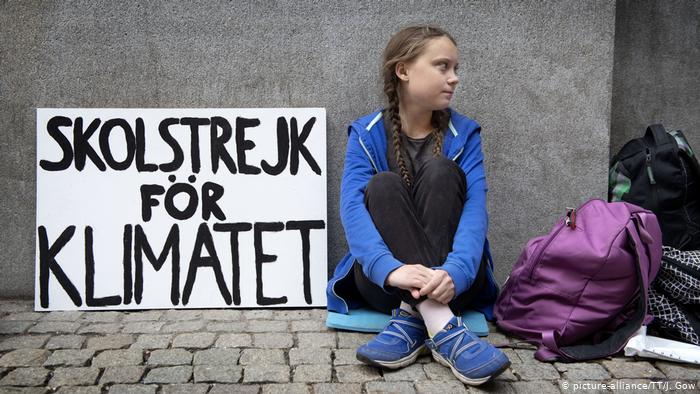
Examples of this could be the beginning of Fridays for Future which started with Greta Thunberg protesting on her own every Friday with the same simple poster with a bold message (Beckh & Limmer, 2022) as well as the #metoo movement which started as a hashtag and was spread in the media and on the streets with the same slogan and icon (Gieseler, 2019).

Ideas that I could further research on

  • History of visual communication (posters, banners, slogans) in activist movements.
  • What are the ethical challenges faced by communication designers when working for commercial purposes versus activism?
  • How have digital technology and social media affected the design strategies used in activist movements?

Topic 2: Feminism in Design

Motivation

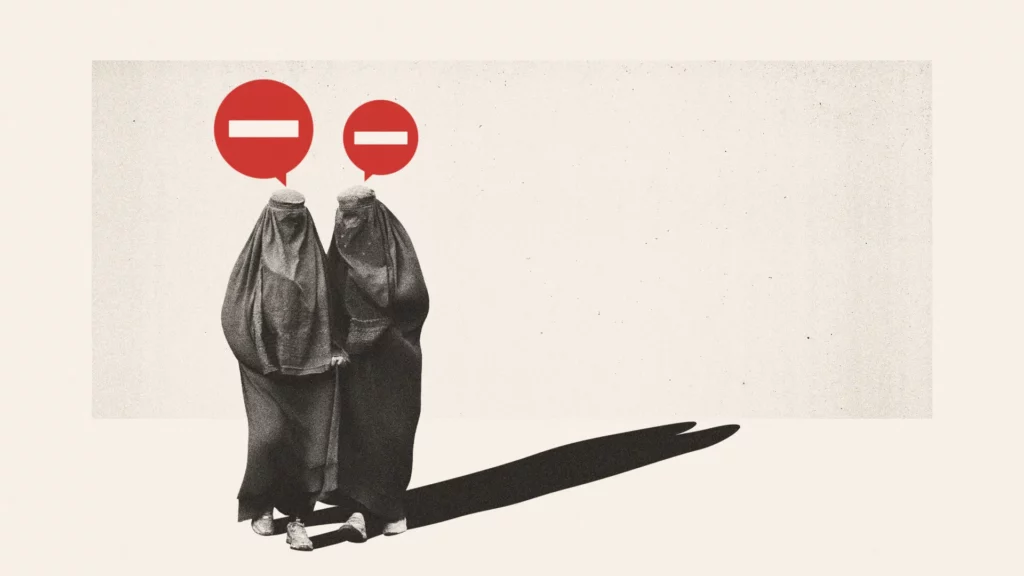
When talking about feminism these days, it often feels as if people are bored of it, as if it is a done deal and one hears quotes like “Feminism has done its job. Women have achieved equality. Feminism is dead” (Camille Paglia, n.d.). On the other hand, recent political changes, with the election of Donald Trump, a man convicted of felony crimes and proven sexual assault allegations (Kumar, 2024), as well as the situation in several countries such as Iran in which the most recent rules indicate that women should not talk publicly or to each other (Marsden, 2024), show that feminism is as relevant as ever, despite its long history.

“Feminist design is not just a thing you do; it’s how you do everything” (Alison Place, 2023).

The continued relevance of feminism in design and advertising becomes clear when examining some statistics. According to CreativeX (2024), Men are 23x more likely to appear in a professional role and women are often placed in a family setting (19%), older women only make up 2% of appearances in advertisements, and Black women only cast in 20% of ads featuring women. These are just a few examples indicating the inequality that is shown in design and therefore influences us through advertisement.  Also, like many other creative fields, graphic design has traditionally been male-dominated, which makes it interesting to look at the history of female designers and how almost everything is designed for and by men, how basic things like the famous fonts we use in design are mainly created by male designers (Furter, 2018), or, when thinking of famous designers throughout history, it’s often challenging to come up with a woman’s name.
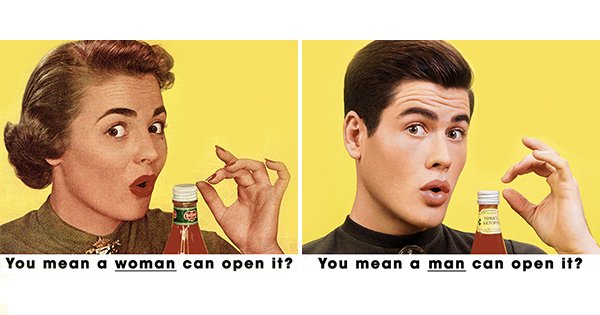
Ideas that I could further research on

  • Comparison of the visual language of feminist and non-feminist campaigns on similar topics and what are the similarities and differences.
  • How can we use design to deconstruct stereotypical gender roles?
  • What impact does digital technology have on feminist design practice?
  • Normalizing taboos that oppress various social groups (e.g. women) and therefore creating awareness in society
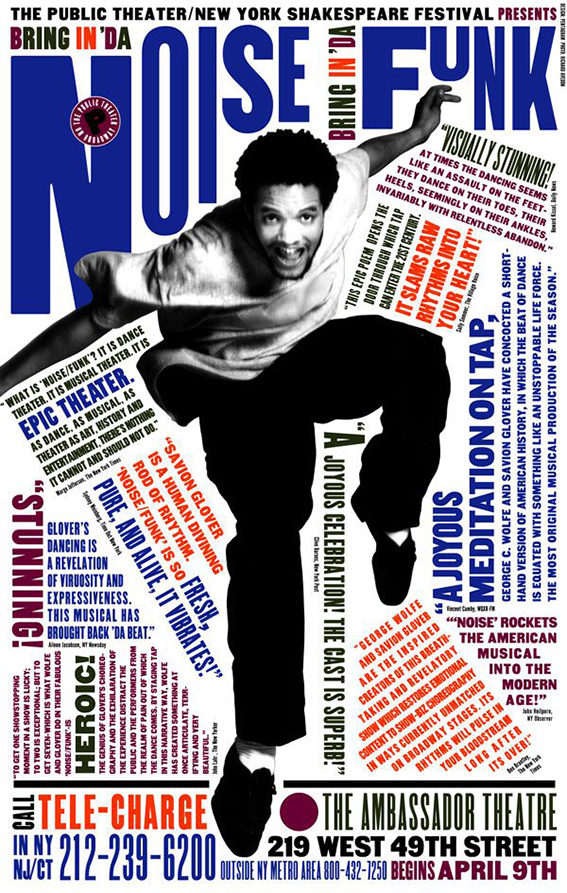
Combination of both ideas

Lastly, I could also combine both ideas and research about feminist movements. Feminist frameworks for design activism are now more relevant than ever, as they emphasize collaborative processes that aim to disrupt and dismantle power hierarchies while centering feminist ways of knowing and doing (Alison Place, 2023).
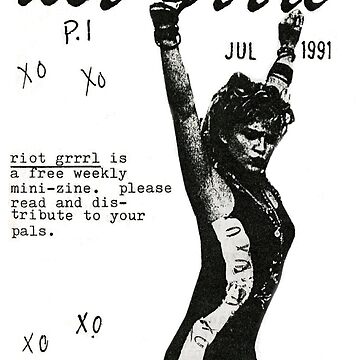
It could be interesting to analyze the communication design strategies and principles used over the years in different countries, particularly for the days of March 6th (Womens Day) and 25th of November (International Day for the Elimination of Violence against Women).

References

Anna‐Sara Fagerholm, Göransson, K., Thompson, L., & Per‐Olof Hedvall. (2023). Activism online: Exploring how crises are communicated visually in activism campaigns. https://doi.org/10.1111/1468-5973.12472

Beckh, P., & Limmer, A. (2022). The Fridays for Future Phenomenon. 427–432. https://doi.org/10.1007/978-3-030-74458-8_28

CreativeX. (2024). Gender in Advertising 2024 Report. CreativeX. https://learn.creativex.com/gender-in-advertising-2024

Furter, L. (2018, March 13). Design and Intersectional Feminism. Communication Arts. https://www.commarts.com/columns/furter

Gieseler, C. (2019). The Voices of #MeToo. Google Books. https://books.google.at/books?hl=de&lr=&id=XdKcDwAAQBAJ&oi=fnd&pg=PR3&dq=metoo+grassroots&ots=DSsg22IkdO&sig=Ki9fBCijfgj7hJK_PbMPLAH2x1g#v=onepage&q=metoo%20grassroots&f=false

Kumar, B. (2024, November 8). Trump first convicted felon to be US President. Can he pardon himself? @Bsindia; Business Standard. https://www.business-standard.com/external-affairs-defence-security/news/trump-first-convicted-felon-to-be-us-president-can-he-pardon-himself-124110800490_1.html

Marsden, H. (2024, October 30). Has the Taliban banned women from speaking? Theweek; The Week. https://theweek.com/world-news/has-the-taliban-banned-women-from-speaking

Place, A. (2023). Feminist Designer. Google Books. https://books.google.at/books?hl=de&lr=&id=QvCfEAAAQBAJ&oi=fnd&pg=PR9&dq=%22communication+design%22+in+feminist+activism&ots=p02VQUdYXz&sig=u4-aJSFiVZyiFOaFxbIdVt0wkvY#v=onepage&q=%22communication%20design%22%20in%20feminist%20activism&f=false