
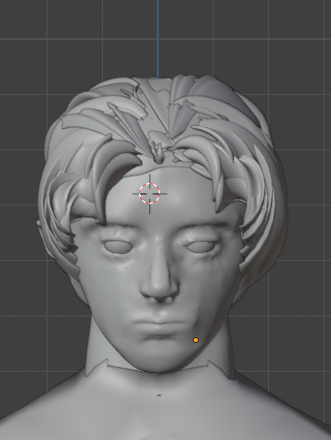
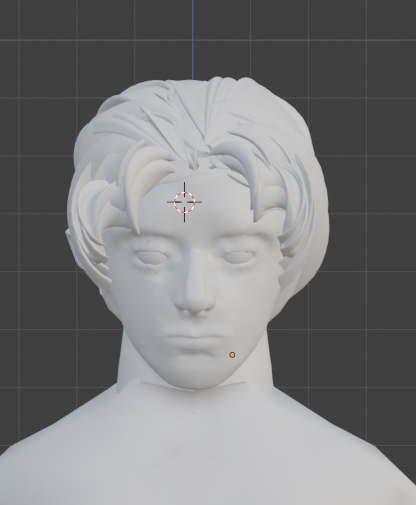
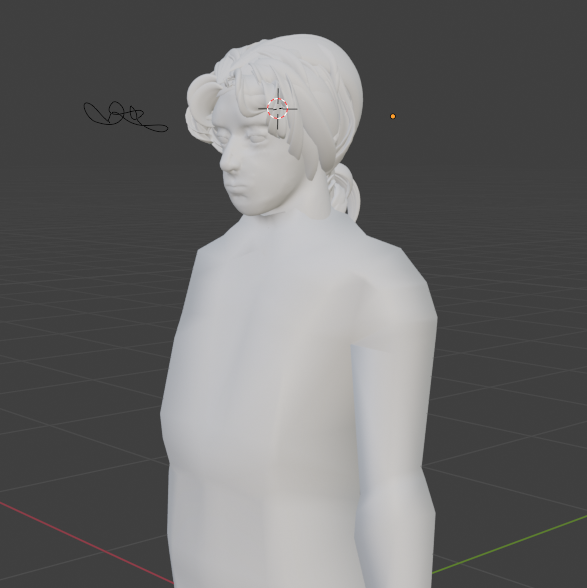
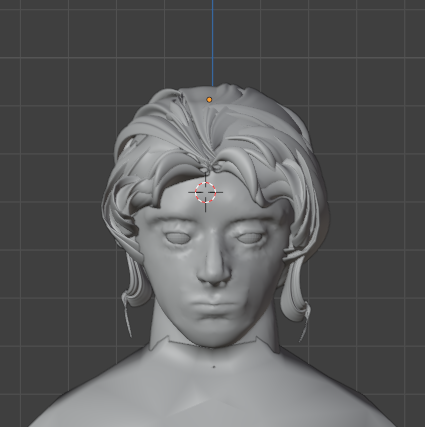
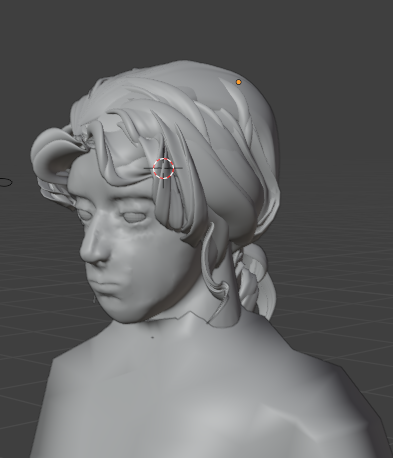
In my previous post, I shared the challenges I faced while learning to model a 3D head and how following a structured tutorial helped me establish fundamental techniques. Building on that foundation, I recently applied those same principles to create a complete stylized character head based on reference artwork. The systematic approach I developed – starting with a low-poly base, focusing on proper edge flow, and gradually refining details – proved equally valuable when working from concept art. Just as modeling the simplified Bammes head served as an effective training exercise, using reference art for this character provided clear visual goals while allowing room for technical problem-solving.
The hair modeling process with curves represented a new challenge that built upon my earlier experiences. While my initial head modeling focused solely on anatomical structure, incorporating hairstyling required adapting my workflow to include different techniques.
The curve-based method I discovered maintained the same philosophy of working cleanly and non-destructively, just as the tutorial’s step-by-step approach had taught me for facial topology. This continuity in methodology – establishing strong foundations before detailing – carried through both projects, demonstrating how core modeling principles apply across different aspects of character creation.
As I prepare to move into texturing and rendering, I find myself returning to the same lesson that emerged from my early struggles: patience and structured workflows yield better results than rushed attempts. Whether tackling fundamental head geometry or more specialized elements like hair, maintaining disciplined modeling habits developed through those initial challenges continues to pay dividends in my current work. The progression from basic head modeling to complete character creation shows how foundational skills serve as a springboard for more complex projects, with each step building logically upon the last.
