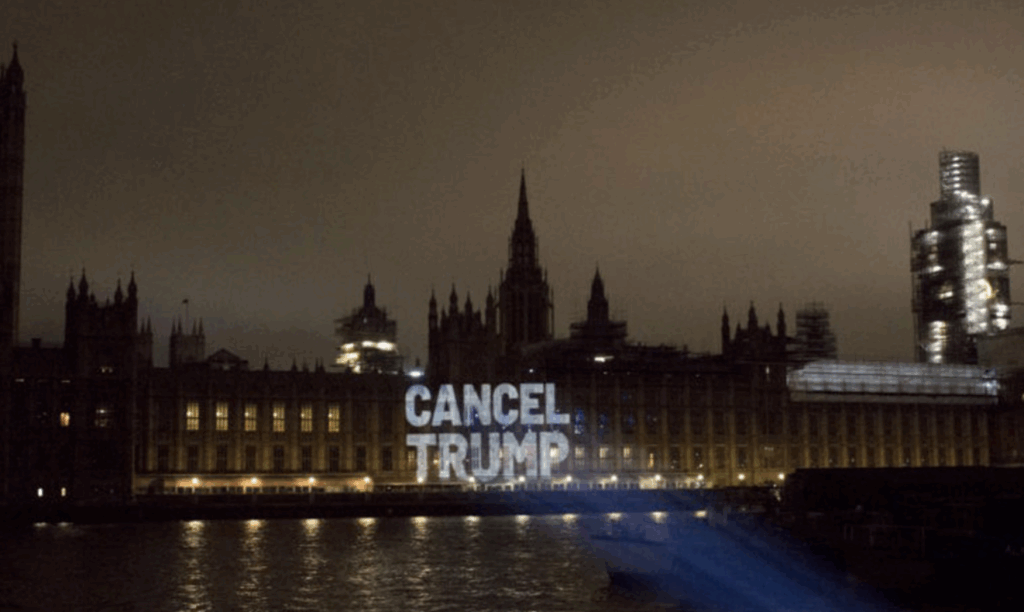
Over the past few weeks, I’ve mostly focused on the technical and aesthetic aspects of projection mapping here experimenting with shapes, surfaces, and how light interacts with plants. But while working on these visual experiments, I still had in my mind what power projection holds beyond just the artisctic side. Especially in the context of recent protests and political action, I started to see projection as a tool that could be used for visibility. One article that stayed with me was from PBS NewsHour, which explored how artists use projection mapping as a form of protest (Projection Artists Bring Light to Social Issues With Attention-grabbing Protests, 2017). They project powerful messages onto public buildings to challenge political systems, spark conversations, and support marginalized voices. What makes projection so effective in this context is its temporality, it doesn’t leave a permanent mark, but for a moment, it transforms a public space into something charged and meaningful. That transience also mirrors the urgency behind many of the messages.
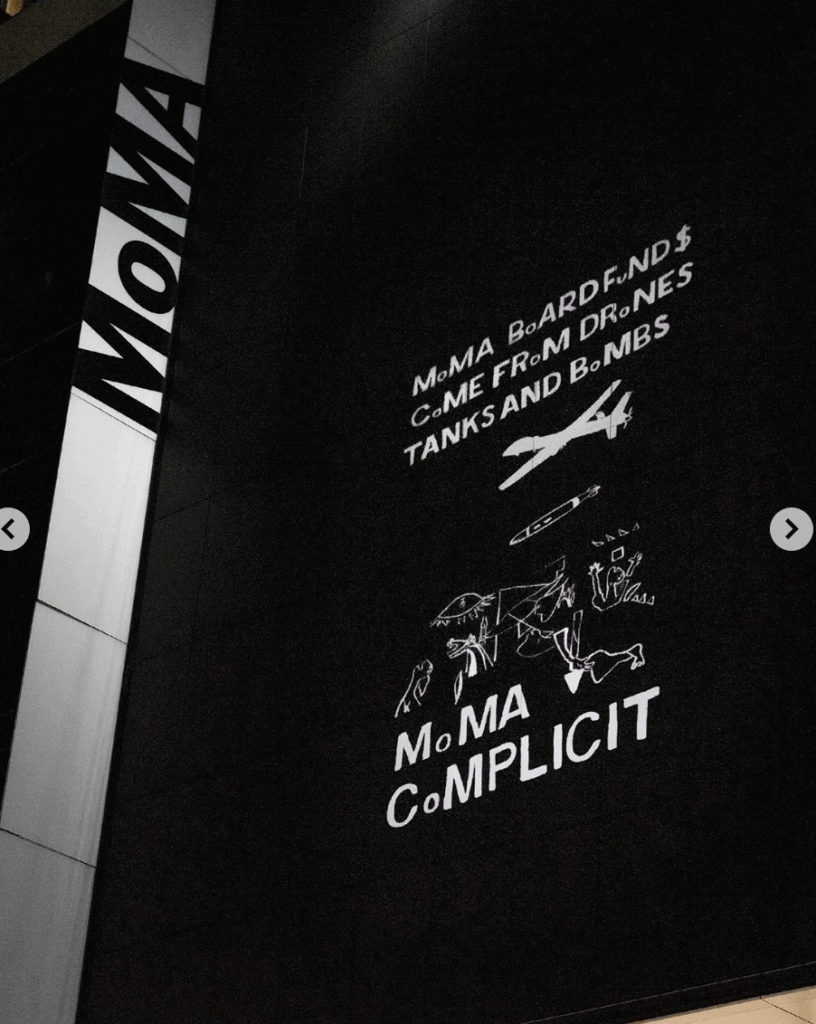
A recent example that made a strong impression on me was an action in New York where protestors occupied the Museum of Modern Art (MoMA) and projected artwork by Palestinian artist Maisara Baroud onto the building. His home in Gaza had been destroyed, and he continues to create and share his work while displaced, living under extreme conditions. The projection of his art onto MoMA was not only a critique of the institution’s silence, but a way of amplifying his voice. The caption of the post summed it up perfectly: “MoMA, we kicked it off for you by showing work from Maisara Baroud.” It’s a direct invitation to reflect on which stories are being told and which are being excluded in institutional spaces.
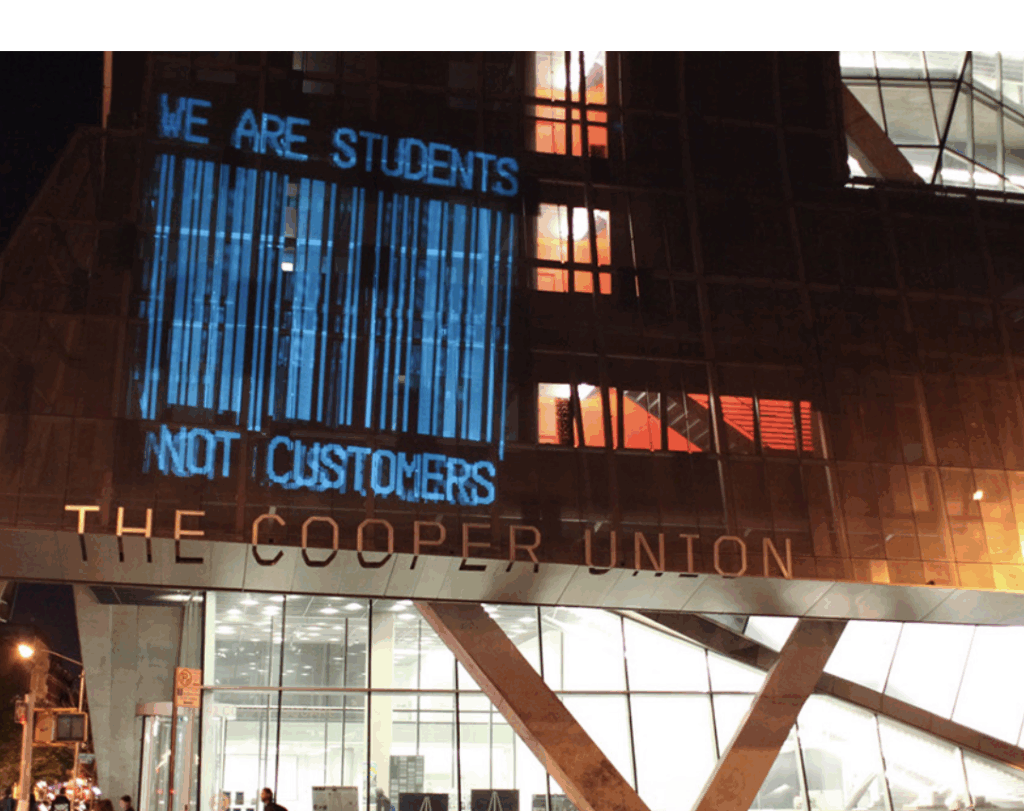
This idea reminded me of other examples where light has been used to resist, comment, or reclaim space. One that came to mind was the collective “The Illuminator,” which has been projecting political messages around New York City for years, often using iconic buildings like the Empire State Building or the New York Public Library as a canvas. They once projected “We are the 99%” during the Occupy Wall Street movement, turning architecture into activism (The Illuminator, n.d.). Reading some passages from Speculative Everything by Anthony Dunne and Fiona Raby also helped me to see things a little differently. They argue that design does not necessarily have to solve problems, but can also raise questions. Their concept of ‘speculative design’ encourages us to create alternative future scenarios and challenge existing norms through visual fiction. This is very similar to what projection mapping can achieve. Especially when it’s not about perfection or entertainment, but about evoking emotions or reflections. I don’t want to overcomplicate things, especially since I’m still learning and experimenting. But this change in mindset helps me approach the next steps of my project with a different attitude. Instead of just focusing on how cool or aesthetic a projection looks, I start thinking about what it can say.
This got me thinking even though my project started with flowers and abstract visuals, what if there projections could also be used as a form of political storytelling? There’s something symbolic about projecting onto plants.
Sources:
Projection artists bring light to social issues with attention-grabbing protests. (2017, September 17). PBS News. https://www.pbs.org/newshour/arts/projection-light-artists-protest
The Illuminator. (n.d.). https://theilluminator.org/
