03. Overview of Health Apps

Introduction to Chronic Disease Management

Chronic diseases, such as diabetes, hypertension, and mental health disorders, are long-term health conditions requiring continuous care and consistent management. Unlike acute illnesses, these diseases often necessitate daily routines, medication adherence, and lifestyle adjustments. Despite the availability of treatment plans, one of the biggest challenges in chronic disease management is ensuring patients remain motivated and consistent over time

The Role of Gamification in Chronic Disease Management

Gamification, the integration of game-like elements into non-game contexts, has emerged as an innovative tool in healthcare. By incorporating features like rewards, progress tracking, and challenges, gamification can transform mundane health tasks into engaging activities. This approach motivates patients to stay involved in their treatment plans and fosters long-term adherence.

How Gamification Motivates Patients to Engage in Daily Health Routines

Gamification taps into human psychology by offering immediate feedback, achievable goals, and rewards. For example, health apps often use points, badges, or streaks to reward users for taking medication on time or completing daily exercises. These small wins create a sense of achievement, encouraging users to stick with their routines.

Gamified systems are particularly effective in promoting long-term behavioral changes. Whether it’s regular exercise, a balanced diet, or mindfulness practices, gamification helps users establish and maintain healthier routines. Features like daily challenges, habit streaks, and milestone rewards provide positive reinforcement for maintaining these habits.

Case Studies & Success Stories

Known for its gamified step-tracking features, Fitbit encourages users to meet daily fitness goals. Fitbit rewards you with badges as certain milestones are achieved.

You can customize the total daily steps goal, set calorie, weight, sleep goals and then get multiple motivational notifications throughout the day
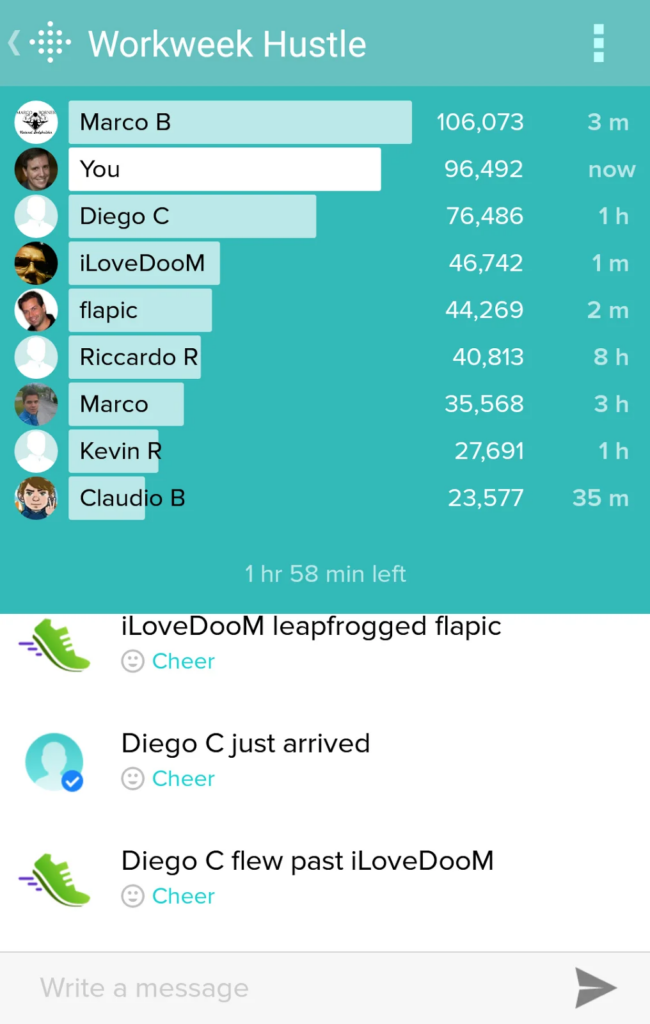
It’s simple, intuitive, and visually appealing, and has important features in setting like silent alarm and goals

You can easily go to the pool or have a shower without worries


From the user review, Fitbit still counted steps when the user waved his hands and added them to the daily goal. Furthermore, Fitbit accidentally added steps while the user air drummed on his leg while listening to music on his way to work and gathered 2,261 “steps”
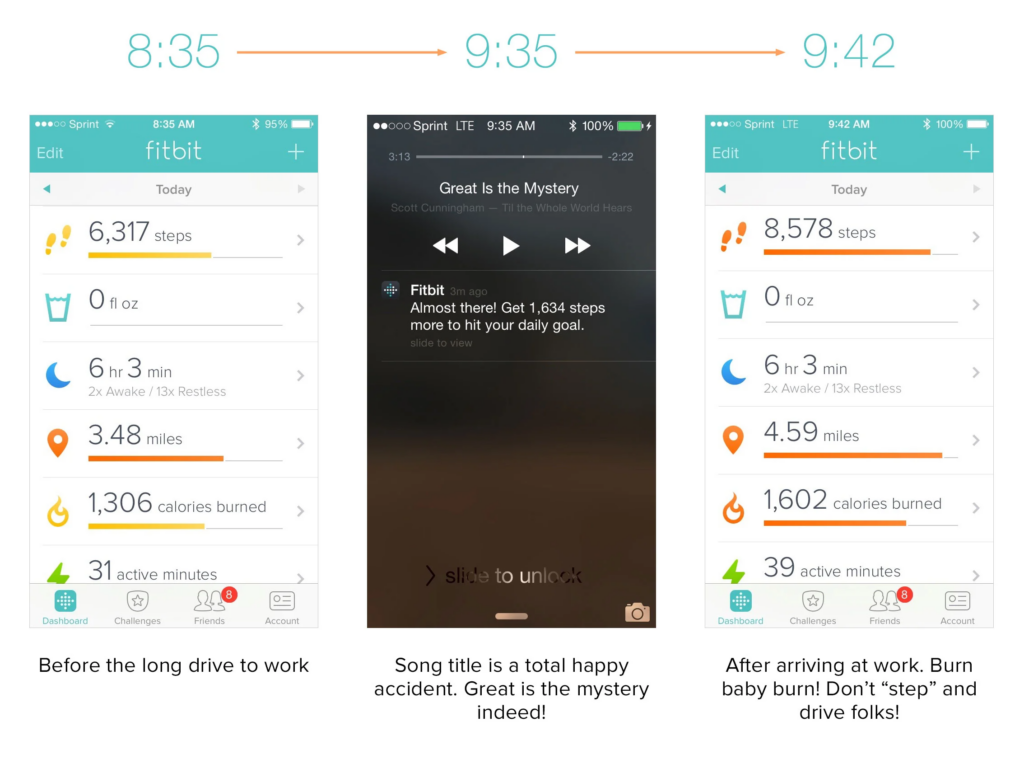
Also, Fitbit counted steps while user mowed the lawn

“It was Saturday, June 27th. I spent 3 – 4 hours on my mower on this particular day. Apart from this, I only took my normal relaxed weekend strides around the house. Somehow I racked up a whopping 22,125 steps by the end of the day! Look at my following day Sunday, June 28th. I look like a lazy butt comparatively. The only difference in my behavior? Sitting on a riding mower for a few hours.“

Unless you keep your phone’s Bluetooth setting activated persistently, you will never receive any low-battery notifications, because it’s not able to send you this message

❌ Difficult to put it on

It’s quite possible that the design rationale maybe if it’s really difficult to put on, it will be really difficult to accidentally take off. Maybe so, but mine has come off numerous times on accident during house cleaning and other occasional occurrences of catching it on various surfaces.

SuperBetter is a motivational app that comprises a series of games and challenges.

SuperBetter is built on research by Jane McGonigal, a game designer and psychologist. The app is scientifically proven to help reduce symptoms of anxiety and depression, improve resilience, and enhance overall well-being.

It uses techniques such as positive psychology, cognitive behavioral therapy (CBT), and resilience-building strategies.

✅ Uses effective game mechanics to engage users:

It uses game mechanics like quests, power-ups, and challenges to keep users motivated and engaged.

Challenges or triggers that represent obstacles to achieving goals.

Users earn points and badges for completing quests, defeating bad guys, or using power-ups. goals and break them into manageable tasks, promoting a sense of accomplishment.

The app is intuitive and easy to navigate, even for users unfamiliar with gamified tools.

Users can invite friends or family members as Allies to offer encouragement and accountability.

The app provides instant responses to user actions, like completing a quest or using a power-up

Although this is one of the best apps on the market, I found some problems:

Some users find the tasks repetitive over time, which may reduce long-term engagement.

Occasional bugs and glitches have been reported by users.

Gamification has proven to be a powerful tool in chronic disease management by increasing patient engagement, improving adherence, and fostering healthier habits. As technology continues to evolve, the potential for gamification in healthcare remains vast. By making health management more interactive and rewarding, gamification promises to improve outcomes and enhance the quality of life for millions of patients worldwide.

Conclusion

While gamification has shown significant success in motivating patients and improving engagement in chronic disease management, it’s clear that no single approach can address the diverse and complex needs of patients living with chronic conditions.

This brings us to an important consideration: How can healthcare platforms be better tailored to meet the unique physical, emotional, and behavioral needs of these patients?

In the next post, I’ll dive deeper into how platforms can go beyond generic solutions, offering personalized tools, adaptive experiences, and targeted support to effectively address the specific needs of chronic condition patients

#02 Loneliness?

Loneliness is a universal human experience, yet it manifests in ways that are deeply personal and varied. What exactly is loneliness, and how can we better understand its dimensions and impact?

What is Loneliness?

Several studies describe a different definition of loneliness. As a discrepancy between the social interactions and relationships an individual desires and those they currently experience, which leads to a negative feeling of being alone. Here, however, being alone is not the same as feeling lonely. 1 It is described as a perceived lack of social contact, 2 or as the unavailability or unwillingness of others to engage in social and emotional experiences 3, or as a condition in which an individual can interact with others but does not do it. 4

Loneliness is a multidimensional phenomenon due to its variations in intensity, causes, and circumstances. 5 Therefore, it can be distinguished between three types of loneliness: emotional loneliness, social loneliness and collective loneliness.

Emotional loneliness “results from the lack of a close, intimate attachment to another person”. Someone, like a spouse or best friend, whom one can rely on for emotional support during hard times and validates one’s values.

Social loneliness is the absence of quality relationships with family or a group of friends who share the same interests and activities. 6  

Collective loneliness pertains to an individual’s sense of disconnection from their valued social identities or “active network” (e.g., group, school, team, or national identity), where one can engage with like-minded others, even if only at a distance, within the broader social context. 7

How to measure Loneliness?

Since loneliness is a subjective experience, its measurement can be challenging. It cannot be directly observed, and there are no objective indicators to assess it. As a result, loneliness is typically measured through self-reported methods, such as surveys and questionnaires. There are two types of measuring loneliness: direct and indirect. 

Direct Measures: People are asked directly if they are feeling lonely in a certain period of time. 

Indirect Measures: People are asked several questions but without using words like lonely or loneliness. The questions are about feelings and experiences related to loneliness. Like the wish to have someone to rely on or talk to about private topics. 

Over the time several scales have been developed for measuring loneliness. The two most known ones are the “University of California Los Angeles Loneliness Scale” created by Russell and Peplau and the and the “De Jong Gierveld Loneliness Scale” created by De Jong Gierveld and Kamphuis. 8

University of California Los Angeles Loneliness Scale (UCLA Loneliness Scale)

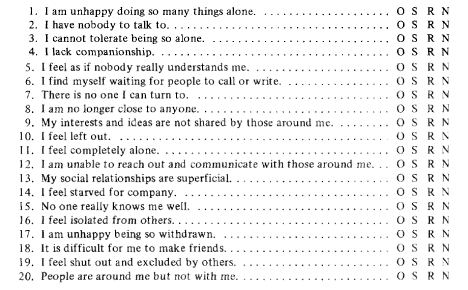
The survey consists of 20 statements, and respondents are required to indicate how frequently each statement applies to them. O: I often feel this way, S: I sometimes feel this way, R: I rarely feel this way, N: I never feel this way.  9

Source: D. W. Russell, L. A. Peplau: Developing a Measure of Loneliness
De Jong Gierveld Loneliness Scale

The original survey consists of eleven statements, in 2000 they created a shortened version with only six statements. Three of the statements are positively formulated and the other three are negatively formulated. The statements need to be answered with “no”, “more or less” or “yes”. This survey also considers the difference between emotional loneliness and social loneliness. 8

6 questions: 

  • I experience a general sense of emptiness.
  • I miss having people around.
  • I often feel rejected.
  • There are plenty of people I can rely on when I have problems.
  • There are many people I can trust completely.
  • There are enough people I feel close to.

What is Social isolation?

Loneliness and social isolation are frequently discussed in tandem or treated as synonymous concepts. 2 However, loneliness describes a subjective experience, whereas social isolation is an objective situation where someone is alone or lacks meaningful social interactions. 10 A person who has little contact to the family, friends or other people of a community is socially isolated. 11

Since belonging is seen as a fundamental human motivation. 12 A core aspect shared by most individuals is the need for love, acceptance, and understanding, which often motivates significant efforts to avoid experiencing loneliness. 


Sources:

[1] L. A. Peplau and D. Perlman, “Loneliness,” in Encyclopedia of Mental Health, H. S. Friedman, Ed., vol. 1, San Diego: Academic Press, 1998, pp. 571–581.

[2] G. C. Wenger, The Supportive Network: Coping with Old Age, 1st ed. Allen and Unwin, London, 1984

[3] K. S. Rook, “Research on social support, loneliness, and social isolation: Toward an integration,” Review of Personality & Social Psychology, vol. 5, pp. 239–264, 1984.

[4] S. Shalev, “On loneliness and alienation,” Isr. J. Psychiatry Rel. Sci., vol. 5, pp. 236–245, 1988.

[5] L. M. Heinrich, E. Gullone und School of Psychology, Psychiatry, and Psychological Medicine, Faculty of Medicine, Nursing, and Health Sciences, Monash University, VIC 3800, Australia, „The clinical significance of loneliness: A literature review“, 2006. doi: 10.1016/j.cpr.2006.04.002.

[6] R. S. Weiss, Loneliness: the experience of emotional and social isolation. 1974. [Online]. Verfügbar unter: http://psycnet.apa.org/record/1974-22306-000

[7] S. Cacioppo, A. J. Grippo, S. London, L. Goossens und J. T. Cacioppo, „Loneliness: Clinical Import and Interventions“, The Author(s), 2015. doi: 10.1177/1745691615570616.

[8] S. V. Schnepf, B. D’Hombres und C. Mauri, Hrsg., Loneliness in Europe. 2024. doi: 10.1007/978-3-031-66582-0.

[9] D. W. Russell, L. A. Peplau, Iowa State University, University of California, Los Angeles und Letitia Anne Peplau, „Developing a Measure of Loneliness“, Journal Of Personality Assessment, Juli 1978, doi: 10.1207/s15327752jpa4203_11.

[10] J. de Jong Gierveld, “Developing and testing a model of loneliness,” J. Personal. Soc. Psychol., vol. 53, pp. 119–128, 1987.

[11] C. Victor, S. Scambler, J. Bond und A. Bowling, „Being alone in later life: loneliness, social isolation and living alone“, Reviews in Clinical Gerontology, Bd. 10, Nr. 4, S. 407–417, Nov. 2000, doi: 10.1017/s0959259800104101.[12] Baumeister, Roy F. and Leary, Mark R., “The Need to Belong: Desire for Interpersonal Attachments as a Fundamental Human Motivation”, Psychological Bulletin 1995, Vol. 117, No. 3, 497-529

02. Understanding Gamification Mechanics: Turning Engagement into Action

In the previous blog post, I briefly explored how gamification can revolutionize preventive healthcare by enhancing user engagement and driving long-term behavioral changes. But what makes gamification so effective? At its core, gamification relies on carefully designed mechanics that tap into human psychology, motivating users to participate, persist, and achieve goals. In this post, I’ll dive deeper into these mechanics and understand how they can be applied effectively.

History of gamification

But before diving into types of mechanics let’s explore the history of gamification. The gamification strategy was developed in 2002 by Nick Peiling. However, the concept of applying game elements to nongame contexts — such as loyalty programs and customer rewards systems — has been around for much longer.

The rise of video games in the 1970s and 1980s influenced the early development of gamification. The addictiveness of playing video games and the engagement video gameplay generated sparked interest in applying game elements to other areas. In the 1990s, educational games like Math Blaster and Carmen Sandiego introduced gamification to the classroom. These games aimed to make learning more engaging and interactive.

With the success of early gamification efforts, companies like Nike and Starbucks began incorporating gamification into their marketing campaigns and loyalty programs in the early 2000s. One example is Nike+, a fitness tracking gamification campaign that Nike launched in 2006 which ranked friends’ fitness scores on social leaderboards. This marked the beginning of the widespread adoption of gamification in various industries. The advent of smartphones, social media, and mobile apps accelerated the popularity of gamification.

Types of game mechanics

The Core Mechanics of Gamification Gamification mechanics are the building blocks of any engaging experience. These include:

Points and Rewards: Providing instant feedback and a sense of accomplishment.

Badges and Achievements: Recognizing milestones and rewarding dedication.

Levels and Progress Bars: Offering clear goals and a sense of progression.

Challenges and Quests: Encouraging users to complete tasks with meaningful rewards.

Leaderboards: Fostering a sense of competition and social recognition.

As was already mentioned in the previous post, gamification strategies are successfully implemented in various fields, such as education, finance, employee training, customer engagement, and health.
Here are some examples of them:

Retail and E-Commerce. Companies such as McDonalds, Nike, and Sephora implement loyalty programs that leverage game mechanics like badges, bonus points, and rewards to motivate customers to interact with a brand

Education and eLearning. Online learning platforms such as Khan Academy and Duolingo incorporate game elements to engage learners in studying languages and programming. They provide immediate feedback, leaderboards, progress tracking, and rewards to engage students.

Gamification works because it aligns with intrinsic and extrinsic motivators. Intrinsic motivation drives users from within – the joy of achievement or curiosity to explore. Extrinsic motivation, on the other hand, involves tangible rewards or social recognition. Effective gamification blends these motivators to create a balanced experience.

Take, for example, a healthcare app that uses daily step-count challenges, the motivation might come from feeling healthier, while extrinsic motivation comes from earning points and competing with friends.

For example, in a preventive healthcare app, the early stages might focus on education and building habits, while later stages could involve challenges and community interaction.

Why gamification doesn’t engage users?

With 1 in 3 adults globally living with chronic conditions and the rise in smartphone ownership, mobile health apps have become a famous tool for managing lifestyle-related health behaviors and mental health. However, high rates of app abandonment pose challenges to their effectiveness.

The observation about sustaining long-term engagement in healthcare apps is derived from common insights in user experience (UX) design and behavioral psychology, specifically regarding app engagement and retention challenges. Research and case studies on healthcare apps, such as Fitbit, MyFitnessPal, and similar platforms, often highlight these issues:

  • Repetitive Tasks and Loss of Interest: Users often abandon mHealth apps due to boredom and loss of motivation, which can result from engaging in repetitive tasks without sufficient variation or enjoyment
  • Lack of Immediate Rewards: Behavioral psychology emphasizes that immediate gratification reinforces behavior. When rewards are delayed or too distant, engagement drops.
  • Sense of Stagnation: Users may feel a sense of stagnation in their progress, leading to disengagement from the app.

The goal of gamification in healthcare should always center around enhancing user well-being, not exploiting vulnerabilities. For instance, some apps use overly aggressive notification systems or create artificial scarcity of rewards, pressuring users into compulsive behavior rather than fostering genuine engagement. These tactics can undermine trust and ultimately reduce long-term participation.

Conclusion

Understanding gamification mechanics is not just about adding game-like features, it’s about crafting experiences that resonate with users. When done right, gamification can bridge the gap between intention and action, especially in fields like preventive healthcare.

I’ll dive into how gamified solutions can improve outcomes for chronic diseases such as diabetes and hypertension, focusing on enhancing patient engagement, medication adherence, and progress tracking.

1.5 Mental Health Apps Market: Trends, Opportunities and What’s Next

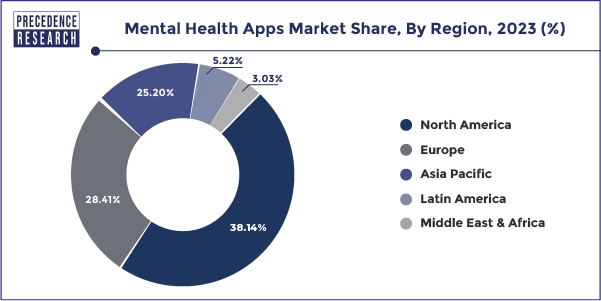
The mental health app market has witnessed significant growth, driven by technological advancements and a global focus on mental well-being. Valued at $6.12 billion in 2023, it is projected to expand further in the coming years. Here’s a snapshot of the current trends, market segmentation and future possibilities.

Image Source: Precedence Research

Market Segmentation

By App Type:

  • Depression and Anxiety Management: apps designed to help users cope with depression and anxiety through tools like CBT, mood tracking and guided exercises.
  • Meditation Management: apps like Calm and Headspace offering guided meditations, breathing exercises, and sleep aids.
  • Stress Management: platforms focused on stress-relief strategies, such as Happify, incorporating gamified exercises to engage users.
  • Wellness Management: apps aimed at holistic well-being, integrating fitness, nutrition, and mental health support.
  • Others: includes niche apps addressing specific challenges like postpartum depression, grief or addiction recovery​.

By Target Audience:

  • Individuals Seeking Self-Help: students, working professionals and retirees seeking accessible, affordable mental health tools.
  • Healthcare Providers: clinicians using apps to complement traditional treatment plans.
  • Corporates: employers implementing wellness apps like Spring Health to enhance workplace well-being and productivity​.

By Region:

North America leads the market with robust app adoption and mental health awareness, Asia-Pacific is growing rapidly, driven by increasing smartphone use and stress-related health concerns.

Image Source: Precedence Research

Key Trends

  • AI-Driven Personalization: apps are using AI to provide tailored mental health experiences. For example, Wysa and Woebot offer conversational AI support, while Kintsugi employs vocal biomarker analysis to detect emotional states​​.
  • Gamification for Engagement: apps like Happify use gamification to make mental health practices more engaging, particularly for younger audiences​.
  • Integration with Wearables: real-time tracking of mental health indicators, like stress and emotional states, through wearable devices is becoming increasingly common.

Opportunities

  • Expanding Accessibility: affordable or free mental health apps can address gaps in underserved regions.
  • Corporate Wellness: more employers are expected to incorporate mental health apps into their benefits packages.
  • Enhanced Privacy and Trust: apps prioritizing user data security and ethical practices will gain consumer confidence.

What’s Next?

  • Niche Specialization: apps targeting specific demographics or conditions, such as adolescent mental health or postpartum support.
  • Integrated Care Models: enhanced collaboration between apps and healthcare providers for comprehensive mental health solutions.
  • Ethical AI Development: transparent and inclusive AI tools designed to meet high clinical standards.

As the market evolves, innovation and user-centric approaches will be crucial in addressing the diverse needs of a global audience.

Sources

  1. “Mental Health Apps Market Analysis by Size, Share, Trends, Growth and Forecast (2024–2032) | UnivDatos.” LinkedIn. Accessed: Dec. 28, 2024. [Online.] Available: https://www.linkedin.com/pulse/mental-health-apps-market-analysis-size-share-trends-growth-ali-bvfsc/
  2. “Mental Health Apps Market Size, Share, and Trends 2024 to 2033.” Precedence Research. Accessed: Dec. 28, 2024. [Online.] Available: https://www.precedenceresearch.com/mental-health-apps-market
  3. “Mental Health Apps Market Size was valued at USD 6.012 Bn in 2023 and is expected to reach USD 16.47 Bn by 2030, at a CAGR of 17.01%.” LinkedIn. Accessed: Dec. 28, 2024. [Online.] Available: https://www.linkedin.com/pulse/mental-health-apps-market-size-valued-usd-6012-bn-2023-komal-kadam-uktbe/

1.4 A Guide to Mental Health Apps: Exploring Types, Features, and AI Integration

With mental health becoming a growing priority, mobile apps have emerged as accessible tools to support emotional well-being. These apps range from guided meditations to therapy chatbots, each offering unique features that cater to various needs. Below is an overview of the main types of mental health apps, followed by a detailed comparison table.

Types of Mental Health Apps

Meditation and Mindfulness
Apps like Calm and Headspace are leaders in this category, offering tools for stress relief, improved focus, and better sleep. Calm is renowned for its celebrity-narrated sleep stories, featuring voices like Harry Styles and Matthew McConaughey, as well as its expansive library of guided meditations. Headspace takes a playful yet calming approach with animations, guided exercises, and its AI companion, Ebb, which offers personalized recommendations for managing stress, relationships, and sleep challenges.

Online Therapy and Professional Support
For those seeking professional mental health care, platforms like BetterHelp and Talkspace connect users with licensed therapists. BetterHelp offers text, audio, and video sessions, while Talkspace integrates AI to analyze therapy transcripts in real-time, identifying high-risk behaviors such as suicidal ideation and alerting therapists for timely intervention.

AI-Powered Support
AI is revolutionizing mental health care, with apps like Wysa, Youper, and Woebot leading the way. Wysa provides CBT and mindfulness exercises through an AI chatbot, while Youper focuses on self-reflection and mood tracking via conversational AI. Woebot adapts its responses based on user needs, offering tools for managing anxiety and stress.

Mood Tracking and CBT Tools
Apps like Daylio and Moodfit help users build self-awareness by tracking emotions and habits. While these apps don’t use AI, their intuitive interfaces and visual data insights make them valuable tools for personal growth. Similarly, apps like MindShift CBT, CBT Companion, and CBT Therapy: Mental Future focus on Cognitive Behavioral Therapy (CBT), offering exercises to challenge negative thoughts and build healthier habits.

Cutting-Edge AI Tools
Innovative platforms like Kintsugi, Cass, Spring Health, and Lyra Health showcase AI’s potential to personalize mental health care. From analyzing vocal biomarkers to matching users with tailored therapy resources, these apps offer groundbreaking solutions for mental wellness.

Mental Health Apps Comparison Table

AppTypeFeaturesAI Integration
CalmMeditation and MindfulnessGuided meditations, celebrity sleep stories, breathing exercises, sleep music, daily calm sessions/
HeadspaceMeditation and MindfulnessGuided meditations, breathing exercises, sleep tools, playful animations, focus music, AI companion (Ebb)AI-powered companion providing personalized recommendations
BetterHelpOnline Therapy and Professional SupportText, audio, video therapy sessions, journaling tools, group therapy options/
TalkspaceOnline Therapy and Professional SupportTherapy sessions, psychiatric services, medication management, AI-driven risk detectionAI analyzes therapy transcripts to identify high-risk behaviors
WysaAI-Powered SupportCBT exercises, mindfulness meditations, mood tracking, journaling, access to human therapistsAI chatbot offering emotional support
YouperAI-Powered SupportMood tracking, emotional reflection, CBT exercises, personalized feedbackAI chatbot for self-reflection and emotional tracking
HappifyMeditation and MindfulnessScience-based games, activities, meditations, gratitude exercises, stress-relief strategies/
DaylioMood Tracking and CBT ToolsMood tracking, activity tracking, visual reports, personalized insights/
MindShift CBTMood Tracking and CBT ToolsThought records, relaxation techniques, goal setting, social anxiety tools, coping strategies/
MoodfitMood Tracking and CBT ToolsMood tracking, gratitude journaling, mindfulness meditations, CBT tools, habit tracking/
iBreatheMeditation and MindfulnessCustomizable breathing intervals, simple and distraction-free design/
CBT CompanionMood Tracking and CBT ToolsCBT worksheets, mood logs, gratitude exercises, guided self-reflection/
BetterMe Mental HealthMeditation and MindfulnessArticles, guided exercises, stress relief tools, daily affirmations/
CBT Therapy: Mental FutureMood Tracking and CBT ToolsPractical CBT exercises, self-help guidance, thought management tools/
WoebotAI-Powered SupportReal-time CBT and mindfulness-based support, mood tracking, daily check-insAI-driven adaptive chatbot for mental health
KintsugiAI-Powered SupportVocal biomarker detection for anxiety and depression, emotional state insightsAI analyzes vocal data to detect mental health indicators
CassAI-Powered SupportEmotional support, psychoeducation, coping strategies, 24/7 availabilityAI chatbot providing personalized responses
Spring HealthOnline Therapy and Professional SupportTherapy, coaching, medication management, wellness exercises, employer-provided plansAI matches users with the most suitable resources
Lyra HealthOnline Therapy and Professional SupportTherapy matching, coaching, personalized care pathwaysAI matches users to therapists and care resources

Sources

  1. “BetterHelp | Professional Therapy With A Licensed Therapist.” BetterHelp. Accessed: Dec. 28, 2024. [Online.] Available: https://www.betterhelp.com/
  2. “BetterMe Mental Health” BetterMe. Accessed: Dec. 28, 2024. [Online.] Available: https://betterme.world/product/meditation
  3. “Calm – The #1 App for Meditation and Sleep.” Calm. Accessed: Dec. 28, 2024. [Online.] Available: https://www.calm.com/
  4. “CBT Companion.” Resiliens. Accessed: Dec. 28, 2024. [Online.] Available: https://resiliens.com/cbt-companion/
  5. “Daylio – Your Private Journal.” Daylio. Accessed: Dec. 28, 2024. [Online.] Available: https://daylio.net/
  6. “Happify: Science-Based Activities and Games.” Happify. Accessed: Dec. 28, 2024. [Online.] Available: https://www.happify.com/
  7. “Headspace: Meditation and Sleep Made Simple.” Headspace. Accessed: Dec. 28, 2024. [Online.] Available: https://www.headspace.com/
  8. “iBreathe – Relax and Breathe iOS App” Jade Lizard Software. Accessed: Dec. 28, 2024. [Online.] Available: https://www.jadelizardsoftware.com/ibreathe
  9. “Kintsugi – Mental Health From Your Voice.” Kintsugi. Accessed: Dec. 28, 2024. [Online.] Available: https://www.kintsugihealth.com/
  10. “Lyra Health | Transforming Mental Health Care.” Lyra Health. Accessed: Dec. 28, 2024. [Online.] Available: https://www.lyrahealth.com/
  11. “Mental Future.” Mental Future. Accessed: Dec. 28, 2024. [Online.] Available: https://www.mentalfuture.com/
  12. “MindShift CBT App.” Anxiety Canada. Accessed: Dec. 28, 2024. [Online.] Available: https://www.anxietycanada.com/resources/mindshift-cbt/
  13. “Moodfit | Mental Fitness Made Simple.” Moodfit. Accessed: Dec. 28, 2024. [Online.] Available: https://www.getmoodfit.com/
  14. “Spring Health – Comprehensive Mental Health Solutions.” Spring Health. Accessed: Dec. 28, 2024. [Online.] Available: https://www.springhealth.com/
  15. “Talkspace – #1 Rated Online Therapy, 1 Million+ Users.” Talkspace. Accessed: Dec. 28, 2024. [Online.] Available: https://www.talkspace.com/
  16. “Cass Home.” Cass. Accessed: Dec. 28, 2024. [Online.] Available: https://www.cass.ai/
  17. “Woebot Health – Mental Health Chatbot.” Woebot Health. Accessed: Dec. 28, 2024. [Online.] Available: https://woebothealth.com/
  18. “Wysa – Everyday Mental Health.” Wysa. Accessed: Dec. 28, 2024. [Online.] Available: https://www.wysa.com/
  19. “Youper: Artificial Intelligence For Mental Health Care.” Youper. Accessed: Dec. 28, 2024. [Online.] Available: https://www.youper.ai/

03 All about Biases

Before getting to know specific biases and getting to know, how to work around them, let’s take a closer look on what a bias actually is, how it’s formed and whether it’s a good or bad thing.

Bias – Definition

According to the Cambridge Dictionary, a bias is “the action of supporting or opposing a particular person or thing in an unfair way, because of allowing personal opinions to influence your judgment:” (Cambridge Dictionary) Sticking with explanation of language, you might come across the term “to be biased against” something or “to be biased towards” something. Being biased against something means to not favor something and being biased towards something means to favor it over something else. (cf. Britannica Dictionary)

Why am I explaining this? Well, I have come to realize, what I actually want to research are cognitive biases not bias in general. So I wanted to understand cognitive biases a little better.

A cognitive bias, is a predictable pattern of error I how our brain functions, those are very widespread. They affect how people understand and perceive reality and hard to avoid, they can lead to different people interpreting objective facts differently. Cognitive biases can lead to irrational decisions, they are result of mental shortcuts, or heuristics. (cf. Britannica Dictionary)

Additionally, one can differentiate between explicit and implicit biases. Explicit biases are conscious and intentional, individuals are fully aware of their attitudes and beliefs, which they can openly express and acknowledge. Implicit biases are unconscious and unintentional, they operate below the level of awareness, influencing behavior without the individual realizing it. (cf. Achievece)

How do Biases form?

Our minds can be like a collection of pockets where every experience is categorized and stored. This sorting process begins in childhood, helping us make sense of the world and react to future situations based on grouped experiences. It occurs automatically, as a mental shortcut to handle vast amounts of information efficiently. While this process is helpful, it also means our present decisions are often influenced by past experiences, which can lead to unconscious biases affecting how we view people, places, and situations.

Positive bias arises when something aligns with our own ideas or feels familiar, while negative bias occurs when something deviates from what we perceive as normal or preferable. Biases are not solely shaped by personal experiences but can also be influenced by external factors, such as media framing of situations, groups, or issues.

Biases can lead us to perceive someone as less capable or trustworthy or cause subtle discomfort around certain individuals. Importantly, these biases are often based on past experiences rather than the present context. (cf. NHS)

They stem from mental shortcuts, known as heuristics, which help our brains process information efficiently. While heuristics save time, they can lead to errors in thinking, particularly when patterns are misinterpreted or assumptions are made too quickly. (cf. Wikipedia)

How do the effect us?

Bias affects many aspects of our lives, often subtly influencing our decisions and perceptions. Implicit bias, formed over time through exposure to societal norms and experiences, impact everything from personal relationships to professional choices. For example, biases can affect hiring practices.Research shows that even trained scientists show bias in hiring, preferring male candidates over equally qualified women. Similarly, a study found resumes with “white” names were more likely to receive interview callbacks than those with “black” names, even when the resumes were identical.

These biases, often unintentional and shaped by socialization, affect not only professional decisions but everyday interactions as well. Recognizing and reflecting on our hidden biases is crucial to minimizing their impact and promoting fairness. (cf. Forbes)

1. The Emotional and Cognitive Power of Audio-visuals in Interactive Environments

Audiovisual elements play a crucial yet often underestimated role in shaping user experiences in interactive environments such as art exhibitions, video mapping, and installations. While visual elements tend to dominate as the primary focus, audiovisual integration—combining both sound and visuals—enhances emotional engagement, guides attention, and fosters spatial awareness. In environments where users actively interact with the space, audiovisual components transcend mere accompaniment, becoming vital parts of the experience that strengthen the connection between the user and their surroundings. This study delves into the impact of audiovisual stimuli in these settings, particularly investigating how sound and visuals together influence user cognition, emotional responses, and overall engagement.

Example 1: teamLab Borderless – This immersive exhibit blends sound, visuals, and user interactions to create a cohesive environment where sound guides participants’ movement and adds emotional depth to the visual narrative.

Example 2: In the SoundScape installation at the Museum of Modern Art (MoMA), curated soundscapes synchronize with projections to create a rich sensory experience, showing how sound can manipulate emotions and guide attention.
Example 3: BLCK SUN performance by AMIANGELIKA is experienced in spatial audio and recorded in real-time using analog synthesizers, digital instruments, and visual programming networks that interact to create a time-sensitive, immersive audio-visual environment that enhances how the audience perceives the story.

RESEARCH QUESTIONS

The research focuses on how audiovisual environments, such as sound, visual projections, and other sensory stimuli, affect user interaction and engagement in interactive spaces.
As anticipated in the main title, the question which I will try to answer is “How do audiovisual elements in interactive environments influence cognitive and emotional responses in users?”. Hopeful that these will bring me to answer the main topic I will research on sub questions such as:

  • How do combinations of visuals and sound enhance emotional and cognitive engagement in interactive art?
  • How can users’ interaction with audiovisual stimuli alter their perception of an installation or exhibition?
  • How does interactivity in audiovisual environments shape user agency and immersion?

IS IT RELEVANT

Yes it is. understanding how audiovisual elements influence user engagement will allow designers to create more effective and emotionally engaging experiences. The findings will contribute to better user experience in interactive art installations, exhibitions and entertainments venues.

CHALLANGES EXPECTED

Some of the challenges that can be faced during the research are: finding the right balance of audiovisual stimuli without overwhelming or confusing the user. Different cultures and individuals may respond differently to audiovisual stimuli. Not all users will interact with the environment in the same way.

PERSONAL MOTIVATION

My interest in interactive environments has been deeply influenced by personal experiences in art exhibitions and installations, where the power of audiovisual elements was so overwhelming that it triggered physical discomfort to the point where I had to leave the space. This intense reaction made me realize the profound impact that sound, visuals, and their combination can have on a person’s emotional and cognitive state. This research is not only important for my academic journey but also for my future career, as it will allow me to learn how to direct user experiences more effectively. I am particularly interested in creating environments where users can not only experience but also manipulate the audiovisual elements, enabling them to have more control over their sensory interactions.

01. Incorporating Gamification in Preventive Medicine

Sudden deaths, particularly those caused by heart attacks, strokes, and injuries, remain a major global health challenge. These incidents often occur without warning and claim the lives of individuals who might have been saved with timely intervention or early detection. According to the World Health Organization, cardiovascular diseases alone account for nearly 32% of global deaths, many of which are preventable with improved public awareness and timely medical attention.

One of the key reasons behind these preventable deaths is the lack of knowledge regarding the early warning signs of life-threatening conditions. For instance, many heart attack and stroke victims do not recognize the symptoms early enough to seek urgent medical care. Studies have shown that the administration of first aid or CPR in the first few minutes of a heart attack or stroke can drastically improve survival rates. In fact, immediate intervention can double or even triple a person’s chances of survival

The intersection of design and healthcare presents a unique opportunity to address these challenges. Is this topic relevant in the tech industry? Absolutely—it’s a rapidly growing sector. The health tech market is thriving, offering immense potential for innovation.

According to Grand View Research, “The Global Digital Health Market was valued at $211 billion in 2022, with a projected compound annual growth rate (CAGR) of 18% until 2030.” This growth underscores the opportunity for UX design to enhance user interaction with healthcare services and platforms, bridging the gap between complex medical systems and user-friendly experiences.

Gamification is one such design approach being widely adopted across industries to improve user engagement. By leveraging elements of human psychology—such as the drive for achievement, competition, and recognition—gamification transforms routine or challenging tasks into enjoyable, engaging activities. For example:

  • Education: Apps like Duolingo use streaks and points to encourage consistent learning.
  • Fitness: MySugr gamifies diabetes management by providing users with engaging tasks.
  • Healthcare: HealthTap rewards users for engaging with health-related content, promoting health literacy.

In healthcare, gamification helps bridge the gap between knowledge and action, motivating users to adopt healthier lifestyles and sustain long-term behavior change.

My motivation to explore this topic stems from my close connections to the medical field, as many of my relatives work in healthcare. Their experiences have provided valuable insights into how ordinary people can take proactive steps to prevent various illnesses. While I initially aspired to become a doctor, I chose a different career path. However, my desire to contribute to improving public health remains unwavering.

Preventive healthcare holds immense potential, yet a significant portion of the population remains unaware of its importance. Measures such as early detection of diseases, vaccinations, and lifestyle adjustments can significantly reduce the risk of chronic illnesses. Despite the accessibility of this information, many individuals do not actively engage in preventive practices. This is often due to a lack of motivation, interest, or understanding of the long-term benefits.

To address these challenges, my master’s thesis focuses on developing an integrated medical platform designed for both patients and doctors. This platform aims to foster communication and decision-making by providing easy access to patients’ comprehensive health histories. Using this data, the system could recommend personalized risk assessments and recommend targeted preventive measures tailored to each individual.

A key feature of this platform would be the incorporation of gamification to boost user engagement. For example, patients could access interactive educational content based on their specific health risks, complete modules, and earn rewards such as discounts on vaccines or vouchers for supplements. These incentives would not only make preventive care more appealing but also encourage consistent participation.

By combining gamified elements with essential healthcare practices, this platform has the potential to address critical gaps in preventive medicine. It offers a more engaging, accessible, and personalized approach to health education, motivating individuals to take charge of their well-being. Ultimately, this innovative concept could lead to improved health outcomes and a significant reduction in preventable illnesses and deaths on a global scale.

My central research question is: 

  • What gamification strategies can be used to increase the popularity of preventive healthcare?

The sub-questions are:

  • How can gamified preventive healthcare platforms ensure user data security and privacy?
  • Which types of gamification are most effective for promoting preventive healthcare behaviors?
  • What are the potential benefits and challenges of creating a unified gamified system for healthcare providers and patients?

In the upcoming blog posts, I’ll take a comprehensive look at the platform concept by examining multiple perspectives. In the first posts, I’ll explore the gamification aspect and its potential for engaging users, and then I’ll also evaluate the platform from the healthcare system’s standpoint. This includes assessing scalability—how well the platform can accommodate diverse users and systems—and privacy concerns, particularly regarding the handling of sensitive medical data.
Ultimately, my goal is to determine whether this is a viable idea or if I should explore alternative directions.

Bringing Paintings to Life with 3D Printing

3D printing has expanded its applications in the art world, moving beyond sculptures and artifacts to include the replication of paintings. By capturing and recreating not just the colors but also the textures, relief, and even the gloss of original works, this technology opens up transformative possibilities for museum interactions. This post delves into how 3D printing of paintings enhances visitor engagement and interaction.

Tactile Exploration of Paintings

Traditionally, paintings have been viewed from a distance to preserve their integrity. However, 3D printing allows for the creation of touchable replicas that maintain the visual and physical characteristics of the original works. For example, museums can reproduce the brushstrokes, texture, and relief of a Van Gogh painting, enabling visitors to physically feel the intricacies of the artist’s technique.

Close-up of a 3D print of Vincent van Gogh, Flowers in a Blue Vase, 1885, oil on canvas, 61.5 x 28.5 cm. Kröller-Müller Museum, Otterlo. Photo by author.

This tactile approach is particularly beneficial for visually impaired visitors. Being able to touch the contours and textures of a painting offers a unique sensory experience, allowing them to perceive the artwork in ways that were previously inaccessible.

Interactive Exhibits with 3D-Printed Paintings

3D-printed paintings can play a key role in interactive exhibits, making art more engaging and educational. Museums can encourage visitors to compare printed replicas with digital displays or augmented reality overlays to understand artistic techniques and historical context. Workshops could even invite visitors to paint or modify 3D-printed replicas, fostering creativity and deeper connections with the artwork.

Additionally, in a 3D print aspects of a work can be magnified and physicalized. For example, enlarging the eye of Vermeer’s Girl with a Pearl Earring makes it possible to understand the artist’s technique and the material changes the work has been through (e.g. the cracks on the surface become clearly visible).

10 times enlarged 3D printed eye of Johannes Vermeer’s Girl with a Pearl Earring, 1665, oil on canvas, 44 x 39 cm. Mauritshuis, The Hague. Photo by author.

This technology also allows for recreations of lost or damaged paintings, providing a window into art history that might otherwise remain closed. Visitors can see and touch pieces of art that no longer exist in their original form, enriching their understanding of the artistic and cultural legacy.

Bridging the Gap Between Art and Audience

While curators may worry about the loss of aura associated with original paintings, 3D printing helps bridge the gap between art and audience by making these works more approachable. Replicas can be displayed in high-traffic areas, touched during guided tours, or used in educational settings without the risk of damaging the originals.

By creating interactive and tactile experiences, museums can attract younger audiences, families, and those who might feel intimidated by traditional gallery settings. This approach transforms the museum visit from a passive viewing experience into an active engagement with art.

Ethical Considerations and Challenges

Despite its advantages, 3D printing of paintings raises important ethical questions. How should replicas be labeled to distinguish them from originals? Could the availability of high-fidelity reproductions diminish the value of authentic artworks? Museums must navigate these issues carefully, ensuring transparency and maintaining the integrity of their collections.

Additionally, there is a need for precision and quality in reproductions. Capturing the intricate details of a painting’s texture and gloss requires advanced scanning and printing techniques, which may not always be accessible or cost-effective for smaller institutions.

A New Frontier for Museum Interaction

3D printing is reshaping how museums approach paintings, transforming them into interactive, accessible, and educational experiences. By providing tactile opportunities, fostering creativity, and connecting visitors more deeply with art, this technology brings a new dimension to the museum world. While challenges remain, the potential for innovation and engagement makes 3D printing an invaluable tool for the future of art and cultural heritage.

As museums continue to embrace this technology, they have the chance to redefine the way audiences experience paintings—not just as objects to admire but as pieces to explore and connect with on a profoundly personal level.

 3D print of Rembrandt van Rijn, The Anatomy Lesson of Dr. Deijman, 1656, oil on canvas, 100 x 134 cm, Amsterdam Museum, Amsterdam
Photo by author, 3D print by Factum Foundation

References:

https://www.codart.nl/feature/museum-affairs/3d-printing-works-of-art-an-opportunity-or-nightmare-for-curators/

https://www.cambridge.org/core/journals/advances-in-archaeological-practice/article/you-can-handle-it-3d-printing-for-museums/5FDE2B8896E09D879B75D77C4530ED1A

https://www.museumnext.com/article/how-museums-are-using-3d-printing/

https://theconversation.com/3d-printing-is-helping-museums-in-repatriation-and-decolonisation-efforts-126449

Reproduction of Gloss, Color and Relief of Paintings using 3DScanning and 3D Printing

The Future of Art Reproduction: Capturing Every Detail with 3D Scanning and Printing

In the realm of art preservation and reproduction, achieving the perfect balance between technology and authenticity is a challenging endeavor. A research from 2017 (W.S. Elkhuizen, T.T.W. Essers, B. Lenseigne, C. Weijkamp, Y. Song, S.C. Pont, J.M.P. Geraedts, and J. Dik) presented in their groundbreaking paper, “Reproduction of Gloss, Color and Relief of Paintings using 3D Scanning and 3D Printing,” offers a revolutionary approach to this challenge. Their work integrates advanced methods to capture and replicate the color, relief, and gloss of paintings.

The Challenge of Authentic Reproductions

High-fidelity reproductions of artworks have long been a goal for museums and cultural institutions. While earlier technologies could reproduce color and surface relief with relative success, replicating gloss—a critical visual component of a painting’s appearance—remained elusive. Gloss plays a pivotal role in how viewers perceive the depth, texture, and overall aesthetic of an artwork. Traditional methods often fell short in accurately capturing the spatially varying gloss, which significantly contributes to a painting’s visual identity.

The Breakthrough: Integrated 3D Scanning and Printing

The research team introduced an innovative system that addresses these limitations. Their approach integrates:

  1. Advanced Gloss Measurement: Using the principles of reflectance polarization, the system measures spatially varying gloss by sampling specular reflection at the Brewster angle. This method provides precise gloss data for every point on a painting’s surface.
  2. Relief and Color Capture: In addition to gloss, the system employs high-resolution 3D scanning to capture the surface relief and advanced imaging techniques to record color details. Together, these components ensure a comprehensive digital representation of the artwork.
  3. Data Processing and Optimization: One of the challenges addressed in this study is the presence of shadows in gloss measurements caused by surface relief. The team devised a technique to mask and interpolate surrounding gloss information, ensuring a seamless and accurate reproduction.

Validating the System

To demonstrate the efficacy of their system, the researchers reproduced a painting titled “Two Wrestling Figures in the Style of Van Gogh.” This reproduction served as a testbed for assessing the accuracy of the gloss, color, and relief measurements. The results showed remarkable fidelity, proving that the system could replicate the nuanced visual properties of the original artwork.

Implications for Museums and Cultural Institutions

This advancement holds transformative potential for art preservation and accessibility:

  1. Preservation: High-quality reproductions reduce the need for handling original artworks, minimizing wear and tear. This is particularly vital for fragile or historically significant pieces.
  2. Accessibility: Reproductions can be shared globally, allowing audiences to experience iconic artworks that might otherwise be inaccessible due to location or conservation concerns.
  3. Educational Opportunities: Museums can use these replicas for educational programs, enabling hands-on interaction without risking damage to the originals.
  4. Exhibitions: Institutions can display reproductions in interactive or immersive environments, enhancing visitor engagement while preserving the original artworks.

Conclusion

This technology stands to redefine how people interact with art in museums. By enabling the creation of high-fidelity reproductions, museums can provide more immersive and interactive experiences. Visitors could touch and closely examine replicas without fear of damaging the originals, fostering a deeper understanding of the artwork’s texture, relief, and gloss. Additionally, this technology can be used to create multisensory exhibits, where audiences engage with art through sight, touch, and even augmented reality overlays. Such innovations make art more accessible to diverse audiences, including those with visual impairments, and enrich the educational value of museum visits.

References:

https://diglib.eg.org/server/api/core/bitstreams/03f416a4-92bd-4a74-9d51-f1724f46994c/content