#09 Creating Interactive Installations

In this post, I want to explore the process of designing and creating interactive installations.

Process of designing an interactive installation

Creating an interactive art installation involves several steps, from defining the concept and technology to the final implementation.

Defining the concept
The first step is to brainstorm and define the core idea of the installation. Interactive Art flourishes from storytelling and creating memorable experiences. These questions can help defining the concept.

  • What is the main theme or message of the installation?
  • How will the audience engage with the artwork?
  • What emotions or experiences should be evoked?

The focus of the concept should always be on the emotions and the story that is to be conveyed. Immersive and interactive art aims to create connections and often uses human behavior as a narrative element. The theme can be a personal interest, an abstract idea or social problems. The more meaningful and moving the topic, the greater the likelihood that it will appeal to people. 

Additionally, identifying and understanding the target audience is crucial for interactive installations. It helps to tailor the experience to their preferences, needs and behaviors. While designing, accessibility should always be a priority, to ensure that the installation is inclusive and engaging for everyone – regardless of background, ability or familiarity with digital art.

Choose the right setting
The physical environment where the installation should be is crucial for the planning, since it influences technical as well as artistic decisions. Whether the installation is in a museum or in a public place, the size and location of the space, accessibility, light and sound and general infrastructure are important factors that need to be considered. 

Public spaces are particularly suitable for interactive installations as they enable a high level of participation and reach many people in urban areas. Placing art in public spaces not only makes it more accessible but also allows it to be seamlessly integrated into people’s everyday lives. However, designing for public spaces requires careful consideration of any necessary permits and insurance.

Choose Technology and Medium
As soon as the concept is done, the next step is to decide which sensory elements like light, sound and touch will transport the theme the best. If the goal is to create dynamic visuals that transform a space – projection mapping might be the right choice. If there should be different layers of interaction and the viewer should fully immerse with the installation AR or VR might be the right technology. The selection of the right sensor (e.g., motion, touch, proximity) and output devices (e.g., displays, projectors, speakers, actuators) is essential to bring the vision to life. It is also important to determine whether the installation will be physical, digital, or both. Each element and technology should smoothly integrate with each other to enhance the overall experience, creating a seamless and immersive environment for the audience. 1 2 3

Software and Tools that can be used

  • Processing: A simple programming environment to develop visually oriented applications. It is a design and prototyping tool which is used for creating large-scale installations. 4
  • TouchDesigner: A node-based visual programming environment and a great tool for interactive shows and installations. 5
  • Max/MSP: A visual programming language for creating interactive software. 
  • Unity: A real-time development platform often used for creating 3D interactive experiences. 7
  • Arduino: An open-source electronics platform based on easy-to-use hardware and software. It’s intended for anyone making interactive projects. 8
  • MadMapper: A reference application for Projection Mapping, LED installations and laser shows. 9
  • Resolume Avenue & Arena: It is the industry-leading software used by VJ’s. 10

Prototyping and Redefining
Prototyping is an essential step before building the full installation, allowing to test and refine the ideas. This phase provides an opportunity to experiment with various interactions and responses to identify the most effective setup. 

Implementing and Testing
Once a working prototype has been created that does justice to the concept, the next step is to build the physical environment of the installation. Whether it’s an entire room, a sculpture or digital screens, this forms the basis for the entire installation. Once the foundation is in place, the next step is to implement the technology – placing the sensors, projectors or programming a computer. After implementing the final installation, it is important to test everything again very carefully to check if all interactions such as movement, touch or other sensors work.

Observing
Interactive installations thrive on the involvement of visitors – it is therefore advisable to be present and observe how people interact with the installation. This way, any adjustments can be made. 1 2 3

Challenges in interactive Installations/art

Although interactive installations or interactive art is very captivating and modern right now, they come with some challenges – whether be technical, creative or logistical. These factors can make creating interactive installations a complex task.

Technical Challenges in Implementation
Interactive installations usually involve different technologies – sensors, software and hardware – which can be a challenge to bring all these individual elements smoothly together. Issues with the accuracy of sensors, the response time from input to output or the stability of the system can complicate the process. It is therefore even more important to test everything carefully before launch.

Balancing artistic vision and technological feasibility
One of the biggest challenges is finding the right balance between artistic creativity and the limitations of technology. It can easily happen that the creative idea is too complex and ambitious and exceeds the possibilities of the technology. It is therefore important to discuss expectations and ideally explore the technical possibilities early on in the concept in order to create a working and realistic interplay between creativity and technology to make the interactive installation a reality.

Collaborative challenges in multidisciplinary teams
In order to create an interaction that captivates people and creates a high level of engagement, it possibly requires the collaboration of different disciplines such as artists, designers, developer, engineers or even psychologists or sociologists. A large interdisciplinary team brings many advantages, and each person can contribute their own ideas and expertise. However, a large team can also quickly become a challenge. It is therefore important to have clear communication so that everyone is on the same page when it comes to the project. This is the only way to ensure good cooperation, which in turn leads to a successful interactive installation. 11


Sources

[1] S. Zafeiriou, „The Ultimate Guide to Immersive Art Installations: Creating Engaging and Interactive Art Experiences | Steve“, Steve Zafeiriou, 18. Januar 2025. https://stevezafeiriou.com/guide-to-immersive-art-installations/

[2] „Exploring Interactive Art Installations: History, Examples, and Creation“, Visual Alchemist, 29. Juni 2024. https://visualalchemist.in/2024/07/22/exploring-interactive-art-installations-history-examples-and-creation/

[3] D. Team, „Interactive Art Installation: Tips & Best Practices“, Daisie Blog, 18. Juli 2023. https://blog.daisie.com/interactive-art-installation-tips-best-practices/#concept-of-interactive-art

[4] „Processing overview“, Processing. https://processing.org/tutorials/overview

[5] Elburz, „What is TouchDesigner? A TouchDesigner FAQ“, The Interactive & Immersive HQ, 8. November 2024. https://interactiveimmersive.io/blog/touchdesigner-lessons/what-is-touchdesigner/

[6] „What is Max? | Cycling ’74“. https://cycling74.com/products/max

[7] „Echtzeit-Entwicklungsplattform von Unity | 3D, 2D, VR- und AR-Engine“, Unity. https://unity.com/de

[8] „Arduino – home“. https://www.arduino.cc/

[9] „MadMapper Home“. https://madmapper.com/

[10] „Avenue & Arena – Resolume“. https://www.resolume.com/software/avenue-arena[11] T. Emb, „The Intersection of Art and Technology in Interactive Installations“, EMB Blogs, 16. April 2024. https://blog.emb.global/art-and-technology-in-interactive-installations/#emotional-impact-of-interactive-art
#08 Interactive Installations

There are various approaches that interaction designers can take to help combat loneliness. It is not only important to tackle loneliness itself, but also to focus on strengthen interpersonal connections and relationships. Since a large part of our lives already takes place online and we spend a lot of time in front of our phones, I would like to pursue an approach that focuses more on the real and analog world – but still does not forego a digital aspect. 

I would like to investigate whether and how interactive installations can contribute to strengthening social interactions in public spaces. Interactive installations have established themselves as an increasingly important medium for combining technology, art and user experience. 1 Such installations not only fascinate but also create a unique experience through active participation and interaction. As noted by Edmonds “interactive art is distinguished by its dynamic behaviour in response to external stimuli, such as people moving and speaking.” Art becomes interactive when audience participation plays a central role in the work. The audience’s actions can influence and alter the artwork itself. When creating interactive art, the artist focuses not only on the visual or auditory aspects of the piece but also on how it engages and interacts with the audience, making this interaction a vital part of its nature. 2 For example, an installation could:

  • Alter the lights, sounds, or visual aspects in response to the people’s presence.
  • Support teamwork, where several users would have to physically and digitally interact with each other in order to activate particular features.
  • Change and improve according to the behavior of a whole audience, which may cause a dynamic and unpredictable outcome.

How interactive installations work

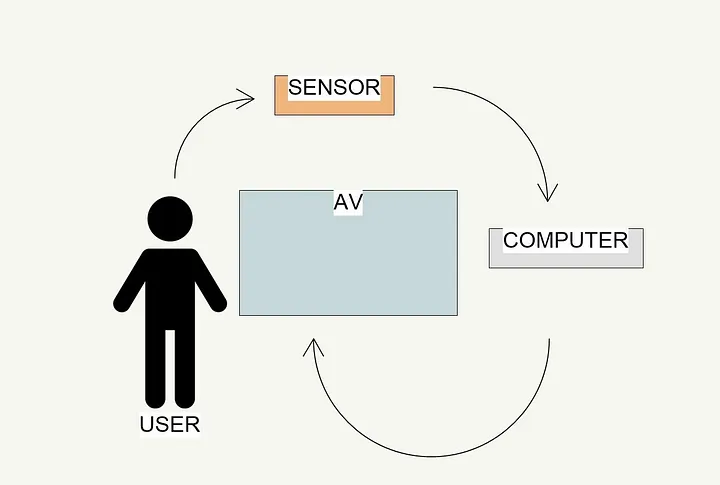
Interactive installations work through input from the audience or the environment. Interaction is achieved through a combination of sensors, software, physical elements or hardware that recognizes and processes the input. These inputs can include:

  • Movement: Motion sensors and cameras record audience movements, triggering the pre-set reactions. 
  • Touch: Pressure-sensitive surface or touchscreens allow for interaction through touch. 
  • Sound: Microphones record and / or respond to volume, pitch, or specific voice commands. 
  • Proximity: Ultrasonic or infrared detectors observe the proximity of a viewer to the installation. 
  • Input Data: Several installations incorporate data from external sources, such as weather, social network trends, or live web feeds. 4

The system takes these inputs and turns them into responses like changes in lights, visuals, sounds, or even mechanical movements. This creates a dynamic, interactive experience where the audience’s actions directly influence how they engage with the piece.

Source: https://medium.com/@steven_tbd/what-is-an-interactive-installation-6e19c98c881

Types of Immersive and Interactive Art Installations

Digital Projections
The projection of digital content is the cornerstone of immersive and interactive art. Advanced projection mapping can transform walls, floors and ceilings into interactive screens and environments and therefore bring the surrounding to life. By incorporating motion graphics and real-time visuals, these installations create multi-sensory environments that transport audiences into new and imaginative worlds.

Sensor-based Installations
The nature of sensor-based installations is that they use motion, touch, or sound sensors to react to human interaction in real-time. Thus, visual elements may change with movement, or perhaps a touch may turn on a certain light. These installations can range from pressure pads to some long-distance proximity sensors or maybe even facial recognition, which can cultivate an intimate space that reacts individually to each individual encounter. 

Sound and Lighting Installations 
Combining surround soundscapes with synchronized lighting systems, the sound and light installations attain a stunning effect. Through the interplay of contrasts, rhythms, and spatial audio, these installations evoke emotions and draw audiences into a compelling sensory world.

Virtual Reality Installations
Virtual reality installations bring interactivity to a new level by immersing participants in fully digital 3D environments. With the VR headsets viewers can navigate through this digital environment, interact with virtual object or even become part of the artwork. These experiences connect storytelling with interactivity, aggregating in deeply personalized experiences for the visitors. Those installations can be used for entertainment or even educational purposes – virtual museums or immersive stories that let people experience scenarios firsthand.

Participatory Installations
Participatory installations directly involves the audience in the creation or completion of the artwork, often through simple, intuitive interfaces that ensure broad accessibility. These installations may feature collaborative elements, where multiple participants work together to contribute to a piece. Examples include digital graffiti walls or crowd-sourced sculptures, which challenge traditional ideas of authorship and create a sense of community within the artwork. This type of interactive installation blurs the lines between artist and viewer, encouraging collective creativity. 4 5 Designing an installation that requires collaboration not only encourages interaction between people and the interface, but also the connection between people and their environment – and above all connection between the people themselves. 1

Interactive installations have the potential to ease feelings of loneliness and strengthen social ties by combining art, technology, and user participation. By combining the physical and digital worlds, these experiences offer new approaches to encouraging meaningful interactions and tackling isolation in shared public areas.


Sources

[1] S. U. Ahmed, „Interaction and Interactivity: In the Context of Digital Interactive Art Installation“, in Lecture notes in computer science, 2018, S. 241–257. doi: 10.1007/978-3-319-91244-8_20.

[2] E. Edmonds, “Interactive Art,” in Interacting: Art, Research and the Creative Practitioner, L. Candy and E. Edmonds, Eds. Faringdon: Libri Publishing Ltd., 2011, pp. 18–32.

[3] T. Emb, „The Intersection of Art and Technology in Interactive Installations“, EMB Blogs, 16. April 2024. https://blog.emb.global/art-and-technology-in-interactive-installations/#:~:text=Technology%20is%20crucial%20for%20interactive,%2C%20sound%2C%20or%20other%20inputs.

[4] S. Zafeiriou, „The Role of Technology in Interactive Installations: How Sensors, Computers, and More Shape Modern Art |“, Steve Zafeiriou, 11. November 2024. https://stevezafeiriou.com/technology-in-interactive-installations/

[5] Fiveable, “Interactive Installations: Study Guide,” Fiveable, 2025. [Online]. Available: https://library.fiveable.me/installation-art/unit-6/interactive-installations/study-guide/rdqjbQtvUFtb8qto. [Accessed: Jan. 25, 2025].

#07 How Interaction Design can shape Public Spaces

In our today’s fast paced and connected world, public places are gradually shifting from passive environments to places of interaction and engagement. As technology continues to change and improve, so too do the ways in which we experience and engage with the world around us. Public spaces are not only for physical gatherings but also serve as a platform for digital interaction, social engagement, and sensory experience. Interaction Design plays an important role in transforming these spaces. 

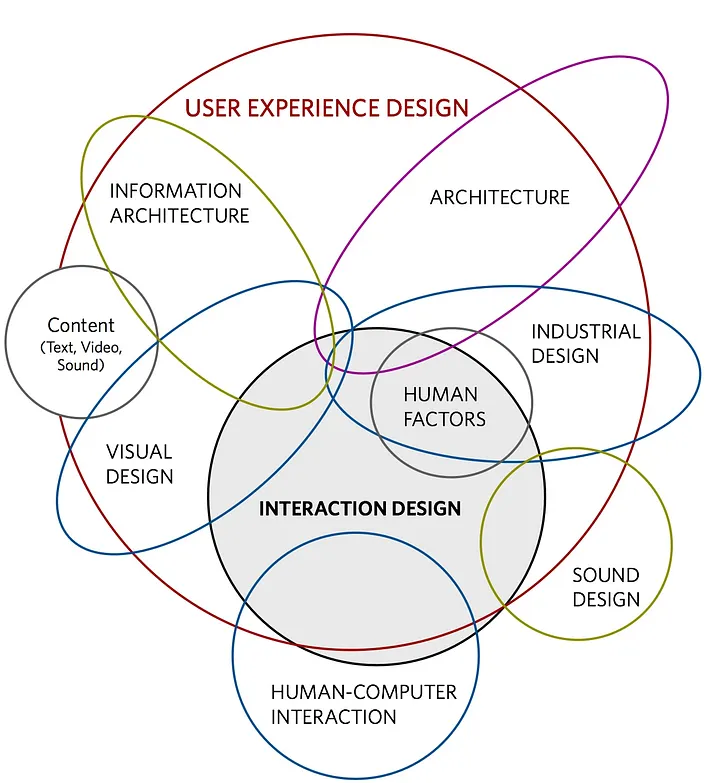
Interaction Design vs. Experience Design

Interaction Design:

This field focuses on how individuals interact with technology, their surroundings and the environment and, most importantly, one another. Its primary aim is to improve users’ understanding of what can be done, what is currently happening, and what has just occurred. Interaction design integrates principles from psychology, design, art, and emotion to create a positive and enjoyable experience for users.  

Source: https://uxdesign.cc/10-steps-to-interaction-design-ixd-6abe778cb8b8
Experience Design:

This practice focuses on creating products, services, processes, events, and environments with an emphasis on the overall quality and enjoyment of the user’s experience. The goal is to ensure a seamless, engaging, and meaningful interaction throughout every stage of the experience. 2

How Interaction Design shapes public spaces

How people perceive the world around them is a key question in urban planning, and it’s central to Kevin Lynch’s groundbreaking book, The Image of the City (1960). In this work, Lynch explores how individuals create mental maps of their surroundings, which mirrors how user interface (UI) research looks at how people interact with digital designs.Integrating UX/UI principles into urban planning can enhance the environment by improving usability, accessibility and user experience. 3

Human-Centered Design

One of the most important reasons why Interaction Designers should be incorporated into urban planning is that architects and urban planners concentrate more on the spatial layout and functionality. Interaction Designer focus on the people who use the space. They prioritize the human needs, capabilities and behaviors first, before designing. 2

Digital integration

Public spaces are no longer just physical places. With the increasing presence of technology in our everyday lives, these spaces are also becoming more and more digital. Since it influences how people move through the city and interact with each other in public spaces we need a new approach that combines both the physical and digital dimensions – Urban Interaction Design. 4 5 

Wayfinding and Navigation

Large public spaces such as parks, transfer areas and city centers can quickly become confusing and overwhelming. With an intuitive navigation system, these places are accessible and more user-friendly. Such systems could include interactive maps, apps or digital signs.

Facilitating Social Interaction

The goal in public spaces or in third spaces is to encourage people to connect — not just with the space itself, but with each other. Since Interaction Design focus on how people interact with physical and digital elements, they can help creating environments that feel alive and are adapting for the needs and wishes of the people. 

Interaction design can therefore also make a small contribution to breaking loneliness and social isolation in public spaces.

Multidisciplinary Approach

However, a multidisciplinary approach between architects, urban planners and interaction designers is best. When all disciplines bring their expertise to the planning, a holistic approach can be created that combines functionality, aesthetics and the human experience. This leads to an accessible, inclusive and engaging space.

Interaction Design has the potential to reshape how public spaces come alive, become centered around people, and connect with the very people they serve. Embracing human-centered design principles, integrating digital systems, and collaborating in design enables shaping public spaces that create valuable social connections.


Sources

[1] S. Li, H. Duan, Y. Yao, W. Zhang und J. Cho, „Enhancing User Experience: A Study of Interaction Design in Coastal Public Spaces“, Asia-pacific Journal Of Convergent Research Interchange, Bd. 10, Nr. 1, S. 473–483, Jan. 2024, doi: 10.47116/apjcri.2024.01.37.

[2] D. Norman, The Design of Everyday Things: Revised and Expanded Edition. Hachette UK, 2013.

[3] J. Kiviluoto, „The lost connection between urban planning and interface design: Ideas towards a re-enactment | LAB Open“, LAB Open, 9. Oktober 2024. https://www.labopen.fi/en/lab-rdi-journal/the-lost-connection-between-urban-planning-and-interface-design-ideas-towards-a-re-enactment/

[4] „Urban Interaction Design – Civic Interaction design“. https://civicinteractiondesign.com/projects/urban-interaction-design/#:~:text=Urban%20Interaction%20Design%20is%20an,design%20approach%20from%20multiple%20perspectives.

[5] „Minor urban interaction design – Minor urban interaction design“. https://urbaninteractiondesign.nl/home/

#06 Designing for Connection: Prioritizing People in Public Space Design

Public spaces can foster social connections, promote inclusivity, and nurture a sense of community. In today’s fast-paced world, where technology often replaces face-to-face interaction and individuals retreat into private spaces, designing public areas that encourage connections has become more crucial than ever. Achieving this goal, however, requires a more human-centered approach — one that focuses not just on the physical environment, but also on how individuals experience and interact with the space. Eric Klinenberg’s concept of social infrastructure provides a compelling framework to understand why these spaces are vital for addressing inequality, polarization, and community resilience. 1 2

Social Infrastructure

Klinenberg believes that a healthy community is not only about shared values, but also about shared spaces so he defines social infrastructure as “the physical places and organizations that shape the way people interact.” As mentioned in the previous posts such places include libraries, playgrounds, parks, but also sidewalks or community gardens. Klinenberg states that the social infrastructure is as essential for society as the infrastructure for power or transportation. 1 2

Designing for people not just for purposes

People have diverse needs, given a wide range of demographics, abilities, and social backgrounds, yet surprisingly often, design decisions for public spaces are done either in favor of functionality or aesthetics alone. Designing public spaces needs to address this diversity by prioritizing accessibility, visibility and inclusivity. In the book “Life Between Buildings” Gehl highlights, that a human-centered approach to public spaces creates meaningful social interactions. 3

First life, then spaces, then buildings. The other way around never works. – Jan Gehl

Principles of Human-Centered Public Space Design

Designing public spaces with a focus on people, rather than just on aesthetic or functional objectives, is guided by human-centered principles. These principles aim to meet users’ physical needs while also addressing their emotional, social, and cultural well-being. These are some qualities of human-centered public urban spaces: 

Spatial qualities:

Accessible: Public spaces must be accessible to all individuals, regardless of socio-economic status, gender, ethnicity, or ability. Everyone should have equal opportunities to use and benefit from the space and its amenities.

Walkable: Neighborhoods designed with walkable pathways and well-connected bike lanes promote physical activity while decreasing dependence on cars. This is especially important in rural areas, where limited transportation options often make car travel the primary means of getting around.

Safe: Well-lit, open spaces without blind spots enhance safety and make public areas more inviting. Gehl highlights that poor visibility fosters fear and exclusion, while transparent, well-lit environments promote comfort, interaction, and community.

Delightful: Public spaces need to incorporate human-scale design, aesthetics and pleasant microclimate like greenery, clean streets and inviting storefront to turn these areas into destinations that foster social connections. 

Comfortable: A comfortable space for spending time and engaging in various activities like walking, standing, sitting, people-watching, and having conversations.

Socio-spatial qualities:

Liveable: Public spaces should be designed with areas for a variety of activities, from quiet reflection to lively social gatherings. This multifunctionality allows individuals to engage with the space in ways that suit their preferences and needs.

Inclusive: Inclusive and welcoming to all, free and open. Urban spaces that foster a diverse range of users and activities.

Sociable: Spaces should be designed to foster social engagement by encouraging natural gatherings. Key elements include thoughtfully arranged seating, pedestrian-friendly walkways, and dedicated areas for social interaction. 1 3 4 5 6

Participation in Urban Planning

While human-centered design provides a strong foundation, its true value lies in practical application that prioritizes community voices. A truly human-centric approach relies on understanding “what people want” by using qualitative tools that assess the social and emotional well-being of residents, including their perceptions, motivations, emotions, ways of living, and values, rather than focusing only on quantitative metrics like the number of blocks or units installed. Tools such as focus groups, workshops, and community-led design sessions help planners shape spaces that align with community needs and wishes while strengthening shared civic identities. However, often the easiest way to gain insights is by talking to the people who are affected by infrastructural proposals. 7

Meaningful public participation becomes increasingly important and is also identified as a core human need. This participation is vital for upholding the principles of participatory democracy, enhancing the effectiveness and quality of the planning process, and improving as well as validating political decision-making. In such a perspective, residents are empowered to have their say in decisions influencing their daily life, ensuring better community involvement. The goal of participatory planning is to incorporate public perspectives into the design of public spaces, recognizing residents not only as stakeholders but as active users, alongside organizations, experts, and professionals. 8


Sources:

[1] E. Klinenberg, Palaces for the People: How Social Infrastructure Can Help Fight Inequality, Polarization, and the Decline of Civic Life, New York, NY: Crown Publishing Group, 2018.

[2] Palaces for the People,” 99% Invisible, Spotify. [Online]. Available: https://open.spotify.com/episode/7fE5rzAYtoCyVMzJnuwf0H?si=b64OVUphRBaOdbErUuyFtg&t=2399. [Accessed: Jan. 13, 2025].

[3] J. Gehl, Life Between Buildings, New York: Van Nostrand-Reinhold, 1987.

[4] M. Almahmood, N. M. Gulsrud, O. Schulze, T. A. Carstensen und G. Jørgensen, „Human-centred public urban space: exploring how the ‘re-humanisation’ of cities as a universal concept has been adopted and is experienced within the socio-cultural context of Riyadh“, Urban Research & Practice, Bd. 15, Nr. 1, S. 1–24, Okt. 2018, doi: 10.1080/17535069.2018.1539512.

[5] “Human-centered design for inclusive urban environments: Building cities that embrace diversity and accessibility,” Buildings. [Online]. Available: https://www.buildings.com/architecture/article/55139034/human-centered-design-for-inclusive-urban-environments-building-cities-that-embrace-diversity-and-accessibility. [Accessed: Jan. 13, 2025].

[6] R. Oldenburg, The Great Good Place: Cafes, Coffee Shops, Bookstores, Bars, Hair Salons and Other Hangouts at the Heart of a Community, New York: Marlowe & Company, 1999.

[7] “Making Cities Human-Centric,” One Works. [Online]. Available: https://www.one-works.com/journal/relate/making-cities-human-centric/. [Accessed: Jan. 13, 2025].[8] E. J. Cilliers und W. Timmermans, „The Importance of Creative Participatory Planning in the Public Place-Making Process“, Environment And Planning B Planning And Design, Bd. 41, Nr. 3, S. 413–429, Apr. 2014, doi: 10.1068/b39098.

#05 The Theory of the Third Place

A few months ago, I came across a TikTok where someone discussed the Theory of the Third Place and argued that Generation Z no longer has a true Third Place. Instead, he suggested, our phones have become the new “third place.” I briefly got stuck on this TikTok because I had never heard of it before but found the topic really interesting. Now that I’ve started researching the topic of loneliness and social isolation, I’m realizing how important these third places are for people, especially young people and their mental health.

What is a Third Place?

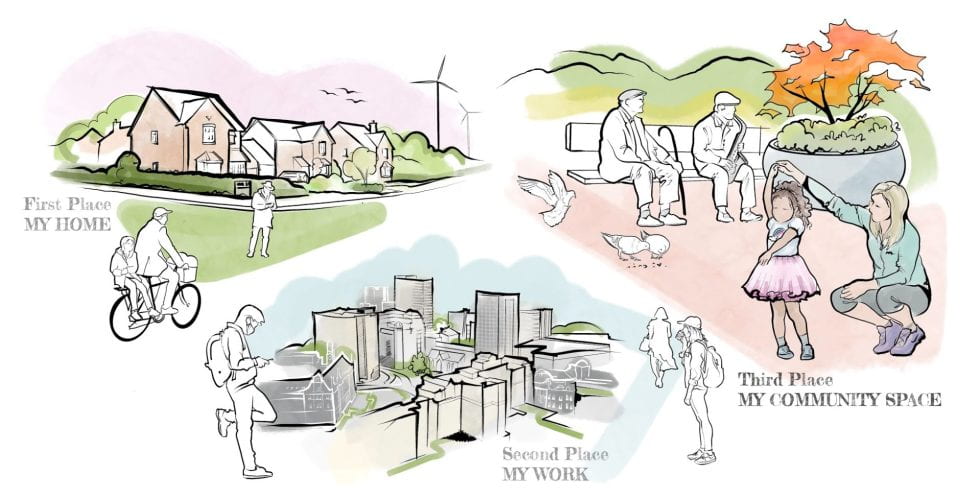
The term Third Places originates in the book “The Great Good Place” (1989) by the sociologist Ray Oldenburg. His Third Place Theory revolves around the concept that our lives are shaped by three key environments: the first place, the second place, and the third place. 1

The first place: HOME

The first place refers to where individuals live and develop their private lives. It is typically associated with privacy, a sense of solitude, and personal ownership. A home serves as a crucial foundation, offering stability, comfort, and a space for shaping one’s identity. 2

The second place: WORK

The second place refers to the workplace, where people spend a substantial part of their time. It is characterized by productivity, professional responsibilities, and a structured setting. Workplaces play a vital role in providing financial security and fostering career growth. 2

The third place: COMMUNITY

A third place is distinct from both home and work, serving as a space where people can regularly gather and connect with friends, neighbors, coworkers, or even strangers. Oldenburg states it as a “a space for informal, free social interaction, essential to democracy” 1 It encompasses locations such as cafes, libraries, parks, community hubs, and other shared spaces. These environments foster social connections, open dialogue, and a sense of community. Some even call the third places the living room of society. 4

Source: “2021 Cat A – My Third Place,” IFLA Europe Youth Competition, 2021, https://iflaeurope.eu/index.php/youth/entry/my-third-place-60edb5efb7ebc2.73333502

Oldenburg identifies the following nine characteristics for third places:

  • Neutral ground: In a third place people can easily join in or disengage from the conversation.
  • Leveler: All people, regardless of class and status, are welcome and intermingle.
  • Engaging Conversation: Talk is the main activity and provides the greatest value. The rules are simple: Don’t dominate the conversation, be sensitive to others’ feelings, speak on topics of general interest, and avoid trying to instruct.
  • Accessibility and accommodation: People can wander in almost any time of day or night and find someone to talk to.
  • Regulars: The people who frequent the place give it character, set the tone, and welcome both old timers and newcomers.
  • Low profile: The decor is plain and unimpressive, discouraging pretension and self-consciousness.
  • Playful mood: Displays of wit are encouraged. The congenial environment makes it feel like a home away from home.” 1

Why are they so important?

Third places are more than just physical spaces — they are vital social hubs that contribute significantly to individual well-being and the strength of society as a whole. Here are the functions they serve:

Encouraging Social Interaction
These spaces offer an inviting setting where individuals can come together, engage in conversation, and build meaningful relationships outside their typical social networks.

Inspiring Creativity
Third places bring together individuals from different backgrounds, creating dynamic environments that encourage the sharing of ideas and inspire creativity and innovation.

Cultivating a Sense of Belonging
Third places help individuals feel valued and accepted, creating a strong sense of belonging that enhances community bonds.

Supporting Personal Development
Through shared experiences, exposure to new perspectives, and opportunities for learning, these spaces contribute to personal growth and self-improvement.

Building Stronger Communities
By hosting gatherings and events, third places act as pillars for community cohesion, helping to create more resilient and united neighborhoods. 2

Third places play a crucial role in promoting health and well-being across all stages of life by providing essential social support. Despite often being overlooked, they are key to addressing pressing societal challenges like isolation, crime, education, addiction, physical inactivity, malnutrition, and sociopolitical polarization. Strengthening these spaces in both cities and suburbs could help rebuild social connections, foster a sense of community and offering opportunities for meaningful in-person interactions, dialogue, and shared experiences. 5 6 7

Examples of Third Places

Oodi Library in Helsinki

“Helsinki Central Library Oodi is a living meeting place at Kansalaistori square, right at the heart of Helsinki. Oodi provides its users with knowledge, new skills and stories, and is an easy place to access for learning, story immersion, work and relaxation. It is a library of a new era, a living and functional meeting place open for all.” 8

Source: https://www.archdaily.com/907675/oodi-helsinki-central-library-ala-architects)

The Highline in New York

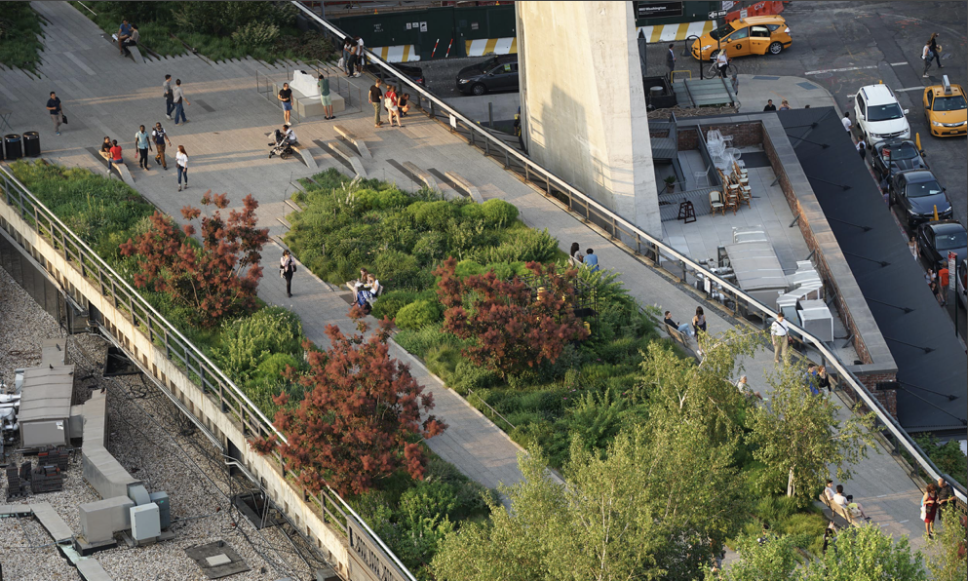
“The High Line is both a nonprofit organization and a public park on the West Side of Manhattan. Through our work with communities on and off the High Line, we’re devoted to reimagining the role public spaces have in creating connected, healthy neighborhoods and cities. Built on a historic, elevated rail line, the High Line was always intended to be more than a park. You can walk through gardens, view art, experience a performance, savor delicious food, or connect with friends and neighbors-all while enjoying a unique perspective of New York City.” 9

Source: https://www.thehighline.org

Third places at risk

Unfortunately, limited public transportation, suburban zoning laws, and rising real estate costs often place these spaces far from residential areas, making car access a necessity and reducing their accessibility. The shift to digital interactions has further diminished these community-focused spaces, leaving many isolated.

But especially in today’s fast-paced digital age, third places are more essential than ever as a counterbalance to the isolating effects of technology, the relentless pace of modern life, and the growing emphasis on work and productivity. 5 6

Video

I also found this interesting YouTube Video from Elliot Sang explaining the issue with Third Places also in a historical context: 


Sources:

[1] R. Oldenburg, The Great Good Place: Cafes, Coffee Shops, Bookstores, Bars, Hair Salons and Other Hangouts at the Heart of a Community, New York: Marlowe & Company, 1999.

[2] N. G. Er, „The Third Place Theory – Nazlı Gizem Er – medium“, Medium, 11. September 2023. [Online]. Verfügbar unter: https://medium.com/@gzm.err/the-third-place-theory-ae0dcee927b6#:~:text=The%20Third%20Place%20Theory%20reminds,to%20our%20overall%20well%2Dbeing.

[3] V. Mehta und J. K. Bosson, „Third Places and the Social Life of Streets“, SAGE Publications, 2010. doi: 10.1177/0013916509344677.

[4] A. Mondry, “In praise of loud, stinky bars,” Shelterforce, May 24, 2012. [Online]. Available: https://shelterforce.org/2012/05/24/in_praise_of_loud_stinky_bars/. [Accessed: Jan. 13, 2025].

[5] E. Klinenberg, Palaces for the People: How Social Infrastructure Can Help Fight Inequality, Polarization, and the Decline of Civic Life, New York, NY: Crown Publishing Group, 2018.

[6] Aquizoncolquitt, „Third Places: What Are They and Why Are They Important to American Culture? | English Language Institute“, 1. November 2023. https://esl.uchicago.edu/2023/11/01/third-places-what-are-they-and-why-are-they-important-to-american-culture/

[7] C. Diaz und S. M. Butler, „“Third places” as community builders“, Brookings, 14. September 2016. [Online]. Verfügbar unter: https://www.brookings.edu/articles/third-places-as-community-builders/

[8] „What is Oodi? – Oodi“, Oodi, 25. Januar 2024. https://oodihelsinki.fi/en/what-is-oodi/

[9] The High Line, „Overview | The High Line“, The High Line, 15. Januar 2025. https://www.thehighline.org/about/

#04 Impact of Loneliness on Health

Social connection and satisfying relationships are fundamental for development, reproduction and survival. The impact of social influences on health and well-being has been extensively investigated through diverse scientific methodologies like epidemiological studies, network analyses, clinical trials and controlled experiments. Consistent evidence indicates that loneliness and social isolation negatively affect mental, physical, and cognitive health, with the most compelling findings linking these factors to an increased risk of premature mortality. 1 Several meta-analyses find that the risk of all-cause mortality is increased by 26 %. Moreover, these findings were consistent across various factors, including age, gender, cause of death, country of origin, and baseline health status 

Existing research makes a difference in all-cause mortality and cause-specific mortality, particularly when talking about cardiovascular diseases or strokes. All-cause mortality refers to the collective risk of death from all conditions associated with loneliness, while cause-specific mortality focuses on the risk of dying from a specific condition closely linked to loneliness or social isolation. 

Research has explored the individual and combined effects of loneliness and social isolation on mortality risk. While both factors independently correlate with higher mortality, studies suggest that social isolation is the stronger predictor when both are analyzed together. For example, some studies show that only social isolation remained significant after controlling for demographic, socio-economic, and health factors. 3 Beller and Wagner observed that loneliness and social isolation interact synergistically: greater social isolation amplifies the impact of loneliness on mortality, while higher loneliness intensifies the effect of social isolation. 4

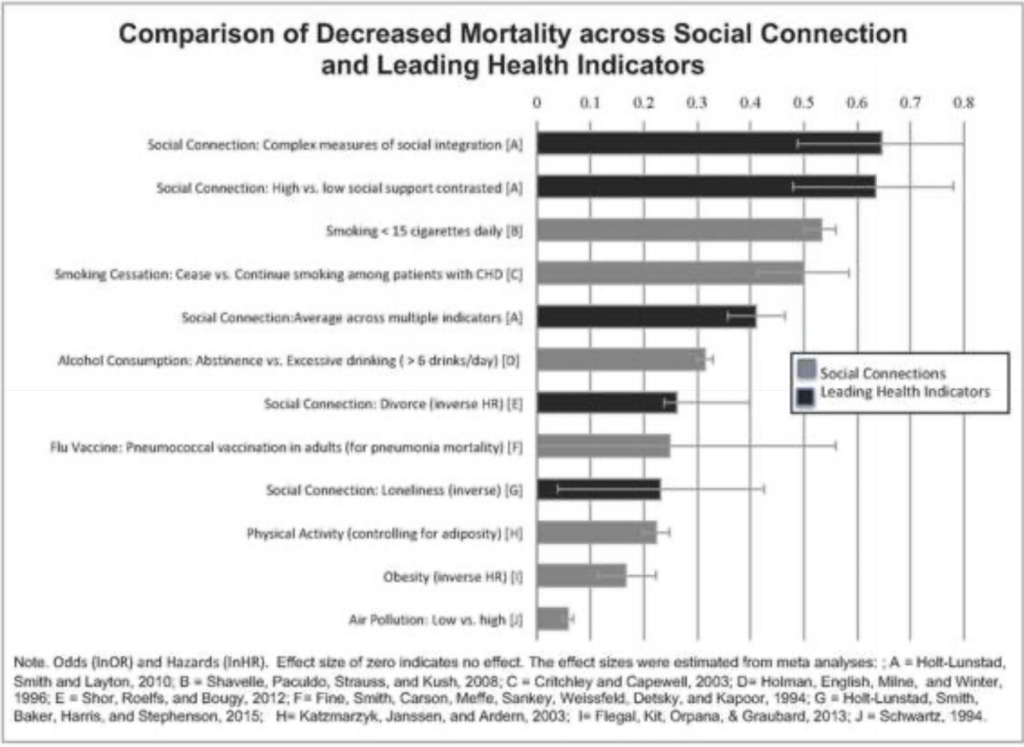
The impact of social relationships on mortality risk can be compared to other well-established lifestyle risk factors like physical activity, alcohol consumption, smoking cigarettes, air pollution or obesity. 5

Comparison of Decreased Mortality across social connection and leading health indicators 3

Physical health

In addition to their association with increased mortality risk, social isolation and loneliness are linked to various health issues, including cardiovascular diseases, stroke, functional decline, and, to some extent, reduced immune function and diabetes. 3

Cardiovascular diseases
Cardiovascular diseases include diseases affecting the heart or blood vessels like heart attacks or strokes. A meta-analysis which is based on 23 different studies shows that loneliness and social isolation are linked to a 29 % higher risk of coronary heart disease and a 32 % higher risk of stroke. These associations were observed in both genders and remained significant regardless of traditional heart disease risk factors. Studies show that loneliness is linked to an increased risk of high blood pressure, particularly among middle-aged and older adults, and inflammatory reactivity. 3

Functional and motor decline
Loneliness is linked to increased functional and motor decline, including greater difficulty with activities of daily living and reduced muscle strength, mobility, and motor performance. 6 It remains unclear whether loneliness contributes to functional decline directly or indirectly through processes like cardiovascular diseases or inflammation. 

Diabetes and cholesterol
Few studies have linked loneliness to developing diabetes for men. A cross-sectional study in Switzerland shows that lonely people have a 40 % higher chance of developing diabetes and 31 % higher chance to have higher cholesterol levels. 8

Cognitive Health

Cognitive function encompasses a range of mental processes that enable an individual to acquire knowledge, reason, and carry out plans. These processes include perception, memory, learning, attention, decision-making, and language skills. 9

Cognitive decline
Several studies have explored the relationship between loneliness and/or social isolation, and cognitive decline, especially in older adults. Even though some studies show a link between loneliness and cognitive decline, they cannot agree on what part of the cognitive function is affected. 3

Alzheimer’s and Dementia
Most evidence suggests a correlation between loneliness and dementia, comparable to the other dementia risk factors like physical activity, low education and late-life-depression. 10 While a study from 2018 found no association between loneliness and dementia, there are other studies showing that there is a link between loneliness and developing dementia. To address the potential problem of reversed causality – where early-stage dementia leads to difficulties engaging in social interactions and therefore people feeling lonely – the study doesn’t include people in those early stages. 3

Mental health

A wide range of literature shows a significant relationship between loneliness and mental health issues like depression and anxiety as well as suicide and suicidal ideations. 3

Depression and Anxiety
Lonely individuals tend to experience more depressive symptoms and report being less happy, less satisfied, and more pessimistic. Additionally, loneliness and depression share common features, such as feelings of helplessness and emotional pain. 11 Another study also shows an association between poor social connection and social anxiety in both adolescents and adults. 1

Suicide and Suicidal Ideation
Studies indicate a connection between loneliness and suicide. A study of individuals who have attempted suicide found that loneliness is frequently cited as a contributing factor. 12

Taking loneliness seriously

Research shows that loneliness affects health, but the relationship is also bidirectional – some health conditions such as poor physical health, disabilities, or hearing loss, can also increase the likelihood of loneliness. The reported evidence highlights that loneliness should be taken more seriously as a risk factor for various health problems. 3


Sources

[1] J. Holt-Lunstad und Department of Psychology, Brigham Young University, Provo, Utah, USA, „Social Connection as a Public Health Issue: The Evidence and a Systemic Framework for Prioritizing the “Social” in Social Determinants of Health“, 2022. [Online]. Verfügbar unter: https://doi.org/10.1146/annurev-publhealth-052020-110732

[2] J. Holt-Lunstad, T. B. Smith, M. Baker, T. Harris, and D. Stephenson, “Loneliness and social isolation as risk factors for mortality: A meta-analytic review,” *Perspect. Psychol. Sci.*, vol. 10, no. 2, pp. 227–237, Mar. 2015, doi: 10.1177/1745691614568352. PMID: 25910392.

[3] J. Baarck, M. Kovacic und Joint Research Centre (JRC), „The Relationship between Loneliness and Health“, Publications Office of the European Union, literature review, 2022. doi: 10.2760/90915.

[4] J. Beller and A. Wagner, “Loneliness, social isolation, their synergistic interaction, and mortality,” Health Psychol., vol. 37, no. 9, pp. 808–813, Sep. 2018, doi: 10.1037/hea0000605. PMID: 30138019.

[5] J. Holt-Lunstad, T. F. Robles und D. A. Sbarra, „Advancing social connection as a public health priority in the United States.“, American Psychologist, Bd. 72, Nr. 6, S. 517–530, Sep. 2017, doi: 10.1037/amp0000103.

[6] K. Beaton and K. Grimmer, “Tools that assess functional decline: systematic literature review update,” Clin. Interv. Aging, vol. 8, pp. 485–494, 2013. Available at: https://doi.org/10.2147/CIA.S42528.

[7] A. S. Buchman et al., “Loneliness and the rate of motor decline in old age: the Rush Memory and Aging Project, a community-based cohort study,” BMC Geriatr., vol. 10, no. 1, p. 77, 2010. Available at: https://doi.org/10.1186/1471-2318-10-77. 

[8] R. A. Richard, S. Rohrmann, C. L. Vandeleur, M. Schmid, J. Barth, and M. Eichholzer, “Loneliness is adversely associated with physical and mental health and lifestyle factors: Results from a Swiss national survey,” PLoS One, vol. 12, no. 7, p. e0181442, Jul. 2017, doi: 10.1371/journal.pone.0181442. PMID: 28715478; PMCID: PMC5513556.

[9] K. Kiely, “Cognitive function,” in Encyclopedia of Quality of Life and Well-Being Research, A. C. Michalos, Ed., Dordrecht: Springer Netherlands, 2014, pp. 483–484. Available at: https://doi.org/10.1007/978-94-007-0753-5_2939.

[10] J. S. Kuiper, M. Zuidersma, R. C. Oude Voshaar, S. U. Zuidema, E. R. van den Heuvel, R. P. Stolk, and N. Smidt, “Social relationships and risk of dementia: A systematic review and meta-analysis of longitudinal cohort studies,” Ageing Res. Rev., vol. 22, pp. 39–57, Jul. 2015, doi: 10.1016/j.arr.2015.04.006. PMID: 25956016. 

[11] R. Mushtaq, S. Shoib, T. Shah und S. Mushtaq, „Relationship Between Loneliness, Psychiatric Disorders and Physical Health ? A Review on the Psychological Aspects of Loneliness“, JOURNAL OF CLINICAL AND DIAGNOSTIC RESEARCH, Jan. 2014, doi: 10.7860/jcdr/2014/10077.4828.

[12] L. M. Heinrich, E. Gullone und School of Psychology, Psychiatry, and Psychological Medicine, Faculty of Medicine, Nursing, and Health Sciences, Monash University, VIC 3800, Australia, „The clinical significance of loneliness: A literature review“, 2006. [Online]. Verfügbar unter: https://doi.org/10.1016/j.cpr.2006.04.002

#03 Are we living in an epidemic of loneliness?

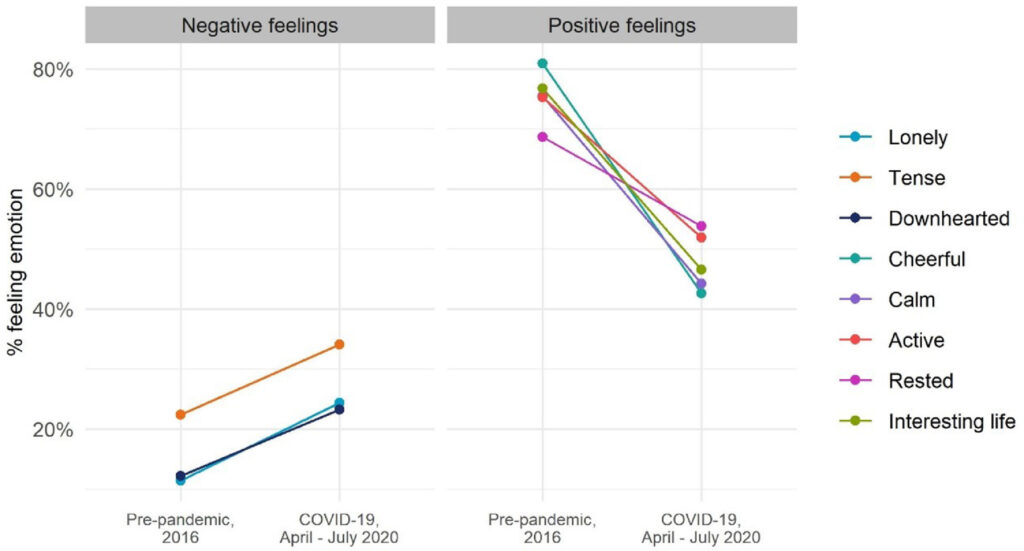
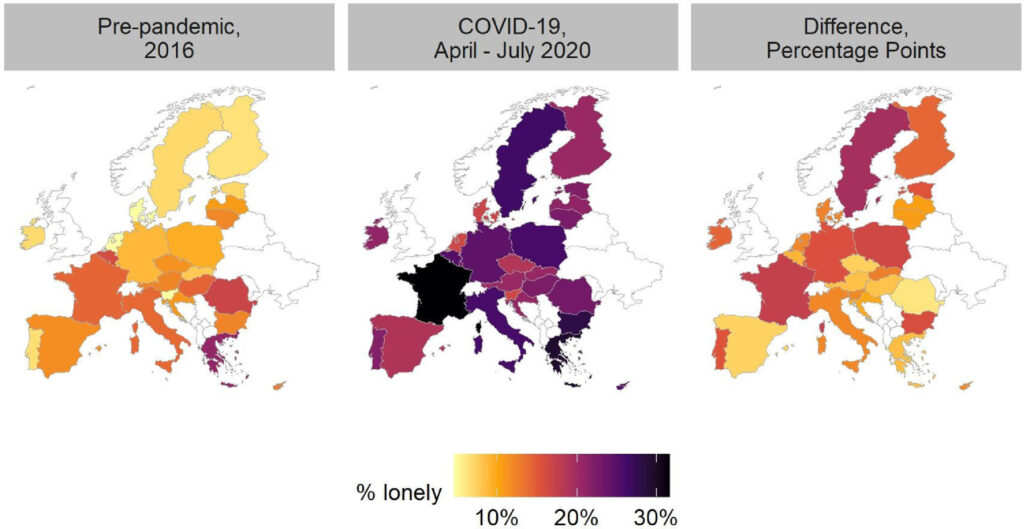
The heightened risk of loneliness during the COVID-19 pandemic has brought increased attention to the issue, leading to loneliness and social isolation being recognized as serious public health concerns.A study conducted by the IFO Institute and the European Commission reveals that in 2016, 12 % of people in the European Union frequently experienced the feeling of loneliness. During the initial months of lockdown, this figure increased to 25%. 2

Source: Loneliness in Europe before and during the COVID-19 pandemic 2

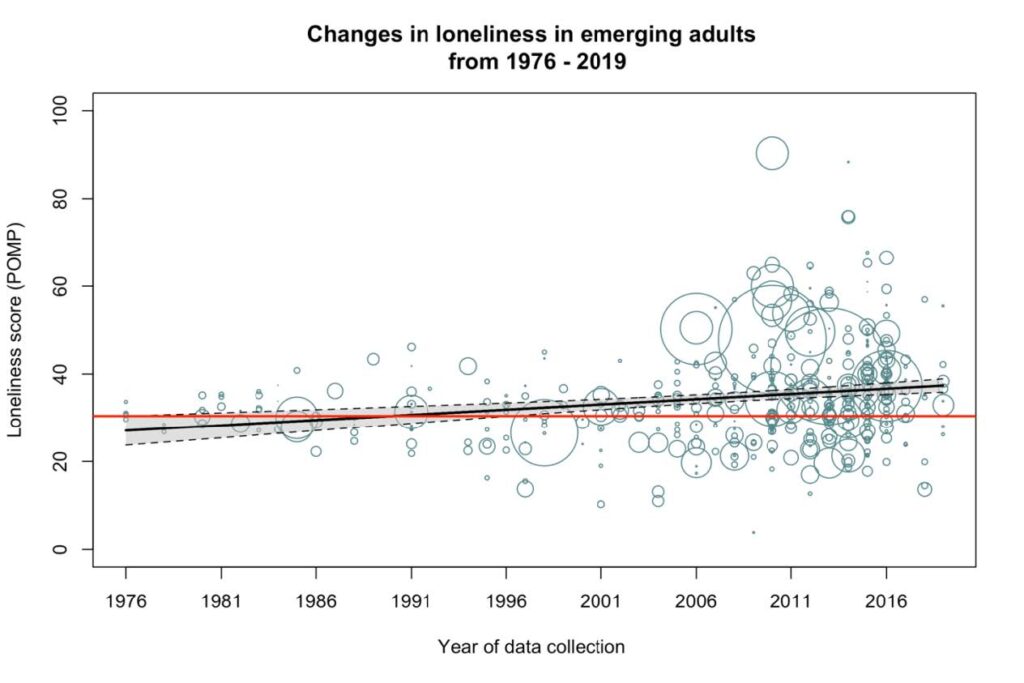
Some researchers even claim that we are living in an epidemic of loneliness right now. However, loneliness is not a modern-day phenomenon. A study by the American Psychological Association analyzed 345 studies comprising 437 independent samples, with a total of 124,855 young adults completing the UCLA Loneliness Scale between 1976 and 2019. Over these 43 years, the study revealed a gradual increase in loneliness. Even though there was constant increase in loneliness, talking about an epidemic of loneliness might be exaggerated. 3

Source: Is Loneliness in Emerging Adults Increasing Over Time? A Preregistered Cross-Temporal Meta-Analysis and Systematic Review 3

Who is at highest risk for loneliness?

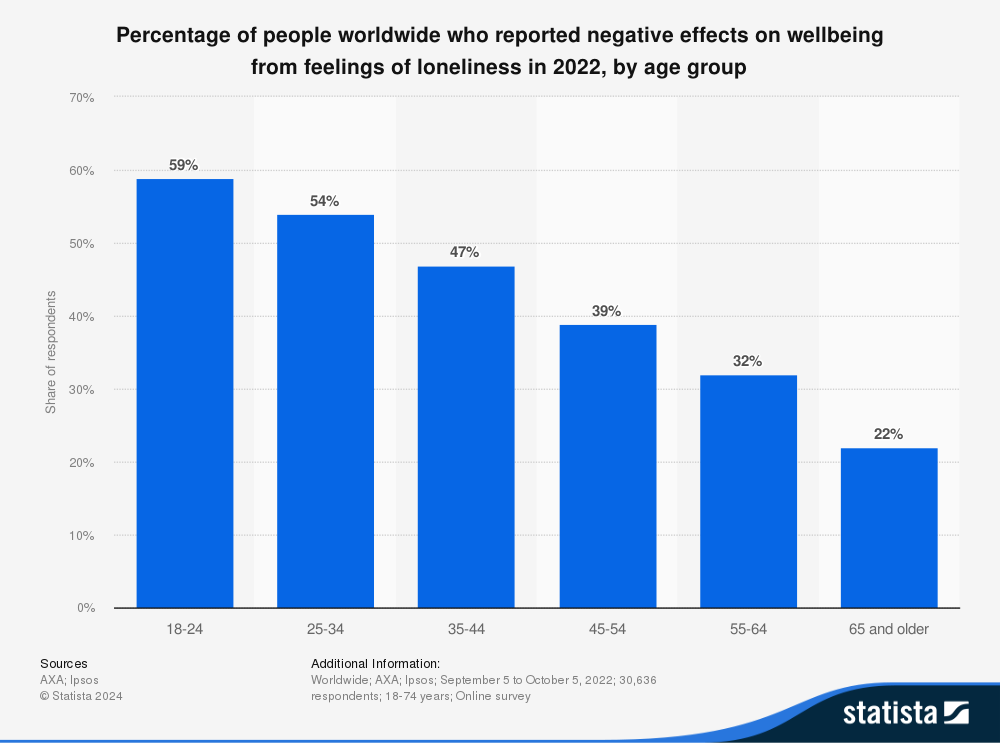
Age is a frequently studied aspect in connection with loneliness. For a long time, the focus was on older people, as they have a particularly high risk of being affected by loneliness. However more recent studied showed that there is a u-shaped relationship between age and loneliness, because also young people are highly affected by loneliness these days. 4

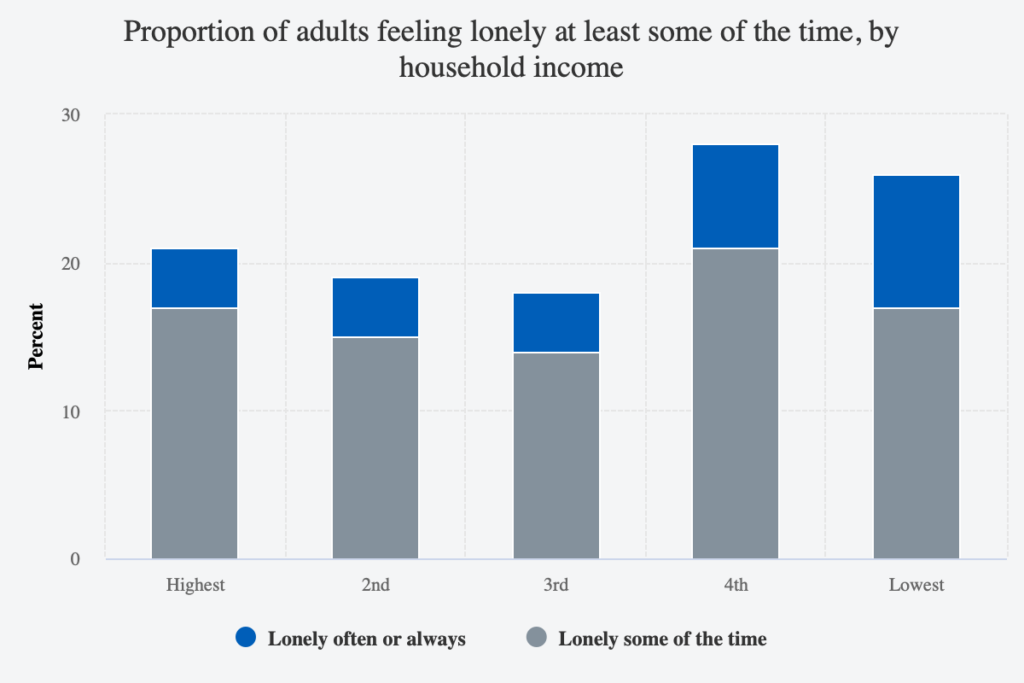
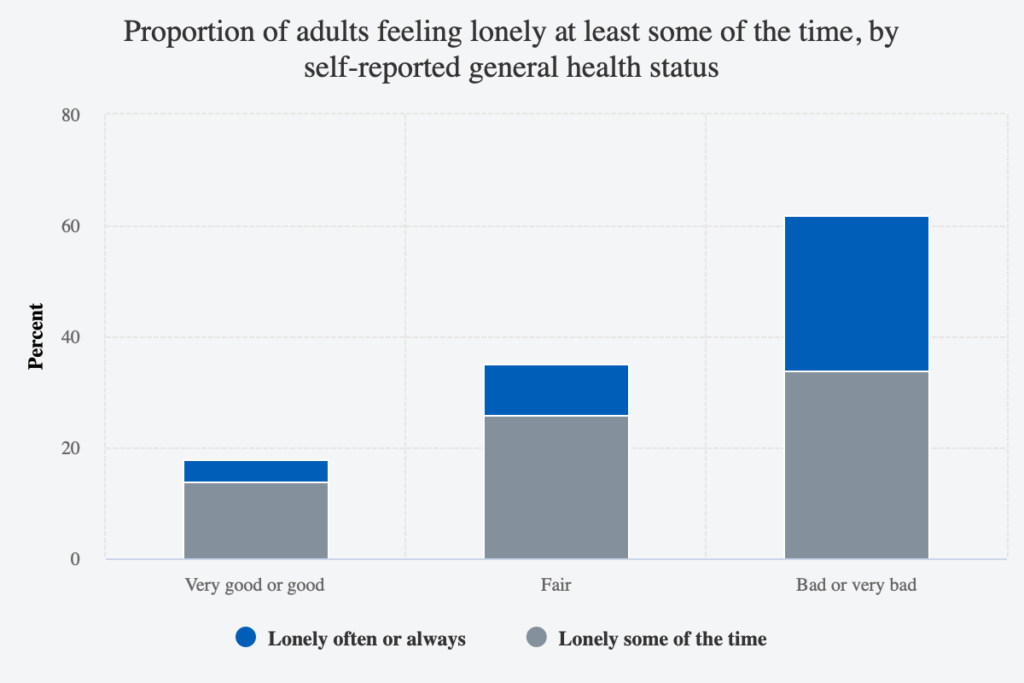
Examining socio-economic factors such as income, health, and living conditions, several studies indicate that individuals with lower income levels are more likely to experience loneliness. Similarly, those who report poor health tend to feel lonelier compared to individuals with good health. Furthermore, research shows that individuals living alone are more likely to experience loneliness. 2 5  

Source: Health Survey for England 2021: Loneliness and Wellbeing 5

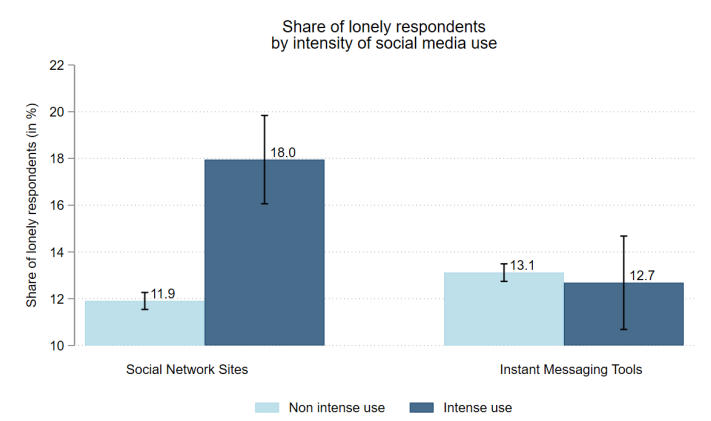
Additionally, technology, particularly social media, has a significant impact on our relationships and social interactions. Even though we are more connected than ever, people tend to feel more lonely nowadays. Excessive social media use (in the study from the European commission excessive means two or more hours per day on social media) can contribute to feelings of loneliness, a fear of missing out, and a lack of meaningful social connection. 6 7

Source: EU Loneliness Survey, 2022 6

Since several studies show the negative impact of loneliness on health and its growing significance in public health, several governments and institutions — such as the government of United Kingdom and Japan, the Ministry of Health in the Netherlands, and the European Commission — are developing strategies to combat loneliness. 

The next blog post explains which impact loneliness has on our health.


Sources

[1] JRC, „Loneliness and social connectedness: insights from a new EU-wide survey“, 2023.

[2] J. Baarck, B. D’Hombres und G. Tintori, „Loneliness in Europe before and during the COVID-19 pandemic“, Health Policy, Bd. 126, Nr. 11, S. 1124–1129, Sep. 2022, doi: 10.1016/j.healthpol.2022.09.002.

[3] S. Buecker u. a., „Is Loneliness in Emerging Adults Increasing Over Time? A Preregistered Cross-Temporal Meta-Analysis and Systematic Review“, journal-article, 2021. doi: 10.1037/bul0000332.

[4] S. V. Schnepf, B. D’Hombres und C. Mauri, Hrsg., Loneliness in Europe. 2024. doi: 10.1007/978-3-031-66582-0.

[5] NHS Digital, Health Survey for England 2021: Loneliness and Wellbeing. Available: https://digital.nhs.uk/data-and-information/publications/statistical/health-survey-for-england/2021-part-2/loneliness-and-wellbeing. Accessed: Jan. 7, 2025.

[6] B. Dhombres, M. Kovacic, S. V. Schnepf, and Z. Blaskó, Loneliness and social media use in the European Union, European Commission, 2024, JRC135806.

[7] V. H. Murthy, „Our Epidemic of Loneliness and Isolation: The U.S. Surgeon General’s Advisory on the Healing Effects of Social Connection and Community“, 2023. [Online]. Verfügbar unter: https://www.hhs.gov/sites/default/files/surgeon-general-social-connection-advisory.pdf

#02 Loneliness?

Loneliness is a universal human experience, yet it manifests in ways that are deeply personal and varied. What exactly is loneliness, and how can we better understand its dimensions and impact?

What is Loneliness?

Several studies describe a different definition of loneliness. As a discrepancy between the social interactions and relationships an individual desires and those they currently experience, which leads to a negative feeling of being alone. Here, however, being alone is not the same as feeling lonely. It is described as a perceived lack of social contact, 2 or as the unavailability or unwillingness of others to engage in social and emotional experiences 3, or as a condition in which an individual can interact with others but does not do it. 4

Loneliness is a multidimensional phenomenon due to its variations in intensity, causes, and circumstances. Therefore, it can be distinguished between three types of loneliness: emotional loneliness, social loneliness and collective loneliness.

Emotional loneliness “results from the lack of a close, intimate attachment to another person”. Someone, like a spouse or best friend, whom one can rely on for emotional support during hard times and validates one’s values.

Social loneliness is the absence of quality relationships with family or a group of friends who share the same interests and activities. 6  

Collective loneliness pertains to an individual’s sense of disconnection from their valued social identities or “active network” (e.g., group, school, team, or national identity), where one can engage with like-minded others, even if only at a distance, within the broader social context. 7

How to measure Loneliness?

Since loneliness is a subjective experience, its measurement can be challenging. It cannot be directly observed, and there are no objective indicators to assess it. As a result, loneliness is typically measured through self-reported methods, such as surveys and questionnaires. There are two types of measuring loneliness: direct and indirect. 

Direct Measures: People are asked directly if they are feeling lonely in a certain period of time. 

Indirect Measures: People are asked several questions but without using words like lonely or loneliness. The questions are about feelings and experiences related to loneliness. Like the wish to have someone to rely on or talk to about private topics. 

Over the time several scales have been developed for measuring loneliness. The two most known ones are the “University of California Los Angeles Loneliness Scale” created by Russell and Peplau and the and the “De Jong Gierveld Loneliness Scale” created by De Jong Gierveld and Kamphuis. 8

University of California Los Angeles Loneliness Scale (UCLA Loneliness Scale)

The survey consists of 20 statements, and respondents are required to indicate how frequently each statement applies to them. O: I often feel this way, S: I sometimes feel this way, R: I rarely feel this way, N: I never feel this way.  9

Source: D. W. Russell, L. A. Peplau: Developing a Measure of Loneliness
De Jong Gierveld Loneliness Scale

The original survey consists of eleven statements, in 2000 they created a shortened version with only six statements. Three of the statements are positively formulated and the other three are negatively formulated. The statements need to be answered with “no”, “more or less” or “yes”. This survey also considers the difference between emotional loneliness and social loneliness. 8

6 questions: 

  • I experience a general sense of emptiness.
  • I miss having people around.
  • I often feel rejected.
  • There are plenty of people I can rely on when I have problems.
  • There are many people I can trust completely.
  • There are enough people I feel close to.

What is Social isolation?

Loneliness and social isolation are frequently discussed in tandem or treated as synonymous concepts. 2 However, loneliness describes a subjective experience, whereas social isolation is an objective situation where someone is alone or lacks meaningful social interactions. 10 A person who has little contact to the family, friends or other people of a community is socially isolated. 11

Since belonging is seen as a fundamental human motivation. 12 A core aspect shared by most individuals is the need for love, acceptance, and understanding, which often motivates significant efforts to avoid experiencing loneliness. 


Sources:

[1] L. A. Peplau and D. Perlman, “Loneliness,” in Encyclopedia of Mental Health, H. S. Friedman, Ed., vol. 1, San Diego: Academic Press, 1998, pp. 571–581.

[2] G. C. Wenger, The Supportive Network: Coping with Old Age, 1st ed. Allen and Unwin, London, 1984

[3] K. S. Rook, “Research on social support, loneliness, and social isolation: Toward an integration,” Review of Personality & Social Psychology, vol. 5, pp. 239–264, 1984.

[4] S. Shalev, “On loneliness and alienation,” Isr. J. Psychiatry Rel. Sci., vol. 5, pp. 236–245, 1988.

[5] L. M. Heinrich, E. Gullone und School of Psychology, Psychiatry, and Psychological Medicine, Faculty of Medicine, Nursing, and Health Sciences, Monash University, VIC 3800, Australia, „The clinical significance of loneliness: A literature review“, 2006. doi: 10.1016/j.cpr.2006.04.002.

[6] R. S. Weiss, Loneliness: the experience of emotional and social isolation. 1974. [Online]. Verfügbar unter: http://psycnet.apa.org/record/1974-22306-000

[7] S. Cacioppo, A. J. Grippo, S. London, L. Goossens und J. T. Cacioppo, „Loneliness: Clinical Import and Interventions“, The Author(s), 2015. doi: 10.1177/1745691615570616.

[8] S. V. Schnepf, B. D’Hombres und C. Mauri, Hrsg., Loneliness in Europe. 2024. doi: 10.1007/978-3-031-66582-0.

[9] D. W. Russell, L. A. Peplau, Iowa State University, University of California, Los Angeles und Letitia Anne Peplau, „Developing a Measure of Loneliness“, Journal Of Personality Assessment, Juli 1978, doi: 10.1207/s15327752jpa4203_11.

[10] J. de Jong Gierveld, “Developing and testing a model of loneliness,” J. Personal. Soc. Psychol., vol. 53, pp. 119–128, 1987.

[11] C. Victor, S. Scambler, J. Bond und A. Bowling, „Being alone in later life: loneliness, social isolation and living alone“, Reviews in Clinical Gerontology, Bd. 10, Nr. 4, S. 407–417, Nov. 2000, doi: 10.1017/s0959259800104101.[12] Baumeister, Roy F. and Leary, Mark R., “The Need to Belong: Desire for Interpersonal Attachments as a Fundamental Human Motivation”, Psychological Bulletin 1995, Vol. 117, No. 3, 497-529

#01 Breaking social isolation in public spaces

Public spaces like parks, squares, and plazas are essential to urban life. These areas should offer opportunities for relaxation, escaping the busy city life and connection with others. But, most of the time people are for themselves, lacking meaningful interactions. This phenomenon is particularly striking in urban neighborhoods, where anonymity is growing, and the sense of community is shrinking. However, several studies have shown that belonging to a community has a positive effect on people’s mental and physical health (Cramer, Pawsey 2023), (Kitchen, Williams, Chowhan 2011). Baumeister and Leary (1995) describe belonging even as a fundamental human motivation. 

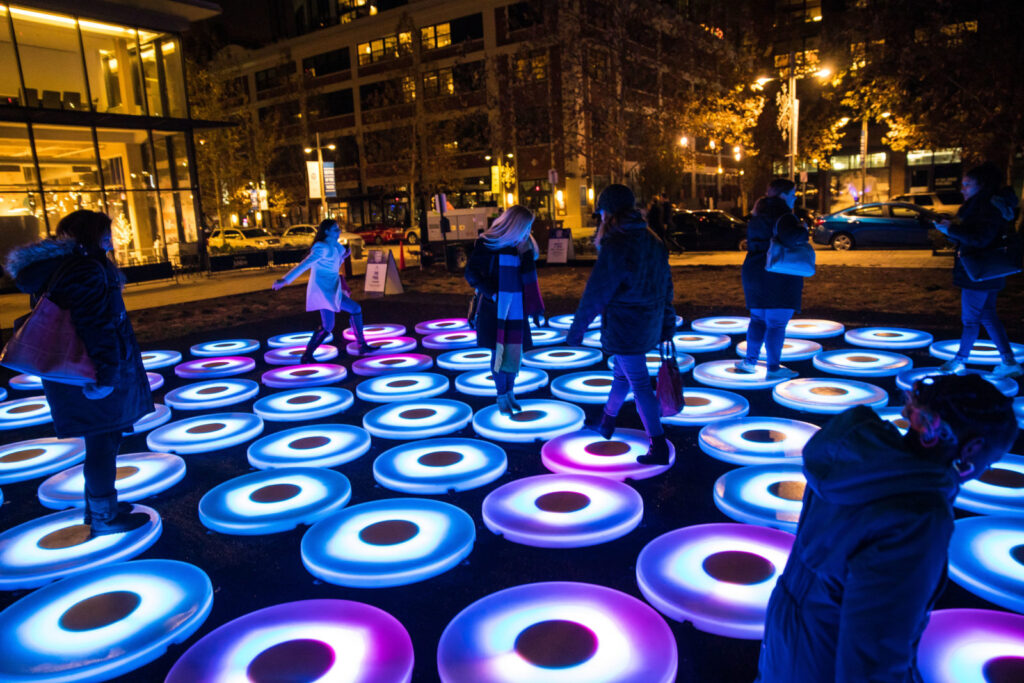
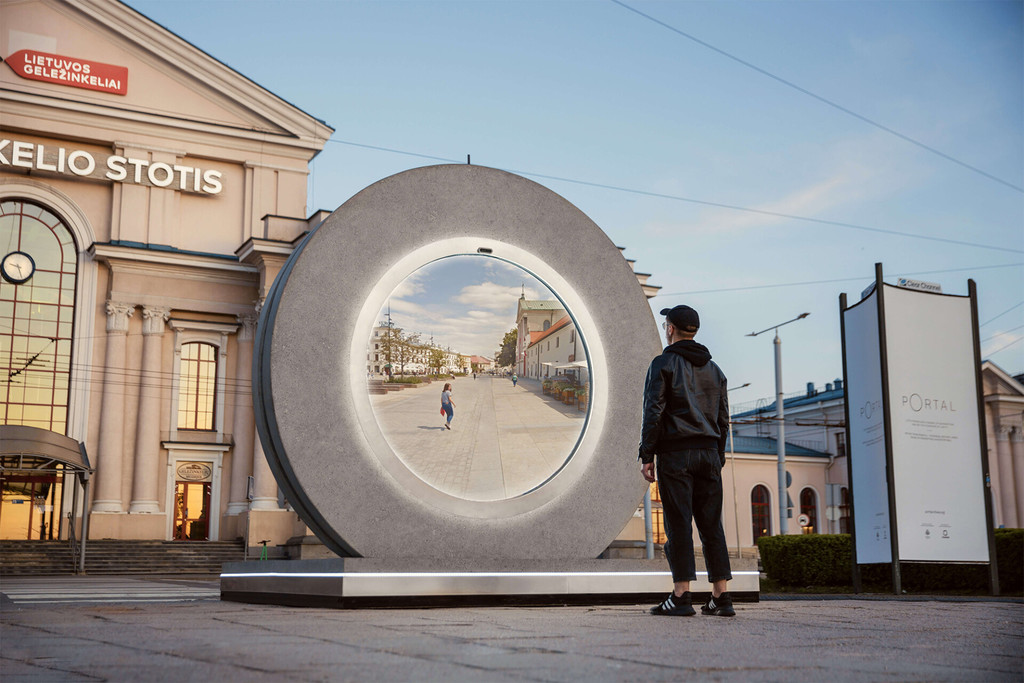
Therefore, the research investigates if interactive installations have the potential to transform the public space into an environment that breaks the social isolation by creating playful experiences that invites people to interact with the installation itself and create a space that encourage social engagement. Can such shared experiences between different people of different background and ages help to strengthen the sense of belonging, strengthen the community and connection within a neighborhood and create a space where people come together?

Source: https://dcist.com/story/18/12/07/let-there-be-light-two-interactive-art-installations-brighten-yards-park/
Source: https://www.portals.org/portal/vilnius

Personal motivation
I am living in a new neighborhood with a great nice park as the center of it, which actually could be a great place of community and interactions. However, the park is rarely used by residents of the neighborhood, primarily due to its lack of amenities. Only few weeks ago few benches were installed, but overall, the space remains largely uninviting.

Next steps
In the next step, I would like to take a closer look at urban design with a focus on public spaces. How are they defined and what must be considered when constructing a public space. I also want to focus on the social dimensions of public spaces. In the second part of research I will dive deeper into the design aspect. That includes learning about interactive installations, the different types available, tools and methods used to create them and studying best practices.

Bringing all these topics into a cohesive concept and finding a type or direction for interactive installations that can be universally used in different public spaces, can be challenges during this research.


Literature
K. M. Cramer and H. Pawsey, „Happiness and sense of community belonging in the world value survey“, Current Research in Ecological And Social Psychology, Bd. 4, S. 100101, Jan. 2023, doi: 10.1016/j.cresp.2023.100101.

P. Kitchen, A. Williams and J. Chowhan, „Sense of Community Belonging and Health in Canada: A Regional Analysis“, Social Indicators Research, Bd. 107, Nr. 1, S. 103–126, März 2011, doi: 10.1007/s11205-011-9830-9.

Baumeister, Roy F. and Leary, Mark R., “The Need to Belong: Desire for Interpersonal Attachments as a Fundamental Human Motivation”, Psychological Bulletin 1995, Vol. 117, No. 3, 497-529