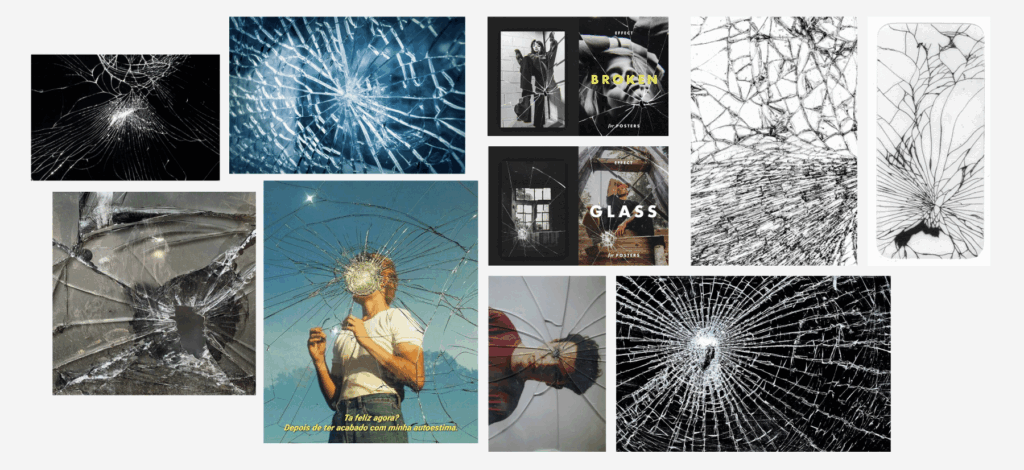
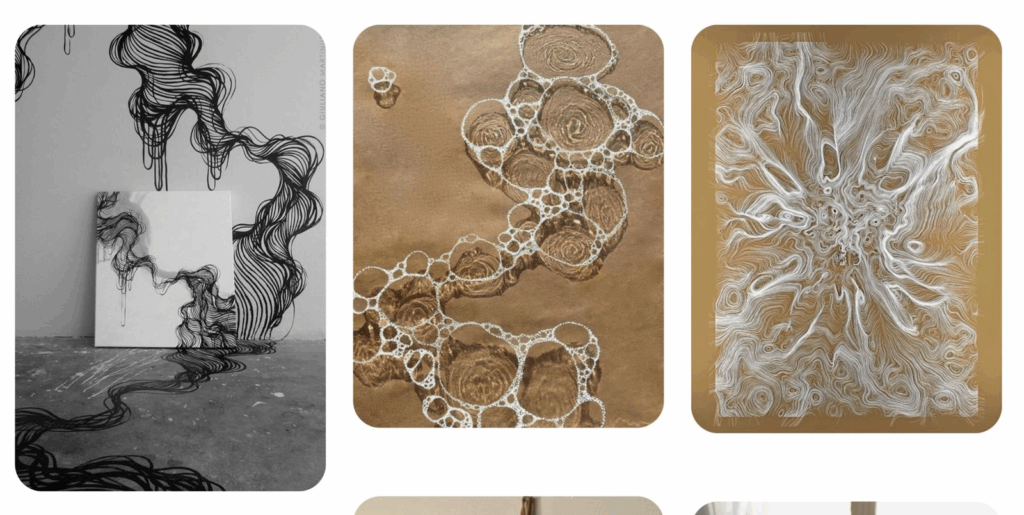
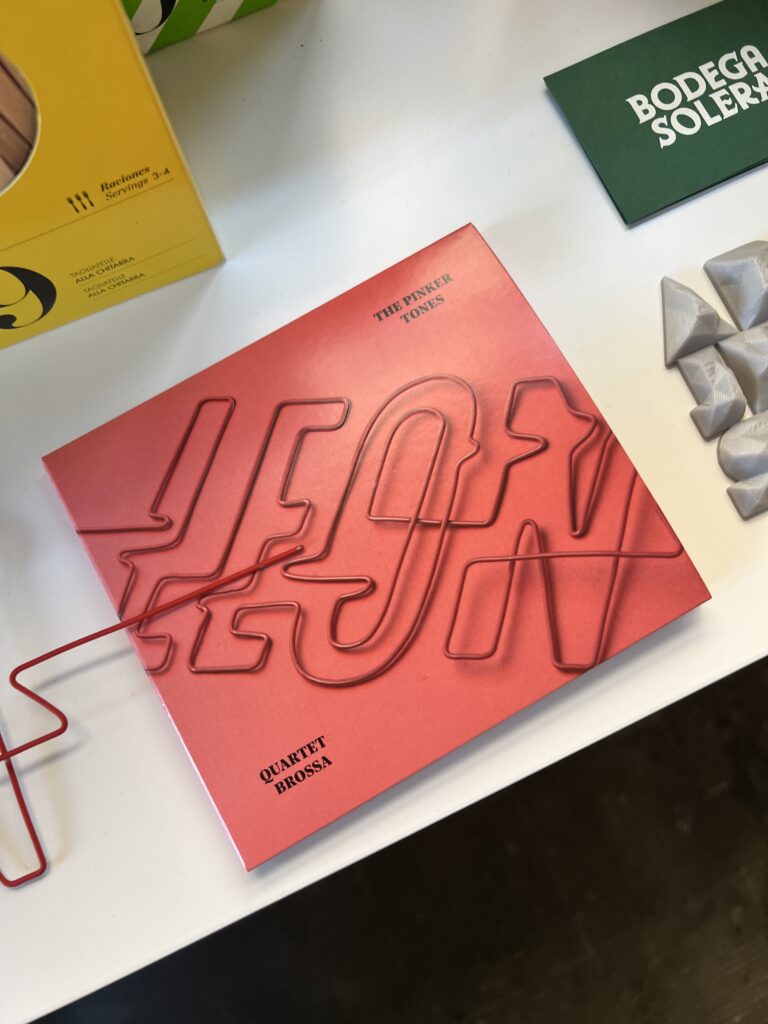
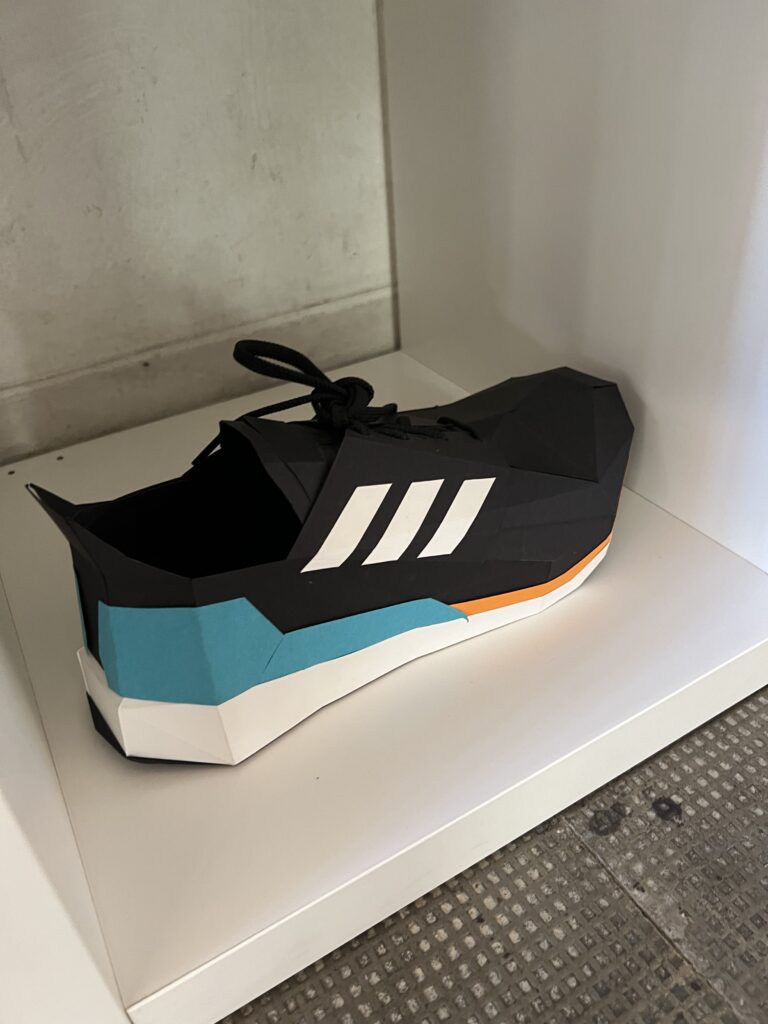
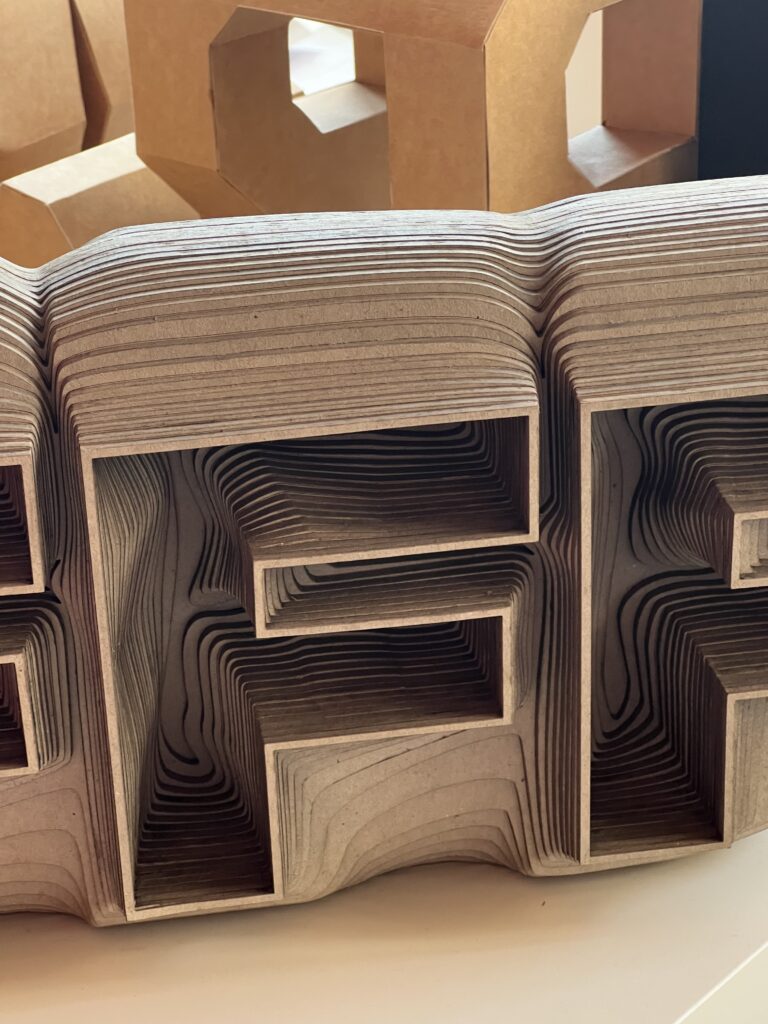
Before I started my project I created a moodboard for inspiration and conceptual direction. My central theme, “Break free from the algorithm,” emerged from a desire to challenge uniformity and celebrate irregularity, fluidity, and organic expression, qualities often lost in algorithm-driven platforms like Instagram and Pinterest.
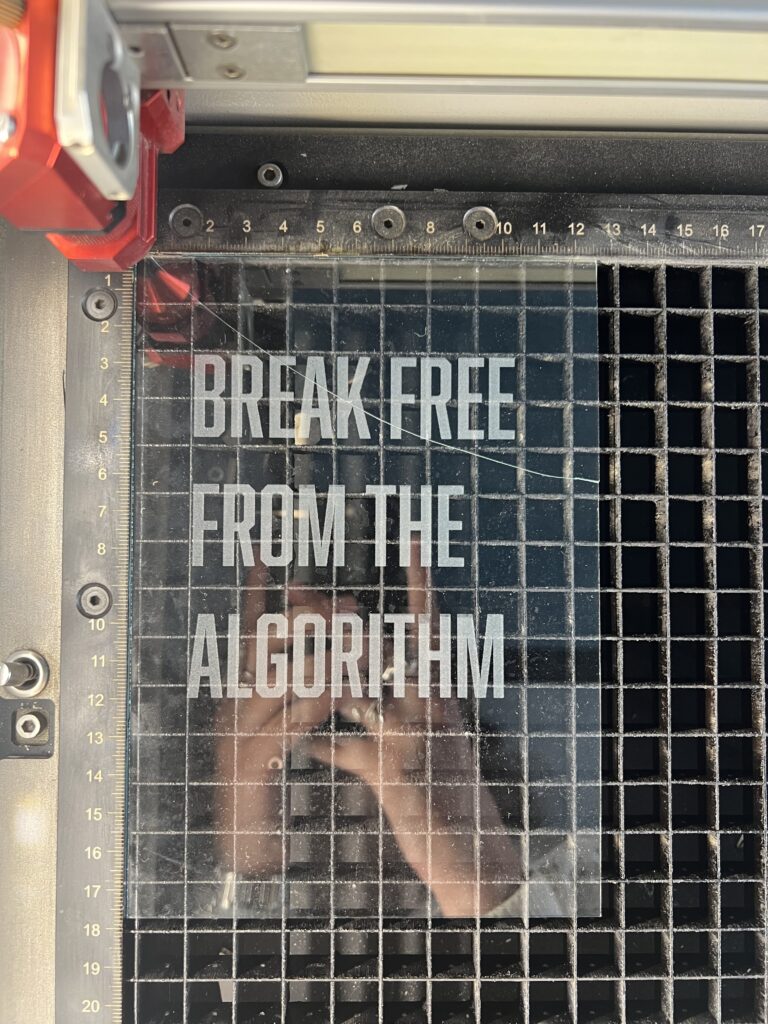
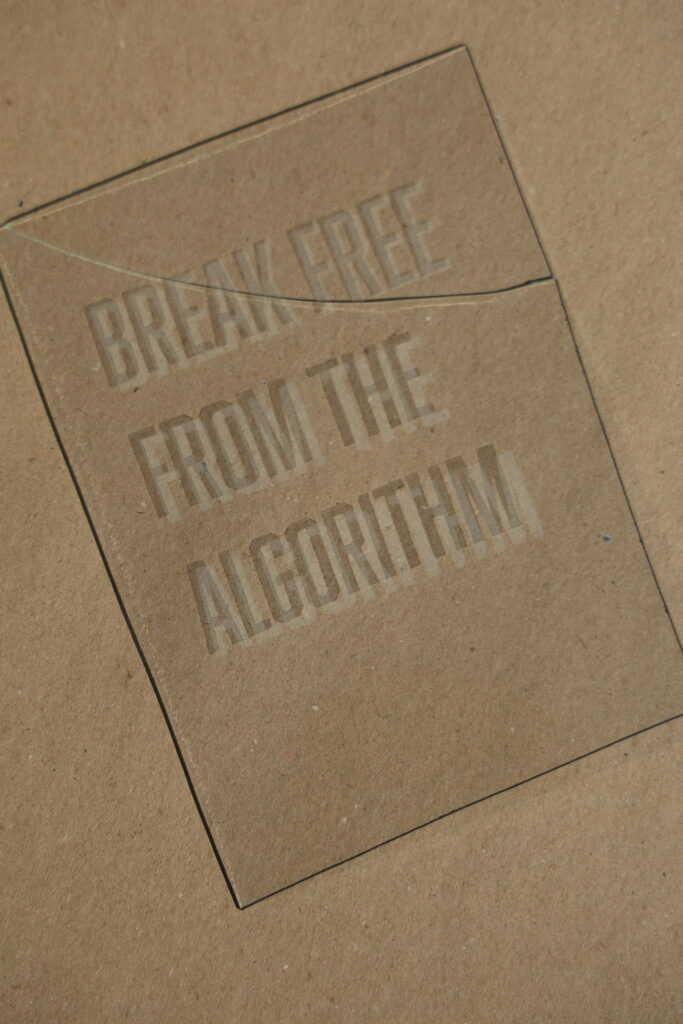
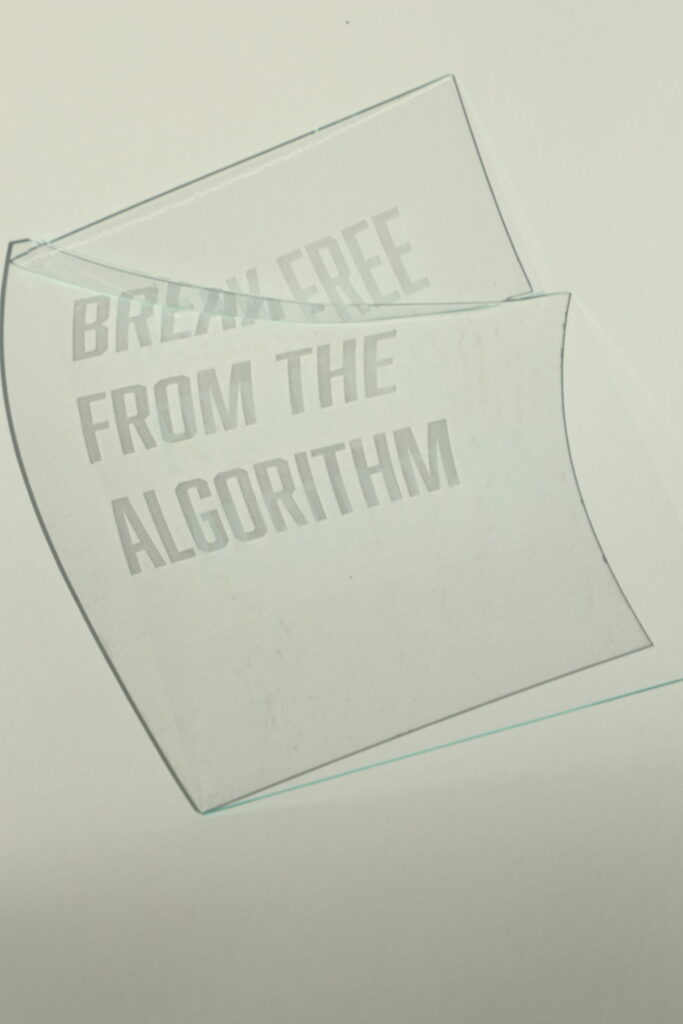
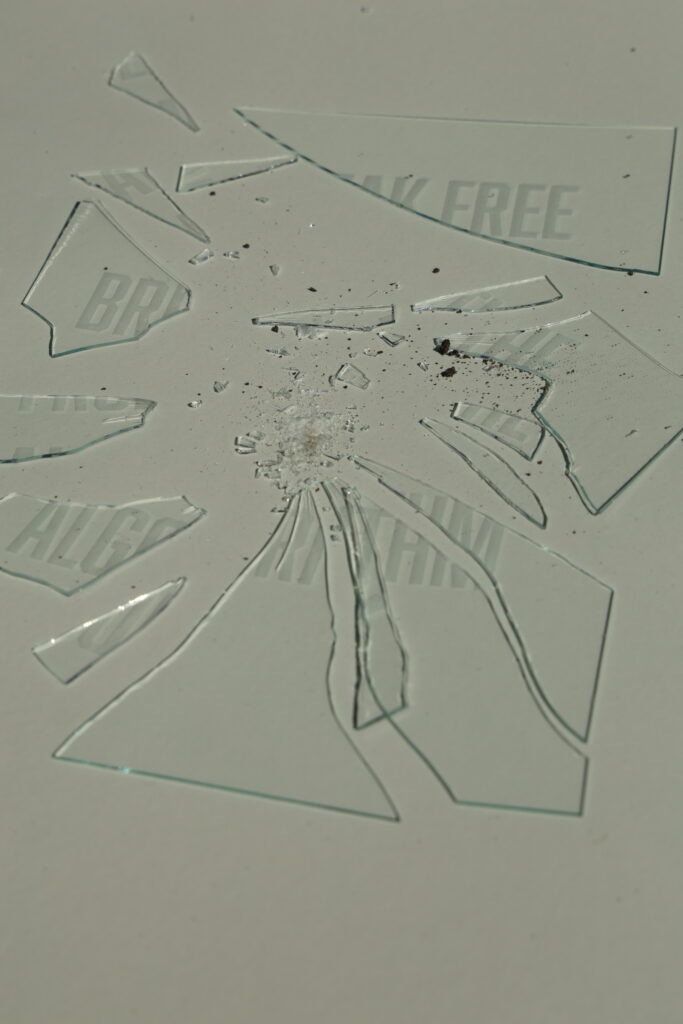
The outcome from the lasercutter in the FabLab: “Break free from the algorithm”
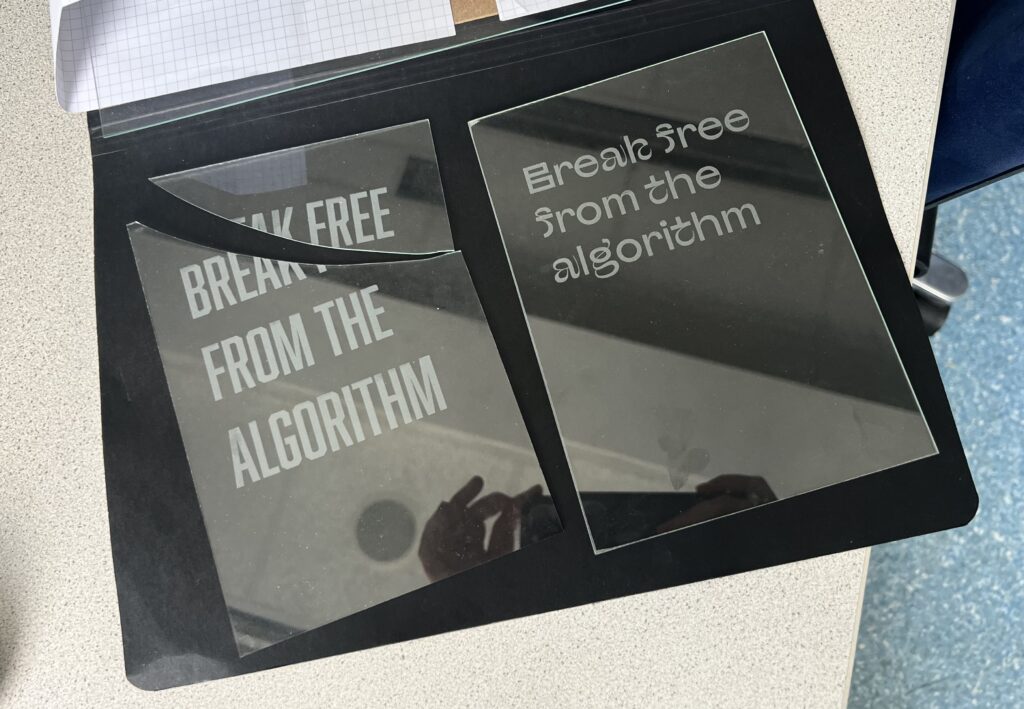
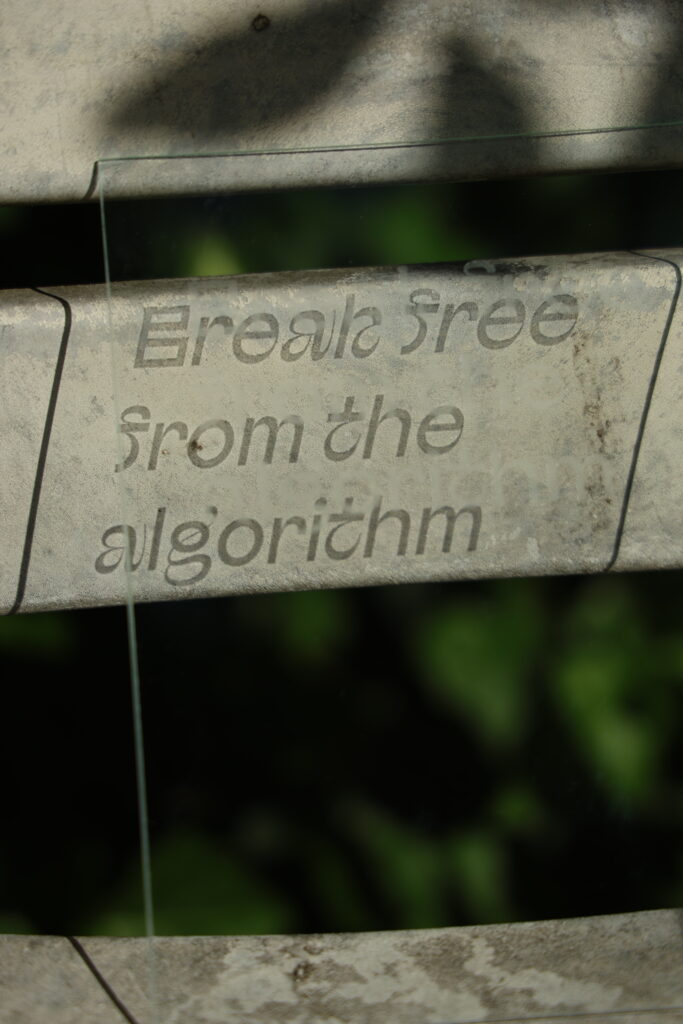
I tested two different typefaces and varied the thickness of the glass, noting how each combination affected legibility, shadow, and the interaction of light through the etching. The glass I took from picture frames that I had left over from making paper.
Photography
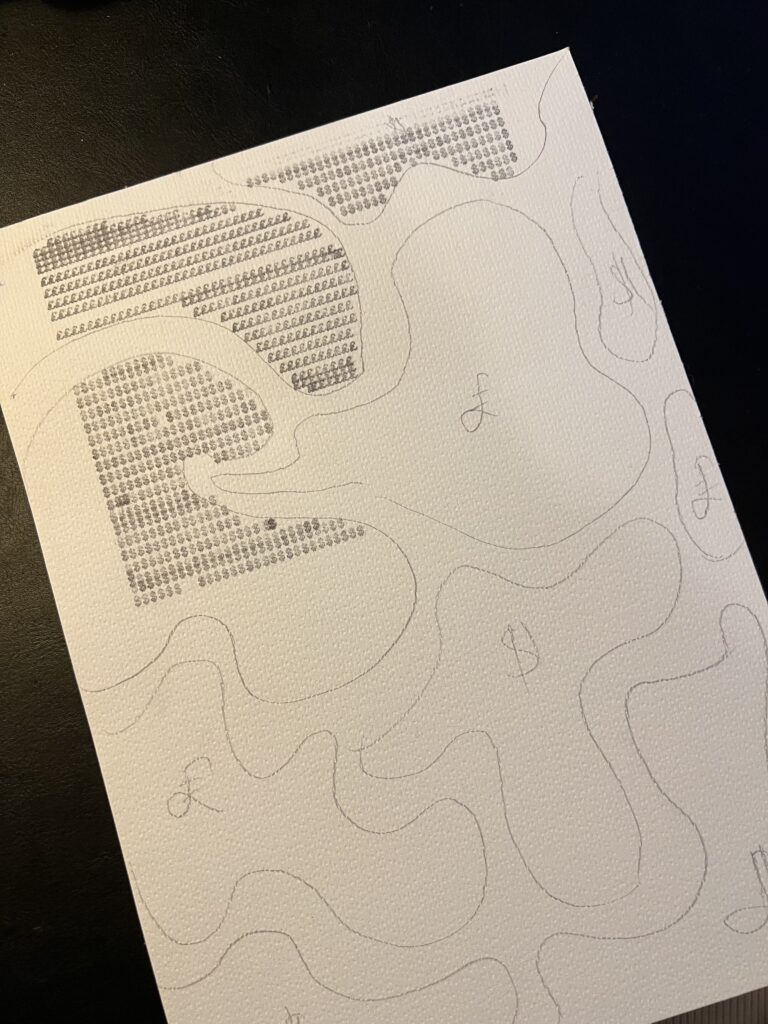
I’m now planning to scale up the format and move beyond text-based work. The next phase involves engraving a larger sheet of glass with an abstract, artistic pattern inspired by organic shapes, particularly those resembling water flow or liquid movement. I created a new vision board to guide this stage, filled with references from fluid illustrations, topographic lines, marbling, and ink-in-water photography.
The goal of this development is to explore how non-linear, natural forms can be embedded into the rigidity of glass—a material often associated with fragility but also permanence. The juxtaposition of algorithmic precision (via laser cutting) and organic chaos (via fluid-inspired design) is the core of this visual concept.
Inspiration & Direction of Research: In Barcelona we got to see insights of the agency “Lo Siento” https://losiento.studio/
This inspired me to take a leap of faith and continue my research from semester 1 and dive deeper into the analogue ideation process and how to create curated and polished designs from it.
Planning my experiments I would like to think about materials first and concepts second as an ideation approach.
MyIdeas for Mixed Media Experiments
Paper x Lasercut
Paper x Riso
Paper x Sewing machine
Paper x Fabric
Fabric x Typewriter
Fabric x Lasercut
Lino x Lasercut
Fabric x Linoprint
Glass x Lasercut
Acrylic Glass x Lasercut
I hope I will be able to leverage materials from previous projects and develop projects as I keep adding new layers and dimensions. In the end I want to professionally photograph my projects and make them look polished like Lo Siento.
With this series of experiments I hope to find out “How to create professional Brandings and design from an analogue ideation process“
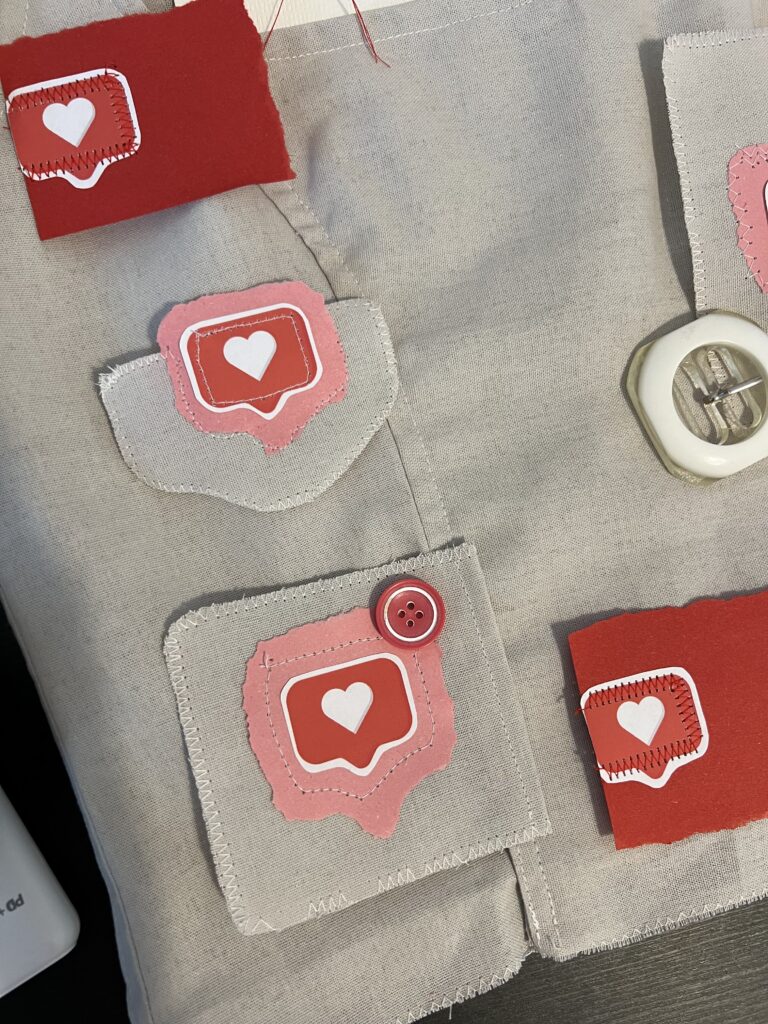
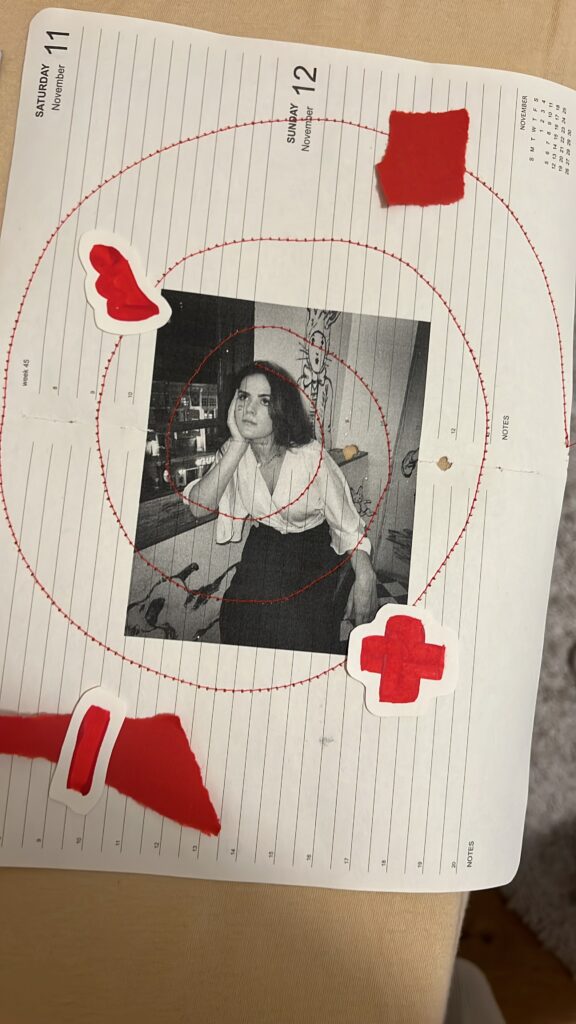
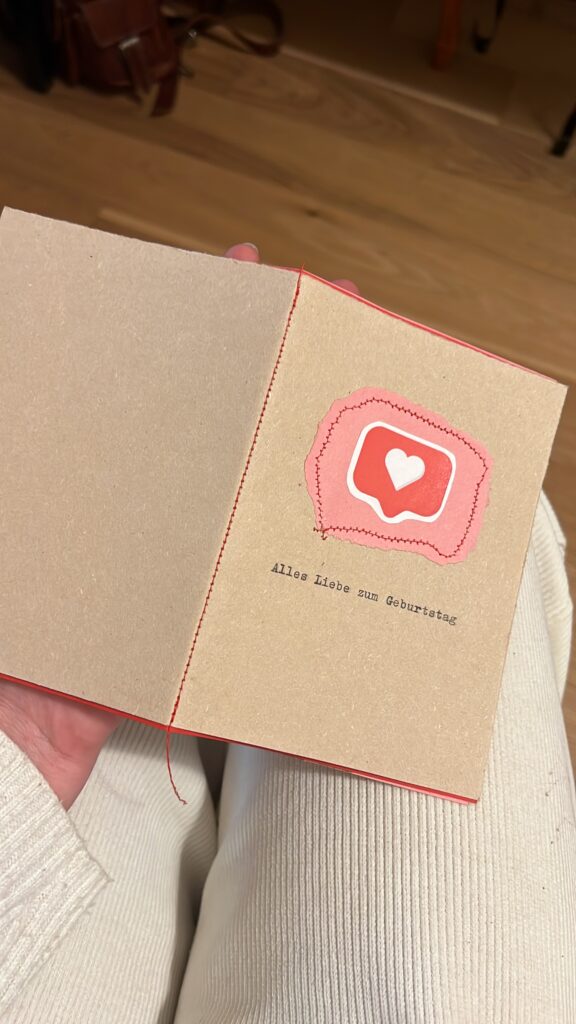
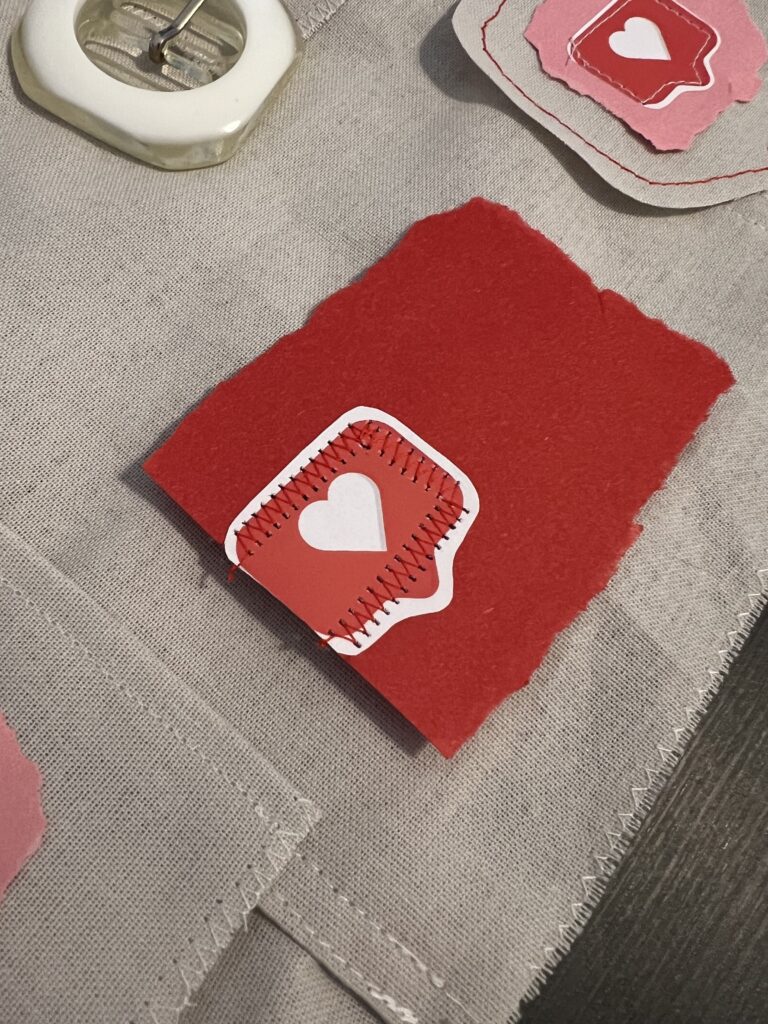
For this experiment I took inspiration from mixed media artists and tried to see which shapes I can create with my sewing machine. As a visual hook/element I decided to use a red threat and pink paper.
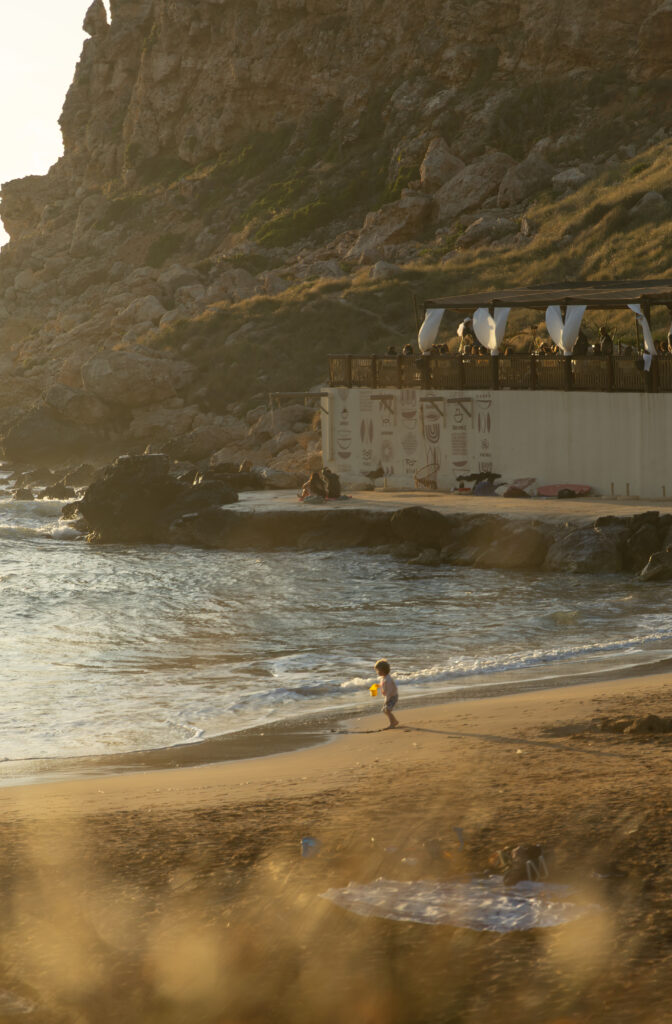
See the beauty in the “ugly” was my personal mission when I was solo traveling malta. I wanted to capture hidden aesthetics and find uncommon design perspectives on usually overseen objects.
The Experiment
The aim of this design research experiment was simple: To train my eye to recognize beauty in the mundane and challenge conventional ideas of what is considered “aesthetic” or “good design.” Rather than seeking balance, symmetry, or sleek minimalism, I was hunting for texture, irregularity, contradiction—qualities that told a story, or better yet, sparked curiosity.
My tools were: a phone camera, a sketchbook, my Canon R6MII equipped with a 24-105mm f4.0 lens, a Canon G7Xii and open time to walk (a lot) and observe.
Here are the results and learnings of my photo trip, I hope you enjoy:
Learnings of my Solo Photo Trip
1. Beauty Exists in Layers Peeling posters, exposed bricks, and weathered doors taught me how time becomes a visual designer. These surfaces held traces of multiple eras, multiple hands, all blending into one layered narrative. Beauty, I realized, often lives in the tension between decay and resilience.
2. Function Over Form Can Still Be Beautiful I became strangely obsessed with utility poles, air conditioning units, and construction scaffolding. These objects prioritize purpose, not polish—yet many had sculptural qualities and unexpected harmonies in proportion or rhythm. Design without trying to be “designed” can be deeply inspiring.
3. Contrast Is a Powerful Communicator Some of the most compelling images I captured juxtaposed old with new, chaos with control, or bright with dull. These visual contrasts created a kind of friction that demanded attention—and that friction became the focal point of the composition.
4. Context Is Everything What’s considered ugly in one setting might be beautiful in another. A crumbling wall in an abandoned village felt poetic and romantic; the same wall in a luxury resort might be considered an eyesore. The environment shifts how we perceive design.
5. Slowing Down Sharpens the Eye Solo travel gave me the gift of stillness. Without distractions, I could truly see what was around me. I learned that “ugly” is often just “unseen.” When you take time to notice, even the most banal surfaces become visually rich.
To be honest, I found it hard to concentrate on the “ugly” when there was so much beauty that surrounded me in Gozo and Malta. I hope my observations spark something in you, too. Whether you’re a designer, photographer, or simply someone curious about the world—try taking a walk with different eyes. You might just fall in love with the “ugly,” too.
It does not directly has to do with my Design Research but I want to share what I learned on my travel to Malta and Gozo from an design perspective.
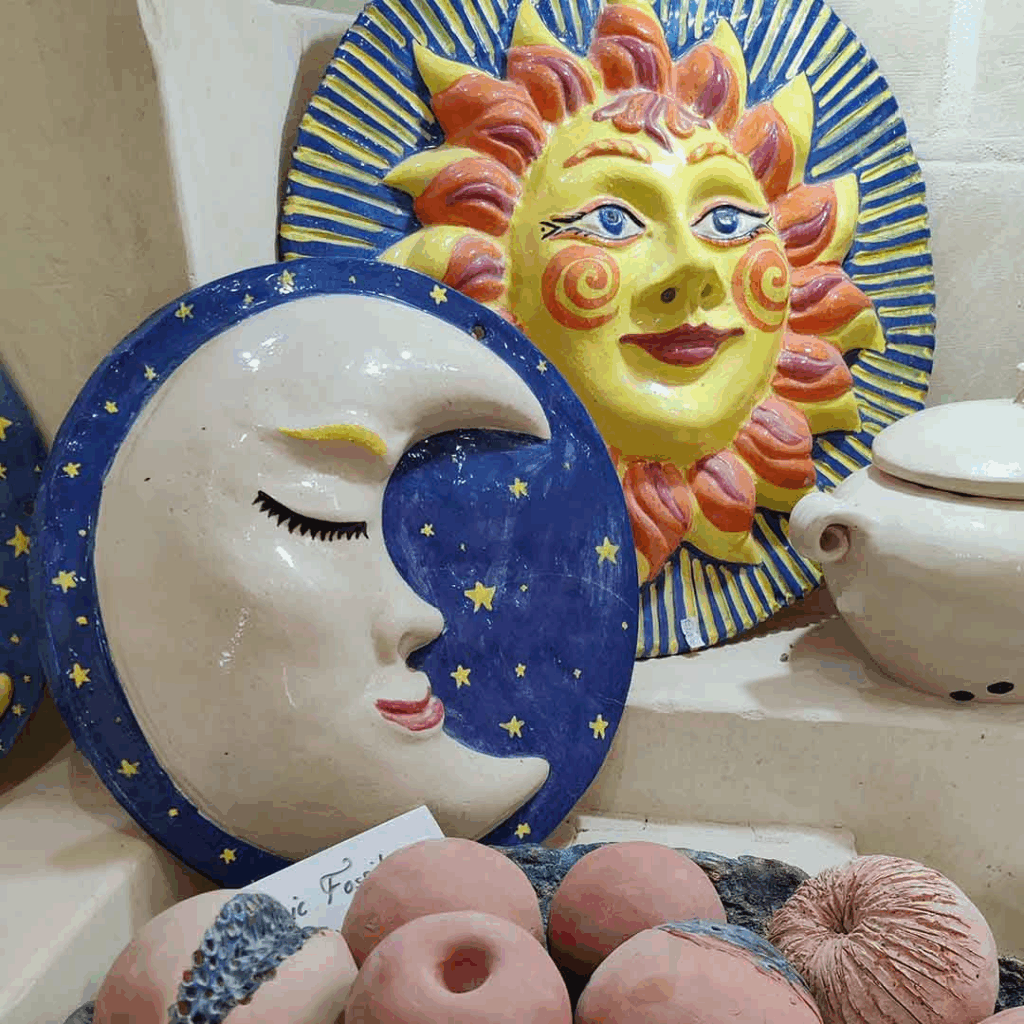
In Malta there is a rich culture of Craftsmanship in Malta, especially Maltese Artisans at Ta’ Qali and the Ta’ Dbieġi Artisan Village. Lastly is the oldest Artisan Village on the sister island of Gozo. From pottery, watercoloring to jewelery and embroidery. These villages boasts some of the finest local craftmanship, which can be enjoyed daily by anyone seeking to buy products of high quality, created on-site.
The Malta Crafts Foundation is also collaborating with the Directorate for Lifelong Learning & Employability within the Ministry for Education, Youth, Sport, Research and Innovation in order to develop more artisanal courses, thereby enhancing the variety of artisanal courses being offered through Lifelong Learning.
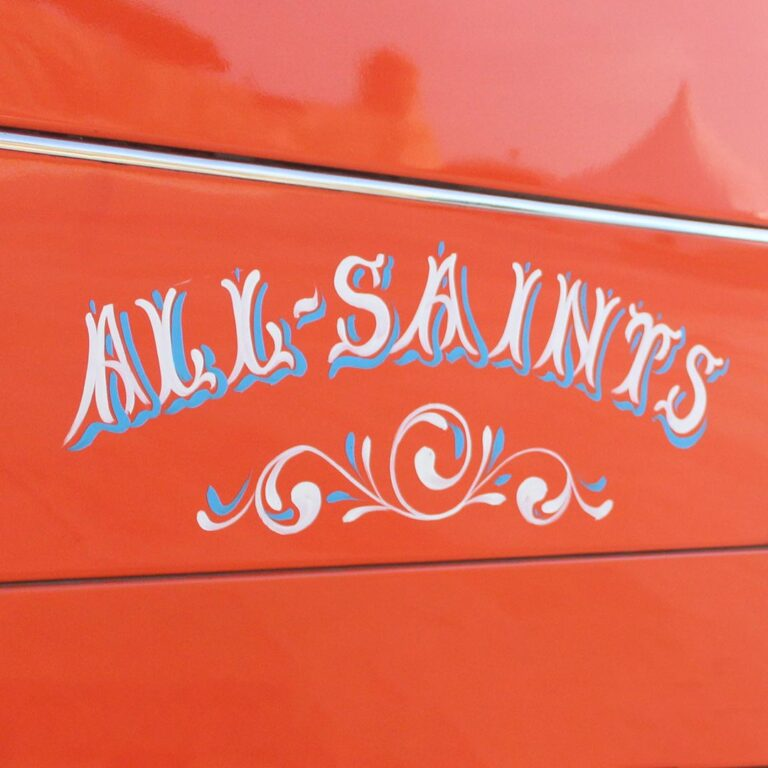
A variety of workshops is offered to anyone interested in learning Maltese crafts. For example traditional Maltese hand-painted lettering and sign writing, known in Maltese as tberfil.
Traditional Maltese lettering is a distinctive art form of hand-painted lettering and signwriting commonly found on Maltese buses, boats, and other forms of transport.
Ganutell is also something very local and traditional. Students will learn the intricate art of combining fine wires, thread, and sequins to form delicate and unique floral decorations. Materials used include cotton, satin, and silk thread, different types of fine wire, bouillon, beads, and pearls.
I also want to feature a few local artists, that inspired me:
The Leather House
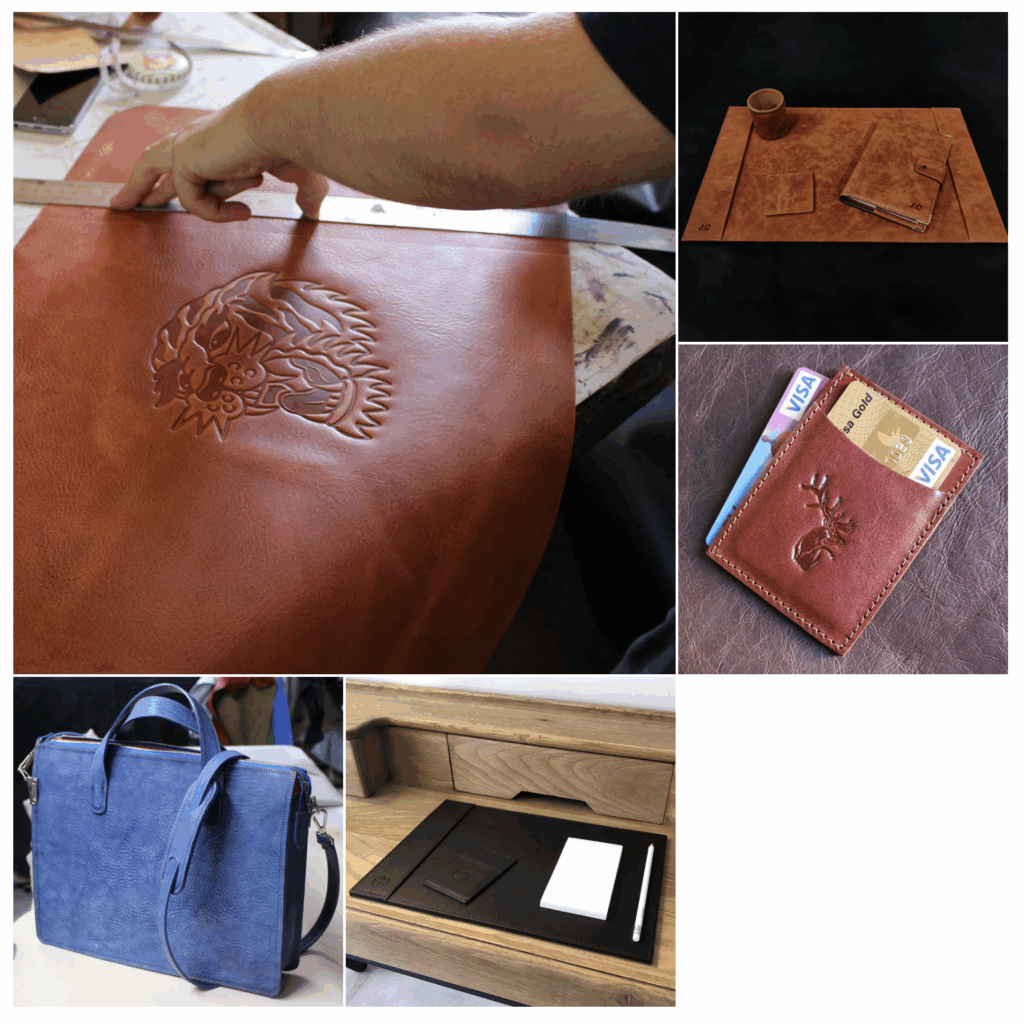
Established in 1965 by Mary Debono and her mother Carmela Vella, The Leather House started as an exporter of fine leather gloves to the United Kingdom and Scandinavia. Together with their Gozitan handcraft workforce, they have supplied various high street shops, movies, and Broadway shows, including the movie Titanic and the play Cats.
Today the business is in the hands of the third generation, Mary’s sons Rodney and David. Under the guidance of their mother, they have expanded their business of leather products both locally and in new territories – such as North America, UAE, Africa, and Japan – taking their business to all the continents of the world. They produce bespoke restaurant menus, hotel accessories, high fashion bags, belts, and much more with the client’s label or logo. All leather used by The Leather House is imported from top European leather tanneries to keep a high standard in both quality and, most importantly, sustainability.
Workshop: TBG 025, Ta’ Dbieġi Artisan Village, Triq Franġisku Portelli, Għarb, Gozo
Katrin Formosa
She started ceramics and mosaic as a hobby in 1983, whilst living in New York, where she lived until 1988. She moved back to Gozo and set up the Gozo Pottery Barn at the Ta’ Dbiegi Artisan Village in 1989, which she still operates today. Nowadays, she has a sustainable business, producing locally handmade products.
Katrin is very creative and innovative in her designs and creates items which bear a local and folkloristic mark. She also creates artistic, abstract, one offs and gallery items which are exhibited at her studio within the Artisan Village. Her clientele includes both locals, as well as tourists. She also teaches pottery and mosaic at the Lifelong Learning Education Centre in Gozo and organises short ceramics and mosaic appreciation sessions for tourists at her studio, as well as pottery sessions for kids in summer.
Workshop TBG 007 and 018, Ta’ Dbieġi Artisan Village, Triq Franġisku Portelli, Għarb, Gozo
Abel and Adrienn Bartolich
At Lace of the Fields Cactus Jewellery, they create unique colourful botanical custom jewellery from a unique material: the dried lace-like fibre pieces of Malta’s iconic plant, the prickly pear cactus.
Their cactus creations are absolutely one-of-a-kind, thanks to the amazingly detailed and intricate patterns of the cactus fibre, as well as the full manual procedure of the preparation which they worked out themselves based on their experiences in different crafts and arts.
For the colourful finishes they draw their inspiration from the beautiful nature of the Maltese islands: the fresh ripe pomegranates, the magical-looking ancient saltpans, and first of all, the majestic and awe-inspiring Mediterranean Sea.
Ebru Cinar
She was born in 1988 in Turkey and spent a lot of time of her childhood in a village named Karacabey. Before moving to Malta, she also lived for two years in Poland, which had a lot of effect on her perception.
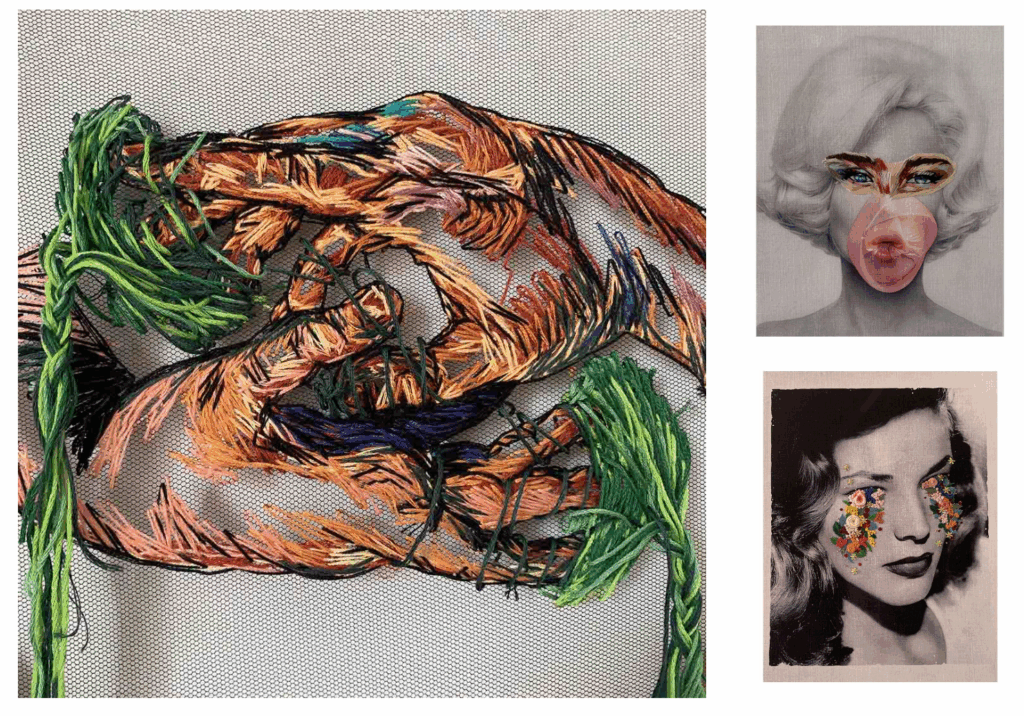
She created her brand byebrucinar in 2016. She has been reflecting her inside world on framed fabric using the inspiration from modern world topics. Artifacts of her toil are represented on fabrics and canvases with a mixture of embroidery, textile printing, acrylic paint, and other materials.
Christopher Saliba
After qualifying as an art educator in 1996, Christopher Saliba was awarded a four-year scholarship at the Accademia di Belle Arti in Perugia, where he focused on contemporary art. He put up several solo exhibitions in local exhibition venues, among which the National Museum of Fine Arts, St James’ Cavalier Centre for Creativity, and Auberge d’Italie in Valletta.
Christopher also displayed his works abroad in solo and collective exhibitions, namely in Perugia, London, Paris, Palermo, Manama, Brussels and Milan. Christopher’s works are found in numerous private and public collections in Malta and across Europe, Japan, Australia, Canada, and the US.
Christian Bezzina
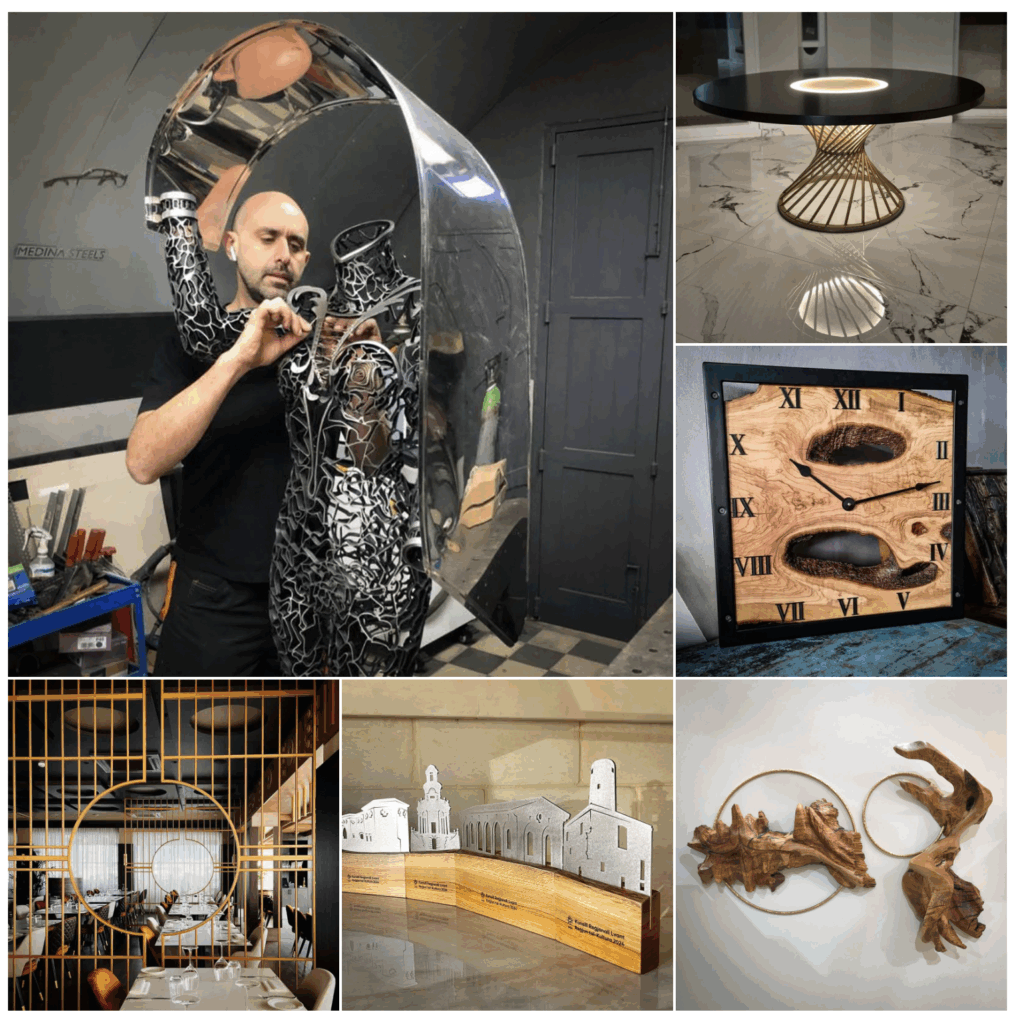
Christian Bezzina’s work at Medina Steels epitomises luxury craftsmanship by blending artistic vision with engineering precision. With over 20 years of expertise in steel fabrication, he has mastered the creation of bespoke high-end metalwork and specialises in luxury tailor-made designs, from intricate metal art to grand statement pieces.
Each piece is a unique personalised masterpiece crafted to the highest standards. With meticulous attention to detail and an unwavering commitment to excellence, Christian transforms visionary concepts into stunning enduring works of art setting the benchmark for bespoke metalwork in exclusive residential and commercial spaces. Despite his creative career he has a Mechanical and Electrical Engineering Diploma.
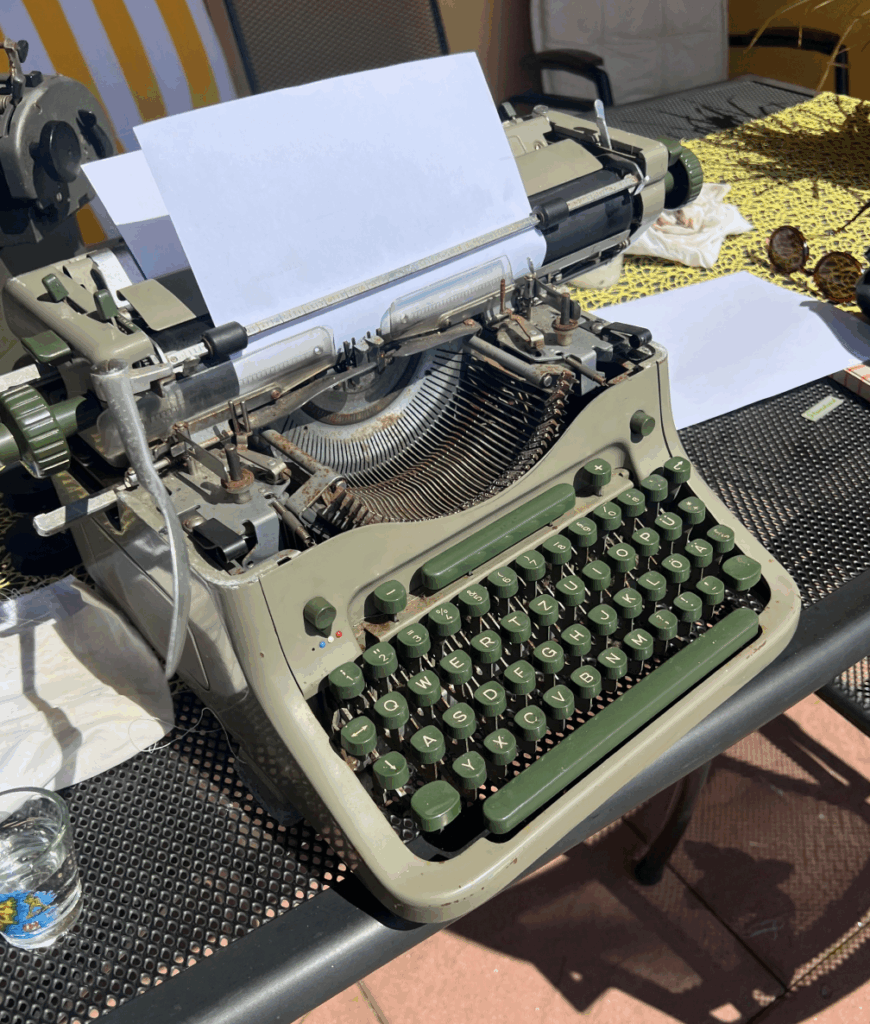
At my grandparents house I started restoring an old rusty typewriter. It took a while until I had all the parts moving again (WD40 helped a lot) and I figured out how to format a document. After some basic sentences I finally started experimenting creatively with it.
The Experiment
As typewriters are artifacts from a time before personal computers, I do not want to revive them in them in a way that they were intended to be used. Which is why I came up with my own idea to create small chicks and bunnies with the limited signage that is offered.
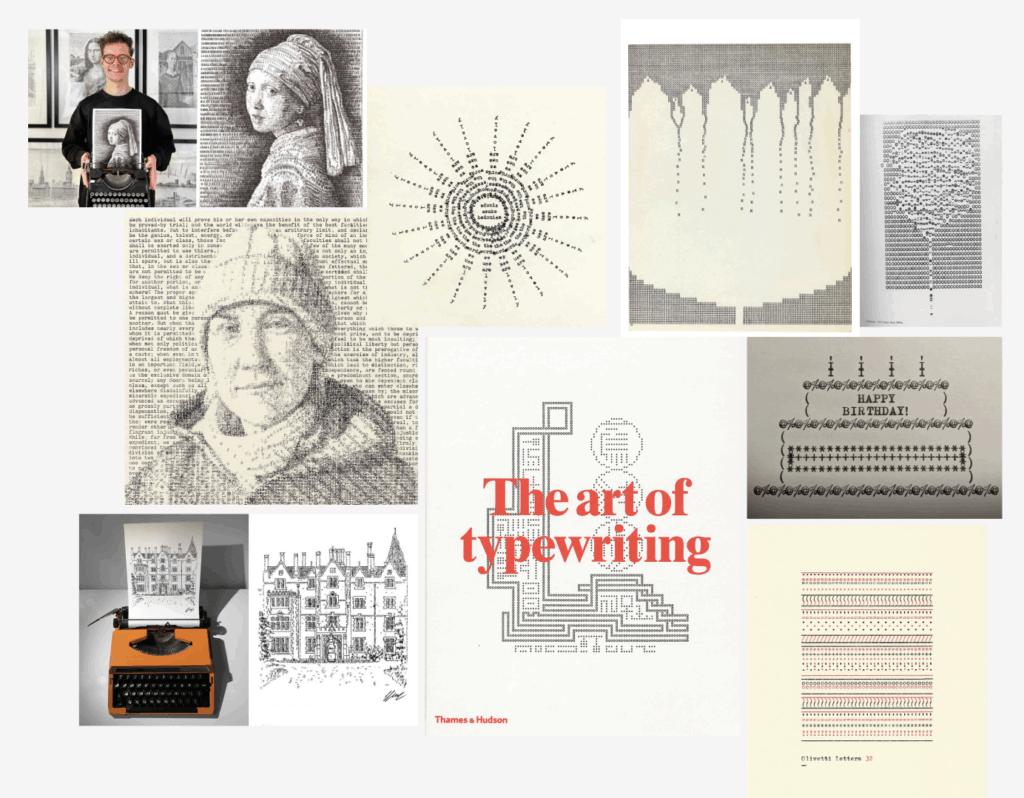
Artist research and inspiration
A glimpse into my idea development and research
The result
I must admit I imagined this to be way easier, but after this my fingers really hurt and I am not sure if my neigbours hate me or not, because typing is actually really loud… So after 1/3 of this A4 page I gave up on the planned pattern and decided to iterate.
Based on my research in the previous semester, I now would like to dive deeper into aspects of design and photography as a fusion like: What is an editorial shooting and what do main trends look like right now?
Research Title: “Exploring Editorial Photography as a Tool for Emotional Design in Brand Collaborations”
Research Question: How can editorial photography—through the creative use of flash and location—enhance emotional design strategies in brands.
what trends influence this visual language today?
Research Objectives
To explore the role of editorial photography in current branding and design trends.
To experiment with flash photography techniques for creative visual expression.
To analyze how different environments, moods, and photographic styles can evoke emotional responses in the viewer.
To identify the visual elements that resonate with modern editorial aesthetics.
Methodology
1. Literature & Trend Review
What is editorial photography?
Explore visual & conceptual trends in current editorial shoots (e.g., movement, surrealism, retro flash, candid energy, minimalism).
Analyze how photography supports emotional design in brand storytelling.
2. Experimental Setup
Equipment
Flash: Godox V100
Camera: Canon R6 Mark II
Lens: 85mm f/1.2 (plus possible experimentation with other focal lengths)
Multiflash Setup: Using two or more flashes to create depth or freeze motion
Shutter Techniques:
Dragging the shutter for motion blur
Zoom burst during long exposure
Rear curtain sync
Focal Length Variations: 35mm, 50mm, 85mm to compare intimacy and compression
Studio vs Outdoor: Controlled lighting vs. reactive improvisation with ambient light
3. Location Scouting
Focus: Urban movement & dynamic scenes
Target locations in Graz that reflect movement & energy (e.g. skateparks, urban intersections, transit zones, car meets, bike paths)
Aim to find locations with architectural contrast or kinetic energy
Graz has many hidden gems, lets find suitable shooting locations for the upcoming experiments. My shotlist includes fast paced environments. Therefore something related to movement would be suiteable. For instance a sport, car,
Sports fields in Graz (Running tracks, darts, jumping,…)
Austernbad
Skatepark
G-class experience center
4. Creative Process
Moodboard Creation
Curate references from current fashion/editorial shoots
What is the research topic / central research question?
Research Topic: The cultural and commercial significance of luxury brand collaborations in shaping design trends and consumer perceptions from the 1980s to today.
In the world of luxury, collaborations between major brands have become an essential strategy for stimulating innovation, broadening their customer base and raising their profile. These partnerships create a unique synergy, combining the prestige of different houses to offer exclusive products.
Central Research Question: How do brand collaborations influence design aesthetics, consumer behavior, and brand strategy, and how have these dynamics evolved?
Why is it relevant to designers / what are the ‘problems to solve’?
While the concept of the brand collaboration isn’t new, the pace at which both luxury and general consumer brands are rolling out collaborations is accelerating.
Synergy between luxury brands from disparate verticals offers a powerful solution to the challenge of capturing consumer engagement, particularly as the consumer attention span shrinks, market saturation is at an all-time high and instant gratification reigns supreme. In fact, today, collaborations aren’t just a trend; they are a strategic imperative in a competitive marketplace.
Collaborations are a requisite for any (luxury) brand looking to offer its existing customer base new moments of discovery, interest and intrigue while also strategically expanding into new audience verticals.
Relevance to Designers:
Cultural Impact of Design: Collaborations between luxury brands and unexpected partners (e.g., artists, mainstream brands, or celebrities) redefine what is considered “luxury” and expand the boundaries of design language.
Maintaining Brand Identity: Designers must find the balance between innovation and preserving a brand’s core identity. This is especially challenging when two distinct creative visions merge.
Accessibility vs. Exclusivity: How can brands create accessible, aspirational collections without diluting their luxury status? Designers play a crucial role in achieving this balance.
Sustainability: The rise of limited-edition collections raises questions about overproduction, fast fashion, and long-term cultural value.
Problems to Solve:
How can luxury brands stay relevant in a world increasingly driven by Gen Z and millennial values, such as inclusivity and sustainability?
What makes a collaboration successful both visually and commercially? Examples like Gucci x North Face succeed, while ventures like Target x Neiman Marcus fail.
How do cultural, technological, and generational shifts shape the nature of collaborations?
3. My motivation & interest
Luxury brand collaborations offer a fascinating lens to study the intersection of design, culture, and commerce. They often reflect the zeitgeist of a specific era—whether it’s the graffiti-inspired Louis Vuitton x Stephen Sprouse collection of the early 2000s or the contemporary blending of high fashion and streetwear. Personally, this topic resonates because it showcases how creativity can transcend traditional boundaries while posing new challenges for modern designers.
This research highlights the power of collaboration to reinvent iconic brands and define new cultural narratives. It’s also intriguing to explore how these collaborations influence design aesthetics across industries and inspire broader creative movements.
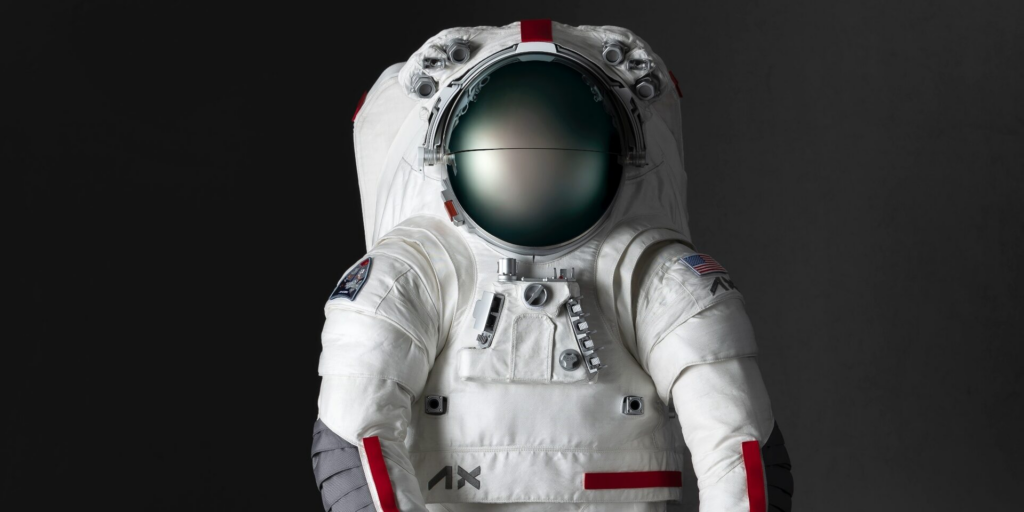
Axiom Space und Prada arbeiten gemeinsam an der Entwicklung neuer Raumanzüge für zukünftige Mondmissionen.Image courtesy of Prada / Axiom Space
Research Results
Design Evolution:
The 1980s: Luxury brands focused on exclusivity and craftsmanship, with less emphasis on collaborations. Design was largely driven by opulence and classicism.
Today: Luxury brands embrace collaborations to stay culturally relevant, often blending nostalgia with modernity to appeal to younger audiences.
Consumer Behavior:
Collaborations significantly impact purchasing decisions, particularly among Gen Z and millennials.
Authenticity and uniqueness are critical factors in determining the success of a collaboration.
Aesthetic Trends:
High-low collaborations (e.g., H&M x Karl Lagerfeld) have introduced luxury aesthetics to mainstream audiences.
Unexpected pairings (e.g., Dior x Technogym) challenge traditional notions of luxury while expanding brand narratives.
Commercial Value:
Successful collaborations drive significant revenue increases and long-term brand loyalty.
Research Methods: Comparative analysis of iconic collaborations
Best practice examples / state of the art
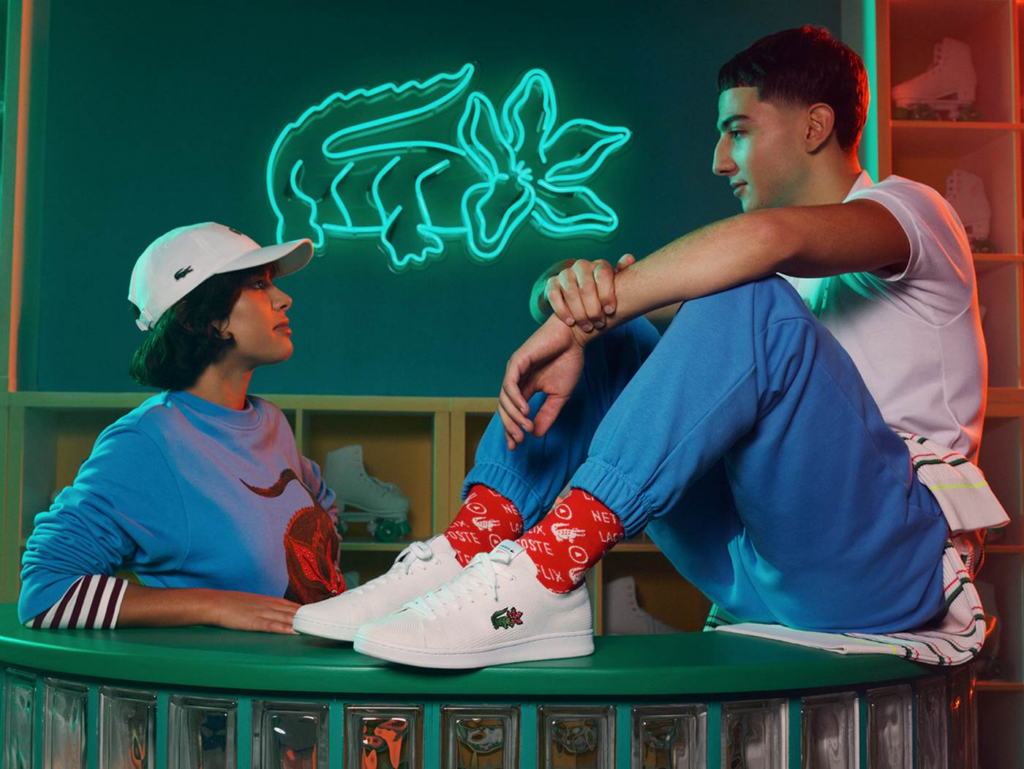
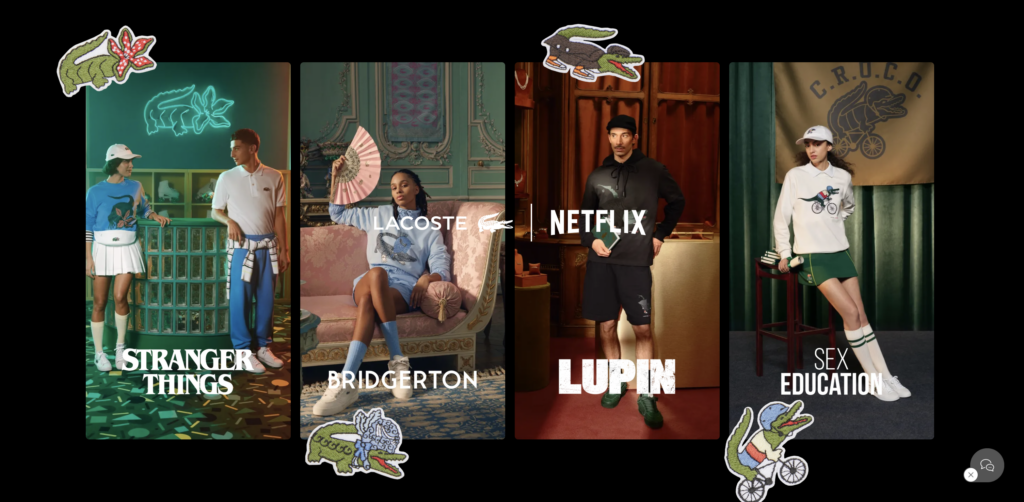
Lacoste x NetflixStranger things brand collaboration
Stranger things is an 80s inspired Netflix series, which is now available as merch from Lacoste. Combining nostalgia, luxury and mainstream media all in one campaign. And they did not stop there: Bridgerton, Sex Education, Lupin, Shadow and Bone, Elite, La Casa de Papel, The Witcher were all incorporated in collections of Lacoste.
1980s Collaborations:
Karl Lagerfeld x Chanel (1980s): Lagerfeld’s transformative influence on Chanel laid the foundation for modern luxury collaborations.
Modern Collaborations:
Luxury Brand x Luxury Brand:
Fendi x Versace (“Fendace”): A successful reinterpretation of each other’s aesthetics, showcasing how luxury brands can cross-pollinate.
Luxury Brand x Celebrity:
Louis Vuitton x Kanye West: A groundbreaking sneaker collaboration that combined luxury with streetwear.
Luxury Brand x Surprise Partner:
Gucci x North Face: A marriage of outdoor practicality and high fashion, appealing to the rising trend of luxury athleisure. A separate logo was designed for the joint collection, combining The North Face’s graphic logo, which is inspired by a mountain, with the green-red-green weave of the GUCCI house.
Collection designs modelled on original North Face items from the 70s
Vision & next steps
MyVision is to understand the cultural, aesthetic, and commercial dynamics of luxury collaborations. This could include conceptualizing and executing mockup collaborations, ensuring they resonate both visually and culturally. Or I aim to present my research as an own design merge, that inspires creatives and viewers to think differently about a given topic and put it into another context.
For this I would have to conduct consumer sentiment surveys and polls regarding collaboration campaigns.
Explore the Intersection of Nostalgia and Innovation:
Investigate how collaborations use nostalgia (e.g., 1980s influences) to attract modern audiences.
Examine how digital tools like AR and CGI expand the storytelling possibilities
Study the Role of Cultural Context:
Analyze how collaborations reflect societal values, such as inclusivity, sustainability, and technological innovation.
Case Study Development:
Conduct in-depth case studies of successful and failed collaborations to identify best practices and pitfalls.
Analysis of commercial performance metrics for high-profile collaborations.
Interviews with design and branding professionals.
Inclusivity vs. exclusivityLouis Vouitton x TimberlandsFail or success? What about target audiences?
Further research questions
Which industies or topics could I target? Interior, Cars, Digital Sector, Music, Games Politics, …?
The Chunky Dunky Nike x Ben & Jerry’s brand collab
The Chunky Dunky is an unexpected maximalist collaboration between Nike and Ben & Jerry’s. Nike released the shoe in very limited quantities, with a box specially designed to look like the Ben & Jerry’s flavor that inspired it, Chunky Monkey.
The shoe was one of the most hyped sneakers of 2020, selling out immediately. If you want a pair, they’re currently going for almost $3,000 on resale markets.
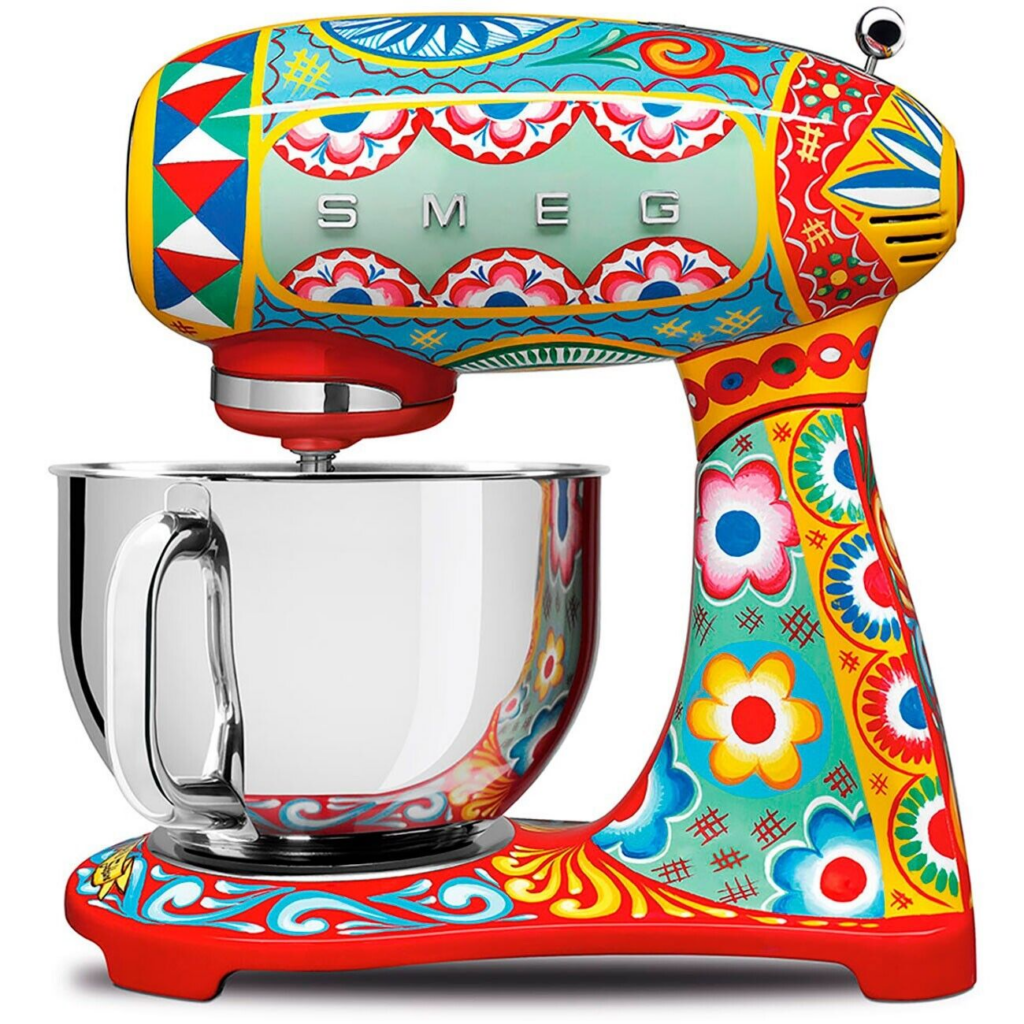
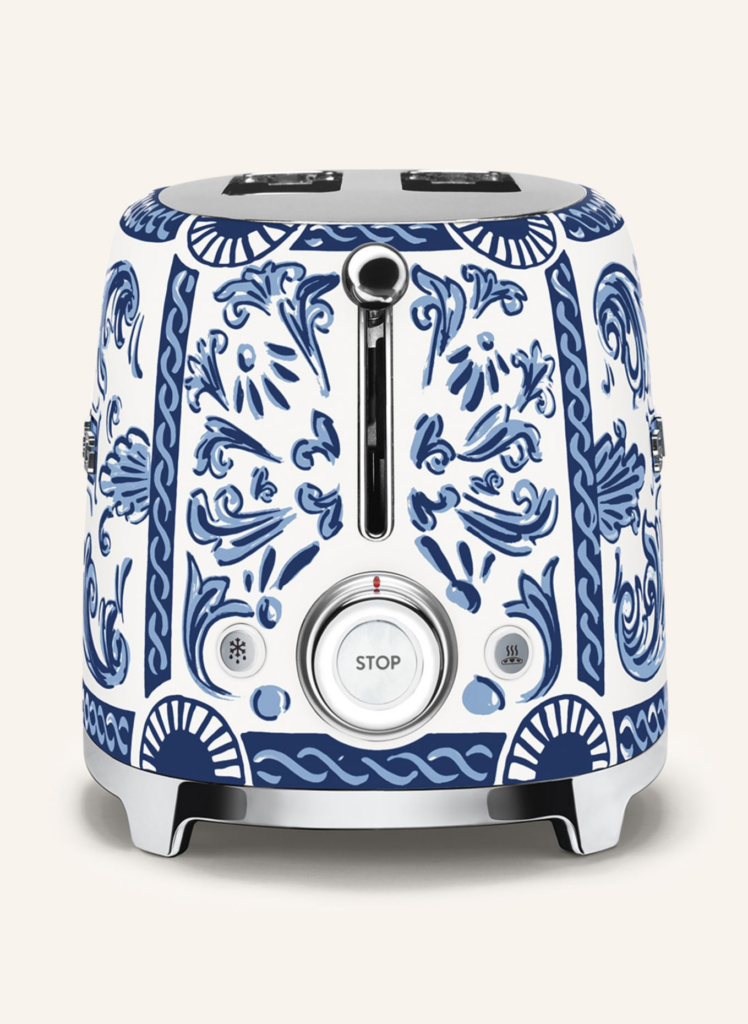
Luxury kitchen appliances: SMEG x Dolce & Gabanna
Have you ever felt like your kitchen appliances weren’t getting enough attention?
Then Dolce & Gabbana’s product coloration with Smeg is perfect for you. The luxury fashion house teamed up with the home appliance manufacturer to product a series of loud, colorful, (and expensive) toasters, kettles, juicers, and blenders.
In einem ersten Projekt kreierten Dolce & Gabbana und Smeg gemeinsam eine Sonderedition des Kühlschranks FAB28 – und schufen wahre Kunstwerke. 100 exklusive, handbemalte Kühlschränke, von denen jeder mit einzigartigen Bildern renommierter sizilianischer Künstler versehen ist: Zitronen, das Symbol der Trinacria, Wagenräder, mittelalterliche Ritter und Schlachtenszenen – allesamt unverwechselbare Elemente der Ästhetik von Domenico Dolce und Stefano Gabbana.
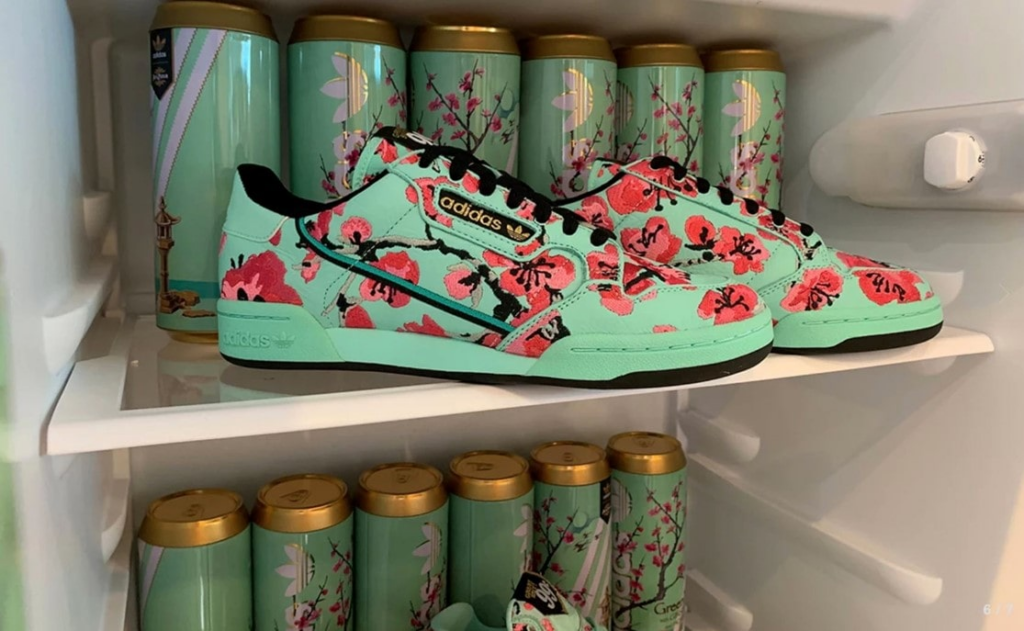
Adidas x Arizona Ice Tea
In this brand collab, Adidas teamed up with Arizona Iced Tea to create a limited-edition sneaker with the iced tea brand’s famous price tag: 99-cents.
Of course, this was more of a marketing play than an attempt at real profits. But it worked. The release of the Arizona Adidas sneakers was so hyped police had to shut down the New York pop-up store. The collab is going for almost $2,000 on resale markets today—a tidy profit for those who managed to buy the shoe for 99-cents.
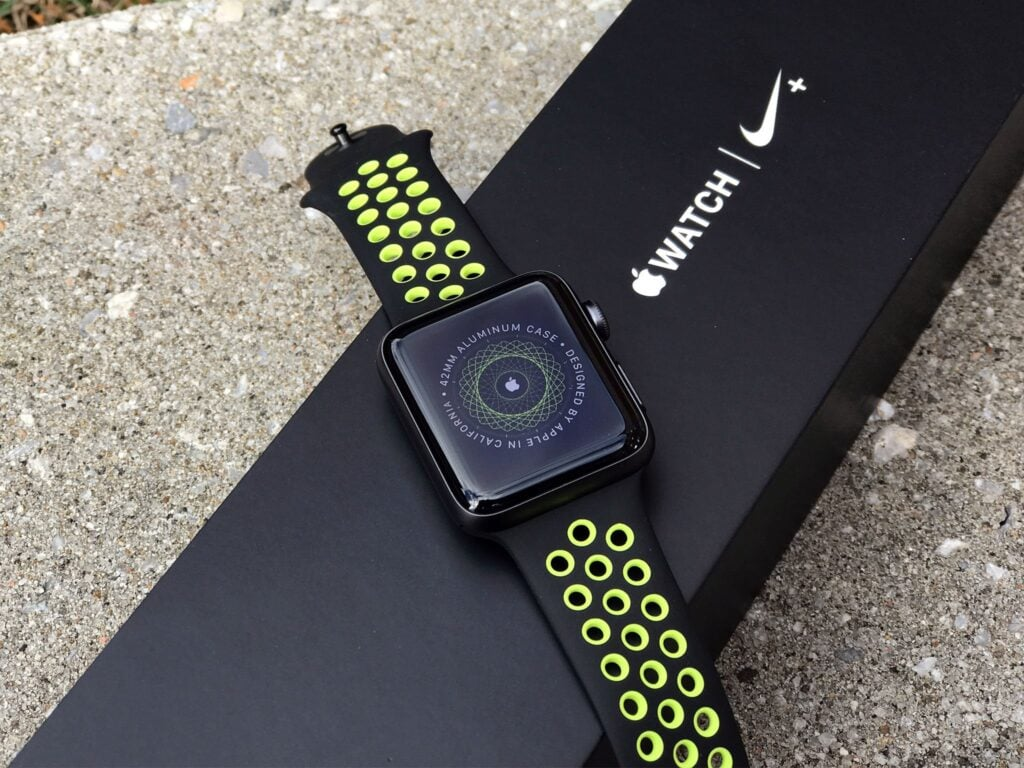
Nike x Apple: Collaborating on the Apple Watch
A major reason why this partnership has been so successful is the seamless handoff between both platforms, a trademark of Apple’s ecosystem. This has helped drive brand loyalty and new customer acquisition for both brands.
Doritos x Taco Bell: The Doritos Locos Tacos
The Doritos Locos Tacos is an excellent example of two complementary mainstream brands coming together to create a product that was a surefire hit with their overlapping customer bases.
Doritos Locos Tacos combined the popular Doritos tortilla chip with classic taco flavors to create a memorable snack full of flavor that customers could only get at Taco Bell.
Lego x Star Wars
The LEGO and Star Wars collaboration is an excellent example of two world-leading consumer brands creating something special for their customers. The special edition LEGO sets brought the iconic Star Wars universe to life, including characters, locations, and even vehicles from the hit film franchise.
The collaboration delighted fans of all ages, leading to a range of spinoff products.
Heinz x Absolute
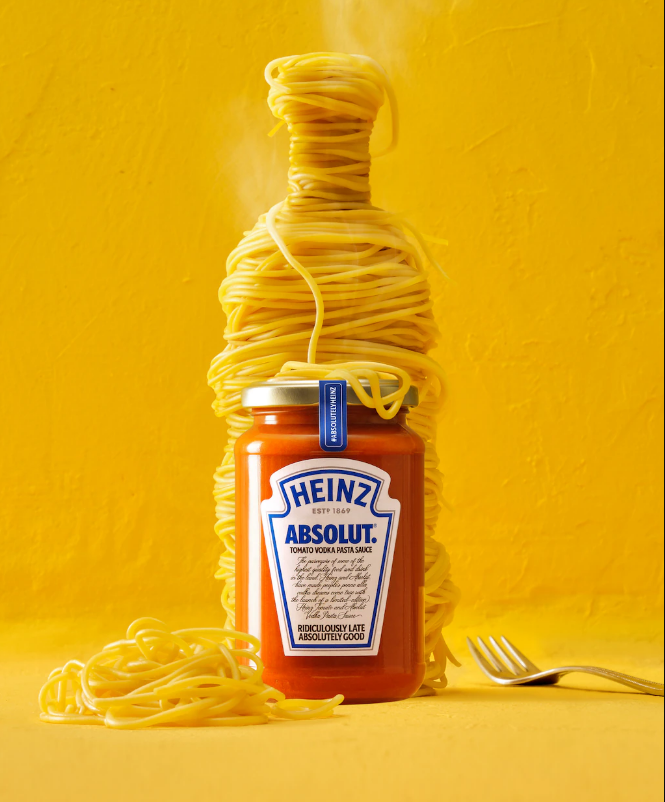
The Heinz x Absolut collaboration is a great example of how to piggyback off a trend successfully. Noticing the surge in tomato and vodka pasta recipes on social media, Heinz partnered with vodka brand Absolut to create the UK’s first tomato vodka pasta sauce.
A hugely successful social media campaign saw food influencers sharing their reactions to the sauce as well as recipes for using it. Within a week of the product release, the campaign had received over 6.2 million views on TikTok, and sales of Heinz pasta sauces were up more than 50% in the two months following.
Supreme x OREO
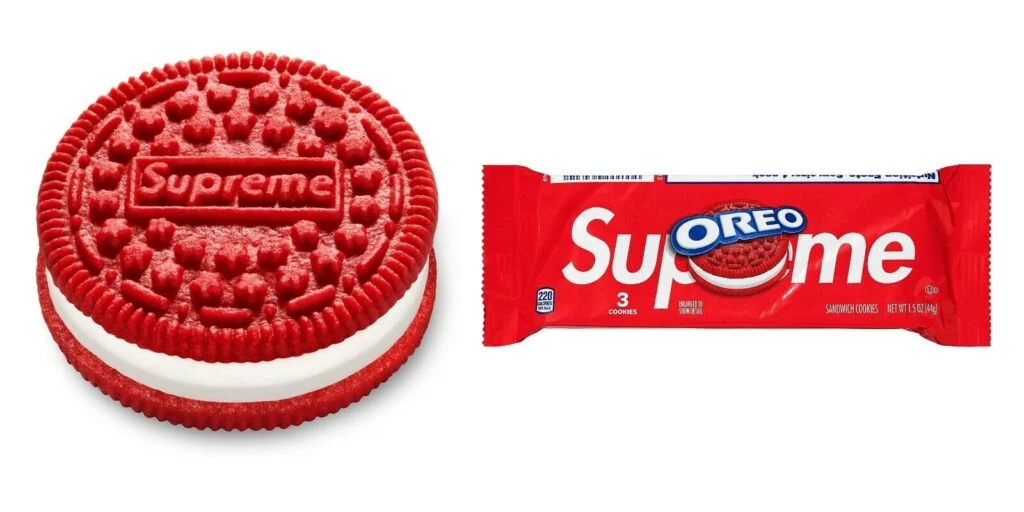
In 2020, Supreme collaborated with Oreo to create a limited edition of Oreo cookies featuring the iconic Supreme logo and its signature red brand color. Both brands are known for their fun, youthful values, and their customers snapped up the cookies as they hit the shelves.
The eye-catching cookies gained colossal buzz online, with one Supreme fan’s tweet about the cookie receiving almost 19,0000 retweets and over 67,000 likes. The cookies quickly sold out and could be found for extortionate sums on resell sites like eBay.
Conclusion: Why These Mainstream Brand Collaborations Are Best Practice Examples
The success of the collaborations highlighted above demonstrates the immense potential of creative partnerships between mainstream brands. These examples represent best practices in brand collaboration due to their ability to merge unique brand identities, resonate with shared customer bases, and create memorable, limited-edition products that drive both cultural relevance and commercial success.
Uniqueness and Creativity Each collaboration, from Nike x Ben & Jerry’s to Heinz x Absolut, showcases a unique fusion of the partners’ strengths. Whether it’s transforming sneakers into collectible art pieces or turning viral recipes into retail products, these campaigns lean into creative storytelling and product innovation to excite audiences.
Cultural Relevance These collaborations reflect or even shape cultural moments. For example, Heinz x Absolut capitalized on a viral food trend, while Supreme x Oreo and Adidas x Arizona Iced Tea brought fun and accessibility to their branding. The ability to tap into the zeitgeist ensures lasting buzz and strong engagement.
Strategic Use of Limited Editions The use of limited-edition releases, such as the Chunky Dunky sneakers or Supreme Oreos, creates scarcity that drives consumer demand and amplifies exclusivity. Resale markets thriving with high prices only add to the allure, as customers view these items as status symbols.
Cross-Market Synergies These collaborations excel by blending overlapping audiences and market strengths. For example, the Doritos Locos Tacos capitalized on a shared love of bold flavors, while Lego x Star Wars merged pop culture fandoms. This strategic alignment ensures that both brands mutually benefit from wider exposure.
Leveraging Digital and Social Media Successful campaigns like Heinz x Absolut and Supreme x Oreo harnessed social media to amplify their impact. Viral content, influencer engagement, and shareable moments drive buzz and allow brands to stay at the forefront of online culture.
Driving Brand Loyalty and Sales These collaborations not only generate buzz but also deepen brand loyalty and drive sales. From Taco Bell’s cult-like following for Doritos Locos Tacos to the resurgence in Heinz pasta sauce sales, the commercial success of these projects underscores their impact.
My Takeaway
The best mainstream brand collaborations prove that partnerships rooted in creativity, cultural relevance, and consumer insight can elevate both brands involved. By offering unique products, limited editions, and digital-first campaigns, these collaborations leave lasting impressions, build cultural cachet, and deliver measurable business results. Designers, marketers, and brand strategists can take inspiration from these examples to create future campaigns that innovate, connect with audiences, and stand the test of time.
Designers, marketers, and brand strategists can draw from the surrealist approach to challenge conventions, create emotional connections, and turn everyday products into cultural touchpoints that delight and inspire.
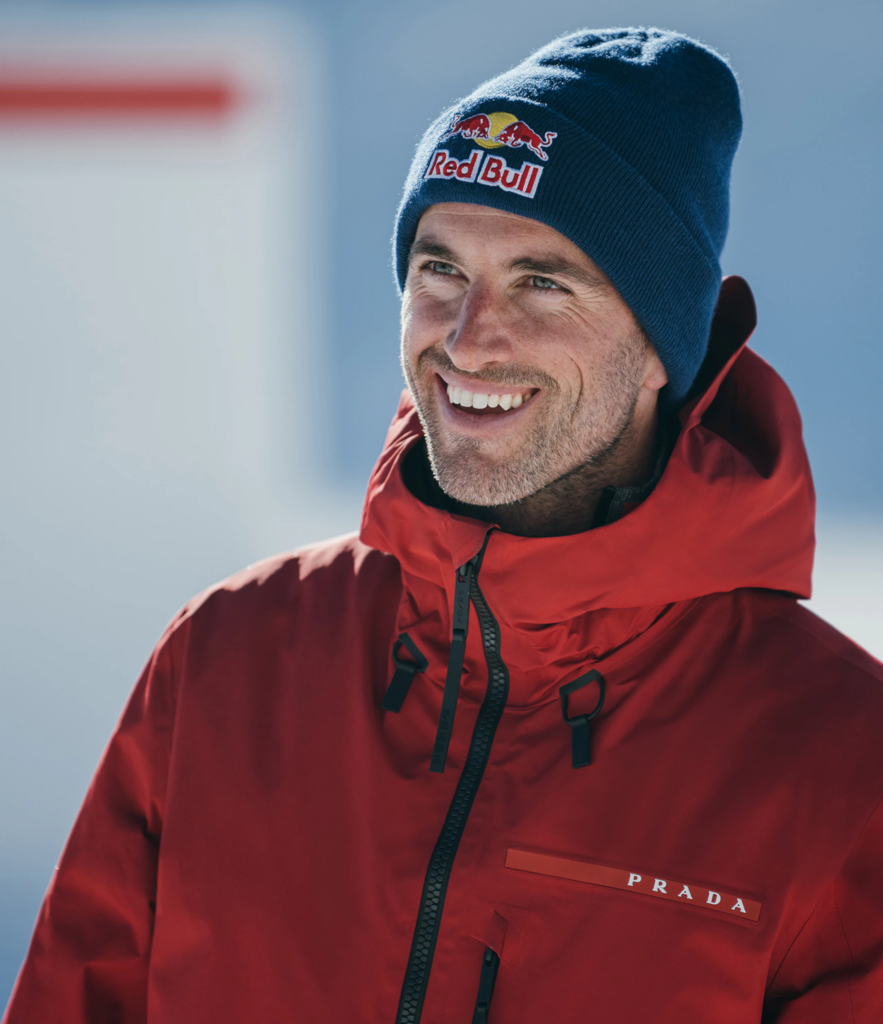
Taking a closer look at a best practise example in the context of luxury brand meets mainstream company. Prada presents its ongoing partnership with Red Bull to promote events and special initiatives focussing on sport and innovation.
Digital first approach: Storytelling
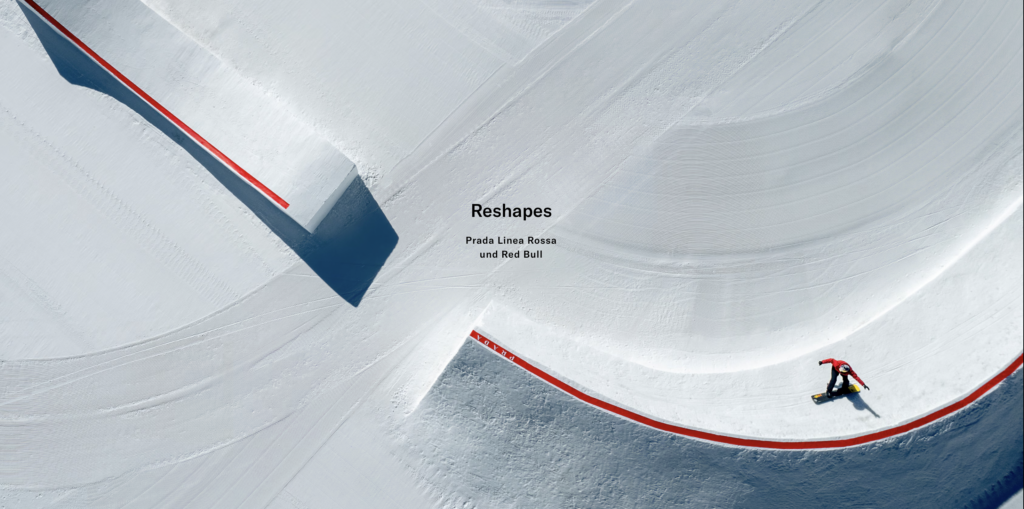
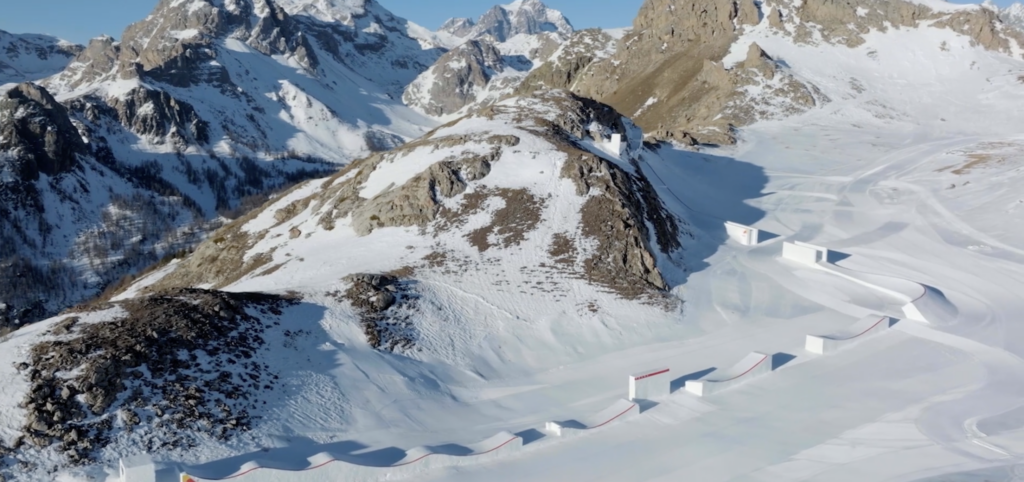
The first part of this collaboration is Reshapes, a documentary film about the famous French snowboarder Pierre Vaultier, which tells the story of his technical, human and sporting achievements, which are unrivalled in the world of snowboarding. The video shows the athlete’s intensive preparation for his return to the top of the world and follows his impressive acrobatic jumps on a fascinating course conceived and designed by Vaultier himself – in the centre of the Serre Chevalier ski resort in the Hautes-Alpes province of France. In tackling this extraordinary challenge, Pierre Vaultier is happy to draw on the experience of Prada Linea Rossa, which has always combined fashion and high-performance sportswear.
The Role of Digital Platforms
Documentary as a Medium: Using a documentary film allows Prada to dive into long-form storytelling, offering more depth than traditional advertisements.
Social Media Amplification: Teasers and behind-the-scenes footage from Reshapes can create buzz on platforms like Instagram, TikTok, and YouTube, driving engagement among younger, digitally native audiences.
Pierre VaultierBranded parcours “Linnea Rossa”
Best Practices for Digital Storytelling in Luxury Collaborations
Personalization: Tailoring content for different audiences (e.g., athletes vs. fashion enthusiasts) can maximize impact.
Multi-Platform Strategy: Leveraging documentaries, short-form content, and live events ensures consistent storytelling across all digital touchpoints.
Collaborating with Real Stories: Using authentic figures like Vaultier creates emotional resonance and builds trust, avoiding the pitfalls of inauthentic celebrity endorsements.
Build a theme / series
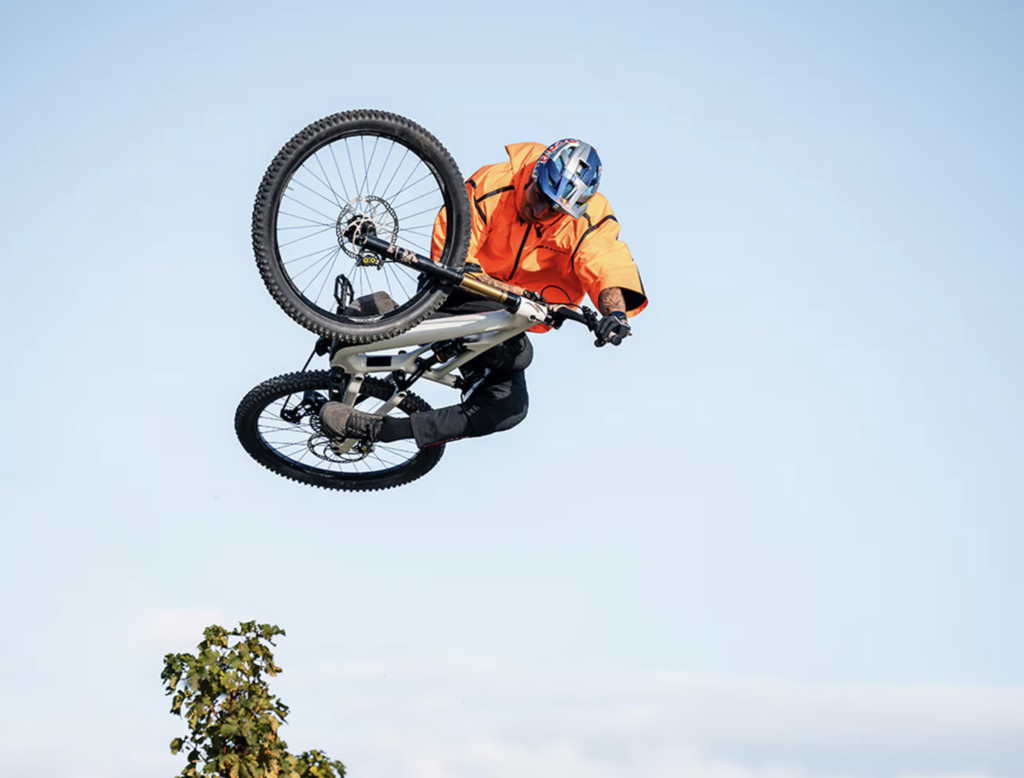
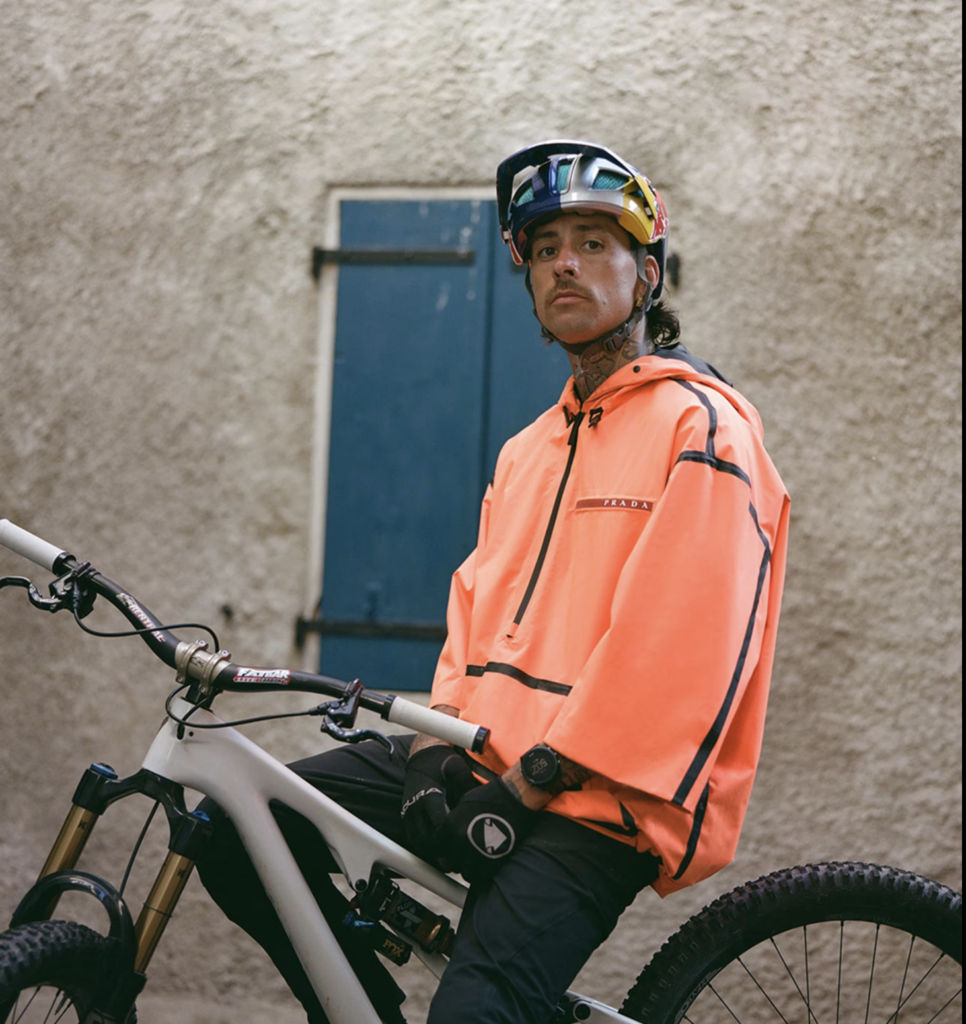
Prada Linea Rossa for Red Bull athlete Kriss Kyle
Prada Linea Rossa is partnering with more than one Red Bull athlete.
They also collaborated with the BMXer Kriss Kyle, who has taken on an extreme challenge. Set in the UNESCO World Heritage Site of Lavaux, Switzerland, the rider has expanded his horizons riding through the striking nature of this location, never explored before by any mountain biker. This reoccuring pattern of storxtelling builds trust & momentum and viewers of the campaign know what to expect.
Outlook
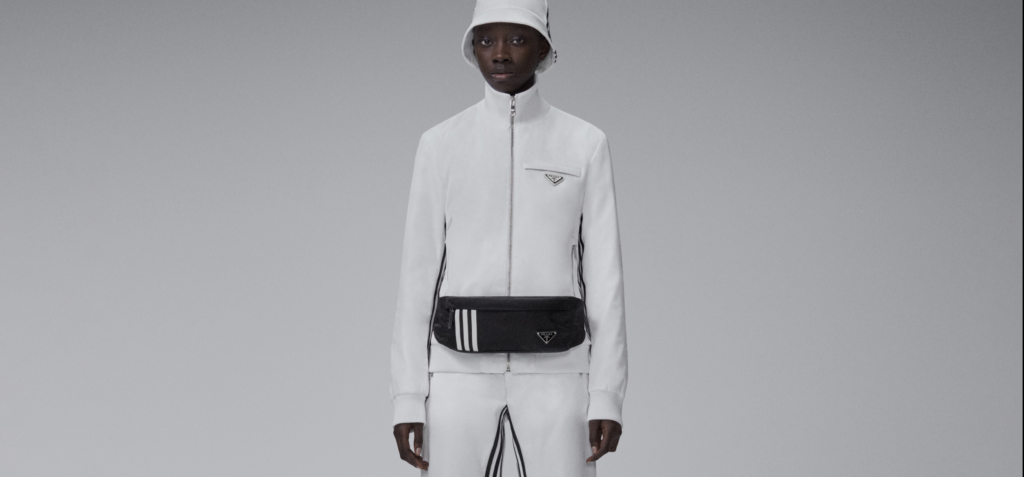
Further campaigns for future researches could be the collaboration Prada x Adidas. his collaboration embodies a unique intersection of high-end fashion and functional sportswear, making it an interesting case study.