#9 Learning Cards with Near-Field Communication (NFC)

The integration of technology into early childhood education offers opportunities to create more interactive, engaging, and personalized learning experiences. Near-Field Communication (NFC) technology, which enables wireless communication between devices over short distances, has significant potential to enhance traditional educational tools.

NFC Technology in Education

NFC is a wireless communication technology that facilitates the exchange of data between an NFC-enabled tag and a compatible device (e.g., a smartphone or tablet). In an educational context, NFC tags embedded within learning cards can provide instant access to supplementary content, such as audio recordings, videos, games, and augmented reality (AR) features. This technology bridges the gap between physical and digital learning, creating a multisensory experience that enhances cognitive processing and memory retention.

Applications of NFC in ABC Learning Cards

1. Interactive Letter Exploration

NFC-enabled cards can transform static letters into interactive experiences. For instance:

  • Tapping a card with the letter “A” could open a video about apples, including fun facts and animations.
  • Audio recordings can teach the phonetic sound of the letter, along with example words (e.g., “A makes the /æ/ sound, as in apple”). This multisensory approach reinforces letter recognition and sound associations, critical components of early literacy.
2. Phonics and Pronunciation Support

By linking to audio guides, NFC cards can support phonics instruction:

  • Children can hear the pronunciation of each letter and example words, building their phonemic awareness.
  • Multilingual support can introduce vocabulary in multiple languages, fostering bilingual or multilingual development.
3. Multisensory Tracing Activities

NFC cards can connect to tracing activities on a digital platform:

  • A child taps the card and is guided through a step-by-step tracing activity on a tablet or screen.
  • Feedback, such as visual corrections or encouraging sounds, reinforces proper letter formation and motor skills.
4. Augmented Reality (AR) Features

Combining NFC with AR capabilities enhances the visual and interactive aspects of learning:

  • A child taps a card with the letter “B,” triggering a 3D animation of a bouncing ball.
  • AR features can also include games, such as matching letters to objects in a virtual environment, which promotes active learning.
5. Gamified Learning

Gamification motivates children to engage with the learning material:

  • NFC-enabled cards can unlock rewards, such as points or badges, when a child completes tasks like identifying letters or tracing them correctly.
  • Collaborative and competitive modes can be introduced, encouraging social interaction and teamwork.
6. Progress Tracking and Personalization

NFC cards can connect to an app that tracks a child’s progress:

  • Data on which letters and activities the child interacts with can help identify strengths and areas for improvement.
  • Personalized recommendations can adjust the difficulty level or suggest additional exercises, ensuring that the learning experience evolves with the child’s needs.

Practical Implementation of NFC in ABC Learning Cards

Design and Functionality
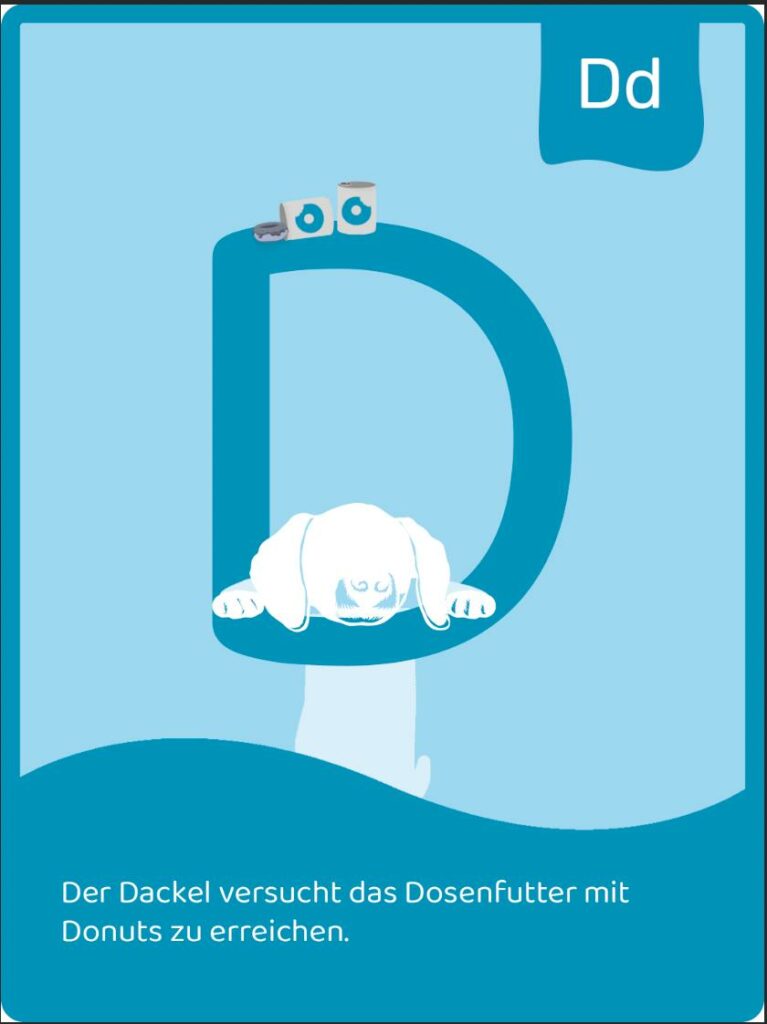
  1. Physical Design: The cards retain their traditional format, with a large, clearly printed letter, an image representing the letter, and the word written below. An embedded NFC tag links to digital content.
  2. Device Compatibility: The NFC tags are designed to be compatible with most smartphones and tablets, ensuring accessibility.
  3. Supplementary App: A companion app provides a centralized platform for accessing interactive content, tracking progress, and managing activities.
Example: The “C” Card
  1. Physical Interaction: The child sees the letter “C,” paired with a colorful image of a cat.
  2. NFC Interaction: Tapping the card opens a short video of a cat meowing, along with an audio recording of the letter sound and word.
  3. Digital Engagement: The child traces the letter “C” on the app, earning a virtual badge upon completion.

Alnfiai, M. (2020). A user-centered design approach to Near Field Communication-based applications for childrenInternational Journal of Advanced Computer Science and Applications, 11(12). https://doi.org/10.14569/IJACSA.2020.0111259

Sánchez, I., Oyarzun, D., Morales, R., & Sas, C. (2011). NFC-based interactive learning environments for children. In Proceedings of the 10th International Conference on Interaction Design and Children (pp. 205–208). ACM. https://doi.org/10.1145/1999030.1999062

Goecke, T. (n.d.). NFC (Near Field Communication) technology in education. SupraTix. Retrieved from https://supratix.com/blog/elearning-starterkit/near-field-communication-in-education/

NFC in smart classrooms: Revolutionizing education technology. (n.d.). QR Lab. Retrieved from https://qrlab.com/blog/post/nfc-in-smart-classrooms-revolutionizing-education-technology

Tap and teach with NFC on the BenQ Board. (2024, October 30). BenQ. Retrieved from https://www.benq.com/en-us/education/edtech-blog/tap-and-teach-with-nfc-on-the-benq-board.html

NFC-based interactive learning environments for children [PDF]. (n.d.). ResearchGate. Retrieved from https://www.researchgate.net/profile/Ivan-Sanchez-Milara/publication/221238516_NFC-based_interactive_learning_environments_for_children/links/54e59de40cf276cec1746ef8/NFC-based_interactive_learning_environments_for_children.pdf

Education industry using NFC RFID. (n.d.). GAO RFID Inc. Retrieved from https://gaorfid.com/education-industry-using-nfc-rfid/

Near Field Communication – Which potentials does NFC bring for teaching and learning materials. (n.d.). ResearchGate. Retrieved from https://www.researchgate.net/publication/258180194_Near_Field_Communication_-_Which_Potentials_Does_NFC_Bring_for_Teaching_and_Learning_Materials

NFC and education: The future of smart classrooms. (n.d.). Yazılım-DA. Retrieved from https://www.yazilimda.com.tr/eng/blog-detail-NFC-and-Education-The-Future-of-Smart-Classrooms.html

How NFC keeps children engaged with books. (n.d.). Avery Dennison. Retrieved from https://rfid.averydennison.com/en/home/news-insights/insights/sports-events-gaming-how-nfc-keeps-children-engaged-with-books.html

#8 Cultural and Linguistic Diversity in Learning Materials

The Importance of Inclusivity in Educational Materials

Children from diverse linguistic and cultural backgrounds benefit from learning materials that reflect their identities and experiences. This is especially significant during early childhood, as young learners are forming their sense of self and developing their worldview. Inclusive educational tools can:

  1. Promote a Sense of Belonging: Representation of children’s cultural and linguistic backgrounds helps them feel included and valued, fostering a positive attitude toward learning.
  2. Enhance Engagement: Materials that reflect children’s lived experiences resonate more with them, improving their focus and motivation.
  3. Support Cognitive Development: Exposure to diverse languages, images, and cultural contexts enriches children’s cognitive flexibility, problem-solving skills, and creativity.
  4. Build Cultural Awareness: Inclusive materials also expose children to cultures other than their own, encouraging empathy and understanding.

Representing Diversity in Learning Cards

Incorporating linguistic and cultural diversity into learning cards requires a thoughtful, multifaceted approach to ensure that the materials are accessible, engaging, and relevant to all children. Key strategies include:

1. Language Representation
  • Bilingual or Multilingual Cards: Each card can include the target letter and corresponding word(s) in multiple languages. For instance:
    • The “A” card could feature “apple” (English), “apfel” (German), or “ají” (Spanish), along with images of objects from each culture.
  • Phonetic Guidance: Including simple phonetic symbols for each word helps children pronounce the words correctly, even if they are learning a second language.
2. Cultural Representation
  • Culturally Relevant Images: Instead of limiting the visual design to objects from a single culture, include items that reflect a broad spectrum of traditions. For example:
    • “B” could feature a “ball” alongside a “biryani pot” or a “boomerang.”
  • Themes and Settings: The imagery and scenarios used on the cards can depict culturally diverse environments, such as festivals, traditional attire, and architecture from different regions.
3. Diverse Names and Characters
  • Incorporating names from various languages and cultures ensures inclusivity. For example:
    • The “L” card could feature “Lila” (English) and “Luis” (Spanish) as examples of names beginning with the letter “L.”
  • Including illustrations of children or characters with diverse appearances (skin tones, clothing, hairstyles) helps children see themselves in the materials.
4. Universal Design
  • Using symbols and images that are universally recognized ensures accessibility across cultures, even when linguistic differences exist.
  • Avoid stereotypes or cultural appropriations to maintain sensitivity and accuracy.

Psychological Learning Principles Supporting Inclusion

Incorporating diversity does not detract from the psychological principles underpinning effective learning; rather, it enriches the learning process. Some ways to align inclusivity with established learning methods include:

  1. Multisensory Learning:
    • By engaging with images, words, and letters that reflect their culture, children form stronger emotional and sensory connections with the material.
    • For instance, a child might better retain the letter “C” when it is paired with “curry,” an object or dish familiar to them, rather than “cat,” which might be less relevant.
  2. Motivation through Relevance:
    • Familiar cultural elements create a sense of relatability, encouraging children to engage with the materials enthusiastically.
    • For example, seeing a picture of a culturally specific festival like Diwali or Lunar New Year on a card can spark curiosity and joy in children who identify with these traditions.
  3. Gradual Exposure to New Cultures:
    • Introducing unfamiliar cultural elements alongside familiar ones helps children gradually expand their understanding of the world while still feeling connected to their own identities.

Practical Applications

The inclusive design of learning cards can take many forms to address the needs of diverse populations effectively. Some examples include:

  1. Localized Versions: Developing region-specific editions of the cards tailored to linguistic and cultural demographics. For instance:
    • A version for North America might feature “E for Eagle,” while one for India might use “E for Elephant.”
  2. Thematic Sets: Creating thematic subsets of cards that explore cultural topics, such as food, festivals, or traditional clothing.
  3. Interactive Activities: Incorporating diversity into games and exercises, such as matching letters to images from different cultures or creating stories that incorporate multilingual words.

Banks, J. A. (2015). Multicultural education: Characteristics and goals. National Education Association. Retrieved from https://www.nea.org/assets/docs/Multicultural-Education.pdf

Cummins, J. (2021). Rethinking bilingual education: The role of language in learning and identity. International Journal of Multilingualism. Retrieved from https://doi.org/10.1080/14790718.2021.1990529

UNESCO. (2009). Policy guidelines on inclusion in education. United Nations Educational, Scientific and Cultural Organization. Retrieved from https://unesdoc.unesco.org/ark:/48223/pf0000177849

UNICEF. (2022). Early childhood education: Building inclusive and equitable learning foundations. UNICEF Reports. Retrieved from https://www.unicef.org/education/early-childhood-education

U.S. Department of Education. (2016). Early literacy: A strong foundation for learning. Retrieved from https://www.ed.gov/sites/default/files/early-literacy.pdf

Neuman, S. B., & Roskos, K. A. (2022). Strategies for teaching culturally diverse classrooms. Reading Rockets. Retrieved from https://www.readingrockets.org/article/strategies-teaching-culturally-diverse-classrooms

National Association for the Education of Young Children (NAEYC). (2021). Principles of effective early literacy instruction. NAEYC Publications. Retrieved from https://www.naeyc.org/resources/topics/early-literacy

Global Partnership for Education. (2022). Inclusive education and its benefits. Retrieved from https://www.globalpartnership.org/results/education-inclusive-equitable

#7 Incorporating Technology in ABC Learning

1. Interactivity and Engagement

  • Dynamic Feedback: Digital tools can provide instant feedback to children as they interact with virtual versions of learning cards. For example, a child could tap a letter on a screen and hear its corresponding sound, reinforcing phonics.
  • Gamified Elements: Features such as earning points, unlocking levels, or receiving badges can motivate children to engage more with the learning material.
  • Adaptive Learning: Apps can analyze a child’s progress and adjust the difficulty or content accordingly, ensuring that the learning experience remains challenging yet achievable.

2. Multisensory Learning

  • Visual and Auditory Integration: While physical cards focus on visual and tactile interaction, digital tools can add sound, animations, and videos to enhance understanding. For example, a card for the letter “B” could show a bouncing ball on the screen and play a sound that starts with the letter.
  • Kinesthetic Interaction: Touchscreen interfaces allow children to trace letters, drag and drop objects, or match words with images, engaging their motor skills alongside cognitive processing.

3. Personalized Learning Paths

  • Digital platforms can track individual progress and tailor content to a child’s unique needs. If a child struggles with certain letters or concepts, the app can provide additional practice or alternative ways to explain the material.
  • Children can revisit specific topics as needed, allowing them to learn at their own pace.

4. Access to a Broader Library

  • Unlike physical cards, which are limited by production constraints, digital platforms can offer an expansive range of content. Children can access additional letters, words, games, and activities with just a few taps.
  • This scalability also enables the inclusion of diverse cultural representations, ensuring that the learning experience feels inclusive and relatable to a wide audience.

Features Digital Tools Can Offer

1. Augmented Reality (AR)

  • Bridge Between Physical and Digital: By scanning a physical card with a smartphone or tablet, children could see 3D animations of the object associated with the letter. For example, scanning a card with the letter “F” might display a flying fish on the screen.
  • Interactive Layers: AR features could include sound effects, pronunciation guides, or fun facts about the object, creating a richer learning experience.

2. Voice Recognition

  • Apps could integrate voice recognition technology to help children practice pronunciation. A child could say the word displayed on the card, and the app could provide feedback on accuracy, helping to develop phonological awareness.

3. Multilingual Options

  • Digital versions of learning cards could support multiple languages, allowing children to learn not just letters and sounds but also translations and pronunciations in other languages. This is especially beneficial in bilingual or multilingual households.

4. Game-Based Learning

  • Challenges and Rewards: Apps could include mini-games where children match letters to objects, solve puzzles, or complete word-building challenges. Rewards like stars or badges keep them motivated.
  • Story-Driven Learning: Some apps could integrate the cards into a larger narrative, where children progress through a story by completing educational tasks.

5. Parent and Educator Dashboards

  • Digital platforms can provide detailed insights into a child’s progress, identifying strengths and areas needing improvement. Parents and teachers could receive recommendations for additional activities or strategies to support learning.

Practical Examples of Integration

1. Physical Cards with QR Codes

  • Each physical card could include a QR code that links to an interactive activity or video. For example, scanning a card with the letter “A” could lead to a short animation about apples or a phonics song featuring the sound.

2. Virtual Flashcards

  • Apps could offer digital replicas of the physical cards, with added features like sound effects, animations, or the ability to trace letters directly on the screen. Children could choose between physical or digital formats depending on their preference or environment.

3. Collaborative Features

  • Digital tools could enable multiplayer modes where children work together to complete challenges. For example, siblings could compete to match letters with objects, fostering teamwork and friendly competition.

Possibilities for Future Development

1. AI-Powered Learning Assistants

  • Integrating artificial intelligence (AI) could allow digital tools to act as virtual tutors, answering children’s questions, providing encouragement, and offering personalized explanations.

2. Virtual and Mixed Reality

  • As technology advances, virtual reality (VR) or mixed reality (MR) could be used to create fully immersive learning environments. Children could “step into” a virtual classroom where they interact with letters and objects in 3D space.

3. Interactive Storybooks

  • Physical cards could be part of a larger interactive storybook experience. For instance, a card with the letter “D” might unlock a story segment about a dog, complete with animations and voice narration.

4. Community and Social Learning

  • Apps could include social features where children share their progress or creations (e.g., words they’ve built) with a safe, moderated community of peers.

Potential Challenges and Considerations

  1. Screen Time Management: Digital tools must be balanced with physical activities to ensure that children don’t spend excessive time on screens.
  2. Accessibility: Apps should be designed to be inclusive for children with disabilities, such as offering audio descriptions, larger text options, or alternative input methods.
  3. Cost and Accessibility: While digital tools can offer immense value, developers must consider affordability and offline access to make these tools available to a broad audience.

Burns, M. (2013, January 15). Test prep with virtual tools: 10 flashcard apps for mobile devices. Edutopia. Retrieved from https://www.edutopia.org/blog/10-flashcard-apps-mobile-devices-monica-burns

Sun, Y., Nambiar, R., & Vidyasagaran, V. (2023). Gamifying math education using object detection. arXiv preprint arXiv:2304.06270. Retrieved from https://arxiv.org/abs/2304.06270

Sabuncuoğlu, A., Yantaç, A. E., & Sezgin, T. M. (2021). Teaching K-12 classrooms data programming: A three-week workshop with online and unplugged activities. arXiv preprint arXiv:2110.05303. Retrieved from https://arxiv.org/abs/2110.05303

Educational technology. (n.d.). In Wikipedia. Retrieved from https://en.wikipedia.org/wiki/Educational_technology

Brainscape: The best flashcards app | Make flashcards online. (n.d.). Brainscape. Retrieved from https://www.brainscape.com/

Flashcards for kids & toddlers 4+. (n.d.). App Store. Retrieved from https://apps.apple.com/us/app/flashcards-for-kids-toddlers/id1605651786

ABC flash cards – sight words. (n.d.). Google Play Store. Retrieved from https://play.google.com/store/apps/details?hl=en_US&id=com.skc.english.learning.flashcards.for.kids

The ultimate guide: 10 digital tools for elementary students. (2024, June 27). ASU Prep Digital. Retrieved from https://www.asuprepglobal.org/news/digital-tools-for-elementary-students/

Vocabulary / ESL flashcards for iPhone, iPad (iOS). (n.d.). Twinkl. Retrieved from https://www.twinkl.com/apps/twinkl-flashcards

Educational apps and tools: Empowering kids in a tech-driven world. (2024, March 15). SimonStapleton.com. Retrieved from https://www.simonstapleton.com/educational-apps-and-tools-empowering-kids-in-a-tech-driven-world/

#6 Design Efficiency of Learning Cards

When it comes to designing learning tools for children, every design choice matters. The colors, fonts, and layouts we use can either support a child’s learning journey or unintentionally hinder their ability to focus and process information. Understanding the role of design in reducing cognitive load is essential for creating effective educational materials—like learning cards that help kids absorb content effortlessly. Let’s dive into what research tells us about optimizing design for young learners.

Why Cognitive Load Matters

Cognitive load refers to the mental effort required to process and understand information. For children, whose brains are still developing, the ability to focus and learn is heavily influenced by how information is presented. Overloading them with unnecessary visual elements, complex fonts, or cluttered layouts can overwhelm their mental capacity, making it harder to absorb new concepts.

Educational materials, such as ABC learning cards, need to minimize distractions and present information in a clear, engaging way. By doing so, children can focus on the core content, like recognizing letters, understanding words, or associating sounds with symbols.

Key Design Elements for Reducing Cognitive Load

1. Fonts: The Foundation of Readability

Fonts are the unsung heroes of effective design. The wrong font can make it difficult for children to recognize letters, while the right one can enhance readability and comprehension.

  • Simple is Best: Sans-serif fonts like Arial, Verdana, or Comic Sans are often recommended for young learners because they are clean and legible. Fonts with excessive flourishes or decorative elements can confuse children who are still mastering letter shapes.
  • Size Matters: Large font sizes (18–24 points) ensure that letters and words are easily visible, even from a distance. Consistency in font size across cards also creates a sense of familiarity.
  • Avoid Overuse of Styles: Bold or italicized text can be used sparingly to emphasize key information, but excessive styling can distract from the primary content.

2. Colors: Balancing Vibrancy and Focus

Colors are one of the first elements that catch a child’s attention. While bright and bold hues are engaging, they need to be used thoughtfully to avoid overstimulation.

  • High Contrast for Visibility: A classic example is black text on a white or pastel background. High-contrast color schemes make content easier to read and understand.
  • Purposeful Color Use: Colors can guide attention:
    • Warm tones (e.g., red, yellow) are great for drawing focus to specific elements.
    • Cool tones (e.g., blue, green) can create a calming effect, helping children concentrate better.
  • Consistency in Color Coding: For example, vowels could always appear in one color (e.g., red) and consonants in another (e.g., blue). This reinforces patterns and aids recognition.

3. Layout: Structure Over Clutter

The layout of a learning card is more than just aesthetics; it dictates how children interact with and process the information presented.

  • Keep It Clean: A minimalist design with plenty of white space ensures that the key elements—letters, images, and words—stand out. Avoid cramming too much information onto a single card.
  • Group Related Information: For example, on a card for the letter “A,” the letter should appear prominently at the top, followed by an image (e.g., apple) and the word “apple” underneath. Grouping these elements reduces the need for visual scanning and makes connections clearer.
  • Maintain Consistency: A predictable layout across all cards helps children focus on learning the content rather than figuring out how to interpret each card’s design.

Full Fabric. (n.d.). How to design visual learning resources for neurodiverse students. Retrieved from https://www.fullfabric.com/articles/how-to-design-visual-learning-resources-for-neurodiverse-students

eSchool News. (2024, January 2). Designing digital learning experiences. Retrieved from https://www.eschoolnews.com/digital-learning/2024/01/02/designing-digital-learning-experiences

Edutopia. (n.d.). Using lessons from visual design to make better materials for students. Retrieved from https://www.edutopia.org/article/using-lessons-visual-design-make-better-materials-students

#5 Visual Supports (Pictures and Symbols) in Language Learning

The Role of Visual Elements in Learning

Visual elements, such as pictures and symbols, serve as powerful tools in early childhood education. They bridge the gap between abstract concepts (words) and concrete understanding, making it easier for children to grasp and retain information. The combination of visual stimuli with verbal information supports language development, vocabulary acquisition, and cognitive growth.

How Visual Elements Affect Word Understanding

  1. Facilitating Concept Formation:
    • Pictures provide a concrete representation of abstract words, helping children form mental images of the concepts they are learning.
    • For instance, when children see the letter “A” alongside a picture of an apple, they not only recognize the letter but also associate it with a tangible object, reinforcing the meaning of the word.
  2. Scaffolding Vocabulary Development:
    • Pictures act as scaffolding tools, allowing children to infer the meaning of words even before they can decode them.
    • For example, a child may not know how to read the word “sun,” but seeing a picture of a sun paired with the word creates a contextual connection that facilitates understanding.
  3. Supporting Early Literacy Skills:
    • Visual elements help children make the connection between phonemes (sounds) and graphemes (letters) by providing a contextual cue.
    • This approach strengthens phonemic awareness as children begin to associate sounds with corresponding visual symbols.

The Impact of Visual Elements on Memory

  1. Dual Coding Theory:
    • Allan Paivio’s Dual Coding Theory suggests that information is encoded and stored in memory through two channels: verbal and non-verbal (visual).
    • When children encounter words paired with images, both channels are activated, leading to deeper cognitive processing and stronger memory traces. For example, pairing the word “dog” with a picture of a dog ensures that children encode the word both visually and verbally, making it easier to recall later.
  2. Picture Superiority Effect:
    • Research shows that images are more memorable than words alone, a phenomenon known as the picture superiority effect. This is because images are processed more quickly and efficiently by the brain, creating stronger memory associations.
    • In educational contexts, visual elements can serve as memory anchors, helping children recall words and concepts even after extended periods.
  3. Engaging the Brain’s Visual Processing System:
    • The human brain is wired to process visual information more efficiently than text. Approximately 90% of the information transmitted to the brain is visual, and it processes images up to 60,000 times faster than words.
    • By leveraging this innate visual processing ability, educational tools can significantly enhance children’s retention of new vocabulary and concepts.

Benefits of Visual Elements in Learning Materials

  1. Increased Engagement:
    • Bright, colorful visuals capture children’s attention and sustain their focus during learning activities. This increased engagement leads to better cognitive absorption and retention.
    • For example, a learning card with a bold, colorful image of a zebra paired with the letter “Z” is more likely to hold a child’s attention than the letter “Z” alone.
  2. Fostering Emotional Connections:
    • Visuals often evoke emotions, which play a critical role in memory formation. A picture of a happy cat, for example, can create a positive association with the letter “C,” making the learning experience enjoyable and memorable.
  3. Supporting Multilingual and Diverse Learners:
    • Visual elements are especially helpful for children who are learning a second language or who come from diverse linguistic backgrounds. Pictures provide a universal reference point, allowing children to understand concepts without relying solely on verbal explanations.
  4. Catering to Different Learning Styles:
    • Visual learners, who make up a significant portion of children, benefit immensely from picture-based learning materials. These materials provide an alternative pathway for understanding concepts, complementing auditory and kinesthetic methods.

Sparx Services. (n.d.). Visual learning techniques for kids unveiled. Retrieved from https://www.sparxservices.org/blog/visual-learning-techniques-for-kids

Wikipedia. (n.d.). Picture superiority effect. Retrieved from https://en.wikipedia.org/wiki/Picture_superiority_effect

EduJournal. (n.d.). The impact of visual learning in education. Retrieved from https://www.edujournal.com/the-impact-of-visual-learning-how-school-curriculum-videos-enhance-student-understanding

#4 Phonological Awareness and Phoneme-Grapheme Correspondence

Understanding Phonological Awareness

Phonological awareness refers to the ability to identify and manipulate the sound structures of language, such as syllables, rhymes, and phonemes (the smallest units of sound). It is a foundational skill that allows children to decode words when reading and encode them when writing. Importantly, it is not about recognizing letters or reading words but instead focuses solely on the auditory recognition of sounds in spoken language.

The Role in Reading Development

Phonological awareness is essential for developing strong reading skills because it bridges spoken and written language. Children with well-developed phonological awareness are better equipped to:

  • Recognize the correspondence between phonemes (sounds) and graphemes (letters).
  • Decode unfamiliar words by breaking them into sounds.
  • Develop fluency, as recognizing patterns in sounds and words makes reading smoother and faster.

For example, the ability to segment a word like “cat” into its individual sounds (/k/, /a/, /t/) enables children to match those sounds to letters, thereby decoding the word when reading. This process is also critical for blending sounds together to form words.

The Role in Writing Development

Phonological awareness is equally important for writing. When children hear a word and can segment it into its individual sounds, they can then map those sounds to letters to spell the word. For instance, if a child hears the word “bat,” the ability to identify the three phonemes (/b/, /a/, /t/) allows them to spell the word correctly. Over time, this process strengthens spelling skills and encourages more confident written expression.

Phonological Awareness as a Predictor of Literacy Success

Research consistently shows that phonological awareness is a strong predictor of later reading and writing success. Children who struggle with phonological awareness are more likely to encounter difficulties with decoding, reading comprehension, and spelling. Conversely, strong phonological skills provide a solid foundation for literacy, enabling children to progress more effectively through the stages of learning to read and write.

Educational Applications

To support the development of phonological awareness, educational tools and activities should focus on reinforcing the connection between sounds and letters. For example:

  1. Sound-Grapheme Associations: Tools like learning cards that combine letters with corresponding sounds are highly effective. A card for “S,” for example, might display the letter “S,” an image of a “sun,” and the word “sun” written below. This pairing helps children connect the visual symbol with its sound and a real-world object.
  2. Segmentation and Blending Activities: Activities where children break down words into individual sounds (e.g., /d/, /o/, /g/ for “dog”) or blend sounds to form words are critical. Cards can guide these activities by providing cues or prompts.
  3. Multisensory Approaches: Combining auditory, visual, and kinesthetic elements—such as tracing the letter “S” while vocalizing the /s/ sound—reinforces learning through multiple sensory pathways.
  4. Rhyming and Alliteration Games: Including cards with rhyming words (e.g., “cat” and “hat”) or alliteration (e.g., “big blue ball”) can further develop the auditory discrimination necessary for recognizing sound patterns in words.

International Literacy Association. (2019). Phonological awareness in early childhood literacy development [Position statement]. International Literacy Association. Retrieved from https://www.literacyworldwide.org/docs/default-source/where-we-stand/ila-phonological-awareness-early-childhood-literacy-development.pdf

Moats, L., & Tolman, C. (2009). Why phonological awareness is important for reading and spelling. Reading Rockets. Retrieved from https://www.readingrockets.org/topics/early-literacy-development/articles/why-phonological-awareness-important-reading-and

National Center on Improving Literacy. (n.d.). How we learn to read: The critical role of phonological awareness. Retrieved from https://improvingliteracy.org/brief/how-we-learn-read-critical-role-phonological-awareness

#3 Multisensory Learning

Multisensory learning refers to teaching methods that engage multiple senses—visual (sight), auditory (hearing), and kinesthetic (touch and movement)—to reinforce learning.

Relevance of Multisensory Learning to Language Development

Multisensory learning is particularly relevant to language development and reading acquisition for the following reasons:

  1. Enhanced Memory Retention:
    • Research indicates that combining sensory inputs improves memory encoding and recall. For example, children who see a letter, hear its corresponding sound, and trace its shape are more likely to retain that information.
    • The interplay between visual and auditory cues strengthens phonological awareness, which is crucial for decoding words during reading.
  2. Improved Engagement:
    • Young children learn best through play and exploration. Multisensory techniques make learning interactive and fun, capturing their attention and sustaining motivation.
    • Kinesthetic activities (e.g., tracing or physically manipulating letters) provide a hands-on, tangible way for children to connect with abstract concepts like the alphabet.
  3. Building Neural Pathways:
    • Early exposure to multisensory learning helps build neural connections in the brain that support language processing. For example, when a child hears the word “apple” while seeing an image and tracing the letter “A,” these sensory pathways work together to reinforce meaning.

Practical Applications in Language Development and Reading Acquisition

1. Visual Stimuli:

  • Impact: Visual elements like bright colors, pictures, and clearly printed letters help children associate abstract symbols with concrete objects or ideas.
  • Example: ABC Learning Cards with large, bold letters and corresponding images (e.g., “A” for “apple”) provide a clear visual representation, allowing children to connect letters to familiar objects.

2. Auditory Cues:

  • Impact: Auditory input, such as hearing letter sounds or associated words, strengthens phonemic awareness. Listening to letter sounds or songs aids in auditory discrimination and sound-symbol recognition.
  • Example: Cards could include QR codes linking to short audio clips where the letter and word are pronounced or sung, reinforcing auditory learning.

3. Kinesthetic Activities:

  • Impact: Movement-based activities like tracing letters, forming them with clay, or using finger paints enhance muscle memory and motor skills while reinforcing letter recognition.
  • Example: Tactile cards with raised letters allow children to trace the shape of a letter while saying its sound, creating a multi-layered learning experience.

Key Benefits of Multisensory Learning

  1. Inclusivity: Multisensory approaches accommodate diverse learning styles, including children with learning differences such as dyslexia or ADHD.
  2. Scaffolding: By starting with simple sensory tasks (e.g., associating a picture with a letter) and gradually increasing complexity (e.g., blending letters into words), children are guided through incremental learning stages.
  3. Motivation and Confidence: The use of multisensory techniques fosters a sense of accomplishment, encouraging children to engage actively with the learning process.

Example: Tactile Letters for Tracing

One practical example of multisensory learning is the use of tactile letters for tracing. These letters could be made from textured materials (e.g., sandpaper or felt) and paired with auditory instructions. A child could:

  1. See the letter “B” printed in a bright color.
  2. Hear the sound “Buh” while tracing the letter.
  3. Associate it with a visual (e.g., an image of a ball) to reinforce understanding.

This integration of sensory inputs ensures that the child not only learns the letter but also internalizes its sound and meaning.


Atlantis Press. (n.d.). The effect of multisensory method on children’s language development. Retrieved from https://www.atlantis-press.com/article/55907495.pdf

Collaborative Classroom. (n.d.). Multisensory instruction: What is it and should I bother? Retrieved from https://www.collaborativeclassroom.org/blog/multisensory-instruction-what-is-it-and-should-i-bother/

National Center for Improving Literacy. (n.d.). Phonics instruction: The value of a multisensory approach. Reading Rockets. Retrieved from https://www.readingrockets.org/topics/curriculum-and-instruction/articles/phonics-instruction-value-multi-sensory-approach

National Library of Medicine. (2015). Multisensory integration and child neurodevelopment. PubMed Central. Retrieved from https://www.ncbi.nlm.nih.gov/pmc/articles/PMC4390790/

Read and Spell. (n.d.). A multi-sensory approach to reading. Retrieved from https://www.readandspell.com/us/multi-sensory-approach-to-reading

US Department of Education. (2019). The impact of multi-sensory language teaching on young English learners’ reading comprehension. ERIC. Retrieved from https://files.eric.ed.gov/fulltext/EJ1195281.pdf

#2 Letter combinations in ABC Learning Cards

Integrating word combinations into the ABC learning cards is highly beneficial. It reinforces the alphabetic principle, enhances phonemic awareness, builds word recognition, supports spelling and writing development, provides contextual learning, and allows for a gradual increase in complexity. These elements collectively contribute to a robust foundation in early literacy.

For practical implementation, starting with simple consonant-vowel-consonant (CVC) words (e.g., cat, dog) and gradually introducing more complex combinations as children’s skills develop.

1. Reinforcing the Alphabetic Principle: The alphabetic principle is the understanding that letters and letter patterns represent the sounds of spoken language. Introducing simple word combinations helps children grasp this concept by demonstrating how individual letters blend to form words. This foundational understanding is crucial for reading development.

2. Enhancing Phonemic Awareness: Phonemic awareness—the ability to recognize and manipulate individual sounds in words—is vital for reading success. By including word combinations, children practice blending sounds, which strengthens their phonemic skills and aids in decoding new words. 

3. Building Word Recognition Skills: Exposure to common word families (e.g., cat, bat, hat) through combinations enables children to recognize patterns, facilitating quicker word recognition and improving reading fluency. This pattern recognition also supports spelling skills by highlighting common letter combinations. 

4. Supporting Spelling and Writing Development: Understanding how letters combine to form words lays the groundwork for spelling and writing. Children learn common letter patterns and word structures, which they can apply in their writing, enhancing their overall literacy skills. 

5. Providing Contextual Learning: Presenting letters within the context of words offers meaningful learning experiences. Children see practical applications of letters, making learning more engaging and relevant, which can boost motivation and retention.

6. Gradual Increase in Complexity: Introducing word combinations allows for a structured progression from simple to more complex concepts. Starting with single letters and advancing to word combinations aligns with educational best practices, ensuring children build on their knowledge systematically.

Combinations:

1. Single Letters (Essential)

  • Purpose: Build foundational recognition and sound association for individual letters.
  • Implementation: Each card focuses on one letter with a matching word and image.
  • Example:
    • Card for “A”: Big “A/a,” picture of an apple, and the word “apple.”

This is the most crucial step for beginners and forms the basis for more advanced combinations.

2. Word Families (Highly Useful)

  • Purpose: Help children recognize patterns in rhyming words and understand sound consistency.
  • Implementation:
    • Include common word families as part of an activity set (on the back of the cards or as an extension).
    • Highlight the shared ending sound (e.g., “-at”).
  • Examples:
    • “-at” family: cat, bat, hat.
    • “-op” family: hop, mop, top.

Word families are great for introducing patterns, even if your primary focus is still the alphabet.

3. Simple Words (CVC Words – Good Addition)

  • Purpose: Introduce blending of letters into short, easy-to-read words.
  • Implementation: Include examples of CVC words associated with the letter on the card.
  • Examples:
    • For “C,” you could show the word “cat.”
    • For “D,” include “dog.”

This reinforces the idea that letters form words and connects letters to phonemes.

4. Vowel-Consonant (VC) and Consonant-Vowel (CV) Words (Optional)

  • Purpose: Begin with short words to build phonemic confidence.
  • Examples:
    • VC: at, in, on, up.
    • CV: me, no, go.

These can be introduced later but aren’t essential in the earliest stages.

5. Consonant Digraphs (Introduce Later)

  • Purpose: Teach that some letter pairs create unique sounds.
  • Examples: ch (chip), sh (ship), th (that).

Digraphs are better suited for a more advanced stage once children are comfortable with basic letters and sounds.

6. Consonant Blends (Introduce Later)

  • Purpose: Teach blending of two or more consonants where each retains its sound.
  • Examples: bl (blue), tr (tree), st (stop).

Similar to digraphs, blends can be introduced in a follow-up set once children master single letters.

7. Silent Letters, Long Vowels, and Advanced Combinations (Skip for Now)

  • Examples:
    • Silent letters: kn (know), wr (write).
    • Long vowels: bake, kite, hope.
    • Complex combinations: eigh (eight), ough (though).

These are too advanced for beginner ABC learning cards and are better suited for advanced phonics resources.

Sources:

Reading Rockets. (n.d.). The alphabetic principle and its role in reading. Retrieved January 8, 2025, from https://www.readingrockets.org/topics/phonics-and-decoding/articles/alphabetic-principle

HMH Blog. (n.d.). What is the alphabetic principle? Retrieved January 8, 2025, from https://www.hmhco.com/blog/what-is-the-alphabetic-principle

The Fidget Game Blog. (n.d.). Word families and their importance in early literacy. Retrieved January 8, 2025, from https://www.thefidgetgame.com/blogs/blog/word-family

ABC Learning Cards

Introduction
The “ABC Learning Cards” project aims to create a set of educational cards designed for preschool and early elementary school children to help them learn the alphabet and build foundational reading skills. These cards will combine engaging design with age-appropriate content and psychological learning principles to support the initial stages of reading development.

Use and Application
The learning card set could be used at home or in preschools and kindergartens. Parents and educators can use the cards in various playful learning activities, like matching pictures to letters, guessing the letter based on the image, or tracing letters on paper.

Project Objectives
1. Enhancing Alphabet Knowledge: The cards will introduce each letter of the alphabet individually to help children recognize letters and understand their sounds. By focusing on one letter per card, children can concentrate on each one, absorbing the information gradually.

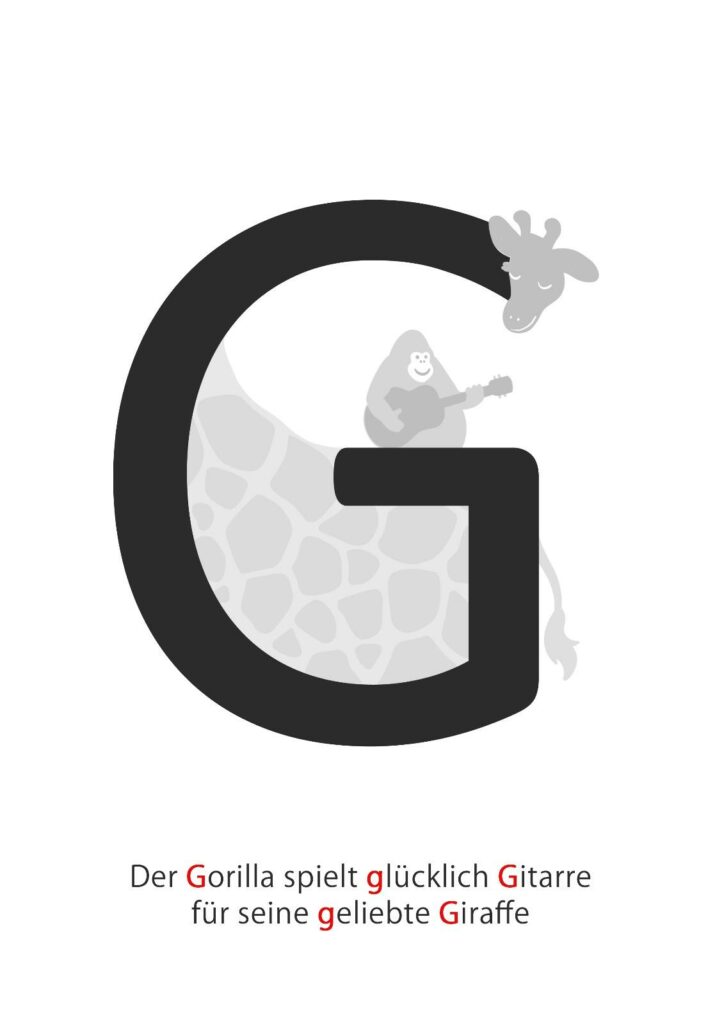
2. Supporting the Reading Process: The cards will be designed to make learning to read a fun and motivating experience. Visual elements like pictures and symbols will clarify the connection between letters and words. For example, the card for “G” might feature a giraffe.

3. Incorporating Psychological Learning Principles: An essential aspect of the project is incorporating psychological strategies that aid learning, such as repetition, positive reinforcement, and multisensory techniques (visual and kinesthetic elements).
Design and Content of the Learning Cards

Visual Design
a) Each card will prominently display one letter in a large, clear font, paired with an image representing a word that begins with that letter (e.g., “B” with a ball image).
b) The cards will use bright, child-friendly colors and clear lines to capture and hold children’s attention.
c) Each card will have a minimalist design without unnecessary text or distracting elements to help children focus on the core content.


Psychological facts/influence
1. Repetition and Consistency: Children benefit from consistent practice and repetition. The project could incorporate playful activities alongside the cards, like simple games where children match letters to images, helping reinforce information in memory.

2. Fostering Motivation: The cards should offer a sense of achievement by providing small, progressive successes. For instance, children could earn points or rewards for correctly identifying letters, promoting self-confidence and enjoyment in learning.

3. Gradual Increase in Complexity: To provide a progressive learning experience, the cards can evolve from simple letter-picture associations (e.g., “A” for “apple”) to recognizing words with multiple letters.