Trump’s Ongoing Propaganda Playbook: Rallies, Social Media, and the Battle for Public Perception

In recent years, few personalities have been as polarising in American political theatre – or as effective in dominating the national conversation – as Donald J. Trump. From his first venture into presidential politics in 2015 to his previous term in office and subsequent campaigns, Trump has consistently employed propaganda techniques to reach and influence tens of millions. Whether through speeches at rallies or posts on social media platforms, his messaging strategy relies on repetition, stirring rhetoric, and a constant stream of polarising content. These tactics ensure that his messages are strengthened by supporters and remain unavoidable for his opponents.

At the core of Trump’s propaganda strategy is his ability to create a spectacle. Drawing large crowds isn’t just a way to measure his popularity; it also serves a psychological purpose. The sight of packed arenas gives the impression of power and ‘certainty.’ By filling venues to capacity, Trump can argue that public support for him is greater than what polls suggest, using the visual impact of these events to push back against negative media coverage. Supporters often describe these rallies as high-energy gatherings where a shared sense of identity is on full display. Chants, slogans, and the symbolic red hats become signs of belonging to a larger group. This creates a double effect: it motivates his base and, at the same time, ensures that these events dominate the news cycle, as the media rush to cover every controversial or provocative moment (Rakich, 2019). Trump’s approach to social media is just as calculated. Following controversy on established social platforms, he has looked for alternative networks that offer him more freedom to publish content without so many restrictions. Here he is capitalizing on a model of political communication that appeals directly to consumers and bypasses the traditional press. Researchers note that Trump’s online posts often mix patriotic appeals with targeted attacks on his opponents, blending declarative statements such as ‘America First’ or ‘Make America Great Again’ with accusations against political opponents, journalists or other perceived enemies (Internationales Forscherteam Analysiert 200 Millionen Social, n.d.). His contributions – short, emotional, and often aggressive – are very well received by his followers, who are conditioned to expect provocative content from him. One of the most well-known propaganda tactics in Trump’s toolbox is the ‘big lie,’ or the repetition of unproven allegations. During the 2020 and 2024 election cycles, he has repeatedly questioned the integrity of elections, claiming widespread voter fraud or wrongdoing despite no court-approved evidence. Psychologists call this technique the ‘illusory truth effect,’ in which repeated statements can appear true to the public over time, regardless of their veracity (Illusory Truth Effect  the Decision Lab, n.d.). Even when fact-checkers, courts or election officials contradict these claims, the persistence of the narrative can sow doubt in parts of the electorate. By the time official denials are leaked, the seeds have often taken root among the believers.

Trump’s campaign often uses scapegoating as a key strategy, blaming political opponents by calling them “radical leftists” or presenting immigrants and foreign nations as threats. This helps focus public anger on specific groups or issues. This approach works especially well during times of economic problems or social tension because fear makes people react quickly without thinking about other important topics. By turning complex problems into a simple “us versus them” idea, his campaign builds stronger support from his followers (Roberts, 2021). Critics, on the other hand, say this kind of talk makes the country even more divided.

Another big part of Trump’s strategy is the feedback loop he creates with conservative media. Things he says at rallies or on social media, like claims about “election fraud” or “Democratic corruption,” are quickly picked up by certain TV channels, radio shows, or websites. These platforms repeat his words and make them seem more believable to his supporters. When Trump is criticized by other media, he points to these friendly outlets as proof that he is right. This helps him control the story and keep his followers on his side. In this sense, Trump’s brand of propaganda isn’t just about spreading misinformation; it’s also about creating an emotional connection with voters who feel ignored or left out by more traditional politicians (The Trump-Fox Feedback Loop Is Powering an Assault on Democracy, 2020). 

Another important part of Trump’s strategy is how he handles his own controversies. When faced with scandals—whether personal, legal, or related to his policies—he often reframes them as “witch hunts” created by his political enemies. This tactic, which can be seen as a projection, turns accusations against him into part of a bigger conspiracy. By doing this, he encourages his supporters to see any criticism as proof that he’s fighting against powerful forces that want to stop him. This creates a repeating pattern where every new controversy fits neatly into his existing story of being unfairly targeted.

Overall, Trump’s campaign relies on several connected strategies to keep his supporters engaged and loyal. These include his large rallies, which feel more like community events than traditional political gatherings, and his polarizing social media posts, which are spread and supported by friendly media outlets. While his communication style may seem chaotic, he is meticulous about keeping his community happy. Some see this as a way to give a voice to ordinary people, while others see it as a way to twist public discussion and create division. Either way, his methods have a strong impact on how political debates in America are shaped. 

Sources: 

Rakich, N. (2019, September 5). Don’t Let Crowd Sizes Mislead You. FiveThirtyEight. https://fivethirtyeight.com/features/dont-let-crowd-sizes-mislead-you/

Internationales Forscherteam analysiert 200 Millionen Social. (n.d.-b). https://www.wiwi.uni-muenster.de/fakultaet/de/news/4890

Illusory truth effect – The Decision Lab. (n.d.). The Decision Lab. https://thedecisionlab.com/biases/illusory-truth-effect

Roberts, K. M. (2021). Populism and polarization in comparative perspective: constitutive, spatial and institutional dimensions. Government and Opposition57(4), 680–702. https://doi.org/10.1017/gov.2021.14

The Trump-Fox feedback loop is powering an assault on democracy. (2020, November 9). 

Media Matters for America. https://www.mediamatters.org/fox-news/trump-fox-feedback-loop-powering-assault-democracy
The Rise of the Modern “Tradwife”: Nostalgia or Empowered Choice?

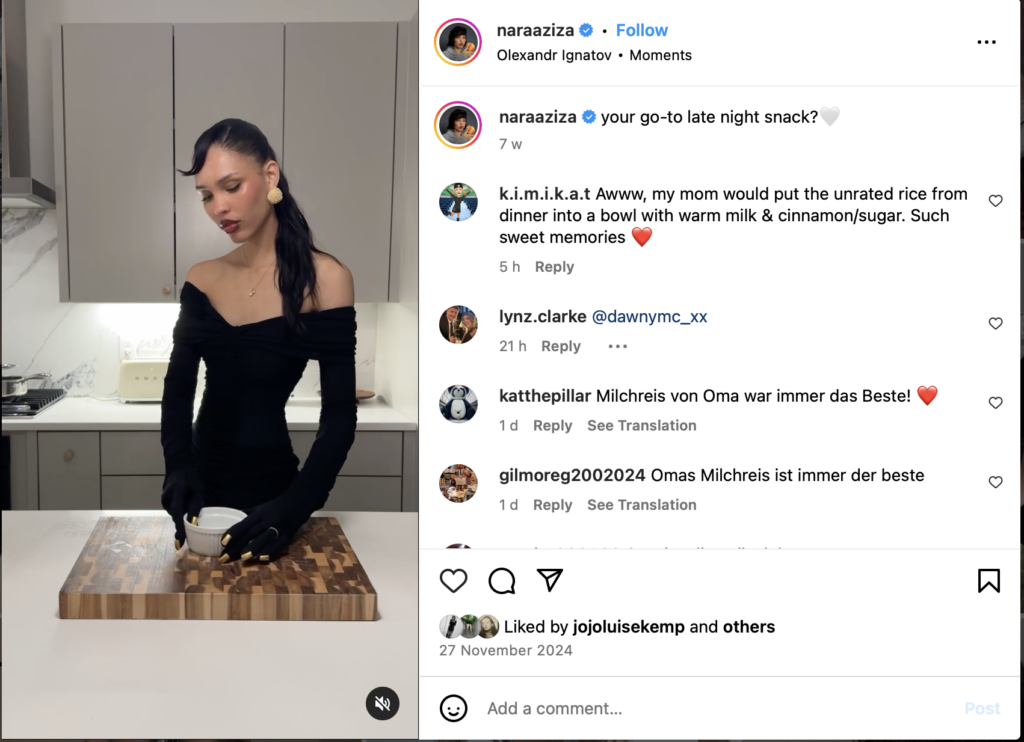
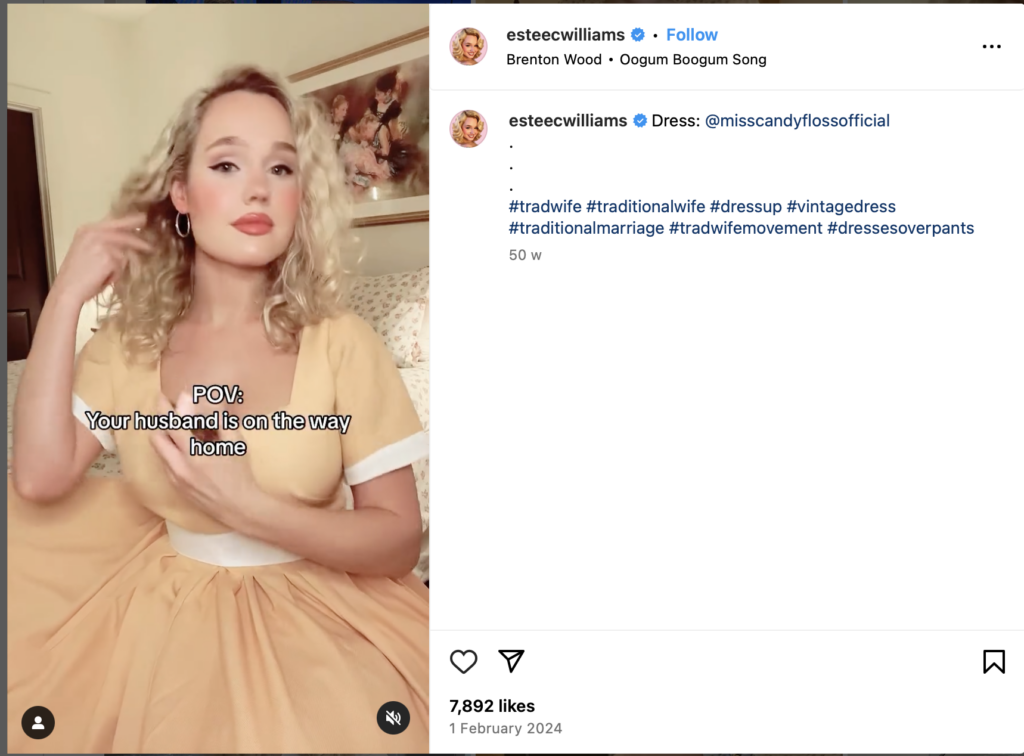
In corners of TikTok, Instagram, and YouTube, a growing contingent of women has taken up a lifestyle that many would consider a throwback to the 1950s: the “traditional housewife.” Figures like Nara Smith, who has amassed a large following on TikTok, showcase daily vlogs of home cooking, tidying routines, and meticulously styled outfits reminiscent of an era where the man of the house was the primary breadwinner, and the woman’s role revolved around homemaking. Under hashtags such as #TradWife, #TraditionalLifestyle, or #WifeLife, these influencers share snapshots of a life that appears orderly, domestic, and, to some viewers, refreshing in its simplicity.

Source: Instagram/esteecwilliams

However, this new revival of housework is not just a pastime. Rather, it is a constellation of viewpoints and experiences. Some women see it as an empowering personal choice, freeing them from the pressures of business life and the stressful juggling of two incomes. Others argue that it reinforces patriarchal norms and oversimplifies the very real social, economic, and political achievements that women have made over the last century. Regardless of perspective, the phenomenon is now too widespread to ignore and raises questions about nostalgia, identity, and autonomy in society. (Garfinkle, 2024). 

Escape from the ‘hustle culture’

Source: Instagram/naraaziza

The longing to escape the demands of ‘hustle culture’ is a common theme among self-proclaimed ‘trad wives’. At a time when digital networking is blurring the lines between personal space and professional obligations, many people – including women – are feeling burnt out by the relentless productivity standards that exist in today’s culture. For some, withdrawing from their professional lives and focusing on the home is a relief. In her TikTok videos, Nara Smith often talks about the peace she finds in a cozy home environment where she plans home-cooked meals and maintains a daily routine free from performance reviews or endless Zoom calls (Walden, 2024). In an economy that prioritizes ambition and measurable success, such a change can seem radical. Critics see it as a retreat from women’s hard-won gains in the public sphere, but supporters argue that the choice, to go from CEO to homemaker actually validates the spirit of personal preference that feminism has always advocated. In other words, the opportunity to ‘ plug into’ domestic life is just as valid for some as the opportunity to have a high-powered career. 

Rapid technological changes, political tensions, and social turmoil can stir up a longing for supposedly simpler times. An important selling point in the #TradWife scene is the idea of stability. Traditional domestic roles are portrayed as an anchor in a chaotic world: The man’s role is clearly defined as a provider, and the woman’s role is equally clear as a nurturer of home and family. Although it is debatable whether the 1950s were really as idyllic as they were portrayed in black-and-white television programs – given the raging gender and racial inequalities – the romantic image remains strong to this day (Gerhard, 2021b). The #TradWife trend, as seen on Nara Smith’s feed, capitalizes on this romanticization: carefully set dining tables, slow-cooked recipes and a calm domestic atmosphere resonate with followers seeking a sense of security or control.

A remarkable twist in the modern version of being a housewife is the very public way in which this domestic life is presented. While historical housewives lacked the platforms and networks to share tips beyond their local communities, today’s ‘trad wives’ foster online communities that reach a wide audience. Influencers share recipes, household tips, and relationship dynamics – all in real time. Some even fund their content through sponsorship or affiliate marketing, turning homemaking into a revenue-generating business. This complicates the question of whether this lifestyle is ‘regressive’.From a certain perspective, these modern housewives are not just domestic helpers, but also content creators, small business owners, and community leaders. Their brand is based on a nostalgic aesthetic but utilizes the tools of modern entrepreneurship – social media analytics, influencer marketing, and virtual networks.

For many feminists and social activists, the glorification of the 1950s housewife role somewhat ignores the inequalities that characterized this era as well. In the past, women did not always have the free choice to stay at home but it was expected and seen as the norm within society. Social norms and legal structures often excluded them from higher education, significant careers, and financial independence. Today, critics worry that the portrayal of domesticity as an escape from ‘toxic’ modern culture masks the real barriers that women still face, including pay inequality, discrimination in the workplace, and the burden of unpaid care work that can maintain dependence on a partner’s income (Tradwife-Trend: Nostalgie Oder Antifeministisches Risiko? – ING, n.d.).Others question whether celebrating the #TradWife trend risks fostering a romanticized illusion. The curated nature of social media can mask the realities of domestic labor, financial vulnerability or the dissatisfaction that can arise from leaving the workforce. Furthermore, in families dependent on a sole earner, the economic risks are multiplied when a spouse loses their job or faces unexpected difficulties – factors that are not easily captured in aesthetically pleasing Instagram images (Schuster, 2024).

Ultimately, the resurgence of traditional housewife ideals embodies the tension between choice and cultural influence. For some, staying home is a personal preference that can foster fulfillment, strengthen mental health, and create strong family bonds. For others, it raises broader societal concerns about eternalizing gender roles that restrict future opportunities. Maybe the real question is whether society can embrace diversity in how women choose to structure their lives—be it as full-time homemakers, professionals, or something in between. While hashtags like #TradWife represent a specific aesthetic and worldview, there is room in modern discourse to acknowledge that not all women (or men, for that matter) find empowerment in the same roles. By understanding the motivations, challenges, and appeals of the trend, we can foster more conversations about identity, family, and the evolving meaning of work in the 21st century.

Sources: 

Garfinkle, M. (2024, July 29). What Is a Tradwife? All About the Controversial Lifestyle — And Why It’s Having a Viral Moment. People.com. https://people.com/what-is-a-tradwife-8684651#:~:text=Researcher%20Mariel%20Cooksey%20defined%20%E2%80%9Ctradwifery,norms%2C%E2%80%9D%20per%20the%20Political%20Research

Gerhard, U. (2021b, December 7). 50 Jahre Gleichberechtigung – eine Springprozession – Essay. bpb.de. https://www.bpb.de/shop/zeitschriften/apuz/31157/50-jahre-gleichberechtigung-eine-springprozession-essay/

Schuster, K. (2024, September 15). Tradwife: Warum der TikTok-Trend gefährlich ist. ZDFheute. https://www.zdf.de/nachrichten/politik/ausland/tradwife-bewegung-trend-tiktok-100.html

Tradwife-Trend: Nostalgie oder antifeministisches Risiko? – ING. (n.d.). ING-DiBa. https://www.ing.de/wissen/tradwife-trend/

Walden, K. (2024, August 16). 5 times Nara Smith made us question if #TradWife life is just a big joke. Brit + Co. https://www.brit.co/nara-smith/

Digital Age Warfare: The Influence of Propaganda

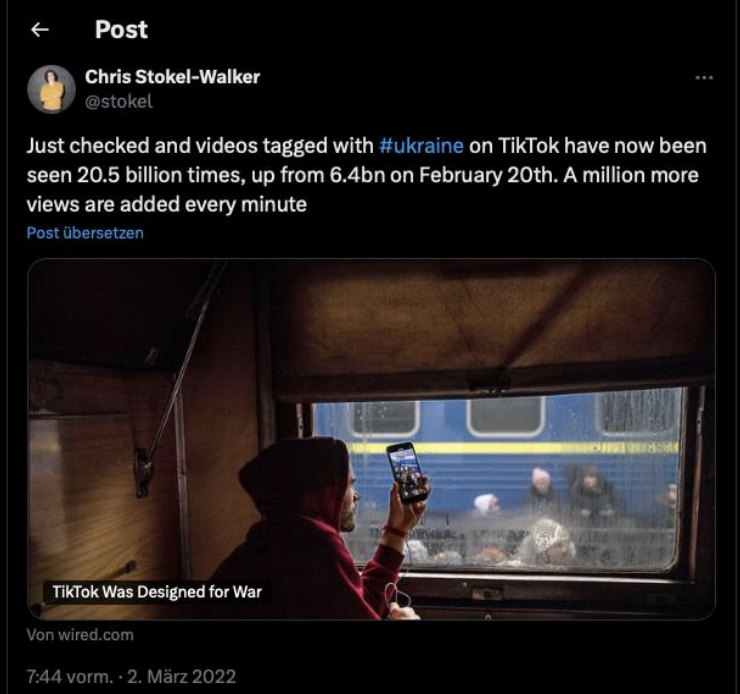
War propaganda has never been as easily accessible, as fast, and as present as today. Unlike in the past, where censorship and physical distance could limit the dissemination of information, digital technology has erased borders and anyone with an internet connection now has access to a global megaphone. This new environment is now creating a new way for nations, non-state actors, and even individuals to participate in conflict. Whereby platforms such as TikTok, YouTube, and Telegram can be used as unparalleled weapons of persuasion.

At the center of modern war propaganda is the struggle for control over how it is portrayed, particularly in the media. Both governments and armed groups have recognized that shaping public perception is often just as important as victory on the ground. Russian state media, for example, utilize an entire ecosystem of television channels and social media channels to justify actions in conflicts – particularly in Ukraine – by portraying them as patriotic or humanitarian missions (Helmus & Holynska, 2024). These narratives are further reinforced by orchestrated disinformation campaigns, sometimes using fake videos or ‘bot armies’ that push certain hashtags. Such tactics aim not only to gain support within the country but also to create confusion among international audiences (Russische DesinformationskampagnenBundesregierung, 2022). 

In Ukraine, a different, more hands-on approach has been chosen. Citizens and soldiers are posting real-time updates from the battlefield, sharing personal stories and the human cost of the conflict. The two purposes of these reports: are to boost support at home and to generate international empathy and aid. In this context, war propaganda becomes a community project rather than a top-down responsibility (Sk, 2024). Platforms such as Twitter (X), TikTok, and Instagram allow ordinary people (influencers) to share footage on the ground and shape narratives at the speed of a retweet, significantly influencing global sentiment.

One remarkable development is the weaponization of viral culture. Memes, for example, are not just trivial internet jokes but can become effective propaganda tools. A single meme can summarise a conflict by portraying one side as heroic and the other as villainous (Poepsel et al., 2024). This visual representation often resonates more than long-winded statements or official declarations. Experts point out that memes bypass traditional fact-checking and academic strictness and appeal directly to emotional responses. They can be spread quickly across language barriers and use humor and simplicity to anchor messages in the public’s consciousness.

However, the digital sphere offers more than just memes. Deepfake technology has become a new frontier of war propaganda. Videos that appear to show high-ranking leaders surrendering or making inflammatory claims can spread quickly before they are exposed. Which can lead to momentary chaos. Although fact-checkers often quickly disprove these clips, the remaining doubt destabilizes any agreement about what is true (Kleemann, n.d.). This atmosphere of uncertainty benefits those who profit from the confusion and makes it increasingly difficult for observers especially those without advanced media literacy, to distinguish truth from fake.

Another influential aspect of modern war propaganda is the role of diaspora communities. Digital networking allows people far from the conflict zone to share and strengthen their views from home. People living abroad can become vocal supporters or critics, organizing international protests or fundraising campaigns. Likewise, state-sponsored campaigns can also target these diaspora communities to influence their views and secure their financial or political support. The result is a highly networked environment in which propaganda easily crosses national borders and can continue to be influential. Media literacy therefore becomes an important tool of defense against war propaganda. Educational initiatives can teach citizens how to evaluate sources, cross-check information, and recognize manipulative content (Bildung, 2022). Numerous NGOs and fact-checking organizations are struggling to keep up with the flood of tweets, videos, and articles being produced in real-time in conflict zones. Although these organizations play an important role, their work can be overshadowed by the sheer volume and spread of misleading information.

Ultimately, war propaganda in the digital age is about more than controlling a single narrative; it is about fragmenting information environments so that multiple competing stories coexist. This fragmented reality complicates attempts at diplomacy and can prolong conflicts, as neither side has a single point of reference for negotiations. For the global public, the flood of competing claims can lead to a sense of cynicism or overwhelm, making it tempting to withdraw altogether. While technology has democratized the distribution of information, it has also multiplied the opportunities for propaganda. States and other organizations involved can adapt quickly to this new environment and with that influence minds and hearts more effectively than ever. Navigating this information battlefield requires alertness, nuanced judgment, and a global commitment to transparency so that truth does not become another casualty of war.

Sources: 

Russische DesinformationskampagnenBundesregierung. (2022c, August 30). Die Bundesregierung Informiert | Startseite. https://www.bundesregierung.de/breg-de/aktuelles/aus-narrativen-desinformation-2080112?

Helmus, T. C., & Holynska, K. (2024, September 3). Ukrainian Resistance to Russian disinformation: lessons for future conflict. RAND. https://www.rand.org/pubs/research_reports/RRA2771-1.html?

Sk. (2024, February 2). Russia-Ukraine War through the eyes of social media | GJIA. Georgetown Journal of International Affairs. https://gjia.georgetown.edu/2024/02/02/russia-ukraine-through-the-eyes-of-social-media/

Poepsel, M. A., Malo, A., Obuekwe, C., Wilhelm, M., Góngora, V. P., & Daiber, D. (2024). “Tears have never won anyone freedom:” a multimodal discourse analysis of Ukraine’s use of memes in a propaganda war of global scale. Online Media and Global Communication3(1), 55–81. https://doi.org/10.1515/omgc-2023-0050

Kleemann, A. (n.d.). Deepfakes – Wenn wir unseren Augen und Ohren nicht mehr trauen können. Stiftung Wissenschaft Und Politik (SWP). https://www.swp-berlin.org/publikation/deepfakes-wenn-wir-unseren-augen-und-ohren-nicht-mehr-trauen-koennen

Bildung, B. F. P. (2022, January 26). Kritische Medienkompetenz als Säule demokratischer Resilienz in Zeiten von “Fake News” und Online-Desinformation. bpb.de. https://www.bpb.de/themen/medien-journalismus/digitale-desinformation/290527/kritische-medienkompetenz-als-saeule-demokratischer-resilienz-in-zeiten-von-fake-news-und-online-desinformation/

Elon Musk and Alice Weidel – Was this collaboration needed?

The recent live discussion between Elon Musk, the owner of X (formerly Twitter), and Alice Weidel, leader of the Alternative for Germany (AfD), became a hot topic in both Germany and internationally. Musk, one of the most recognizable figures in tech, hosted the event on his platform, and Weidel didn’t miss the chance to frame her controversial political stance for a massive audience. (Kramer, 2025). But why is this conversation so significant, and what does it tell us about propaganda in the modern era?

The Context of the Conversation

The AfD, a right-wing populist party, has gained momentum in recent years, partly through its adept use of social media to disseminate its messages. Within the conversation, Musk expressed support for the AfD, describing it as the only party capable of “saving Germany.”  Weidel however tried to use the platform to criticize past German leadership, labeling Angela Merkel as a “green chancellor” who allegedly caused significant harm to the country. However, one of the most controversial moments came when Weidel claimed Adolf Hitler was a communist, a statement Musk did not challenge but appeared to agree with.

This statement again showed the spread of historical inaccuracies, which are a hallmark of propaganda tactics. By distorting facts, such statements are intended to provoke reactions, attract attention, and create a favorable narrative for their supporters.

Social Media as a Propaganda Tool

Social media platforms like X allow public figures to bypass traditional media channels and connect directly with audiences. This can empower marginalized voices, but it can also provide fertile ground for disinformation to spread unchecked. Algorithms amplify controversial or engaging content, meaning provocative or false statements often reach a wider audience simply because they generate reactions – be it outrage or support (Menczer, n.d.). 

Musk’s ownership of X complicates matters further. As a prominent entrepreneur and influential figure, his public support for political entities can lend credibility to their messages, regardless of their validity. This dynamic emphasizes the fuzzy boundaries between personal opinion, platform governance, and corporate influence.

Lessons from History 

The use of propaganda to influence public opinion is not new and has been around for quit some time. As mentioned in previous blog posts during the Nazi era, Joseph Goebbels, Hitler’s chief propagandist, effectively used radio, film, and print media to spread the regime’s ideology (Deutschland, n.d.). While the mediums have changed, the underlying principles remain similar: controlling the narrative, evoking strong emotions, and repeating messages to create a sense of inevitability.

The Characteristics of Modern Propaganda

Propaganda has evolved significantly in the digital age. Today, it often relies on emotional appeals, oversimplified narratives, and repetition to resonate with audiences. The conversation between Musk and Weidel demonstrates these tactics:

  • Emotional Appeals: By portraying Merkel’s policies as a problem and presenting the AfD as Germany’s savior, the discussion taps into fears about the future of the nation
  • Historical Revisionism: Weidel’s claim about Hitler distorts historical facts to provoke outrage and attract attention, which is a common propaganda technique
  • Repetition and Amplification: Social media algorithms reward engagement, which means that controversial posts are likely to reach a larger audience through sharing and commenting, regardless of their accuracy

    The Risks of Unregulated Platforms

    Musk’s leadership of X has been criticized for its laissez-faire approach to content moderation. Critics argue that this policy allows harmful content, including propaganda and hate speech, to flourish unchecked. The European Union’s Digital Services Act (DSA) seeks to address these concerns by holding platforms accountable for illegal content and public safety risks (Digital Services Act: Ensuring a Safe and Accountable Online Environment, n.d.). The Musk-Weidel conversation has already prompted investigations into whether X violated the DSA (Keskin, 2025b). 

    Without regulation, platforms like X risk becoming megaphones for disinformation or fake news. This not only distorts public discourse but also undermines trust in legitimate media and democratic institutions, making it difficult to decide between fake and truth. The DSA represents a step toward addressing these issues, but its enforcement will be critical.

    Ethical and Regulatory Challenges

    Combating propaganda requires more than just regulating certain media on social platforms. Media literacy is essential. People need tools to critically evaluate what they see online. This includes recognizing manipulative tactics, checking sources, and understanding the algorithms that shape their feeds. For example, if viewers had better media literacy skills, they might question Weidel’s outlandish claims about Hitler or consider why Musk’s endorsement of the AfD matters. Hereby education systems and public campaigns can play a vital role in building this awareness for a younger audience.

    Conclusion

    The conversation between Elon Musk and Alice Weidel is a strong reminder of the power and pitfalls of social media in shaping political discourse nowadays. It illustrates how influential figures can use these platforms to spread their messages, often blurring the lines between fact and fiction. As social media continues to evolve, so too will the methods of those who seek to manipulate it for their own benefits.

    Sources:

    Kramer, K. (2025, January 10). Elon Musk und Alice Weidel bei X: Warum das Gespräch so banal war. FAZ.NEThttps://www.faz.net/aktuell/feuilleton/medien/elon-musk-und-alice-weidel-bei-x-warum-das-gespraech-so-banal-war-110222209.html

    Digital Services Act: ensuring a safe and accountable online environment. (n.d.). Eurojust. https://www.eurojust.europa.eu/de/publication/digital-services-act-safe-and-accountable-online-environment#:~:text=The%20Digital%20Services%20Act%20(DSA,safe%20and%20trusted%20online%20environment.

    Keskin, S. (2025b, January 14). Medienbericht: Musk-Weidel-Talk löst EU-Überprüfung aus. Medienbericht: Musk-Weidel-Talk Löst EU-Überprüfung Aushttps://www.trtdeutsch.com/politik-inland/medienbericht-musk-weidel-talk-lost-eu-uberprufung-aus-18253627

    Menczer, F. (n.d.). Facebook’s algorithms fueled massive foreign propaganda campaigns during the 2020 election – here’s how algorithms can manipulate you. The Conversation. https://theconversation.com/facebooks-algorithms-fueled-massive-foreign-propaganda-campaigns-during-the-2020-election-heres-how-algorithms-can-manipulate-you-168229

    Deutschland, S. D. H. M. S. H. D. G. D. B. (n.d.). Gerade auf LeMO gesehen: LeMO Das lebendige Museum Online. https://www.dhm.de/lemo/biografie/joseph-goebbels

    Wag the Dog: Propaganda within a film and the role of storytelling

    In the world of political manipulation and propaganda, the 1997 film “Wag the Dog” has a special place. The satire, directed by Barry Levinson, shows how a political scandal is covered up by staging a fictitious war. The film offers an entertaining but also frightening perspective on how media and storytelling can be used to influence public opinion. (Levinson, 1997). This blog post analyses the way propaganda techniques are applied within the film. The term “wag the dog” already gives insights into what the movie topic is about. The phrase already indicates that attention is being diverted and the focus lies on something else (Wag The Dog | Phrase Definition, Origin & Examples, n.d.).  

    The film begins with a political nightmare: the US president is confronted with a scandal shortly before his re-election. To deflect public attention, his advisor Conrad Brean, played by Robert De Niro, hires a Hollywood producer, Stanley Motss, played by Dustin Hoffman. Together they want to create the illusion of a war against Albania, by creating fake news, patriotic songs, and a tragic heroine story. The plot reveals how easy it is to create an alternative reality with the help of the media. By manipulating emotions and spreading targeted information, the protagonists control the population’s perception – a central propaganda mechanism.

    The film clearly shows how emotionalization is used to capture people’s attention. An invented ‘tragic heroine’ is presented whose fate evokes the audience’s sympathy one of the scenes is where a young girl escapes from a destroyed village with a cat. This scene is particularly impressive and influential. This kind of emotional imagery makes the audience forget that the war itself is not real. Hereby showing that the use of emotions is a tried and tested propaganda method that is also used and implemented in the real world. The film adds the targeted repetition and consistency of the message over and over again. The invented story of the war is repeated again and again in various media until it is accepted as truth within the population. This technique makes use of the famous propaganda rule: ‘A lie that is repeated often enough becomes the truth.’

    Another central element within the movie is distraction. The staged war is able to distracts the population from the president’s actual scandal and shows how propaganda can be used to control public perception. The film illustrates how crucial it is to control the media in order to spread a certain message. With this visual and narrative elements are staged really well in the film to create credibility and draw the audience’s attention to the chosen narrative and not the present scandal.

    “Wag the Dog” is also fascinating from a different point of view. The way images, music, and stories are used shows the importance and impact designs can have on conveying messages. The fake news reports in the film are an impressive illustration of how visual content can be manipulated to create emotions and with this create a certain type of credibility. With this, the musical backing also plays a very crucial role within the movie. A patriotic song called ‘We Are the Land of the Free’ is composed especially for this fictional war just to make the whole story and idea more convincing for the population to believe. Music is used here as a powerful tool to reinforce emotions and anchor a message. 

    Although the film was released over 25 years ago, it hasn’t lost its importance and impact. At a time when fake news and disinformation are more common, the message of “Dare the Dog” is more relevant than ever. With this, the film can remind the audience of the importance of critically questioning information and recognizing the power of the media. The mechanisms of manipulation depicted in the movie are even easier to implement today through social media channels and digital platforms and are often more difficult to see through. It shows that those who tell stories have enormous power, which can be used for both a good and bad purpose.

    With this the movie “Wag the Dog” is more than just a satire – it is a lesson in how propaganda works and the role that media play in it. The film impressively shows how storytelling can be used to shape reality and influence opinions.  At the same time, the film is an invitation to consumers to question information carefully and not to be influenced by a well-told story. As the movie impressively shows, the line between truth and fiction can be very thin. The film can teach that critical thinking and healthy skepticism are the best tools for recognizing manipulation and arming ourselves against propaganda.

    Sources:

    Levinson, B. (Director). (1997, December 25). Wag the Dog. Baltimore Pictures, TriBeCa Productions.

    Wag the Dog | Phrase Definition, Origin & Examples. (n.d.). https://www.gingersoftware.com/content/phrases/wag-the-dog#

    Propaganda but make it new

    While the examples of Nazi propaganda offer a specific glimpse into the past of propaganda methods, it’s essential to recognize that the art of manipulation has not disappeared. In fact, it has further evolved with the digital times. In the age of social media, propaganda has taken on new forms by using platforms like TikTok, Instagram and Telegram it is able to reach a much younger audience. Right-wing parties, amongst many others, have been using and exploiting these platforms to spread their political messages and recruit new followers and thus spread further awareness about their political goals.

    Social media platforms today are designed to be addictive. Their algorithms constantly learn our preferences, feeding us content that aligns with our beliefs and creating echo chambers where other opinions are drowned out. This highly personalized experience can make it difficult to distinguish between fact and fiction or even fake news. Younger individuals who spend a significant amount of time on these platforms are particularly sensitive. Their developing critical thinking skills make them more vulnerable to the manipulation of information that is consumed so fast and often. 

    Social media platforms are not just passive spaces for consuming content; they are carefully engineered systems designed to keep users engaged. At the core of these platforms are algorithms and complex rules that determine what content users can see. When users interact with content on social media—by liking, sharing, or commenting—they provide valuable data to these algorithms. This information allows the platform to tailor the user’s feed, showing more of what they already liked and shared. Over time, this creates a filter bubble that isolates users from diverse perspectives and exposes them to a constant stream of information that confirms their existing beliefs. (De Luca, 2024)

    The phenomenon known as the “echo chamber effect” (Khosravinik, 2017) can be particularly dangerous when it comes to political and social issues. Extremist groups and individuals can exploit algorithms to spread their messages to a broader audience by creating highly engaging and emotionally charged content. As a result, a deformed perception of reality emerges, allowing misinformation and conspiracy theories to thrive. Users become increasingly polarized and may struggle to understand the nuances of complex issues. This decline in critical thinking skills can have serious consequences, ranging from political extremism to social unrest.

    The study of Harenberg (2024) has shown that young adults primarily get their news from social media, relying less on traditional news sources. As a result, many people now base their knowledge on information consumed on platforms like TikTok, often treating it as factual. The common phrase “I read somewhere that… ” has taken on a new meaning in this context, as most “scientific” findings are learned from videos and accepted as truth with little skepticism (Light-hearted News on Social Media Drawing Gen Z Away From Traditional Sources, 2023). This trend has significant implications, as social media platforms often contain misinformation and disinformation. Right-wing groups have made it a habit to exploit this by creating engaging content that appeals to the emotions of young people, often inciting fear, anger, and resentment. They sometimes also use popular challenges or TikTok trends, incorporating well-known songs to convey a right-wing worldview or message within their videos (Br, 2024). 

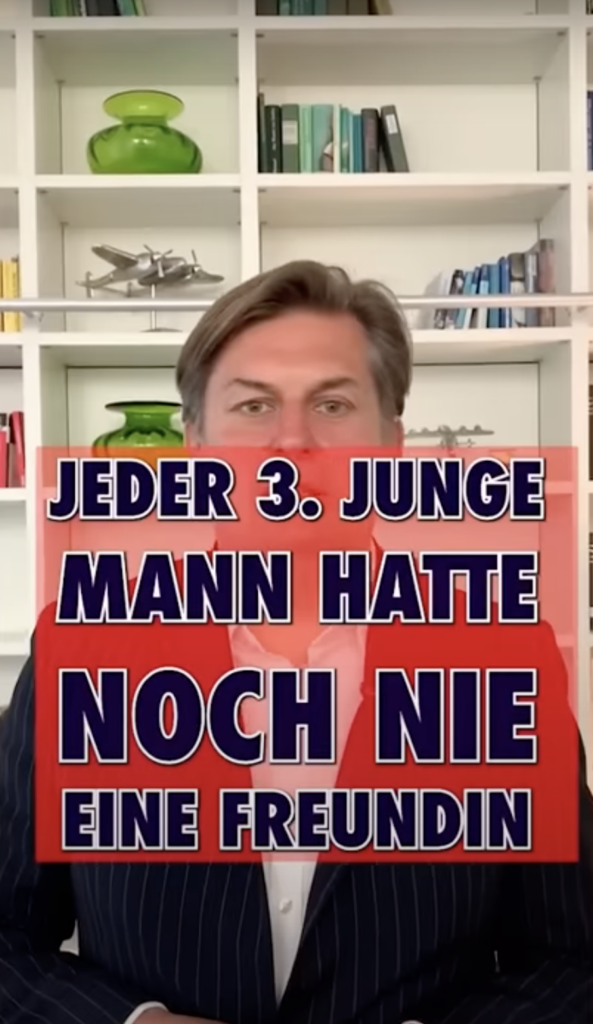
    The content in question is designed to provoke anxieties around status and power loss, hereby calling for men to band together in a show of solidarity. This narrative crafts a sense of urgency and companionship by tapping into the insecurities some men feel regarding their masculinity. Right-wing populist rhetoric often use this to promise a revival of traditional gender roles, suggesting that by sticking to these traditional roles, individuals can improve their self-esteem and find belonging within a community that is portrayed as robust and united (Dillet, 2020). 

    In this scenario, women are often depicted as passive, weak, or even as threats. This portrayal not only diminishes women but also demands men to take up the initiative of ‘defending’ the traditional family structure against the more modern family structures. Furthermore, the glorification of violence in some of these videos is very high; it is often framed as legitimate and even heroic to solve problems in a more brutal way, as this is considered manly and “normal”. This narrative can particularly resonate with young men, who may struggle with their identities and seek recognition within their community (Nickschas & Nickschas, 2024). The combination of these different themes and struggling emotions as young adults reinforces a cycle of anxiety, identity, and aggression and is used and capitalized. With this, right-wing populist messages promise a return to traditional gender roles and offer a boost to self-esteem by promoting a sense of belonging in a supposedly strong community.

    Sources:

    Khosravinik, M. (2017). Right wing populism in the West: social media discourse and echo chambers. Insight Turkey. https://www.jstor.org/stable/pdf/26300530.pdf

    Dillet, B. (2020). Speaking to algorithms? Rhetorical political analysis as technological analysis. Politics, 42(2), 231–246. https://doi.org/10.1177/0263395720968060

    Light-hearted news on social media drawing Gen Z away from traditional sources. (2023, July 20). www.ofcom.org.uk. https://www.ofcom.org.uk/media-use-and-attitudes/attitudes-to-news/light-hearted-news-social-media-drawing-gen-z/#:~:text=Social%20media%20platforms%20dominate%20the,feature%20in%20their%20top%20five.

    Harenberg, M. (2024, July 8). Social Media als Nachrichtenquelle der Generation Z. MedienNetzwerk Bayern. https://mediennetzwerk-bayern.de/netzwerkwissen-social-media-nachrichtenquelle-generation-z/#top

    De Luca, S. (2024, January 17). Filterblasen: Leben in der Bubble. MDR.DEhttps://www.mdr.de/medien360g/medienwissen/meinungsbildung-im-netz-filterblasen-leben-in-der-bubble-100.html

    Br, I. P. (2024, May 16). Warum die AfD auf TikTok Erfolg hat – und was andere Parteien daraus lernen. tagesschau.de. https://www.tagesschau.de/inland/gesellschaft/rechtsextremismus-jugendliche-100.htmlNickschas, J., & Nickschas, J. (2024, March 22). TikTok drosselt Reichweite von AfD-Europawahlkandidat Krah. tagesschau.de. https://www.tagesschau.de/inland/innenpolitik/tiktok-afd-100.html

    Storytelling: The Art of Manipulation

    The following images contain historical representations of Nazi symbols and propaganda. They are for documentation and analysis purposes only and are not endorsed

    At its core, storytelling is the art of creating narratives that inspire the audience. This includes creating different characters, developing plots, and evoking different emotions. Effective storytelling can transport audiences to other worlds, inspire empathy, and change perspectives. As Steve Jobs once said, “The most powerful person in the world is the storyteller. The storyteller sets the vision, values, and agenda of an entire generation that is to come.” (Raja, 2023). This as another example highlights the immense power of storytelling. 

    Propaganda, on the other hand, is the active dissemination of information – facts, arguments, rumors, half-truths, or lies – to influence public opinion. When combined with storytelling tactics, propaganda becomes even more effective. By creating captivating narratives, propagandists can bypass critical thinking and thus appeal to deep-seated emotions and exploit them for their own ends. In certain cases, methods such as ‘scapegoating’ are used, where a person or group is used to achieve a specific purpose. This method has the purpose of transferring the blame to them and thus presenting the image that all problems are caused by this group and must therefore be eliminated (Prejudice in Society: Sociological Perspectives, 2015). The ‘knife in the back’ myth was a central component of National Socialist propaganda. It was used to explain the defeat in the Second World War and to shift the blame away from the Nazi leadership. By claiming that the German people had been ‘betrayed’ from within, the Nazis were able to fuel hatred towards certain groups and deny their own responsibility for the regime’s crimes (Hindenburg Spreads “Stab-in-the-Back” Myth, n.d.). 

    When it comes to Storytelling various methods were used, including the simplification of complex issues. As a result, complex problems and themes were simplified. Among other things, simple solutions were then also offered to such complex problems, which were mostly black-and-white thinking and did not consider the complexity at all. Again, the methods mentioned above were used making it easier to communicate to a broader audience. Another variant was repetition, where important messages were repeated again and again to get them into people’s heads. As a result, many messages were later internalized at a subconscious level and inner action or thinking changed. For propaganda purposes, emotional appeal was also an important way of reaching people. Stories were designed to evoke strong emotions, such as fear, anger, and pride. The use of symbols in National Socialist propaganda contributed significantly to shaping public opinion and promoting a sense of national unity. Symbols such as the swastika, the eagle, and the oak leaf were carefully selected and used to evoke certain emotions and associations. These visual cues simplified complex ideological concepts and enabled the Nazi regime to create a strong and enduring visual identity. By integrating these symbols into every aspect of public life, from architecture to art to everyday objects, the Nazis sought to create a totalizing environment that left no room for dissent (Takala & Auvinen, 2016). 

    One of the most notorious examples of Nazi propaganda is Leni Riefenstahl’s film “Triumph of the Will” (1935). This documentary, chronicling the 1934 Nuremberg Rally, employed a range of cinematic techniques to create a visually stunning and emotionally charged spectacle (Candler, 2016). Riefenstahl masterfully manipulated viewers’ emotions through her use of music, camera angles, and editing. Soaring orchestral scores, coupled with sweeping aerial shots and close-ups of adoring faces, fostered a sense of collective euphoria. Hitler, portrayed as a charismatic leader bathed in spotlights, commanded the unwavering devotion of the masses, further reinforcing the image of an unstoppable and unified Nazi movement. The sheer scale of the rallies, with thousands of uniformed party members marching in perfect synchronization, instilled awe and intimidation (Candler, 2016). 

    Although film and others were powerful instruments, they were just one small piece of the Nazi propaganda machine. Radio programs became an omnipresent platform for the dissemination of news and speeches, often infused with nationalist and anti-Semitic rhetoric. Newspapers, which were tightly controlled by the regime, picked up on these messages and suppressed all alternative voices. Posters that were displayed in public places used bold images and simple slogans designed to evoke fear, anger, and blind obedience (Fürstenau, 2020). The color red became the symbol of strength, power, and revolution – a visual representation of Nazi ideology. Black, on the other hand, was used to demonize the ‘enemy’, while white symbolized Aryan purity (zsong@conncoll.edu, n.d.). Similarly, bold, sans-serif fonts were used in propaganda materials to convey a sense of urgency and absolute authority.

    How the Nazis mastered propaganda techniques has had a lasting impact on the world. Even today, these methods continue to be used by authoritarian regimes and extremist groups to manipulate public opinion and justify violence

    References:

    Raja, M. (2023, June 2). Why Do We Fall For Narratives? – love what you make – Medium. Medium. https://medium.com/love-what-you-make/why-do-we-fall-for-narratives-a5605d55726c

    Hindenburg spreads “Stab-in-the-Back” myth. (n.d.). https://encyclopedia.ushmm.org/content/en/timeline-event/holocaust/before-1933/hindenburg-spreads-stab-in-the-back-myth

    Prejudice in Society: Sociological Perspectives. (2015). Science Direct. https://www.sciencedirect.com/topics/social-sciences/scapegoating#:~:text=Scapegoating%20Theory,-Scapegoating%20theory%20says&text=Similarly%2C%20the%20theory%20of%20scapegoating,failure%20to%20some%20vulnerable%20group.

    Candler, P. (2016). How a Nation Lost Its Mind. La Review of Books. https://lareviewofbooks.org/article/nation-lost-mind/

    Fürstenau, M. (2020, November 30). How the Nazis used poster art as propaganda. dw.com. https://www.dw.com/en/how-the-nazis-used-poster-art-as-propaganda/a-55751640

    Takala, T., & Auvinen, T. (2016). The Power of Leadership Storytelling: Case of Adolf Hitler. In Tamara : Journal for Critical Organization Inquiry (Vols. 14–14, Issue 1, pp. 21–34). Kozminski University. https://jyx.jyu.fi/bitstream/handle/123456789/49268/etamara%20art%20adolf%20hitler%20storytelling.pdf?sequence=1

    Introduction to the power of propaganda

    This blog series will dive deep into the world of propaganda, exploring its history, its techniques, and its transformation into the digital age using new platforms such as TikTok and Instagram. One of the focuses will be on how propaganda was used by the NSDAP and how it has evolved and is used by other right-wing parties today. In addition, these blog posts will look at storytelling within propaganda techniques, the importance of telling good stories, and how certain techniques can influence and spread messages.

    Hereby starting with introducing the term propaganda, according to Bildung (2024) propaganda is “the attempt to deliberately influence people’s thoughts, actions and feelings,” most of the time used within politics, but also used in advertisement to a certain point. Propaganda is characterized by the fact that it does not present the different sides of an issue; rather, it mixes opinions and information. Those who engage in propaganda do not want to discuss and convince with proper arguments, but use all kinds of ways to influence people’s emotions and behavior, for example by drawing from negative emotions such as anger or fear. Within politics, the form of propaganda not only uses emotional appeals but also name calling, scare tactics, manipulating information, and the use of symbols, stereotypes, and slogans among many other ways (Cuncic, 2023).

    Propaganda is not a modern invention. It has been around for a long time and already started in ancient times when the government used propaganda to advance their political cause for their own benefit. Within that time one of the people that used it to their advantage was Octavian. He carried out an aggressive propaganda campaign to destroy his rival Marcus Antonius and thus became emperor of Rome (Sifuentes & Raddato, 2024). These early techniques amongst many others laid the groundwork for the more advanced methods also seen in regimes like Nazi Germany during the 1930s, which had perfected the use of film, posters, and speeches to manipulate public opinion.

    The start of Nazi propaganda as it was later known started in the period after the First World War. The economic dysfunction and dissatisfaction of the Weimar Republic provided a fertile ground for extremist ideologies. This dysfunction and dissatisfaction amongst the people could later be utilized by the Nazi Party. Under the leadership of Adolf Hitler, the party capitalized on this discontent by, presenting a seductive and appealing narrative that promised a new positive future for Germany. Joseph Goebbels, the propaganda minister, was a master at manipulating public opinion. He knew how to use the power of emotional appeals, repetition, and simplification. His propaganda machine produced a large amount of messages aimed at finding enemies to against, glorifying the Führer and conveying a certain sense of national unity. (Propaganda and the Nazi Rise to Power – the Holocaust Explained: Designed for Schools, 1923). With his campaign, he managed to create an image of Hitler which was later known as the “The Hitler Myth” portraying an image of him as “Superman” and as a heroic leader of his political party (Ian Kershaw, n.d.).

    Nowadays, the typical term propaganda can mainly be associated in connection with authoritarian or totalitarian states. Here it is usually used with different forms of information being controlled by direct censorship or the monopolization of the media.

    However, even today, different ways of propaganda are still being used through new social media platforms and so-called TikTok campaigns by right-wing political parties such as AfD or FPÖ. Hereby the essence of propaganda lies in its storytelling and visual approach. Through the use of carefully crafted images and narratives, emotions such as fear, pride, and hope are used to convey messages that resonate strongly with the platform’s viewers. Platforms such as TikTok also allow for short, emotionally charged videos that combine engaging visuals with persuasive messaging (Reinders, n.d.). With this strategy, they can reach a much younger and broader target audience.

    In the following blog series, other topics and questions are going to be explored such as: How was propaganda used in the media during the Nazi regime? What storytelling techniques made propaganda so effective in evoking emotions and influencing opinions? How do visual elements like color, typography, and video editing enhance propaganda’s impact?

    References:

    Bildung, B. F. P. (2024, January 22). Was ist Propaganda? bpb.de. https://www.bpb.de/themen/medien-journalismus/krieg-in-den-medien/130697/was-ist-propaganda/

    Sifuentes, J., & Raddato, C. (2024). The propaganda of Octavian and Mark Antony’s civil war. World History Encyclopedia. https://www.worldhistory.org/article/1474/the-propaganda-of-octavian-and-mark-antonys-civil/

    Ian Kershaw. (n.d.). The Hitler myth. In historytoday.com. http://history-groby.weebly.com/uploads/2/9/5/6/29562653/hitler_myth.pdf

    Propaganda and the Nazi rise to power – The Holocaust Explained: Designed for schools. (1923, November 9). https://www.theholocaustexplained.org/the-nazi-rise-to-power/the-nazi-rise-to-power/propaganda/

    Reinders, S. (n.d.). Modern propaganda: hiding in plain sight. Scot Scoop News. https://scotscoop.com/modern-propaganda-hiding-in-plain-sight/

    Cuncic, A., MA. (2023, November 29). How does propaganda work? Verywell Mind. https://www.verywellmind.com/how-does-propaganda-work-5224974