The Software, Workflow & Time Investment
Augmented Reality is becoming the new favourite tech of fashion brands to grab attention of shoppers and optimizing their shopping experience. From virtual try-ons to interactive fashion campaigns, AR filters bring clothes to digital life — and they are a powerful marketing and personalization tool, as well as a vehicle for product discovery.
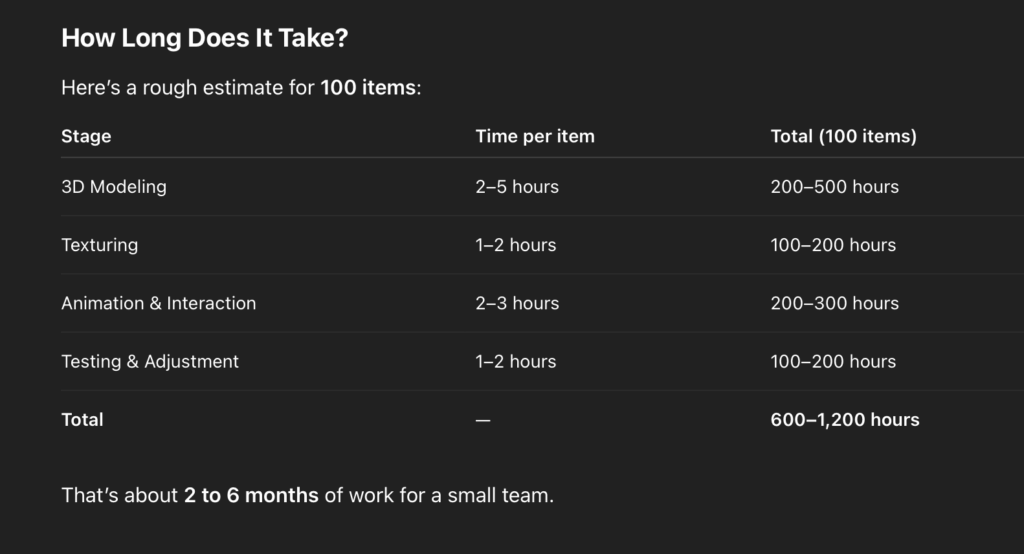
In this article, I’ll address how fashion AR filters are produced, the necessary tools and platforms, the kind of needed data and the time needed to build a full AR experience from scratch.
📝 Note: Some of these are also questions I would like to feature for Ines Alpha, the 3D makeup and AR artist that exhibited at OFFF Festival Barcelona on the subject of “3D software an augmented reality to merge makeup with tech.” I’m super excited to have an interview scheduled with her, and can’t wait to get more behind-the-scenes info on what her creative process and use of AR become in the world of digital fashion/beauty.
Why Fashion Brands Use AR Filters
Fashion AR filters are being used on various platforms from Instagram and Snapchat to branded apps to produce:
- Virtual Try-Ons – Allowing consumers to see how an item will look and move on their body.
- Digital Dress-Up – Enabling consumers to mix and match articles of clothing in real time to produce curated looks.
Not only do these experiences personalize shopping, but they increase customer engagement and social shares — and even conversion rates.
How to Make an AR Filter for Fashion
1. Concept and Design
Defining the concept and user experience is the first step. Brands must decide:
- Are they featuring a product?
- Want to build your own interactive fashion show?
- Promoting a new campaign?
Early on, teams align on: - Format of experience: Try-ons, storytelling or brand-specific interactions.
- User interaction: Are users going to swipe, zoom or rotate to view the garment?
- Brand identity: Preserving branded colors, logos, textures, and tone of voice.
Designers often create wireframes or storyboards before developing their ideas.
2. 3D Model Creation
At the core of AR filters, you’ll find high quality 3D models of clothing. These have to look and move real.
Steps include:
- 3D Scanning: To digitize real pieces (especially more complex garments)
- 3D Modeling Software: Experience with Blender, Maya or 3DS Max to create highly detailed virtual clothing.
Rigging: Rigging, adding skeletons, so that clothes can move in a natural way with a body — or flight, or other body movement.
3. AR Filter Development
After 3D models are completed, they’re brought into an AR development platform.
- Spark AR Studio (Instagram/Facebook)
- Lens Studio (for Snapchat)
Tasks include: - Importing 3D assets
- Using your own textures or materials
- Introducing interaction (e.g.Gesture, tap-to change, animation)
- Supporting multiple devices and platforms (iOS/Android)
The filters are checked for fit, this is very tight, dust-free, rotation smoothness.
Performance Testing
Smooth performance is key. Filters must:
- Load quickly
- Perform well on low-spec phones
- Not drain battery
Users fall off if filters lag or freeze. Checking that everything runs correctly is essential if users are to have a friction-free experience.
Launch and Monitoring
Once they’re ready, you can then launch your filters through social networks or mobile applications. Brands monitor:
- Engagement: How frequently users apply and share the filter.
- Conversion: What is the purchase rate after a user applies the filter?
- Feedback: What do users love? What do they want more or less of?
This refining process is useful for future campaigns.
How Accurate Are AR Filters?
Accuracy depends on:
- 3D model quality Body Tracking(Face/Body Detection)
- Device functionality (iOS/Android)
Today’s AR tech can be impressively life-like, but there are discrepancies between platforms.
Conclusion
Making AR filters for fashion requires a blend of technical perfection, artistic freedom and user experience design. Every step along the way, from the ground up design process to launch requires a delicate touch to ensure that the experience “feels” intuitive, engaging, and beautiful.
And while building 100 filters might sound like a Herculean effort today, advanced tools and workflows are making the process simpler and faster every day.
interview with Ines Alpha coming soon….
This text was grammar-corrected with the assistance of ChatGPT.
