In addition to the siren test recording, a further exploratory experiment was conducted later the same day under controlled indoor conditions. The aim of this session was to observe physiological responses to a pre-designed auditory scenario resembling elements of an air-raid situation, while maintaining full control over timing and sound structure.
Prior to the experiment, a long-form audio file was prepared. The recording began with ten minutes of continuous rain sounds. At the ten-minute mark, a civil defense siren was introduced, followed approximately one and a half minutes later by an explosion sound. The siren–explosion sequence lasted for three minutes and gradually faded out. Throughout this phase, the rain sound remained present and continued for an additional twelve minutes after the end of the siren and explosion. The experiment started at 19:25 and ended at approximately 19:50. All sound materials were sourced from soundfree.org and consisted of field recordings made in Kyiv.
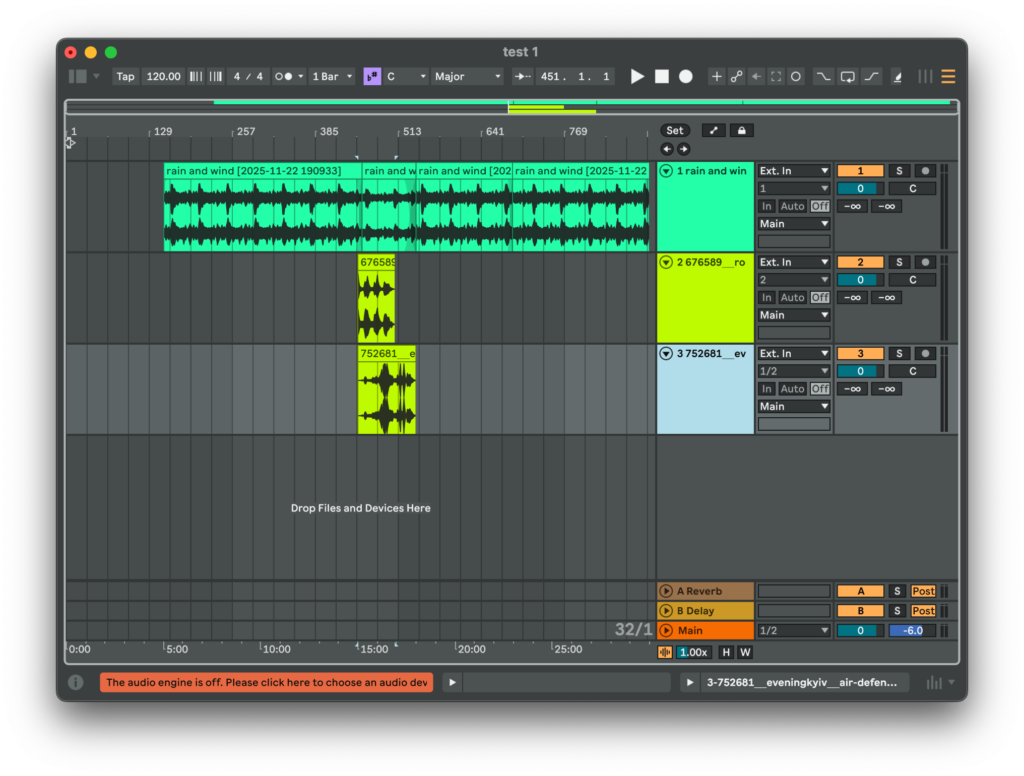
Ableton Live session showing the audio structure used in the experiment (rain, siren, and explosion sounds).
The heart rate response during this experiment revealed several notable features. The first pronounced increase in heart rate occurred shortly before 19:30. At this moment, no siren or explosion had yet been played. Instead, this increase coincided with anticipatory thoughts related to the upcoming sounds, specifically concerns about playback volume and the potential intensity of the explosion sound. After briefly adjusting the volume and returning to a resting position, heart rate gradually decreased. However, with the onset of the siren and subsequent explosion sounds, heart rate increased again. This pattern suggests that not only the auditory stimulus itself, but also the anticipation of an expected threat-related sound, can activate a physiological fight-or-flight response.
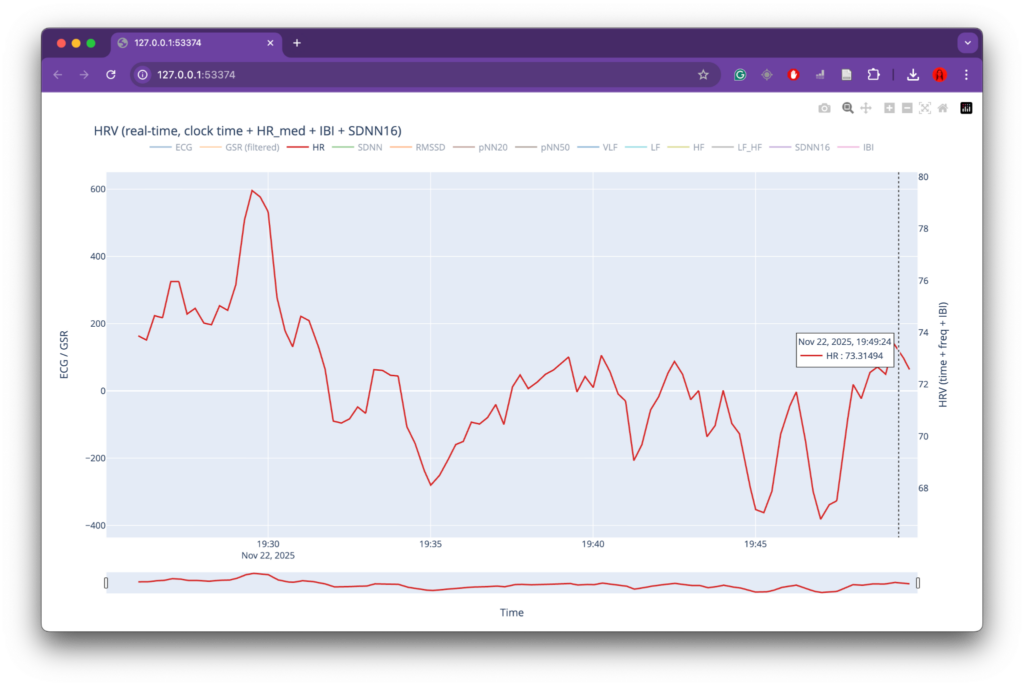
Heart rate during the audio-based experiment.
Consistent with the previous recording, the GSR signal showed rapid and pronounced changes. Sharp drops in GSR values were observed at the onset of the siren and again approximately one and a half minutes later, coinciding with the explosion sound. These abrupt responses indicate that skin conductance reacts very quickly to sudden or salient auditory events, often preceding slower cardiovascular changes.
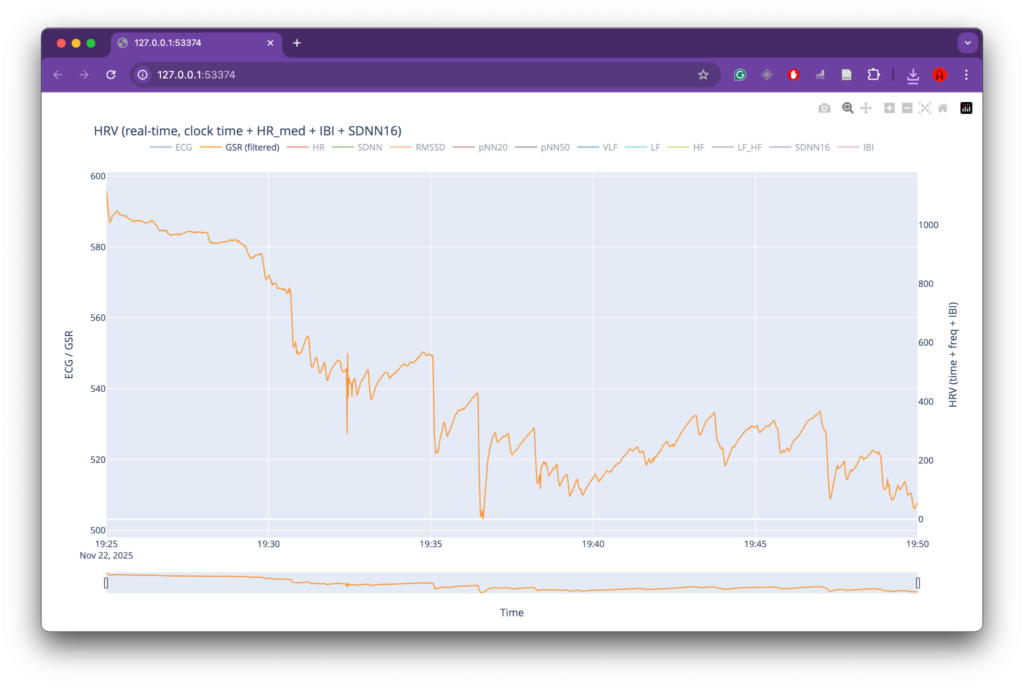
GSR signal during the audio-based experiment.
The LF/HF ratio behaved in a less predictable manner during this experiment. Changes in LF/HF occurred more gradually and, notably, the ratio decreased following the end of the siren–explosion sequence. After this decrease, LF/HF values began to rise strongly during the later phase of the recording. Due to the complexity of this pattern and the limited number of repetitions, no clear interpretation could be drawn at this stage.
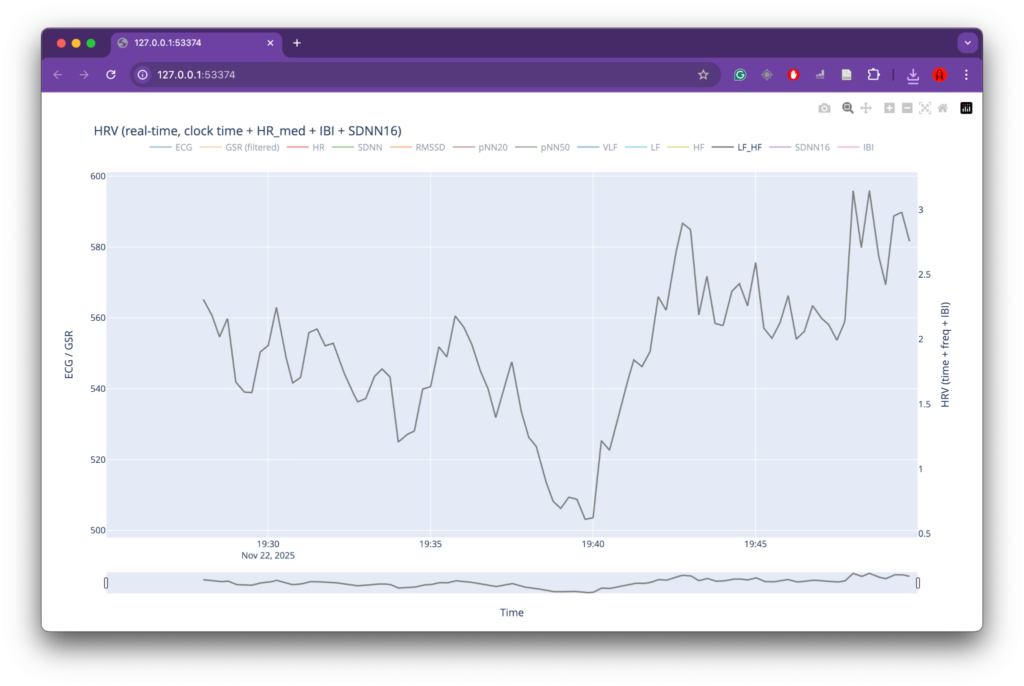
LF/HF during the audio-based experiment.
This experiment was conducted only once, and the subjective experience was described as unpleasant. In retrospect, the use of rain sounds both before and after the siren and explosion may have introduced a confounding factor, as rain is generally associated with calming effects. For this reason, the results of this experiment should not be used as a primary basis for quantitative analysis. Nevertheless, the recording remains qualitatively informative, particularly in demonstrating the role of anticipation and the differing temporal dynamics of cardiovascular and skin conductance responses.
