For the CMSI exhibition Overlays, my fellow student and friend (shoutout to my girl) Elisabeth Seiler and I decided to create our own shared exhibition piece. We wanted to contribute something together, something personal, instead of working alone. Our goal was to develop a project that fits the exhibition but also represents our work and style.
Working with CRT TVs
Very early on, we knew we wanted to work with old CRT televisions (Röhrenfernseher). They matched the 2000s aesthetic of the exhibition perfectly, and we loved the idea of using a special and slightly unusual output device. Showing animations on an old TV feels very different from showing them on modern screens. The imperfections of the image give it a lot of character and charm.
Ideas and Inspiration
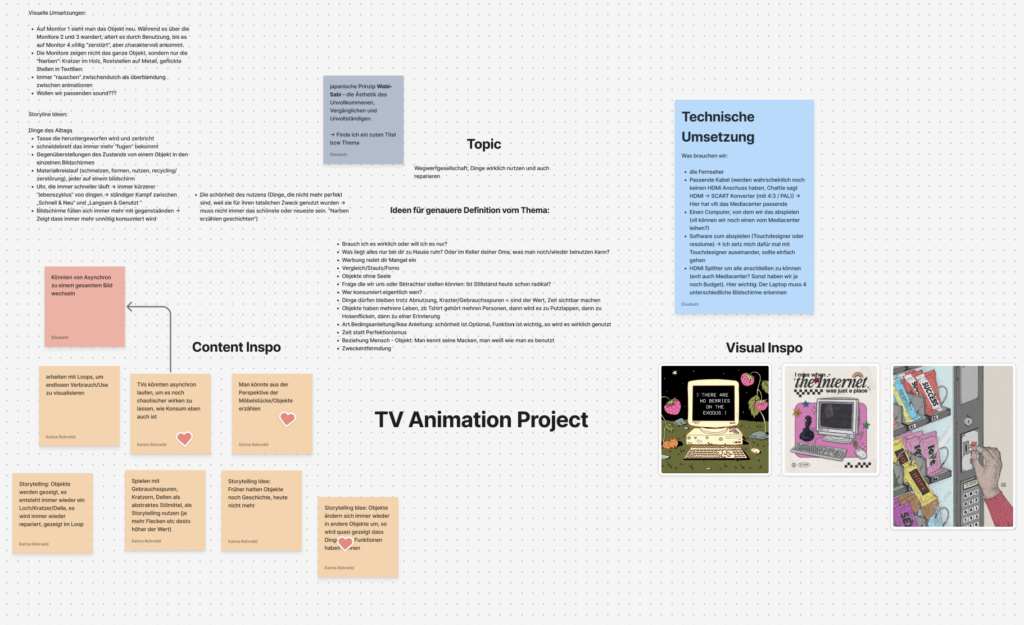
At the beginning, we spent a lot of time brainstorming. We created moodboards, collected visual inspiration, and talked about different themes and ideas for what we could show on the TVs. One thing was clear from the start: we wanted to show animated content. Take a look at one part of our moodboard:
Finding the Theme: Wabi-Sabi
After many discussions, we decided on the theme Wabi-Sabi.
Wabi-Sabi is a Japanese concept that focuses on the beauty of imperfection, transience, and incompleteness. It encourages us to accept flaws, cracks, and signs of aging as something meaningful instead of something negative. Things don’t have to be perfect to be beautiful. This idea fit our project and the old televisions very well. We researched a lot in the history and artsytle of WabiSabi as well. Here you can see how it usually looks like and what we used as inspirations for our projects:

The Technical Setup
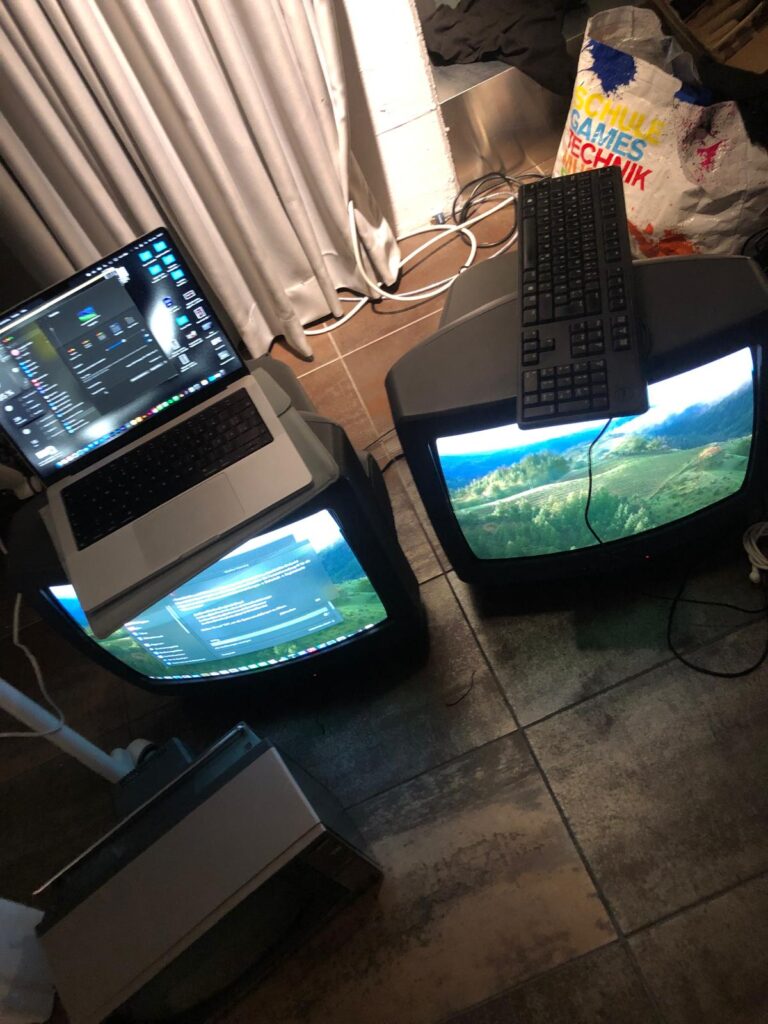
Next, we focused on the technical side. Old CRT TVs can still be used as output devices, but you need some extra equipment. We used:
- a CRT TV with Scart or Cinch input
- an HDMI to Scart/Cinch adapter
- a laptop or media player to play the animations
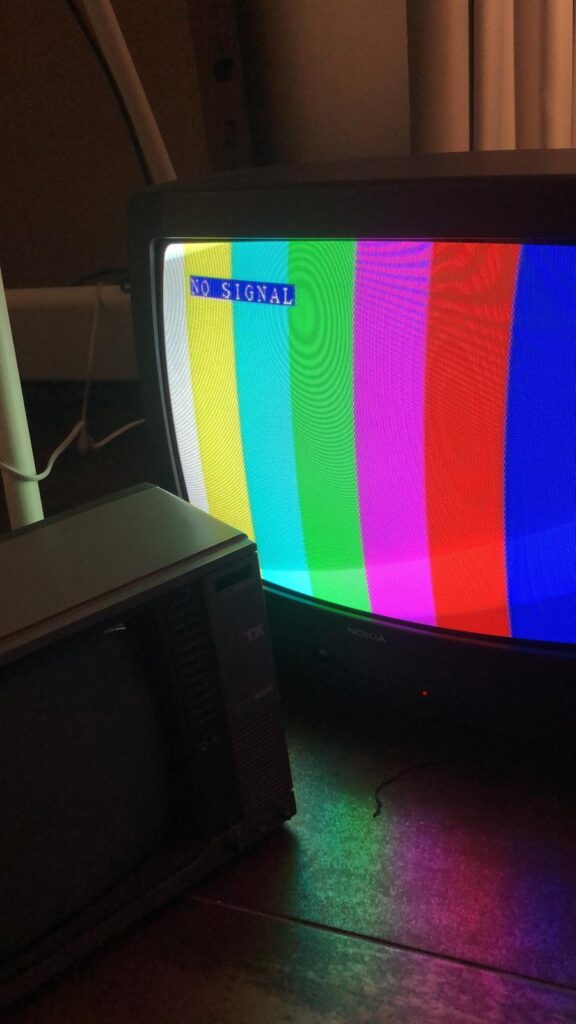
The modern video signal is converted so the old TV can display it. The image quality is lower, but that was exactly what we wanted. The blur, flickering, and color distortion are part of the aesthetic. We were lucky to get the TVs for free from an old hotel, which no longer needed them. This also fit the Wabi-Sabi idea of reusing old objects and giving them new meaning. It took as some time (and a lot of nerves) bit in the end we manged it.
Creating the Animations
Once everything was set up, we started animating. Lizzy and I each created our own animation, both based on the same theme but in our individual styles.
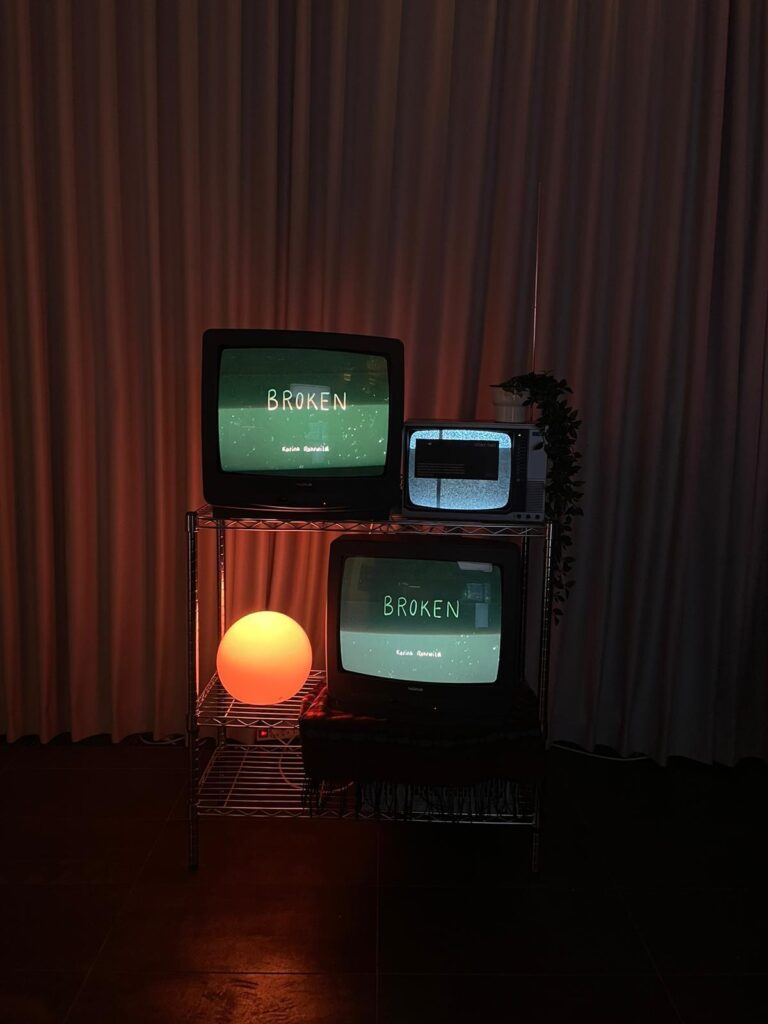
I chose to create an illustrated animation in my own visual style and storytelling approach. I wanted to communicate Wabi-Sabi in a poetic and emotional way. In my animation, two animals talk to each other: a fox and a mouse. The message is subtle and hidden between the lines. The fox explains to the mouse why it’s okay to feel broken sometimes, and why imperfections are not something to be ashamed of. I created the illustrations in Procreate and animated everything later in After Effects.
Final Thoughts
Our exhibition piece was not just about the final result, but about the process itself. Working together, combining old technology with animation, and exploring a meaningful theme was a very valuable experience for both of us. In the end, everything came together naturally: old screens, new stories, and beauty in imperfection. Happy us!
