While researching digital activism and intervention for my master’s thesis in Interaction Design, I came across the work of etoy, an international art collective founded in the mid-1990s. Although their work predates many of today’s debates around digital activism, platform power, and interface control, it feels surprisingly relevant to current discussions in interaction design.

etoy became widely known during the so-called Toywar in the late 1990s, a legal and cultural conflict between the art collective and the toy company Toys “R” Us over the domain name etoy.com. What makes this event important is not only the legal outcome, but the way etoy treated the internet as a contested cultural space rather than a neutral technical infrastructure. Their actions were not about usability, efficiency, or communication, but about intervention, appropriation, and visibility.
From an interaction design perspective, etoy’s work challenges the idea that digital systems are primarily tools to be optimized. Instead, they used corporate language, branding, and online infrastructures as material for cultural action. By adopting the structure of a corporation and exaggerating it to an absurd degree, etoy exposed how power, ownership, and control operate in digital environments. Interaction here was not about completing tasks, but about participating in a situation.
This approach strongly connects to the core ideas of my future master’s thesis. My project investigates digital activism not as content production, such as posting messages or sharing information, but as action through visual intervention. Similar to etoy’s practice, the focus is not on what is said, but on what is done. In both cases, meaning emerges through interaction rather than explanation.
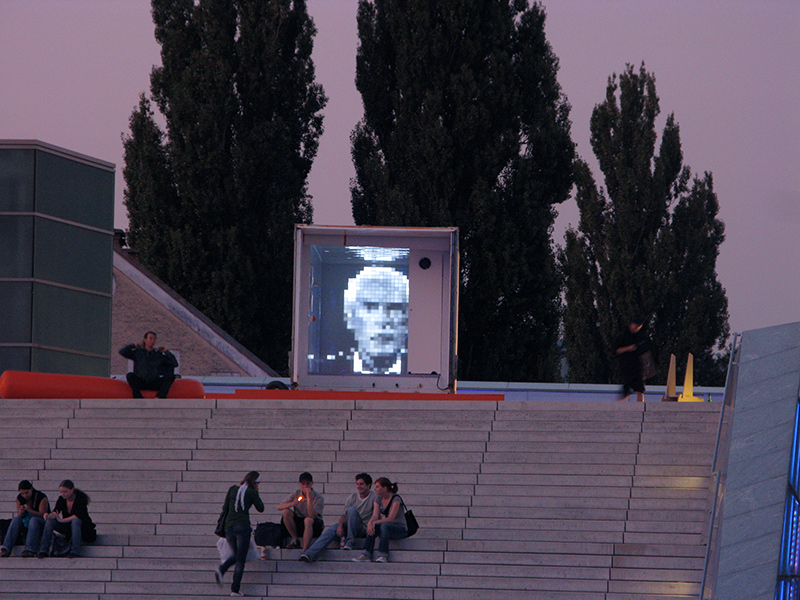
Another important aspect of etoy’s work is its ritualistic character. Projects such as Mission Eternity treated digital space as a place for symbolic action and repeated participation. These projects were not efficient, clear, or goal-oriented. Instead, they created moments of reflection and engagement that resisted traditional design logic. This idea directly informs my own approach, which aims to design an artefact where users intervene visually without guidance, ranking, or optimization.
etoy’s work also highlights a key issue in contemporary interface design: the illusion of neutrality. Many digital interfaces present themselves as neutral and objective, while silently enforcing certain behaviors and values. By intervening in these systems, etoy made these hidden structures visible. This resonates with my thesis, which treats interface intervention as a way to expose control, authorship, and power relations embedded in design.
In this sense, etoy can be understood as an early example of interaction as cultural practice. Their projects demonstrate that digital systems can be used not only to communicate or function, but also to resist, disrupt, and question. For my master’s thesis, etoy serves less as an aesthetic reference and more as a conceptual precedent. Their work supports the idea that interaction design can operate beyond usability and become a medium for activism, ritual, and cultural expression.
