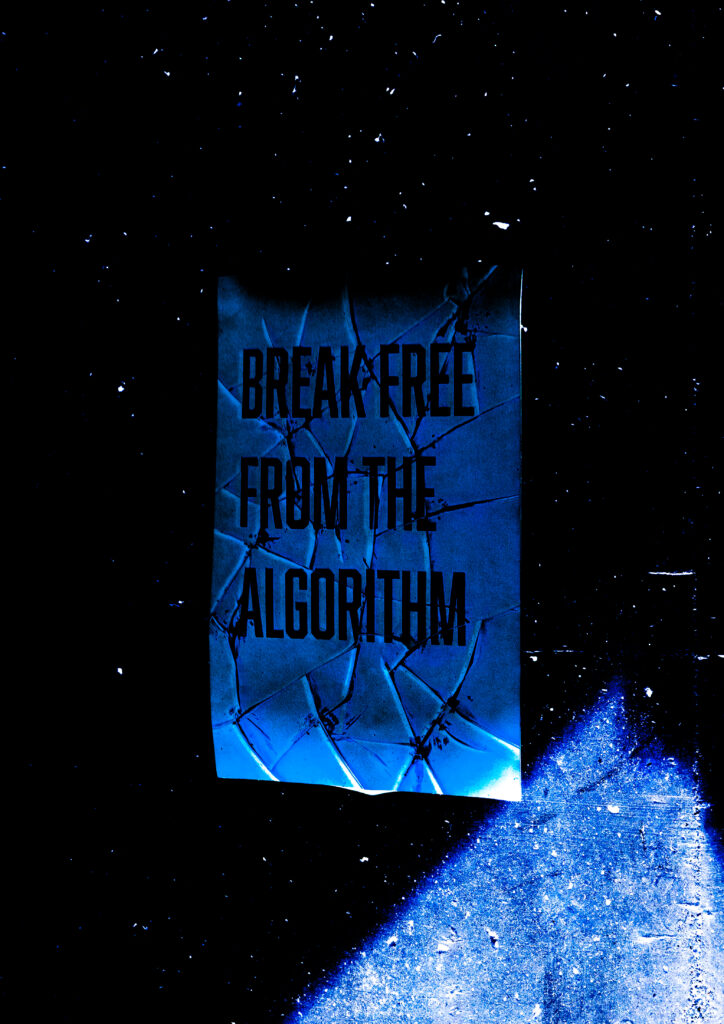
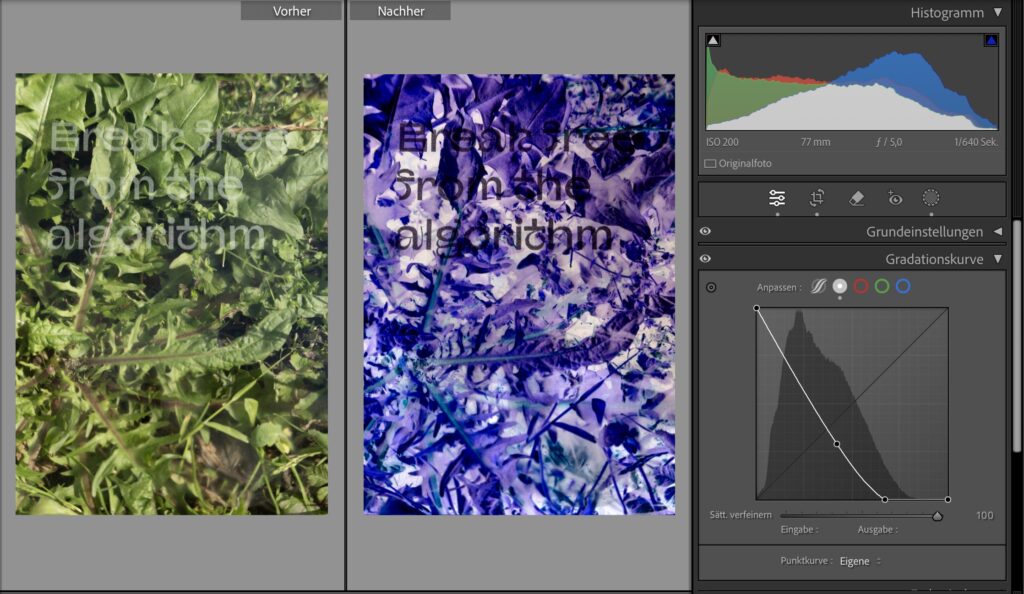
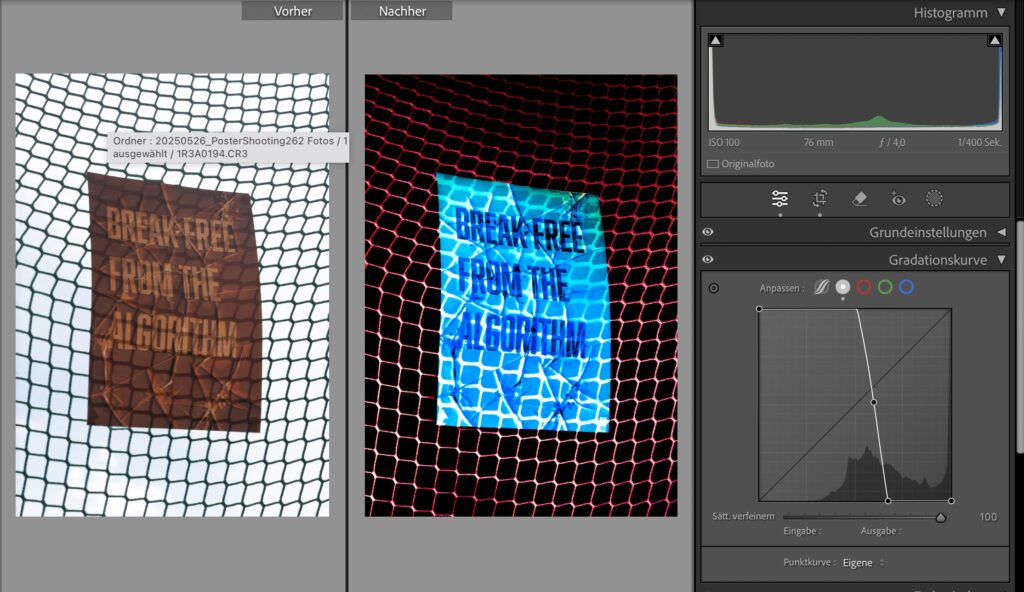
Editing can have a huge impact on the overall mood of a picture. The before images look plain and “boring” compared to what I created in LR. Usually the goal of a “good” photographer would be to keep the editing minimal and making it look natural and not too fake, but here I wanted to go to the extemes. The lasercut glass, originally a tactile and light-reactive material, becomes a canvas for digital light manipulation.
Medium: Photography (of analogue designs, here Lasercut glass artworks) + Lightroom editing
Method: Extreme post-processing to reframe meaning, emotion, and visual identity, Material vs. Digital, Mood Creation vs. Documentation
The goal is not to make the image look “good,” but to push the visual mood to its extreme edge, breaking down the idea of photography as neutral or truthful. Here are my experiments with the previous lasercut designs on glass from experiment #4:
Structure of the Experiment:
Phase 1: Capture the Raw
- Photograph your lasercut glass designs in neutral lighting (daylight or studio).
- Use a consistent background and angle for control.
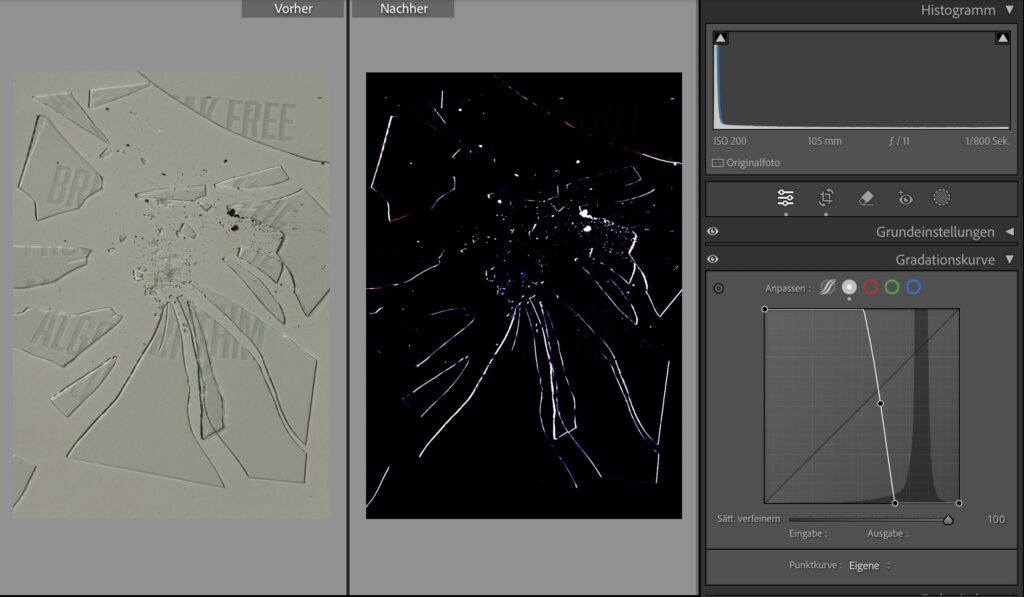
Phase 2: Create Mood Extremes in Lightroom
Create a series of radical edits, each based on an extreme manipulation of light
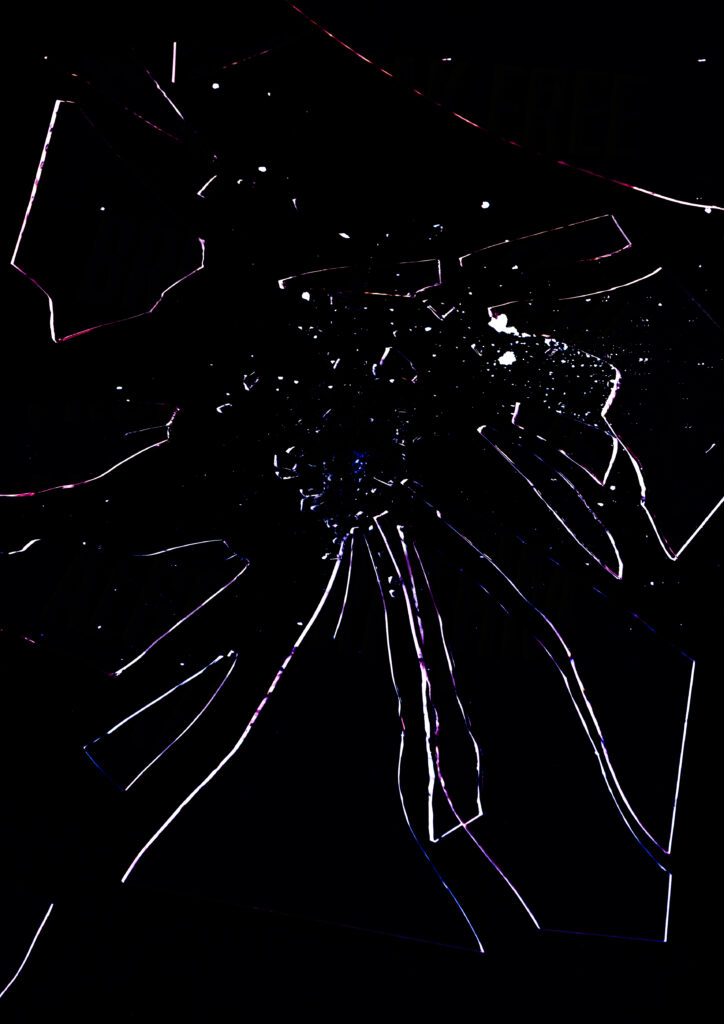
- Overglow / Celestial Mood
- Max out whites, clarity, and glow. Shift tones toward blue-violet.
- Glass appears divine or untouchable like a starry night (see image above)
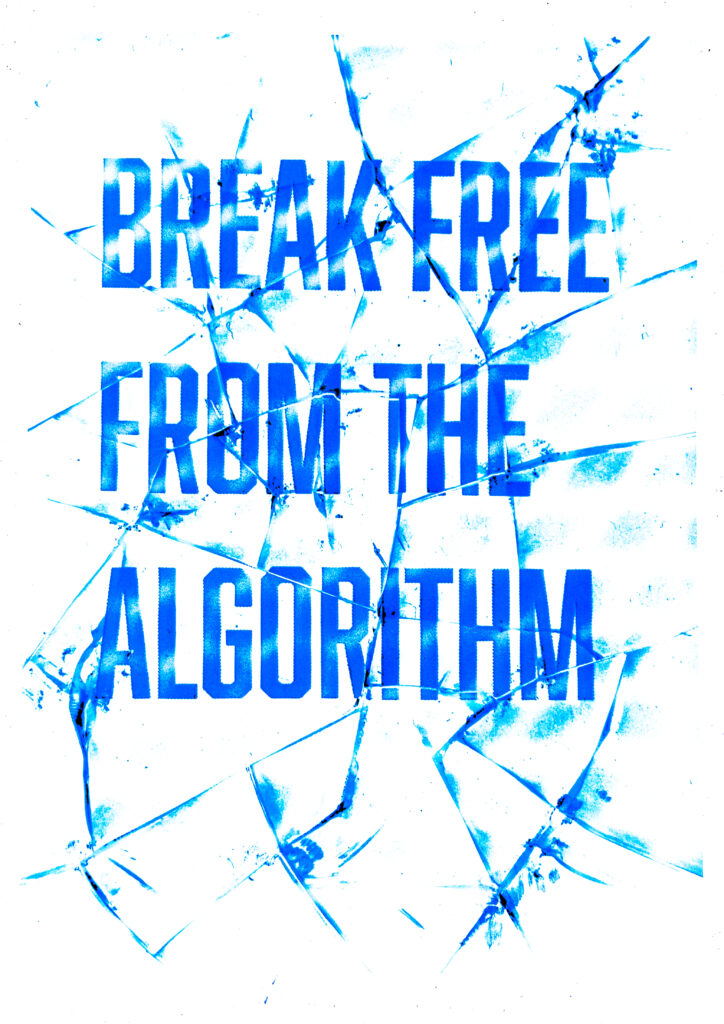
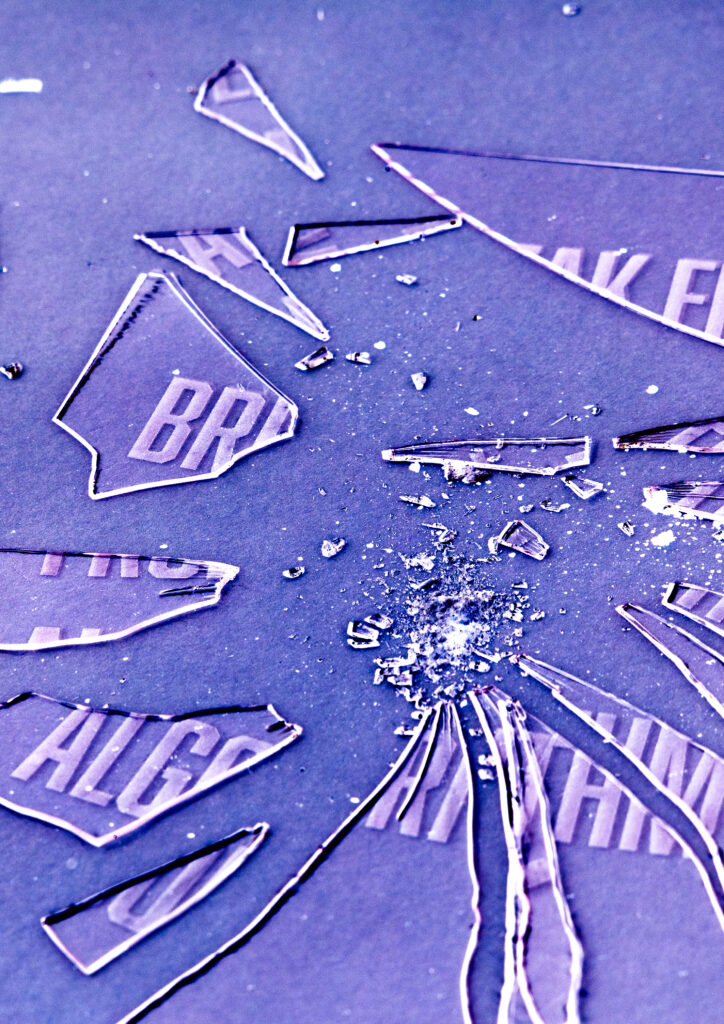
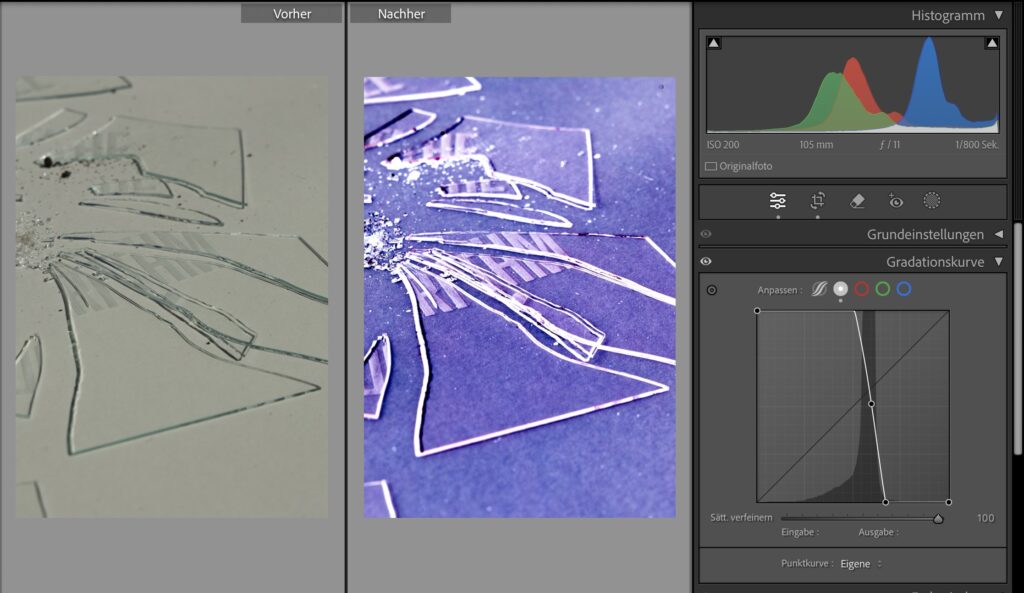
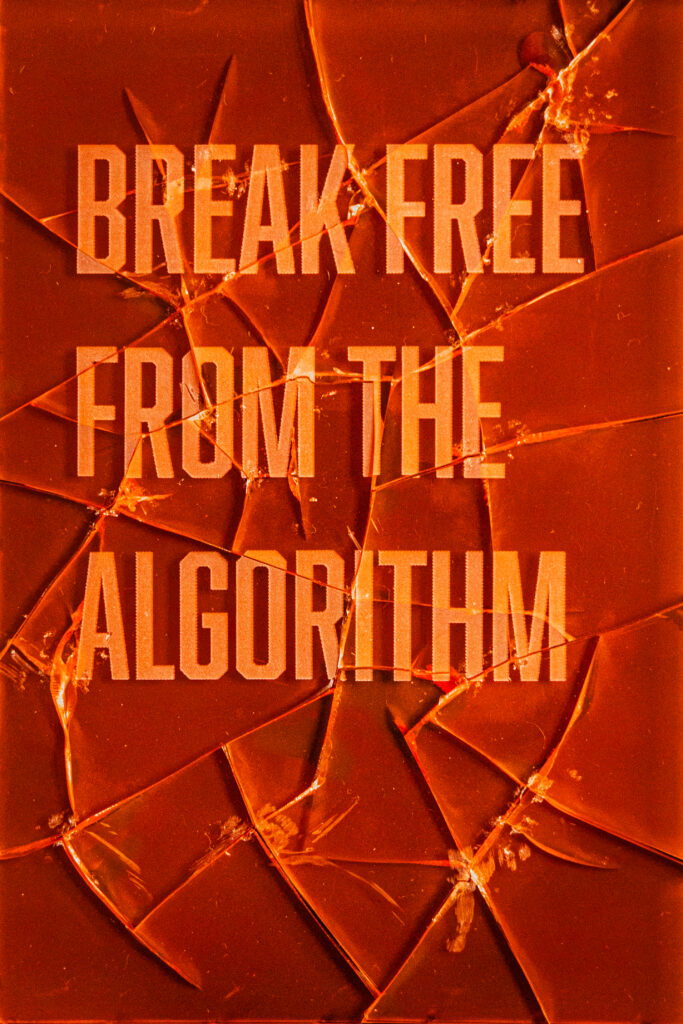
Using the gradient curve in an unusal way by inverting the colors, creating special effects with the otherwise translucent glass:

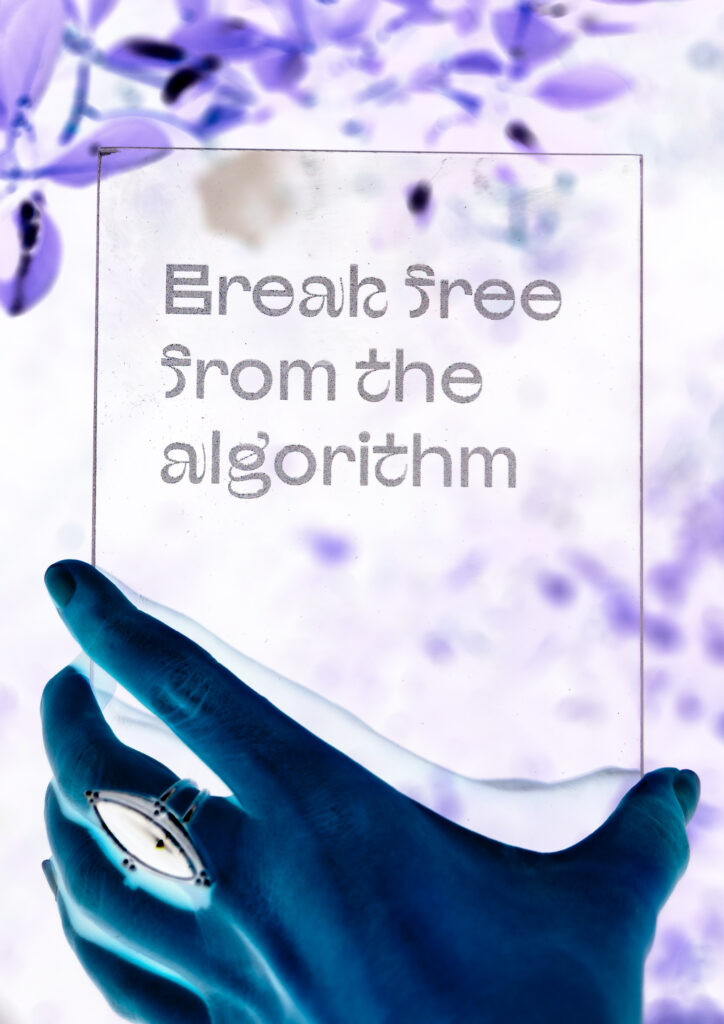
More experiments:
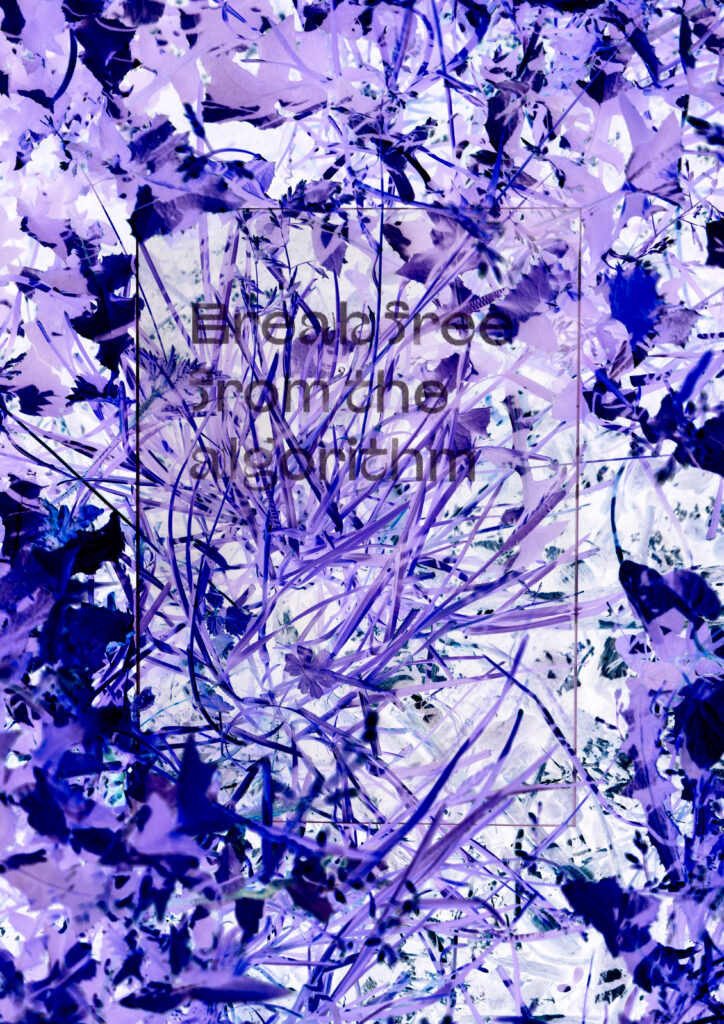
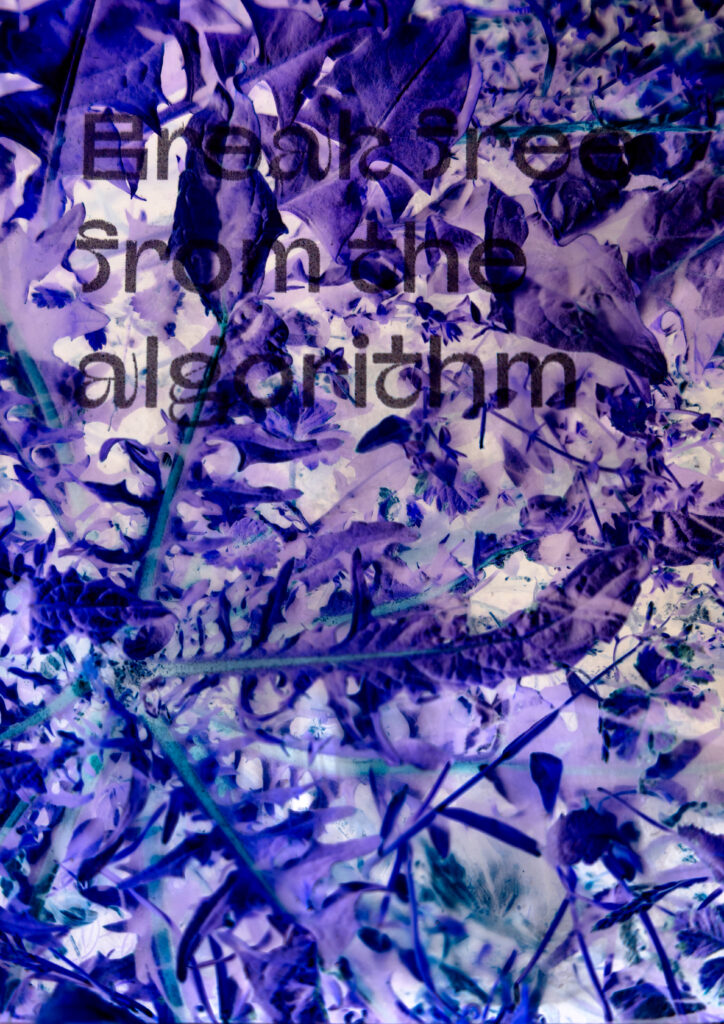
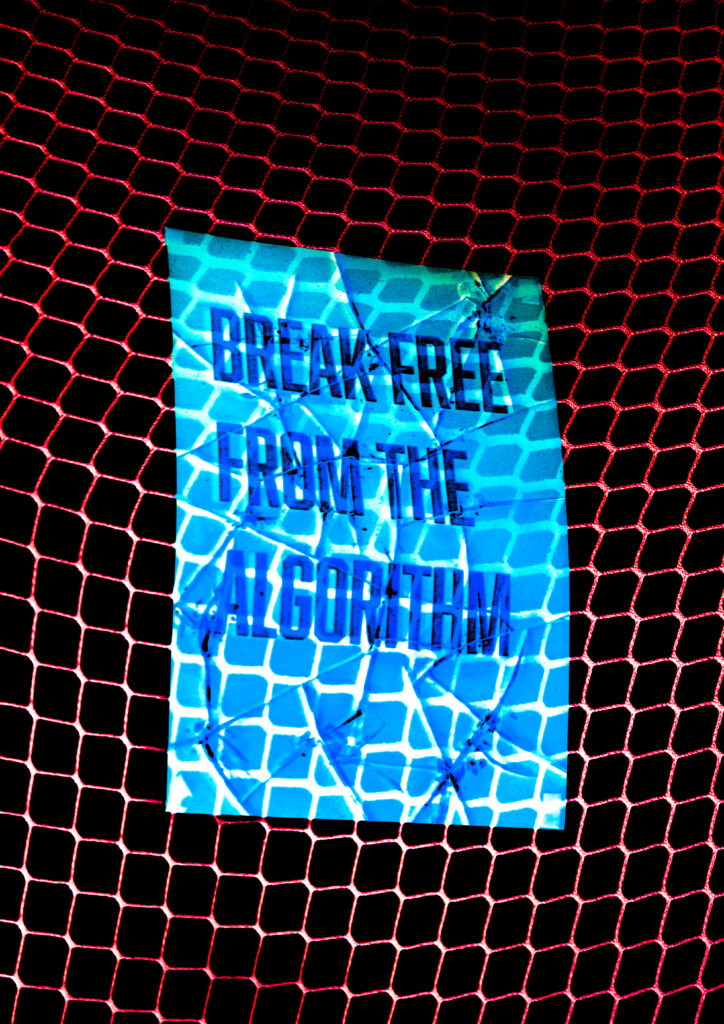
In a digital age, we rarely encounter anything unfiltered. By exaggerating the act of editing, this project lays bare the emotional manipulation inherent in visual culture. Not hiding the edits. I am weaponizing them and making them my own visual channel.

Video “Animation”
