Over the past few weeks, I had the chance to explore the Risograph printer in more depth at our university’s FabLab.
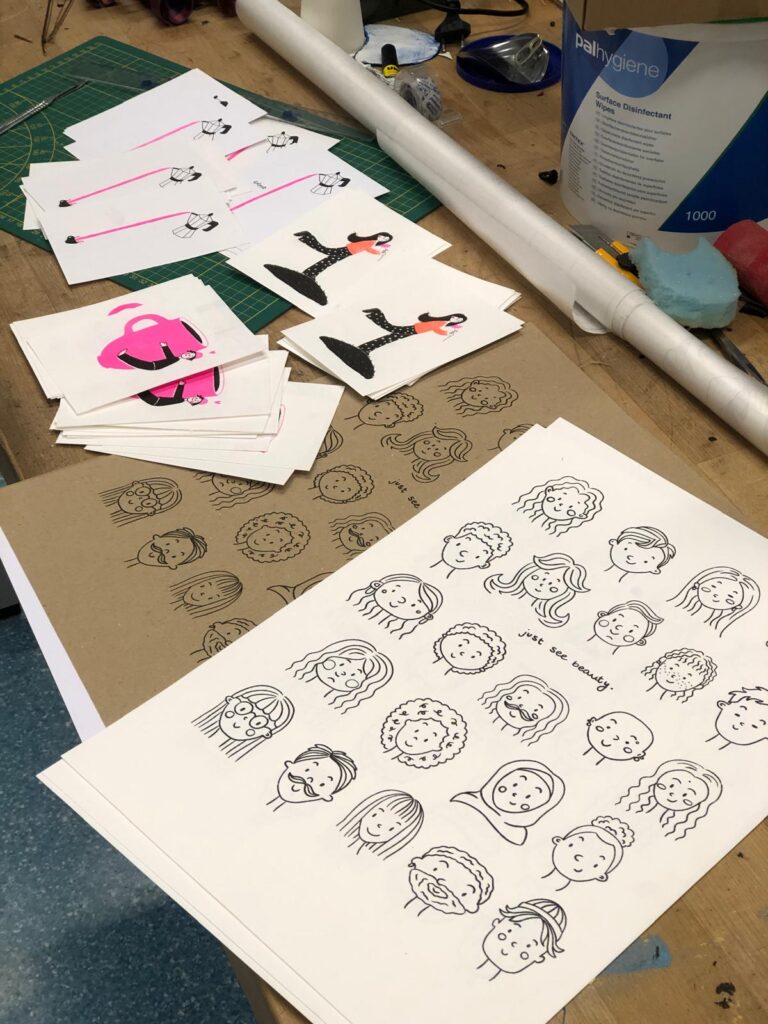
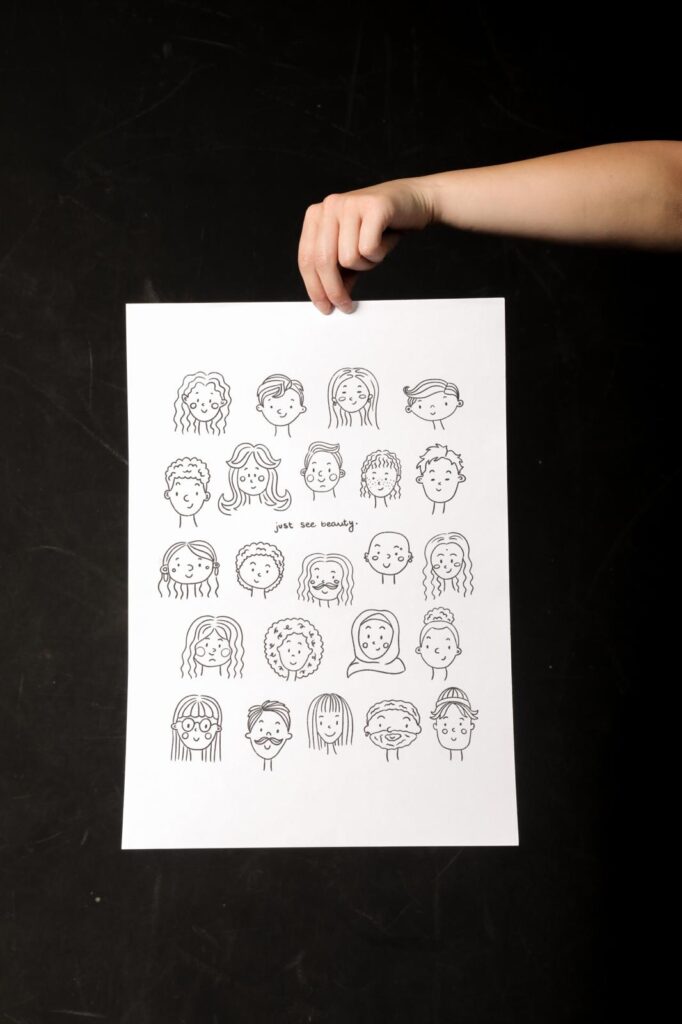
It all started with an illustration I had drawn some time ago. I digitized it using Procreate, added some text, and designed a layout for an A3 poster. After that, I prepared the file for Riso printing and printed it in black ink on various types of paper.
Paper Testing & Printing Experience
I wanted to find out how different types of paper would affect the final print, so I tested three options:
- Coated paper (160 gsm)
- Textured paper (160 gsm)
- Textured cardboard (200 gsm)
The textured papers were my clear favorites. They give the print a special tactile quality and depth that fits the Risograph aesthetic really well.
Because I enjoyed the process so much, I went on to print a series of smaller A5 cards, again using illustrations I had already created. I also experimented with multi-color Riso prints, which can be a bit challenging at times, but very rewarding.
Learnings & Riso Charm
One important takeaway from this project: always include crop marks!
Since the Risograph tends to shift the layers slightly, which actually adds to its unique charm, it’s really important to plan for that from the beginning. Adding crop marks helps avoid a lot of frustration when trimming the prints later on. I also tested different papers for the A5 cards and was very happy with the results.
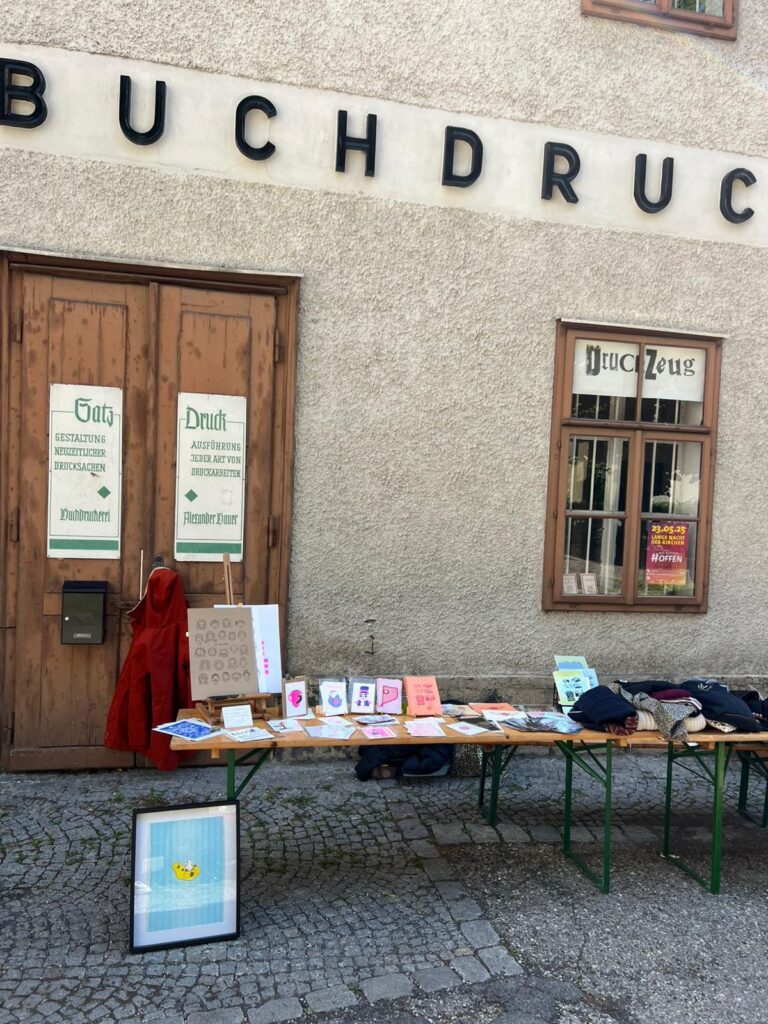
Hinterhof Flea Market at Druckzeug
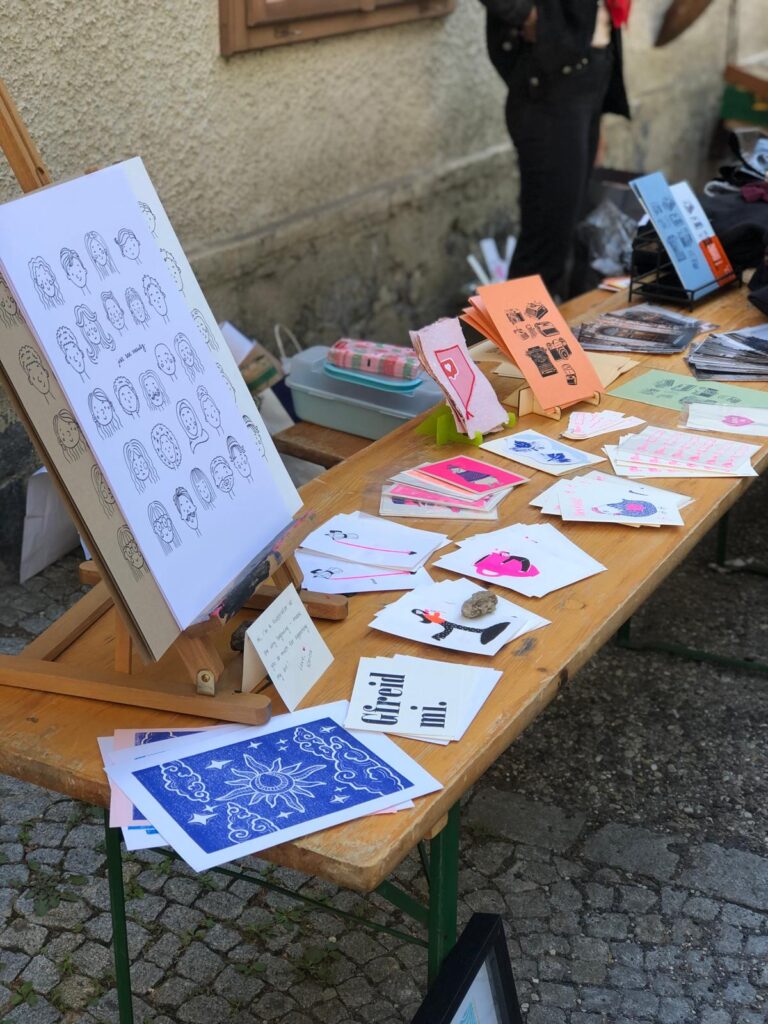
A really lovely part of this project was teaming up with Julia Steile together, we had the chance to sell our own prints and illustrations at the Druckzeug stand during the Hinterhof flea market.
To be honest, I didn’t expect much but I was completely surprised in the best way. The response was overwhelmingly positive. So many people were genuinely interested in our work, appreciated it, and bought something. I was especially happy that almost all of my posters were sold.
In addition to kind feedback, we also received generous support and had many meaningful conversations with fellow creatives and visitors.
This feedback really confirmed something for me: In an increasingly digital world, handmade work still matters. People value things that are tactile, imperfect, and personal, all qualities that the Risograph conveys beautifully.
As an aspiring illustrator, this project was not only a fun experiment, but also a huge motivation. It showed me that printmaking is alive and well and that it’s absolutely worth putting in the time, creativity, and love for detail.
