
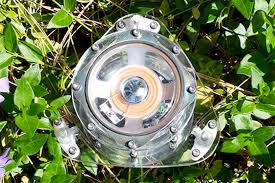
Legatus is a soundscape augmentation artifact designed for outdoor environments, providing a way of engaging with and enhancing isonic environments. It is a lightweight, self-powered device that can listen to and interact with its environment using sensors, and then generate audio responses based on the captured sounds. It leverages audio playback, synthesis, and real-time effects, creating a interaction between the natural world and its sonic representation. The device has been tested in various outdoor installations, with the goal of encouraging environmental listening and fostering a deeper connection between visitors and their surroundings.
The hardware design of Legatus includes several key components: a microcontroller, environmental sensors, an audio codec, a digital signal processor, and an amplifier, all housed within an acrylic body. The device is powered by rechargeable batteries and is designed for easy transport and setup, with modular feet and simple controls.
Legatus operates through a series of interactive installation scenarios, where it listens to its surroundings, records sounds, and either replays or synthesizes new sounds in response to environmental conditions. These scenarios include spatially relocated soundscapes, temporally relocated soundscapes, pitch-based synthesis, and feedback chamber modes.
WHAT ARE IT’S STRENGHTS?
Legatus is a promising tool for sound installations and environmental art projects. Its key strength lies in its ability to engage the natural environment through audio responses. The integration of sensors that detect ambient light, temperature, humidity, and sound levels makes it highly reactive to its surroundings. This reactivity allows for real-time interaction between the artifact and its environment.
Another strength is its portability. Legatus is lightweight and compact, making it easy to transport and set up in various outdoor locations.
Moreover, Legatus’s durability in outdoor conditions is not to take for granted. The device is resistant to water splashes and dust, making sure that it can work proprrly in various weather conditions without significant risk of damage.
Additionally, Legatus promotes non-cochlear visual feedback through the use of RGB LEDs, directing attention away from the artifact’s vocalizations and towards the ambient soundscape. This feedback loop helps maintain the visitor’s engagement with the surrounding environment.
WHAT ARE IT’S WEAKNESSES?
While Legatus is without any doubt a promising product it does have several weaknesses that limit its scope, particularly in larger or more complex installations.
One of the primary issues is the volume and audio clarity. The current speaker design, while functional, is limited in terms of sound output. In larger spaces or environments with high background noise, the audio may not be loud or clear enough to be heard effectively.
Another significant weakness is the lack of networking capabilities. In installations with multiple Legatus units, there is no communication between the devices, meaning they cannot work together to create a more cohesive or immersive soundscape.
Additionally, the environmental mappings that drive Legatus’s behavior can sometimes feel too abstract for visitors to understand. The relationship between sensor readings and the artifact’s responses is not always intuitive, making it difficult for audiences to connect the device’s actions with the environmental conditions they represent, and making necessary a prior explanation or guidance.
The interaction between the artifact and the audience is also quite passive, they have no direct control over it’s actions. This lack of interactivity may reduce engagement and limit the potential for more personalized experiences.
IMPROVEMENTS
Audio Output and Durability: Upgrading the speaker to a more robust, weatherproof model could prevent damage and improve sound quality.
Networking Capabilities: Integrating Wi-Fi or Bluetooth networking would enable Legatus units to communicate with each other. This would allow for synchronized sound playback and the creation of multi-channel audio experiences in installations with multiple devices.
Environmental Mappings: To make the mappings between environmental conditions and artifact behavior more intuitive, clearer visual cues, such as a simple mobile app interface, could be introduced. Visitors could see and hear more directly how environmental changes influence the device’s behavior, improving understanding.
Interactivity: Adding user-controlled elements, such as touch sensors, proximity sensors, or a mobile app for controlling sound parameters, could make the experience more engaging. By allowing visitors to influence the artifact’s behavior there would be space to create a more personalized and immersive installation.
CONCLUSION
Legatus offers an innovative approach to blending audio, sensors, and real-time interaction, encouraging visitors to engage with and reflect on the sonic environment around them. While there are notable weaknesses, such as limited audio output, lack of networking, and passive interaction, the device’s strengths, including its portability, adaptability, and environmental responsiveness, make it a powerful tool for artistic expression. With some improvements, particularly in terms of interactivity, audio capabilities, and networking, Legatus could become an even more versatile and engaging platform for sound art installations.
