Sound Meets the City: Nadine Schütz’s Promenade Sonore Transforms a Footbridge into a Living Instrument
We first encountered Nadine Schütz’s fascinating work during her presentation at the IRCAM Forum Workshops 2025, where she introduced her project Promenade Sonore: Vent, Soleil, Pluie (“Wind, Sun, Rain”). The talk offered deep insights into her creative process and the technical and ecological thinking behind the installation.

In the heart of Saint-Denis, just north of Paris, Swiss sound artist Nadine Schütz has reimagined the way we move through and experience urban space. Her project Promenade Sonore: Vent, Soleil, Pluie (“Wind, Sun, Rain”) is not just a public art installation—it’s a multi-sensory experience that turns an ordinary walk across a footbridge into an acoustic encounter with the environment.
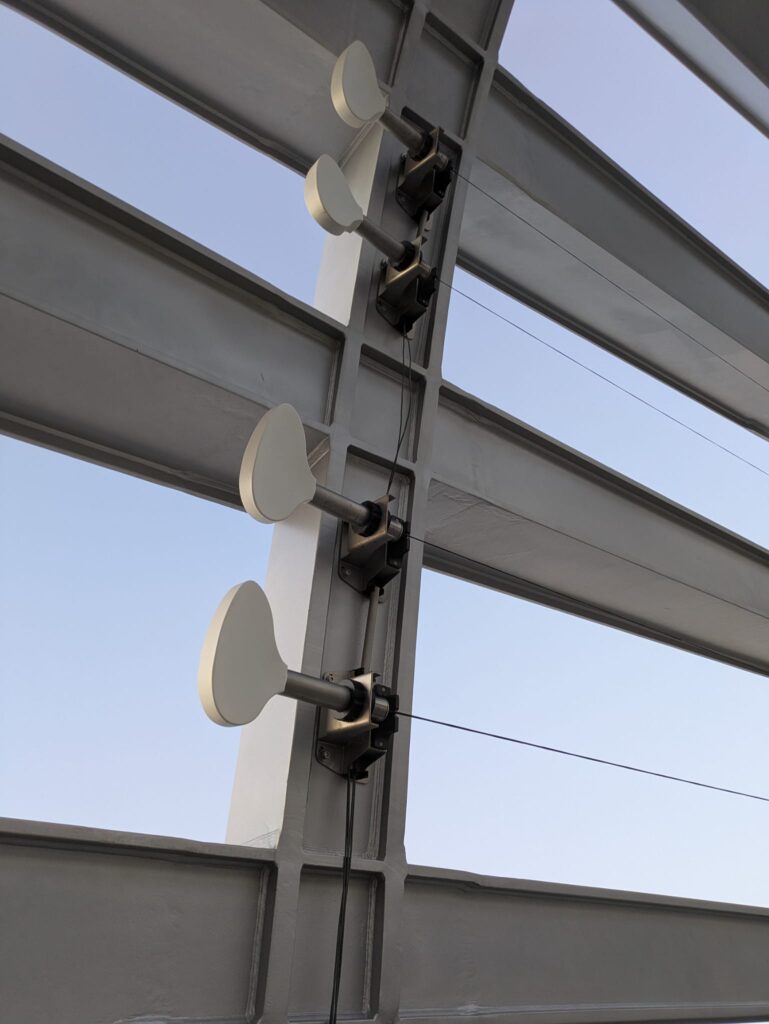
Commissioned by Plaine Commune and developed in close collaboration with architect-engineer Marc Mimram, the installation is located on the Pleyel footbridge, a key link between the neighborhoods of Pleyel and La Plaine. Rather than adding passive sound or music, Schütz has embedded three sculptural sound instruments directly into the architecture of the bridge, each one activated by a different natural element: wind, sun, and rain.
These instruments aren’t just symbolic; they actually respond to the environment in real time. Wind passes through a metal structure that produces soft, organ-like tones. When sunlight hits specific points, it activates solar-powered chimes or sound emitters. During rainfall, the structure becomes percussive, resonating with the rhythm of droplets. The bridge becomes a living, breathing instrument that reacts to weather conditions, turning nature into both performer and composer.
What makes Promenade Sonore truly compelling is how seamlessly it blends technology, ecology, and design. It’s not loud or intrusive—it doesn’t drown out the urban soundscape. Instead, it subtly enhances the auditory experience of the city, encouraging passersby to slow down and listen. It transforms a utilitarian space into a space of poetic reflection.
Schütz’s work is rooted in the idea that sound can deepen our connection to place. In this project, she brings attention to the sonic qualities of weather and architecture—things we often overlook in our fast-paced, screen-driven lives. The soundscape is never the same twice: it shifts with the wind, the angle of the sun, or the mood of the rain. Every walk across the bridge is a unique composition.
More than just an artistic gesture, Promenade Sonore is part of a broader vision of “land-sound” design—a practice Schütz has pioneered that treats sound as an essential component of landscape and urban planning. In doing so, she challenges traditional boundaries between art, science, and infrastructure.
Visit of the pleyel bridge
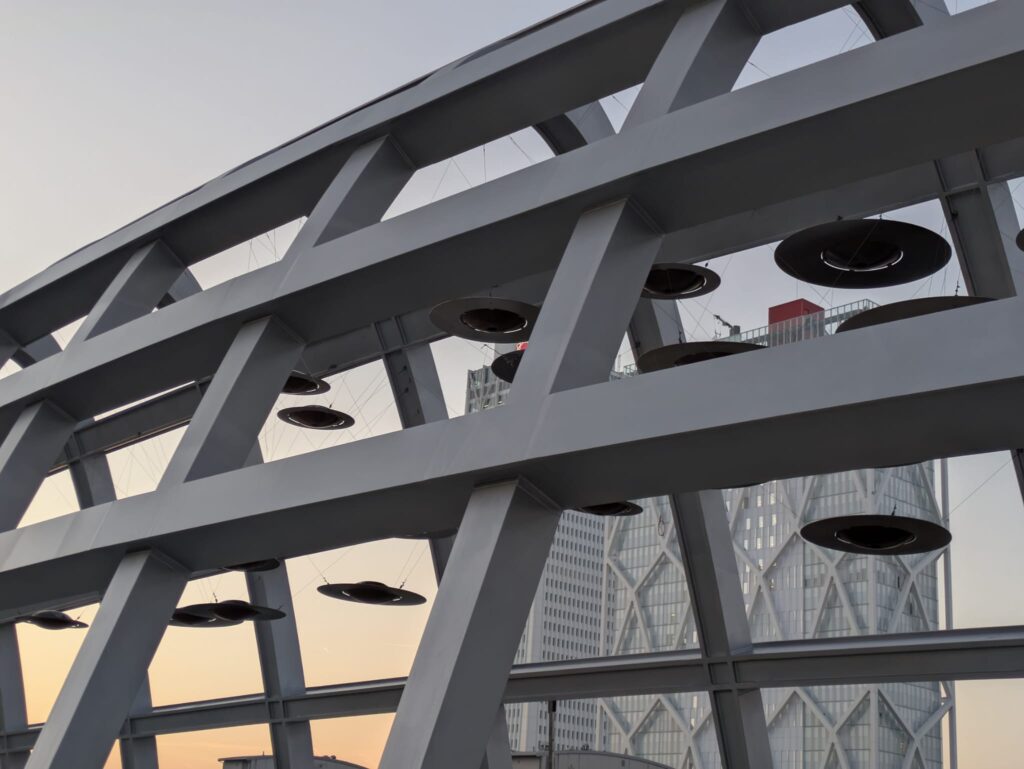
We had the chance to visit the Pleyel footbridge ourselves—and it was a one-of-a-kind experience. Walking across the bridge, immersed in the subtle interplay of environmental sound and sculptural form, was both meditative and inspiring. While on site, we also conducted our own field recordings to capture the dynamic soundscape as it unfolded in real time. Listening through headphones, the bridge became even more alive—each gust of wind, each shifting light pattern, each ambient tone weaving into a delicate, ever-changing composition.