LAYERS x RAEBURN – parachute edition 2019
The designers focused specifically on using surplus ex-military parachutes and aircraft brake parachutes, made from ultra-thin ripstop nylon material, and worked with one of the head seamstress at Raeburn to create the finished products.

The material used comes from old military parachutes and from the brake parachutes of aircraft, which basically function like parachutes. Two of the chair designs boast a more tousled look, achieved by draping layers of the parachute material over their framework. One features a mixture of white and peachy tones, while the other is coloured in a palette of blacks and greys.
The other style sees a multi-coloured parachute material tightly wrapped around its metal structure for a taut finish, making it clearer what purpose the material once served.

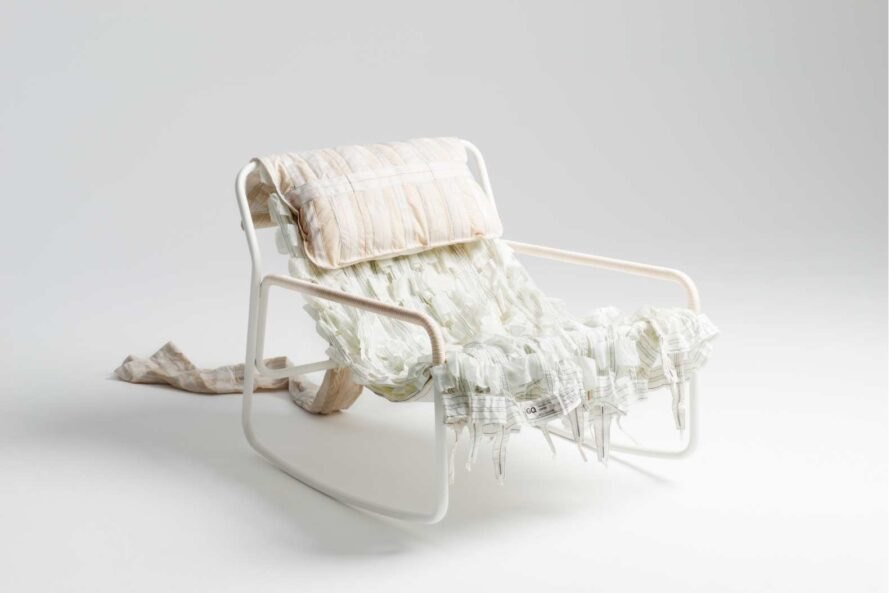
Each of the textiles were secured with a combination of concealed zips and different textile techniques, including hidden seams and French seams. Extra parachute material has been wrapped around the armrests. Recycled parachute material wrapped over welded steel frames make up this collection of rocking chairs and screens by Benjamin Hubert‘s design agency Layer and the eponymous label of fashion designer Christopher Raeburn.
Welded steel frameworks provided a “blank canvas” for the designers, enabling them to make the parachute material the standout element in each product.
“The Canopy Collection uses the strict geometry of the steel frames as a base on which to experiment with innovative and forward-thinking recycled parachute upholstery,” said the creators.

“[It] is tuned into the semantics of a parachute in flight – the lounge chair gently rocks back and forth whilst the re-configurable screen takes inspiration from the section and construction of a wing,” they added. The ability to layer the ultra-thin ripstop nylon to create durable furniture pieces with innovative forms was a particular area of interest.
According to Hubert, one of the biggest challenges was templating from the military parachutes, as they contain existing panels, in addition to being very large in size and circular in form. Rather than creating “pseudo-panels”, the designers wanted to use the parachute as it was.
Resources:
- https://www.lilligreen.de/upcycling-moebel-aus-fallschirmen/
- https://www.raeburndesign.co.uk/
- https://www.designboom.com/design/layer-raeburn-recycle-parachute-material-the-canopy-collection-10-01-2019/
- https://layerdesign.com/ / https://layerdesign.com/project/canopy/
- https://www.dezeen.com/2019/09/30/layer-raeburn-canopy-furniture-collection-recycled-parachutes/
Further research:
– Contact Paratec for an interview
