The research aim is to investigate the use of typically feminine visual elements, such as makeup, styling, and fashion within, specifically, K-pop boy groups, and to explore how these elements contribute to their identity, brand image, and fanbase reception. Further, I’d like to explore how these stylings challenge traditional gender norms and create brand identities. Lastly, the research possibly proposes a design prototype for a K-pop boy group, examining how different visual and stylistic choices influence brand perception.
Motivation
The motivation behind this thesis comes from my interest in the intersection of gender identity, branding, and fan culture, particularly within the focus of K-Pop. In a world where beauty, fashion, and personal expression are increasingly fluid, I would like to explore how gender identity influences the branding of K-Pop idols and how fanbases respond to it.
While in many Western cultures, fluidity between the genders is often seen as subversive or even “negative” when associated with male-identifying individuals, K-Pop has created a space where this fluidity is celebrated. In K-Pop, the boundaries between masculinity and femininity are often blurred, allowing for a broader and more inclusive definition of identity. I am particularly interested in how K-Pop’s unique approach to styling—its embrace of makeup, fashion, and androgynous looks—has captured the attention of a global audience and challenged conventional gender norms.
This thesis will explore the power of gender expression in shaping branding strategies, particularly in how K-Pop artists use beauty and fashion to construct public personas that resonate with their fanbases.
Lastly, this project combines my interests in beauty, fashion, and gender theory with my interest for K-Pop music and culture. As a final step, I am excited to propose a prototype for a boy group that captures these gender-fluid expressions, both as a theoretical model and a potential blueprint for future branding in the music industry.
Some of the key research questions could be
- How do K-pop boy groups use typically feminine visual elements (such as makeup, fashion, and hairstyles) to construct their brand identity?
- How does this styling affect the way male idols are perceived by fans and the public?
- What role do these stylistic choices play in shaping the broader K-pop industry’s marketing and branding strategies?
- How can a prototype boy group styling be developed to explore the nuances of femininity in male K-pop identities and their reception by diverse fanbases?
Practical Angle
The practical component could involve creating a visual identity for a prototype boy group that showcases different stylistic directions and their potential impact on brand perception. Considering for example styling variations, brand persona development, and fan engagement.
Importance of the thesis
The thesis will contribute to both design studies and cultural studies by addressing the role of gender and visual design in the construct of K-Pop boy group brands. Also, valuable insights into how design, specifically fashion and styling, play a central role in the globalization of K-Pop and its fandom culture. The outcome could be used in the fashion and styling industry working in the entertainment industry, in K-Pop marketing, rethinking the branding of their idol groups, but also in gender and media studies, discussing the evolving role of gender in popular culture and how gender fluidity is navigated in global media.
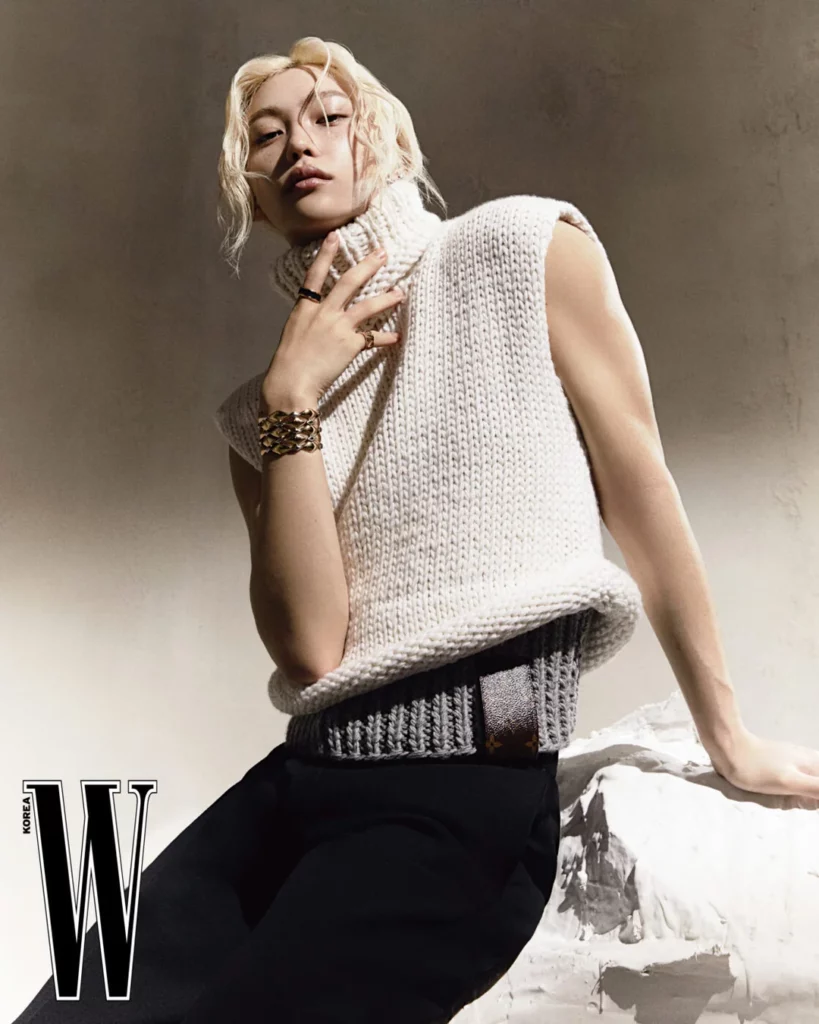
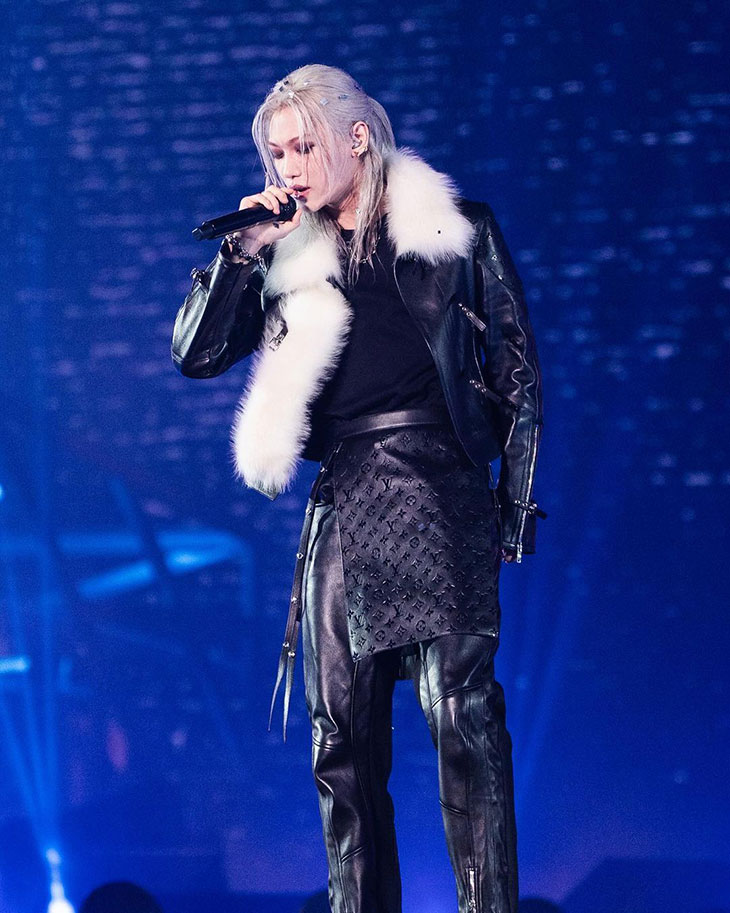
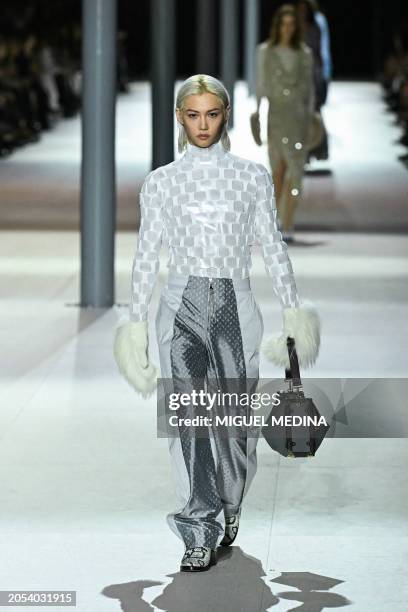
Stray Kids Felix as an example for gender fluidity
Sources
Gender Theory by Judith Butler: https://www.cla.purdue.edu/academic/english/theory/genderandsex/modules/butlergendersex.html
Gender Theory by Bell Hooks: https://vc.bridgew.edu/jiws/vol21/iss1/3/
Branding and identity Theory by Wally Olins: https://books.google.at/books?hl=de&lr=&id=01bGDwAAQBAJ&oi=fnd&pg=PT190&dq=branding+and+identity+theory+wally+olins&ots=5nlYtfx-dj&sig=CuhCg50qvQubtbvkuyVw5CTrglU#v=onepage&q=branding%20and%20identity%20theory%20wally%20olins&f=false
Branding and identity Theory by David Airey: https://books.google.at/books?hl=de&lr=&id=Tg2IDwAAQBAJ&oi=fnd&pg=PP1&dq=branding+and+identity+theory+david+airey&ots=ck8NMFCgIi&sig=TFDXvBqhgvFES6gg1RIHuwqbkKU#v=onepage&q=branding%20and%20identity%20theory%20david%20airey&f=false
How boy groups across the world are changing masculinity https://digitalcommons.tacoma.uw.edu/cgi/viewcontent.cgi?article=1097&context=access
K-Pop Styling – Masculine vs Feminine Imagery as shown by 2021 music videos https://d101vc9winf8ln.cloudfront.net/documents/44555/original/2021_K-Pop_Styling–Masculine_and_Feminine_Imagery_as_Shown_by_Wardrobe_and_Makeup.pdf?1665463087
Toward a Gendered Aesthetics of K-Pop
https://www.researchgate.net/publication/300934678_Toward_a_Gendered_Aesthetics_of_K-Pop
the Gendered construction of K-Pop female idol groups in documentaries: a gender analysis
http://www.diva-portal.org/smash/get/diva2:1871844/FULLTEXT01.pdf
How gender shapes music: a comparison within K-Pop
https://research.library.fordham.edu/cgi/viewcontent.cgi?article=1106&context=international_senior
