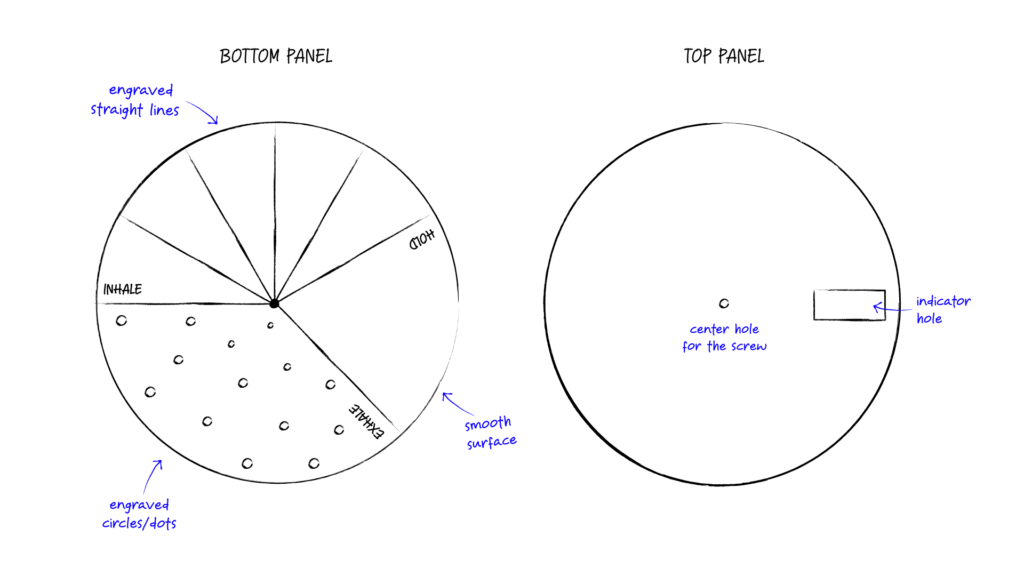
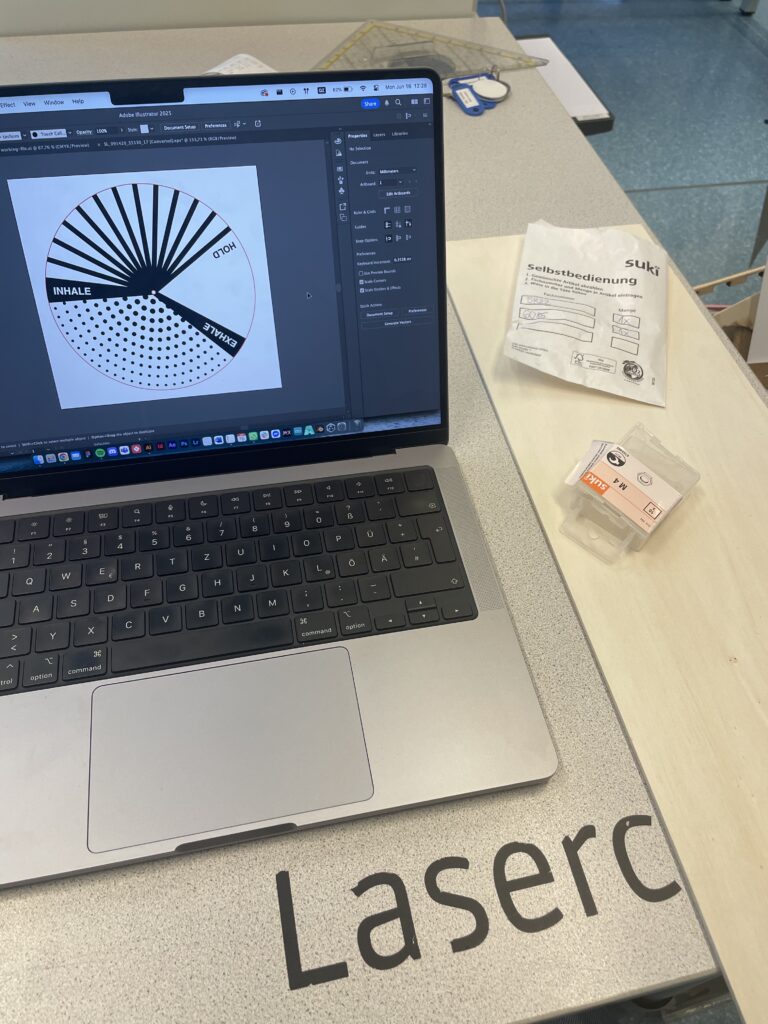
After finishing the design phase, I moved on to creating the physical prototype using the university’s Lasercutter CO2 Trotec Speedy 360. The material I chose was 4mm thin plywood, sturdy enough for the breathing circle but still easy to work with. Before starting the machine, I prepared my design in Adobe Illustrator. To make sure the laser cutter knows what to cut and what to engrave, I used two different colors in the file: red lines show where the laser should cut completely through the plywood, outlining each piece of the breathing circle, black lines and textures represent areas to engrave, like the tactile patterns for the inhale, hold, and exhale sections, plus small text labels.
This separation is important because engraving only burns the surface lightly, creating texture and detail without cutting all the way through. Since I’m relatively new to laser cutting, I was careful not to engrave too deeply – wood can start to burn quickly if the settings are too strong. This cautious approach helped me keep the surface textures clear and clean.
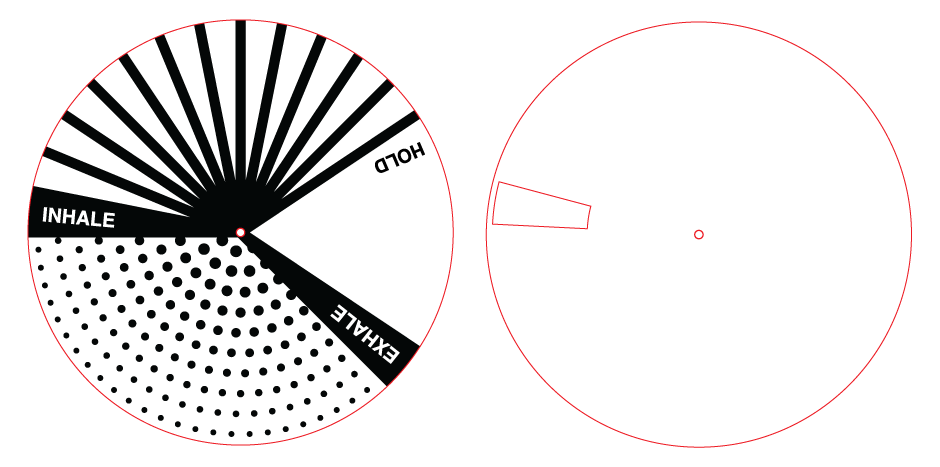
Once the file was ready, I set up the materials and workspace with the 4mm plywood sheets and M4 size plastic screws. These screws allow the plates to rotate smoothly while keeping the holes minimal and unobtrusive, maintaining a clean and minimalistic look.
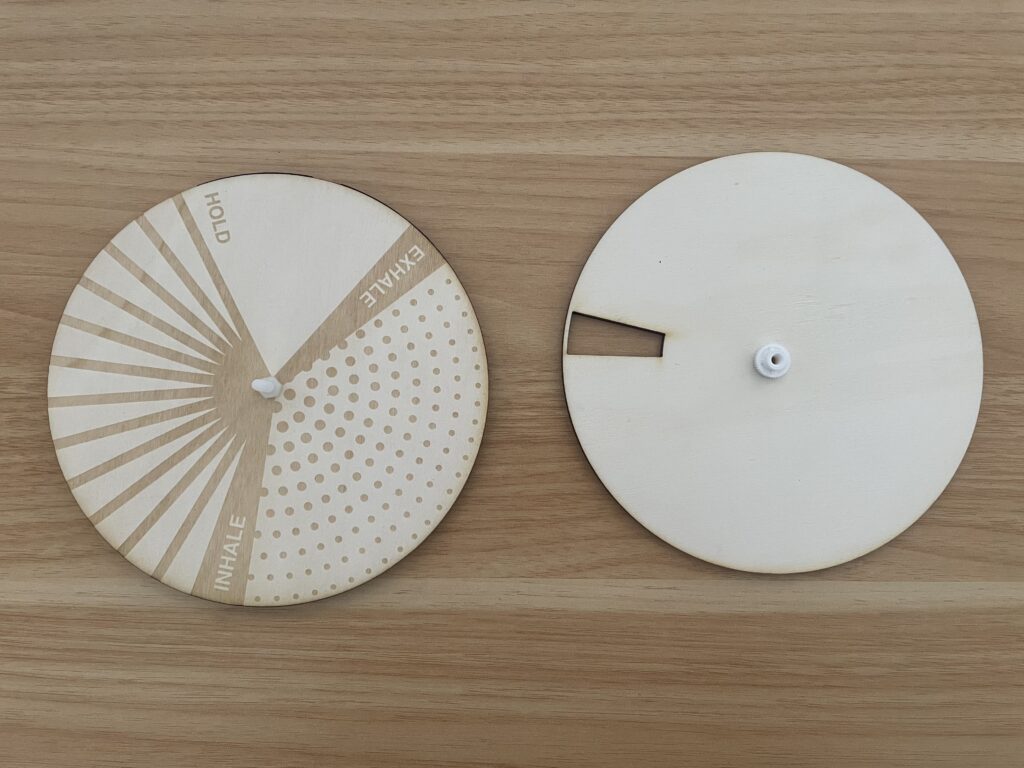
The laser cutter produced very precise pieces with clean edges. The engraved sections added subtle textures that can be felt by touch, which is essential for the breathing circle’s interactive experience.
At this stage, the prototype pieces were not yet assembled, but it was exciting to see the parts come to life physically. The cutouts and engraving matched the digital design well, making assembly straightforward.
Final Thoughts
Using the laser cutter was a key step in turning the concept into something tangible. This process allowed me to explore the tactile qualities of the breathing circle and how the physical form supports the interaction. Even though the prototype isn’t complete, the precise cuts and engraved textures already give a strong sense of how users might experience it.
This phase reinforced how prototyping, especially analog and lo-fi methods, can reveal important insights early in the design process. It’s not just about finishing a perfect product but about thinking through the physical experience, testing ideas, and learning along the way.
Next, I will do some user testing to gather feedback and observe how the prototype works in practice.