RESEARCH #6 – Florine Bonaventure

Chaos and direction are not opposites, but exist in relation to each other. Creative direction, in a way, is the act of navigating chaos: selecting, shaping, and giving form to something that initially has no clear structure.

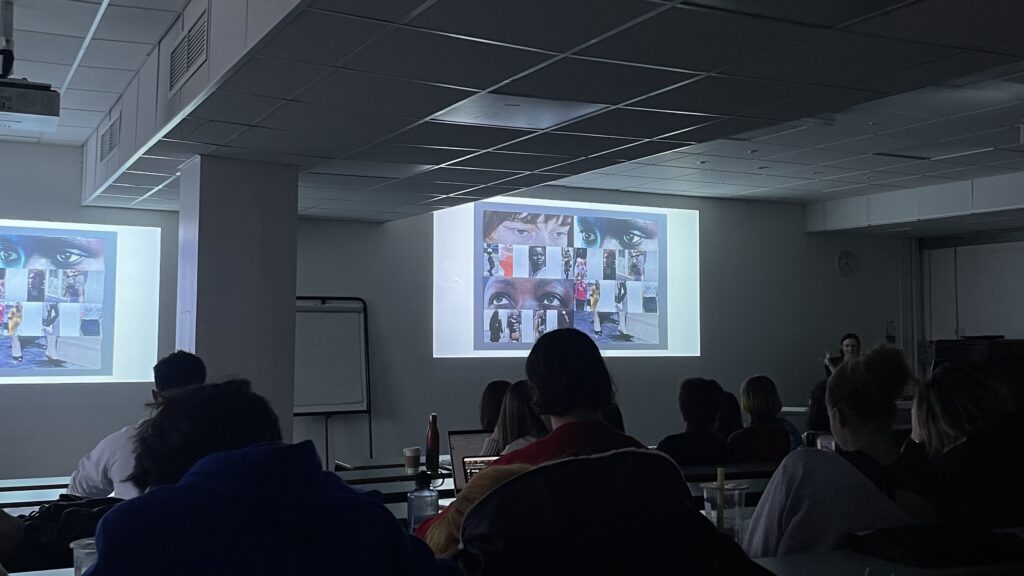
This became clearer to me after attending a talk by Florine Bonaventure, a creative director who has worked across different brands, including Phoebe Philo, a London-based fashion label led by one of the most influential fashion designers of recent years. Before this talk, I had heard of the brand but never really payed attention to it. It made me realise that creative directors do more than just produce visual outcomes. Through their work, they also introduce audiences to new references and brands they might not have encountered otherwise.

In this sense, creative directors don’t just shape how something looks, but how it is perceived and understood. By working with different brands, they become closely connected to them, influencing how people encounter and remember them. They act as mediators between the brand and the audience.

What I found especially interesting was hearing how Florine’s work exists across different disciplines. She mentioned that she teaches in various study programs, including architecture and fashion. This was surprisingly reassuring to hear. Having studied architecture before, I often felt like I had abandoned that path. But hearing that creative direction exists across multiple fields reminded me that creative practice does not have to be limited to one discipline. It made me see creative direction as a space that allows movement between fields. It involves connecting ideas, people and contexts.

Another thing that stayed with me was how creative direction involves making decisions within uncertainty. There is no fixed formula. Each project begins with open possibilities, and the role of the creative director is to navigate these possibilities and give them coherence.

This connects directly to my interest in chaos. Chaos is often understood as something negative and something that needs to be controlled or eliminated. But through this talk, I began to see chaos differently. Chaos can also be understood as potential. It contains multiple directions, and creative direction becomes the process of selecting and shaping one of them. This perspective helps me understand creative direction not as a purely technical skill but as a way of thinking.

Every time I collect references, organise ideas, or connect different influences I am already practicing forms of creative direction. This talk reinforced my interest in exploring creative direction further.

Links:
https://thegentlewoman.co.uk/names/florine-bonaventure
RESEARCH #5 – Arriving at Kingston and Expanding My Perspective

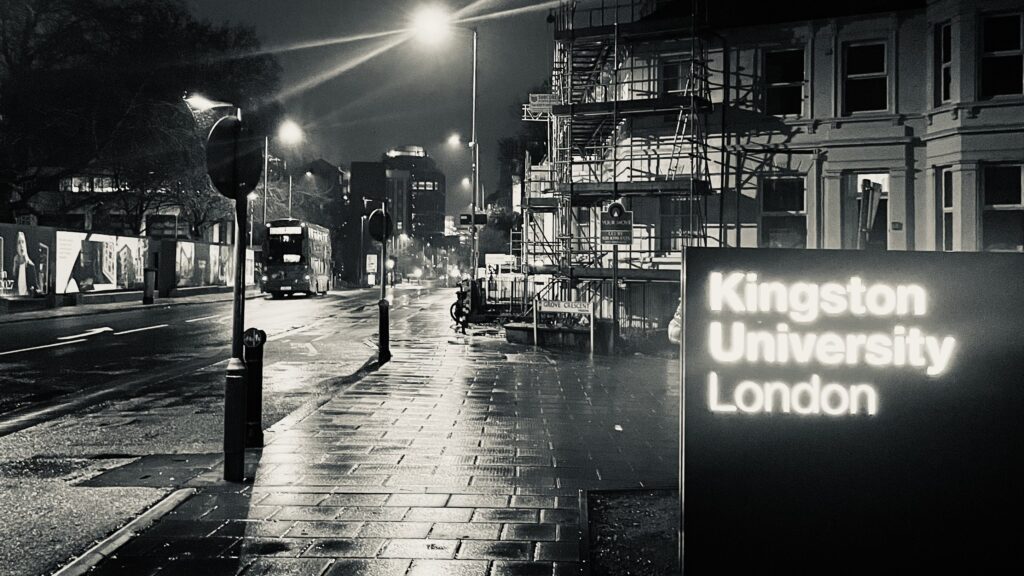
Arriving at Kingston marked an important shift in how I approached my thesis. Before coming here, I saw the thesis primarily as something I needed to complete. It felt distant and intimidating, like something that existed somewhere in the future, but not yet part of my daily reality.

What I noticed early on was how many opportunities there are to encounter new ideas. Inspiration is not limited to lectures or assigned readings. There are constant talks, workshops, and events happening across the university. Just yesterday, for example, the student union invited Florine Bonaventure, a creative director, to give a talk. Listening to people speak about their own practice and process makes the idea of creative direction feel much more real and accessible. It also shows how many different paths and approaches exist. I will reflect more on this talk in my next blog entry, but moments like these make research feel connected to a wider creative community.

Another thing that stood out to me was the physical structure of the classroom itself. The tables and chairs are not arranged to face the lecturer in a traditional way. Instead, they are organised for group work, allowing students to sit together and face each other. Most of the time, we are encouraged to work in small groups, often using large sheets of paper to share and discuss ideas. These groups change regularly, since no one has a designated seat. This means you are constantly exposed to different perspectives and ways of thinking.

This setup changed how I engaged with my thesis topic. At the beginning, I was hesitant to talk about it. I struggled to explain it clearly, and I was unsure how it would be understood by others. It made sense in my head, but when I tried to express it out loud, it felt vague and incomplete. Because of this, I avoided talking about it in detail.

However, over the past weeks, I found myself in situations where I had to explain my ideas repeatedly. In group discussions, workshops, and informal conversations, people would ask what I was working on. Over time, it became easier. Each time I explained it, something shifted slightly. The act of verbalising my thoughts helped clarify them.

What also made a difference was the feedback I received. Hearing responses from people with different backgrounds and perspectives allowed me to see my ideas from outside my own thinking. Sometimes they made connections I had not considered, or asked questions that helped refine my direction. Through these conversations, my thesis topic slowly became more defined.

#10 Why Spatial Immersion Intensifies Emotional Response

When we experience a traditional painting or a flat screen animation, there is always a clear separation between the viewer and the work. We stand outside, observing. We can maintain a psychological distance. But when we enter a spatial installation, this distance disappears. We are not just observers anymore, we are participants. The work surrounds us, envelops us, and forces our body into the experience. This shift is crucial for understanding how abstract motion design can generate emotions, particularly stress.

Stress, as an emotion, is strongly tied to the body. Heart rate, breathing, tension, and attention all respond to external stimuli. It is a universal, recognizable emotion. It is physiological and psychological. Unlike joy or sadness, it is closely tied to attention, movement, and bodily awareness. In spatial environments, abstract visual elements like moving light, patterns, and shapes no longer sit at a distance. Instead, they occupy the same space as our bodies (Schmitz et al., 2011). The closer the visual and temporal stimuli are to our physical presence, the stronger their potential impact on emotional intensity. By removing the physical and psychological distance, installations intensify bodily exposure to motion parameters. Unlike screen-based animations, where the body can remain passive, spatial designs require active navigation. The viewer’s position, movement, and orientation directly influence what is perceived. This is where motion design principles, such as rhythm, tempo, repetition, and density, can be used in a controlled way to generate emotional effects.

Spatial installations unfold over time.The experience depends on movement and duration. A hallway of pulsing lights, a room of shifting patterns, or a suspended arrangement of floating shapes all change as you move through them. Temporal design, the core of motion design, is therefore a key tool. By carefully orchestrating the timing of visual changes, the designer can escalate intensity, build tension, or release it. Consider stress as an example. Slow, irregular rhythms may feel uneasy. Fast, dense pulses increase physiological arousal. By adjusting tempo and repetition over time, one can simulate the onset of stress in a non-narrative, abstract environment. The visitor experiences these shifts physically, through subtle bodily reactions, before they even cognitively recognize them.

Hereby the role of navigation and orientation is important. Immersive environments create opportunities for multiple perspectives. Moving through a space changes what is seen, how light reflects, and how patterns interact. The visitor is a co-creator of the experience: their choices determine the path, the duration of exposure, and the angles from which stimuli are perceived (Lennon, 2025). Motion design can respond to this movement by creating feedback loops: lights that shift as a person approaches, patterns that densify when more people occupy a space, or visual flows that guide attention. These interactions are key to understanding emotional response. Stress is not only triggered by the motion itself but also by the unpredictability of the environment and the necessity to adapt. When motion and light respond to the visitor, the intensity of the experience increases. For instance, a fast, repetitive movement on a small screen may cause moderate tension. In a 3D installation that surrounds the body, the same movement can create a sense of overwhelm. By controlling rhythm, density, and directionality, designers can amplify the emotional impact without relying on narrative or symbolic content.

Modern installations often integrate digital technology to create responsive systems. Sensors, projection mapping, LEDs, and sound allow motion parameters to change in real-time based on visitor behavior. These feedback loops enhance immersion and can intensify emotional responses. Stress, in particular, can be modulated dynamically: sudden changes in light rhythm or density in reaction to movement can create moments of heightened tension. Visitors feel as though the space itself is alive, interacting with their bodies and decisions. Spatial installations offer a unique environment to study and apply motion design principles. By integrating rhythm, tempo, repetition, and density with bodily navigation and immersive presence, designers can create abstract experiences that generate stress without narrative or symbolic content. The viewer becomes both subject and co-creator, their body and attention guiding the unfolding of the work.

Bibliography:

Schmitz, A., Merikangas, K., Swendsen, H., Cui, L., Heaton, L., & Grillon, C. (2011). Measuring anxious responses to predictable and unpredictable threat in children and adolescents. Journal of Experimental Child Psychology, 110(2), 159–170. https://doi.org/10.1016/j.jecp.2011.02.014

Lennon, B. (2025). How contemporary installation art uses space, site and scale to create a phenomenological experience for viewers [Master’s thesis, Institute of Art, Design + Technology]. https://hdl.handle.net/10779/iadt.30601340.v1

LS3 #10 Hokus Pokus, wo ist der Fokus?

Nachdem wir mehrere unterschiedliche Gespräche bezüglich Masterarbeit mit verschiedenen Menschen hatte, ist mir klar geworden, dass mir noch etwas der Fokus fehlt. Bei meinem Gespräch mit Frau Lagger, haben wir zwar auch klargestellt, dass zu Beginn des Researchs auch noch kein exakt klarer Fokus stehen muss, dennoch wäre es gut, einen Bereich und eine Zielgruppe zu definieren – einfach damit ich es mir leichter und greifbarer mache.

Ich find es immer sehr schwer, einen klare Fokus zu finden, weil das ja bedeutet, dass interessante Themen herausfallen könnten. Hier also erstmal, was ich gern mitdrin hätte.

Reime

Klar, das ist offensichtlich und der Hauptfokus meiner Arbeit.

Humor

Nachdem ich letztens die eine Masterarbeit zum Thema Humor im Design gelesen habe, habe ich nochmal mehr gemerkt wie interessant ich Humor und Witz eigentlich finde, auch wenn es schwer messbar ist. Aber gerade das macht es so interessant und in kombination mit Reimen vielleicht auch gut erforschbar.

Außerdem schafft Humor einen niedrigschwelligen Einstieg in jegliche Kommunikation. Oft werden so Hemmschwellen reduziert und Botschaften zugänglicher gemacht (Eisend & Kuß, 2009). Menschen reagieren offener auf spielerische statt belehrende Sprache. Besonders bei Text im öffentlichen Raum kann oft der erste emotionale Impuls entscheiden und Humor könnte diesen Impuls positiv färben. Gleichzeitig ist natürlich auch die Frage, wie weit Humor gehen kann und ab wann Grenzen überschritten werden oder ernste Themen zu witzig dargestellt werden.

Anwendungsbereich: Aktivismus/ gesellschaftliche Kommunikation

Ich arbeite in meinen bisherigen Projekten häufig mit gesellschaftlichen oder feministischen Themen, auch sichtbar hier im prozess meiner Blogposts. Dabei interessiert mich irgendwie immer weniger laute oder konfrontative Protestästhetik, sondern subtilere, alltagsnahe Interventionen und gleichzeitig Gestaltung die Menschen eher einlädt als belehrt.

Ich hab durch vorherige Arbeit und Praktika auch ein paar Kontakte bei Greenpeace und zu aktivistischen Gruppen in Graz, deren Standpunkte ich für meinen Research gut nutzen könnte.

Außerdem sind viele aktivistische Gestaltungen recht ernst, schwer oder moralisch aufgeladen und solche Kommunikation kann logischerweise schnell abschreckend oder überfordernd sein, vor allem für Menschen, die sich damit eher wenig befassen wollen und damit im Straßenbild überrascht werden.

Ich hab gemerkt, dass ich selbst auf humorvolle oder gereimte Botschaften stärker reagiere als auf reine Forderungen. Deshalb interessiert mich, ob spielerische Sprache wirksamer sein kann als klassische Appelle und Aktivismusformen.

Mögliche Forschungsfrage (fokussiert yeha):

Wie beeinflussen gereimte und humorvolle Formulierungen die Wahrnehmung, Merkfähigkeit und emotionale Zugänglichkeit gesellschaftlicher Botschaften im öffentlichen Raum im Vergleich zu sachlich formulierten Aussagen?

Oder aber, wenn ich mehr in Richtung Gestaltung gehen möchte:

Wie beeinflussen typografische und layoutbezogene Gestaltungsstrategien die Wahrnehmung, Lesbarkeit und Merkfähigkeit gereimter Sprache in der visuellen Kommunikation?

RESEARCH #4 – Developing a Personal Research Process

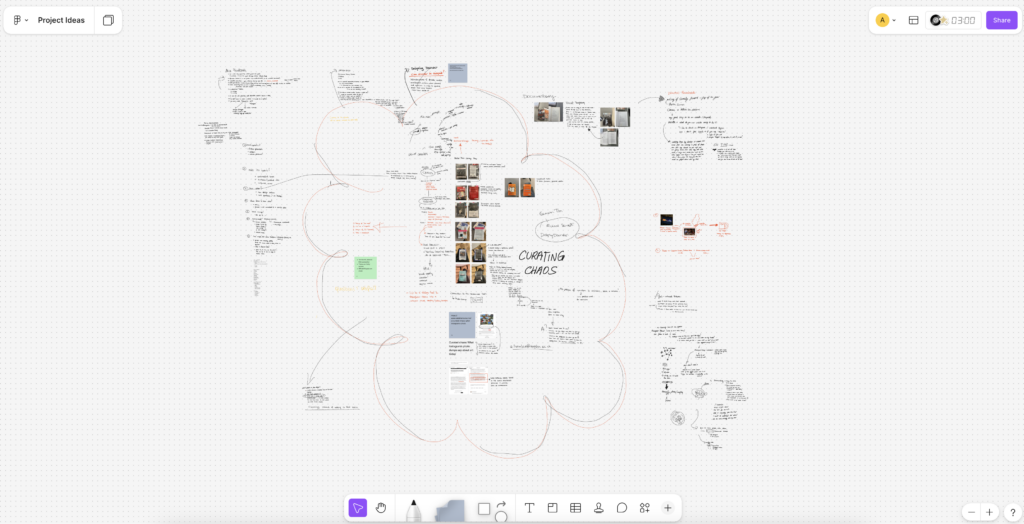
One of the first concrete steps I took in my research process was creating a Figma file to collect references. Instead of using traditional academic tools, I began documenting books, images, and thoughts visually. Whenever I found a book in the library that interested me, I took photos of the front and back cover and placed them into this file.

This method might feel informal and unstructured for some. I mean, it did not follow conventional academic standards, and people might question whether it is the “right” way to approach research. However, I realised that this visual system allowed me to engage with my research in a more intuitive way.

Seeing the books as images, alongside my own notes and reflections, made the research feel more tangible. It allowed me to see relationships between different sources more clearly. Instead of existing as isolated texts, the books became part of a larger visual landscape of ideas.

What surprised me most was how naturally patterns began to emerge. Even when I selected books based on intuition rather than relevance, many of them explored similar themes. Questions about perception, environment, attention, and meaning appeared repeatedly.

Over time, the Figma file became much more than just a collection of books. It started to include everything that influenced my thinking. I wrote down things that were said during lectures at Kingston, notes from the workshop at UAL, and reflections on documentaries I watched, even when they were not directly related to my thesis. I added feedback I received from my lecturers, ideas my friends shared with me in conversations, and even things my dad said that stayed with me afterwards. Sometimes it was just a sentence, a question, or a song title that captured a certain feeling or direction.

This made me realise that research does not only happen in structured academic settings. It happens constantly, through conversations, experiences, and observations. The Figma file became a space where all of these fragments could exist next to each other. It allowed me to take these moments seriously and recognise them as part of the research process. (I love it)

This process helped me understand that research does not have to follow a rigid structure from the beginning. Developing a personal system made the process more accessible and engaging. It also made me more confident in trusting my own way of working. Looking at the file now, I don’t see a finished structure, but a growing archive of my thinking. What initially felt random and unorganised slowly began to form connections.

Research #11 Editorial Design x Motorsport

When you go to a the F1 Race at the Red Bull Ring, you usually get a special version of the Red Bulletin —a booklet filled with all of the Red Bull Content, ads, (Red Bull) driver infos, and maybe some more information. And while Red Bull is generally doing a good job, it’s designed to be used for a few hours and then thrown in the bin.

RESEARCH #3 – On Starting

Closely connected to avoidance was procrastination. Even when I had time to work on my thesis, I often found it difficult to begin. The act of starting felt much harder than the work itself. I would sit down with the intention to work on it, but quickly find myself distracted by smaller tasks or well… MY PHONE.

What I noticed was that the anticipation of working on the thesis created more stress than the actual process of doing it. Once I started reading, collecting references, or writing down thoughts, it didn’t feel as overwhelming as I had imagined. But reaching that point required overcoming a mental barrier.

I think part of this came from the expectations I associated with the thesis. It felt like something that needed to be meaningful and well-developed from the beginning. This created pressure to make the “right” decisions early on. As a result, I hesitated to make any decisions at all.

This made me realise how much procrastination is connected to uncertainty. It is easier to delay something than to confront the possibility of making mistakes or choosing the wrong direction.

What helped me move forward was shifting my perspective. Instead of seeing the thesis as a single large task, I began breaking it down into smaller actions. Taking photos of books, writing short reflections, or organising references became manageable entry points. These actions did not require immediate clarity, but they allowed the process to begin. Clarity does not appear before the process begins, but emerges through the process itself. Understanding this helped me approach my research more realistically. Instead of waiting for the perfect moment, I learned to value small, consistent steps.

RESEARCH #2 – Avoiding the Thesis

For a large part of the semester, I avoided thinking about my thesis. I was busy with other university projects, workshops, and deadlines, and it was easy to focus on tasks that had clear expectations and immediate outcomes. These projects gave me structure. I knew what to do, how to do it, and when it needed to be finished. The thesis, in contrast, felt abstract and undefined. There was no immediate urgency, no fixed form, and no clear starting point.

Because of this, I kept postponing it. I told myself that I would start once I had more time, or once other projects were finished. I convinced myself that I needed the right moment to begin, even though that moment never really arrived.

Looking back, I realise this is a pattern I have experienced before. When something feels important but uncertain, I tend to avoid it. Not because I am not interested, but because the openness of it feels overwhelming. The thesis carried a different kind of weight compared to other projects. It felt more permanent, more personal, and more significant. This made it harder to approach.

At the same time, I now understand that avoidance did not mean the thesis was absent from my thinking. Even when I wasn’t actively working on it, I was still encountering ideas that influenced it. Lectures, conversations, exhibitions, and books all became part of my research indirectly. I just didn’t recognise it as such at the time.

Avoidance created the illusion that I was delaying the process, but in reality, the process was already happening in the background. My interests were forming gradually, even without conscious effort.

Reflecting on this made me realise that research is not a purely linear or controlled process. It includes phases of uncertainty, hesitation and distance. These phases are not necessarily unproductive. They allow ideas to develop more naturally, without forcing premature decisions.

Recognising my avoidance was an important turning point. It made me more aware of the emotional and psychological dimensions of research. The difficulty was not only about finding a topic, but about allowing myself to engage with something that didn’t yet have clear boundaries. Understanding this helped me approach my thesis with more patience.