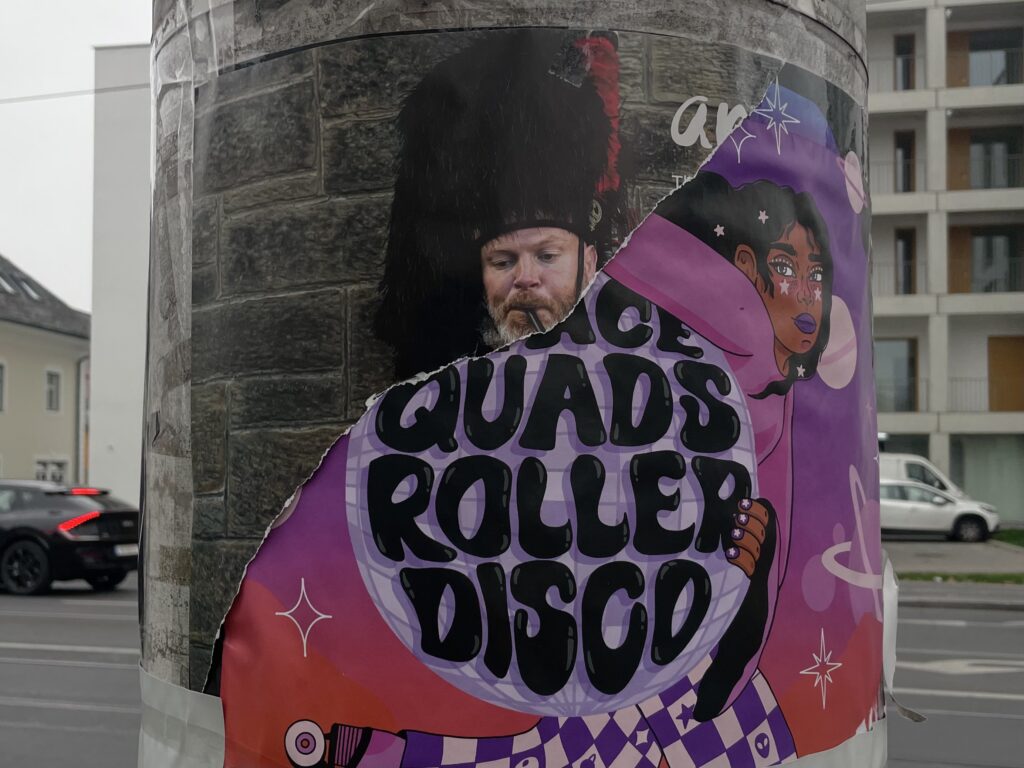
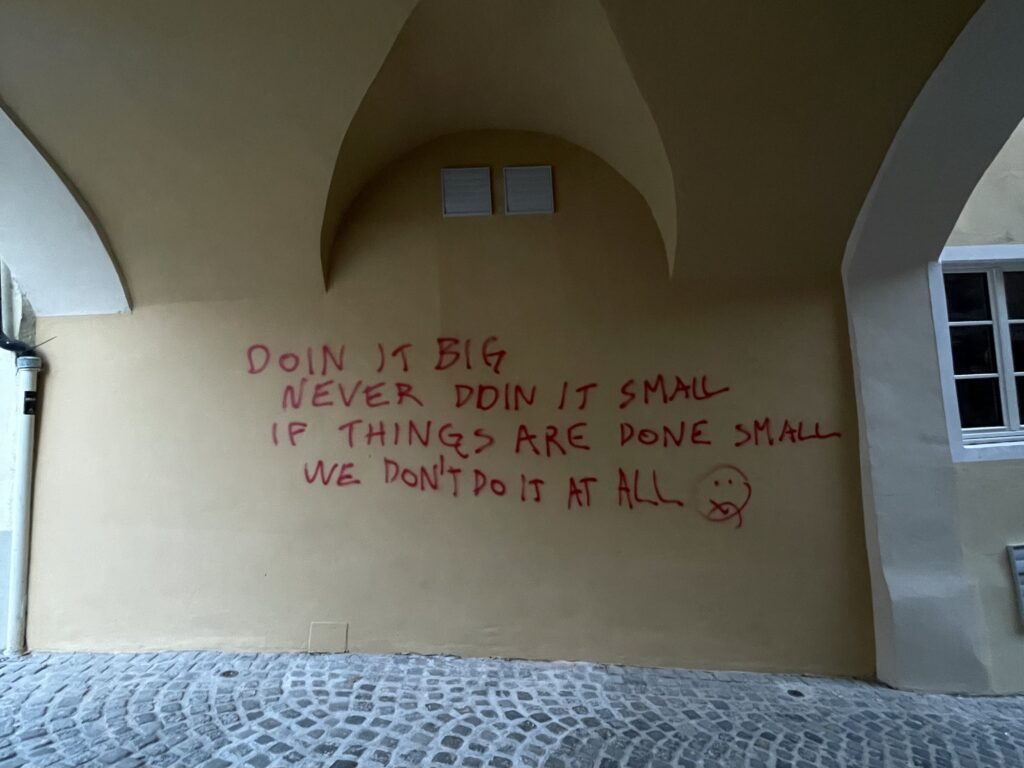
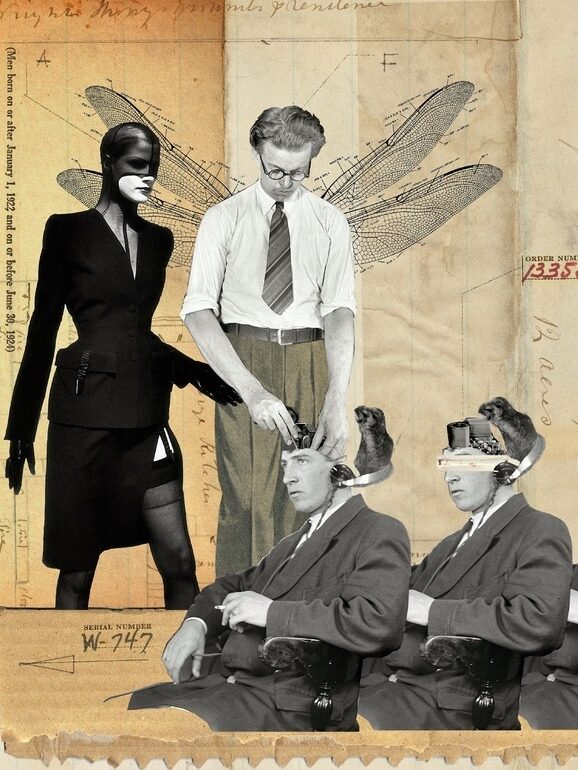
Not everything we encounter is designed with intention. Some things just happen, a misplaced sticker on a street sign, a torn ad revealing layers of past posters, or a scribbled note left on a café table. These accidental compositions, often more visually striking than purposefully designed elements, remind us that meaning isn’t always created, it emerges.
In design, there’s a long history of embracing the unintentional. The Dadaists used chance as a creative tool, cutting up newspapers and rearranging words randomly. The punk movement layered photocopied textures and type without precision, rejecting polish in favor of raw expression. Today, we see echoes of this in the chaotic collages of Y2K-inspired graphic design, the resurgence of DIY aesthetics, and even in social media trends that celebrate visual spontaneity.
But beyond nostalgia, there’s a bigger reason why randomness and imperfection feel refreshing: we are overwhelmed by control. In a world where algorithms dictate what we see, where AI can generate the “perfect” design in seconds, where branding follows rigid aesthetic guidelines, the accidental feels like a breath of fresh air.
Think about urban design and public spaces. Graffiti, layered posters, stickers covering street poles—these things were never meant to be compositions, yet they tell stories of a city’s identity. The way sun-faded billboards accidentally create new images, or how a café’s window reflections distort the view inside, these are all unintentional moments of design that shape our visual world.
So, what if we started designing with imperfection in mind? Not as an afterthought, but as an active part of the process? What if a poster was meant to tear and reveal something underneath? What if digital design allowed for unexpected, unplanned disruptions?
Maybe the future of design isn’t about control, it’s about making room for what happens naturally. Because sometimes, the most compelling things are the ones no one planned at all.
Sources: Foster, H. (1996). The Return of the Real: The Avant-Garde at the End of the Century. MIT Press. Poynor, R. (2003). No More Rules: Graphic Design and Postmodernism. Laurence King Publishing. Triggs, T. (2006). Fanzines: The DIY Revolution. Chronicle Books. Wilde, R. (2023). The Role of Imperfection in Contemporary Design. Design Observer.
In a hyper-curated world where content is planned, polished, and algorithmically optimized, there’s a growing fascination with what feels raw, imperfect, and fleeting. We see it in the rise of Instagram photo dumps, the adoption of grainy, retro-inspired visuals, and even in how brands have begun to embrace a sense of randomness in their storytelling. This cultural shift is not just a stylistic trend but a broader reflection of our need to reconnect with the in-between moments of human experience—those small, often overlooked fragments of life that feel authentic and unfiltered.
From Nostalgia to the Present Moment
Nostalgia plays a role in this shift, but it’s not the end goal it’s the gateway. As explored previously, nostalgia offers comfort in a disconnected world, but what’s more interesting is how it has evolved into a tool for reclaiming presence and celebrating imperfection. Today’s creators and designers aren’t just looking to the past; they’re using nostalgia-inspired aesthetics to elevate the in-between moments of everyday life, making the ordinary feel extraordinary.
This shift reflects a broader cultural fatigue with perfection. From Instagram’s carefully curated grids to the rise of AI-generated content, the overly polished has begun to feel soulless. In response, creators and designers are leaning into imperfection not as a rejection of design, but as a rethinking of its role in fostering connection and meaning.
The Photo Dump: A Study in Randomness
One of the most visible manifestations of this new aesthetic is the photo dump. These collections of random, loosely connected images have redefined how we share our lives online. Unlike the hyper-curated grids that dominated social media in the mid-2010s, photo dumps embrace imperfection and spontaneity. A single post might include a blurry shot of a sunset, a close-up of a coffee cup, a candid of friends laughing, and a seemingly unrelated image of a wrinkled shirt on a chair.
What makes photo dumps so compelling is their unpredictability and intimacy. They feel less like a performance for an audience and more like flipping through a friend’s camera roll—messy, eclectic, and personal.
Randomness Feels Human
There’s something inherently human about randomness. It resists optimization and rejects the calculated perfection that AI and algorithms are so adept at producing. Take Rhode, Hailey Bieber’s skincare brand, as an example: their campaign visuals mix glossy lip products with playful, unscripted imagery like a piece of toast dripping with honey or sticky fingers holding a donut. Similarly, Jacquemus, known for its innovative campaigns, once used a slab of butter as a prop, adding an unexpected, almost absurd twist to their fashion storytelling. These pairings feel spontaneous and alive qualities that resonate in a world increasingly dominated by automation and artificiality.
This kind of storytelling feels genuine because it mirrors the way we naturally navigate our surroundings. It’s imperfect, chaotic, and often surprising. In contrast to the overly polished, hyper-aestheticized visuals that dominated platforms like Instagram during the late 2010s, this new approach doesn’t strive for unattainable perfection. Instead, it embraces the beauty of imperfection, making the experience feel more grounded and relatable.
The photo dump aesthetic and the broader embrace of randomness in design is about more than just style. It’s a reaction to a cultural moment defined by disconnection and overstimulation. In an age of AI-generated content, endless scrolling, and hyper-curated branding, we’re yearning for something that feels real. Randomness, with its unpolished edges and unexpected connections, offers that sense of authenticity.
For designers, this is an opportunity to rethink how we create and communicate. How can we use design to capture the fleeting, in-between moments that make life meaningful? How can we embrace imperfection and randomness as tools to foster connection in a disconnected world? It’s about finding beauty in the messiness of life and using design to highlight those moments. In a world where perfection is easy to replicate, imperfection becomes the ultimate mark of authenticity. The in-between spaces of our lives, the random, fleeting moments we rarely stop to notice are where meaning resides.
Sources Rhode Campaign Imagery. Rhode Skin. Retrieved from https://www.rhodeskin.com Jacquemus Butter Campaign. Jacquemus. Retrieved from https://www.jacquemus.com Lorenz, T. (n.d.). Why Instagram’s Photo Dumps Are Taking Over the Internet. The Atlantic. Retrieved from https://www.theatlantic.com Designing for the Unpolished: Nostalgia and the Rise of Imperfection. Creative Review. Retrieved from https://www.creativereview.co.uk The Evolution of Branding Aesthetics: From Minimalism to Playful Randomness. Design Week. Retrieved from https://www.designweek.co.uk
The in-between moments of life whether waiting at a train station or scrolling aimlessly through our phones often feel hollow, like pauses in a song that never quite resolve. These spaces, both physical and emotional, are markers of our supermodern world, a concept that philosopher Marc Augé describes as defined by non-places, spaces of transience and anonymity where human connection feels incidental.
In this landscape of fleeting interactions and relentless motion, a curious phenomenon has emerged: an overwhelming yearning for the past. Nostalgia has become more than a wistful longing for simpler times, it’s a response to the alienation of modern life, a coping mechanism for the loss of grounding.
Why Nostalgia Now?
The rise of nostalgia is not random. Moments of uncertainty like the pandemic disrupt our sense of continuity, leaving us detached. When the present feels unstable and the future overwhelming, the past becomes a refuge. We turn to it not just for comfort but for clarity, a reminder of who we are and where we come from.
But this surge in nostalgia isn’t just personal; it’s cultural. It’s reflected in the return of vinyl records, the revival of 90s fashion, and the rise of retro aesthetics in branding and media. Even the way we consume content has shifted: the grainy, imperfect visuals of film photography are back, standing in stark contrast to the high-definition polish of digital life.
Nostalgia in the Age of Supermodernity
Supermodernity surrounds us with spaces and experiences designed for function, not connection. The clean, efficient lines of minimalism, the ubiquity of algorithmically curated feeds, the soulless sprawl of urban planning, they all prioritize performance over personality. In this environment, nostalgia reintroduces warmth, texture, and humanity into a world that can feel sterile and detached.
Consider the design of non-places like airports, shopping malls, and chain hotels. They are spaces without memory, where individual stories blur into the background of globalized sameness. Nostalgia offers a counterbalance, grounding us in the precision of memory and the uniqueness of our personal histories. It asks us to pause and notice the details—the handwritten note, the faded poster, the uneven cobblestones—that make us feel rooted.
The Role of Design in Nostalgia
Design has always played a key role in shaping how we experience the world, and nostalgia is no exception. Today, brands are tapping into this sentiment, not just through retro aesthetics but by embracing imperfection. Consider the resurgence of “wabi-sabi” in design, a Japanese philosophy that celebrates the beauty of impermanence and the incomplete. Or the trend of “photo dumps” on social media, where casual, uncurated snapshots resonate more deeply than polished, posed images.
These movements reflect a growing fatigue with perfection and a desire for authenticity. Nostalgia helps fill this void by reminding us of a time when things felt more real, when objects had weight, spaces had character, and connections felt tangible.
Nostalgia as a Guide
Rather than viewing nostalgia as escapism, we can see it as a guide, a way to reimagine how we design for connection in an increasingly disconnected world. By understanding what draws us to the past, we can begin to apply those principles to the present. This might mean designing spaces that encourage lingering instead of rushing, embracing imperfections instead of hiding them, or creating systems that prioritize people over efficiency.
The in-betweens of life both physical and emotional can be places of profound meaning if we allow them to be. Nostalgia teaches us to pause, to notice, and to find value in what we often overlook. In doing so, it offers us a way to reclaim our humanity in a world that too often feels impersonal.
As we continue to explore these ideas, let’s consider: How can we design not just for function, but for emotion? How can we create spaces digital or physical that honor the past while embracing the present?
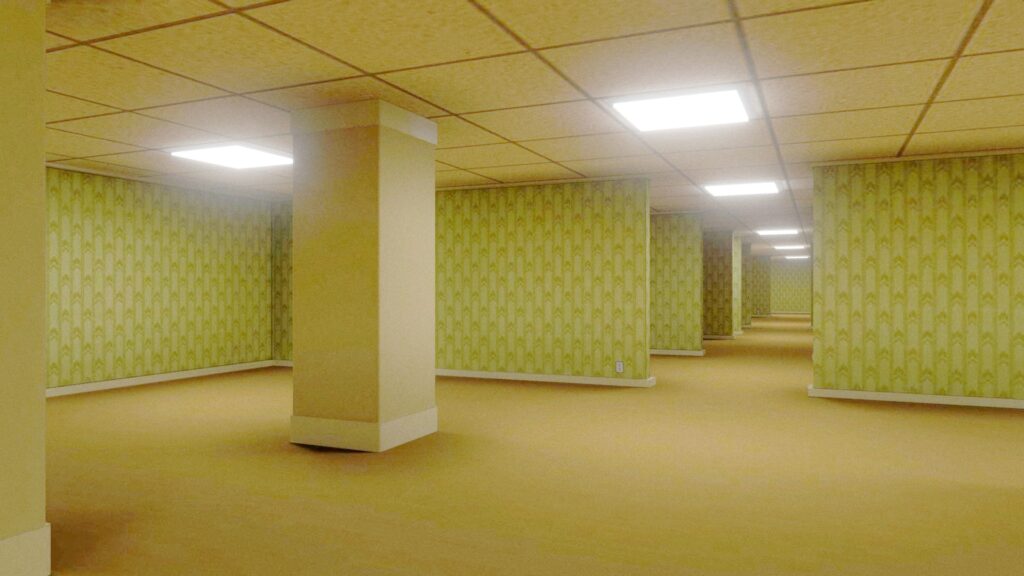
There’s a strange, almost haunting allure to liminal spaces. These are the empty hallways, deserted office corridors, and endless parking garages that feel frozen in time, places that seem familiar but lack the warmth of human presence. The internet phenomenon of “the backrooms” captures this perfectly: infinite, fluorescent-lit spaces that feel uncanny and unsettling.
But why do these spaces affect us so deeply? And how can this eerie, detached quality inspire design?
What Makes Liminal Spaces Feel Eerie?
Liminal spaces are defined by their “in-between” nature. They exist in transition zones neither fully occupied nor abandoned. The sense of eeriness comes from their detachment from human purpose. These are places meant for passing through, not staying, and when devoid of people, they lose their intended function and feel unnervingly off.
Liminal spaces often share distinct characteristics that contribute to their unsettling aura. Uniformity is a key feature, with repetitive patterns, identical rooms, and featureless designs that evoke a suffocating monotony. Harsh fluorescent lighting adds to the unease, bathing everything in an unnatural, sterile glow that feels alien and cold. Finally, these spaces are marked by an unsettling emptiness devoid of personal touches, warmth, or signs of life creating an uncanny void that leaves viewers feeling disconnected and adrift.
Liminal Spaces in Art
Designing the Uncanny
In design, certain elements can evoke an atmosphere of unease or intrigue, challenging the viewer’s comfort while sparking curiosity. Repetition and uniformity, for example, create visual tension. Grids or patterns that repeat endlessly can feel hypnotic yet slightly disorienting, keeping the viewer caught between fascination and discomfort. Similarly, hyper-clean, over-processed aesthetics can feel detached and impersonal; while visually striking, they risk losing warmth and connection, leaving an impression of sterility. Muted color palettes and flat lighting can further heighten this effect, washing designs in tones that feel distant or overly neutral, evoking stillness or even lifelessness.
Typography can also play a role, with stretched letters, misaligned kerning, or unconventional placements subtly disrupting the norm, creating a feeling of dissonance. These elements, while not inherently eerie, tap into the same sense of ambiguity and unease that draws us to the unfamiliar and the imperfect.
What’s fascinating is how the eerie feeling of liminal spaces parallels the direction modern design is heading, especially with the rise of AI. While AI-generated designs excel in precision and efficiency, they often lack the human touch that makes design feel alive. Like liminal spaces, these creations can feel too perfect, too detached, and ultimately soulless.
The Role of Supermodernity in Liminal Design
The eerie feeling of liminal spaces is deeply tied to the concept of supermodernity, a world obsessed with speed, efficiency, and transient experiences. In supermodern environments, spaces like airports, hotel lobbies, and highway rest stops prioritize functionality over identity. These are “non-places,” devoid of history or emotional connection.
In design, supermodernity’s influence can be seen in the rise of templates, algorithms, and hyper-efficiency. This has led to a flood of designs that, while functional, often feel detached or impersonal. Interestingly, the aesthetics of liminal spaces highlight this very tension. They reflect the soullessness of mass-produced environments and challenge us to think critically about the designs we create. Are we leaning too heavily into efficiency at the expense of meaning?
Why Liminality Resonates
There’s a reason why images of liminal spaces go viral. They capture a shared, almost primal unease, a reminder of what’s lost when spaces or designs lack humanity. For designers, this eerie aesthetic offers a powerful way to provoke thought and engage emotions.
By borrowing elements from liminal spaces, we can create work that taps into this sense of unease. Whether it’s through uniformity, emptiness, or a deliberate lack of “soul,” these designs challenge the viewer to confront feelings of isolation and detachment.
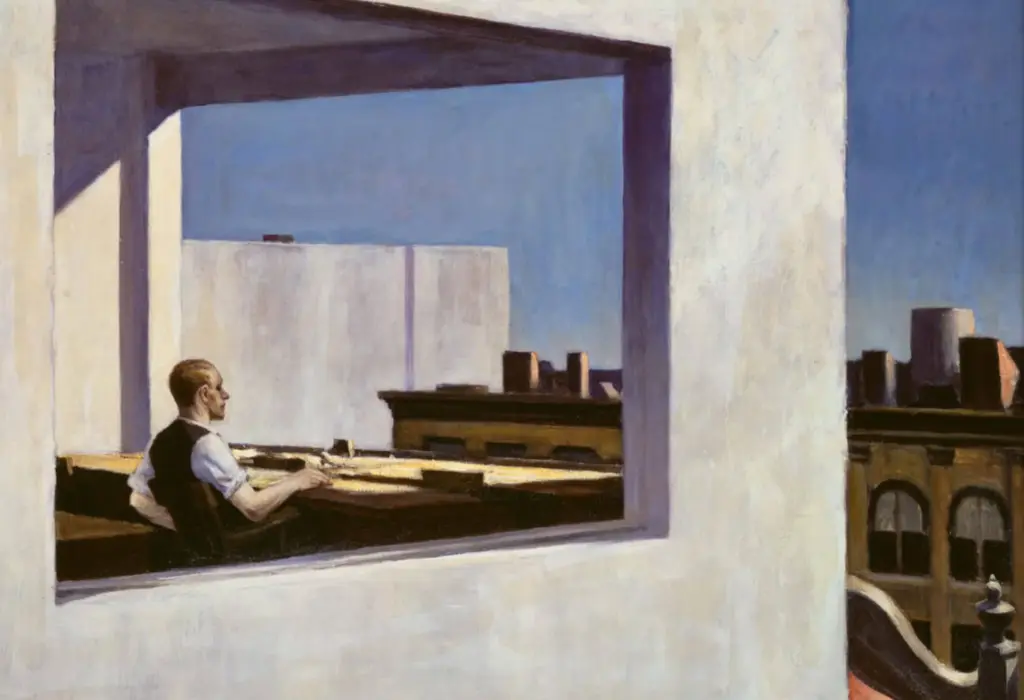
Edward Hopper – Office in a Small City
Liminal spaces, both physical and digital, are unsettling reminders of a world increasingly defined by transitions and non-places. In design, they force us to confront the consequences of detachment and explore how we can create meaning within the eerie and the unfamiliar.
By embracing the unease of liminal aesthetics, designers have the opportunity to craft work that lingers in the mind: haunting, thought-provoking, and eerily beautiful. However, as we explore this visual language, we must also recognize the broader concerns of soullessness and detachment already present in contemporary design. The challenge lies in balancing these eerie, intriguing elements with a sense of humanity and connection, ensuring that our creations evoke emotion and meaning rather than reinforcing the cold, impersonal trends that risk alienating us further.
Sources
Augé, Marc. Non-Places: Introduction to an Anthropology of Supermodernity. Verso, 1995. Fisher, Mark. The Weird and the Eerie. Repeater Books, 2016. Hatherley, Owen. “Why Is Modern Design So Soulless?” The Guardian, 2018. https://www.theguardian.com McClelland, Samuel. “AI and the Future of Creative Work.” Journal of Digital Culture, 2023. What Are Liminal Spaces?” The Aesthetics of Eerie Environments, Medium. https://medium.com
In the rush of daily life, we rarely stop to think about the spaces we inhabit. Yet, our cities are filled with what Marc Augé describes as non-places like airports, malls, highways, and waiting rooms. These are not destinations but places of transit, designed to be functional rather than meaningful.
Augé’s concept of non-places is rooted in supermodernity, a world defined by excess: too much information, too many choices, and too little time to reflect. In this environment, spaces become stripped of identity and connection. They exist only to move people along efficiently, anonymously, and often in isolation.
The Decline of Third Places
In contrast to non-places, sociologist Ray Oldenburg introduced the idea of third places: informal gathering spots like cafés, parks, or community centers. These spaces foster relationships, spark conversations, and create a sense of belonging.
But as cities expand and modernize, third places are disappearing. Public spaces are increasingly privatized, and social hubs are replaced by commercial zones. Where people once gathered to share stories, we now find sprawling malls or cookie-cutter cafés designed more for profit than community. The result? A sense of isolation that permeates our everyday lives.
Supermodernity and the Human Disconnect
Supermodernity doesn’t just shape the spaces we move through; it’s also reshaping the way we design. In our quest for efficiency and innovation, we often lose sight of the human element. Think about the rise of AI-generated art and design. While these tools are undeniably powerful, they sometimes lack the warmth, imperfection, and emotion that make human creations resonate.
Take the design of a campaign, for example. Comparing two Prada posters: one generated by AI and one created in the 1990s. The AI poster might flawlessly follow current trends, optimizing composition and color for maximum engagement. But the 90s poster carries a distinct cultural context, emotional depth, and an imperfect charm that resonates on a personal level. Supermodernity prioritizes speed and scalability, but at what cost?
What We’re Losing
The loss of third places and the rise of non-places highlight a deeper issue: the erosion of shared experiences and community. Third places like lively cafes, local libraries, and neighborhood parks once fostered connection and creativity. They weren’t just physical spaces but cultural hubs where people exchanged ideas and found belonging. Design in these spaces reflected the communities they served, with typography, posters, and art carrying personal and local meaning.
Today’s minimalist coffee shops, with their sterile aesthetics, often feel transactional rather than inviting, completely unlike the vibrant, conversational spaces of the past. Public squares, laundromats, community centers, and traditional marketplaces have largely been replaced by services focused on speed and convenience.
These losses aren’t just physical. The mental well-being tied to spontaneous connection and shared experiences has also diminished. Without true third places, design risks becoming generic and disconnected, shaped more by algorithms than human insight, losing the vibrancy that once made it meaningful.
Reclaiming the Human Element
So how do we push back against this trend? How can designers, especially communication designers, bring humanity back into their work?
One way is by focusing on storytelling. Every non-place has a story waiting to be told whether it’s the history of a train station, the hidden lives of workers in a shopping mall, or the personal journeys of travelers in an airport. Through typography, visuals, and interactive media, designers can turn these spaces into places of connection and meaning.
Another approach is to embrace imperfection. Hand-drawn illustrations, experimental layouts, or unexpected textures can remind audiences of the human touch behind the design. Instead of striving for sleek, AI-perfected results, we can celebrate the messy, emotional side of creativity.
Supermodernity in Design
Designers also need to critically examine their role in a supermodern world. Are we creating for convenience, or are we creating for connection? The rise of AI and automated systems has its benefits, but we must ensure these tools enhance, rather than replace, the human aspect of design.
For instance, an AI can generate a visually stunning ad campaign, but it’s up to the designer to ensure that campaign resonates on a deeper level tapping into cultural symbols, emotions, and shared experiences.
In a world dominated by non-places, designers have the power to make people pause, reflect, and connect. By reclaiming the human element in design, we can transform even the most impersonal spaces into meaningful experiences. It’s not just about making something look good, it’s about making it feel alive.
Sources: Augé, M. (1995). Non-Places: Introduction to an Anthropology of Supermodernity. Verso. Oldenburg, R. (1999). The Great Good Place. Marlowe & Company.Ritzer, G. (2019). The McDonaldization of Society. Pine Forge Press.Sennett, R. (2012). The Culture of the New Capitalism. Yale University Press. Cowen, T. (2019). Big Business: A Love Letter to an American Anti-Hero. St. Martin’s Press. Friends Central Perk Coffee Shop Image (Accessed 3 January 2025). Available at: https://at.pinterest.com/pin/290271138482279670/. Prada Poster 90’s (Accessed 3 January 2025). Available at: https://i-d.co/
We spend a lot of our lives in spaces that we don’t always notice: the brief moments between destinations, the corridors we walk through, the stairways, the waiting areas. These “in-between” spaces are often overlooked in design and in everyday life, but they carry immense potential in shaping our experience of belonging, culture, and connection.
The In-Between: More Than Just a Transition
In architecture and design, much of the focus tends to go toward the main destinations: the rooms where we live, work, or socialize. But the spaces in between, those hallways, stairwells, or passageways, are just as crucial in determining how we experience a place. Often, we think of these as mere transitions, as if they are less important than the final destination. However, these spaces play an essential role in our sense of belonging.
Take, for example, the waiting areas in public transport stations or airports. These spaces aren’t just for waiting—they are places where we engage with our surroundings, observe others, and reflect on our journey. Whether we’re waiting for a train, a flight, or simply passing through, these moments offer a unique opportunity to be in the “in-between,” to pause for a moment, breathe, and assess where we are, both physically and mentally.
Cultural Approaches to Transitory Spaces
Just as different cultures view waiting differently, they also approach these transitional spaces in diverse ways. In some cultures, the “in-between” is seen as a place of ritual, a space for connection and reflection. For example, in Japan, the concept of “Ma” refers to the space between things—the pause or gap that carries meaning. This idea isn’t just about the physical gap but also about the mental space between actions. The design of public and private spaces in Japan often emphasizes transitions, with spaces that allow for moments of contemplation or interaction, even in the most fleeting moments.
On the other hand, in Western contexts, the focus might be more on efficiency. Public spaces designed for movement, like subway corridors or office lobbies, often prioritize functionality over reflection. These spaces are created to move people from one place to another quickly and without disruption. However, there’s an opportunity to rethink these places, to design them not just as functional transitions but as moments where culture, connection, and belonging can emerge.
The Unnoticed and the Invisible
What about the spaces we don’t consciously notice at all? The hidden corners, the forgotten alleyways, or even the backrooms of cafes and shops? These unnoticed areas can tell us just as much about culture and power as the more visible spaces we focus on. For example, in many public spaces, the back areas where staff work are intentionally separate from customer-facing areas. These spaces are often overlooked in design discussions, yet they reveal much about the social dynamics of service and power. The people who work in these hidden areas, often out of view, are an essential part of the experience—yet they are often forgotten or marginalized in both design and society.
The unnoticed also relates to how we perceive and belong in spaces. In certain cultural contexts, the idea of “invisibility” is linked to exclusion. How do we design spaces that make these unnoticed areas more visible, more inclusive, and more engaging? How can we take the invisible and make it a part of our understanding of community and belonging?
Transitory Spaces as Opportunities for Connection
In some of the world’s busiest cities, designers have started to embrace the potential of these in-between moments. For example, parks in urban centers aren’t just places of recreation; they also act as spaces for connection and community. These spaces are often transitory, where people pass through or take a moment to pause. Yet, they offer a sense of belonging and inclusion that transcends the mere act of passing through.
Similarly, cafes, train stations, and public plazas can become places of community if designed thoughtfully. Imagine a train station not just as a waiting area, but as a space where people can connect, sit, talk, or even collaborate. By incorporating comfortable seating, green spaces, or art, designers can transform the in-between into a space that fosters belonging, even in the briefest moments of transition.
Power and Privilege in the In-Between
Just as in the previous blog entry, we cannot overlook how these unnoticed, in-between spaces reveal power and privilege. The way we experience transitory spaces often reflects our position in society. For example, people in more privileged social positions might experience these spaces differently, finding comfort in spaces designed for efficiency and ease, while those from less privileged backgrounds might be more familiar with the uncomfortable, neglected spaces where they have to wait or pass through without much regard for their comfort.
In public spaces, who gets the comfortable seat? Who gets to wait in the air-conditioned room, and who is left standing in the sun? These questions of who belongs where and why are part of the complex web of power dynamics that influence how we experience public space.
Sources Bachelard, G. (1994). The Poetics of Space. Beacon Press. Lefebvre, H. (1991). The Production of Space. Blackwell Publishing. Augé, M. (1995). Non-Places: Introduction to an Anthropology of Supermodernity. Verso. Dans Le Gris. (n.d.). MA: The Space in Between. Retrieved from https://danslegris.com/blogs/journal/ma Deeper Japan. (n.d.). MA and Its Influence on Modern Minimalism. Retrieved from https://deeperjapan.com/journal/ma-and-its-influence-on-modern-minimalism
Waiting is something we all experience, but rarely think about. Whether we’re queuing for coffee, sitting in a hospital waiting room, or waiting for a response to a job application, waiting is a moment we all share. But what if waiting itself reveals something deeper about our society? It isn’t just about passing time; it’s often a political act. The way we wait and where we wait can reflect who holds power, who has access, and who doesn’t.
In many parts of the world, waiting in line also happens in contexts of poverty, displacement, or crisis. Refugees in camps or people seeking asylum in different countries often experience waiting as a form of silence, a pause that represents uncertainty, powerlessness, and marginalization. In contrast, those in more privileged positions often experience waiting in comfortable, organized environments like airports or exclusive healthcare clinics. This disparity highlights the way social systems are structured and how public spaces can reinforce inequalities.
Transitional Spaces and the Impact of Design
The spaces where we wait are not just functional areas, they have a strong influence on our emotional and psychological state. The design of a waiting area can either intensify the stress of waiting or help alleviate it. In healthcare settings, for example, well-designed waiting rooms with soft lighting, comfortable seating, and natural elements can reduce anxiety and create a sense of calm. In contrast, cramped, cold spaces with little thought to comfort can intensify frustration and feelings of isolation.
In fact, the design of transitional spaces – those spaces where we pass through or wait – has a powerful impact on how we experience time. Architects and designers use spatial elements like ceiling heights, lighting, and layout to guide our emotional responses. Narrow, confined spaces can create a sense of urgency and pressure, while expansive areas encourage us to slow down, reflect, and take our time. This manipulation of space to affect time and emotion is something that’s as relevant to communication design as it is to architecture.
Reimagining Waiting: More than Just a Pause
Waiting doesn’t have to be a passive activity; it can be an opportunity for connection, reflection, and even solidarity. By rethinking the design of waiting spaces, we can transform them from uncomfortable, isolating areas into spaces that invite interaction and empathy. This is especially important in public settings, where waiting often brings people together in shared, communal experiences.
For example, in public assistance centers, where people wait for food, shelter, or other forms of aid, designers could create environments that foster a sense of dignity and belonging, rather than reinforcing feelings of powerlessness. The inclusion of communal seating, interactive displays, or elements that invite participation can make waiting feel less like a time of discomfort and more like a shared experience.
Connecting Space, Time, and Experience
In both architecture and communication design, the manipulation of space and time can create meaningful experiences. Just as architects use compression and expansion in physical spaces to guide emotional responses, communication designers use pacing, rhythm, and layout to guide how users engage with information. Whether in physical environments or digital platforms, the way we structure time through pauses, delays, or moments of engagement influences how we connect with our surroundings and each other.
In the end, waiting is more than just filling time. It’s a reflection of who we are as a society, how we treat each other, and what we value. By rethinking the spaces where how we wait, we design experiences. We can start to create environments that not only ease the discomfort of waiting but also challenge the systemic inequalities that make waiting so painful for some.
Sources de Botton, Alain. The Architecture of Happiness. Pantheon Books, 2006. Whyte, William H. The Social Life of Small Urban Spaces. Project for Public Spaces, 1980. Lohmann, Justus P. K. The Power of the Small: The Role of Public Space in the City. Architekt Verlag, 2017. The Spaces Between: Psychology of Transitional Spaces. Architizer, 2017. The Politics of Waiting. The Guardian, 29 May 2010.
In an era defined by constant connection, waiting has become a paradox. Moments of pause—once natural and even necessary—are now often filled with distractions like scrolling through our phones. But what if these transitional periods were reimagined not as empty spaces but as opportunities for connection and reflection?
The Psychology of Waiting
Waiting is a deeply human experience. Psychologists describe it as a state that exposes our relationship with time, control, and expectation. Studies reveal that environments can significantly influence how we perceive waiting. Bright lighting and cold spaces, for example, can amplify feelings of impatience, while warm colors and calming sounds can soothe and even shrink our perception of time.
In today’s hyper-individualistic culture, the isolation of waiting is amplified. We are more likely to disengage from the world around us, retreating into personal bubbles of content and communication. The result? Lost opportunities for organic social interactions, empathy, and moments of shared humanity.
Research reveals that our perception of wait times is heavily influenced by anxiety and uncertainty. When we don’t know how long we’ll have to wait or why the delay is occurring, our stress levels increase significantly. This phenomenon is known as waiting anxiety. In contrast, environments that offer clear communication about waiting times or provide distractions can significantly reduce stress, even if the actual wait time remains unchanged.
Designing for Connection
Some designers and artists have taken up the challenge of reimagining these spaces. Studio Swine’s Can City transformed the urban act of waiting into a moment of collaboration and creativity, sparking connections in a city often dominated by hurried routines. In Tokyo, Nakagin Capsule Tower’s compact communal areas emphasized shared experiences in transitional spaces, offering a striking contrast to the isolation of modern architecture.
Reimagining waiting spaces can create environments where connection and interaction take precedence over isolation. One example is the Waiting Room Project by artist Jana Napoli. In this project, Napoli transformed a sterile hospital waiting room into a space designed to encourage social interaction. By incorporating art and communal seating, she helped alleviate the tension and isolation often associated with waiting, turning it into a shared experience.
Waiting in the Age of Fragmentation
Our century has been described as one of “splintered modernity”—a time when our communities, relationships, and even our own attention are fragmented. Waiting, often considered an annoyance or inefficiency, offers a counterpoint to this fragmentation. By embracing it as a communal and reflective experience, we can combat the isolation that characterizes much of modern life.
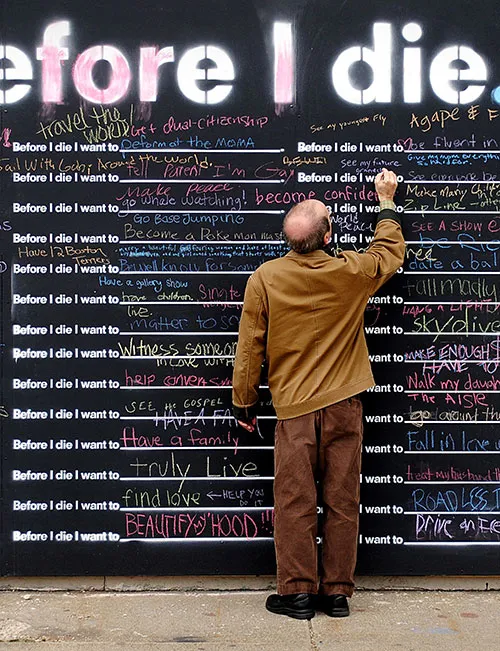
The design of these spaces can be subtle but impactful. Small interventions—like public seating arranged to encourage conversation or calming elements like plants and natural light—can turn waiting into an act of engagement. The artist Candy Chang’s Before I Die walls are a beautiful reminder of how public spaces can inspire self-reflection while creating a shared narrative of hope and aspiration.
A Return to Rituals
Ultimately, waiting is an ancient ritual—one that, when acknowledged and designed thoughtfully, has the power to reconnect us to ourselves and to others. Instead of rushing to fill every pause with distraction, perhaps we should allow ourselves to feel the weight of waiting.
So next time you’re waiting—whether at a bus stop, in a line, or for an uncertain future—look around. What do you notice? And what might design do to turn that moment into something worth remembering?
Sources Maister, D. H. (1985). The Psychology of Waiting Lines. Ulrich, R. S., et al. (1991). Healing Spaces: The Science of Place and Well-Being. Cambridge, MA: Harvard University Press. Bauman, Z. (2000). Liquid Modernity. Cambridge, UK: Polity Press. Napoli, J. (2013). Waiting Room Project. Studio Swine. (n.d.). Can City. University of Cambridge (2018). Study on communal activities in waiting spaces. Kurokawa, K. (1977). Metabolism in Architecture. London, UK: Studio Vista. Insights into the Nakagin Capsule Tower and its social design.
Public spaces are more than just places we pass through—they are where communities grow, and social connections silently form. The concept of social capital—the value created through relationships and social networks—often thrives in these shared spaces, but it’s rarely noticed or understood. Additionally, there are countless unseen roles and small contributions made by individuals that keep these spaces welcoming and functional. From janitors who clean early in the morning to street vendors who create a sense of familiarity, these “unseen workforces” form an essential part of the community fabric.
Taking Inspiration from Interactive Projects
Communication design can illuminate these hidden layers of social capital and unseen labor, making these connections visible and appreciated. For example, artist Candy Chang’s Before I Die project, launched in New Orleans, invites people to share personal hopes on public chalkboard walls, creating spontaneous, shared moments that strengthen community ties.
Similarly, Subway Therapy by Matthew “Levee” Chavez took place in New York City’s subway stations. By encouraging commuters to leave sticky notes with messages, he created a shared, empathetic space during a time of high tension.
Krzysztof Wodiczko’s Place des Arts projection in Montreal, Canada is another powerful example. Using video projections, Wodiczko gave a platform to marginalized voices, allowing individuals to share their personal stories and feel seen within their own city.
Towards an Inclusive and Interactive Future
Looking forward, the design of public spaces is moving toward a more inclusive approach—one that fosters a sense of belonging for people of all backgrounds. By understanding and revealing the invisible rituals that already exist, we can create environments where everyone feels seen and heard, even without speaking. Communication design has the potential to amplify these subtle, often overlooked interactions, turning everyday moments into powerful experiences of connection.
Over the next few semesters, I will be diving deeper into how communication design can illuminate these unseen social bonds. This will involve exploring case studies, conducting field research, and experimenting with new design approaches. The goal is to create design interventions that not only highlight invisible connections but also strengthen them, making the silent rituals of public life more visible and meaningful to all who encounter them.