The different Modes of Documentaries

Here is a very brief overview of the six different Modes of Documentary Film by Bill Nichols as described in his 2010 book: 

The Poetic Mode

This mode is more focused on conveying specific moods, feelings, and experiences to the viewers rather than just facts. The editing of poetic documentaries is very intentional and specific (Nichols, 2010, p. 162). Like in the expository mode, the poetic mode will often not focus the relationship between individuals and the filmmaker. Individuals are shown but viewers never really get to know them (Nichols, 2010, p. 156). 

The Expository Mode

In expository documentary films viewers are addressed directly in order to convey information to them. Sometimes filmmakers will use the Voice-Of-God, a stylistic choice where we cannot see the speaker but hear them throughout the film. This is the classical voice over used in many documentaries (Nichols, 2010, p. 167). In expository documentaries rhetoric methods are used to make points as clear as possible. These types of documentaries usually move within a framework that has existed beforehand. They add to the viewers’ knowledge pool, but they do not question or challenge existing structures (Nichols, 2010, p. 169).

The Observational Mode

While poetic and expository documentaries often collect raw material aiming to edit it into something aesthetically compelling or informative, fitting their exact ideas of the film, observational documentary filmmakers will often just see what happens in front of the camera without any intervention. Often there will also be no voice over or commentary in observational documentaries (Nichols, 2010, p. 172). This also allows for viewers to choose the focus instead of the filmmakers (Nichols, 2010, p. 174). With more authentic pacing of the films, the viewers also get to experience the actual timing more realistically (Nichols, 2010, p. 176).
The development of newer, lighter, more mobile equipment has helped observational documentaries flourish by guaranteeing the camera almost disappears (Nichols, 2010, p. 172). Individuals ideally tune out the cameras as much as possible, especially when being preoccupied with their own struggles. This authenticity and closeness to ones struggling can many times be uncomfortable to watch, feeling very intrusive. This has raised some ethical questions about this mode of documentaries as well (Nichols, 2010, p. 174). Also, the non-involvement of the filmmakers in this mode of documentaries can create some ethical dilemmas. Moreover, the omission of any form of commentary or clarification can lead to a problematic misrepresentation of certain situations or behaviors (Nichols, 2010, p. 175).

The Participatory Mode

In participatory documentaries the filmmaker does not just passively observe the subjects but actively interacts with them and influences the events. Conversations and interviews are an important part of these documentaries and the film becomes a reflection of the interactions between filmmaker and individuals (Nichols, 2010, p. 179). The filmmaker develops from some ominous, neutral presence into an actual human, interacting with others (Nichols, 2010, p. 182). Like in the observational mode and the performative mode, participatory documentaries feel like meeting the individuals. The influence filmmakers have on them, however, can raise some ethical questions (Nichols, 2010, p. 157).
With some participatory documentaries, the interaction does not stop with filmmaker and subject, but also the viewers can participate via interactive websites or art installations (Nichols, 2010, p. 180). However, participatory documentaries are not the first example to foster interaction with their audience. For example radio shows where hosts and callers interact, or anthropologists living among their research subjects also rely on the interaction between individuals (Nichols, 2010, p. 181).

The Reflexive Mode

Where the participatory mode provides exchange between filmmaker and subject, the reflexive mode focuses on the interaction of filmmakers and viewers. Reflexive documentaries do not just talk about history, facts or experiences, but about their representation within the film. The focus is shifted from the content to the film itself (Nichols, 2010, p. 194). 

The Performative Mode

Similar to the poetic mode, the performative mode of documentary filmmaking tries to convey emotions instead of facts. The focus is less on delivering information and more on creating emotional understanding (Nichols, 2010, p. 199). Performative documentaries are also often used by filmmakers to talk about their own personal experiences or those of communities they are a part of (Nichols, 2010, p. 205).

This was just a brief overview of the existing modes of documentaries; there is a more detailed table describing more specific qualities for each of the mentioned modes which I might include in the appendix. For analyzing and categorizing documentary films, this more extensive information will surely be useful, but I believe that for this part of my work the shortened down version of the description will suffice in giving an overview of the different modes.

History of The Modes of Documentary

This and the next blog post will be a deep dive into Bill Nichols’ Modes of Documentaries. In this first part I will give an overview into what these modes are, how they can be used to classify documentary films and how they developed over time. The two sources I used are both books written by Nichols, one published in 1991 and one in 2010. I also briefly talk about the changes made between the two books, but will occasionally combine informations found in both of the books as I deem them fitting for specific passages.

The In his book Representing Reality (1991), Bill Nichols first introduced what he called “Documentary Modes of Representation”: The Expository Mode, The Observational Mode, The Interactive Mode, and The Reflexive Mode (NICHOLS, 1991, p. 32). 
These initial four modes have since been amended with two more, Poetic and Performative, which are explained in depth in Nichols’ 2010 book Introduction to Documentary, Second Edition. Furthermore, Nichols changed the name of The Interactive Mode into The Participatory Mode, while the ideas stayed more or less the same (Nichols, 2010, pp. 149–153).
Additionally to the initial modes of documentaries, Nichols also talks about another way of categorizing documentary films: different models for documentary film, taken from other nonfictional types of media such as biographies, reports, or essays. In comparison, models for documentary film are a categorization lent from other types of media which are also nonfictional, while the modes of documentary film are categories which can also applied to other, also fictional, types of film, but not to other media. These two systems of classification, when used in combination provide a useful tool for analyzing documentary films (Nichols, 2010, p. 148). While Nichols also gives a brief overview of the different nonfictional models, as well as many different documentary example which he categorized according to model and mode, the main focus of the chapter in his book, as well as this part of this thesis will be on the six different modes of documentary film (Nichols, 2010, pp. 149–153).

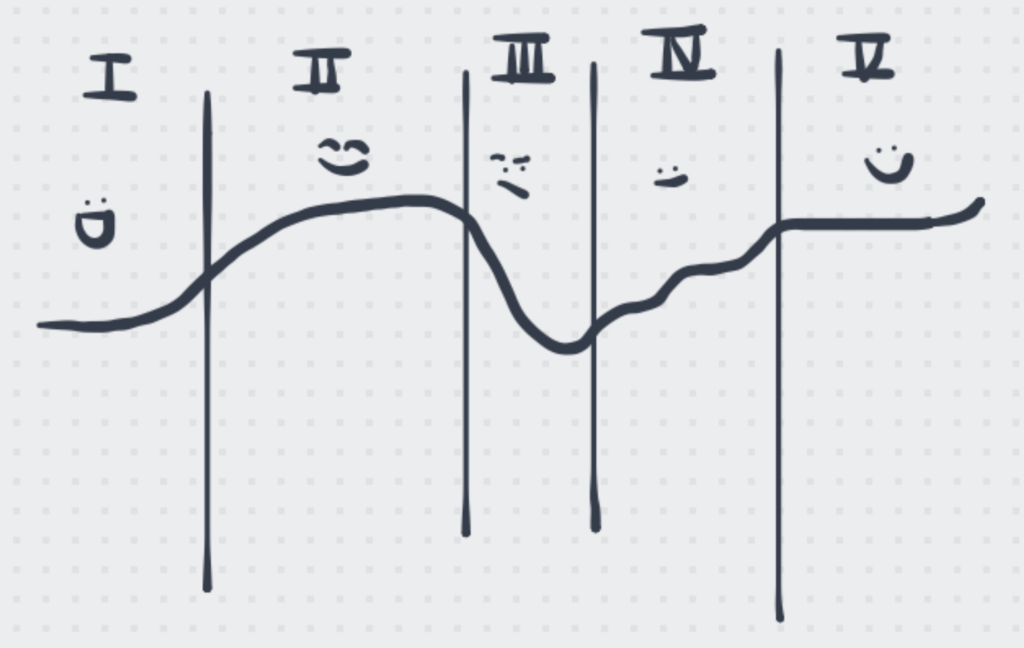
In his 1991 book Nichols talks about the development of the different Documentary Modes of Representation. While he does state that some of the modes have predominant time periods as well as geographical areas, this does not mean that one followed after the other or that some are inherently better than others. All of the modes have existed next to each other and still do. Moreover, a film can usually not just be categorized as one mode, but is usually a mixture of two or more (NICHOLS, 1991, p. 33). Nonetheless, Nichols tries to give some insights into what might have motivated the emergence of each of the four initial modes. The expository mode of documentaries was developed as a reaction to fiction films, which were considered to be too distracting and too focused on entertainment instead of conveying information. The poetic mode was created with the desire in mind to talk about historical information while showing the world in a new and different way. With the emergence of newer, more mobile technologies in the 1960s, observational documentaries emerged. They were also a counter-reaction to the morales in expository documentaries. Once the observational documentaries felt too passive and limiting, interactive documentaries were created, establishing more interaction with the subject and enabling filmmakers to visualize past events through witness statements instead of reenactments. Finally, reflexive documentary films were driven by the desire to question the representation of the topics itself as well as conventions of documentaries (NICHOLS, 1991, pp. 32–33). Seemingly, new modes have always been developed when old ones were found to be lacking. However, Nichols suggests that this might just have been due to the world meant to be represented in documentaries had changed and thus also the modes of representation had to adapt and still do. Especially developments like technological advances have had tremendous effects on documentary films throughout history. Also now, the fact that almost every major event is being filmed by multiple phone cameras changes the available footage immensely (Nichols, 2010, p. 160). 

To conclude, while the different modes have developed out of some dissatisfaction with previous ones, each of these six modes is still being used in modern documentaries and has its application. With changing topics, filmmakers, subjects and frameworks, the ideal way to approach a documentary project will vary greatly and will most of the time require aspects and ideas from more than one of the different modes.

Decisions

Right now the main thing that is holding me back is mainly just my inability to make decisions. I have a lot of different options and ideas about what direction my thesis could go in, but no certainty what I am going to do. I have been pivoting between many different decisions for months now, switching between feeling sure and very lost. So this blog post is my effort to finally cement one of the decisions I have made. The theory is that by putting it online for people to read, I will feel obliged to fulfil their expectations of my thesis. Objectively, this would never work because first of all, maybe about two people are ever going to read this far (thank you at this point) and second of all, no one will be so invested into my thesis topic as to actually form any huge expectations. But I am a notorious people-pleaser who is deadly afraid of letting people down, so for me this method will work just fine.
Full disclosure: for the following information on the thesis structure as well as the exact formulation of my research question, I have used ChatGPT to help me find something suitable.

The Topic

At my talk with Roman last week I presented him with the options I had narrowed it down to in my last blog post, with the sole goal in mind to walk out of that room with a decision for my topic. I’ll admit, that was a fairly ambitious plan, but although I didn’t have a fixed title, research question and structure ready by the end of our talk, it was really helpful in deciding what to explore further. I decided to somehow combine the notion of convincing people to travel more sustainably via a visual media, and the question of how documentary filmmakers’ audiovisual and ethical decisions on how to portray contrasting viewpoints can change the viewers’ perception.
I then explained my ideas and intentions to ChatGPT, asking him to come up with an appropriate research question. The following is the option that resonated most with me and that I felt like represented best what I want to do with my thesis.
“How can the design of a documentary—through audiovisual style, narrative structure, and ethical framing—be leveraged to fairly present conflicting viewpoints while effectively motivating audiences toward more sustainable travel behaviors?”

The Title

Well, this one is still a work in progress, but ChatGPT and I have come up with some options that I already like the sound of:

“Seeing Fairly: Ethical and Audiovisual Strategies for Persuasion in Sustainability Documentaries”“Representing Conflict Fairly: Ethical Documentary Design in the Context of Sustainable Travel Communication”
“Influencing Perception Ethically: Documentary Media Design for Sustainable Travel”
“…: Ethical Documentary Strategies for Fair and Persuasive Sustainable Travel Communication”

One idea I have had for a while now is for the title of my documentary project, which I would like to call Only Planet, as a reference to both the travel guide company Lonely Planet and to the fact that Earth is the only planet we have and we have to take better care of it. When I asked ChatGPT about its associations with the name though, it immediately jumped to a connection with Only Fans, so before I make a final decision on the name, I might test it out with real people in my life to see which association they would make first.

The Methods

For my research on documentaries and how different filmmakers approach the task of portraying contrasting viewpoints as well as treating the topic of sustainability, I want to both interview experts in the field, who can tell me first hand how they would deal with such issues. Furthermore, I would like to develop an informed framework for analysing different documentaries myself and categorising them within my thesis. For writing about the current state of research, I will rely heavily on scholarly literature on the topic.

The Structure

The following would be a rough outline of how the thesis might be structured to properly deal with the topic. While a lot of this will most likely still change throughout the course of the next few weeks, for now it is a good starting point to know what chapters I will definitely have to write, and to be able to prepare literature and also excerpts for my thesis. Once again, the structure was provided by ChatGPT after I had prompted him with the topic, research question, and methodology of my thesis. I then added some comments of my own for what I might want to write about in certain chapters.


1. Introduction

1.1 Background and significance
-> talking about sustainable travel as well as documentary filmmaking and viewer persuasion

1.2 Research problem

1.3 Research question + sub-questions

1.4 Methodological overview

1.5 Structure of the thesis

2. Theoretical & Conceptual Framework

2.1 Documentary Theory & Styles

-> talking about the theory behind documentary filmmaking, what types and styles there are, how to categorise

2.2 Media Design for Persuasion & Behaviour Change

-> talking about persuasion through media in general, empathy, sustainability persuasion specifically

2.3 Fairness, Credibility & Trust in Visual Media

-> the ethics behind it, how fairness is perceived

3. Methodology

3.1 Research Design

-> explanation and justification of used methodology, also how literature, research and practice tie together

3.2 Data Collection

-> describing criteria for which documentaries to analyse and which experts to talk to

3.3 Analytical Procedure

-> creating the framework for film analysis as well as the set of questions for expert interviews, also considering ethics and viability

4. Analysis & Findings

4.1 Content Analysis Results

-> how the documentaries analysed conflicting viewpoints, ethical considerations, common techniques

4.2 Expert Interview Findings

-> describing the expert’s answers, methodologies and approaches to documentary filmmaking, conflicts and ethics

4.3 Synthesis of Findings

-> see whether there are common themes in analysed films and amongst experts, see how different results might be combined

5. Practice-Based Component (max. 1/3 of thesis)

5.1 Project Description

5.2 Application of Findings

-> how theoretical findings can be applied to my own practical work / what I could have done better

5.3 Reflective Evaluation

6. Discussion

6.1 Interpretation of Results

6.2 Theoretical Implications

6.3 Practical Implications

6.4 Limitations

7. Conclusion

IMPULSE: Travelling to Sweden

In these impulse blog entries we are supposed to talk about a cultural experience we have had, right? And what is travelling if not a cultural experience? As to the relevance my journey to Malmö has for my master’s thesis, I did take the same trains I will be needing for my journey to Lapland, which I will be documenting. Of course I did not just travel all the way to Sweden just to be able to write another blog entry, but I will gladly take the opportunity to use my experience productively. So in this blog entry I will be analysing what observations I have made on my way to the north that might come in handy when repeating my journey in February.

My Travel Companion

Well, not only did I travel part of the same route as I will in February, I also had the same travel buddy join me: my mom. There are some valid reasons for it, both because my mom and I share some of the same passions for travelling, spontaneity, Scandinavia, and sustainability, and also because she’s my mom and I like spending time with her. However, we hadn’t travelled together just the two of us in about a decade, so in a way this trip was also a good way of figuring out whether the two of us were compatible travellers. Some observations I have made on this topic were that while we both are quite relaxed, my mom does enjoy a higher level of comfort, probably due to the fact that she is just not 24 anymore, but also that she has significantly more money at her disposal than a 24-year old (me in this case) would have. While, if I had been travelling by myself, I would have just booked a seat on the overnight train and gambled whether I could upgrade it to a mini sleeping cabin on the day of, my mom went to the register at the train station (yes, like real life people and stuff) and made the reservations for our sleeper cabins a month in advance. That being said, I was very grateful that she did (and also paid for my reservation <3) because I slept the whole night through on the train, feeling better rested than most mornings when I wake up for FH. So to summarise, I believe my mom and I complement each other quite well when on holiday, taking turns who gets to be relaxed and who stressed out, having the same priorities (i.e. looking for cute shops and taste-testing cinnamon rolls), and both being very flexible about our plans (like spending the whole day at a children’s museum when it is too rainy to do any sightseeing).

My Route

In order to get to Malmö without having to fly, we decided on taking the overnight train to Hamburg, then a 5-hour train ride to Copenhagen and another 30 minutes to Malmö. The first train ride went by in no time, because all we essentially did was fall asleep, wake up shortly before Hamburg, have breakfast delivered to bed and then we were already there. During the train ride to Copenhagen I mostly worked and we played cards, and on the ride to Malmö most of what we did was just admiring the Öresund bridge and taking pictures. So all in all, the journey was really enjoyable and didn’t feel long at all. When going to Lapland in February, however, this is of course only half of the distance we’ll be making. We will have a stopover in Copenhagen, from there we will journey on toward Stockholm and then take another overnight train, taking us all the way to Lapland.

My Luggage

While I severely overpacked for the 4 days we actually spent in Malmö, I will surely be having even more luggage the next time around. This time it went quite smoothly with having one big backpack and a small suitcase and I’m thinking for February I might just pack all of my clothes into a slightly bigger suitcase and then have a backpack for most of the camera equipment. If I find out that on our journey farther north there are some passages where pulling a suitcase is simply not an option, I might have to reconsider that choice and maybe switch to a duffel bag instead. But all in all, manoeuvring my luggage proved to be fairly easy this time around.

My Film

While mostly for my own entertainment and for the memories, I did bring a camera with me and take some photos as well as video snippets, also as sort of a “trial run”. One thing I realised though is that I felt a little disconnected from the activities if I was “the one with the camera”, documenting things. It obviously makes sense that I felt that way, but this time it did keep me from reaching for my camera quite a few times because we were actually there to visit my best friend who I hadn’t seen in months and I wanted to spend as much uninterrupted quality time with her as possible. Next time around though, the story is going to be a different one, because I will be travelling with mostly strangers (except for my mom of course, but I consider her as more of a camera assistant than film subject), thus I will more easily find into my role as observer I believe. I am quite used to that role due to working in event photography and videography a lot, where being invisible and unnoticed leads to the best results most of the time.

My Conclusion

All in all I can say that the trial run for our journey in February was a great success, also showing me what I might have to take into consideration, also what clothes to pack and which ones to leave at home, and what to expect from the train rides up north. I am thoroughly excited for February and I feel a little more confident and assured that everything might work out somewhat how I imagined it would.

Exploring my Options

I feel like, even though I have had a fairly clear overall direction for my topic from the very beginning, I always thought that the perfect idea for a more specific research question will come to me as I learn more about the topic. 

Well, that still has not happened and I’m beginning to stress out a bit. So, this blog post is my effort to sort through my own brain and figure out what I want to work on for the next 6 months. I know, this isn’t the type of scientific, perfectly cited content expected of these blogposts, but I promise, as soon as I have figured out what topic I want to write those perfectly researched texts about, I will put all my effort into it. 

I will use this blog post to create a comprehensive list of topic ideas I have had so far, a possible research question, an overview of the topic and what possible pros and cons would be.

Documentaries and Environment/Responsible Tourism

Possible Research Questions: How can documentary film function as a form of environmental communication in the context of sustainable tourism?
In what ways can documentary storytelling influence audience perceptions of responsible tourism?
To what extent can visual media foster behavioral change toward more sustainable travel?

Overview: I would explore the overall topic of environmental documentary films, how they are structured, which storytelling tools they use and how they can shape people’s views and behaviours. Maybe I could also talk about environmental communication and sustainable tourism in general and then do a deep dive on documentaries on the topic. 
With the second research question, my focus could also maybe be more on documentary storytelling in general, and then later applying it to the topic of responsible tourism.

Methods: I would first off look for literature on the topic, exploring the state of the art as well as past research and then analyse different enivronmental documentaries amongst other forms of media on how they aim to instill a desire for change in their viewers. A qualitative analysis on actual effects of these pieces of media would also be interesting, I am however not sure how I would approach this task. 

Pros: The theoretical part of my thesis would tie nicely into and prepare me for my practical project next semester, where I could apply what I learned about environmental documentaries to my own work. 

Cons: I have not yet been very successful in finding a lot of literature on the topic, which is why I am afraid I might not be able to amass enough knowledge on the topic in order to analyse and judge the pieces of media accurately. Moreover, I do not know if analysing different pieces of media alone would be enough of a scientific method for my master’s thesis.

Entschleunigung / Slow Media = Slow Travel?

Possible Research Question: How can media design interventions based on slow media principles encourage slower, more mindful, and sustainable forms of travel?

Overview: I was intrigued by the idea of connecting the slow media and the slow travel movements, exploring how travel content promoted via slow media might encourage slower and more conscious travel alongside a more conscious media consumption. 
In a world, where everything just gets faster and faster, many have recognized a need to slow down in their lives. This desire for a more conscious and more sustainable life is the most pressing on social media, where content just keeps getting faster and shorter, and in travel, where short and frequent holidays by plane, visiting every major sightseeing or insta spot are more popular than ever. 

Methods: I would again look into current research on the topic (if there is any) and explain the issues of our fast paced world, both on social media, in the fashion or food industry and in the travel sector. I would then talk about the slow media and slow travel movements and on what principles they operate, maybe finding some examples to analyse. I could also imagine creating a survey to see what the overall opinion on our fast-paced society looks like and whether the need for slower living truly exists.
In order to connect slow media to slow travel, I might be able to analyse examples or create different versions of media to compare in the survey. 

Pros: As far as I have seen, creating the connection between slow media and slow travel has not been done too often before, meaning the thesis might have some originality to it. I also feel like the documentary I want to create would tie well into the slow media idea, even if I would not be talking about documentaries specifically in my work. 

Cons: I have struggled a bit to find literature on the topic, or on slow media in general. Moreover, I am afraid that the term and the idea of “Slow Media” are not scientifically based enough to write a whole thesis on the topic. So, the whole thesis might become a bit too abstract, straying from clear-cut scientific writing too much.

Portraying Conflict in Documentaries

Possible Research Question: How do documentary filmmakers’ audiovisual and ethical decisions shape the representation of conflicting standpoints and influence viewers’ perceptions of fairness?

Overview: For this topic I would explore the topic of conflict in documentaries and how filmmakers can assure that their final work includes enough tension and conflict without harming any of the participants. Here, ethics would also come into play and would need to be talked about in depth. Portraying contrasting ideas and viewpoints is a common occurrence in documentary films and I would like to explore the different ways this task can be approached. In the case of my documentary this conflict would be between sustainable travel and the booming tourism industry, causing overtourism. Maybe conflicts could also arise between tourists and locals affected by them. 

Methods: As with the other topics, literature research would be at the start of my thesis, exploring how storytelling can work in documentaries, which role ethics play in planning and creating a documentary film and the different ways conflict can be addressed. I would also analyse different documentaries, looking at which conflicts appear and how they are treated. 

Pros: Doing a deep dive into how conflicts can be used to tell a story and dealt with in an ethical way can be good preparation for my own documentary project next semester. Also Daniel Bauer suggested this topic to me, so I feel a bit more secure about the fact that this would be an actually feasable topic people would want to read about.

Cons: Throughout the last week I have tried to find literature on the topic of conflict in documentaries and almost every search result that came up had something to do with political conflicts or war and documentaries about that, which is not really my aim for the thesis. Like with the other topics, I am kind of afraid that I won’t be able to find a lot of scientific literature on the topic. 

Conclusion

Some small part of me was hoping that, after writing all of this down and getting it out of my head and onto paper, I would see it clearly which topic is the right one. That is not quite the case, I’m still as indecisive as ever. Nonetheless, I feel like this blog post has given me some tangible bulletpoints to orient myself at and, maybe more importantly, it has shown me apects I am still unsure about with every topic, where I can ask targeted questions to my professors. So I am hopeful that by the next blog post I will have finally made a decision!

Seeking Conflict Ethically

In this blog post, I will be analyzing the article Dramatic Conflict in Documentary How to Build it Safely? published in 2023 and written by Andrei Tache-Codreanu (Tache-Codreanu, 2023, pp. 473–478). The text talks about how in order for a documentary film to be compelling and catching, as all films and stories, it needs to have a conflict consisting of a protagonist and opposing antagonistic forces, working against the protagonist (Tache-Codreanu, 2023, p. 473).

In documentaries however, seeking this type of conflict might create ethical dilemmas as the subjects being filmed and observed are real-life people with real problems, for whom the experience of being put onto a screen might be (re-)traumatizing.
Tache-Codreanu describes how, many times, talking to a camera can lead participants to reveal far more than they had intended initially intended, making them very vulnerable. Documentary filmmakers need not lose sight of that when chasing their perfect story (Tache-Codreanu, 2023, pp. 474–475).

In chapter 2 of his article Tache-Codreanu describes the parallels documentaries bear to psychoanalysis in the way that patients or, in the case of a documentary, participants wish to have an opportunity to have their story heard by someone empathetic and respectful, who will ideally help them understand it better by having someone reflect the story back to them in a broken down and simplified way. The main difference between the two would be that documentary filmmakers do not have the participant’s healing process as their highest aim, it might just be a lucky side effect of their main goal: creating a captivating and interesting piece of media. This discrepancy between participants feeling like they will achieve some healing or closure by revealing some potentially traumatic information and the filmmaker possibly only aiming at getting an intriguing story, whatever it takes, might lead to an exploitation of the participant’s trauma when filmmakers push too hard. This is why Tache-Codreanu describes that, like in psychoanalysis, conversations in documentaries should be able to flow freely without being forced (Tache-Codreanu, 2023, p. 475).

Nonetheless, even when the interview situation itself is pleasant and freeing for the participants, Tache-Codreanu talks about how seeing themselves in the finished product can lead to anxiety if the participants do not recognize their doppelganger on the screen. This separation between their perceived self and what the editing process and style of the documentation have made of them can cause a great deal of pain and trauma for the film’s subjects. This is why Tache-Codreanu making participant’s also feel included in the rest of the creative process, giving them a certain amount of control over the version of themselves they are going to show the world. This collaborative approach can look like explaining the different steps of the filmmaking process, including the film team and equipment, making the participants feel as a part of the team, but can also go so far as to ask creative input from them for how they want the documentary to look and feel like. This inclusion would help people feel not as test subjects to be studied under a microscope, but as active participants and proud part of the production, thus aiding in making them feel more comfortable with the results, even if deeply traumatic topics are treated. One method by Rosenthal, which Tache-Codreanu described is having a sort of warm-up phase before the actual interview starts where he just talks to the participant, maybe having a cup of tea and introducing the crew as well as the equipment and process, before the actual interview begins (Tache-Codreanu, 2023, pp. 476–477).

Tache-Codreanu concludes that in order to create meaningful and ethical documentaries that still tell captivating stories about real people, it is never a good idea to force answers out of the participants or edit the footage in a way that makes it seem more enticing, but less real. He says that truly moving stories come from a collaboration between filmmaker and film subjects where there are mutual trust and openness. Creating a safe space is the best method for getting honest and raw stories and letting participants have a say in the finished product assures a harmonious and ethical collaboration. Documentary filmmakers are wholly dependent on the stories they are told, so it is of utmost importance to treat those who tell these stories with care and respect (Tache-Codreanu, 2023, pp. 477–478).

Source:

Tache-Codreanu, A. (2023). Dramatic Conflict in Documentary How to Build it Safely?

IMPULSE: Doku Girls & Gods

Als zweiten Impuls für meine Blog Beiträge habe ich mir die 2025 erschienene Dokumentation Girls & Gods angesehen, in der Inna Shevchenko die Zuseher:Innen durch unterschiedliche Dialoge zum Thema Feminismus und Religion führt. Der Film scheut nicht davor zurück, Konflikt zu zeigen, entgegengesetzte Meinungen und Weltansichten zu thematisieren und so zu einem Dialog und einem Nachdenken über das Thema anzuregen.

Mit meiner Masterarbeit im Hinterkopf war es besonders spannend zu sehen, dass Interviews in Dokumentationen keineswegs immer neutral und objektiv geführt werden müssen. Shevchenko hat in ihren Konversationen mit unterschiedlichen Frauen aus diversen Religionen, Kulturen, und Überzeugungen sehr klar Stellung zu den Themen bezogen und auch ihr Hintergrund als feministische Aktivistin wird klar thematisiert. Damit steht sie in vielen der Gesprächen als ganz klare Gegenspielerin zu den oftmals streng-gläubigen Frauen und deren patriarchalen Überzeugungen.

Und obwohl sie in keinem der Interviews je respektlos oder angreifend wird, erkennt man ganz klar ihre Meinung und auch ihre Leidenschaft zu gewissen Themen. Als Zuseher:In fühlt man sich stark geneigt, ebenfalls Shevchenkos Überzeugungen zu teilen und auf ihrer Seite der Diskussionen zu stehen. Die Dokumentation hat meiner Meinung nach aber trotzdem beide Seiten des Themas ganz klar beleuchtet und auch durch Shevchenkos Art und Weise ruhige, respektvolle und interessierte Gespräche mit Personen zu führen, deren Überzeugungen das genaue Gegenteil ihrer eigenen darstellten, hat Zuseher:Innen das Gefühl gegeben, einem ausgeglichenen und produktiven Dialog beizuwohnen.

Girls & God behandelt ein extrem polarisierendes Thema ohne es jedoch mit Samthandschuhen anzufassen. Die Filmemacher nehmen eine ganz klare Position ein und schaffen es trotzdem aus dem Film keine Hetze gegen “die Anderen” zu machen, sondern ein passioniertes und doch respektvolles Gespräch zwischen Personen, die teils völlig konträre Lebenseinstellungen und Prinzipien haben und es dennoch schaffen, einander auf Augenhöhe zu begegnen. Nun, ich sage nicht, dass diese Art von respektvollem Dialog nur darauf zurückzuführen ist, dass in dem Film lauter weiblich gelesene Personen zu Wort kamen, aber ich sage auch nicht, dass ich das völlig ausschließe.

Mein Fazit zu dem Film ist, dass er es unglaublich gut schafft, in den Zuseher:Innen genau die richtige Mischung aus Empörung, feministischer Solidarität, und Weltoffenheit zu erzeugen, um wichtige Gedanken und Dialoge anzustoßen. Während Girls & Gods ganz klar zeigt, wie wichtig es ist, das Gespräch mit denjenigen zu suchen, deren Weltanschauung sich ganz stark von der eigenen unterscheidet, hat er Zuseher:Innen auch dazu an, darüber hinaus nicht unsere Gemeinsamkeiten zu vergessen.

Die Dokumentation zeigt bewusst unterschiedliche Meinungen und Überzeugungen und lässt nicht die Argumente der anderen einfach weg, während sie trotzdem sehr klar Stellung zu den thematisierten Problemen bezieht, ohne predigend, abwertend oder ignorant zu sein.

Für meine eigene Arbeit lässt sich diese Art und Weise der Konfliktdarstellung vielleicht aufgreifen, da ich zwar ganz klar Stellung beziehen will zu Nachhaltigkeit im Tourismus, gleichzeitig aber nicht jede Person die regelmäßig fliegt oder jede Kreuzfahrtgesellschaft verteufeln und pauschal als schlecht darstellen will. Stattdessen würde ich gerne einen Raum für Dialog schaffen, der es Zuseher:Innen ermöglicht, das ganze Bild zu sehen und sich eine eigene Meinung zu machen, sowie für ihr eigenes Leben vielleicht die passenden Schritte in Richtung Nachhaltigkeit zu setzen.

Proseminar Task: Analysing a Master’s Thesis

The master’s thesis with the title “Overtourism destination: Finding the positive message in overtourism DMOs social media” (Limbu, 2022), which was published in 2022 by Dil Kumar Limbu at the Faculty of Social Sciences and Business Studies at the University of Eastern Finland, analyses how destination marketing organisations (DMOs) deal with the issue of overtourism in their social media marketing, especially on Facebook. 
The thesis makes a qualitative analysis of two different DMO Facebook accounts; Visit Reykjavik and I Amsterdam, over the course of a year.

Unfortunately, the thesis was not created alongside a workpiece, which could have been used to dive deeper into the topic. Generally, I would have hoped to find a more design-heavy thesis on the topic, but did not succeed unfortunately, which is why this analysis focuses more on how the scientific background and analysis of media content could look.

Overall presentation quality

Scientifically, the thesis fulfils a fairly high standard with a well-reasoned methodology and a thorough overview of the most important scientific backgrounds as well as a comprehensive presentation of the current knowledge pool. All this information is presented in a well-structured manner that is easy to follow. 

Degree of innovation

While part of the thesis was used to sum up and explain existing ideas and terms in marketing and tourism, the main core of Limbu’s work could be considered innovative, for connecting the topics social media marketing and overtourism as well as for deducting an independent in-depth analysis of Facebook posts. 

Independence

This also speaks for the student’s independence, seeing as the research conducted has not been done in this way before, meaning a completely new and independent analysis structure had to be developed. 

Organization and structure

The thesis is structured into an introduction, explaining the background, objective and approach of the study, a main part where different terms and ideas around marketing, social media in tourism and over-tourism are explained, then a methodology part talking more about the conducted analysis and an in-depth discussion of the results as well as a conclusion, summarising the whole thesis and taking a look into the future. 

Communication

Overall, the thesis is well structured, however, concerning the quality of the written text I found the language to be a bit lacking at times, with some sentences being either grammatically wrong or too vague to properly grasp the conveyed idea. This sometimes made it difficult to follow the point made and was generally detrimental to the effectiveness of the communication. 

Scope

For each of the chapters, an appropriate and balanced number of pages was allocated, leading to the feeling that the thesis had an appropriate length and scope for the treated topic. With a page number of around 50, the scope also seems appropriate for a master’s thesis. 

Accuracy and attention to detail

As I have mentioned before, the attention to detail was focused more on the scientific work and the discussed results, and less so on the linguistic finetuning of the text. While the scientific content is arguably very important, it is unfortunate when the style of the written text distracts from the actual content instead of properly supporting the scientific results. 

Literature

The thesis includes an 8 page long, comprehensive literature list, which to the best of my knowledge includes a well-balanced mixture of articles, books and various webpages. While I have not checked each and every one of these sources, the ones I looked up all seemed to be of appropriate quality and credibility for usage in a master’s thesis. 

Conclusion

The thesis I chose to evaluate was unfortunately not written in the field of media, which is why there was no workpiece to analyse and the overall style and focus of the work might not have been what will be expected from our theses. Nonetheless, I found it interesting to see how another student from another field has approached and analysed the topic of media and overtourism, or at least part of it. The scientific work in the thesis seems to be sound and very thoroughly conducted, leading to newly synthesised information. However, one of the weak points of the thesis for me was the linguistic style and some of the errors made, which impeded the reading flow whilst analysing the thesis. Nonetheless, the thesis certainly fulfils a high scientific standard and provides valuable information on the topic. 

Literature

Limbu, D. K. (2022). Overtourism destination: Finding the positive message in overtourism DMOs social media.

IMPULSE: Doku Fernweh und Flugscham

Als ersten Impuls und erste Inspiration für mein Masterarbeit-Thema habe ich recherchiert, welche anderen Dokumentationen zum Thema Overtourism, nachhaltiges Reisen und die Zukunft des Tourismus bereits produziert wurden und bin dabei auf die Dokumentation “Fernweh und Flugscham – Wie wollen wir in Zukunft reisen?” von Antje Christ auf der ARTE Mediathek gestoßen.

Die Dokumentation behandelt allgemein die Probleme die mit der immer weiter steigenden Menge an Touristen einhergehen. Im speziellen wird auf einzelne Hotspots eingegangen wie zum Beispiel Barcelona, Venedig und Dubrovnik.

Palau wird als Positivbeispiel herangezogen, da hier großer Wert darauf gelegt wird, die Einreisenden Tourist:Innen darauf hinzuweisen, respektvoll mit dem Land umzugehen. Hierfür wurde ein eigenes Video produziert (siehe: https://www.youtube.com/watch?v=UKhmZbY3FYY), welches jeder einreisenden Person gezeigt wird, sowie ein spezieller Passstempel, mit dem man sich bei Einreise zumindest symbolisch dazu verpflichtet, sich dem Land gegenüber respektvoll zu verhalten.

Während solche Maßnahmen durchaus das Bewusstsein und das Verantwortungsgefühl der Reisenden stärken können, werden sie alleine nicht die Lösung gegen Overtourism sein.

Die Doku beschreibt, dass das große Problem im heutigen Tourismus die schiere Menge und Konzentration von Tourist:Innen an bestimmten Orten darstellt. Und obwohl Tourismus durchaus auch neue Jobs und Möglichkeiten für Anwohner dieser Hotspots schafft, sind dies meist sehr schlecht bezahlte und unsichere Berufe. Eine der notwendigen Maßnahmen, welche in der Doku beschrieben wird ist daher die Dezentralisierung von Touristenströmen, um Hotspots zu entlasten. In Barcelona werden beispielsweise immer mehr Attraktionen in der direkten Umgebung der Stadt beworben um die Touristenmassen im Stadtkern auszudünnen und Touristenströme bewusst zu lenken und zu verteilen.

Auch in Venedig ist die schiere Konzentration neben den Kreuzfahrtschiffen das größte Problem. Die Touristenmassen konzentrieren sich auf einige wenige Attraktionen, während Kreuzfahrtschiffe die Luftqualität drastisch verschlechtern und ihre Passagiere kaum Geld in der Stadt lassen. Hier gibt es Überlegungen, in Zukunft digitale Systeme wie beispielsweise Überwachungskameras, Smartphone Tracking, sowie Big Data einzusetzen um die Bewegungsmuster von Touristenmassen zu verfolgen und dementsprechend zu reagieren und sie zu steuern. Hier wurde in der Dokumentation auch darauf eingegangen, dass Tourist:Innen auch heute schon nicht nur durch bewusst wahrgenommene Eindrücke, beispielsweise auf Social Media oder im Fernsehen, sondern auch durch die darunterliegenden Algorithmen stark unterbewusst beeinflusst werden.

Die Dokumentation zeigt aber auch mögliche Zukunfts-Szenarien auf, wie Tourismus nachhaltiger gelebt werden kann. Beispielsweise wird von “Resonanztourismus” gesprochen, bei dem das Ziel sein soll, dass sich Besucher:Innen kaum noch von Einheimischen unterscheiden lassen, sondern mit den lokalen Gegebenheiten quasi verschmelzen. Außerdem soll “Slow Travel” in Zukunft als Kontrast zur alltäglichen Gehetztheit stehen und damit auch authentischere Erlebnisse für Reisende ermöglichen.
Im Film wird erklärt, dass Tourismus nur dann zukunftsfähig sein kann, wenn immer weniger große Konzerne involviert sind, man selten aber dafür länger verreist und man so gut es geht versucht auf umweltschädliche Reisen zu verzichten.

Die Doku beschreibt noch viele andere wichtige Punkte und Probleme, die von mir aufgezählten waren jedoch die, die bei mir am meisten Eindruck hinterlassen haben und mir den größten Denkanstoß gegeben haben. Allgemein hat die Doku in mir die Frage geweckt, ob möglicherweise unsere grundlegende Art in der heutigen Zeit Konsum zu betreiben auch das ist, was aus Tourismus ein Problem macht und ob vielleicht ein allgemeines Umdenken notwendig ist.
Warum sollte man aber nicht genau im Tourismus mit diesem Umdenken starten?

Für alle, die Interesse an der Dokumentation haben, hier noch der Link: (disclaimer – sie ist leider nur in Deutschland oder mit deutschem VPN verfügbar)
https://www.arte.tv/de/videos/100296-000-A/fernweh-und-flugscham/

My plans for the next semesters

I have done and learned quite a bit these past two semesters and in this blog post I want to give a brief summary of what has happened so far and what the next two semesters might look like for me in Design and Research.

So far I have mostly focused on the production side of things, reading up on how to film, edit and fund a documentary as well as how to properly conduct interviews. I have also done some research on the different forms of tourism and how they can positively or negatively impact locals and the environment. The different types I treated so far were mostly overtourism and responsible tourism as two very contrasting examples.

Going from there I have also started a bit to connect different types of media with the effect they have on travel behaviour. For the next semester I want to dive deeper into this topic, figuring out which types of media have the strongest influence and why. I also want to figure out whether this influence always has negative effects on the specific areas or if media influence can also be used for good. Therefore I want to explore different examples of times when the media has had negative impacts as well as maybe positive ones. I also want to create a collection of documentary films I deem valuable and fitting for the topic and explore what it is about them that appeals to me.
I want to research which connections have been drawn before and how researchers came to their conclusion in order to maybe do some research myself on the topic. I want to contact different organisations working on the issue of overtourism and how to improve it, in order to see how they approach the problem.

Furthermore, I want to get into concrete planning for my practical work in the end, figuring out where and what I want to film exactly and how to do it in the most efficient way. But not only should my practical work slowly take shape, I also need to figure out how to integrate the theoretical part in a fitting way and what I want to explore there specifically.

All in all, my mission for next semester and maybe even already summer break, is to specify my research further and narrow down what I have done so far to a workable topic for my Master Thesis. I feel like the more I research, the better my insight will be into what makes a good topic and what will be interesting to write and read about as well as how to collect the data and information I will need.
Another issue I want to focus on during the summer is planning the project with my project partner at the travel agency, talking about which journey I might join and what could be interesting and valuable to document.

So all in all, my blogs so far have been pretty interesting to write and research for, as well as my semester project where I got a first idea of what it can look like to film interview, but all of my effort has been fairly unfocused and a bit all over the place. So for the next semester I think I also want to make a plan beforehand of what I want to explore in each blog posts in order to have more of a structure and concrete plan behind it. I believe this will help me see results better and also steer my efforts into a more productive and targeted direction and lead up to the start of my Master Thesis.

I am looking forward to narrowing down my topic and diving deeper into what I want to do, but I am also a bit overwhelmed still because there are so many different ways I could go with the topic and deciding which one is the most suitable for my thesis. But I believe that researching further and also talking to my peers, friends, relatives and experts about the topic will help me see what is the most promising path to take.
So to conclude this semester, I have learned a lot about the topic as well as about the practical aspect of my thesis, and now it is time to narrow down the broad basis I have so far in order to get more specific the next semesters.