Public spaces are more than just places we pass through—they are where communities grow, and social connections silently form. The concept of social capital—the value created through relationships and social networks—often thrives in these shared spaces, but it’s rarely noticed or understood. Additionally, there are countless unseen roles and small contributions made by individuals that keep these spaces welcoming and functional. From janitors who clean early in the morning to street vendors who create a sense of familiarity, these “unseen workforces” form an essential part of the community fabric.
Taking Inspiration from Interactive Projects
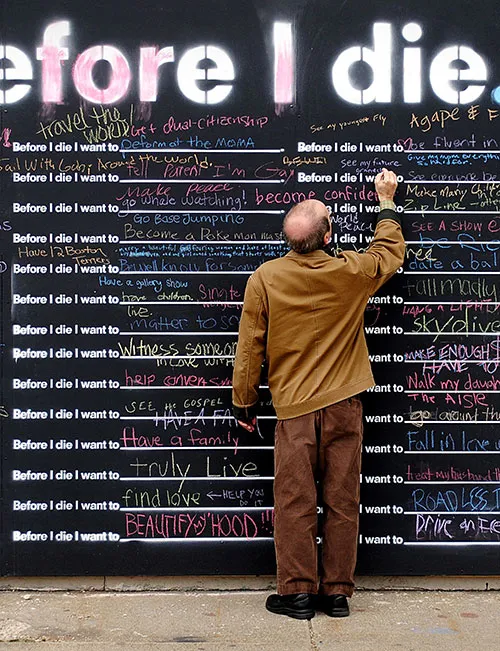
Communication design can illuminate these hidden layers of social capital and unseen labor, making these connections visible and appreciated. For example, artist Candy Chang’s Before I Die project, launched in New Orleans, invites people to share personal hopes on public chalkboard walls, creating spontaneous, shared moments that strengthen community ties.
Similarly, Subway Therapy by Matthew “Levee” Chavez took place in New York City’s subway stations. By encouraging commuters to leave sticky notes with messages, he created a shared, empathetic space during a time of high tension.


Krzysztof Wodiczko’s Place des Arts projection in Montreal, Canada is another powerful example. Using video projections, Wodiczko gave a platform to marginalized voices, allowing individuals to share their personal stories and feel seen within their own city.

Towards an Inclusive and Interactive Future
Looking forward, the design of public spaces is moving toward a more inclusive approach—one that fosters a sense of belonging for people of all backgrounds. By understanding and revealing the invisible rituals that already exist, we can create environments where everyone feels seen and heard, even without speaking. Communication design has the potential to amplify these subtle, often overlooked interactions, turning everyday moments into powerful experiences of connection.
Over the next few semesters, I will be diving deeper into how communication design can illuminate these unseen social bonds. This will involve exploring case studies, conducting field research, and experimenting with new design approaches. The goal is to create design interventions that not only highlight invisible connections but also strengthen them, making the silent rituals of public life more visible and meaningful to all who encounter them.
Sources:
National COVID Memorial Wall – London, England
https://www.covidfamiliesforjustice.org/
Before I Die – Candy Chang
https://candychang.com/work/before-i-die
Subway Therapy – Matthew “Levee” Chavez
https://www.subwaytherapy.com/
Projection: Place des Arts – Krzysztof Wodiczko
https://www.publicartfund.org/exhibitions/view/krzysztof-wodiczko-places-and-projections/
Certeau, M. de (1984). The Practice of Everyday Life. Berkeley: University of California Press.
Ledwith, M. (2011). Building Social Capital: A Learning Approach to Community Development. Wiley-Blackwell.
ter Kuile, C. (2020). The Power of Ritual: Turning Everyday Activities into Soulful Practices. Shambhala Publications.
