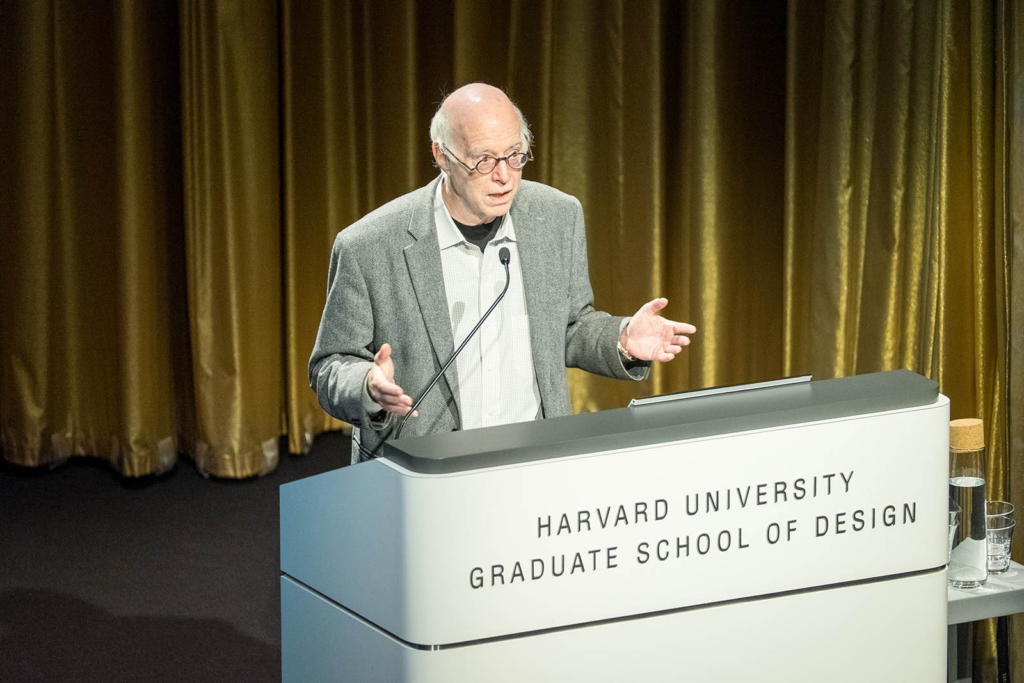
In one of my earlier impulse blog entries, I wrote about Richard Sennett’s book The Uses of Disorder. At the time, I had only just started reading it. But looking back now, I realise how much his work has influenced the way I understand my thesis topic.
I first came across his name in a very casual but memorable way. After one of our lectures at Kingston, I asked my professor if it would be possible to use my thesis topic for the research proposal we are preparing this term. I showed her my iPad, where the only thing readable on the screen was “CURATING CHAOS” in capital letters. There was no explanation, no context, just those two words. She was in a rush, but she immediately reacted and told me to send her an email and quickly said, “Look into Richard Sennett — Designing Disorder.” Even without seeing my full research, she was able to point me toward someone whose work directly engages with similar questions.
I later found out that Designing Disorder was not available at the library, so instead I borrowed his earlier book, The Uses of Disorder. Reading it became an important turning point in how I viewed chaos. Before this, I mostly saw chaos as something negative. Something that needed to be organised, controlled, or resolved. Chaos felt like a problem, something that stood in the way of clarity and meaning. My instinct was always to try to structure it.
Sennett introduced a different perspective. Instead of treating disorder as something to eliminate, he describes it as something necessary. He writes about how environments that are too controlled or too ordered can limit human experience. Disorder, in contrast, creates space for interaction, adaptation, and growth. His work, especially in relation to architecture, urban planning, and social structures, explores how environments can be designed in ways that allow for complexity rather than suppress it. The idea that disorder could be something that is not only unavoidable but also valuable was new to me.
The concept of “designing disorder” itself raises an interesting contradiction. It suggests that disorder is not simply the absence of structure, but something that can exist within structure. It can be shaped, framed and engaged with intentionally.
This made me reflect on my own understanding of creative direction. Creative direction is seen as the act of creating order: selecting, organising, and defining. But through Sennett’s perspective, I began to see it differently. Creative direction is not about eliminating chaos, but about navigating it.
Sennett’s work helped me realise that chaos is not the opposite of meaning. It can be the condition that allows meaning to form. This shift in perspective changed how I approach my thesis. Instead of trying to resolve chaos, I am now more interested in understanding how it can be engaged with, shaped, and curated.
