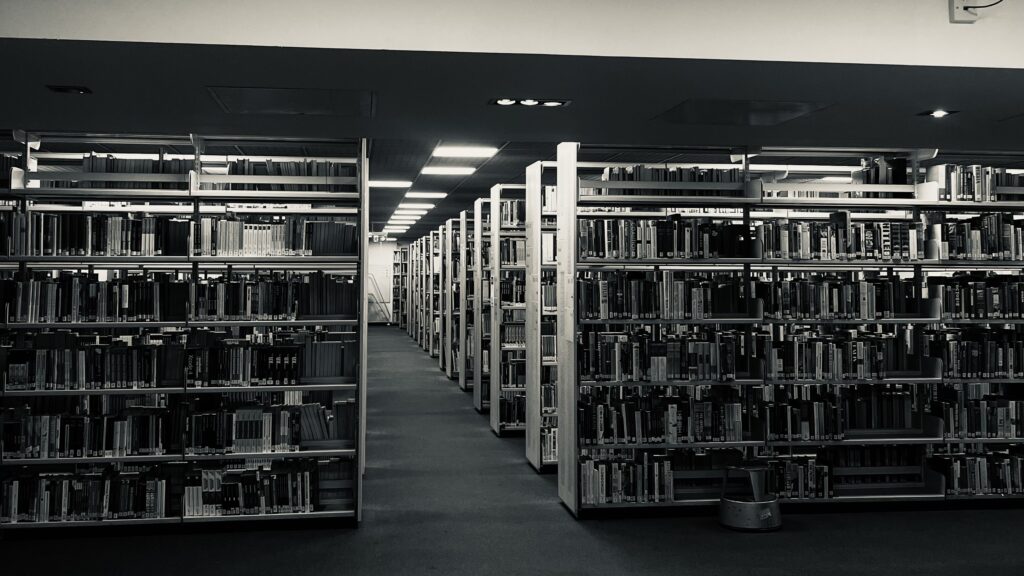
Throughout this research phase, I’ve spent a lot of time in libraries. Especially since coming to Kingston, visiting the library has become a regular part of my routine. This might be because of how big and comfortable the Kingston University library is, or simply because I feel motivated to make the most of my time here and use the facilities available to me. But I’ve noticed that the library has become more than just a place to work. It has become part of my research process itself.
I’ve always loved spending time in libraries and bookshops. As cheesy as it sounds, it really feels like entering a different world. There is something about being surrounded by books that makes knowledge feel physical and accessible. It creates a kind of quiet focus that is very different from being online. Even though I would argue that my social media feed is quite educational and inspiring, it doesn’t create the same depth of attention. Scrolling feels fast while being in a library feels slower and more intentional.
What became especially important during this phase was how I started collecting literature. Instead of using a structured or academic system, I began simply taking photos of the front and back of books that interested me and placing them into a Figma file. It’s probably the most unprofessional way of collecting literature for a thesis. But visually seeing the book covers alongside my thoughts made the process more engaging and personal. It didn’t feel like a boring literature research, it felt like building my own archive.
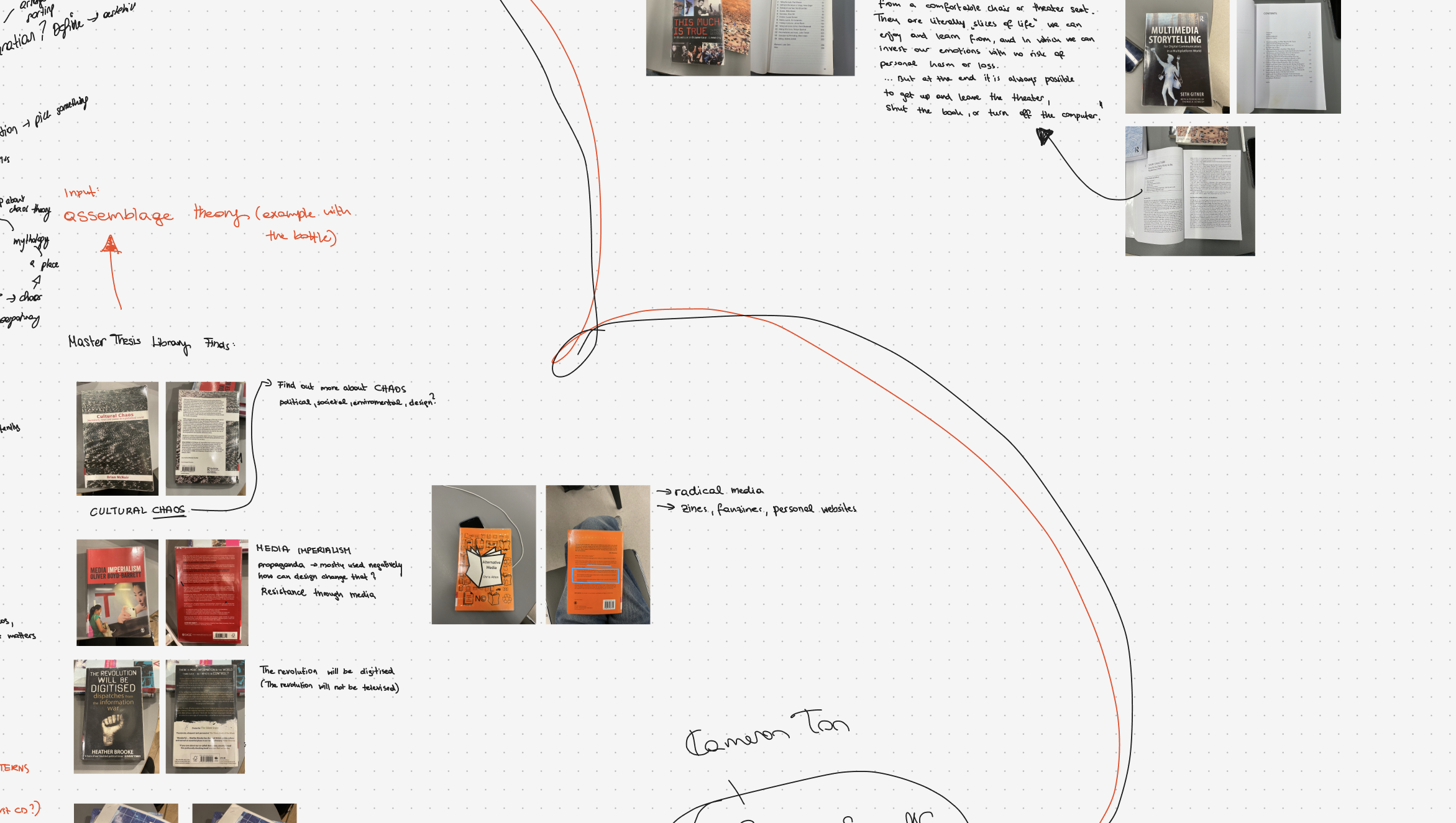
I didn’t even limit myself to design-related books. Most of my visits were to a different Kingston campus library and ended up in sections like psychology, politics, and cultural studies. I picked books purely based on intuition picking titles, colours, or topics that caught my attention, without worrying whether they were directly relevant to my thesis.
What surprised me was that even though these choices felt random, connections began to appear. Many of the books, in different ways, touched on similar themes: how people understand the world, how environments shape behaviour, how meaning is constructed, and how individuals exist within larger systems.
This experience also changed how I think about chaos in relation to research. At first, my approach felt disorganised. I wasn’t following a clear structure, and my collection of books came from different disciplines without an obvious order. But over time, patterns began to emerge. What initially felt like chaos started to form its own internal logic.
This impulse has influenced my research by helping me trust a more intuitive approach. Instead of forcing my thesis into a fixed direction too early, I’ve allowed myself to collect fragments, ideas, and references from different fields, wishing there was more time to just focus on this process. But unfortunately this phase of searching for a topic has to come to an end soon…
