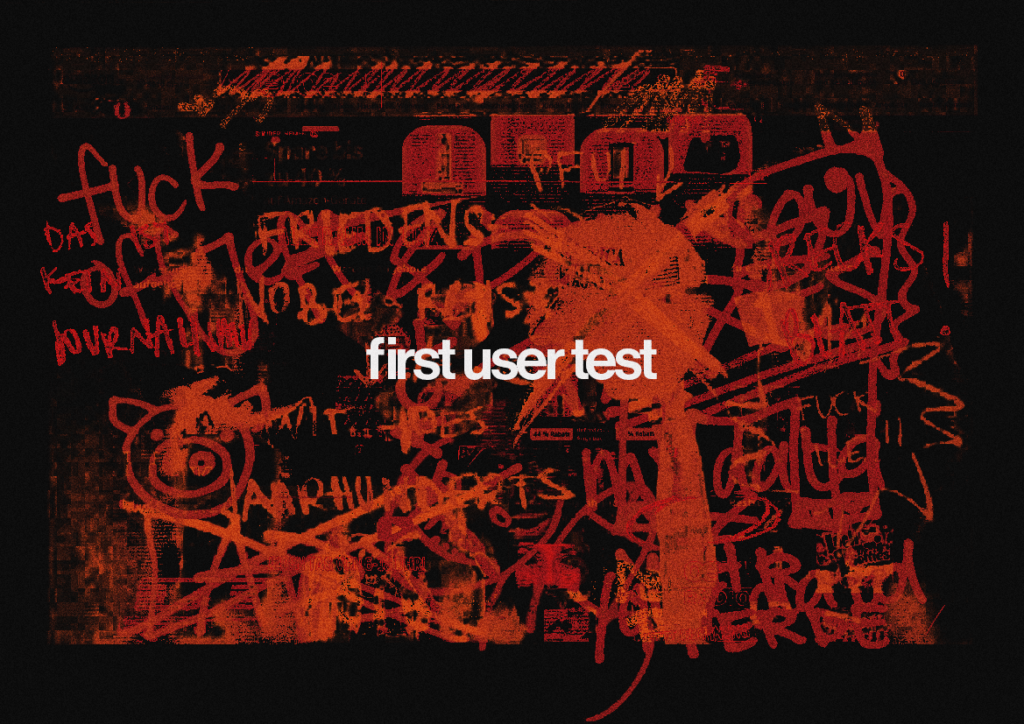
As part of my research for my thesis, I conducted an initial exploratory study to better understand how people express emotions, critique, and resistance through visual intervention. The broader context of my thesis focuses on digital activism as a form of action rather than communication, and on how individuals appropriate digital interfaces as cultural spaces.
For this first study, I worked with four participants. Instead of using interactive prototypes or digital tools, I chose a deliberately simple and low-tech approach. I selected a range of websites and printed them on paper. These included websites that are often considered controversial by the general public, as well as neutral corporate websites and generic online stores. Each participant received one printed website.
The task was intentionally open-ended. Participants were asked to draw, write, mark, or alter the printed website in any way they wanted. The only instruction given was to express their thoughts and emotions freely and to react honestly to what they saw. There was no specific goal, no design task, and no expectation to improve the interface. Participants were not given a time limit and could stop whenever they felt finished.
To avoid influencing the process, I left the room during the exercise. This decision was made consciously, as I wanted the intervention to feel private and unobserved. The absence of the researcher reduced performance pressure and allowed participants to treat the activity as an emotional outlet rather than a test situation. In this way, the act of drawing or marking became closer to a spontaneous reaction than a designed response.
The results of this study are a collection of visual artefacts. Participants crossed out elements, added aggressive or ironic comments, highlighted specific interface components, exaggerated logos, or covered parts of the page entirely. Some interventions were chaotic and emotional, while others were more precise and symbolic. Despite the small number of participants, clear patterns began to emerge. Many participants focused on branding elements, headlines, or images rather than functional components such as navigation or buttons. This suggests that emotional reactions are often directed toward symbolic aspects of an interface rather than its usability.

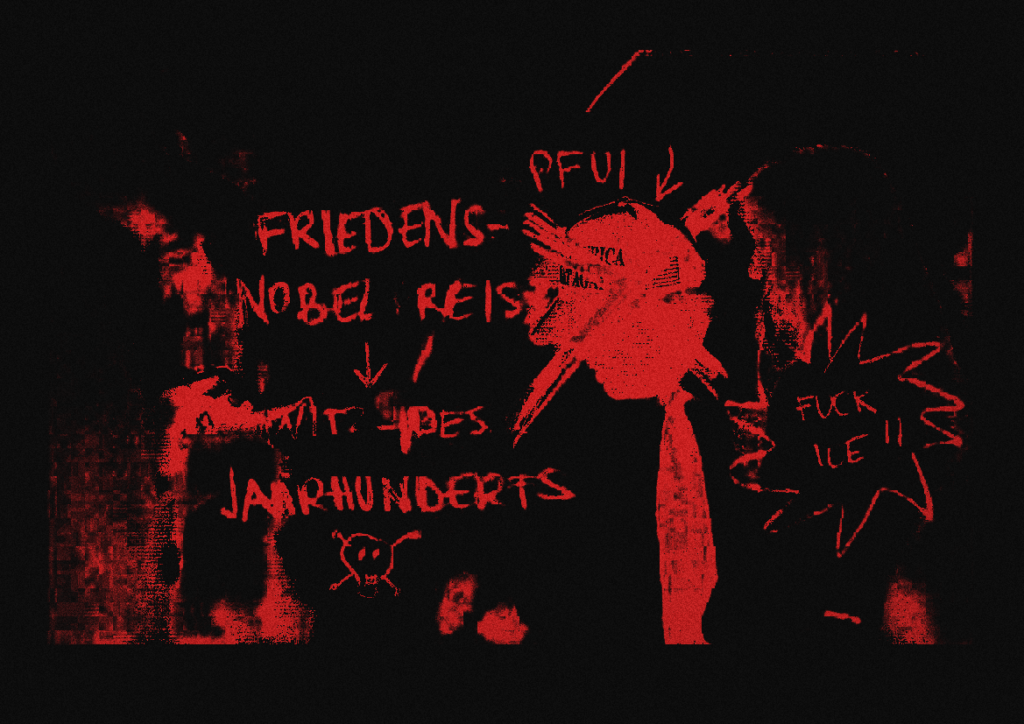

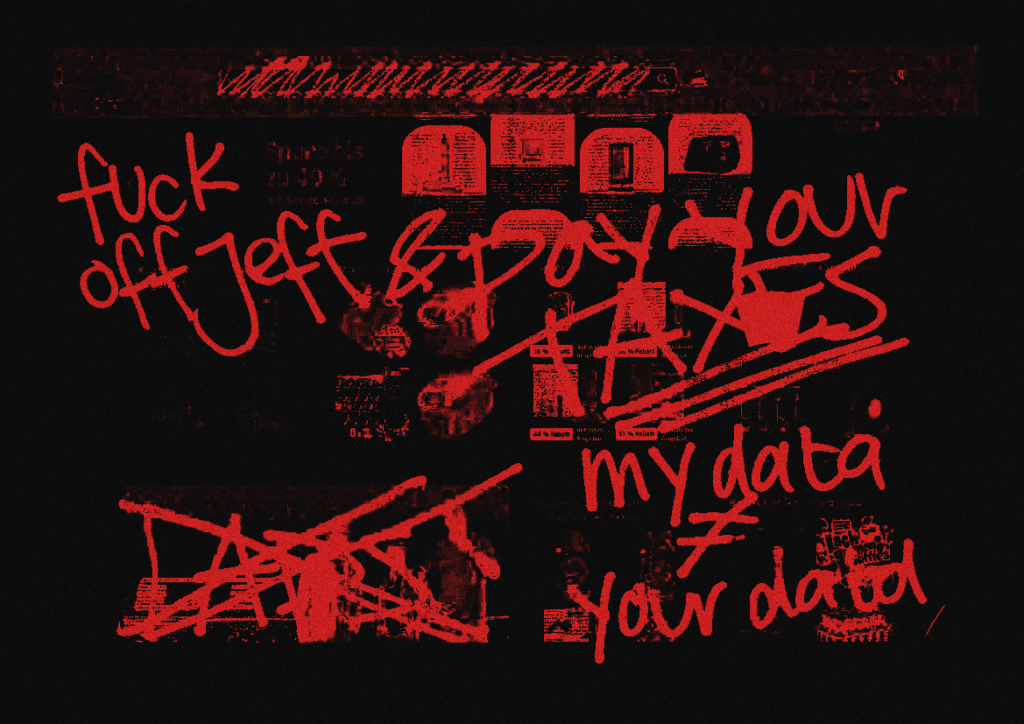

It is important to note that this study was not intended to evaluate usability, efficiency, or user satisfaction. Instead, it functions as an exploratory intervention study. Its purpose was to observe how people visually appropriate interfaces when they are allowed to act freely and without constraints. In this sense, the printed format proved valuable, as it removed technical barriers and enabled direct physical interaction.
This first experiment strongly influenced the direction of my master’s project. It confirmed that visual intervention can act as a form of expression and critique, even without clear messages or explanations. More importantly, it highlighted how interfaces can become sites of emotional and cultural engagement, not just tools for task completion. These insights directly informed the concept of my final artefact, which aims to translate this act of visual intervention into a digital, but equally non-optimized, environment.
