EMOTIONALLY DIRVEN ROOMS
Emotionally driven rooms in interactive design use music and visuals to create specific emotional atmospheres that immerse participants. By pairing the right kind of music with complementary visuals, these rooms evoke feelings such as calmness, excitement, or awe. For instance, a “Calm Room” could feature slow-tempo, minor-key music alongside visuals of flowing water and cool colors like blues and purples, providing a serene atmosphere. In contrast, an “Excitement Room” might use fast-paced, syncopated rhythms paired with sharp, dynamic visuals in warm tones like reds and oranges, generating energy and intensity. To further enhance the experience, environmental factors such as scent or temperature can be incorporated—cool air and the scent of lavender could accompany the calm setting, while the excitement room could feel warmer with energetic vibrations in the floor. Visitors can also influence the tone of the room through touchscreens or voice commands, adjusting the mood and music to create a more personalized emotional response.
Real-world examples of emotionally driven rooms include the “Museum of Ice Cream”, which creates various themed environments using color and music to evoke joy and nostalgia, and “TeamLab Borderless in Tokyo“, where interactive, immersive rooms shift based on visitors’ movements, evoking a range of emotions.
INTERACTIVE MUSIC-VISUAL FEEDBACK SISTEMS
Interactive music-visual feedback systems allow visitors to control both sound and visuals in real-time, giving them agency in shaping their own emotional experiences. Gesture-based systems, for instance, use motion sensors to detect users’ movements, letting them “conduct” music or trigger visual effects through their actions. As visitors move their hands upward, they might increase the pitch of the music, while corresponding changes in lighting or visual elements could brighten or shift in color. Wearable technology, like gloves or bracelets, could be used to control sound parameters such as pitch or tempo, creating a seamless blend of touch and sound that is directly reflected in the visuals. Collaborative interaction is also a possibility—several participants can engage with the system simultaneously, creating a shared musical and visual experience that blends their input into a unique, communal result.
Real-life examples of interactive systems include the “Dandelion Dome at Expo 2020 Dubai”, where visitors could blow on virtual dandelions to trigger sound and visuals, and Google’s AI Experiments, such as the “Chrome Music Lab”, which allows users to manipulate sound and visuals together in a digital format. Another example is the “Wavefield in Montreal“, where users swing on illuminated swings that trigger musical notes and synchronized lighting changes.
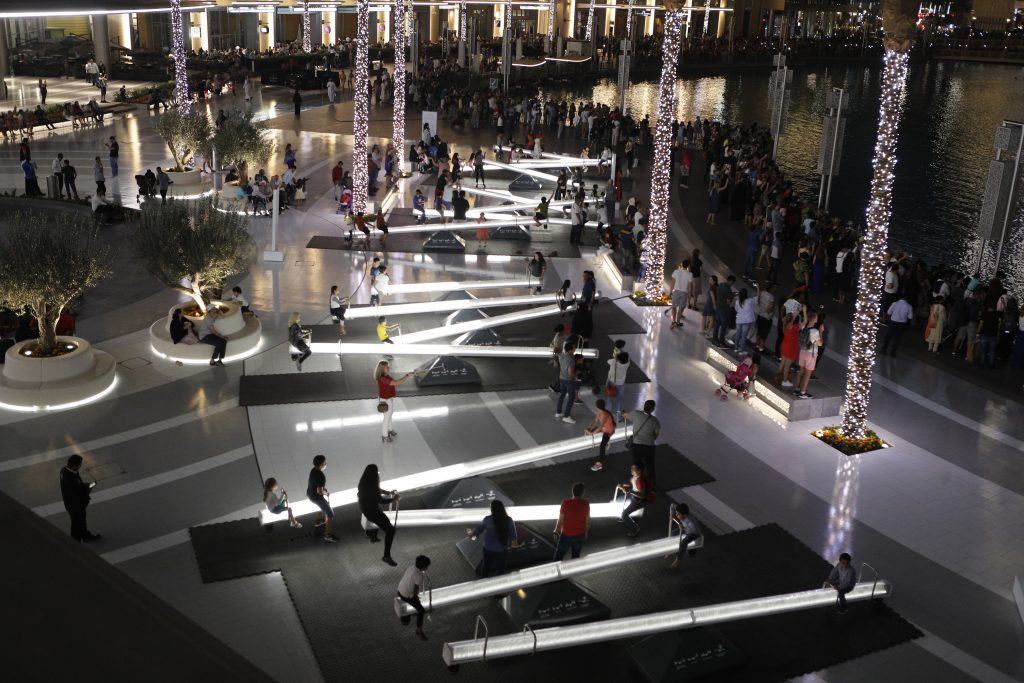
Wavefield in Montreal
EMOTIONALLY RESPONSIVE INSTALLATIONS
Emotionally responsive installations use AI and biometric data to dynamically adjust music and visuals based on participants’ emotional states, creating a deeply personalized experience. These systems can monitor facial expressions, heart rate, or skin responses to gauge how a person is feeling. For example, an AI system might detect signs of tension and shift the music to a calming melody while changing the visuals to soothing, fluid patterns. This creates a responsive environment that adapts to the user’s emotions. Additionally, layered responses can allow users to interact with the system, letting them customize aspects such as tempo or color in reaction to the emotional cues detected by the AI. This dynamic interplay between AI and human interaction guides visitors through emotional transitions, helping them move from a state of anxiety or stress to relaxation or excitement.
A real-world example of emotionally responsive technology includes “The Alchemist’s Garden in Prague“, where AI analyzes participants’ emotional states and adjusts the music and visual patterns accordingly. IBM’s Mood Mixer, used in collaboration with the Grammys, also offers a similar experience, where users’ responses help generate a personalized music playlist with visuals designed to match their emotional profile. Refik Anadol’s art installations, such as “Melting Memories,” utilize biometric data to generate dynamic, mesmerizing visual patterns synchronized with ambient soundscapes, further demonstrating the power of AI in creating emotionally responsive art.
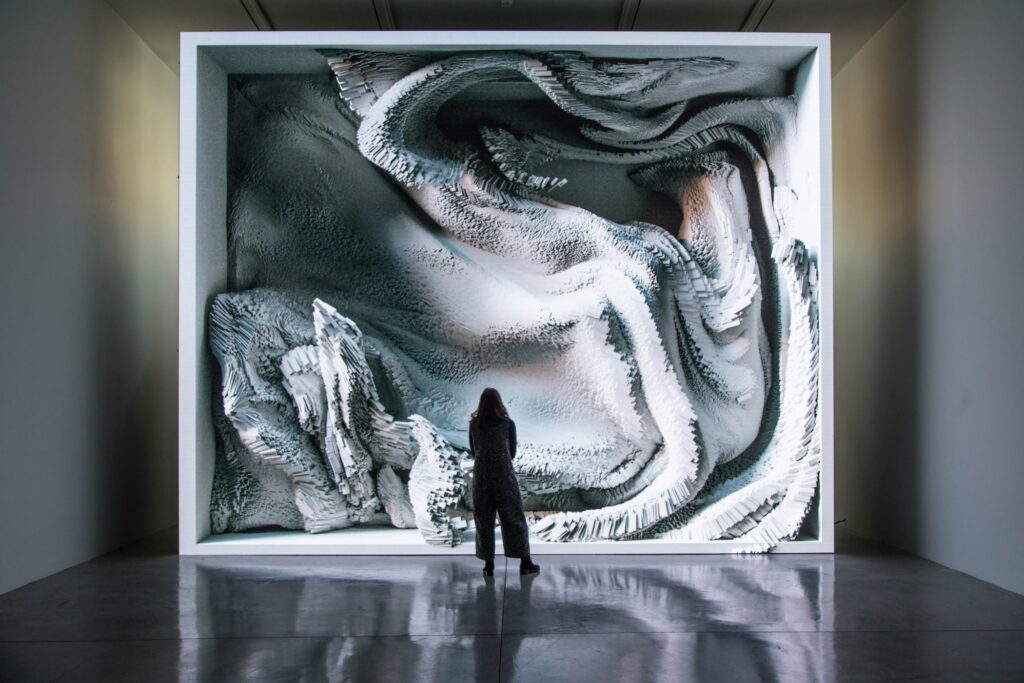
Refik Anadol’s art installation “Melting Memories,”
ENHANCEMENTS TO CONSIDER
To enhance the emotional depth of these exhibitions, designers can incorporate immersive technologies like 360-degree projection mapping, spatial audio, or virtual reality (VR). These tools fully envelop the visitor in a multi-sensory environment, heightening emotional engagement. Additionally, exhibitions can serve an educational purpose by showing how music and visuals work together to influence emotion. Visitors might see how specific changes in tempo or key can alter the tone of an environment, or how visual elements like lighting or color shift alongside the emotional trajectory of the music. For a broader impact, cross-cultural elements can also be integrated, showcasing how different cultures use music and visuals to evoke emotions, allowing visitors to explore diverse emotional languages and experiences. Combining these enhancements with sound and visual integration can transform any exhibition into a deeply personal and emotionally engaging journey for each visitor.
