Music and visuals have immense power to evoke emotions and immerse participants in interactive experiences. By combining the insights from Chapter 1 of This Is Your Brain on Music with design principles, we can create emotionally engaging designs. Below is a framework for how music, visuals, and interactivity can work together, with examples and practical applications.
EMOTIONAL TRIGGERS AND THEIR INTERACTIVE USES
1. Pattern Recognition and Expectation
An interactive design application could incorporate dynamic lighting that reacts to musical patterns, such as intensifying lights during a crescendo and dimming or shifting colors during resolution. To encourage participation, users could control musical sequences through touch panels or motion sensors, creating harmonious results that satisfy their pattern-seeking instincts and evoke joy. For example, a touch-sensitive wall could allow participants to tap and create melodies, triggering synchronized visual effects like ripples or sparks that align with melodic expectations.
2. Tension and Release
Emotional arcs in music, such as the buildup and resolution of tension, mirror life experiences, making them deeply relatable. Designers can enhance these arcs by pairing music with immersive visuals that reflect emotional shifts. For instance, tense musical passages could be accompanied by jagged, dark visuals, which then transform into soft, flowing imagery as the music resolves. Interactive exhibits can further engage participants by giving them control over tension and release, such as pressing a button to trigger a visual explosion synced with a musical climax. An example could be a VR experience where users navigate an environment that becomes brighter and more colorful as the music resolves, evoking feelings of triumph or relief.
3. Visual Analogies (Colors and Shapes)
The brain naturally links musical qualities with visuals, such as warm colors for happy music or smooth shapes for calm music. Aligning music with complementary visuals amplifies its emotional impact. Designers can map musical elements to visual stimuli, like using higher pitches to trigger vibrant colors (reds, yellows) and lower pitches to evoke cool tones (blues, purples). Rhythmic changes could influence shapes, with sharp angles for fast tempos and flowing curves for slower ones. Interactive experiences can further engage users by allowing them to mix visual effects or adjust color schemes in sync with musical features, fostering a sense of agency over the emotional tone. For example, an interactive light installation could let participants control both the soundtrack and visuals, where selecting a major key generates bright, colorful imagery, while a minor key creates darker, subdued visuals.
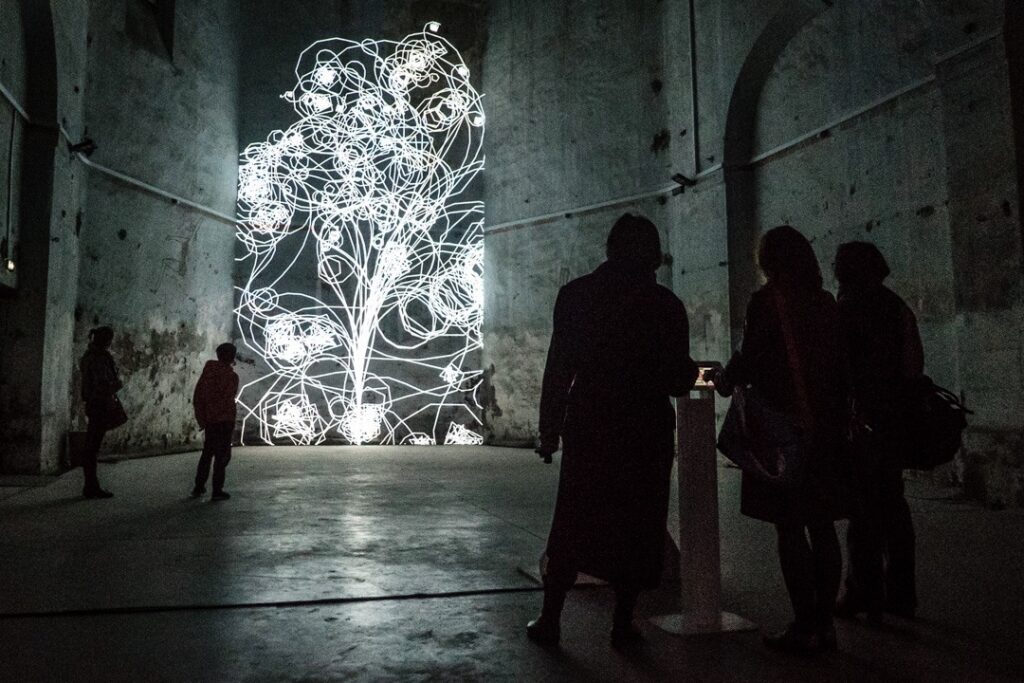
“FLORA” light installation, 2015/2016, Philipp Artus
DESIGN CONSIDERATIONS
Designing for maximum emotional impact in interactive exhibitions requires a seamless integration of sound and visuals, leveraging their ability to evoke and amplify emotions. Synchronizing music with visual transitions ensures an immersive and cohesive experience, while personalization fosters a sense of agency, making the interaction deeply engaging and memorable. By incorporating contrast and surprise, designers can mimic music’s tension-and-release mechanism to create emotional highs and lows. Finally, considering cultural contexts ensures the experience resonates universally, honoring diverse interpretations of sound and imagery. Together, these principles can transform exhibitions into powerful, multisensory journeys that connect deeply with audiences.
