Riso Printing / Tec specs

A Japanese printing process, similar to screen printing. Riso is never perfect, which is precisely what makes it so exciting, as colour applications and offsets are special characteristics. There is one print pass per colour. The colours are therefore not mixed, but applied in layers.

This also means stencils are designed especially for each drum and cannot be used on another drum. Multicolored prints are produced by switching out the drums, overprinting, and again running the paper through the RISO! 

Colors

Riso colours are applied to the paper one after the other, similar to screen printing. Each colour is printed separately. Riso inks appear translucent in the overprint and this transparent effect can be used to create mixed colours. The advantage compared to CMYK printers is that special colors like neon or metallic can be printed.

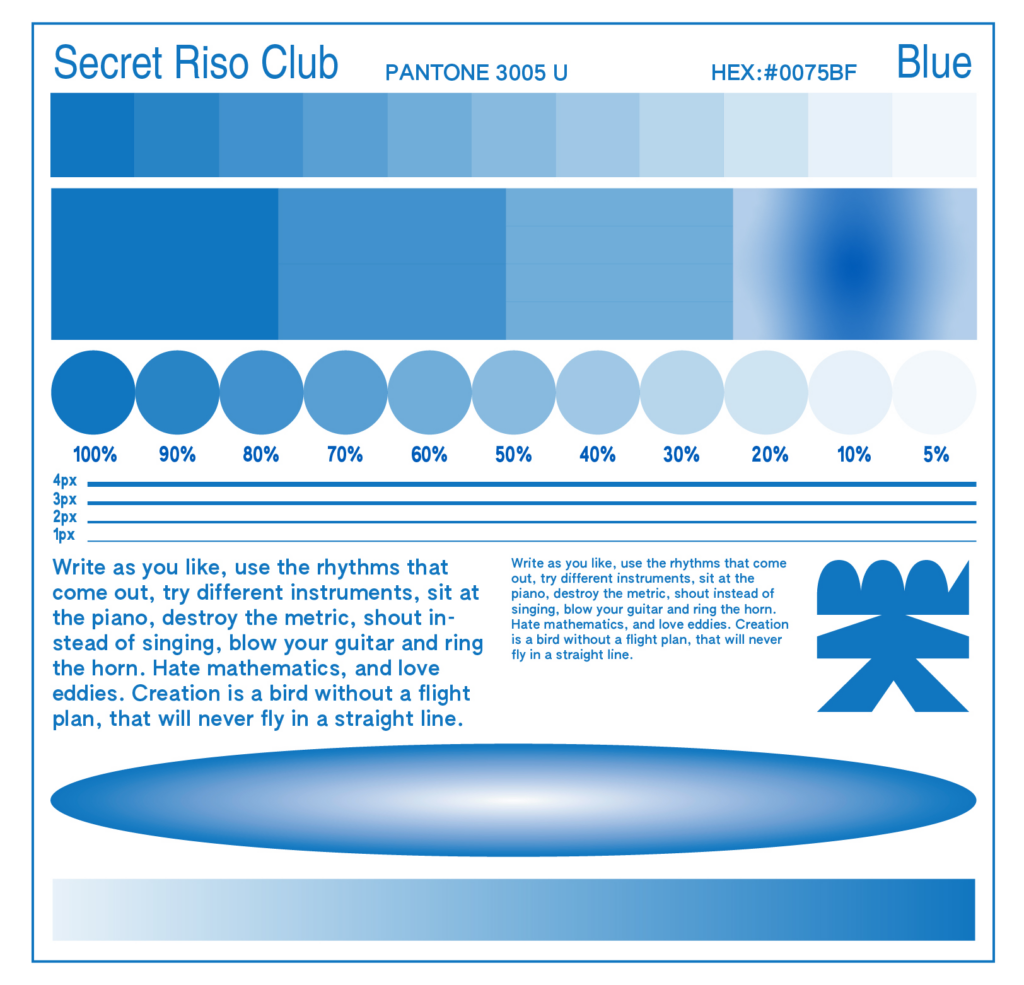
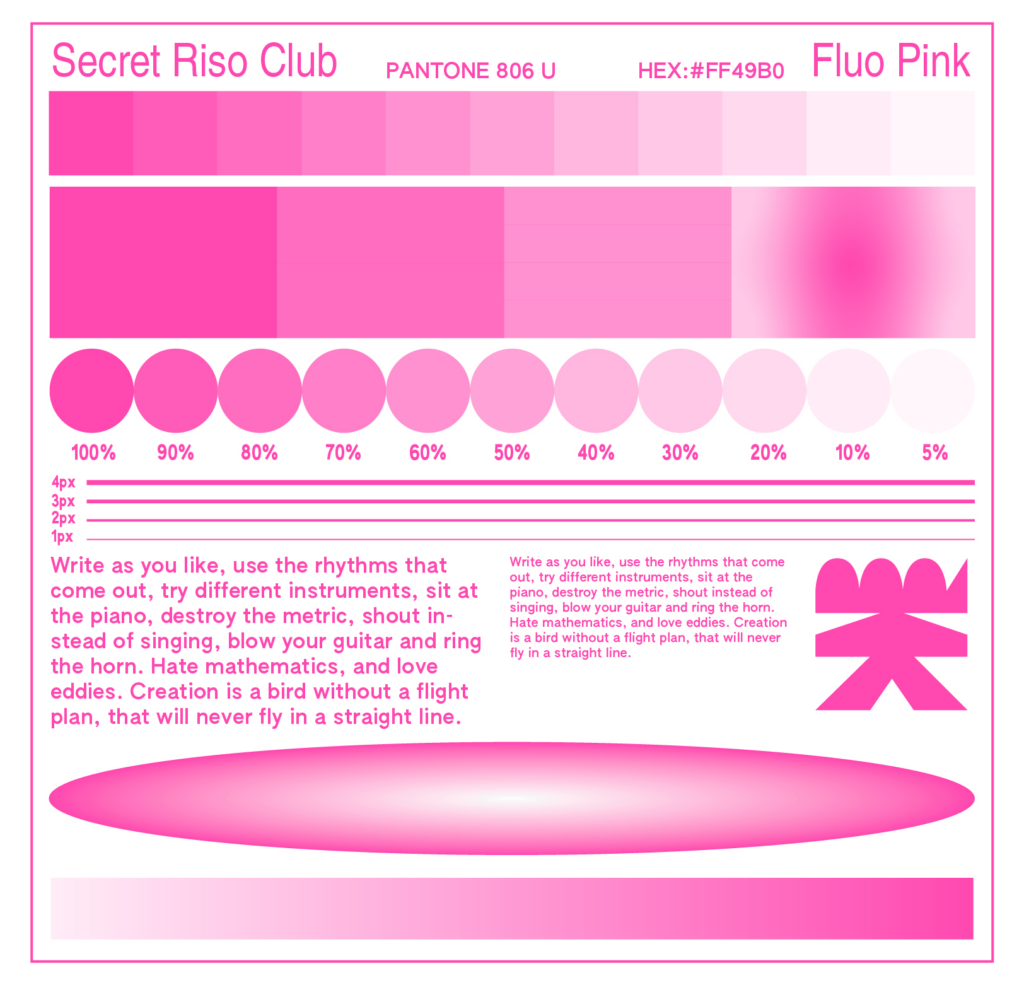
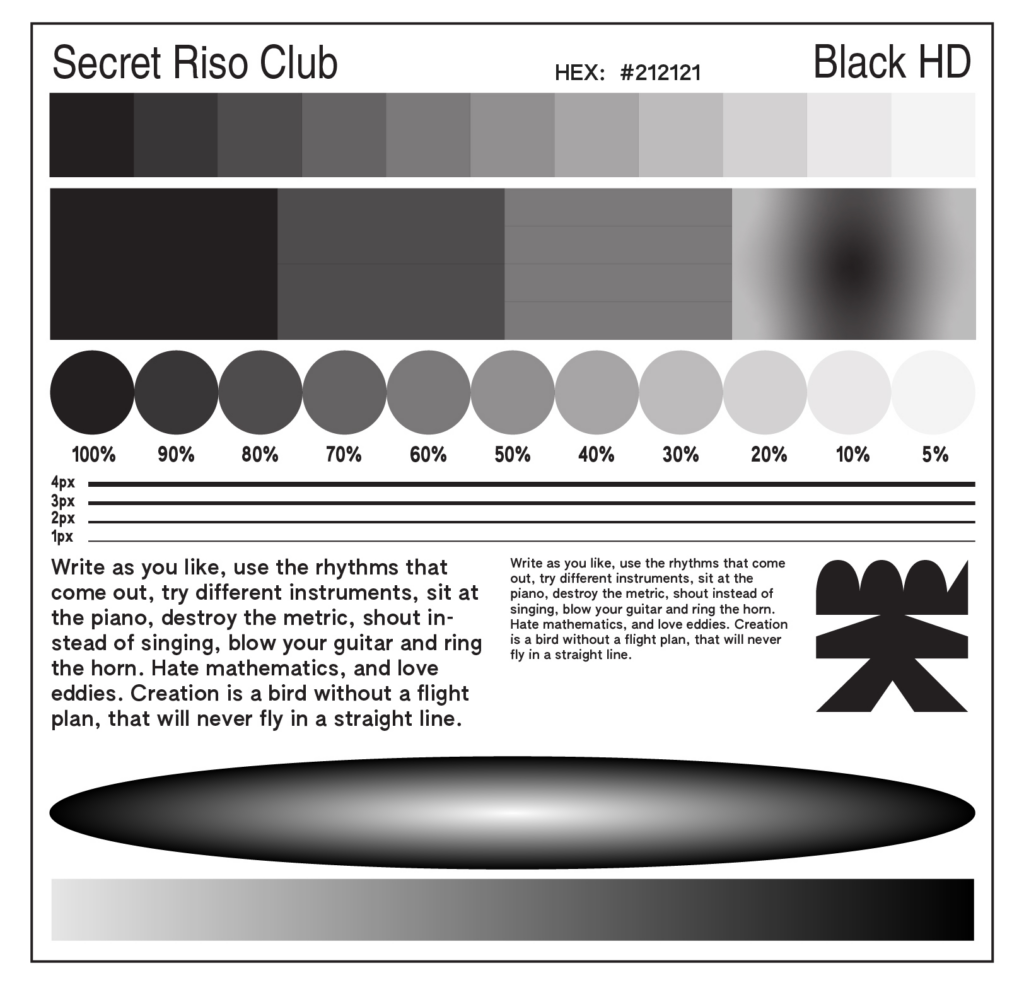
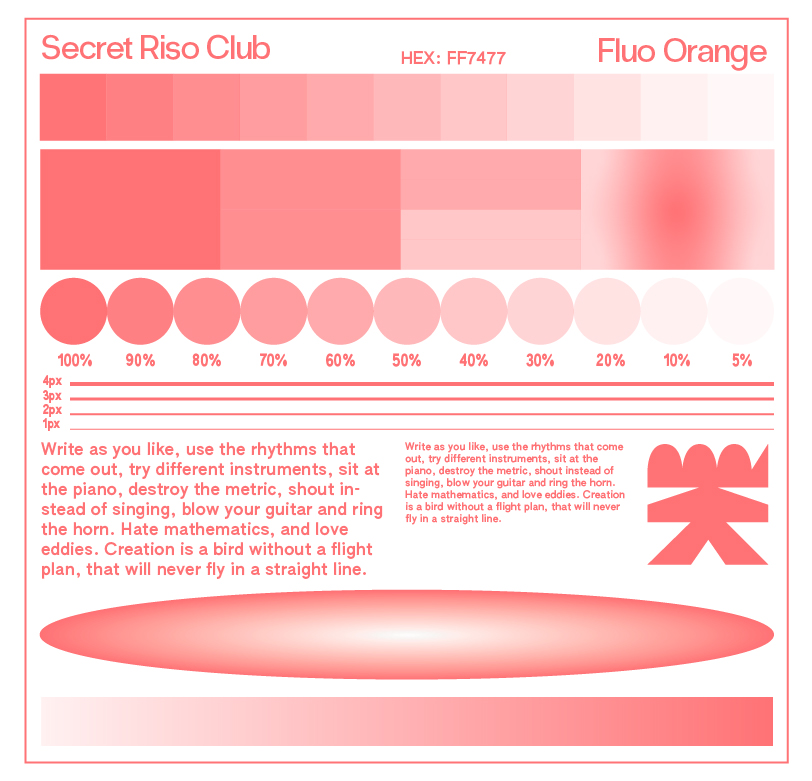
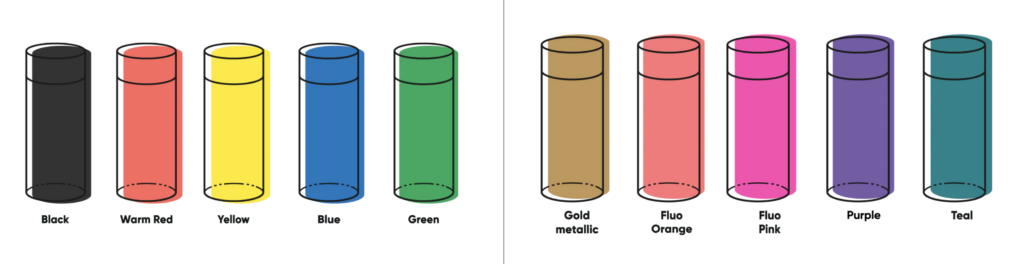
Our FabLab has an assortment of four colors. Black, blue, fluo orange and fluo pink. These colors can be used in the following shades and can be blended to make new colors by layering and altering % of opacity.

To prepare your artwork for printing, you need to save each color layer as a separate grayscale file. All solid shapes, type and images should be set to Black (from 5% to 100% opacity). Fonts cannot be smaller than 7pt and lines .5pt minimum.

Color Seperation

In addition to solid colour areas, it is also possible to print halftone screens on the Risograph. If multi-coloured images are to be reproduced, similar to offset or digital printing, this can be done in various ways. These colour layers are usually called separations, positives or plates, depending on the printing process, substrate or context. For example, it is possible to create a three-colour print with three colours in the Risograph, provided that three masters are created and printed one after the other on the same substrate.

If image areas are overprinted in two or more image areas, new colours are created as the colours on the risograph are translucent and mix where they overlap with others. These colour separations are to be regarded as greyscale images, which can have a respective colour application between 0 and 100 %. An area of an image coloured in full tone therefore has 100% of the respective colour, whereas lighter areas of the image also have lighter colour tones. It should be pointed out once again that the Risograph does not have the colours of the four-colour Euroscale, cyan, magenta, yellow and black.

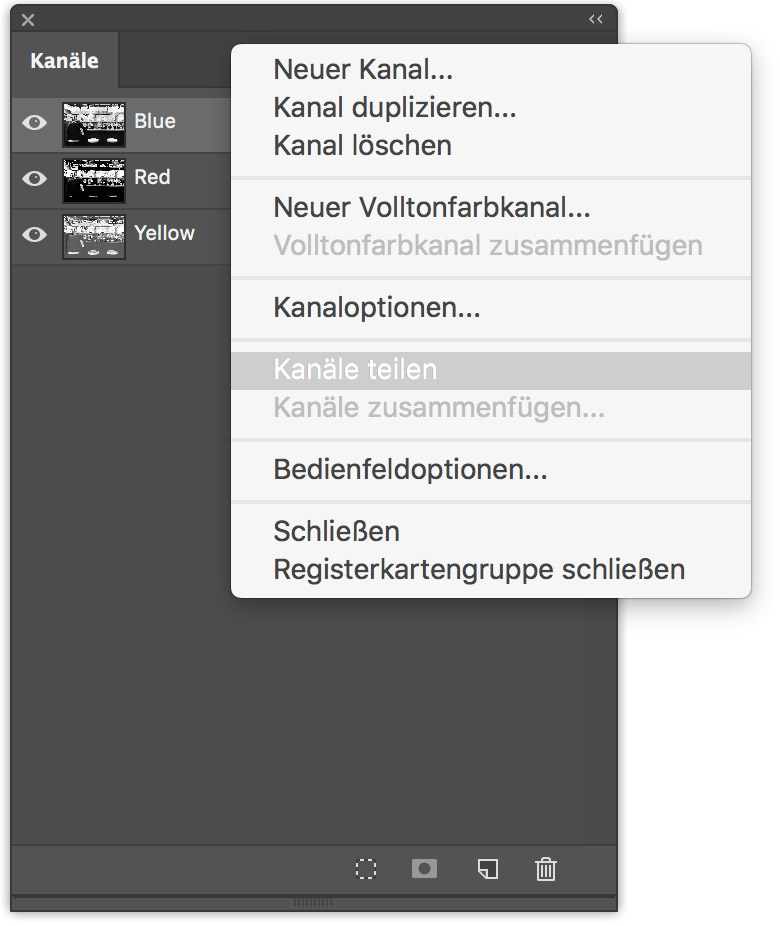
Once the image has been converted into the multicolour profile, it is divided into the channels. This can be done in Adobe Photoshop in the [Channels] window. The [Channels] window is a list-like overview of the channels contained in the image file and can be found in the top programme bar under Window > Channels. On the right-hand side of this window is a button for activating a drop-down menu. Here, the [Split channels] command splits the image into the respective number of primary colour channels.

Paper

It’s important to use open pored paper, as the ink will be soaking into the paper better. 60lb-100lb – 80lb Preferred and Uncoated paper – Vellum or “Offset” finish preferred, because Riso can’t print glossi or coated paper.

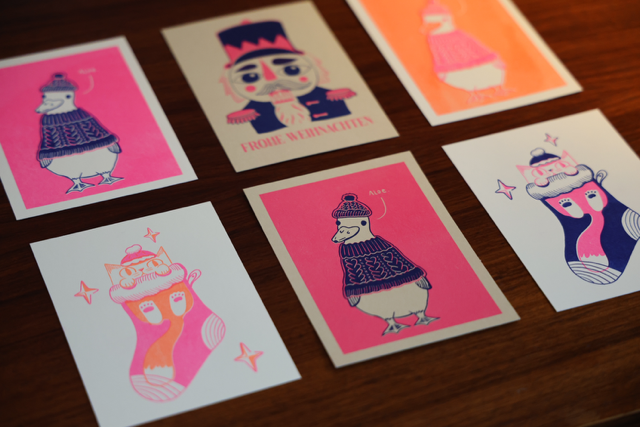
For this reason I bougth different paper types and colors and tried them out in our FabLab. Here is a sneak peek into the results:

Resources

#3 The Viewer’s Role: Is Art in the Eye of the Beholder?

“Beauty is in the eye of the beholder” finds its counterpart in art: perhaps art exists only through the act of being observed. This idea ties into phenomenology, a philosophical approach that emphasizes individual experience. Art, in this view, is not a static entity but a relationship—a moment of interaction between object and observer.

John Dewey, a pioneer of this relational perspective, argued that art is less about the artifact and more about the experience it generates. A sunset, a graffiti-covered wall, or even a cluttered desk can become art if it evokes a profound response. In this sense, art does not reside in objects but in moments. However, this subjectivity introduces complexity. If art is fully dependent on perception, does anything have the potential to be art? Could even the absence of an object—a blank gallery, an empty street—constitute an artistic experience? These questions have been explored by conceptual artists like Yves Klein, whose The Void exhibition in 1958 presented an empty gallery space as the artwork itself. The absence of objects demanded viewers engage with their own expectations and imaginations, suggesting that art can exist even without a tangible medium.

The Frame and Its Limits: Do Museums Still Matter?
Museums have long served as arbiters of art, offering context, preservation, and legitimacy. Yet, as contemporary art increasingly embraces everyday objects and experiences, the traditional role of museums is being questioned. Do museums remain relevant in a world where art spills into public spaces, digital platforms, and even ordinary life?

One perspective is that museums provide a critical framework for understanding art. By placing works in historical or thematic contexts, they enable deeper engagement and interpretation. Without these structures, art may risk losing its meaning or becoming purely decorative. For example, Picasso’s Guernica would lose much of its political and emotional power if displayed without context.
On the other hand, art that exists outside these structures offers a more immediate, democratic experience. Everyday installations, for instance, thrive precisely because they are unmediated. They are not curated or framed but discovered by those who take the time to notice. This immediacy can make art more accessible, bridging the gap between high art and everyday life.

Digital spaces further complicate this dynamic. Platforms like Instagram act as informal “museums,” allowing anyone to curate and share their interpretations of art.

TLDR
Everyday installations are not curated but discovered by those who take the time to notice.

#2 Art – A Deeper Dive into Context, Perception, and Boundaries

Ultimately, what defines art is a question that resists a singular answer. It is shaped by an interplay of factors: the intention of the creator, the context of its presentation, and the perception of its audience. Philosophers like John Dewey emphasize that art is a process, not a product—an experience that unfolds between the work and its observer. This relational approach aligns with the view that art can be found anywhere, provided we engage with it thoughtfully.
In today’s world, the boundaries of art continue to blur. Social media, public interventions, and everyday encounters expand our understanding of what art can be. While museums and galleries remain vital spaces for reflection and preservation, they no longer hold a monopoly on artistic meaning. Instead, art thrives in its multiplicity—within and beyond frames, in curated halls and forgotten corners.
As we navigate a world filled with both traditional and unconventional expressions, the question shifts from “What is art?” to “How do we choose to see it?” Art, in its essence, challenges us to look closer, think deeper, and connect more profoundly with the world around us. Whether in a museum, on a street, or in the unnoticed poetry of everyday life, art invites us to reconsider what we value—and why.


What Makes Art, Art?
Building on the idea that everyday arrangements can be perceived as art, the philosophical and aesthetic questions surrounding what constitutes art become even more pressing. If we accept that art is no longer confined to galleries or museums, how do we determine what qualifies as art, where it begins, and what sustains its identity? This second exploration pushes deeper into these ideas, examining the role of context, interpretation, and frameworks in shaping art’s meaning and value.

Is Art Defined by Its Context?
In the first exploration, we touched on how Marcel Duchamp’s Fountain revolutionized the art world by reframing an ordinary urinal as a piece of art. But Duchamp’s provocation raises a broader question: does art inherently require a deliberate recontextualization to exist? Philosophers like Nelson Goodman argue that art is not a property of objects themselves but of the “worlds” they inhabit. In other words, the same object can be art in one setting and mundane in another, depending on the circumstances of its presentation.

Context can transform perception. For instance, a crumpled piece of paper in a trash bin is easily overlooked, but place it on a plinth in a gallery, and it invites scrutiny, even reverence. This dynamic becomes more complex in contemporary art, where artists like Banksy exploit public spaces to challenge the very notion of curated contexts. His work often thrives because it exists outside the gallery, in the rawness of urban environments, offering unmediated access to passersby.

However, there is a counterpoint to consider: is context too much of a crutch? If an object or arrangement requires a gallery or an artist’s name to be perceived as art, is it still meaningful? Everyday installations—those accidental compositions of objects in public spaces—suggest that perhaps context is less important than we think. Instead, they call on the observer to actively assign meaning, placing the power of “art-making” in the hands of the audience rather than institutions.

LS #3  Let’s keep on Recapping

In the last blogpost, I cleared up a few definitions within the topic of feminism. But as this field is so broad, here are some more…

Different Types of Feminism

Feminism is not an undifferentiated movement but rather an umbrella term including various perspectives and ideologies. For example, liberal feminism focuses on achieving equality through legal and political reforms of the current social systems, by changing it with e.g. equal pay and reproductive rights rather than an overhaul of the systems (Guy-Evans, 2024). Radical feminism, on the other hand, empathizes on the patriarchal structures that perpetuate gender inequality, often critiquing traditional family roles and societal norms. Therefore, radical feminists are often sceptical if there can be an effect in changing the current systems and politics (Johnson Lewis, 2020).  Intersectional feminism emphasizes the overlapping systems of oppression that affect individuals, such as racism, sexism, and classism. It was coined recognizing that the experience of a Black woman differs significantly from that of a white woman (UN women, 2020). Other branches include socialist feminism, which critiques capitalism’s role in sustaining gender inequality and how patriarchy and capitalism are interconnected forms of oppression and exploitation of women (MasterClass, 2020); and ecofeminism, which connects the exploitation of women to the exploitation of nature and argue that women around the world are more affected by the consequences of climate change (Bamberg, 2023).

Intersectionality

Introduced by Kimberlé Crenshaw, intersectionality is an essential framework for understanding how different forms of oppression intersect and compound each other (Crenshaw, 1991). For example, a woman who is both Black and LGBTQ+ faces unique challenges that cannot be addressed only by focusing on sexism or racism in isolation. Intersectionality ensures that feminism is inclusive and accounts for the diverse experiences of all women. Without it, we risk ignoring people who face multiple types of unfair treatment, which goes against the inequalities feminism is trying to fix (Hawk & Sharkey, 2016).

Femicide

One of the gravest manifestations of gender inequality is femicide, the intentional killing of women because they are women. This extreme form of violence is often rooted in misogyny and is disturbingly common in many parts of the world. For example, a study by UN Women (2023) has revealed that in 2023, 140 femicides happened a day, which is a woman being killed by intimate partners or as a result of systemic violence every 10 minutes. Recognizing and addressing femicide is crucial in the fight for gender equality, as it underscores the deadly consequences of unchecked misogyny.

Misogyny & Misandry

Misogyny and misandry are terms that often come up in conversations about gender equality and I have also used them before, but their definitions and relevance within feminism deserve clarification. Misogyny refers to the hatred, dislike, or prejudice against women and often manifests in systemic oppression, gender-based violence, and societal norms that devalue women (Kendall, 2019). On the other hand, misandry describes the hatred or prejudice against men, often expressed through stereotyping or resentment (Oxford Dictionary, 2023). While both represent harmful attitudes, it’s important to note their contexts: misogyny is deeply ingrained in societal structures and has widespread, institutionalized consequences, whereas misandry typically arises in interpersonal or cultural settings and lacks the same systemic impact (Greene, 2022).

In the context of feminism, it’s crucial to address both misogyny and misandry, as the goal of feminism is not to reverse oppression or create new power imbalances. Instead, it’s about achieving equity and dismantling harmful systems that hurt everyone. Misandry, while sometimes a reaction to lived experiences of misogyny, does not align with feminist values. Feminism emphasizes accountability rather than blame, encouraging men and women alike to reject toxic gender norms. By confronting misogyny’s systemic roots and addressing the frustrations that sometimes lead to misandry, feminism creates space for mutual understanding and respect, ensuring that gender equality benefits everyone.

Why Do We (Still) Need Feminism?

After reading and knowing about the history of feminism, there is voices asking why feminism is even still necessary nowadays. Unfortunately, it is. But let’s start with the positive: Thanks to the movement, the recognition of the topic like gender-based violence, harassment and discrimination has greatly increased and movements like #metoo have given victims a voice and changed the way, society talks about consent and responsibility (Joshi, 2023).  

The need for feminism becomes clear when you look at both the obvious and the more hidden examples of gender inequality that still exist in our world.

Despite growing awareness of gender equality, there are still glaring issues that underline the necessity of feminism in 2024. Online harassment remains rampant, with women facing abuse, revenge porn, and deepfake violations that threaten their safety and privacy. Reproductive rights are under attack in many regions, limiting women’s autonomy over their bodies. Domestic violence and the rise of coercive control reveal how systemic issues continue to trap women in unsafe environments. In healthcare, medical gaslighting leads to misdiagnosis and neglect of women’s health concerns. Climate change exacerbates gender inequality, disproportionately affecting women in vulnerable communities. Workplace discrimination, including promotion bias and harassment, continues to hold women back, especially those from marginalized groups. Leadership positions remain dominated by men, with women underrepresented in politics and business. Finally, menstrual inequity persists, as stigma and lack of access to menstrual products continue to impact women worldwide. These pressing issues demonstrate why feminism remains vital today.

But it doesn’t stop there. Some forms of inequality are more subtle yet equally harmful. Society has conditioned women to be “the emotional caretakers,” making them seem naturally more empathetic and suited to caregiving roles. This isn’t inherent; it’s learned behavior, shaped by cultural expectations that prioritize others’ needs and feelings over their own. On the other hand, men are raised with the expectation to suppress their emotions, frequently told to “man up” or avoid vulnerability, leading to emotional repression. These patterns don’t arise in isolation; they are rooted in deeply ingrained social norms passed down through generations, starting from childhood. As a result, women often bear an unequal emotional burden while men are deprived of healthy outlets for their feelings, perpetuating cycles of inequality and harm.

These rigid gender roles harm everyone. Women are overburdened with societal expectations, while men are trapped in a framework that denies them emotional freedom. Addressing these ingrained norms is not just about fairness—it’s about creating a society where individuals are free to express themselves authentically without fear of judgment or limitation. This change must begin with the way we raise children, teaching them from the earliest stages that emotions and empathy are human qualities, not gendered traits. By challenging these stereotypes and fostering equity from the ground up, we can move closer to a more balanced and compassionate world.

And Why Do Men Too?

Feminism is not just for women—it is for men as well. Patriarchy imposes rigid expectations on men, such as the need to suppress emotions, adhere to traditional notions of masculinity, and prioritize dominance over vulnerability (Mohler, 2024). These stereotypes not only harm men’s mental health but also strain relationships and limit personal fulfilment. In countries that have a more gender-equal system and society, men are less likely to struggle with mental health, physical health and have a 40% reduced risk of a violent death (Werber, 2018). By embracing feminist principles, men can reject toxic masculinity, fostering healthier, more equitable interactions with others. Additionally, a more egalitarian society benefits everyone by promoting collaboration, empathy, and mutual respect.

Sources

Bamberg, O.-F.-U. (2023, May 4). Geschlechtersensible Forschung: Ecological Feminism (or Ecofeminism). Uni-Bamberg.de; Otto-Friedrich-Universität Bamberg. https://www.uni-bamberg.de/gbwiss/kunigunde-der-blog-der-gleichstellungsbeauftragten-wissenschaft/alle-artikel/artikel/geschlechtersensible-forschung-ecological-feminism/

Crenshaw, K. (1991). Mapping the Margins: Intersectionality, Identity Politics, and Violence Against Women of Color. Stanford Law Review, 43(6), 1241–1299. https://www.jstor.org/stable/1229039

Greene, M. (2022, September 14). Misogyny vs. Misandry: One Has Historically Defined the Structural, One Has Not. Medium. https://remakingmanhood.medium.com/misogyny-vs-misandry-one-has-historically-defined-the-structural-one-has-not-69abd2f0b9b8

Guy-Evans, O. (2024, February 13). Liberal Feminism: Definition, Theory & Examples. SimplyPsychology. https://www.simplypsychology.org/liberal-feminism.html

Hawk, T., & Sharkey, G. (2016, July 26). What is “Intersectional Feminism”? Denison University. https://denison.edu/academics/womens-gender-studies/feature/67969

Johnson Lewis, J. (2020, November 25). What Is Radical Feminism? ThoughtCo. https://www.thoughtco.com/what-is-radical-feminism-3528997

Joshi, V. (2023, September 30). Feminism in Today’s World. Bschool.dpu.edu.in. https://bschool.dpu.edu.in/blogs/feminism-in-todays-world

Kendall, E. (2019). Misogyny | sociology. In Encyclopædia Britannica. https://www.britannica.com/topic/misogyny

MasterClass. (2020). Socialist Feminism Explained: What Is Socialist Feminism – 2024 – MasterClass. MasterClass. https://www.masterclass.com/articles/socialist-feminism

Mohler, J. (2024, February 15). The biggest reason men should be feminists. Substack.com; Make Men Emotional Again. https://makemenemotionalagain.substack.com/p/the-biggest-reason-men-should-be

Oxford Dictionary. (2023). misandry, n. meanings, etymology and more | Oxford English Dictionary. Oed.com. https://doi.org/10.1093//OED//5787175758

UN Women. (2023, November 22). Femicides in 2023: Global estimates of intimate partner/family member femicides. UN Women – Headquarters. https://www.unwomen.org/en/digital-library/publications/2024/11/femicides-in-2023-global-estimates-of-intimate-partner-family-member-femicides

UN women. (2020, July 1). Intersectional feminism: what it means and why it matters right now. UN Women; United Nations. https://www.unwomen.org/en/news/stories/2020/6/explainer-intersectional-feminism-what-it-means-and-why-it-matters

Werber, C. (2018, September 17). Countries where men hold the power are really bad for men’s health. Quartz. https://qz.com/work/1392183/mens-health-is-worse-in-countries-with-less-gender-equality

The Ten Commandments for Neurodesign: A Guide for Graphic Designers

Who would’ve thought, but this is almost the last entry in this blogging journey! Drawing from months of exploring research and literature, this post offers the Ten Commandments for Neurodesign—guidelines based on cognitive science, visual perception, and usability research. These “commandments” provide actionable insights for designers seeking to create engaging, high-performing online content. In the fast-paced world of digital content creation, designers often face the challenge of capturing attention, holding interest, and guiding users to take specific actions. This blog post aims to synthesize my existing research on neurodesign and distill key principles that graphic designers could (should) follow when crafting online content. As we enter an era where web design isn’t just about aesthetics but also about optimizing user experience (UX) based on how our brains work, it’s essential to look at preexisting research to guide best practices. The insights shared in this post represent a draft framework for how graphic designers can approach creating online content that truly resonates with users on a cognitive level. In the age of information overload, web design is more than just aesthetics—it’s about understanding human psychology and crafting an experience that aligns with how our brains process, react, and decide. The digital landscape is crowded, and users are often just a click away from moving on to the next distraction. So, how can we capture attention and keep users engaged?


1. Thou Shalt Prioritize Simplicity and Clarity

The first rule of web design is one of the most important: don’t overwhelm your users. Our brains are wired to avoid confusion and unnecessary complexity. A site full of clutter doesn’t just look bad; it increases cognitive load and causes visitors to disengage. Remember Miller’s Law, which suggests the average person can hold only 7 (plus or minus 2) pieces of information in short-term memory. Simplify your layout, streamline your content, and use Gestalt principles to guide the eye. Less really is more. Our brains love simplicity because it requires less mental effort. Cognitive load theory suggests that when there are too many choices or visual distractions, our brains can become overwhelmed, leading to reduced decision-making efficiency. The use of Gestalt principles—like proximity, similarity, and closure—helps create a sense of order in design, making it easier for users to process information.

Future Outlook:
As we move into a world where augmented reality (AR) and virtual reality (VR) are more commonplace, the need for simplicity will only grow. Designers will need to create intuitive, minimal interfaces that allow for seamless transitions between the physical and digital worlds. Neurodesign will play an even more pivotal role in helping users process complex information without feeling overwhelmed, especially in these immersive environments. Expect the rise of spatial UI design, where clarity and simplicity will be paramount in user interactions.

2. Thou Shalt Create Urgency, But With Subtlety

Scarcity is a powerful psychological tool, but using it too aggressively can backfire. People are driven by the fear of missing out (FOMO), and this fear can be used to encourage quick action. Limited-time offers, countdowns, or highlighting low stock levels (e.g., “Only 3 left!”) create urgency. However, authenticity matters—overdoing it makes you look desperate. Use urgency to guide behavior, but avoid the trap of making every product feel scarce. This balance keeps the experience genuine while still motivating action. Urgency is rooted in our primal instincts—fear of missing out taps directly into our fight-or-flight response. The scarcity principle triggers the release of dopamine, creating excitement and motivating action. When used correctly, countdown timers or low stock indicators can create a feeling of limited opportunity, pushing users toward making quicker decision

Future Outlook:
In the future, artificial intelligence (AI) could take this to the next level. AI-driven systems may analyze a user’s browsing behavior and personalize urgency notifications based on their preferences and actions in real-time. Imagine a scenario where your site dynamically adjusts the urgency messaging depending on how much time a user has spent considering a product or how many similar items they’ve viewed elsewhere. The balance will lie in personalizing urgency without overloading the user with too much pressure, making it feel like an organic nudge rather than a forced action.

3. Thou Shalt Utilize Social Proof to Build Trust

Humans are social creatures, and our decisions are often influenced by the actions of others. This is where social proof comes in. Displaying testimonials, user reviews, or metrics like “500 people bought this today” taps into the herd mentality. Worchel, Lee, and Adewole (1975) demonstrated that when something is perceived as scarce, its value increases. This concept can be applied not just to products but also to information. If it’s popular, it must be valuable. So, don’t be shy—let your visitors see that others trust your brand or product. Social proof works because our brains are wired to trust the actions of others as indicators of quality. This behavior is driven by mirror neurons, which mimic the actions of others. Seeing others engage with your content or product activates these neurons, making users feel more comfortable and confident in their own decision-making. Worchel’s research shows that when we see something as rare or popular, it increases its perceived value.

Future Outlook:
With machine learning and data-driven personalization, social proof could become even more dynamic. Instead of generic testimonials, we might see personalized social proof in the form of user-generated content, like seeing what your friends or similar users are purchasing in real-time. This can enhance the feeling of connectedness and further validate choices. In the future, augmented reality could even let users “try on” or visualize products in their environment, where social proof elements could be overlaid to show how many people have made similar choices nearby.

4. Thou Shalt Focus on the User’s Journey, Not Just the Design


It’s easy to get caught up in making things look visually appealing, but web design isn’t just about aesthetics. It’s about creating a smooth user journey. Cognitive load theory tells us that the more mental effort a user needs to expend, the less likely they are to engage fully with content. Minimize distractions, optimize page speed, and ensure your layout flows logically from one section to the next. The fewer barriers you create, the more likely your visitors will complete their journey—whether it’s making a purchase, subscribing, or exploring more content. The user journey should feel seamless, almost invisible. Flow theory explains that people are most engaged when they’re fully immersed in an experience that matches their skill level and challenges them just enough. When users experience flow, their brains release feel-good chemicals like dopamine, keeping them motivated and engaged. Cognitive ease—the feeling that something is effortless—promotes this state, which is why minimizing obstacles in the user journey is so important.

Future Outlook:
In the coming years, voice interfaces and gesture controls will likely change how we navigate websites. Instead of relying on the standard point-and-click method, the user journey may be driven by voice commands or physical gestures, which will require a complete rethinking of intuitive design. Additionally, the integration of neurofeedback could allow websites to adjust in real-time based on users’ emotional states or cognitive load, ensuring that users stay in a state of flow without overexerting themselves.

5. Thou Shalt Use Contrast Wisely

In design, contrast is more than just making things look different—it’s about guiding the user’s focus. The concept of contrast comes into play when presenting choices, as we see in pricing models or options. When you show two products—one standard, the other premium—make the premium option stand out. The contrast principle suggests that scarcity can make something seem more valuable simply by positioning it against something less exclusive. By strategically highlighting features or price points, you create a sense of exclusivity and value.Contrast doesn’t just draw the eye; it also facilitates decision-making. The contrast principle creates a relative sense of value and importance. This works well with pricing, product options, and features. When we perceive something as scarce or premium, our brains assign it greater value. This is why the decoy effect works—when you add a high-priced option next to a mid-priced one, the mid-priced one suddenly looks more reasonable.

Future Outlook:
In the future, dynamic contrast could become more personalized. AI could adjust contrast and visual emphasis based on user behavior or even emotions. For example, if a user is hesitating between two options, a website could subtly emphasize one over the other to steer them toward a choice. With the rise of dark mode, designers may experiment with different contrast strategies, where the traditional visual cues of light-on-dark versus dark-on-light are reimagined to create a more personalized user experience.

6. Thou Shalt Be Transparent with Your Offers


Transparency is key in building trust. Iyengar and Lepper’s (2000) research on choice shows that when we’re given too many options, we feel overwhelmed and may walk away entirely. But when presented with a curated selection, we’re more likely to make a decision and stick with it. Offering a limited number of clear, straightforward choices on your site reduces decision fatigue. Ensure that pricing, features, and availability are crystal clear, without hidden fees or misleading terms. Transparency makes users feel more comfortable and confident in their decisions. Transparency builds trust, which is crucial in the decision-making process. When users feel that they are being presented with clear and honest information, it reduces their cognitive dissonance and aligns with our brain’s natural preference for predictability and certainty. The mere exposure effect suggests that the more familiar we are with something, the more we tend to like it, so transparency helps in building familiarity.

Future Outlook:
In the future, blockchain technology may be used to offer absolute transparency, especially in e-commerce. Blockchain could provide users with immutable proof of pricing history, product origin, and even customer feedback. This would further reduce skepticism and enhance decision-making by offering not just transparency but also verifiable authenticity in ways we can’t even imagine today. Additionally, AR might be used to overlay transparent pricing and feature comparisons directly onto products, creating an immersive transparency experience.

7. Thou Shalt Use Colors to Evoke Emotion

Color isn’t just for decoration—it plays a key role in shaping emotions and decisions. Research on color psychology has shown that colors can influence everything from trust (blue) to urgency (red) and calm (green). Choose your color palette wisely to evoke the right emotions at the right moments. A well-designed site leverages these associations subtly, guiding users to feel comfortable, excited, or ready to act without overwhelming them with too many bold or jarring colors. Color is one of the most powerful tools in neurodesign because it can trigger emotional responses that drive action. For example, red increases urgency, blue builds trust, and green suggests calmness. These responses are based on our evolutionary history and cultural associations. Color also impacts attention—bright colors can attract attention, while muted tones can calm it.

Future Outlook:
With the advent of emotion-sensing technology, designers could tailor color schemes to the individual user’s emotional state. If a user’s face or voice indicates frustration or confusion, the site could change the color scheme to one that induces calmness or clarity. Similarly, AI-driven color palettes could evolve to match the user’s aesthetic preferences and emotional responses in real-time, offering an even more personalized experience.

8. Thou Shalt Provide Clear Calls to Action (CTAs)

A call to action (CTA) is the ultimate goal of any web page—whether you want users to subscribe, buy, or learn more. But simply placing a CTA on a page isn’t enough; it needs to be compelling and easy to find. Fitts’s Law tells us that the closer and larger a target is, the easier it is to click. So, place your CTAs strategically in areas that make sense (think above the fold), and make sure they stand out with contrasting colors and action-oriented language like “Join Now” or “Get Started.” A clear call to action (CTA) triggers the brain’s decision-making system by creating a direct path for the user to follow. Fitts’s Law tells us that the easier it is to target and select a CTA, the more likely users are to act. The brain favors clarity and ease, so a CTA should be visually prominent and use action-oriented language that creates a sense of urgency or importance.

Future Outlook:
The future could bring interactive CTAs that evolve based on user actions or emotions. Imagine a CTA that changes dynamically as you approach it or that offers a personalized nudge based on user data. Voice-activated CTAs could also become more common, allowing users to make purchases or take actions simply by speaking their intent. These innovations will make CTAs even more intuitive and less intrusive, further enhancing the user experience.

9. Thou Shalt Limit Choices to Improve Decision-Making

One of the key insights from Iyengar and Lepper’s (2000) research is that too many choices can lead to decision paralysis. Shoppers faced with 24 jam options are less likely to purchase than those with only 6 choices. The same principle applies to web design—don’t overwhelm users with endless options. Instead, focus on a smaller, well-curated selection to guide decisions and ensure users are more likely to follow through. It’s not just about providing options—it’s about guiding them toward the best one for their needs.

Decision paralysis is real, and too many choices can overwhelm users. The paradox of choice shows that when we’re faced with too many options, our brains often shut down. By limiting options, you make the decision process easier and more satisfying. Cognitive ease helps users feel confident in their choice, and when the experience is too complex, users may simply leave without choosing anything.

Future Outlook:
In the future, AI-powered recommendation systems will likely become more accurate at predicting and limiting choices for users. Instead of presenting all available options, your website could analyze a user’s preferences and show a much smaller subset of options—those that have the highest likelihood of being chosen. Personalization will take this a step further by predicting what the user wants before they even realize it, leading to a more streamlined and intuitive experience.

10. Thou Shalt Keep the User in Flow
The experience of browsing your website should feel seamless. Users don’t want to be interrupted by slow load times, confusing navigation, or excessive pop-ups. Optimize your page speed, reduce unnecessary distractions, and ensure your site works across all devices. Neurodesign principles suggest that when users encounter smooth, frictionless experiences, they’re more likely to stay engaged and take the actions you want. A good user experience isn’t just nice to have—it’s essential for achieving your design goals.


Final Thoughts

Webdesign is not just about making things look pretty—it’s also about creating a psychological experience that makes users want to engage, stay, and act. By following these 10 commandments, you can craft websites that perform well in terms of user engagement and conversion. Designing with psychology in mind isn’t about manipulation—it’s about guiding users toward decisions that feel natural, satisfying, and rewarding. By following these Ten Commandments for Neurodesign, you could leverage the insights provided by cognitive science and visual perception research to create more engaging, effective online content. While design trends may evolve, these principles are rooted in timeless human psychology and provide a solid foundation for improving the user experience.


References

Hick, W. E., & Hyman, R. (1952). Response Times in Human Information Processing. Journal of Experimental Psychology.

Albers, J. (1963). Interaction of Color. New Haven: Yale University Press.

Bruce, V., & Young, A. (1998). In the Eye of the Beholder: The Science of Face Perception. Oxford: Oxford University Press.

Damasio, A. (1994). Descartes’ Error: Emotion, Reason, and the Human Brain. New York: Putnam.

Gibson, J. J. (1979). The Ecological Approach to Visual Perception. Boston: Houghton Mifflin.

Nielsen, J., & Pernice, K. (2006). Eyetracking Web Usability. Berkeley: New Riders.

Sweller, J., Ayres, P., & Kalyuga, S. (2011). Cognitive Load Theory. New York: Springer.

Tullis, T. (1983). The Effects of Presentation Format and White Space on Performance in a Complex Display Task. Proceedings of the Human Factors Society Annual Meeting, 27(2), 139–142.

Wertheimer, M. (1923). Laws of Organization in Perceptual Forms. In Ellis, W. (1938), A Sourcebook of Gestalt Psychology. London: Routledge.

Sustainability and Innovation in Graphic Design

Pushing Boundaries with Eco-Innovation

Sustainability in graphic design doesn’t just address environmental challenges, it opens doors to innovative approaches that redefine design itself. By combining eco-conscious principles with cutting-edge tools and creative strategies, designers can deliver impactful, sustainable solutions. This entry explores how sustainability fuels innovation.

Eco-Innovation in Action

  1. Biodegradable and Recycled Materials
    The development of innovative materials has significantly expanded sustainable options for graphic design. For instance, the use of biodegradable paper embedded with seeds allows packaging to transform into a plantable product, merging design with nature. Projects like these align with the principles of cradle-to-cradle design advocated by McDonough and Braungart (Cradle to Cradle, 2002), turning waste into opportunities.
  2. Generative Design for Resource Optimization
    Generative design uses algorithms to create multiple design variations, optimizing for specific sustainability metrics such as material use or energy consumption. This approach has been used to develop minimalistic packaging that reduces waste without compromising aesthetics or functionality.
  3. Interactive and Digital Innovations
    Transitioning from physical to digital mediums is another area of sustainable innovation. Interactive infographics, virtual product manuals, and augmented reality (AR) branding experiences reduce the need for printed materials while engaging audiences in new ways. Google’s lightweight design for digital platforms, as highlighted by Dougherty (Green Graphic Design, 2008), sets an example for energy-efficient digital solutions.
  4. 3D Printing for Packaging Design
    3D printing enables designers to prototype and produce packaging with minimal material waste. Brands have used this technology to create custom-fit designs that eliminate unnecessary components, showcasing how innovation and sustainability intersect.
3D printing

Key Drivers of Sustainability-Led Innovation

  1. Creative Problem-Solving
    Sustainability challenges require designers to think outside conventional frameworks. For example, designing reusable packaging or modular graphics encourages rethinking the product lifecycle.
  2. Collaboration Across Disciplines
    Working with scientists, engineers, and material experts fosters breakthroughs in design. Projects like Coca-Cola’s PlantBottle packaging demonstrate how interdisciplinary efforts can lead to scalable solutions (Packaging Sustainability, Jedlicka, 2011).
  3. Consumer Expectations
    With growing awareness of environmental issues, consumers demand more sustainable products. Meeting these expectations drives innovation as brands seek eco-friendly ways to maintain competitive advantages.

Challenges in Scaling Eco-Innovation

While the possibilities of eco-innovation are inspiring, challenges remain:

  • Access to Resources: Advanced technologies like 3D printing and generative design require specialized knowledge and tools.
  • Balancing Costs: Innovative materials and methods can be costly, especially in the early stages of development.
  • Regulatory Obstacles: Adhering to sustainability regulations while staying innovative can complicate workflows.

References

  • Dougherty, B. (2008). Green graphic design. Allworth Press.
  • Jedlicka, W. (2011). Packaging sustainability: Tools, systems, and strategies for innovative package design. Wiley.
  • McDonough, W., & Braungart, M. (2002). Cradle to cradle: Remaking the way we make things. North Point Press.

1. The Emotional and Cognitive Power of Audio-visuals in Interactive Environments

Audiovisual elements play a crucial yet often underestimated role in shaping user experiences in interactive environments such as art exhibitions, video mapping, and installations. While visual elements tend to dominate as the primary focus, audiovisual integration—combining both sound and visuals—enhances emotional engagement, guides attention, and fosters spatial awareness. In environments where users actively interact with the space, audiovisual components transcend mere accompaniment, becoming vital parts of the experience that strengthen the connection between the user and their surroundings. This study delves into the impact of audiovisual stimuli in these settings, particularly investigating how sound and visuals together influence user cognition, emotional responses, and overall engagement.

Example 1: teamLab Borderless – This immersive exhibit blends sound, visuals, and user interactions to create a cohesive environment where sound guides participants’ movement and adds emotional depth to the visual narrative.

Example 2: In the SoundScape installation at the Museum of Modern Art (MoMA), curated soundscapes synchronize with projections to create a rich sensory experience, showing how sound can manipulate emotions and guide attention.
Example 3: BLCK SUN performance by AMIANGELIKA is experienced in spatial audio and recorded in real-time using analog synthesizers, digital instruments, and visual programming networks that interact to create a time-sensitive, immersive audio-visual environment that enhances how the audience perceives the story.

RESEARCH QUESTIONS

The research focuses on how audiovisual environments, such as sound, visual projections, and other sensory stimuli, affect user interaction and engagement in interactive spaces.
As anticipated in the main title, the question which I will try to answer is “How do audiovisual elements in interactive environments influence cognitive and emotional responses in users?”. Hopeful that these will bring me to answer the main topic I will research on sub questions such as:

  • How do combinations of visuals and sound enhance emotional and cognitive engagement in interactive art?
  • How can users’ interaction with audiovisual stimuli alter their perception of an installation or exhibition?
  • How does interactivity in audiovisual environments shape user agency and immersion?

IS IT RELEVANT

Yes it is. understanding how audiovisual elements influence user engagement will allow designers to create more effective and emotionally engaging experiences. The findings will contribute to better user experience in interactive art installations, exhibitions and entertainments venues.

CHALLANGES EXPECTED

Some of the challenges that can be faced during the research are: finding the right balance of audiovisual stimuli without overwhelming or confusing the user. Different cultures and individuals may respond differently to audiovisual stimuli. Not all users will interact with the environment in the same way.

PERSONAL MOTIVATION

My interest in interactive environments has been deeply influenced by personal experiences in art exhibitions and installations, where the power of audiovisual elements was so overwhelming that it triggered physical discomfort to the point where I had to leave the space. This intense reaction made me realize the profound impact that sound, visuals, and their combination can have on a person’s emotional and cognitive state. This research is not only important for my academic journey but also for my future career, as it will allow me to learn how to direct user experiences more effectively. I am particularly interested in creating environments where users can not only experience but also manipulate the audiovisual elements, enabling them to have more control over their sensory interactions.

#6 Japanese Art and Illustration

The illustration reflects the unique culture of each region or continent. Asia, with its rich history and traditions, has developed its own unique styles that are very different from those of the West.

Differences between Asian and Western illustration

Asian illustrations focus more on expression and atmosphere, while Western art often emphasises realism and perspective. The aim is often to capture the essence of an object rather than depicting it in detail. Colours are used sparely and the text is often seamlessly integrated into the artwork. Asian art is closely connected to nature and is characterised by minimalism and simplicity. Some styles have established themselves through philosophical ways of thinking, such as Zen-Buddhism, which particularly want to express the pursuit of harmony and balance.

Japanese art styles

Ukio-e

Ukiyo-e, which means ‘pictures of the flowing world’, is a Japanese art form of the Edo period (17th-19th century), which became known primarily through woodblock prints (Holzschnittdrucke). It depicts scenes from everyday life, nature and mythical themes. It is characterised by colours, clear lines and detailed patterns. Above all, the pictures show a lot of life, movement and colours. Famous artists such as Hokusai (‘The Great Wave off Kanagawa’) characterised this style, which later influenced Western artists such as Van Gogh, Monet and Klimt.

Sumi-e

Sumi-e is a traditional Japanese art form that focuses on painting with black ink. It developed from Chinese ink painting and is closely linked to Zen Buddhism. The focus is less on realistic details and more on capturing the essence of a theme with minimal, expressive brushstrokes. Nature elements such as bamboo, mountains or birds are often depicted, with the use of empty spaces and shading playing an important role in creating harmony and depth.

Manga and Superflat

Manga is a Japanese comic and illustration art form that developed in the late 19th century, but has roots in traditional Japanese art forms such as ukiyo-e woodblock prints. After the Second World War, manga experienced a major boom thanks to artists such as Osamu Tezuka. Manga is characterised by lively image layouts, expressive facial features, large eyes and detailed backgrounds. The stories cover a wide range of genres, from adventure and romance to science fiction and horror, and are aimed at different age groups and interests. Manga has had a major influence on art, pop culture and media worldwide.

Kawaii

Kawaii is a Japanese art and illustration style known for its focus on cuteness. The term ‘kawaii’ means ‘cute’ or ‘adorable’ and is reflected in childlike, simplified figures with large eyes, round shapes and bright colours. Animals, food or figures are often depicted with over-the-top cute facial expressions. The style emerged in the 1970s and was popularised internationally by brands such as Sanrio (creator of Hello Kitty). Kawaii has strongly influenced Japanese pop culture and can now be found in fashion, advertising and entertainment worldwide.

Nihoga

Nihonga is a modern Japanese painting style that developed in the late 19th century and combines traditional Japanese painting techniques with influences from Western art. Artists use natural materials such as mineral colours, silk paper or gold leaf and often work on wood or paper. Subjects range from classical landscapes and nature scenes to contemporary interpretations. Nihonga keeps the aesthetics of Japanese art but integrates modern elements to create a bridge between tradition and innovation.

01. Incorporating Gamification in Preventive Medicine

Sudden deaths, particularly those caused by heart attacks, strokes, and injuries, remain a major global health challenge. These incidents often occur without warning and claim the lives of individuals who might have been saved with timely intervention or early detection. According to the World Health Organization, cardiovascular diseases alone account for nearly 32% of global deaths, many of which are preventable with improved public awareness and timely medical attention.

One of the key reasons behind these preventable deaths is the lack of knowledge regarding the early warning signs of life-threatening conditions. For instance, many heart attack and stroke victims do not recognize the symptoms early enough to seek urgent medical care. Studies have shown that the administration of first aid or CPR in the first few minutes of a heart attack or stroke can drastically improve survival rates. In fact, immediate intervention can double or even triple a person’s chances of survival

The intersection of design and healthcare presents a unique opportunity to address these challenges. Is this topic relevant in the tech industry? Absolutely—it’s a rapidly growing sector. The health tech market is thriving, offering immense potential for innovation.

According to Grand View Research, “The Global Digital Health Market was valued at $211 billion in 2022, with a projected compound annual growth rate (CAGR) of 18% until 2030.” This growth underscores the opportunity for UX design to enhance user interaction with healthcare services and platforms, bridging the gap between complex medical systems and user-friendly experiences.

Gamification is one such design approach being widely adopted across industries to improve user engagement. By leveraging elements of human psychology—such as the drive for achievement, competition, and recognition—gamification transforms routine or challenging tasks into enjoyable, engaging activities. For example:

  • Education: Apps like Duolingo use streaks and points to encourage consistent learning.
  • Fitness: MySugr gamifies diabetes management by providing users with engaging tasks.
  • Healthcare: HealthTap rewards users for engaging with health-related content, promoting health literacy.

In healthcare, gamification helps bridge the gap between knowledge and action, motivating users to adopt healthier lifestyles and sustain long-term behavior change.

My motivation to explore this topic stems from my close connections to the medical field, as many of my relatives work in healthcare. Their experiences have provided valuable insights into how ordinary people can take proactive steps to prevent various illnesses. While I initially aspired to become a doctor, I chose a different career path. However, my desire to contribute to improving public health remains unwavering.

Preventive healthcare holds immense potential, yet a significant portion of the population remains unaware of its importance. Measures such as early detection of diseases, vaccinations, and lifestyle adjustments can significantly reduce the risk of chronic illnesses. Despite the accessibility of this information, many individuals do not actively engage in preventive practices. This is often due to a lack of motivation, interest, or understanding of the long-term benefits.

To address these challenges, my master’s thesis focuses on developing an integrated medical platform designed for both patients and doctors. This platform aims to foster communication and decision-making by providing easy access to patients’ comprehensive health histories. Using this data, the system could recommend personalized risk assessments and recommend targeted preventive measures tailored to each individual.

A key feature of this platform would be the incorporation of gamification to boost user engagement. For example, patients could access interactive educational content based on their specific health risks, complete modules, and earn rewards such as discounts on vaccines or vouchers for supplements. These incentives would not only make preventive care more appealing but also encourage consistent participation.

By combining gamified elements with essential healthcare practices, this platform has the potential to address critical gaps in preventive medicine. It offers a more engaging, accessible, and personalized approach to health education, motivating individuals to take charge of their well-being. Ultimately, this innovative concept could lead to improved health outcomes and a significant reduction in preventable illnesses and deaths on a global scale.

My central research question is: 

  • What gamification strategies can be used to increase the popularity of preventive healthcare?

The sub-questions are:

  • How can gamified preventive healthcare platforms ensure user data security and privacy?
  • Which types of gamification are most effective for promoting preventive healthcare behaviors?
  • What are the potential benefits and challenges of creating a unified gamified system for healthcare providers and patients?

In the upcoming blog posts, I’ll take a comprehensive look at the platform concept by examining multiple perspectives. In the first posts, I’ll explore the gamification aspect and its potential for engaging users, and then I’ll also evaluate the platform from the healthcare system’s standpoint. This includes assessing scalability—how well the platform can accommodate diverse users and systems—and privacy concerns, particularly regarding the handling of sensitive medical data.
Ultimately, my goal is to determine whether this is a viable idea or if I should explore alternative directions.

Unlocking Creativity through Neurodesign and Playfulness – Jess Herrington, Deloitte Digital & ANU

DISCLAIMER: Like I’ve mentioned before in a few posts, it is hard to find actual practical examples on how neurodesign is actually implemented, hence why I want to persue this topic for another 2 years. The video on top is one of the first and sadly only practical examples of a designers perspective on how to use neurodesign. It may not be super creative or perfect but it gives us a good glimpse into the future how these methods could be used to strive for more connectivity.

Let’s talk about playfulness. Incorporating playful elements into web design may sound like a gimmick, but it’s one of the smartest moves you can make. Why? Because playful design taps into the brain’s reward systems. People love to be surprised and delighted—and more importantly, they love to feel in control while exploring something new. Adding interactive animations, micro-interactions (like a subtle bounce when you hover over a button), or gamified elements can make users not just browse but engage. Think about Duolingo, the language-learning app. It uses playful badges, sounds, and positive reinforcement to make users feel good about their progress. Your website could do the same. Jess Herrington delves into the intersection of neuroscience, design, and playfulness, exploring how these elements can be harnessed to foster creativity. She discusses the concept of neurodesign, which involves applying principles from neuroscience to design processes to enhance user engagement and innovation. Herrington emphasizes the importance of playfulness in the creative process, suggesting that incorporating playful elements can lead to more effective and enjoyable design outcomes. Throughout her presentation, Herrington identifies several challenges in integrating neurodesign and playfulness into creative projects:

Measuring Impact: Assessing the effectiveness of incorporating neurodesign and playfulness into projects can be challenging due to the subjective nature of creativity.

Balancing Structure and Flexibility: Designers often struggle to find the right balance between structured methodologies and the freedom required for creative exploration.

Overcoming Conventional Thinking: There is a tendency to adhere to traditional design practices, which can stifle innovation.

Engaging Diverse Audiences: Creating designs that resonate with a wide range of individuals requires understanding and incorporating diverse perspectives.

Take product websites as an example. Imagine you’re shopping for a new phone. If the website is just a catalog with rows of products, sure, you’ll browse—but if it’s playful, with 3D views, color options that shift in real-time, and smooth, interactive scroll effects, you’re not just browsing. You’re immersed. And when users are immersed, they stay longer—and more importantly, they’re more likely to convert into customers.


Building Simplicity Into Complexity

In online design, the goal is often to make complex systems feel simple. Users shouldn’t feel like they’re working hard when they’re using your site. Instead, the process should be intuitive, like the website already knows what they’re looking for. This is where neurodesign shines. By understanding how the brain processes visual hierarchies, spacing, and motion, designers can create layouts that guide users naturally from one point to the next.

For instance, Google’s homepage is a neurodesign masterclass. The blank white space isn’t just for aesthetics; it reduces cognitive load, allowing the user to focus on the search bar—because that’s what 99% of people came for. Simple. Direct. Perfect.

But simplicity doesn’t mean boring. With the right playful elements, you can maintain an engaging, enjoyable experience. Take Slack’s playful loading screens with quirky messages. They acknowledge the user’s wait but turn it into a playful, human moment. It’s a small touch, but it makes all the difference.


The Challenges: Knowing Your Audience

But here’s the catch: Playfulness and neurodesign aren’t a one-size-fits-all solution. One of the main challenges designers face is knowing how far to push the playfulness before it starts to feel gimmicky. What works for a gaming website might not work for an e-commerce platform selling luxury watches. Neurodesign also has to account for user demographics. Younger audiences may appreciate playful animations and interactions, while older users might prioritize simplicity and ease of use.

Additionally, while it’s tempting to use fun, engaging elements, they must serve a purpose. Users can tell when a website is trying too hard, and nothing kills engagement like a site that feels more like a toy than a tool. Designers need to balance playful elements with functionality, ensuring they support the user experience rather than distract from it.


A Final Word: Creativity, Science, and Play

Incorporating neurodesign and playfulness into online content creation isn’t just about keeping users happy; it’s about crafting an experience that’s rooted in science while allowing for creativity. By understanding how users think and feel, and adding elements that surprise and engage them, designers can craft online spaces that don’t just deliver information—they connect on a human level.

So the next time you sit down to design your website, think beyond the pixels. Think about how you can play with your user’s brain in all the right ways. And remember, whether it’s a quirky animation, a thoughtful interaction, or just the right amount of white space, it all adds up to an unforgettable user experience. Now go forth and design playfully—but with purpose.

From Herrington’s insights, we can glean several valuable lessons:

  • Embrace Playfulness: Incorporating elements of play can lead to more innovative and engaging designs.
  • Foster a Growth Mindset: Encouraging experimentation and viewing failures as learning opportunities can enhance creativity.
  • Prioritize User Experience: Designs should be user-centric, considering the diverse needs and preferences of the target audience.
  • Measure Success Holistically: Beyond traditional metrics, consider qualitative feedback and user satisfaction to assess the impact of creative initiatives.

In summary, Jess Herrington’s presentation offers a compelling exploration of how neurodesign and playfulness can be leveraged to unlock creativity in design processes. By addressing the identified challenges and embracing the lessons learned, designers can enhance their creative endeavors and produce more engaging and effective outcomes.