Whilst in the last blog post I explored different ways and a bit of history of feminism in graphic and communication design, I want to dive deeper on the reasons why it is necessary in Design as well. Reproduced gender stereotypes, representation and oppression was and is common especially in advertisement but in all other design areas as well.
Advertisements 20th Century


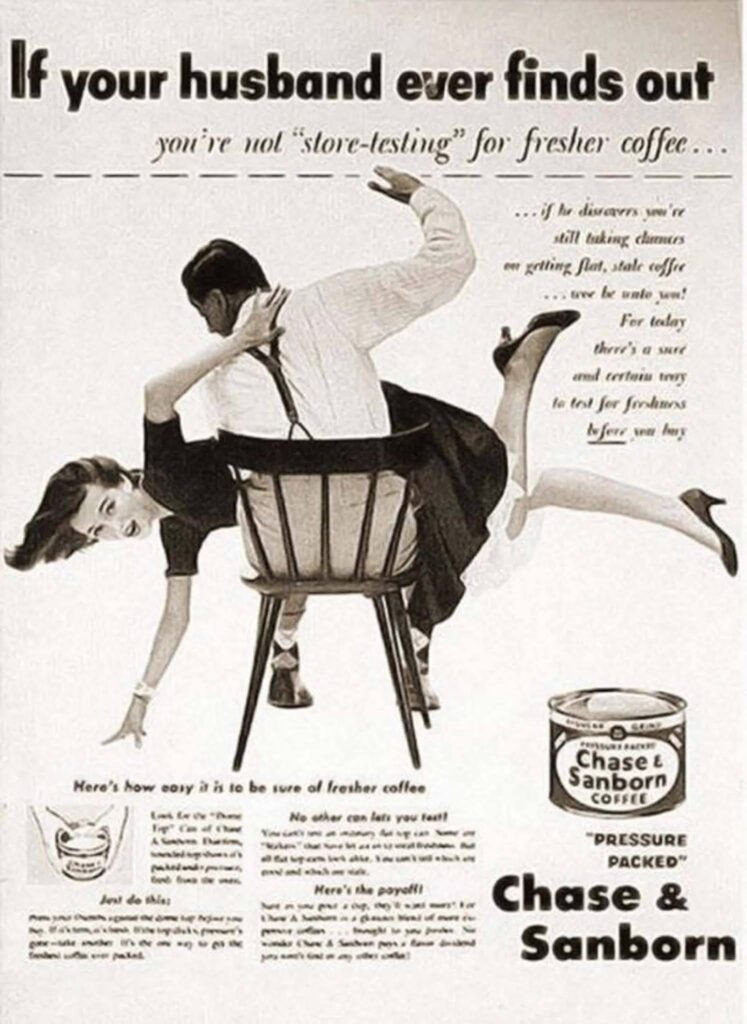

Common examples of historical advertisements of the 20th century show the objectifying and sexualising of women and reflect how women* were seen and valued in the time period (Rare Historical Photos, 2021). Sexist vintage advertisements often relied heavily on the sexualisation of women, portraying them as passive objects to appeal to male consumers. These ads typically featured women in exaggeratedly submissive or provocative roles, reinforcing harmful stereotypes about gender dynamics. While the “sex sells” approach aimed to elicit positive responses from men, it frequently alienated women, who were more likely to perceive such ads as lacking value and agency. For example, iconic vintage ads for products like cigarettes or kitchen appliances often depicted women in highly stylized, sexualized poses, accompanied by slogans that trivialized their roles or intelligence (Keller et al., 2020).
These are bold and controversial examples of sexism in graphic design that already sparked a few discussions at the time but are nowadays an integral part within the debate of gender discrimination.
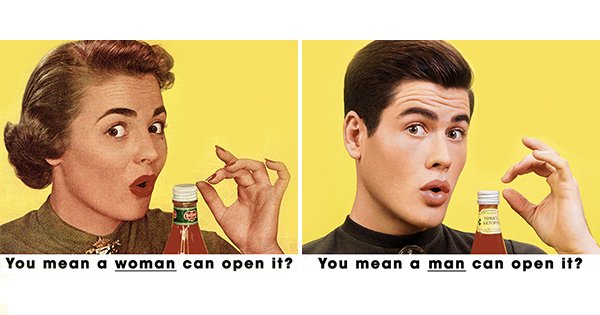
In 2018, Photographer Eli Rezkallah from Beirut, Lebanon joined the conversation with a humoristic approach, by recreating sexist vintage advertisements with reversed gender roles in the photo series “ in a parallel universe (Arushi Lohia, 2018).
Advertisements 21st Century
As the examples above are from another century, one may argue that this kind of sexism and objectifying does not happen anymore nowadays. Obviously, it is not happening as bold as then, but it is the subtle sexism that does about the same harm.
Gaps Kids

2016 – Gap’s kids advertisement, limiting their interests by highlighting stereotypes that girls like pink and to gossip, they are “the talk of the playground” and boys have “genius ideas” and bright future ahead, in blue of course (Kennedy, 2016). This advertisement primarily relies on the stereotypes of color theory, assigning pink to girls and blue to boys. This reinforces a clear division of genders, leaving no room for exceptions.
Tradwives
In 2022 and 2023, the Tradwives Trend on TikTok went viral and gained momentum. The videos are made by women that promote traditional gender roles, advocating for a lifestyle centered around homemaking, submission to husbands, and traditional family values. While most people cannot even understand how this lifestyle can be attractive for any women, there is a brought audience that aligns with the values and supports the idea (Toma-Toader, 2024).
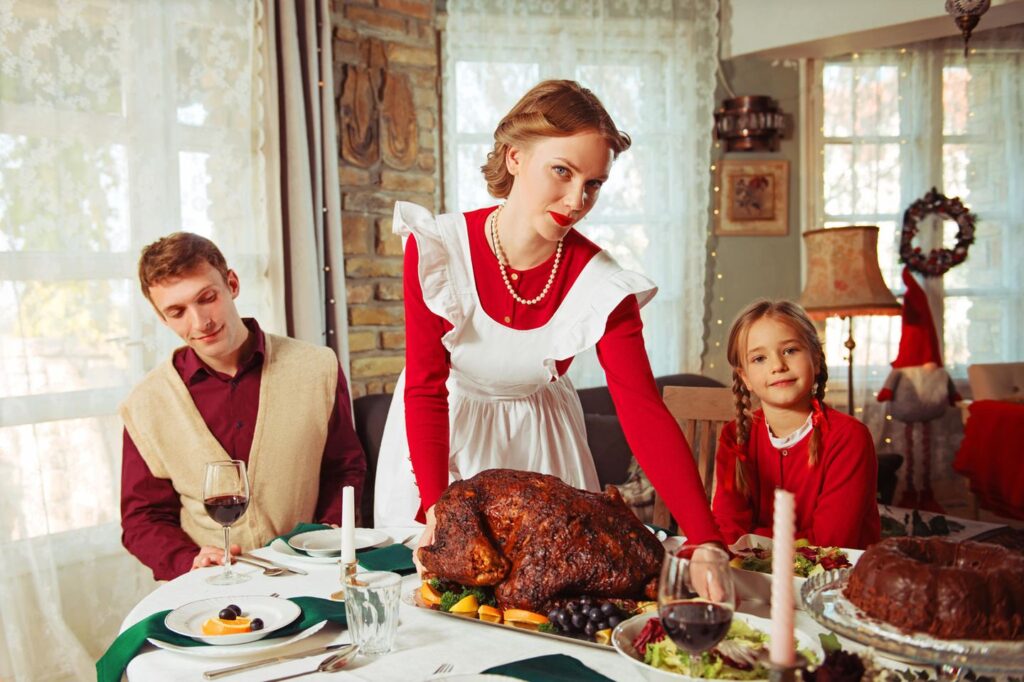
The videos often use nostalgic imagery and styling, evoking the 1950s “ideal housewife” aesthetic like vintage dresses, immaculate kitchens, and choreographed depictions of domestic bliss. Many proponents link their lifestyle to religious beliefs or traditional cultural practices, framing their roles as morally superior or more fulfilling than modern egalitarian arrangements. Also, a common theme in the trend is the rejection of feminism, with creators claiming that feminist movements have “robbed” women of their happiness by encouraging careers and independence over family-oriented roles (Saskia Papenthin, 2024).
Campaign Brief’s Creative Leaders List (2023)
The Campaign Brief’s Creative Leaders List is an annual feature by an Australian advertising industry publication, showcasing what it considers the top creative leaders of the year. The 2023 list sparked controversy for including 20 men and no women, drawing attention to the ongoing gender imbalance in leadership within the creative sector. While the publisher claimed the list simply reflected the current makeup of chief creative officers in the industry, its lack of female representation subtly reinforces systemic sexism. By failing to recognize or elevate women in creative leadership, it perpetuates the notion that such roles are predominantly male, overlooking the structural barriers and biases that limit women’s opportunities to advance in the field. This omission serves as a stark reminder of the deep-seated gender inequalities that persist in advertising and beyond (Cleal, 2024).
In this blog post, I primarily use the term “women” when discussing feminism and related issues. This choice is grounded in the historical context of feminist movements, which have traditionally centered on the experiences and struggles of women. However, it is important to emphasize that this usage is meant to include and apply to all individuals who fall under the FLINTA umbrella (Female, Lesbian, Intersex, Nonbinary, Trans, and Agender people).
Sources
Arushi Lohia. (2018, January 18). Photographer Gives Sexist Vintage Ads A Role Reversal To Show How Misogynistic Advertising Can Be. ScoopWhoop. https://www.scoopwhoop.com/life/sexist-vintage-ads-role-reversal/
Cleal, O. (2024, October 15). “Toxic, misogynistic, exclusionary”: Campaign Brief criticised for male-dominated list of creative directors. Women’s Agenda. https://womensagenda.com.au/latest/toxic-misogynistic-exclusionary-campaign-brief-criticised-for-male-dominated-list-of-creative-directors/
Keller, M., Walker, M., & Reutner, L. (2020, June 3). Sex Sells? The Role of Female Agency in Sexualized Advertisements| Social Psychological Bulletin. Spb.psychopen.eu. https://spb.psychopen.eu/index.php/spb/article/view/2643/2643.html
Kennedy, M. (2016, August 1). Gap accused of sexism over “social butterfly” children’s T-shirt ad. The Guardian. https://www.theguardian.com/fashion/2016/aug/01/gap-accused-sexism-social-butterfly-pink-childrens-t-shirt
Rare Historical Photos. (2021, September 9). Sexist and offensive vintage ads that would never fly today, 1940-1980 – Rare Historical Photos. Https://Rarehistoricalphotos.com/. https://rarehistoricalphotos.com/offensive-sexist-vintage-ads/
Robertson, T. (2024, July 3). Fury at “sexist” ad campaign with Team GB rugby stars in lingerie as former Olympian slams use of ‘porn und… The Sun. https://www.thesun.co.uk/sport/28923240/fury-sexiest-campaign-olympics-team-gb-rugby-stars/?utm_source=chatgpt.com
Saskia Papenthin. (2024, March 15). “Tradwives”-Trend: Eine Rückwärtsrolle für den Feminismus. Brigitte.de; BRIGITTE.de. https://www.brigitte.de/aktuell/gesellschaft/-tradwives–trend–eine-rueckwaertsrolle-fuer-den-feminismus-13784198.html
Toma-Toader, A. (2024, March 7). Propaganda mit dem Kochlöffel. Taz.de. https://taz.de/Antifeminismus-auf-Tiktok/!5995016/
