06 Transparency in Data Use: Building Trust Through Clear Communication

Introduction

Trust is the foundation of any user-platform relationship, and transparency is the key to earning it. Users need to know what data is being collected, why, and how it’s being used. In this post, I’ll explore how clear communication about data use can strengthen user trust and discuss practical design strategies for achieving transparency. These insights will inform my thesis objectives: creating a Privacy Framework for companies and prototyping a tool for managing personal data online.

Why Transparency Matters

Transparency transforms uncertainty into trust. When users understand how their data is used, they’re more likely to engage with a platform. Without it, users feel manipulated, leading to distrust and disengagement. Example: Many users became wary of Facebook after the Cambridge Analytica scandal because the platform failed to communicate how user data was being shared and exploited.

Key Elements of Transparent Data Use

  1. Clarity: Use plain language to explain data practices. Example: Replace “We may collect certain information to enhance services” with “We use your email to send weekly updates.”
  2. Visibility: Make privacy policies and settings easy to find. Example: A single-click link labeled “Your Data Settings” at the top of a webpage.
  3. Real-Time Feedback: Show users how their data is being used in real time. Example: A privacy dashboard that displays which apps or services are currently accessing your location.
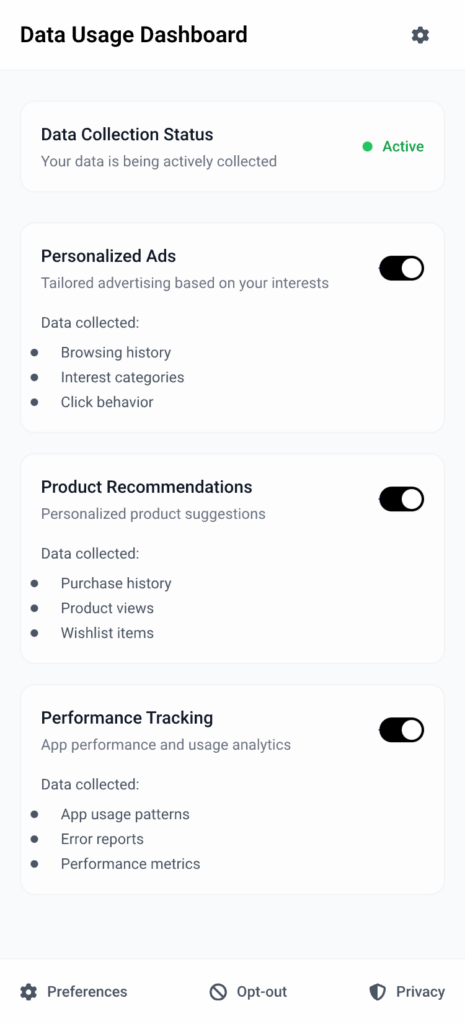
Possible transparency settings that can be introduced by companies

Case Studies of Transparency in Action

  1. Apple’s Privacy Nutrition Labels: These labels show, at a glance, what data an app collects and how it is used, simplifying complex privacy policies into digestible bits of information.
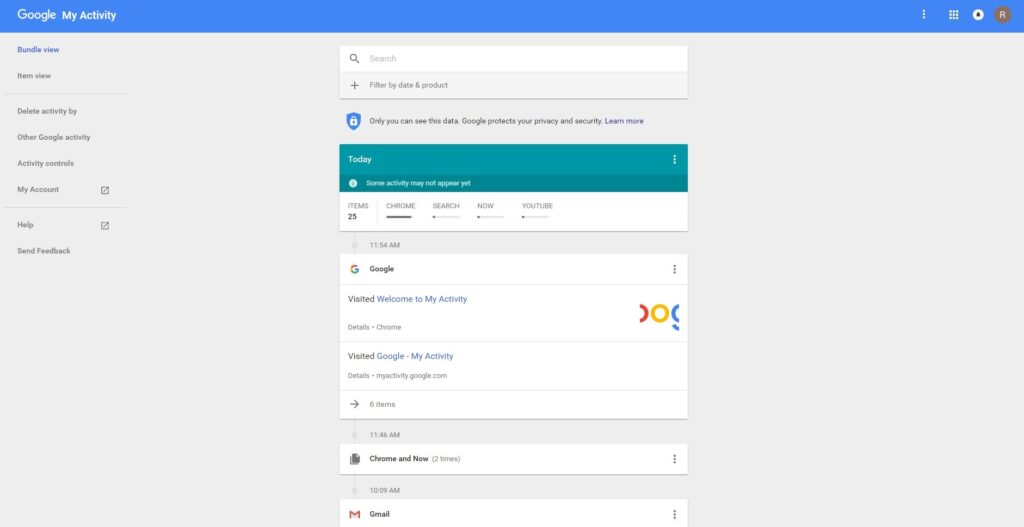
  2. Google’s My Activity Dashboard: Google allows users to view and manage their activity data, offering options to delete or limit collection.
  3. noyb.eu’s Advocacy Work: By challenging platforms that obscure their data use, noyb has pushed for greater clarity and compliance with GDPR.

These examples demonstrate how transparency fosters trust and aligns with ethical design principles.
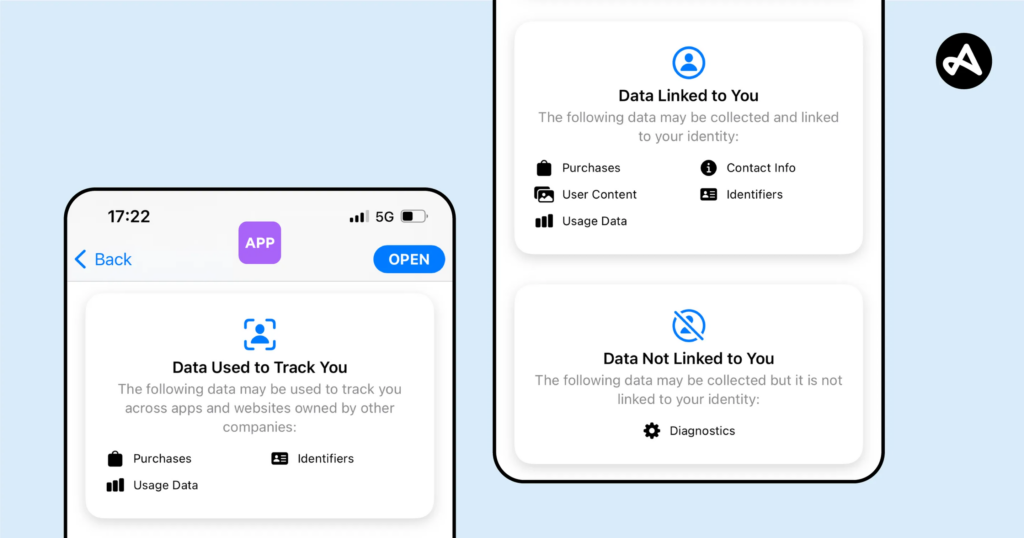
Apple lets you know what data is being used.
image source: Adjust
Google has a “My Activity” section tyhat shows relevant info.

How can design effectively communicate data use to build trust and ensure transparency?

  • What visual and interactive elements improve users’ understanding of data use?
  • How can transparency features integrate seamlessly into existing platforms?

Designing for Transparency

To achieve transparency, platforms can:

  1. Integrate Visual Feedback: Use graphics, charts, or icons to explain data use. Example: A pie chart showing how much of your data is used for ads vs. analytics.
  2. Streamline Privacy Policies: Provide short, bulleted summaries of key data practices. Example: “We collect: your email for updates, your location for recommendations, and your browsing history for ads.”
  3. Offer Customization: Allow users to adjust permissions directly. Example: Toggles for enabling/disabling specific data categories like tracking or personalization.

These approaches will also inform the Privacy Framework I’m developing, ensuring it includes actionable guidelines for platforms to improve data transparency.

Challenges and Personal Motivation

Transparency isn’t always easy to achieve. Challenges include balancing clarity with detail, overcoming user distrust, and addressing corporate reluctance to reveal data practices. However, I’m motivated by the potential to create tools and frameworks that make transparency accessible and actionable for users and companies alike.

1.7 Privacy vs. Personalization: Navigating Ethical Challenges in AI Mental Health Apps

AI-driven mental health apps offer a remarkable combination of personalization and accessibility, providing users with tailored experiences based on their unique needs. For example, apps like Talkspace utilize AI to detect crisis moments and recommend immediate interventions, while platforms such as Wysa offer personalized exercises based on user interactions. However, these benefits come with significant privacy and ethical challenges. To deliver personalized support, such tools rely on sensitive data such as user emotions, behavioral patterns, and mental health histories. This raises critical questions about how this data is collected, stored, and used.

Image Source: Government Technology Insider

Ensuring privacy in these apps requires robust safeguards, including encryption, secure data storage, and compliance with regulations like GDPR in Europe and HIPAA in the United States. These laws mandate transparency, requiring developers to clearly explain how user data is handled. Companies like Headspace exemplify these practices by encrypting user data, limiting employee access, and providing users with the option to control data-sharing settings. Headspace also rigorously tests its AI for safety, particularly in detecting high-risk situations, and connects users to appropriate resources when needed.

Beyond privacy, ethical concerns about fairness and inclusivity in AI algorithms are prominent. If the data used to train these algorithms isn’t diverse, the resulting tools may be less effective, or even harmful, for underrepresented groups. For example, biases in language or cultural context can lead to misunderstandings or inappropriate recommendations, potentially alienating users. To address this, platforms must ensure their datasets are diverse and representative, integrate cultural sensitivity into their development processes, and conduct ongoing audits to identify and rectify biases. Headspace’s AI Council, a group of clinical and diversity experts, serves as a model for embedding equity and inclusivity in AI tools.

Transparency is another key pillar for ethical AI in mental health. Users must be informed about how the AI works, the types of data it collects, and its limitations. For example, AI is not a replacement for human empathy, and users should be made aware of when to seek professional help. Clear communication builds trust and empowers users to make informed choices about their mental health.

While AI-driven mental health apps can enhance engagement and outcomes through personalization, the trade-off between privacy and functionality must be carefully managed. Ethical design practices, such as secure data handling, bias mitigation, and transparent user communication, are essential for balancing these priorities. By addressing these challenges proactively, developers can ensure that these tools support mental health effectively while respecting users’ rights and diversity.

Sources

  1. “AI principles at Headspace.” Headspace. Accessed: Jan. 14, 2025. [Online.] Available: https://www.headspace.com/ai
  2. Basu, A., Samanta, S., Sur, S., & Roy, A. Digital Is the New Mainstream. Kolkata, India: Sister Nivedita University, 2023.
  3. “Can AI help with mental health? Here’s what you need to know.” Calm. Accessed: Jan. 14, 2025. [Online.] Available: https://www.calm.com/blog/ai-mental-health
  4. Coghlan, S., Leins, K., Sheldrick, S., Cheong, M., Gooding, P., & D’Alfonso, S. (2023). To chat or bot to chat: Ethical issues with using chatbots in mental health. Digital Health, 9, 1–11. https://doi.org/10.1177/20552076231183542
  5. Hamdoun, S., Monteleone, R., Bookman, T., & Michael, K. (2023). AI-based and digital mental health apps: Balancing need and risk. IEEE Technology and Society Magazine, 42(1), 25–36. https://doi.org/10.1109/MTS.2023.3241309
  6. Valentine, L., D’Alfonso, S., & Lederman, R. (2023). Recommender systems for mental health apps: Advantages and ethical challenges. AI & Society, 38(4), 1627–1638. https://doi.org/10.1007/s00146-021-01322-w