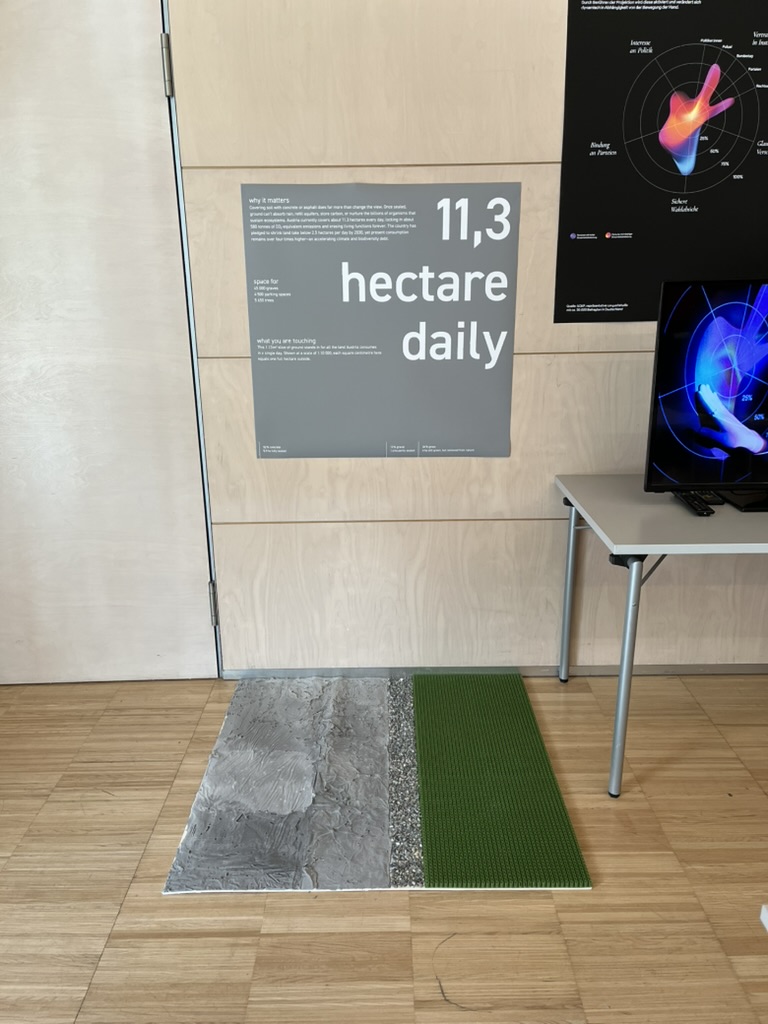
After experimenting with spaghetti mountains and 1:10,000 land-consumption patches, I’ve found myself drawn toward a new direction – one that combines topography, climate data, and tactile experience into a single, tangible system. This post is about bringing those earlier experiments together under a more urgent, nationally relevant theme: flood risk in Austria.
Where I’m Coming From
So far, my prototypes have had one foot in playful material exploration and the other in physical data storytelling:
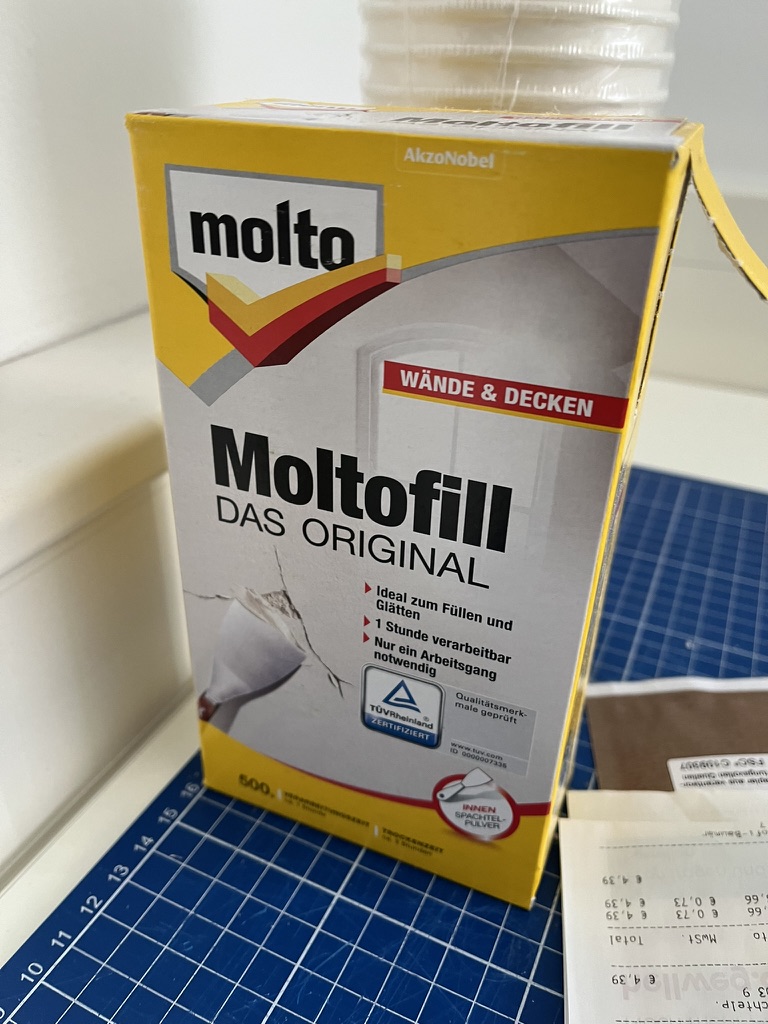
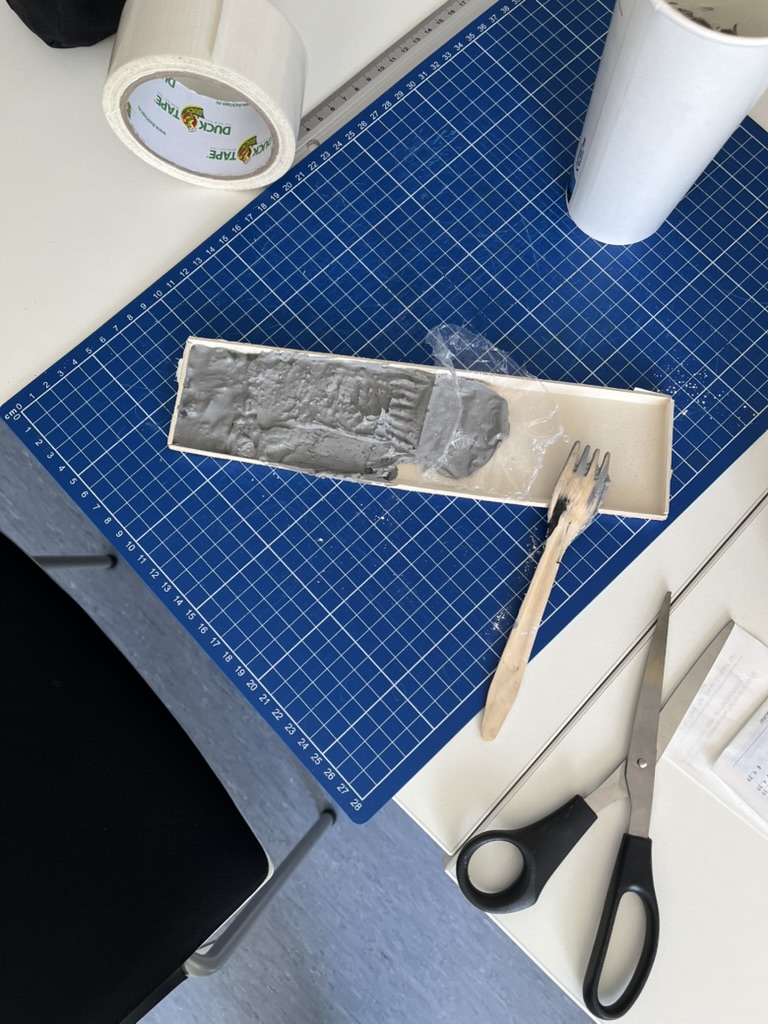
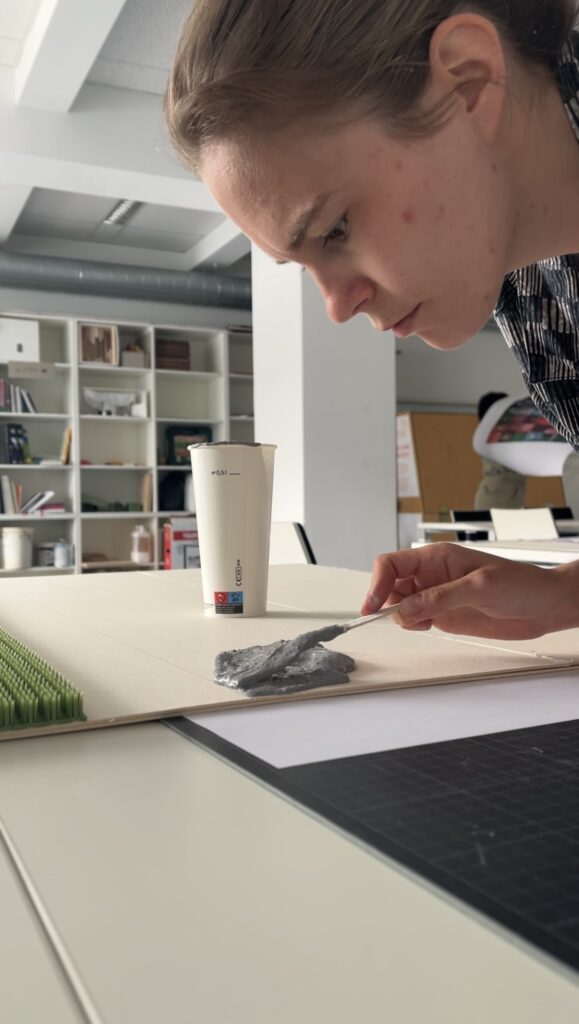
- The Spaghetti Schlossberg turned abstract elevation data into a tactile mountain – wobbly and imperfect, but rich with potential.
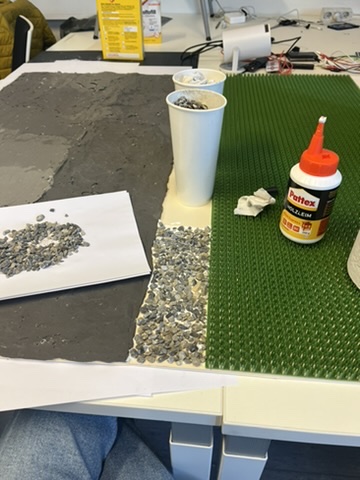
- The Land Use Patch made daily land consumption physically touchable, swapping colors for textures to communicate proportion, pressure, and permanence.
While they felt like separate ideas at first, both were really about the same thing: using touch to interpret spatial data in a more embodied way.
A Shift in Focus: Austria, Climate, and Tactile Maps
After researching climate impacts in Austria, especially the floods in 2024 in Vienna and Lower Austria, I began asking a new question:
What would it feel like to touch the places most vulnerable to climate risk?
This led me to the idea of creating a tactile flood risk map of Austria, combining elevation and flood zones into one cohesive, touchable landscape. The concept builds directly on what I’ve done so far: layering materials, mapping by hand, and treating texture as information.
Inspiration: Harrison Cole and Tactile Environmental Mapping
A major turning point came when I watched Harrison Cole’s video on tactile maps. His research for his phd shows how important carefully designed tactile maps are and how they can communicate both geographic and thematic information – not just where things are, but how they relate, change, and affect us.
Especially relevant were:
- Making Flood Maps Accessible: Designing Tactile FIRMs→ Demonstrates how FEMA maps were transformed into raised, texture-coded floodplain guides.
- Feeling the Flood: Evaluating Thematic Tactile Maps→ Offers insight into user testing with blind and low-vision individuals, and how tactile symbols and overlays shaped their understanding.
These examples helped me see that tactile design isn’t just about accessibility, but also about expanding the way everyone can perceive environmental risk – with their hands, not just their eyes.
What I’m Building Next
For my next prototype, I’m sketching out a physical map of Austria that shows both elevation and flood-prone areas. Here’s the plan:
- Stacked cardboard or foam to build elevation in simplified contour layers.
- Flood zones represented using sponge, felt, or soft rubber – anything that feels “wet” or absorbent.
- Possibly include overlays from my land-use prototype (gravel, concrete, grass) to link impermeable surfaces to higher flood risk.
By combining these, I hope to answer:
- Can we physically feel the risk tied to elevation and development?
- How does texture communicate urgency or vulnerability better than visuals alone?
- Could this be used in climate education or planning contexts?
Why Flood Risk?
Austria isn’t immune to climate impacts. The floods in Vienna and along the Danube aren’t isolated events. They’re part of a broader pattern of intensifying risks tied to both urban development and changing weather patterns.
A tactile map could:
- Make climate data more accessible to visually impaired users.
- Create a more memorable experience for general users.
- Encourage reflection and conversation around geography, infrastructure, and preparedness.
Final Thoughts
What began as two strange lo-fi experiments have merged into something more purposeful. This third prototype will be a test of that synthesis: Can elevation, land use, and flood vulnerability live on the same board? Can they tell a story not just visually, but viscerally?
References & Links
- Harrison Cole’s video: https://www.youtube.com/watch?v=-xVnAaXWPFo
- Feeling the Flood: Evaluating Thematic Tactile Maps
- Austrian Flood Risk Map Source: BML – Hochwasserrisikozonenplan
- https://hora.gv.at/#/chwrz:-/bgrau/a-/@47.72463,13.50823,8z