Music is often seen as a one-directional experience—composers create, performers interpret, and audiences listen. However, what if listeners could play a more active role in shaping the music they hear?
Movement as a Musical Element
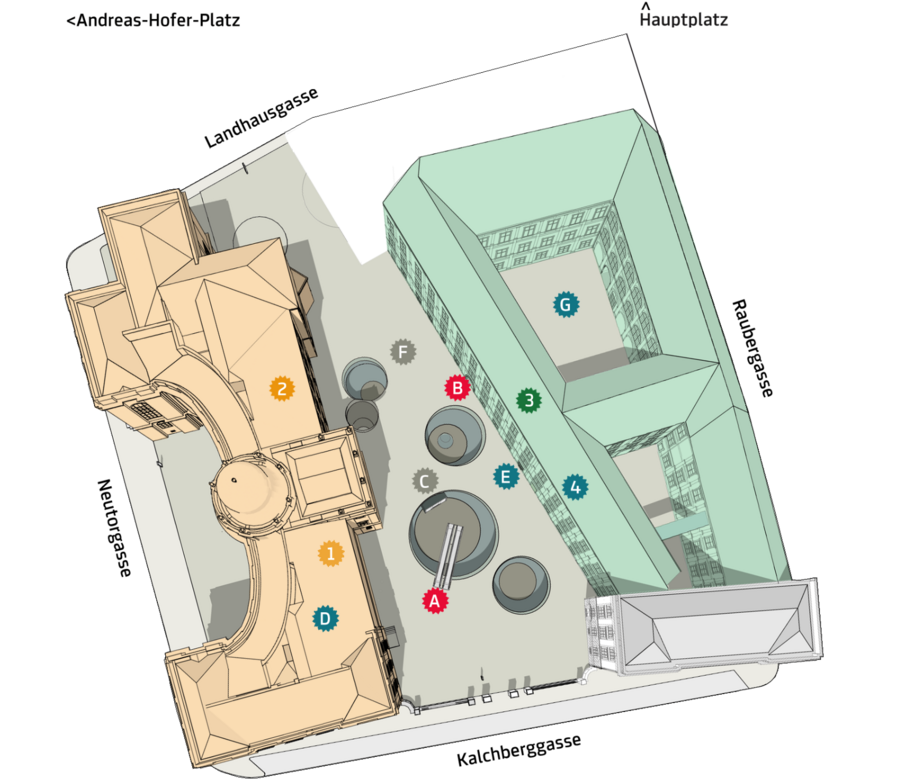
In conventional concerts, the audience remains stationary while sound moves towards them. In contrast, this project leverages the open public space of the Joanneum Quarter to allow the audience to move through different acoustic environments, making movement an essential part of the musical experience.
This already begins with the Joanneum Quarters being an open public space, people cross during there everyday-life. There is no literal gate-keeping, which allows people to enter end leave the place and therefore the musical piece, whenever they like or stumble upon it.
Further the architectural design of the Joanneum Quarter introduces natural delays and phasing shifts as sound waves bounce off its curved glass structures as well as from the surrounding walls. This means that a e.g. melody played in one location may sound different depending on where a listener is standing. And because of time delays the layering of melodies result differently at different locations. As audience members walk through the space, their perception of the music changes, creating a dynamic and personal auditory experience.
Creating immersion via interfaces
Beyond the organic interaction caused by movement, the project considers additional ways to involve audiences directly in the performance. One may be the installation of interfaces:
By incorporating technical solutions such as speaker controls or digital interfaces, visitors can influence the composition itself. Simple adjustments—such as modifying the volume of different speakers—allow participants to shape their own experience. A more complex approach could involve digital interfaces, such as iPads placed around the space, where participants can select different musical elements for each acoustic funnel, effectively curating their own version of the performance.
Public spaces can foster social connections, promote inclusivity, and nurture a sense of community. In today’s fast-paced world, where technology often replaces face-to-face interaction and individuals retreat into private spaces, designing public areas that encourage connections has become more crucial than ever. Achieving this goal, however, requires a more human-centered approach — one that focuses not just on the physical environment, but also on how individuals experience and interact with the space. Eric Klinenberg’s concept of social infrastructure provides a compelling framework to understand why these spaces are vital for addressing inequality, polarization, and community resilience. 1 2
Social Infrastructure
Klinenberg believes that a healthy community is not only about shared values, but also about shared spaces so he defines social infrastructure as “the physical places and organizations that shape the way people interact.” As mentioned in the previous posts such places include libraries, playgrounds, parks, but also sidewalks or community gardens. Klinenberg states that the social infrastructure is as essential for society as the infrastructure for power or transportation. 1 2
Designing for people not just for purposes
People have diverse needs, given a wide range of demographics, abilities, and social backgrounds, yet surprisingly often, design decisions for public spaces are done either in favor of functionality or aesthetics alone. Designing public spaces needs to address this diversity by prioritizing accessibility, visibility and inclusivity. In the book “Life Between Buildings” Gehl highlights, that a human-centered approach to public spaces creates meaningful social interactions. 3
First life, then spaces, then buildings. The other way around never works. – Jan Gehl
Principles of Human-Centered Public Space Design
Designing public spaces with a focus on people, rather than just on aesthetic or functional objectives, is guided by human-centered principles. These principles aim to meet users’ physical needs while also addressing their emotional, social, and cultural well-being. These are some qualities of human-centered public urban spaces:
Spatial qualities:
Accessible: Public spaces must be accessible to all individuals, regardless of socio-economic status, gender, ethnicity, or ability. Everyone should have equal opportunities to use and benefit from the space and its amenities.
Walkable: Neighborhoods designed with walkable pathways and well-connected bike lanes promote physical activity while decreasing dependence on cars. This is especially important in rural areas, where limited transportation options often make car travel the primary means of getting around.
Safe: Well-lit, open spaces without blind spots enhance safety and make public areas more inviting. Gehl highlights that poor visibility fosters fear and exclusion, while transparent, well-lit environments promote comfort, interaction, and community.
Delightful: Public spaces need to incorporate human-scale design, aesthetics and pleasant microclimate like greenery, clean streets and inviting storefront to turn these areas into destinations that foster social connections.
Comfortable: A comfortable space for spending time and engaging in various activities like walking, standing, sitting, people-watching, and having conversations.
Socio-spatial qualities:
Liveable: Public spaces should be designed with areas for a variety of activities, from quiet reflection to lively social gatherings. This multifunctionality allows individuals to engage with the space in ways that suit their preferences and needs.
Inclusive: Inclusive and welcoming to all, free and open. Urban spaces that foster a diverse range of users and activities.
Sociable: Spaces should be designed to foster social engagement by encouraging natural gatherings. Key elements include thoughtfully arranged seating, pedestrian-friendly walkways, and dedicated areas for social interaction. 1 3 4 5 6
Participation in Urban Planning
While human-centered design provides a strong foundation, its true value lies in practical application that prioritizes community voices. A truly human-centric approach relies on understanding “what people want” by using qualitative tools that assess the social and emotional well-being of residents, including their perceptions, motivations, emotions, ways of living, and values, rather than focusing only on quantitative metrics like the number of blocks or units installed. Tools such as focus groups, workshops, and community-led design sessions help planners shape spaces that align with community needs and wishes while strengthening shared civic identities. However, often the easiest way to gain insights is by talking to the people who are affected by infrastructural proposals. 7
Meaningful public participation becomes increasingly important and is also identified as a core human need. This participation is vital for upholding the principles of participatory democracy, enhancing the effectiveness and quality of the planning process, and improving as well as validating political decision-making. In such a perspective, residents are empowered to have their say in decisions influencing their daily life, ensuring better community involvement. The goal of participatory planning is to incorporate public perspectives into the design of public spaces, recognizing residents not only as stakeholders but as active users, alongside organizations, experts, and professionals. 8
Sources:
[1] E. Klinenberg, Palaces for the People: How Social Infrastructure Can Help Fight Inequality, Polarization, and the Decline of Civic Life, New York, NY: Crown Publishing Group, 2018.
[2] Palaces for the People,” 99% Invisible, Spotify. [Online]. Available: https://open.spotify.com/episode/7fE5rzAYtoCyVMzJnuwf0H?si=b64OVUphRBaOdbErUuyFtg&t=2399. [Accessed: Jan. 13, 2025].
[3] J. Gehl, Life Between Buildings, New York: Van Nostrand-Reinhold, 1987.
[4] M. Almahmood, N. M. Gulsrud, O. Schulze, T. A. Carstensen und G. Jørgensen, „Human-centred public urban space: exploring how the ‘re-humanisation’ of cities as a universal concept has been adopted and is experienced within the socio-cultural context of Riyadh“, Urban Research & Practice, Bd. 15, Nr. 1, S. 1–24, Okt. 2018, doi: 10.1080/17535069.2018.1539512.
[5] “Human-centered design for inclusive urban environments: Building cities that embrace diversity and accessibility,” Buildings. [Online]. Available: https://www.buildings.com/architecture/article/55139034/human-centered-design-for-inclusive-urban-environments-building-cities-that-embrace-diversity-and-accessibility. [Accessed: Jan. 13, 2025].
[6] R. Oldenburg, The Great Good Place: Cafes, Coffee Shops, Bookstores, Bars, Hair Salons and Other Hangouts at the Heart of a Community, New York: Marlowe & Company, 1999.
[7] “Making Cities Human-Centric,” One Works. [Online]. Available: https://www.one-works.com/journal/relate/making-cities-human-centric/. [Accessed: Jan. 13, 2025].[8] E. J. Cilliers und W. Timmermans, „The Importance of Creative Participatory Planning in the Public Place-Making Process“, Environment And Planning B Planning And Design, Bd. 41, Nr. 3, S. 413–429, Apr. 2014, doi: 10.1068/b39098.
A few months ago, I came across a TikTok where someone discussed the Theory of the Third Place and argued that Generation Z no longer has a true Third Place. Instead, he suggested, our phones have become the new “third place.” I briefly got stuck on this TikTok because I had never heard of it before but found the topic really interesting. Now that I’ve started researching the topic of loneliness and social isolation, I’m realizing how important these third places are for people, especially young people and their mental health.
What is a Third Place?
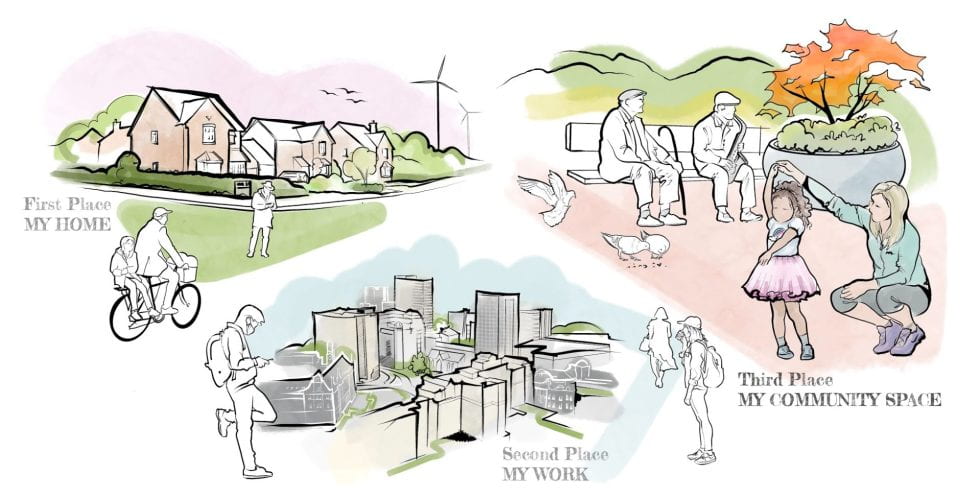
The term Third Places originates in the book “The Great Good Place” (1989) by the sociologist Ray Oldenburg. His Third Place Theory revolves around the concept that our lives are shaped by three key environments: the first place, the second place, and the third place. 1
The first place: HOME
The first place refers to where individuals live and develop their private lives. It is typically associated with privacy, a sense of solitude, and personal ownership. A home serves as a crucial foundation, offering stability, comfort, and a space for shaping one’s identity. 2
The second place: WORK
The second place refers to the workplace, where people spend a substantial part of their time. It is characterized by productivity, professional responsibilities, and a structured setting. Workplaces play a vital role in providing financial security and fostering career growth. 2
The third place: COMMUNITY
A third place is distinct from both home and work, serving as a space where people can regularly gather and connect with friends, neighbors, coworkers, or even strangers. 3 Oldenburg states it as a “a space for informal, free social interaction, essential to democracy” 1 It encompasses locations such as cafes, libraries, parks, community hubs, and other shared spaces. These environments foster social connections, open dialogue, and a sense of community. 2 Some even call the third places the living room of society. 4
Source: “2021 Cat A – My Third Place,” IFLA Europe Youth Competition, 2021, https://iflaeurope.eu/index.php/youth/entry/my-third-place-60edb5efb7ebc2.73333502
Oldenburg identifies the following nine characteristics for third places:
“Neutral ground: In a third place people can easily join in or disengage from the conversation.
Leveler: All people, regardless of class and status, are welcome and intermingle.
Engaging Conversation: Talk is the main activity and provides the greatest value. The rules are simple: Don’t dominate the conversation, be sensitive to others’ feelings, speak on topics of general interest, and avoid trying to instruct.
Accessibility and accommodation: People can wander in almost any time of day or night and find someone to talk to.
Regulars: The people who frequent the place give it character, set the tone, and welcome both old timers and newcomers.
Low profile: The decor is plain and unimpressive, discouraging pretension and self-consciousness.
Playful mood: Displays of wit are encouraged. The congenial environment makes it feel like a home away from home.” 1
Why are they so important?
Third places are more than just physical spaces — they are vital social hubs that contribute significantly to individual well-being and the strength of society as a whole. Here are the functions they serve:
Encouraging Social Interaction These spaces offer an inviting setting where individuals can come together, engage in conversation, and build meaningful relationships outside their typical social networks.
Inspiring Creativity Third places bring together individuals from different backgrounds, creating dynamic environments that encourage the sharing of ideas and inspire creativity and innovation.
Cultivating a Sense of Belonging Third places help individuals feel valued and accepted, creating a strong sense of belonging that enhances community bonds.
Supporting Personal Development Through shared experiences, exposure to new perspectives, and opportunities for learning, these spaces contribute to personal growth and self-improvement.
Building Stronger Communities By hosting gatherings and events, third places act as pillars for community cohesion, helping to create more resilient and united neighborhoods. 2
Third places play a crucial role in promoting health and well-being across all stages of life by providing essential social support. Despite often being overlooked, they are key to addressing pressing societal challenges like isolation, crime, education, addiction, physical inactivity, malnutrition, and sociopolitical polarization. Strengthening these spaces in both cities and suburbs could help rebuild social connections, foster a sense of community and offering opportunities for meaningful in-person interactions, dialogue, and shared experiences. 56 7
Examples of Third Places
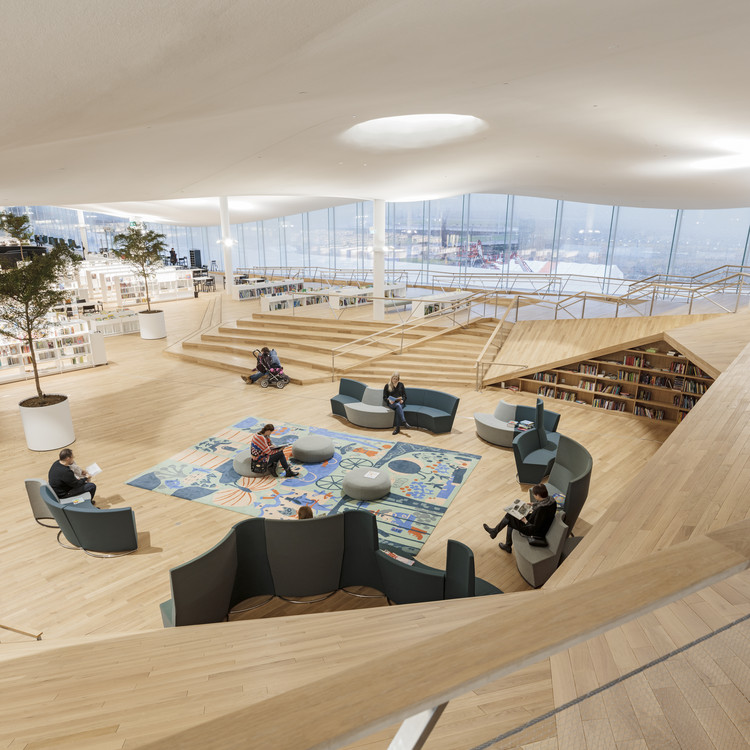
Oodi Library in Helsinki
“Helsinki Central Library Oodi is a living meeting place at Kansalaistori square, right at the heart of Helsinki. Oodi provides its users with knowledge, new skills and stories, and is an easy place to access for learning, story immersion, work and relaxation. It is a library of a new era, a living and functional meeting place open for all.” 8
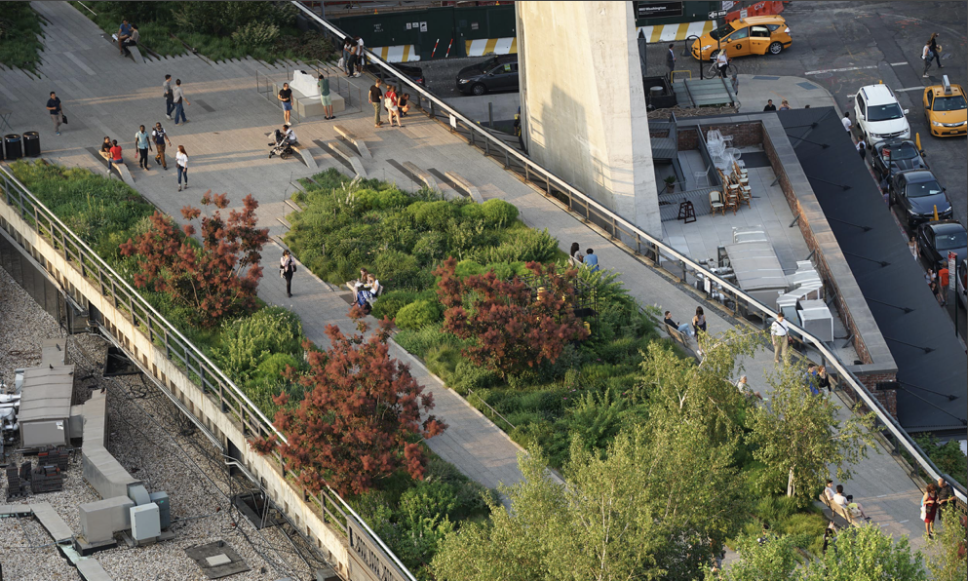
“The High Line is both a nonprofit organization and a public park on the West Side of Manhattan. Through our work with communities on and off the High Line, we’re devoted to reimagining the role public spaces have in creating connected, healthy neighborhoods and cities. Built on a historic, elevated rail line, the High Line was always intended to be more than a park. You can walk through gardens, view art, experience a performance, savor delicious food, or connect with friends and neighbors-all while enjoying a unique perspective of New York City.” 9
Unfortunately, limited public transportation, suburban zoning laws, and rising real estate costs often place these spaces far from residential areas, making car access a necessity and reducing their accessibility. The shift to digital interactions has further diminished these community-focused spaces, leaving many isolated.
But especially in today’s fast-paced digital age, third places are more essential than ever as a counterbalance to the isolating effects of technology, the relentless pace of modern life, and the growing emphasis on work and productivity. 5 6
Video
I also found this interesting YouTube Video from Elliot Sang explaining the issue with Third Places also in a historical context:
Sources:
[1] R. Oldenburg, The Great Good Place: Cafes, Coffee Shops, Bookstores, Bars, Hair Salons and Other Hangouts at the Heart of a Community, New York: Marlowe & Company, 1999.
[2] N. G. Er, „The Third Place Theory – Nazlı Gizem Er – medium“, Medium, 11. September 2023. [Online]. Verfügbar unter: https://medium.com/@gzm.err/the-third-place-theory-ae0dcee927b6#:~:text=The%20Third%20Place%20Theory%20reminds,to%20our%20overall%20well%2Dbeing.
[3] V. Mehta und J. K. Bosson, „Third Places and the Social Life of Streets“, SAGE Publications, 2010. doi: 10.1177/0013916509344677.
[4] A. Mondry, “In praise of loud, stinky bars,” Shelterforce, May 24, 2012. [Online]. Available: https://shelterforce.org/2012/05/24/in_praise_of_loud_stinky_bars/. [Accessed: Jan. 13, 2025].
[5] E. Klinenberg, Palaces for the People: How Social Infrastructure Can Help Fight Inequality, Polarization, and the Decline of Civic Life, New York, NY: Crown Publishing Group, 2018.
[6] Aquizoncolquitt, „Third Places: What Are They and Why Are They Important to American Culture? | English Language Institute“, 1. November 2023. https://esl.uchicago.edu/2023/11/01/third-places-what-are-they-and-why-are-they-important-to-american-culture/
[7] C. Diaz und S. M. Butler, „“Third places” as community builders“, Brookings, 14. September 2016. [Online]. Verfügbar unter: https://www.brookings.edu/articles/third-places-as-community-builders/
[8] „What is Oodi? – Oodi“, Oodi, 25. Januar 2024. https://oodihelsinki.fi/en/what-is-oodi/
[9] The High Line, „Overview | The High Line“, The High Line, 15. Januar 2025. https://www.thehighline.org/about/
In an increasingly urbanized and digital world, public spaces are no longer the main place for community and interaction they once were. However, while global connectedness has rapidly increased thanks to modern technology, smartphones and social media many people, despite being surrounded by others, feel disconnected, isolated and lonely. Public spaces, like parks, libraries, and cafés, have always served as places where people come together. But as our lives become more fast-paced and technology-driven, these spaces are not the first choice for seeking connection, with most digital online solutions being more convenient and accessible.
I find the paradox of a rapidly evolving world, where global connectedness and interaction are increasing, yet loneliness is at an all-time high, to be a fascinating premise. It is a topic that – at least to a certain degree – almost everyone is affected by, and understanding what differentiates different kinds of interaction and connection (e.g. online and face to face) will only become more important in the future, especially for interaction designers. I see designing connection and interaction as an important starting point to tackling many different societal issues, loneliness being only one of them.
Interaction design is the practice of designing the way people interact with technology, environments, and most importantly: each other. It therefore offers the potential to rethink how public spaces function. By creating interactive experiences, design can invite people to slow down, engage with their surroundings, and connect with others in creative and meaningful ways. With the increasing issue of loneliness, the principles of interaction design and the potential of public spaces I want to ask and aim to answer the question how design can combat loneliness by reshaping the way we interact in public spaces.
When diving deeper into the topic of loneliness, several sub-questions arise for further exploration and understanding. To tackle loneliness at its core, it is important to understand what loneliness is exactly and what the root causes are. These foundational questions help define the phenomenon and uncover why it emerges in various contexts. The effects should also be looked at more closely, posing questions such as: What does loneliness do to us? – physically, emotionally, and socially. Especially when it comes to exploring and developing possible solutions exploring the flip side, will be important. Questions like What is connection? How do we connect? and examining the mechanisms of building (meaningful) bonds are important. Researching on a broader scale, learning about basic human needs and how communities are built is another important aspect that should be considered.
More specific topics for interaction design could include reimagining third spaces like parks or cafes to encourage interactions, designing interactive and participatory experiences, or developing digital platforms that prioritize meaningful engagement over superficial connections. Additionally, incorporating haptic and sensory elements, such as touch-based installations or shared experiences, can evoke a stronger feeling of presence and connection. It’s essential to ask whether the spaces we design truly foster connection, and whether technological connectedness actually equals connection – fulfilling our need to be understood and supported. Some interesting ideas for design spaces with connection and community in mind have already been implemented. In many cities, including Graz, places like „Repair Cafés“ [1] can be found. These are spaces where people can not only fix their broken items, but also socialize, connect and learn from each other. “Maggie Centers” [2] provide a place for people affected by cancer in which they can come together, talk, connect and bond over workshops and activities.
It is important to keep in mind that loneliness is a very large and hard to grasp topic. There is existing research, however the approaches and understanding of the topic still vary. Even a general consensus on how to define the term itself hasn’t been found. It can mean different things to different people and it can have various root causes, which means a solution could look very different for many people. An interesting approach could therefore be focusing on human needs in terms of social connection, belonging and purpose, which are things that directly contrast loneliness. When working on possible solutions it is important to keep in mind that there is no one cure, since loneliness as well as connection are complex and deeply personal.
In the upcoming blogposts, I will explore the broader topic of loneliness, connection, and community to gain a solid understanding and foundation of the topic. From there, I will investigate more specific elements of the research question by taking a look at spaces and environments that foster social interaction, such as third and fourth spaces, as well as principles of designing for connection and belonging. I will also look at case studies and examples of successful design interventions to draw inspiration. This journey will ideally give valuable insights and opportunities for addressing loneliness through thoughtful and intentional interaction design.
Repair Café: https://www.repaircafe-graz.at/ Maggie Centers: https://www.maggies.org/our-centres/ The UK has recently launched a campaign to end loneliness:https://www.campaigntoendloneliness.org/ The loneliness lab is a global collective of people and organizations on a mission to design connection:https://www.lonelinesslab.org/
Public spaces like parks, squares, and plazas are essential to urban life. These areas should offer opportunities for relaxation, escaping the busy city life and connection with others. But, most of the time people are for themselves, lacking meaningful interactions. This phenomenon is particularly striking in urban neighborhoods, where anonymity is growing, and the sense of community is shrinking. However, several studies have shown that belonging to a community has a positive effect on people’s mental and physical health (Cramer, Pawsey 2023), (Kitchen, Williams, Chowhan 2011). Baumeister and Leary (1995) describe belonging even as a fundamental human motivation.
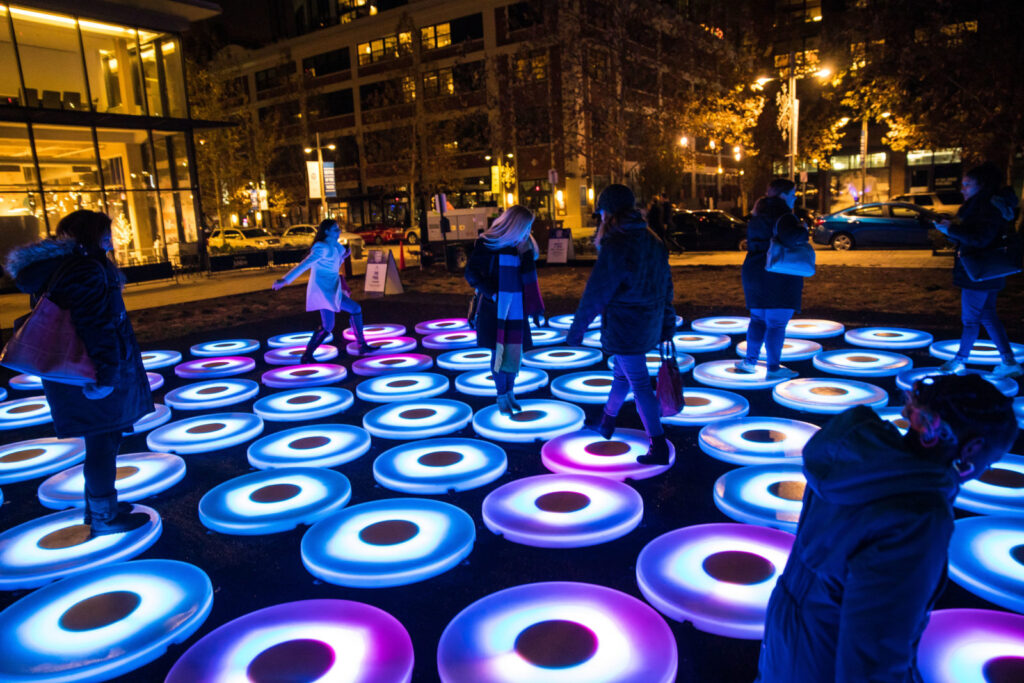
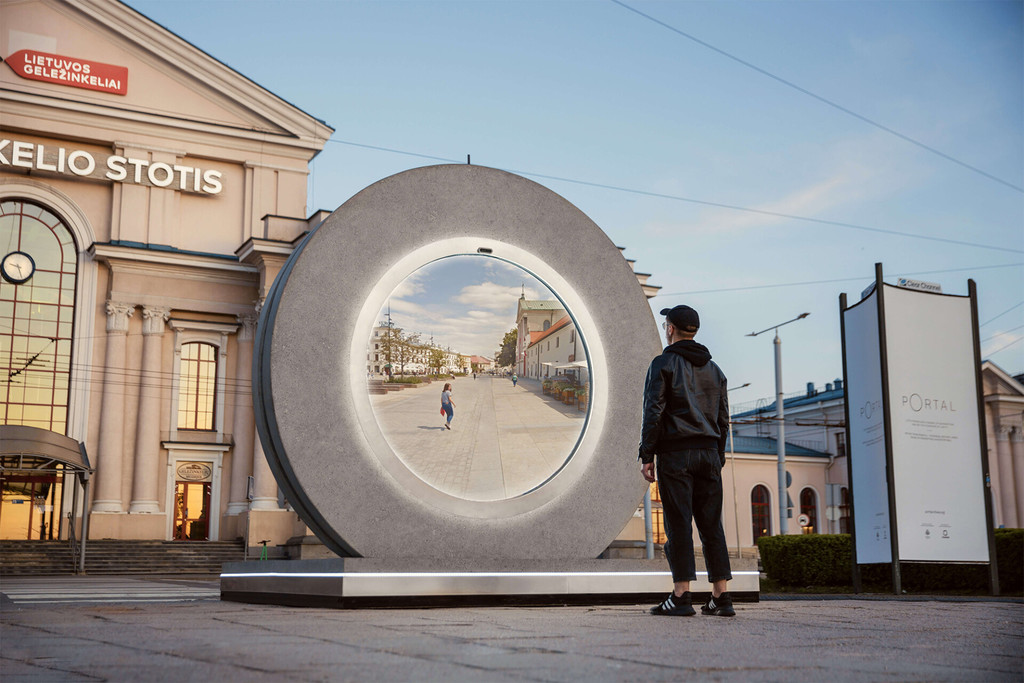
Therefore, the research investigates if interactive installations have the potential to transform the public space into an environment that breaks the social isolation by creating playful experiences that invites people to interact with the installation itself and create a space that encourage social engagement. Can such shared experiences between different people of different background and ages help to strengthen the sense of belonging, strengthen the community and connection within a neighborhood and create a space where people come together?
Personal motivation I am living in a new neighborhood with a great nice park as the center of it, which actually could be a great place of community and interactions. However, the park is rarely used by residents of the neighborhood, primarily due to its lack of amenities. Only few weeks ago few benches were installed, but overall, the space remains largely uninviting.
Next steps In the next step, I would like to take a closer look at urban design with a focus on public spaces. How are they defined and what must be considered when constructing a public space. I also want to focus on the social dimensions of public spaces. In the second part of research I will dive deeper into the design aspect. That includes learning about interactive installations, the different types available, tools and methods used to create them and studying best practices.
Bringing all these topics into a cohesive concept and finding a type or direction for interactive installations that can be universally used in different public spaces, can be challenges during this research.
Literature K. M. Cramer and H. Pawsey, „Happiness and sense of community belonging in the world value survey“, Current Research in Ecological And Social Psychology, Bd. 4, S. 100101, Jan. 2023, doi: 10.1016/j.cresp.2023.100101.
P. Kitchen, A. Williams and J. Chowhan, „Sense of Community Belonging and Health in Canada: A Regional Analysis“, Social Indicators Research, Bd. 107, Nr. 1, S. 103–126, März 2011, doi: 10.1007/s11205-011-9830-9.
Baumeister, Roy F. and Leary, Mark R., “The Need to Belong: Desire for Interpersonal Attachments as a Fundamental Human Motivation”, Psychological Bulletin 1995, Vol. 117, No. 3, 497-529