What I’ve discovered is that there’s a strong awareness of loneliness as a problem, especially in the research community. There are countless studies, statistics, and even political measures addressing it, but what’s missing are concrete steps and ideas on how to tackle it.
There are some considerations, such as guidelines for urban planners and architects, that lay the groundwork. But direct, creative, and innovative approaches are harder to find. Most existing solutions focus on open spaces, but few actively invite specific forms of interaction. What’s needed is a deep understanding of both the structural aspects of loneliness and the personal experience of it. This means understanding what people need in order to change their behavior and the way they operate in the world we currently live in. Is it the online world and our phone addiction? The fast paced life style? The way and amount we work? The ways our offices, homes an cities are designed and built?
It might be helpful to focus on specific scenarios where loneliness occurs, as its causes and effects vary depending on the context. Loneliness looks different for an older person in a retirement home than it does for a young person who just moved to a new city. Patients in hospitals or reha centers face different challenges than single parents with little time for social interaction. Immigrants who have been separated from their families and cultures experience isolation differently than someone struggling with mental health issues. People who have been removed from or disconnected from their communities also face unique forms of loneliness.
So what can design do? There are different angles and scales from which to approach this issue. One possibility is rethinking urban planning to create spaces that naturally foster human interaction. Another is shifting public perception by raising awareness and reducing the stigma around loneliness, making it something we can talk about openly rather than something to be ashamed of. Smaller interventions can also play a role, like simple design elements that spark interaction and connection, allowing relationships to develop organically.
The next step is to explore possible directions. Should this take the form of a framework or set of guidelines for urban design? A workshop that actively engages communities? A game or interactive tool that initiates connection? A digital platform that helps people meet in meaningful ways? Maybe physical installations or experimental spaces designed to encourage spontaneous interactions. Or maybe artistic works that highlight and address loneliness could invite reflection and conversation.
To move forward, more research is needed and the questions that came up during research need to be answered. Interviews, testing, and case studies could provide valuable insights into what actually works. Understanding the real experiences of people struggling with loneliness and setting a direction for a project are key to designing solutions that go beyond theory and make a real impact.
Tag: installations
A different approach – designing for loneliness
While traditional approaches to tackling loneliness often focus on creating opportunities for social interactions, there’s another, more surprising strategy gaining attention: designing public spaces that actively embrace and even encourage solitude. A paradoxical approach recognizes that many people experiencing loneliness don’t necessarily want to be surrounded by others but instead need environments that allow them to feel comfortable being alone. Being comfortable with being alone and even feeling lonely is important. Sometimes the feeling is inevitable and a vital part to identifying and overcoming loneliness is connecting with ones own emotional needs as it is connecting with others. Places that make this possible in a positive, comfortable and nonjudgmental way can therefore also play an important role in wellbeing, reflection and dealing with an at first uncomfortable feeling [3].
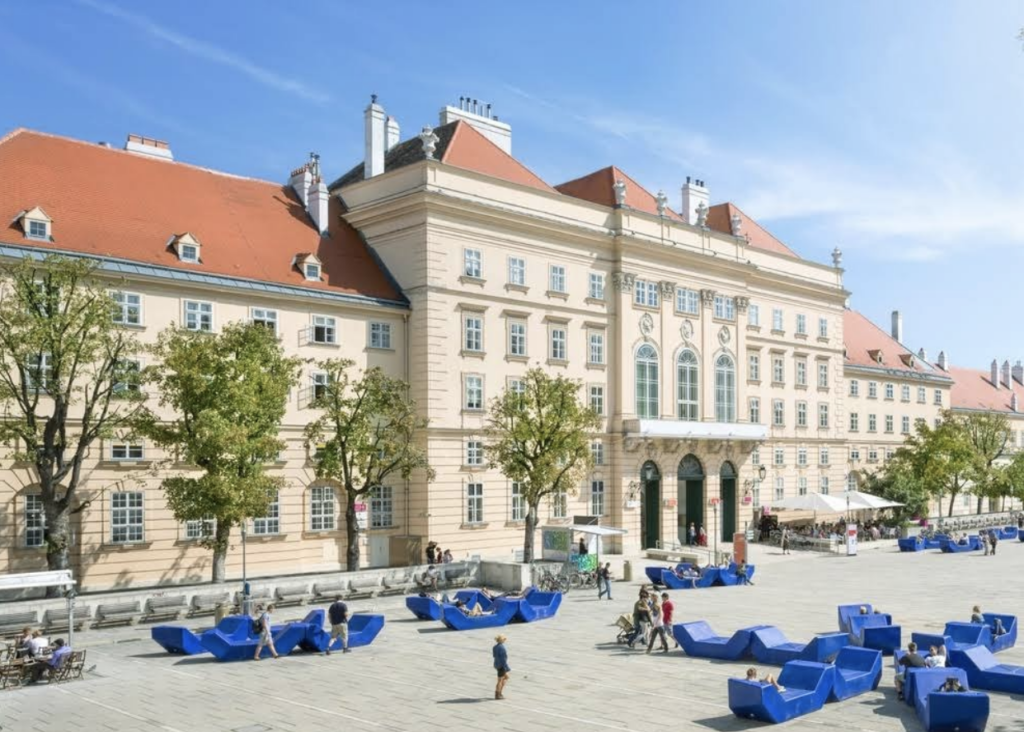
Often, urban spaces prioritize group interactions, leaving little room for those who prefer solitude. This can unintentionally send the message that being alone in public is unusual or even undesirable. However, small design tweaks can challenge that stigma. Take seating arrangements, for example. Public furniture designed for individuals – like single chairs rather than long communal benches – can make it feel normal and even inviting to spend time alone in public. The MuseumsQuartier in Vienna does this with its modular seating options that work just as well for one person as they do for a group, creating a more inclusive and flexible experience.
It’s not just about where you sit, it’s also about the atmosphere. Public spaces can be designed to provide opportunities for quiet moments, which are essential for helping people process their feelings of loneliness. Parks are a natural fit for this kind of design. Whether someone wants a solitary walk or a peaceful corner to sit and reflect, these kinds of environments offer options for both privacy and connection. Nature itself can also play a big role. Green spaces, dense vegetation, and the presence of birds or other wildlife add a sense of life and calm to a city. These features don’t just make urban spaces – they provide a way for people to connect with something larger than themselves. Studies have shown that access to green spaces is linked to lower feelings of loneliness, likely because they help clear the mind and create moments of quiet, personal connection with nature.
This idea of “paradoxical intervention” in design doesn’t just apply to solitude. It’s about embracing contradictions to create better experiences. By designing spaces that support both solitude and social interaction, we can serve different emotional and social needs in the same environment. It’s a shift away from rigid design concepts and toward more flexible, human-centered thinking.
Interaction design, too, has a critical role in this conversation. Thoughtfully designed technology can help foster meaningful connections in ways that feel organic and comfortable. For example, the concept of “cozy tech” has emerged as a way to create products that offer a sense of companionship. Devices designed with warmth and simplicity in mind, for instance, can provide emotional support in subtle ways. These tools aren’t about replacing human relationships but complementing them, making it easier for people to feel connected in their own way.
Ultimately, combating loneliness in cities requires a holistic approach – including rethinking public spaces, embracing solitude as a valid experience, and designing products that help people feel less alone. By integrating interventions and innovative interaction design into urban life, environments can be created that feel welcoming, inclusive, and human. And in doing so, we can take meaningful steps toward not just reducing loneliness, but reshaping how we think about connection and belonging in the first place [1,2].
Sources
- L. Heu and T. Brennecke, “Making Space For Loneliness In Our Cities,” Next City, Oct. 21, 2022. https://nextcity.org/urbanist-news/making-space-for-loneliness-in-our-cities-design-research
- L. C. Heu and T. Brennecke, “By yourself, yet not alone: Making space for loneliness,” Urban Studies, vol. 60, no. 16, pp. 3187–3197, May 2023, doi: 10.1177/00420980231169669.
- “Knowledge on Loneliness — The Loneliness Lab | Loneliness in urban spaces,” The Loneliness Lab, Dec. 29, 2020. https://www.lonelinesslab.org/knowledge-hub
Designing for connection – Part 2
DESIGNING INTERACTION
In the previous post I have discussed what is important when designing the public space itself. Now it is also important to look at what aspects to consider and incorporate when designing interaction and human connection. To build successful products like installations or experiences that are meant to bring people together and create or nurture connection we must understand key elements that create connections between people.
Human connection comes from a mix of emotional, physical, and psychological factors, all of which can guide how we design interactions that bring people closer together. Physical touch is an important aspect – it releases hormones like oxytocin, reduces stress, and builds trust. Designs can for example use haptic feedback, like vibrations or warmth, to mimic touch or encourage real-life gestures and touch like handshakes or hugs [1]. Physical proximity also plays a big role – being near others naturally makes connection easier. Spaces that bring people closer, like small gathering spots can create more chances for spontaneous interaction. Similarly, eye contact creates intimacy and trust.
Shared experiences are also something that bring people together by creating a sense of belonging and togetherness. Things like group activities, team challenges, or even shared virtual spaces can help foster these bonds [2]. Another aspect that gives people a sense of identity and connection are rituals and traditions. This could mean designing recurring events or encourage and help the development of little rituals specific to an experience [3].
Active listening makes people feel heard and valued, and Emotional sharing deepens relationships when people feel safe enough to open up. Design ideas could include anonymous spaces for sharing or lighthearted prompts that encourage people to talk about their feelings [4].
WHAT DO WELL DESIGNED PLACES AND INTERACTIONS LOOK LIKE?
The Loneliness Lab is a „global collective of people and organizations on a mission to design connection in to the places where we live, work and play.“ They for example made a toolkit for tackling loneliness in areas for people involved in urban planning and helped create several projects and concepts addressing the issue.
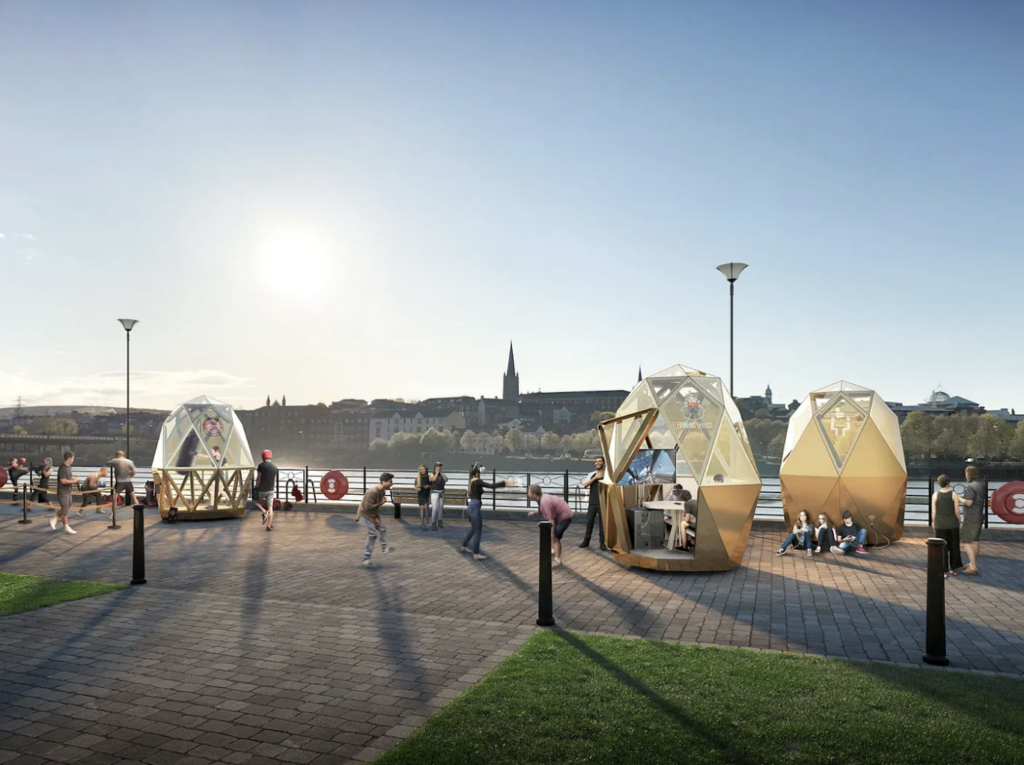
Designing public spaces that are inclusive, welcoming, and engaging can significantly impact social interactions and well-being. Accessible wayfinding, paths, and facilities ensure these spaces are available to everyone, especially those with disabilities or those who may feel excluded. Community-generated art empowers locals to reclaim and transform neglected spaces into safer, more inviting areas. Features like lighting, street furniture, and creative installations bring life to underused spaces, as seen in Derry’s pop-up meeting pods paired with mental health training, fostering connection and well-being. Temporary or “meanwhile use” spaces, such as Story Garden in London, allow communities to actively shape their environment while policymakers learn about long-term needs. Programs like this build creative skills and tackle local issues through collaborative projects. Lighting also plays a crucial role, it can help create a feeling of safety and encourage positive behaviors, as seen in Phillips’ LED installations, which extended children’s outdoor playtime and reduced device usage. A sense of place and identity strengthens connections between residents, businesses, and organizations. For example, “Elephant Says Hi!” unites over 30 groups in Elephant and Castle to create a welcoming environment for all. Thoughtful design, such as flexible seating, human-scale areas and elements, and moveable furniture, enhances the comfort of large spaces for both individuals and groups. Long-term administration is vital for sustainability, as demonstrated by the Gillett Square Partnership, which fosters ongoing collaboration to transform a once-deprived area into a vibrant community hub [5].
Further approaches from these ideas could also go more in the direction of installations and artistic displays, that follow a specific goal or have a specific message, for example creating awareness about the topic or making a statement.

Source
- A. H. Tejada, R. I. M. Dunbar, and M. Montero, “Physical contact and loneliness: Being touched reduces perceptions of loneliness,” Adaptive Human Behavior and Physiology, vol. 6, no. 3, pp. 292–306, May 2020, doi: 10.1007/s40750-020-00138-0.
- V. Chung, R. Mennella, E. Pacherie, and J. Grezes, “Social bonding through shared experiences: the role of emotional intensity,” Royal Society Open Science, vol. 11, no. 10, Oct. 2024, doi: 10.1098/rsos.240048.
- D. Robson, “The secret to long-lasting connection? Shared rituals,” Dec. 30, 2024. https://www.bbc.com/future/article/20241218-michael-nortons-rituals-key-to-connection-family
- S. Myers, “Empathic Listening: Reports on the Experience of being Heard,” Journal of Humanistic Psychology, vol. 40, no. 2, pp. 148–173, Apr. 2000, doi: 10.1177/0022167800402004.
- “Knowledge on Loneliness — The Loneliness Lab | Loneliness in urban spaces,” The Loneliness Lab, Dec. 29, 2020. https://www.lonelinesslab.org/knowledge-hub